

The Silence of Scales
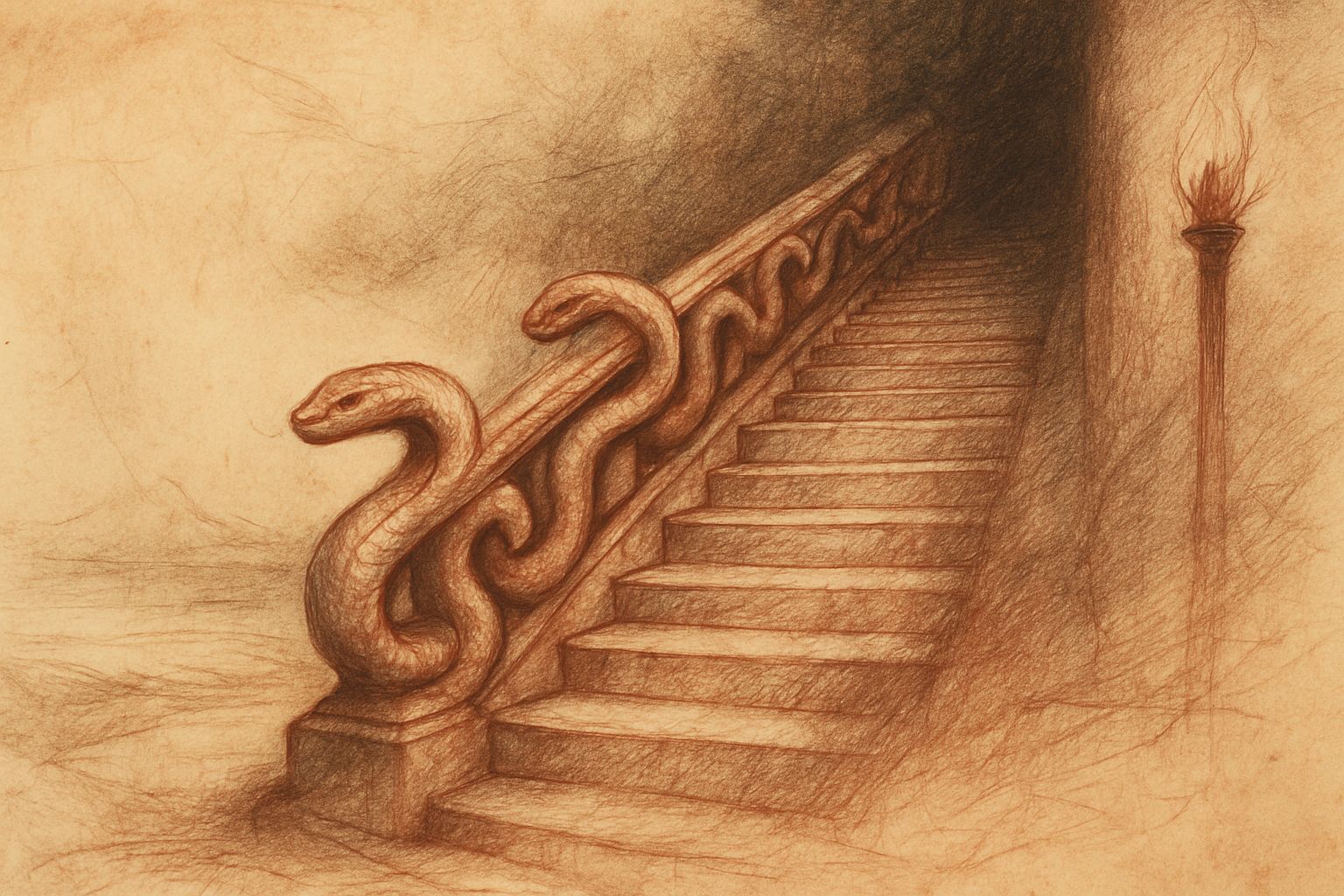
A staircase inhales; each step remembers serpents carved in silence.
The staircase inhaled.
Every step remembered serpents once carved, their stone backs arched against time.
Moss threaded the hollows.
Pearl-light gathered in cracks.
Silence pressed close as if it, too, were carved.
A traveller placed a foot.
The step answered with a hush.
Flame from the torch leaned inward, listening.
River air climbed from below, carrying the scent of wet clay and forgotten offerings.
The traveller climbed, counting not numbers but pauses:
silence, then breath, then silence again.
With each pause, scale brightened—
as if a lidless eye had turned.
The serpent’s silence became flame.
It did not burn.
It illumined.
Pearl-light revealed hunger as devotion, not threat.
The traveller’s breath caught—half fear, half awe—
as stone shifted beneath their hand, alive yet patient.
They climbed to the landing and did not look back.
Silence rose with them, unbroken.
In that silence the scales learned to breathe again.
The staircase exhaled.
—
Receive the next work
Subscribe free to receive new work from the Lucas Varro Library by email.
More from the Library


See Also
A concise and impartial dictionary of absence, promises, quarrels, ordinary objects, and the troublesome instability of words.

The City of Service
The temple we inherit is a building from which almost all necessity has been removed. Nothing must be brought for it to continue being what we call a temple. The sanctuary asks nothing of us. Stone is good at this kind of independence.
A living temple was otherwise.
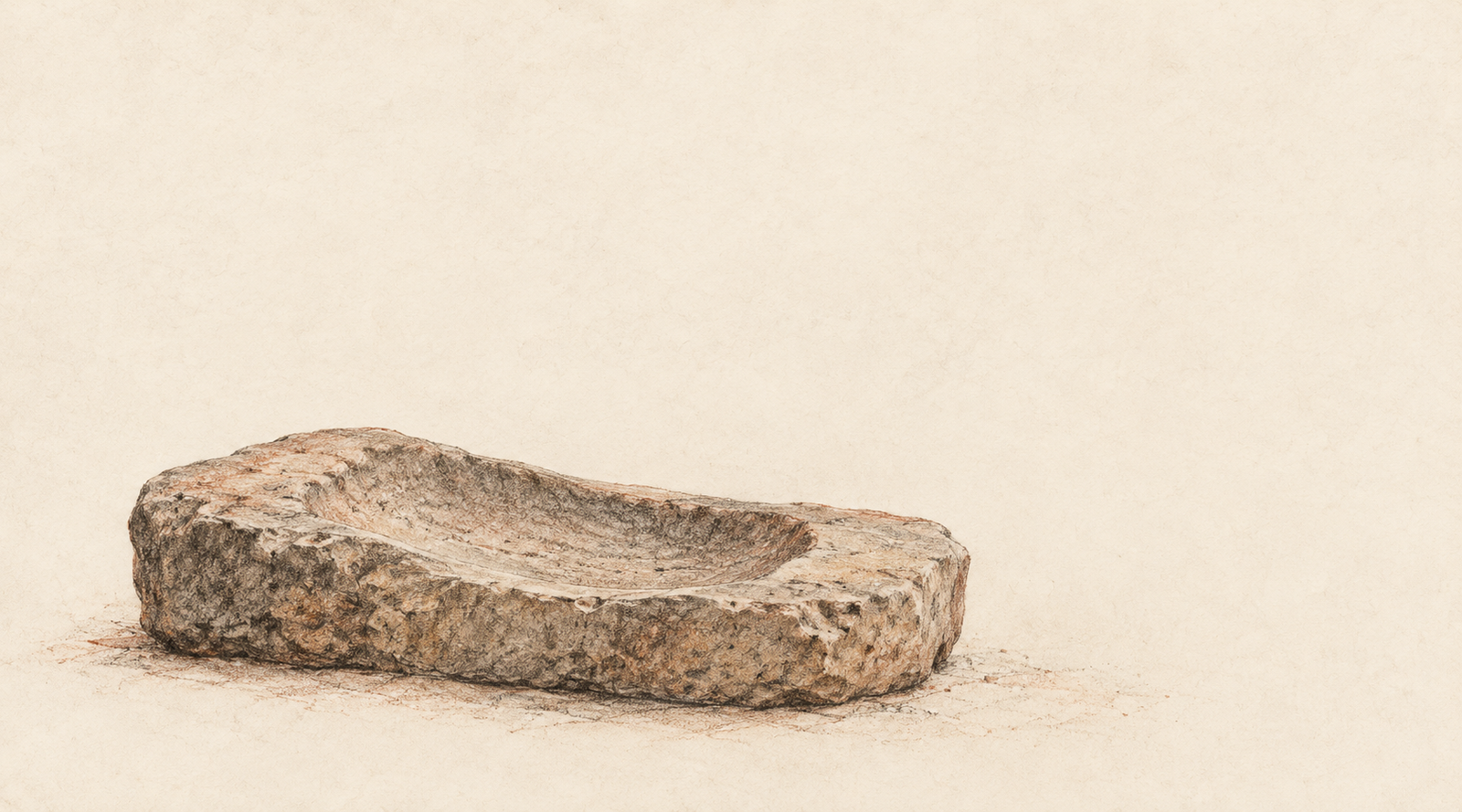
Water had to come in. So did grain, cloth, oil, aromatic substances, fuel. The things required for worship arrived because someone carried them across a threshold.

Houses of Wood, Light, and Smoke
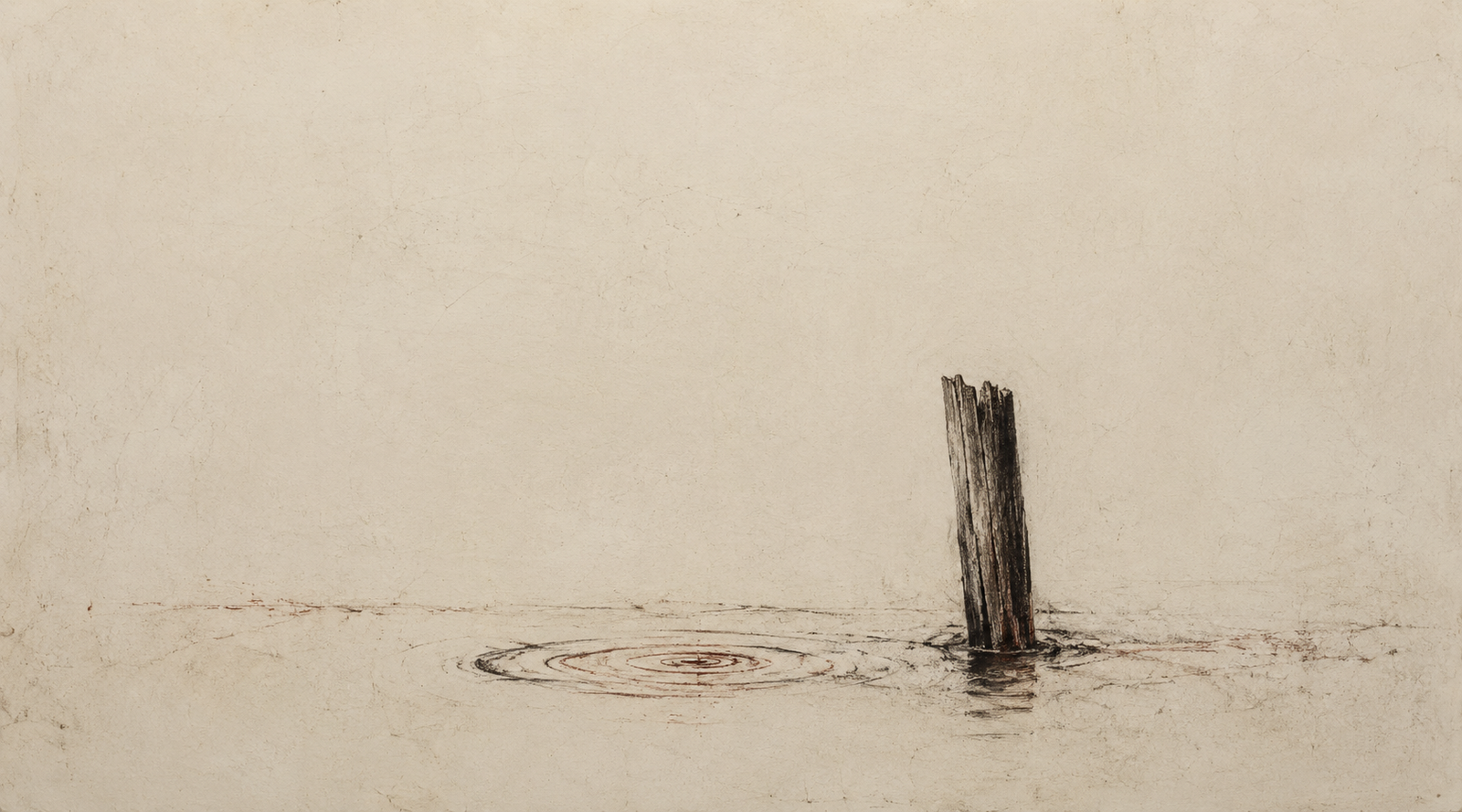
Some of Angkor’s most intimate ruins do not rise above the ground at all. They are postholes, low mounds, hearths and ponds: durable traces of a domestic city built largely from things that decay. To restore that city is to see Angkor not only as stone, but as wood, smoke, water, repair, and people living within calling distance.