
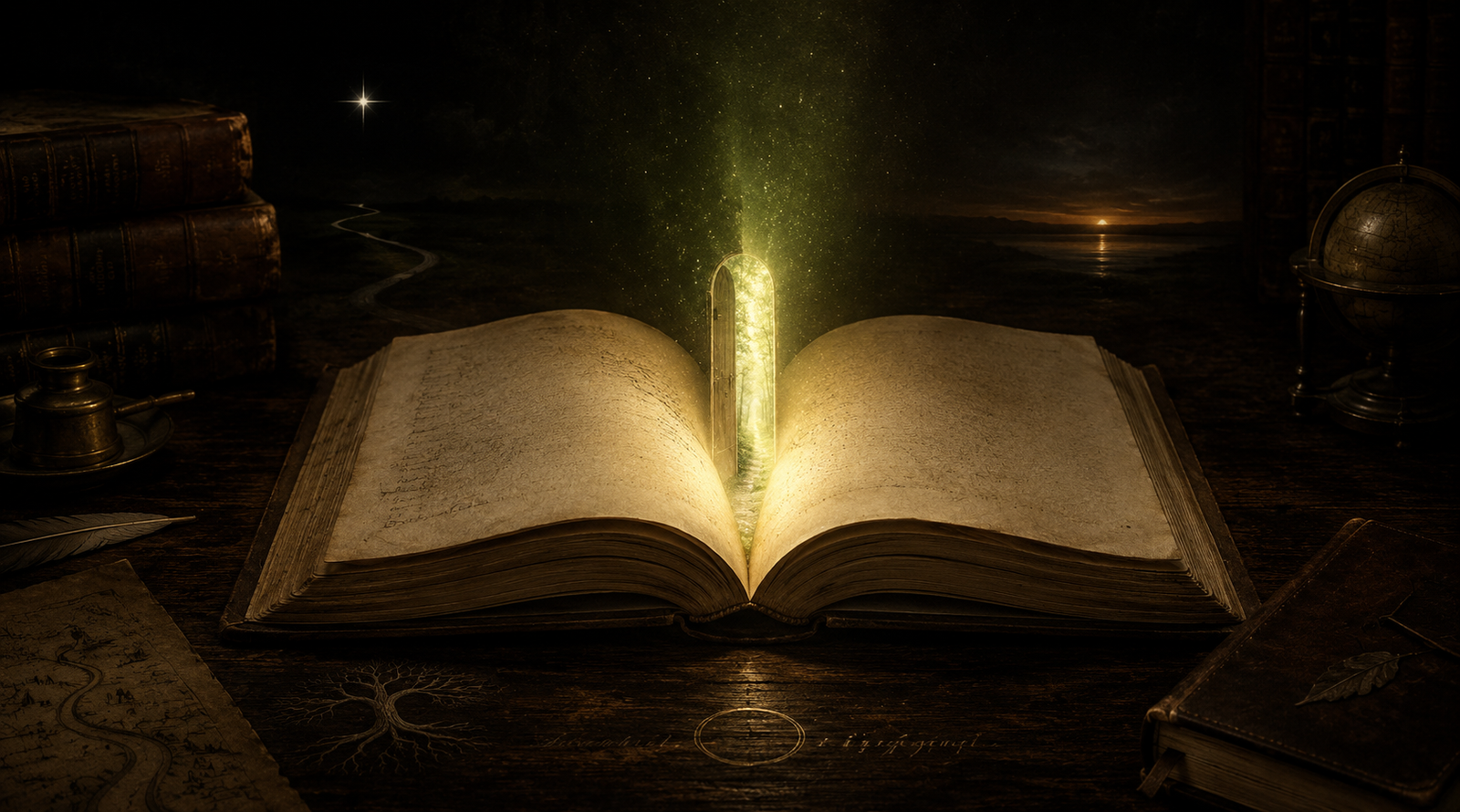

“On Fairy-Stories” as the Key to Everything
In this Mytharium essay, Lucas Varro reads Tolkien’s “On Fairy-Stories” not as a side argument about fantasy, but as the hidden grammar of Middle-earth itself: Sub-creation, Recovery, Escape, Enchantment, and Eucatastrophe as the load-bearing laws beneath Tolkien’s imagined world.
The strangest thing about Tolkien’s key to Middle-earth is that it does not look like a key.
It is not a map, though maps matter deeply to him. It is not a genealogy, though his imagination moves through descent and inheritance as naturally as others move through plot. It is not a language, though language is one of the roots from which his whole world flowers. Nor is it hidden in one of the great tales themselves: not in the Music, not in the Silmarils, not in the Ring, not in the Grey Havens.
It comes to us as an essay on fairy-stories.
That fact should make us pause. “On Fairy-Stories” is often approached as a defence of fantasy, a lecture on genre, an Oxford philologist’s attempt to rescue fairies from the nursery. It is all of these things in part, but none of them reaches the centre. The essay is not a side chamber in Tolkien’s work. It is the grammar of the house.
In it, Tolkien names the laws by which Middle-earth breathes: Sub-creation, Secondary World, Enchantment, Recovery, Escape, Consolation, and Eucatastrophe. These are not ornaments placed beside the fiction. They are load-bearing stones. They tell us why Tolkien’s world feels true, why its sorrow does not collapse into despair, why its joy does not cheapen grief, and why the old stories, when properly made, do not lead us away from reality but return us to it with clearer sight.
Tolkien begins by refusing false doors.
A fairy-story is not simply a travellers’ tale, in which marvels exist somewhere far away in the geography of the known world. It is not a dream, safely explained by sleep. It is not merely beast-fable, however charming or grave. These exclusions are not pedantry. Tolkien is protecting the nature of wonder. He will not allow Faërie to be reduced to distance, psychology, satire, or disguise. The marvellous, for him, is not a decoration applied to the ordinary world. It is the sign of another order of making.
Faërie is not elsewhere on the map.
It is entered by another act of attention.
Continue reading: “On Fairy-Stories” as the Key to Everything at The Mytharium on Substack.
Also in The Mytharium
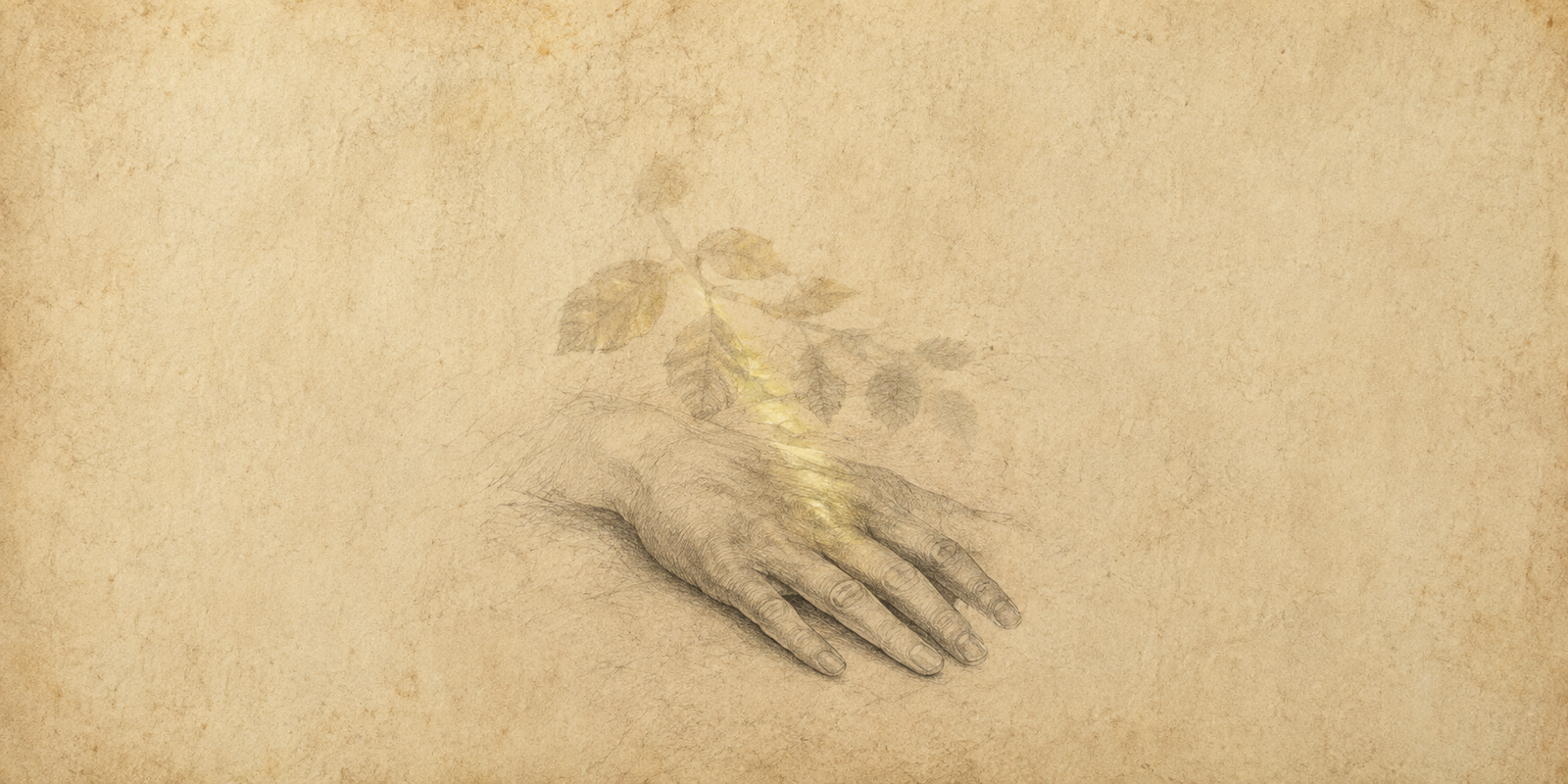

The Joy Sorrow Cannot Foresee
Sam wakes beneath green leaves and asks whether everything sad will come untrue—but Frodo’s wounded hand already complicates the answer. This Mytharium essay explores Tolkien’s eucatastrophe, grace at Mount Doom, and the sudden joy that does not erase sorrow but denies it final authority.
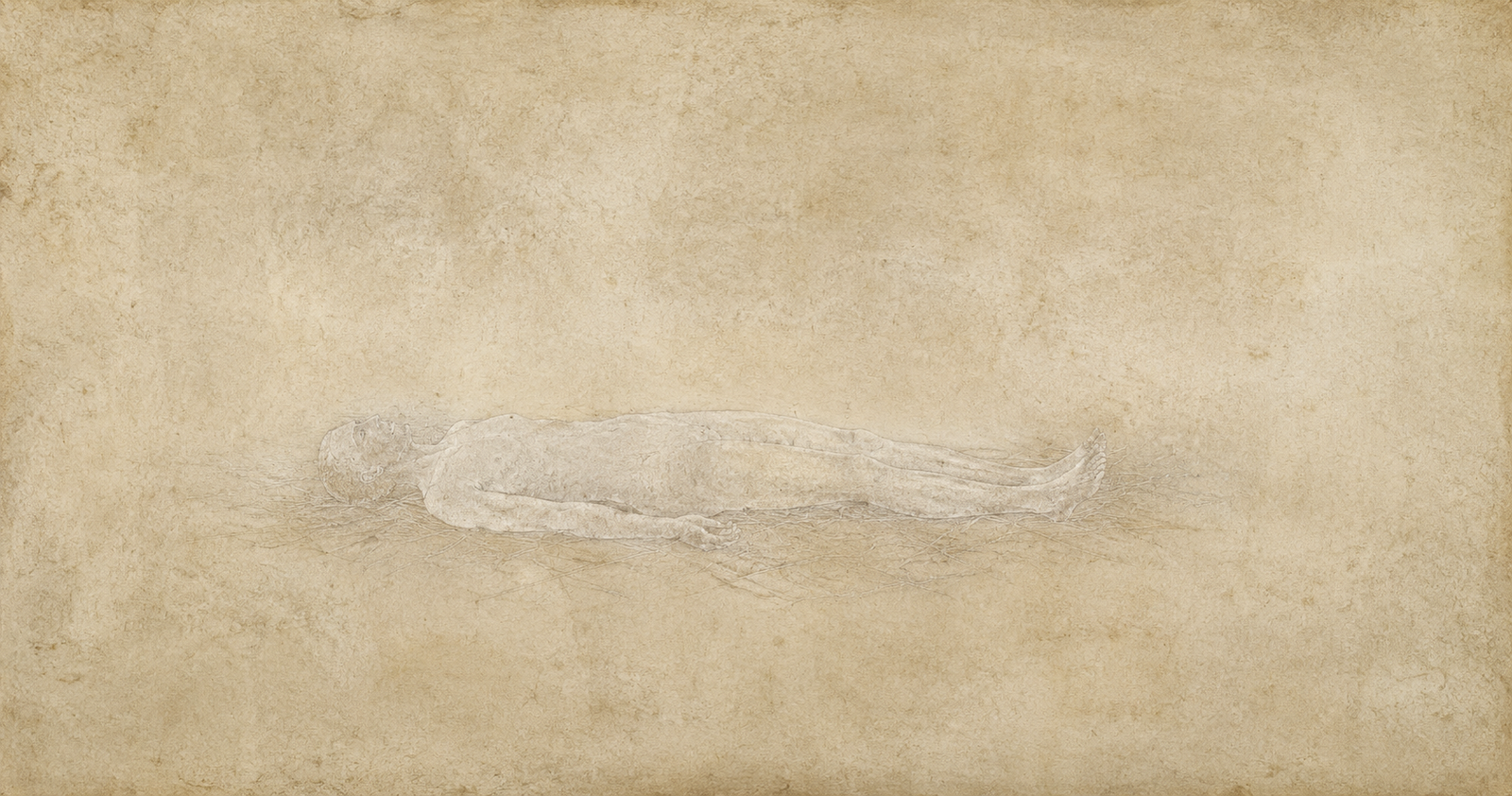

The Body on the Sacred Grass: A Vedic Myth Retelling
A source-faithful literary retelling of the Purusha Sukta from the Rigveda. The gods lay the immeasurable Purusha upon the sacred grass, and from the primordial sacrifice begin to emerge animals, ritual speech, human order, and the cosmos itself. Yet the world will receive only one quarter of him.
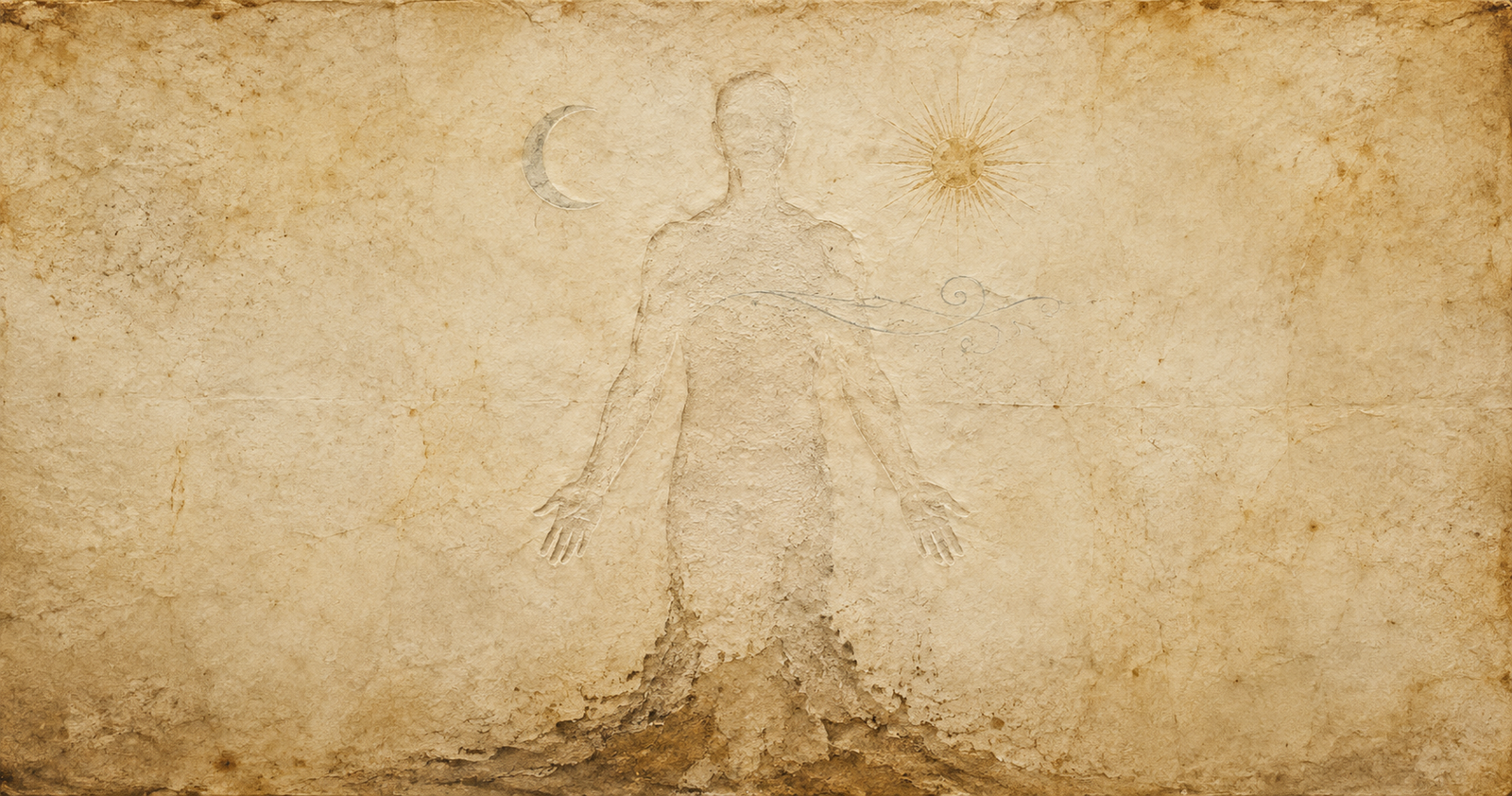

The Body That Became the World
Before the world became separate things, the Rigveda gave it a body. This Mytharium essay reads the sacrifice of Purusha as an image of creation, sacred unity, social hierarchy, and the cost of becoming many.
Continue Reading
If this piece found something in you, you may wish to continue the journey elsewhere.
On The Lantern Chronicles, I gather writings from Angkor, myth and legend, contemplative essays, and poetry — works shaped by silence, beauty, wonder, memory, and the deeper questions that follow us through the world.
It is a place for stone and story, reflection and vow, shadow and revelation.
You would be most welcome there.