

Balaha — The Horse Who Carries Across
In Mahayana Buddhism, compassion does not always arrive as a gentle hand.
Sometimes it comes as motion.
Sometimes it comes as speed.
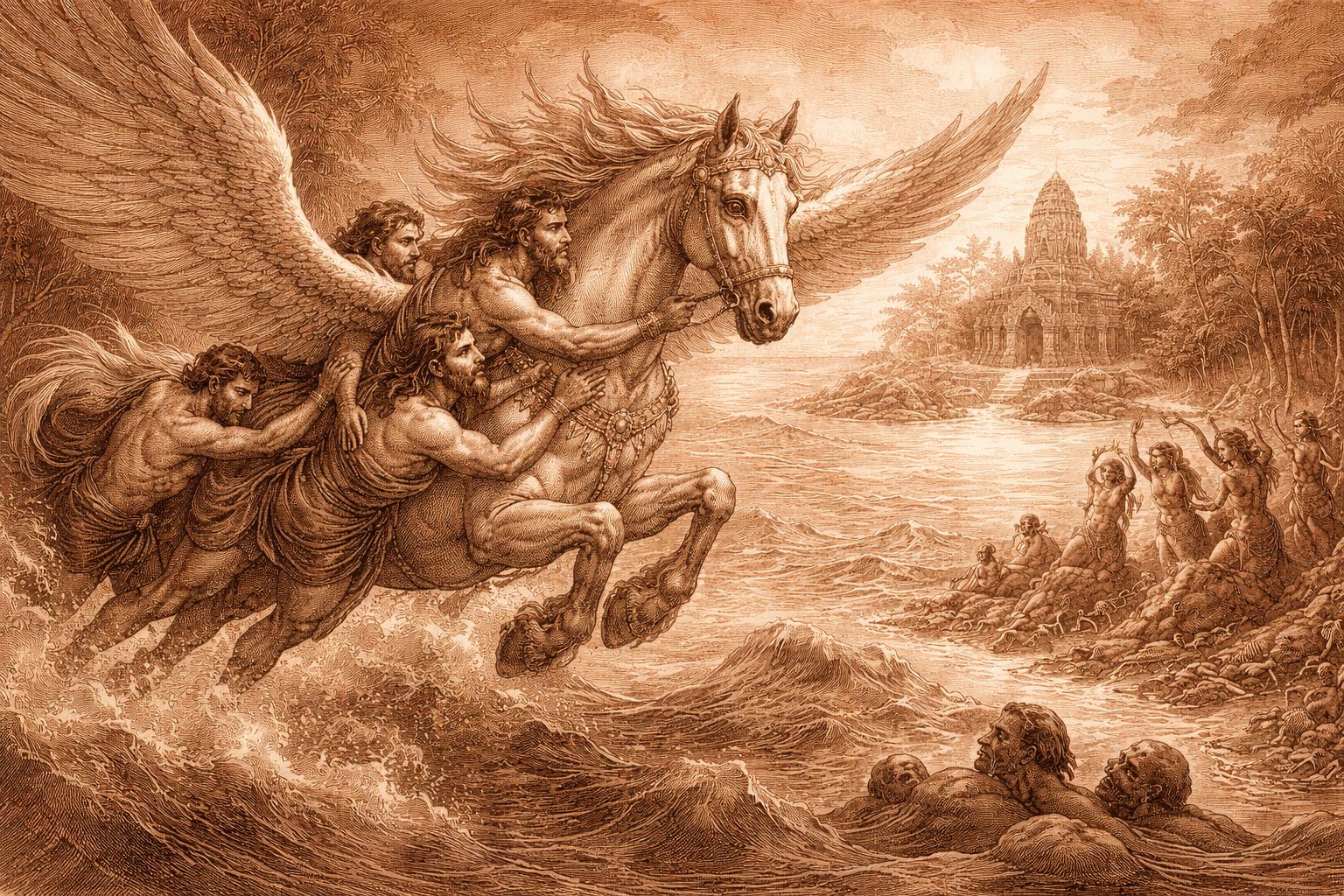
Balaha is Lokeshvara in flight—compassion made muscle, breath, and wing. He is the Bodhisattva who does not simply console the drowning, but becomes the vessel by which they cross.
The legend tells of merchants shipwrecked upon an island that promised abundance and delivered consumption. The women who welcomed them were not hosts but hunters; the comfort they offered was bait. This is how samsara is often described—not as torment at first, but as seduction. Only later does it reveal its teeth.
When the truth was seen, prayer rose. And in response, Lokeshvara did not descend as judge or teacher. He came as Balaha, the white flying horse named Cloud, calling from above the waves: Who will go to the other shore?
This detail matters.
The Bodhisattva does not carry those who hesitate.
He carries those who choose.
The escape is not without cost. As Balaha lifts the survivors from the island, he gives a single instruction: do not look back. The warning is not moral; it is structural. Attachment pulls downward. To turn one’s gaze toward what has already consumed you is to surrender gravity back to the world.
Most cannot resist. They look. They fall.
Only one remains—eyes fixed forward, body taut with trust.
He is carried across.
In this story, salvation is not granted automatically. Compassion appears, but it must be met. Balaha does not force rescue. He offers passage.
At Angkor, this allegory was carved into water and stone. During the reign of Jayavarman VII, Balaha emerged as one of the most potent visual expressions of Mahayana mercy. At Neak Pean, the flying horse appears within the central pool, surrounded by men clinging desperately to his flanks and tail. He moves not toward open sea, but toward sanctuary.
Here, the baray becomes the ocean of existence.
The island temple becomes the other shore.
The horse becomes the vow itself.
Balaha’s form is telling. Unlike royal mounts or divine vehicles, he is not adorned for glory. His body is taut, purposeful, angled forward. Compassion, in this image, is effort. It strains. It bears weight. It moves despite resistance.
This is why Balaha belongs to Lokeshvara. Compassion, in Mahayana thought, is not passive kindness. It is active rescue. It is the willingness to enter peril, to become the bridge, the boat, the body that carries others across danger.
In Khmer reliefs, Balaha is sometimes confused with the multi-headed horses of Hindu mythology—solar beings, symbols of royal power and celestial order. But the difference is decisive. Those horses carry gods. Balaha carries the lost.
He does not elevate rulers.
He retrieves the drowning.
To stand before his image is to be asked a question rather than offered an answer. Not are you worthy? but are you willing? Will you hold on? Will you face forward? Will you trust the motion that carries you away from what you love but cannot survive?
Balaha does not promise comfort.
He promises crossing.
And in the roar of wings over dark water, compassion becomes audible—not as reassurance, but as wind.
—
Receive the next work
Subscribe free to receive new work from the Lucas Varro Library by email.
More from the Library


See Also
A concise and impartial dictionary of absence, promises, quarrels, ordinary objects, and the troublesome instability of words.

The City of Service
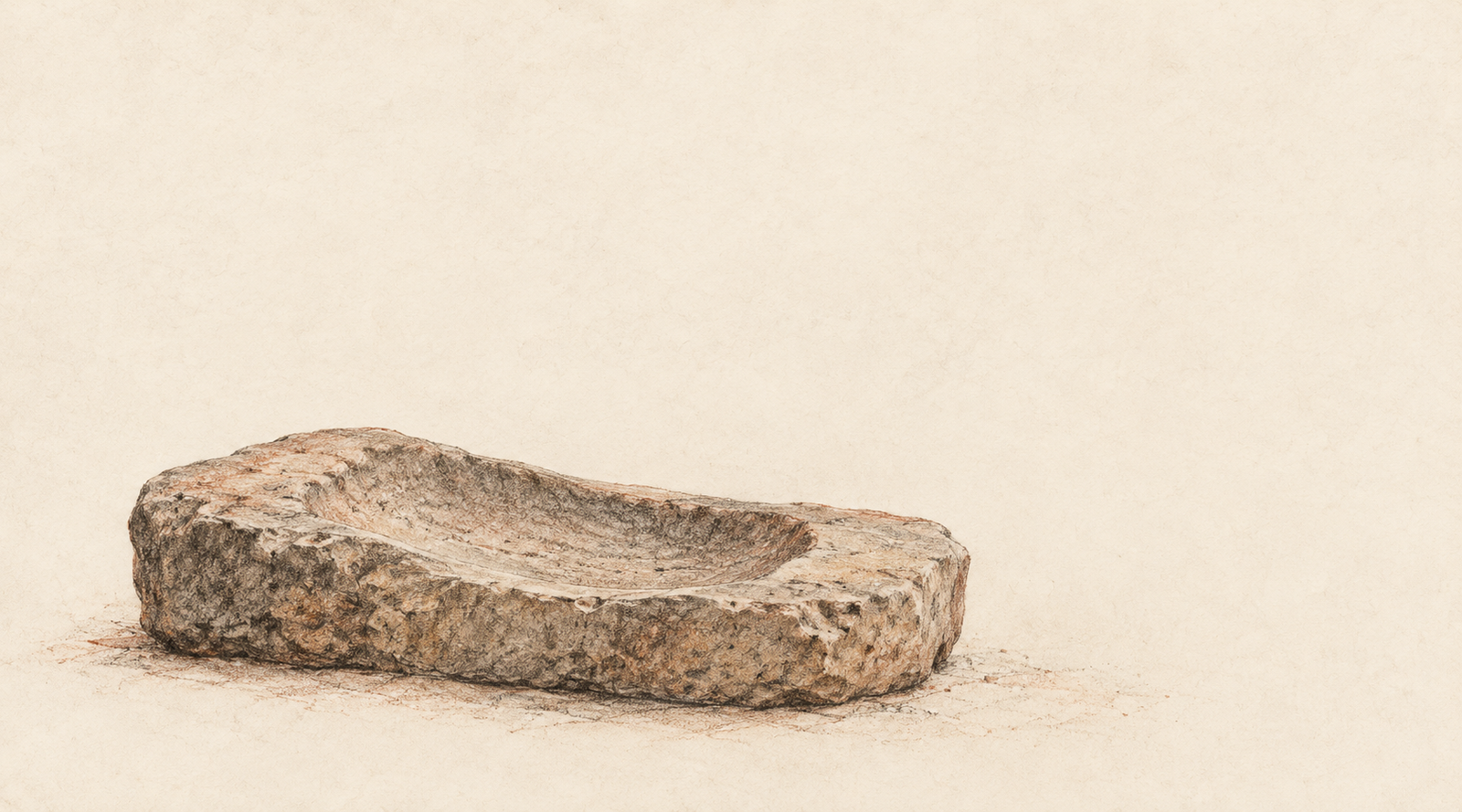
The temple we inherit is a building from which almost all necessity has been removed. Nothing must be brought for it to continue being what we call a temple. The sanctuary asks nothing of us. Stone is good at this kind of independence.
A living temple was otherwise.
Water had to come in. So did grain, cloth, oil, aromatic substances, fuel. The things required for worship arrived because someone carried them across a threshold.


Houses of Wood, Light, and Smoke
Some of Angkor’s most intimate ruins do not rise above the ground at all. They are postholes, low mounds, hearths and ponds: durable traces of a domestic city built largely from things that decay. To restore that city is to see Angkor not only as stone, but as wood, smoke, water, repair, and people living within calling distance.