
The Library gathers the written works of Lucas Varro — journals of the temples, mythic retellings, contemplative essays, poems, and volumes shaped by shadow, silence, and wonder. Here, words stand beside images as offerings: field notes from Angkor, meditations on sacred stone, old stories rekindled, and reflections carried beyond the visible world.
Within these shelves you will find many rooms: Angkor journals, myth and legend, apsara meditations, contemplative essays, poems, children’s mythic wonder, literary retellings, and quieter devotions of the page. Wander chronologically, enter by theme, or pass through one of the dedicated publication houses now gathered within the wider Library.
For those who wish to follow these paths further, several of these writings continue on Substack and in dedicated archive blogs: The Lantern Chronicles , where myth, legend, contemplative essays, poetry, and other imaginative works are carried onward; The House of Cadmus , where Greek myth and tragedy are reopened through inheritance, violence, fate, and recurrence; The Mytharium , where myth, Tolkien, fairy stories, and old literature are read and retold with seriousness; The Alexander Series , where A. M. Sharp retells Greek myths for children who want to be trusted by stories; and The Hospitable Dark , where A. M. Sharp offers literary myth retellings shaped by darkness, shelter, endurance, and return.
Library
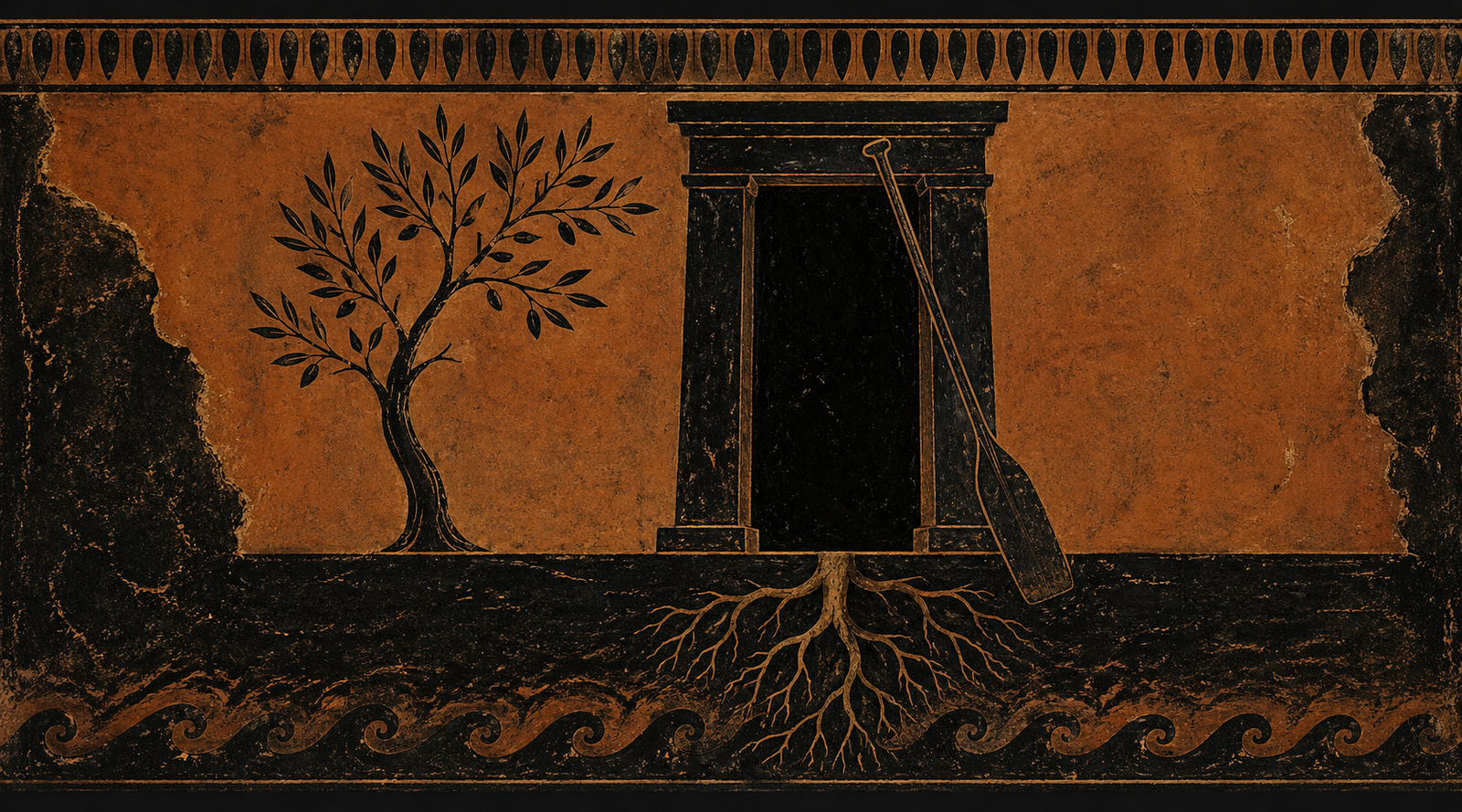

No Man Comes Home V — The Name Inside the Cave
In this fifth canto of No Man Comes Home, Odysseus enters the cave of Polyphemus with no need to be there. What follows is not only a famous Greek myth of cunning and escape, but a severe study of curiosity, leadership, hospitality, and the danger of needing one’s name to be known.

The Story Is Not Finished Yet
A Living Way essay on the old parable of fortune and misfortune: the lost horse, the returned horse, the injured son, and the wisdom of refusing to give the present a final name. This is not consolation, but a meditation on judgement, uncertainty, and the discipline of not closing life too soon.
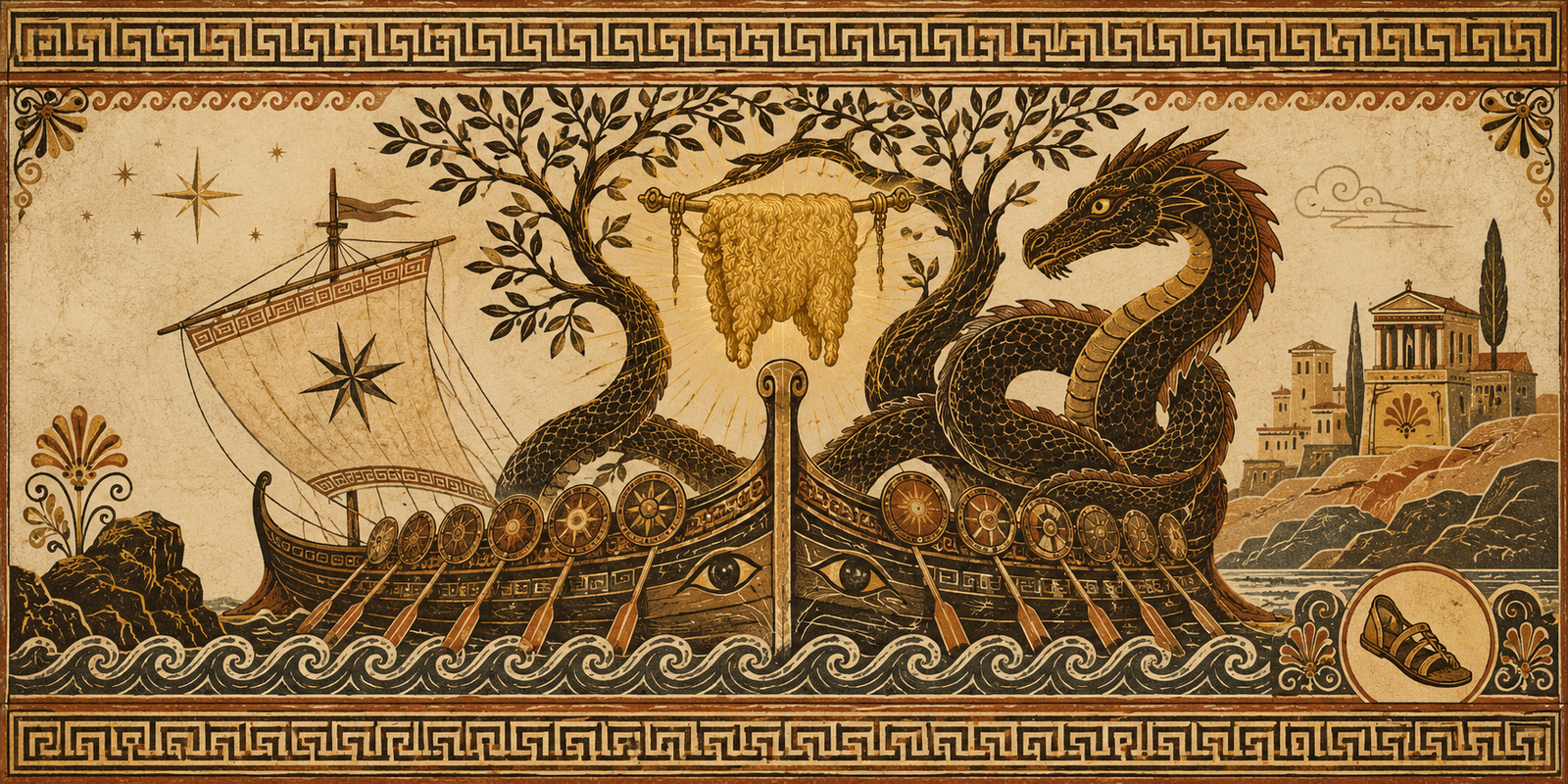

Jason and the Golden Fleece — A Greek Myth Retold for Children
A serious children’s Greek myth retelling of Jason, the Argo, Medea, the sleepless dragon, and the quest for the Golden Fleece. This excerpt opens the tale at the river, where one lost sandal becomes prophecy, danger, and the beginning of a voyage no hero can complete alone.
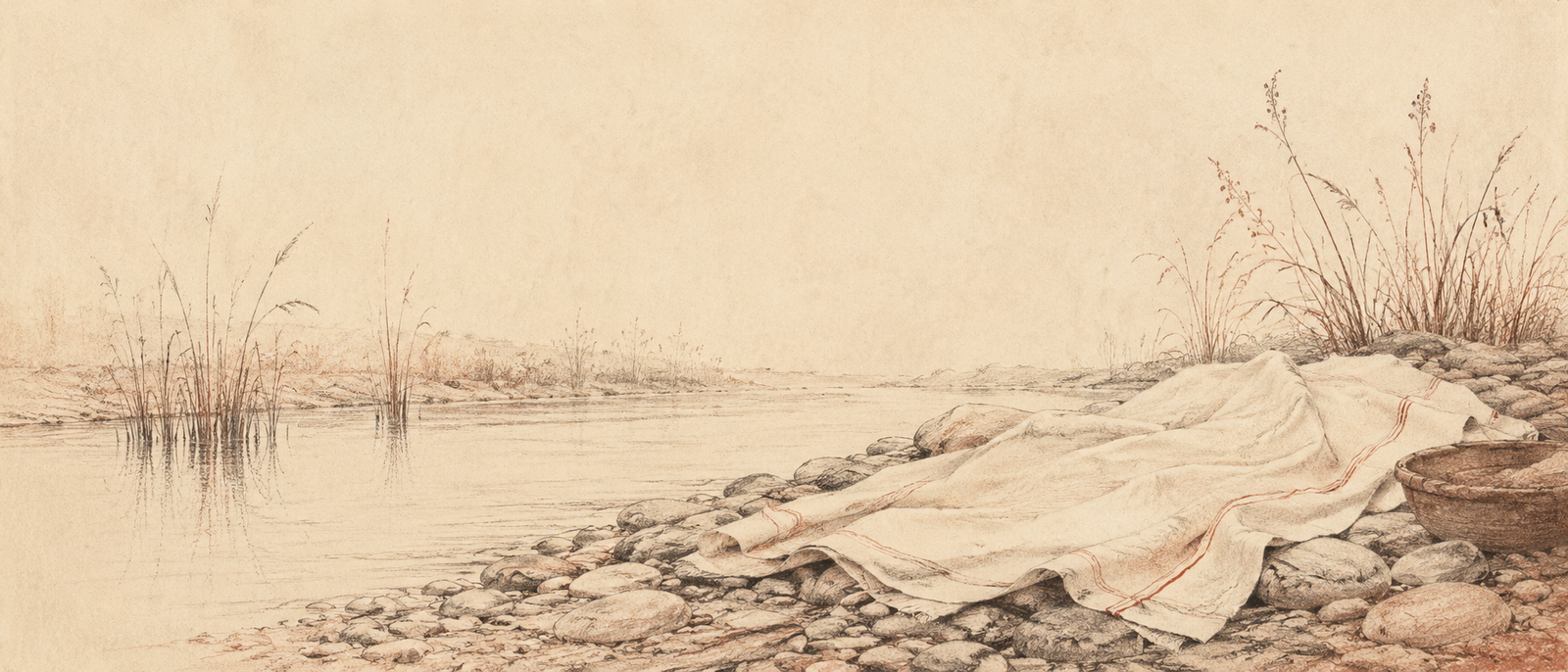

The Long Return VI — Nausicaa at the River
A literary retelling of Odyssey Book VI, where Nausicaa meets Odysseus at the river after the storm. Before the stranger has a name, rank, proof, or story, he has need — and hospitality begins there. A grave, intimate instalment from The Long Return, published at The Hospitable Dark.
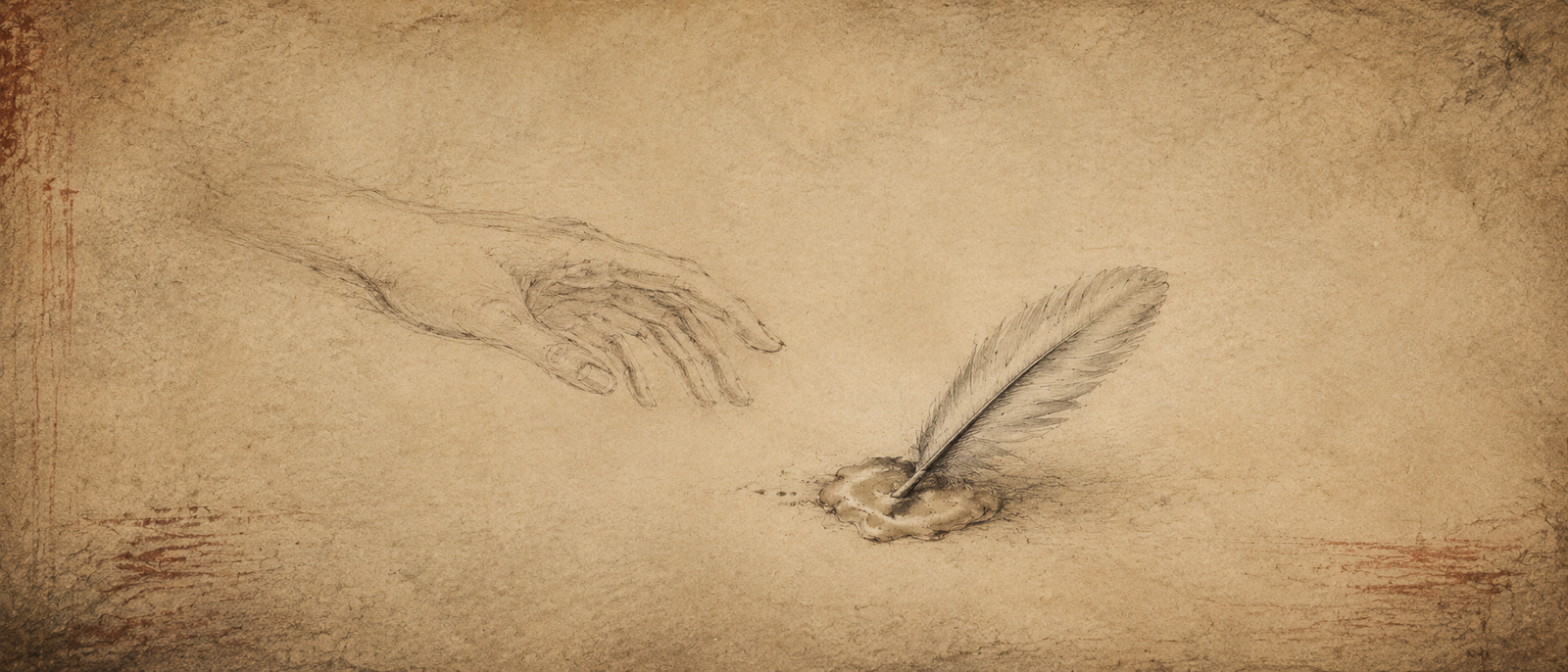

The Limit of the Father’s Hand
A companion myth essay on Icarus and Daedalus, asking why the famous story is not simply a warning against ambition. Beneath the flight and fall lies a more painful truth: a father may make freedom, give warning, and still discover the limit of his hand.

The Consolation of Not Being Separate
There are moments when the world refuses to become personal. The rain falls on the day you needed sun. The illness does not pause because someone is loved. The sea does not soften because a child is afraid. And when the thing prayed against happens anyway, it can feel as if the world has abandoned us. But perhaps what has failed is not the world’s care. Perhaps what has failed is our idea of care.
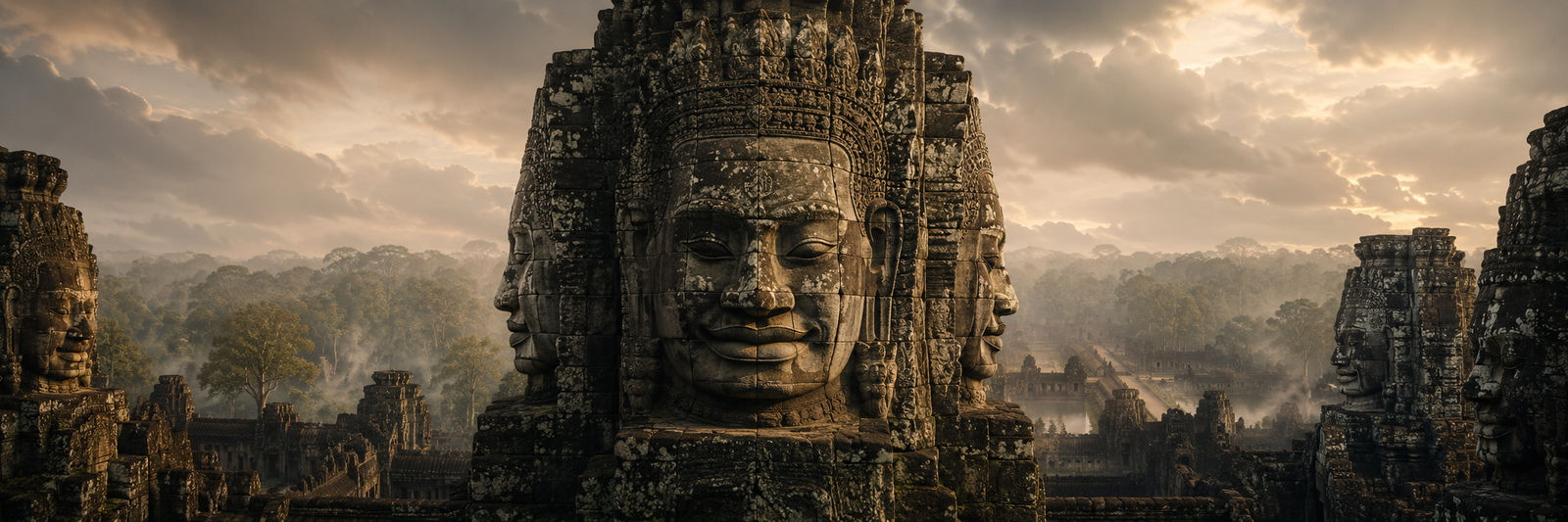

The Face That Looks Four Ways
The faces of the Bayon have been called Brahma, Lokeshvara, Jayavarman VII, and Vajrasattva. This essay examines the evidence behind each theory and argues that their deepest meaning may lie in a royal-Buddhist synthesis: compassion given the scale of empire.
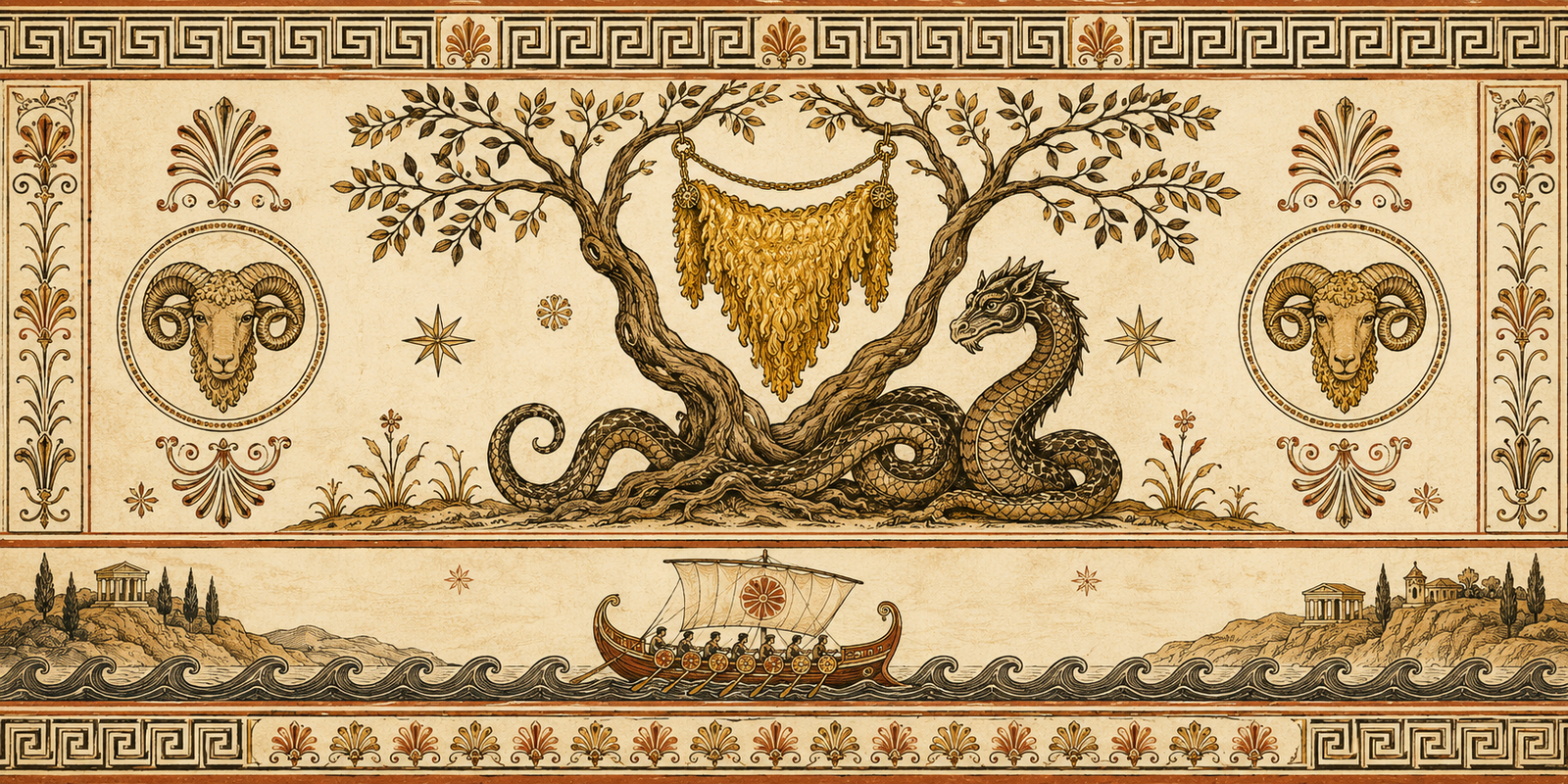

The Golden Fleece — The Bright Object That Begins Jason’s Quest
Before Jason sails for Colchis, there is the Golden Fleece: the bright remainder of an older rescue, kept in a far country, guarded by a dragon, and powerful enough to call a ship across the sea.
This excerpt from The Alexander Series: The Greek World introduces young readers to the golden ram, Phrixus and Helle, Colchis, the sacred tree, and the mythic object at the centre of Jason’s quest.
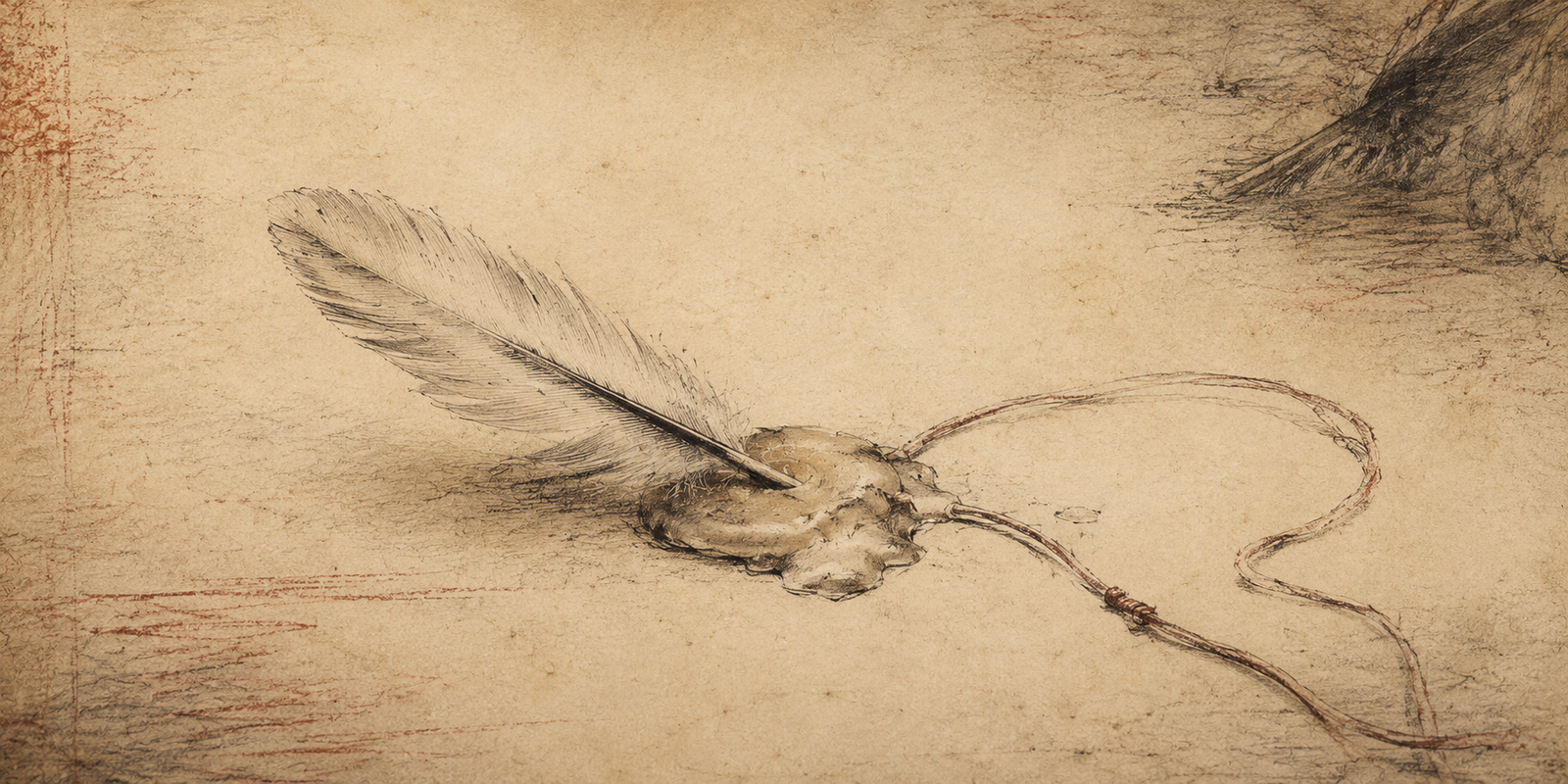

Daedalus and Icarus — The Wax Beneath the Sun
A warm, grave Greek myth retelling of Daedalus and Icarus, beginning not in the sky but in the lamplit room where a father prepares wings from feathers and wax while his child watches too closely. A tale of craft, captivity, warning, flight, and the limit of paternal care.
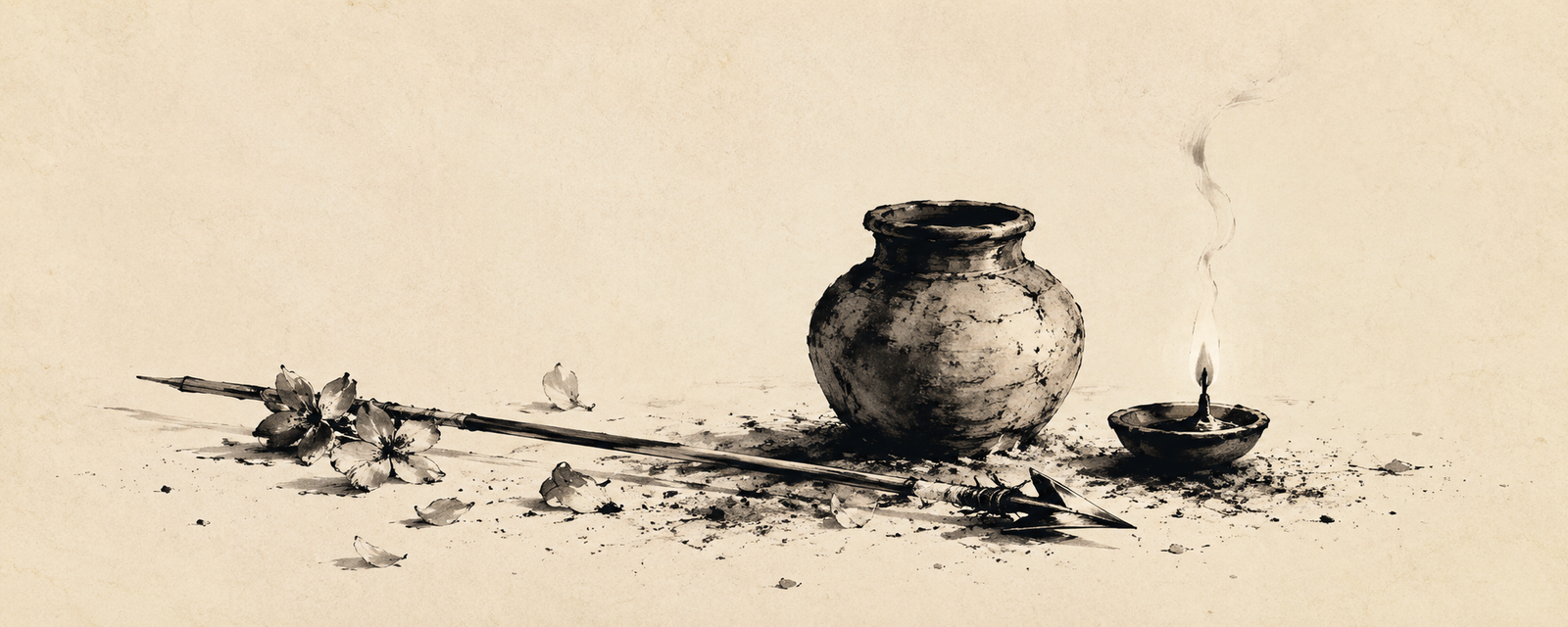

Fires of the Old World XVIII — Desire Turned to Ash
A hearthlit retelling of Shiva, Kama, Rati, and Parvati: desire comes to the mountain with a flower-arrow, and Shiva answers with fire. This excerpt opens the tale in the quiet room of a grandmother and child, before moving to the cold slopes where longing, ash, and spring wait to meet.
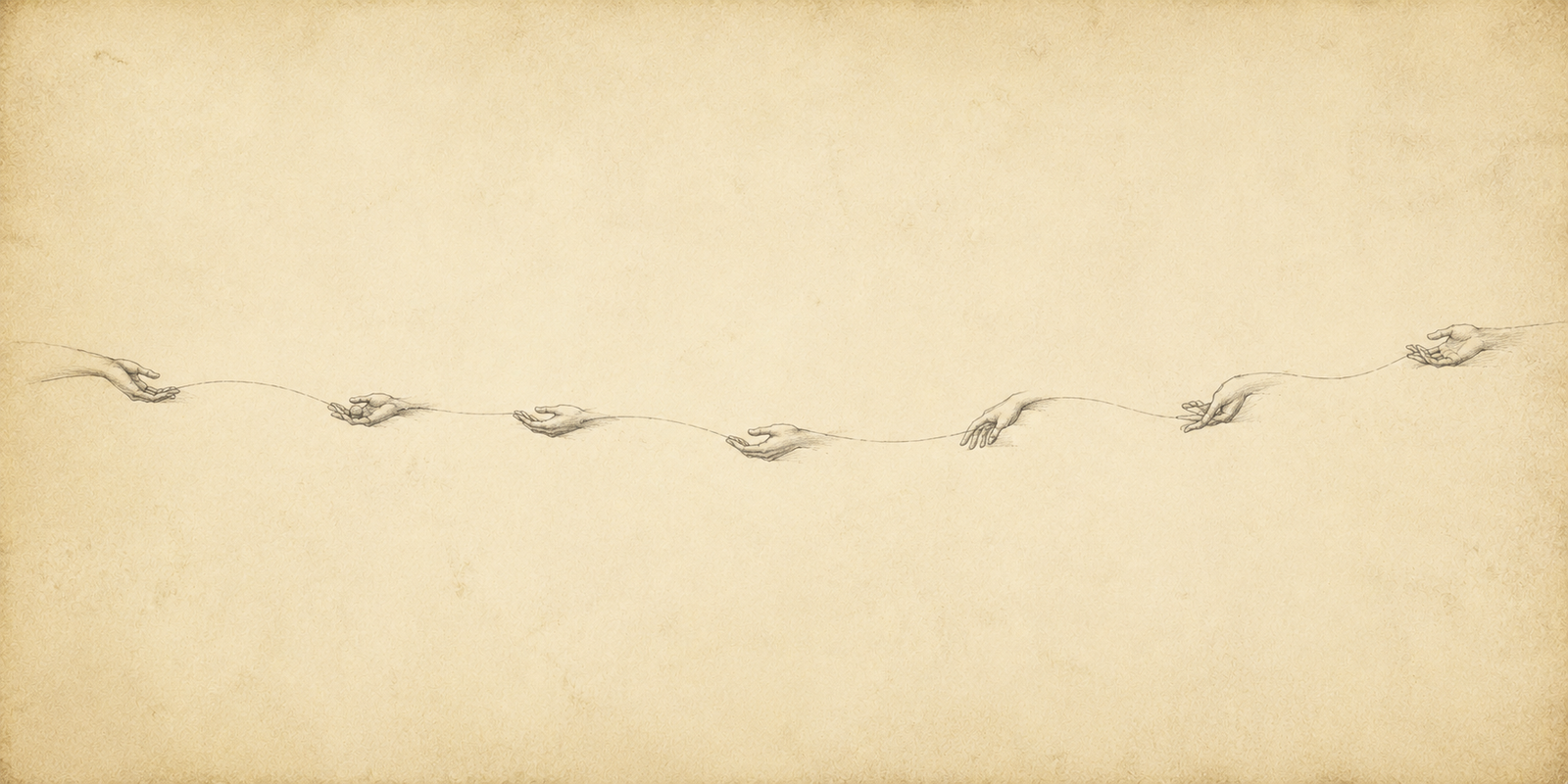

The Kindness That Continues
A Living Way companion essay on everyday kindness, altruism, and the moral temperature of ordinary encounters. This piece asks why one act of kindness is never enough, yet still may alter the next human moment — not by replacing justice, but by teaching justice how to remain human.
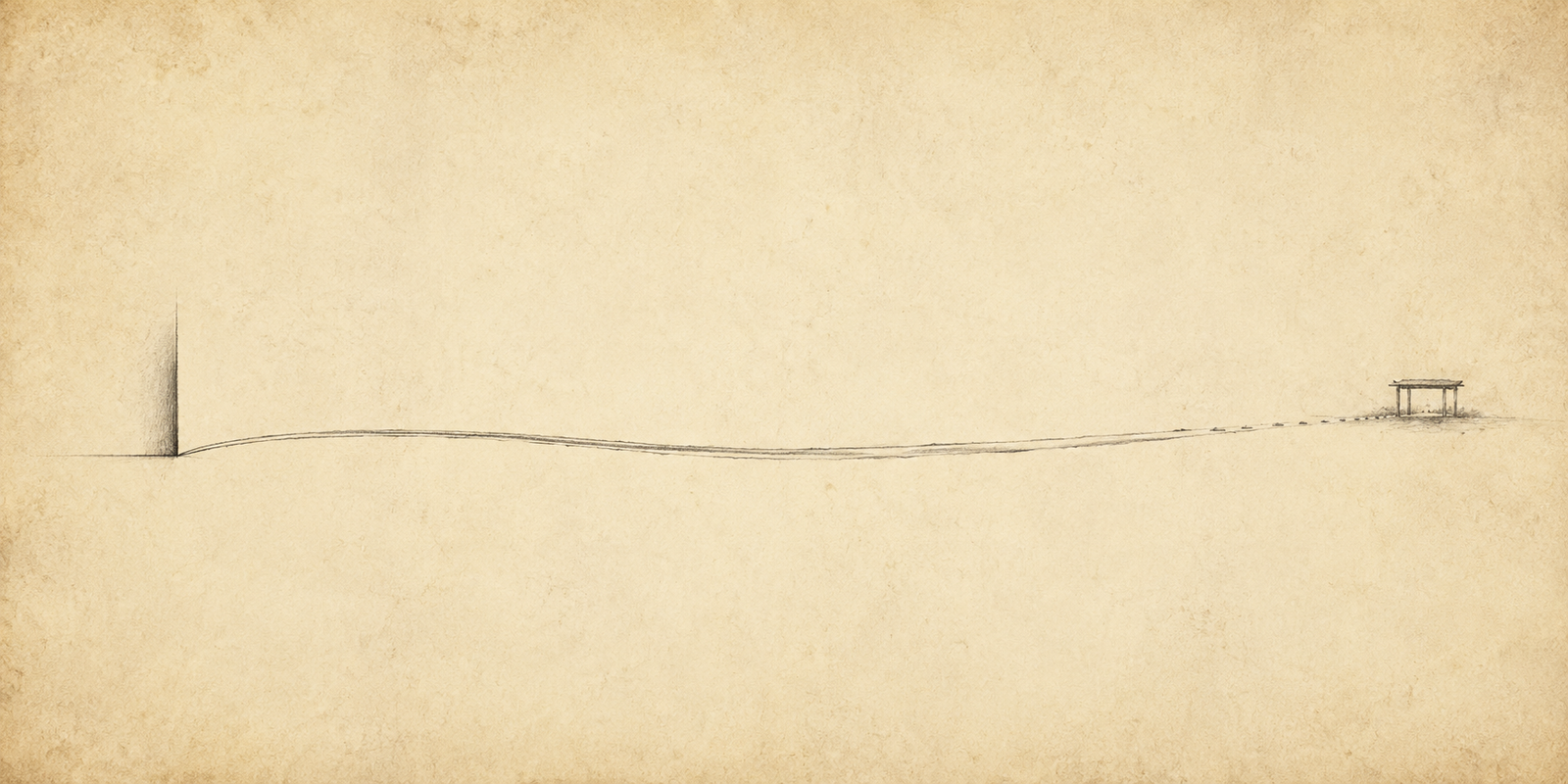

The Society That Does Not Turn Away
A Living Way essay on hospitality, refuge, immigration, and the moral architecture of civilisation. Beginning with the image of the door, this piece asks what a society reveals about itself when the vulnerable arrive before its systems, and whether mercy can become durable enough to be built into the road.
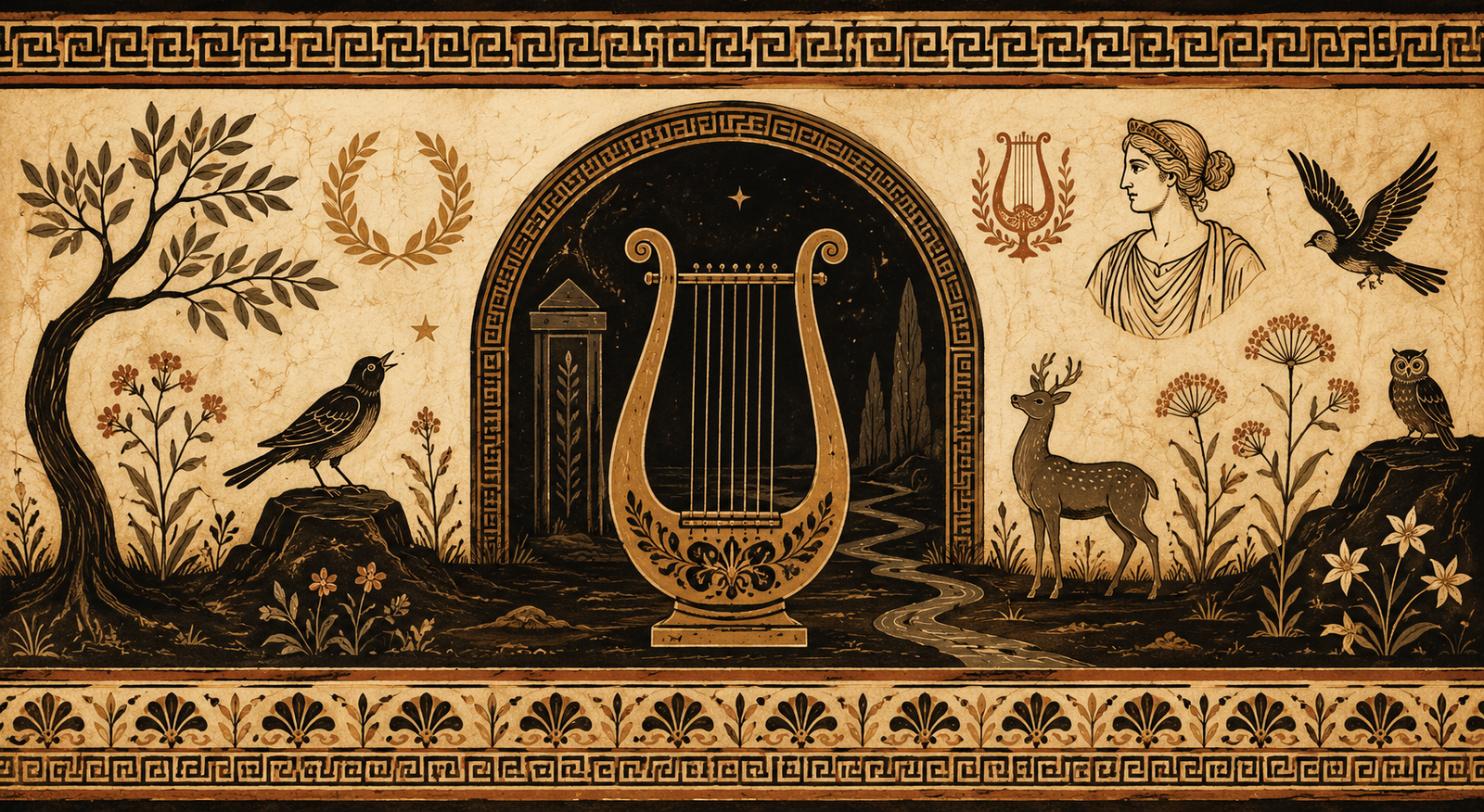

Orpheus’ Lyre — The Song That Made the Dark Listen
A child-readable Greek myth guide to Orpheus’ lyre: the small instrument that carried song, grief, memory, Apollo, the Muses, and love down to the gates of the Underworld. This excerpt opens the question of what kind of power song has in Greek myth — and where even that power reaches its limit.

Why Calypso Cannot Be Home
A Reader’s Guide to Calypso, Odysseus, immortality, exile, and the mortal meaning of home. This essay asks why safety, beauty, and endless life cannot satisfy the longing at the heart of Homer’s Odyssey — because home is not merely where the body is preserved, but where a life remains answerable.

No Man Comes Home IV — The Stranger Washed Ashore
Odysseus has survived the sea, but survival is not yet return. Washed ashore on Scheria, naked and nameless, he must enter the human world again through restraint, supplication, Nausicaa’s courage, and the dangerous mercy of a house that does not yet know whom it has received.
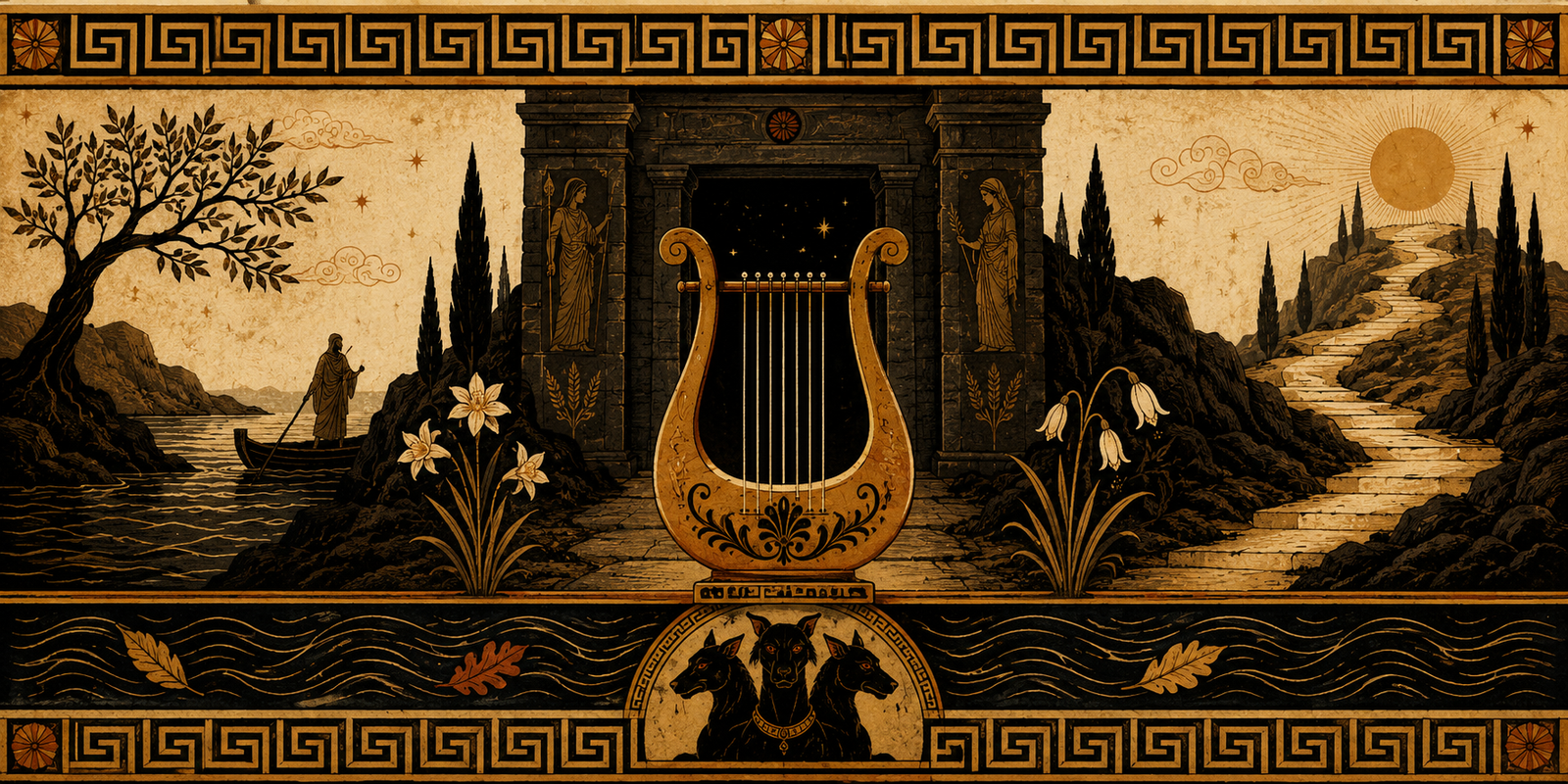

Orpheus and the Underworld — A Greek Myth Retold for Children
A serious children’s Greek myth retelling of Orpheus and Eurydice: music, love, the lyre, and the road into the Underworld. This excerpt opens the tale before Orpheus begins his descent, preserving the wonder, warmth, and danger of The Alexander Series without giving away the full journey below.
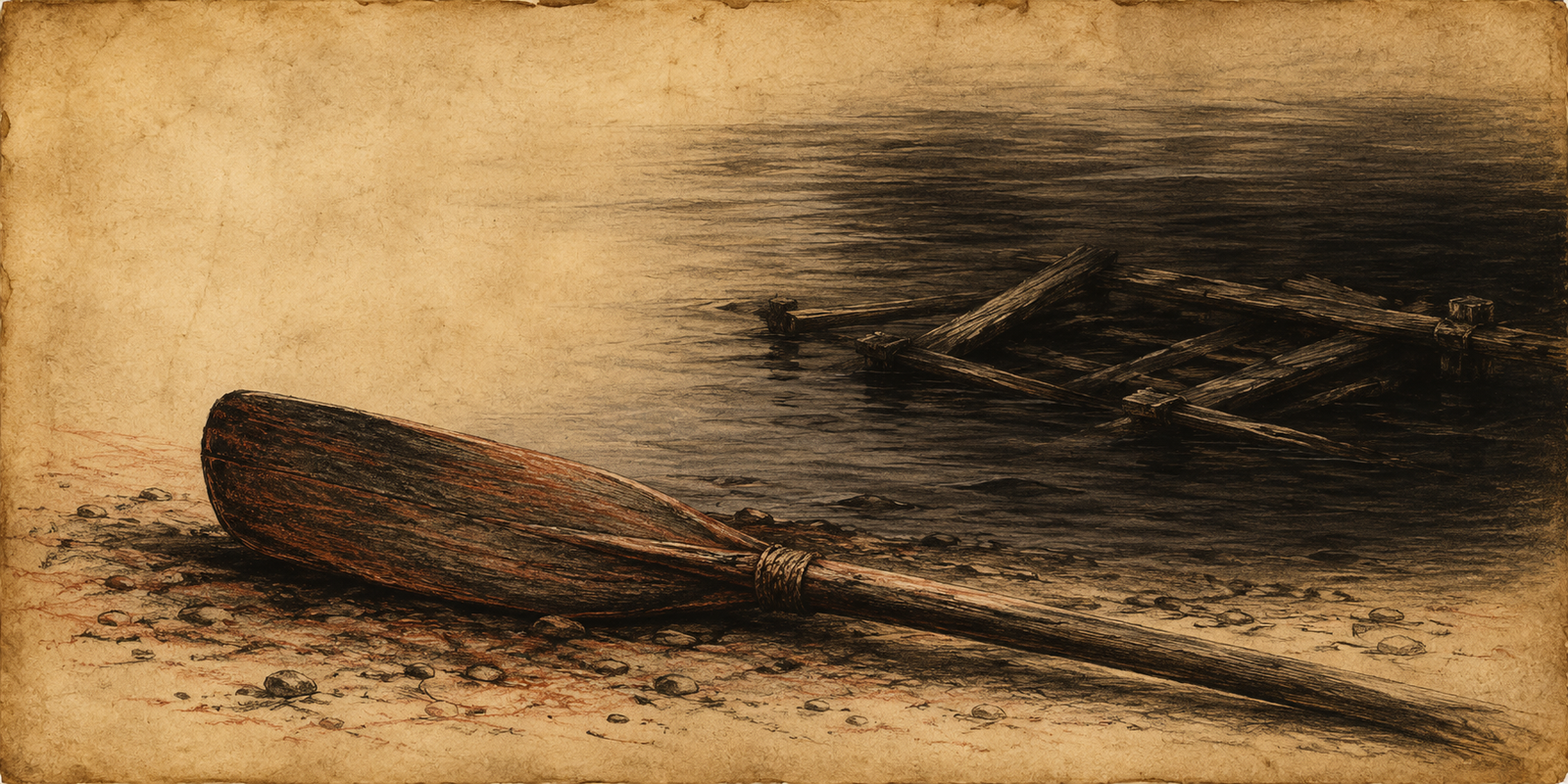

The Long Return V — From the Goddess to the Storm
In this fifth instalment of The Long Return, Odysseus leaves Calypso’s island and chooses the mortal danger of the sea over divine safety. A grave retelling of Odyssey Book V, where immortality is refused, a raft is built, and return begins again through storm.
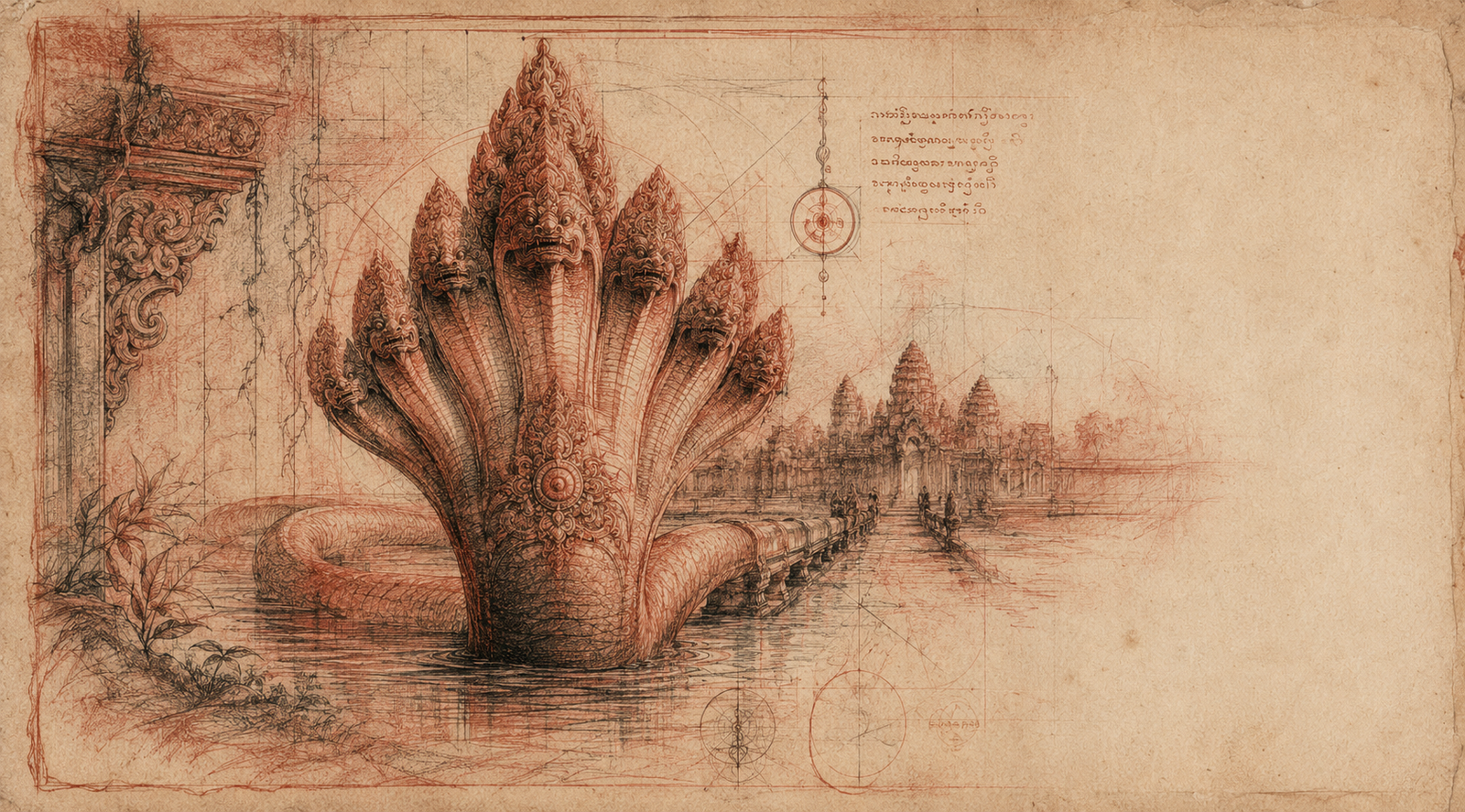

The Serpent Beneath the Kingdom
The Naga is one of the oldest truths Angkor kept in stone. It rises from balustrades, frames thresholds, shelters the Buddha, coils beneath Vishnu, and becomes the rope by which gods and demons churn the ocean of immortality. To understand the Naga is to understand that Angkor’s sacred imagination does not only rise. It descends.
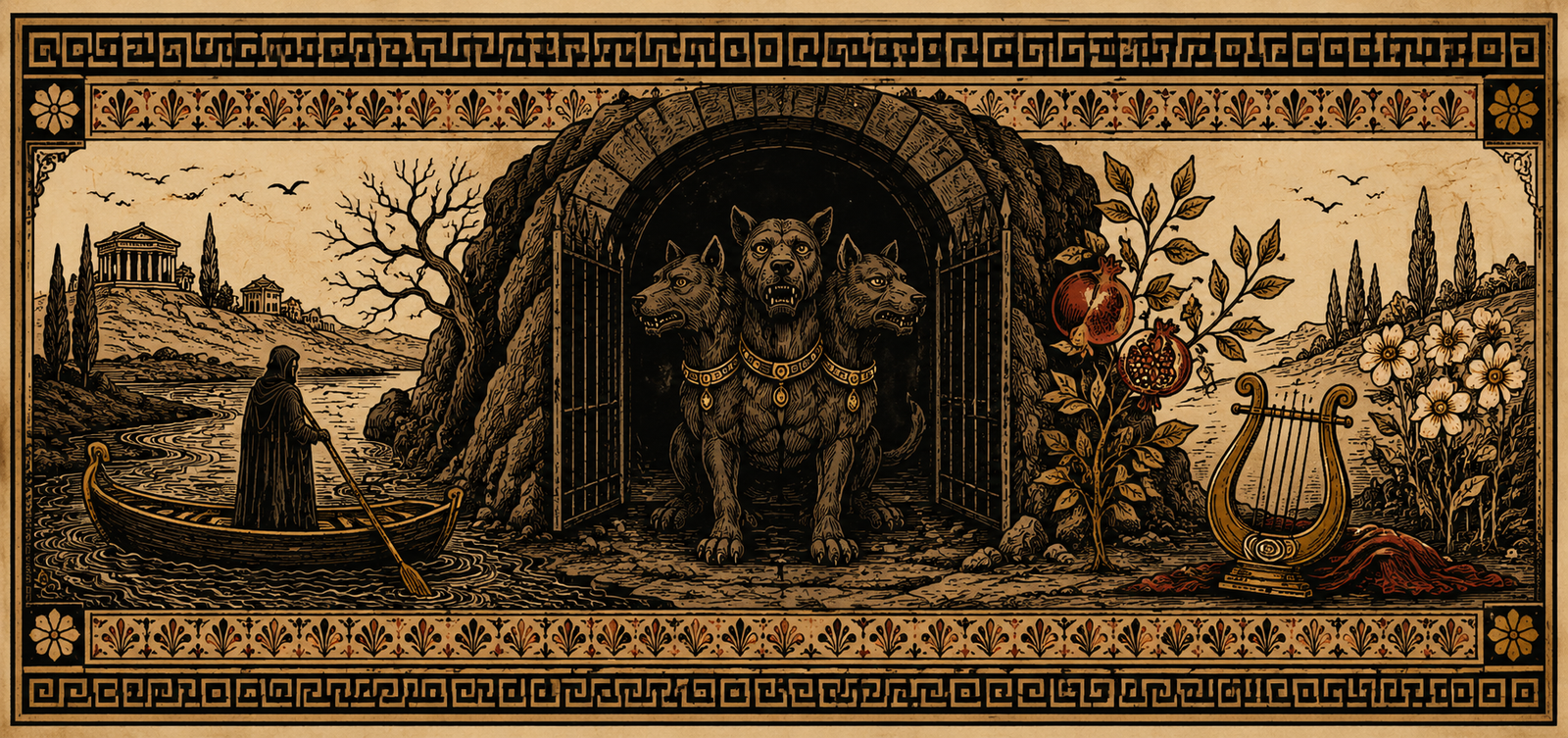

The Underworld — A Greek Myth Guide for Children
Before Orpheus descends, a child should know that the Greek Underworld is not simply a dark place. It is a kingdom beneath the earth: ruled by Hades and Persephone, guarded by Cerberus, crossed by rivers, and almost impossible to leave. A Greek myth guide from The Alexander Series.
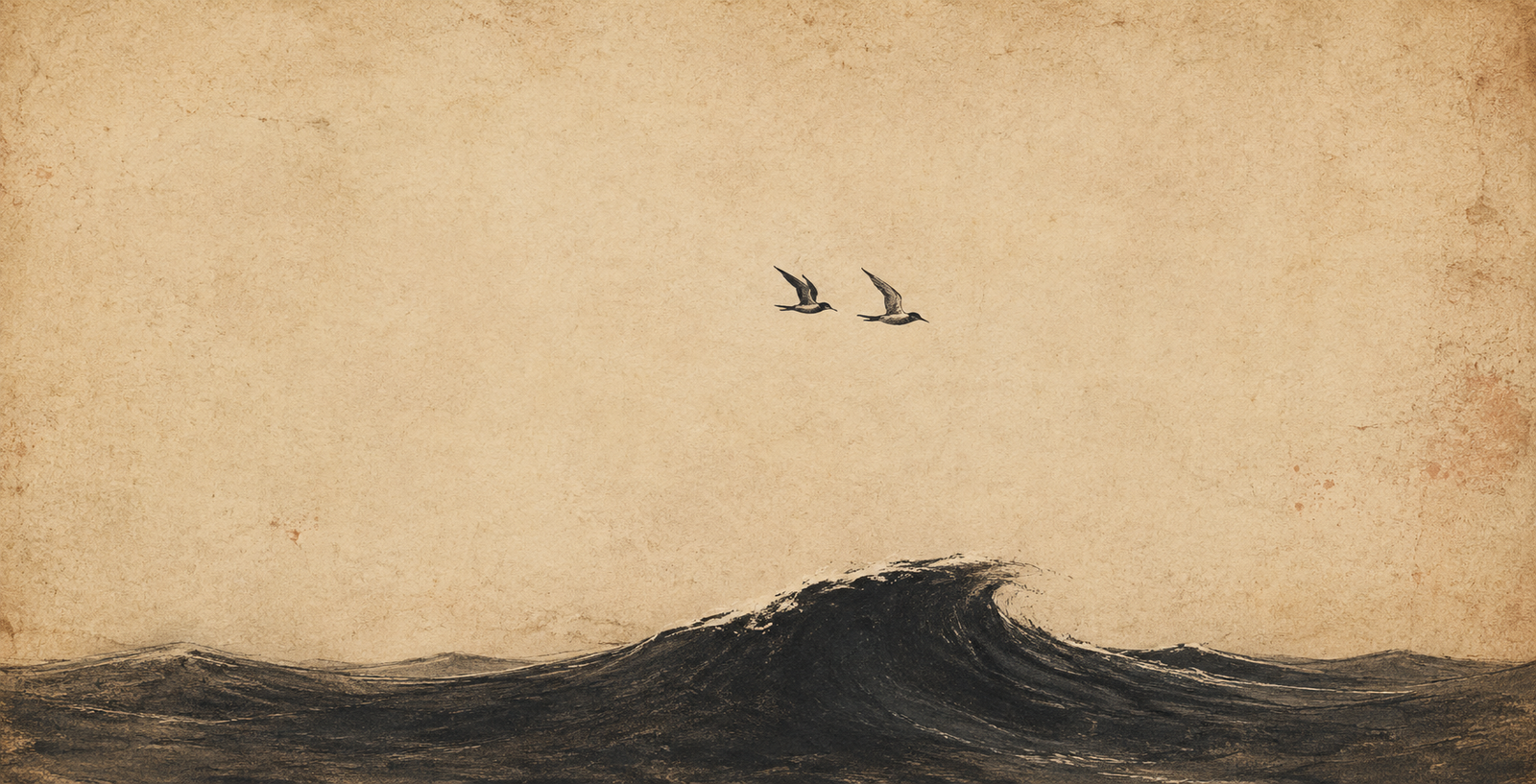

Alcyone and Ceyx — The Birds After the Storm
A warm, grave retelling of Alcyone and Ceyx: a Greek myth of marriage, sea-dread, dream, mourning, and transformation, where love cannot prevent loss, but grief is given wings.
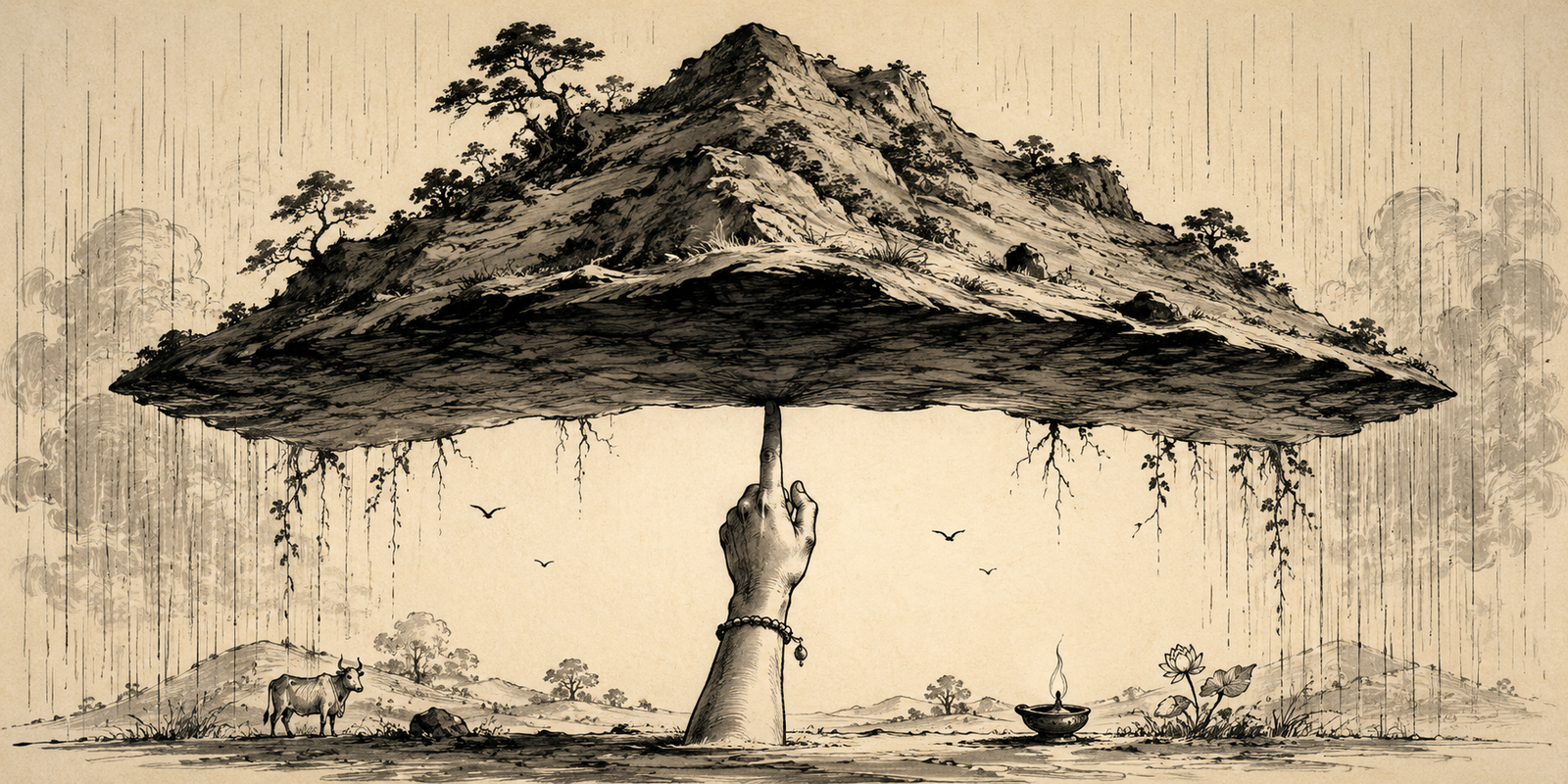

The Lifted Mountain — A Krishna and Govardhana Retelling
A hearthlit retelling of Krishna and Govardhana: rain becomes punishment, a mountain becomes shelter, and a village learns what it means to stand beneath a hand held steady. Fires of the Old World XVII — The Lifted Mountain continues the sacred mythic cycle with tenderness, danger, and old-world wonder.
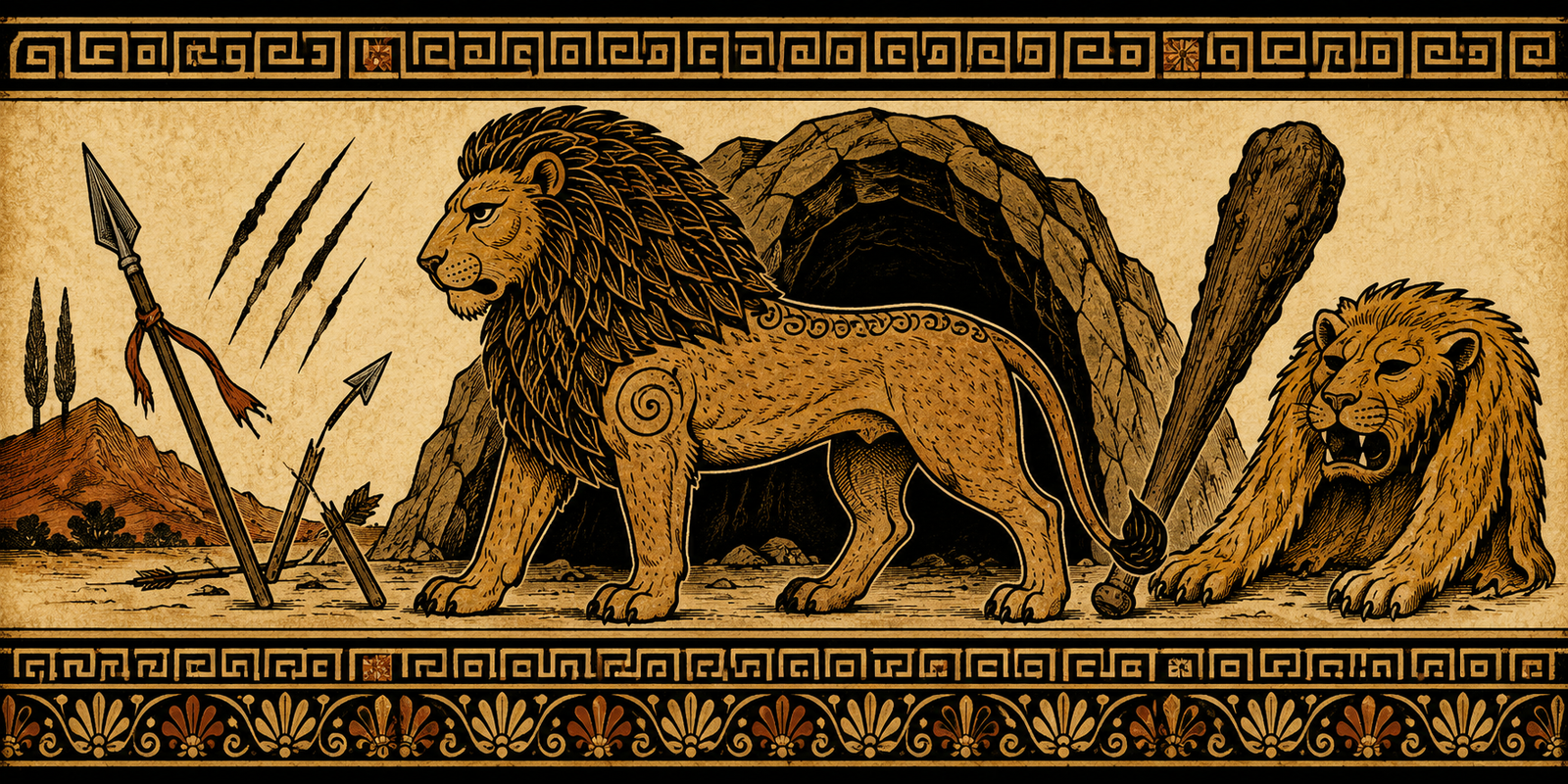

The Nemean Lion
A child-readable Greek World guide to the Nemean Lion: the monster no weapon could pierce, the cave where Heracles had to come close, and the lion skin that became his first great sign.
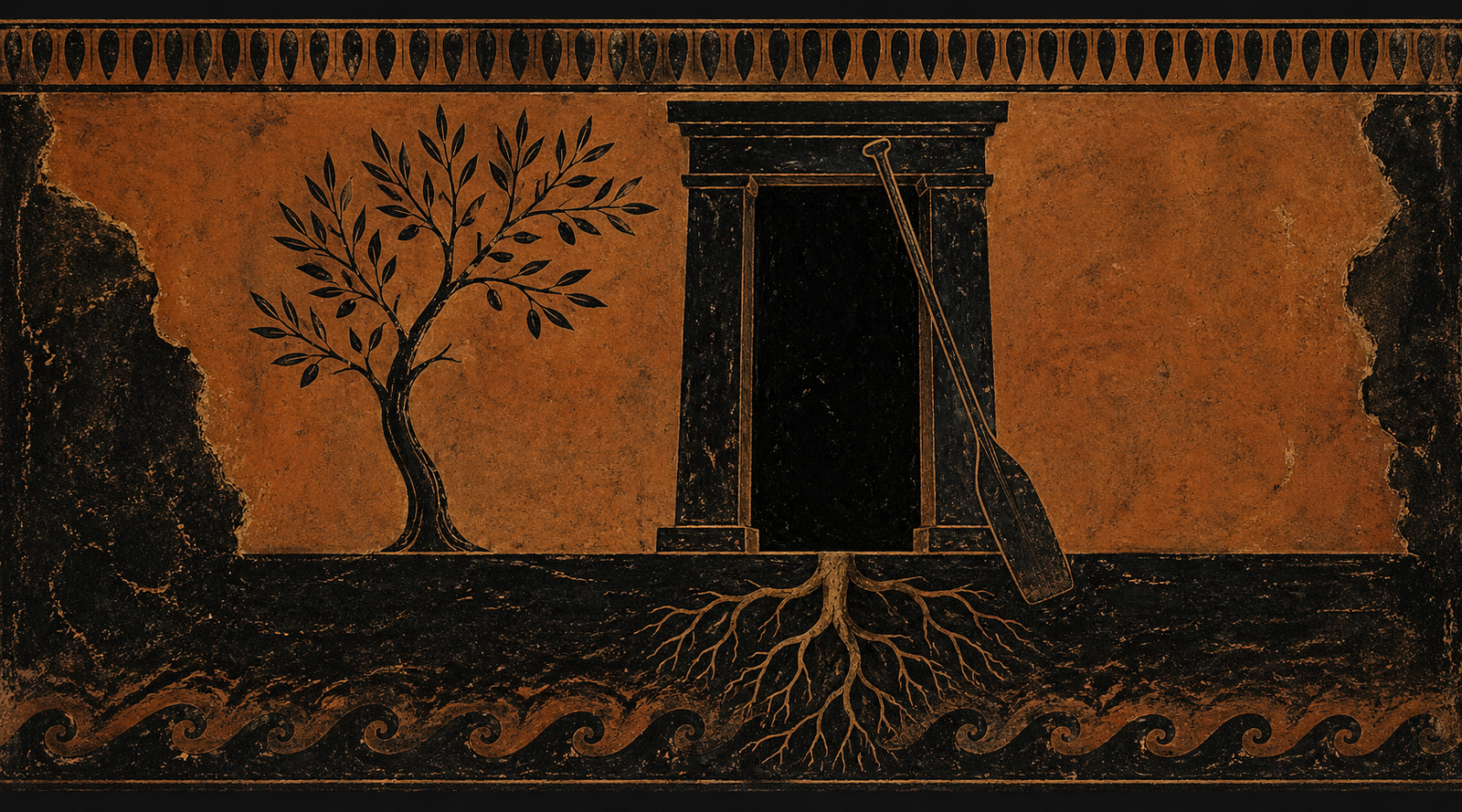

No Man Comes Home III — The Island of the Kept Man
Calypso’s island saves Odysseus, then begins to steal him. In the third canto of No Man Comes Home, immortality is not offered as thunder or command, but as tenderness becoming law. To return, Odysseus must choose mortality, consequence, and the road that may kill him.
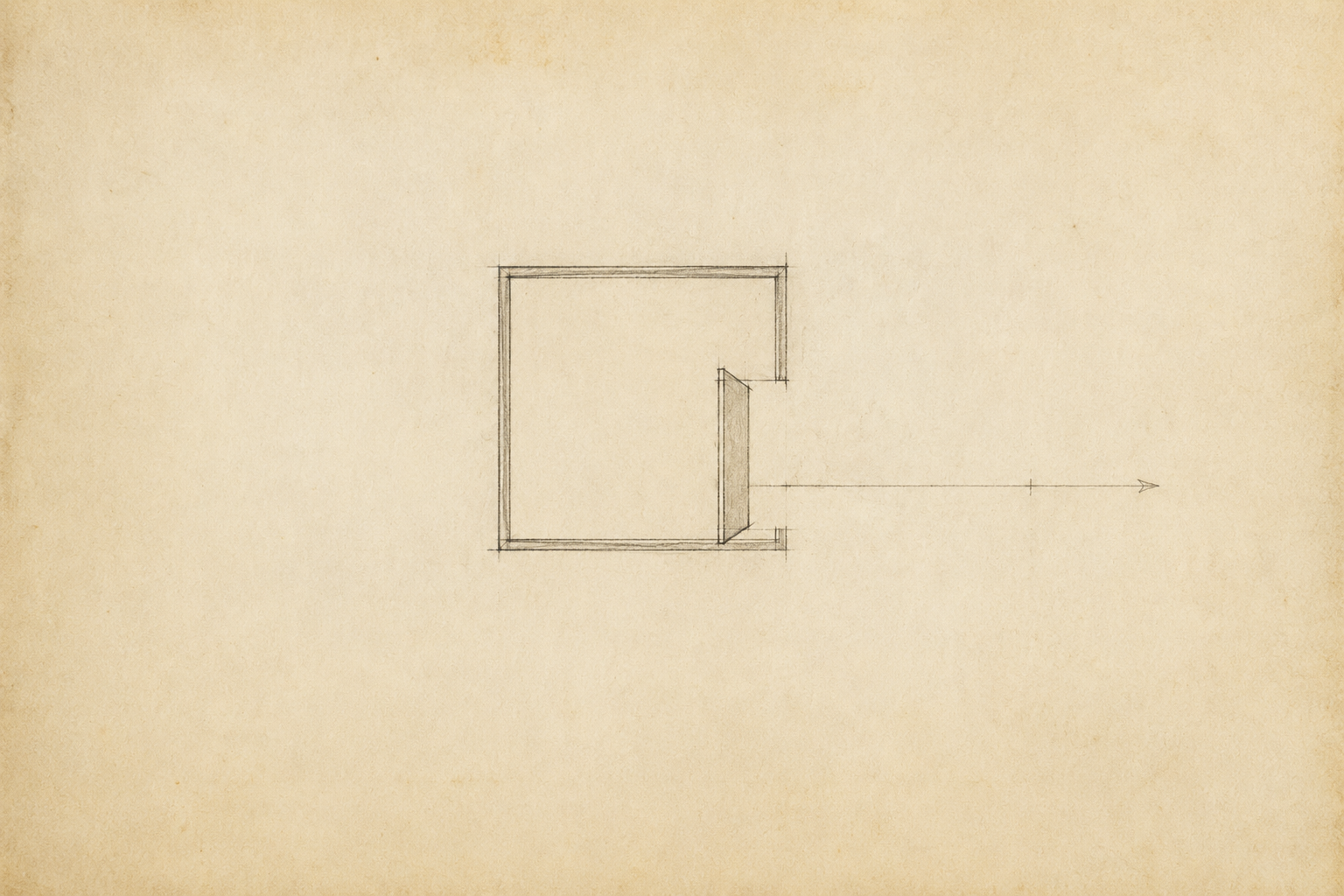

The Difference Between a Concept and a Door
A Living Way essay on sacred language, attention, and self-deception. Moving through God, Brahman, Plotinus, Hindu form, Krishnamurti, and the image of the hut, this piece asks whether our highest words clarify reality — or become beautiful furniture for the defended self.
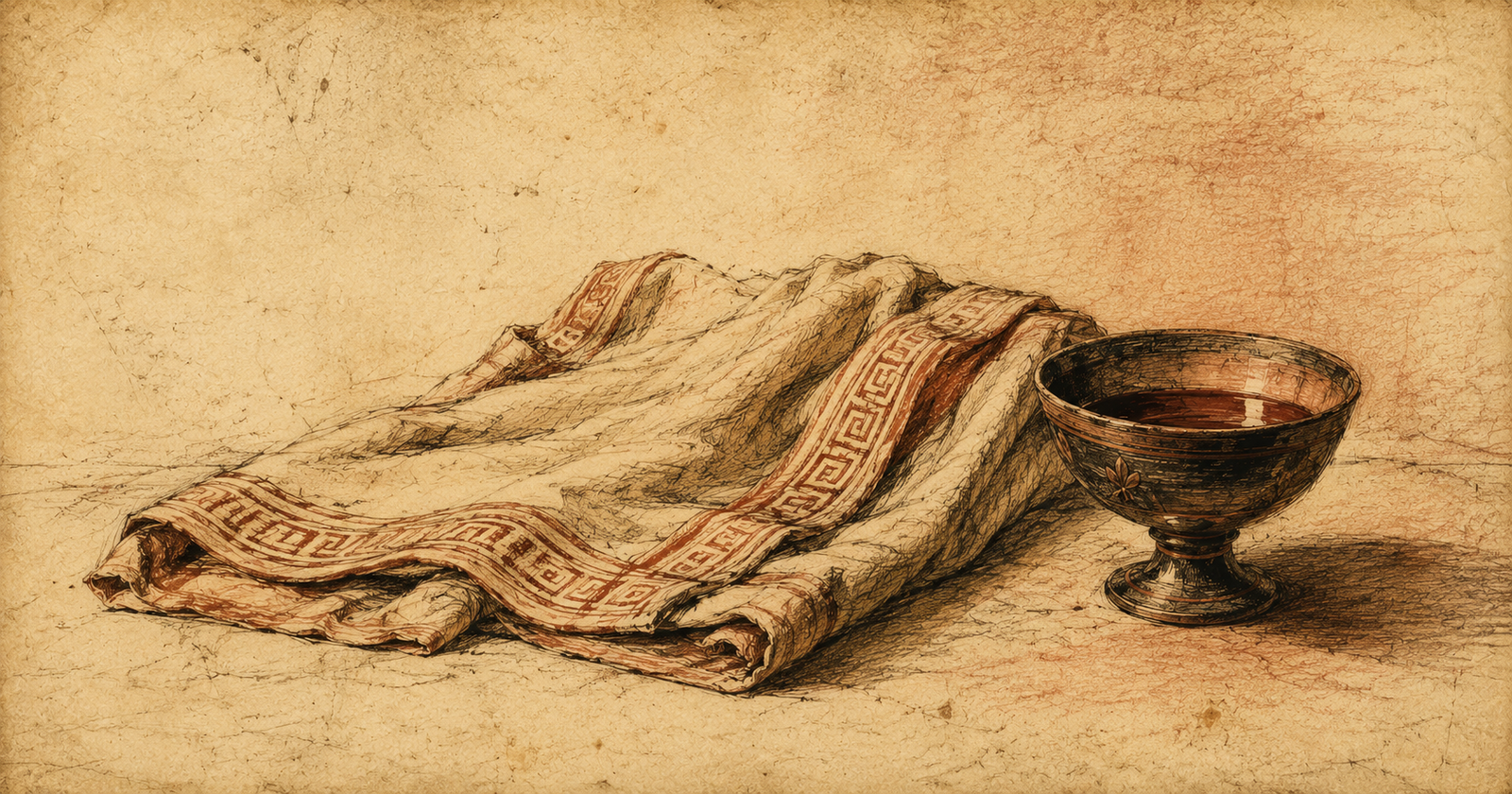

What War Leaves Behind in Beautiful Rooms
A Long Return reader’s guide to Helen, Menelaus, Telemachus, and the polished aftermath of Troy. This essay explores why Sparta’s beautiful rooms are so unsettling in Homer’s Odyssey, and how war leaves behind not only ruins, but ceremony, composure, competing memories, and grief made habitable.
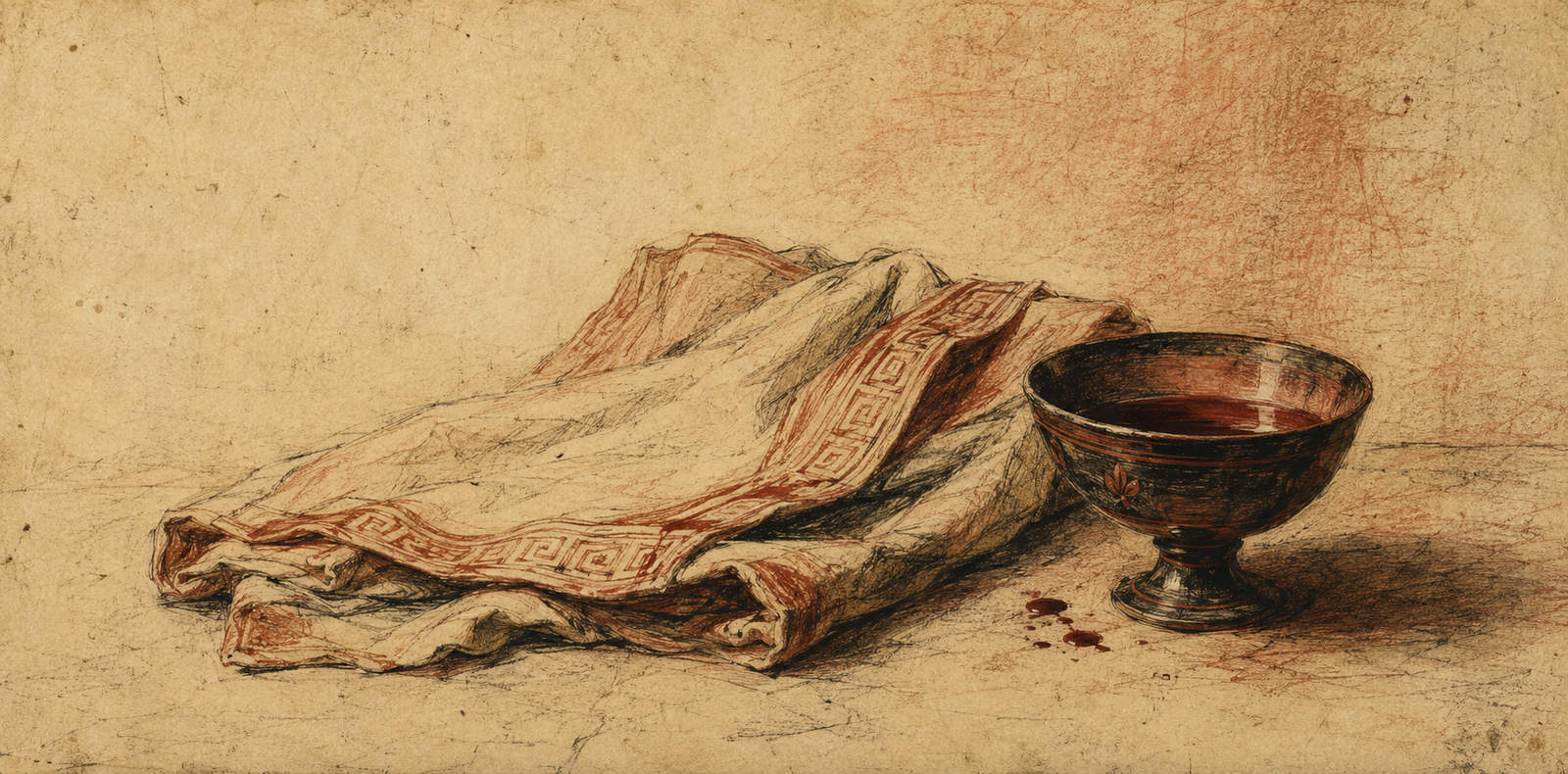

The Long Return IV — Helen, Menelaus, and the Sea-God’s Word
In this fourth instalment of The Long Return, Telemachus enters the beautiful house of Menelaus and Helen, where hospitality, grief, fame, and memory gather uneasily around the absent Odysseus. A grave Odyssey retelling about what war leaves behind, and how a son learns that a famous father becomes harder to know.
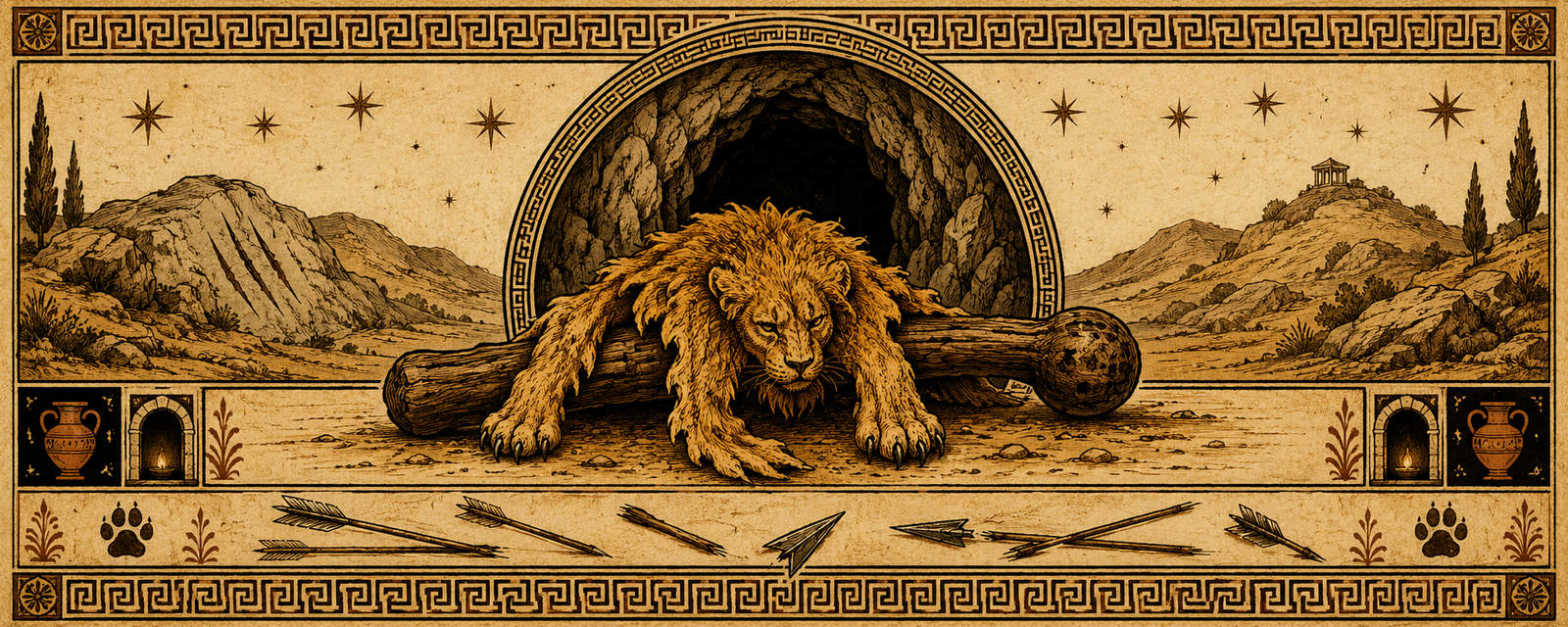

Heracles and the Lion
A serious children’s Greek myth retelling of Heracles and the Nemean Lion: a valley closing its doors before sunset, a monster no weapon can harm, and a hero who must learn what strength becomes when the cave is waiting.
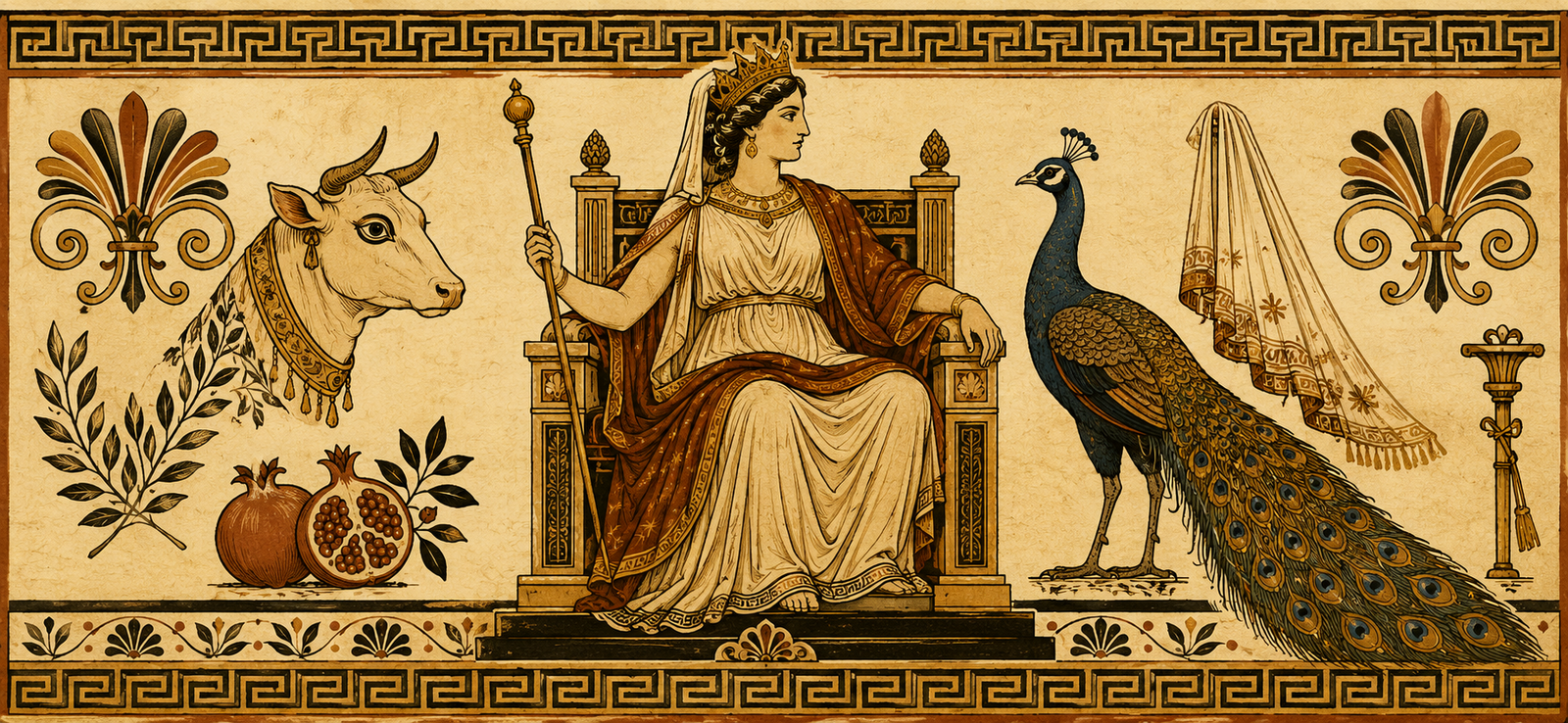

Hera — Queen of Olympus and the Pressure Behind Heracles
Before Heracles faces the lion, a child should know Hera: queen of Olympus, guardian of marriage, throne, sceptre, veil, and wounded honour. This Greek World entry introduces Hera not merely as a villain in Heracles’ story, but as the divine pressure that makes his strength matter.
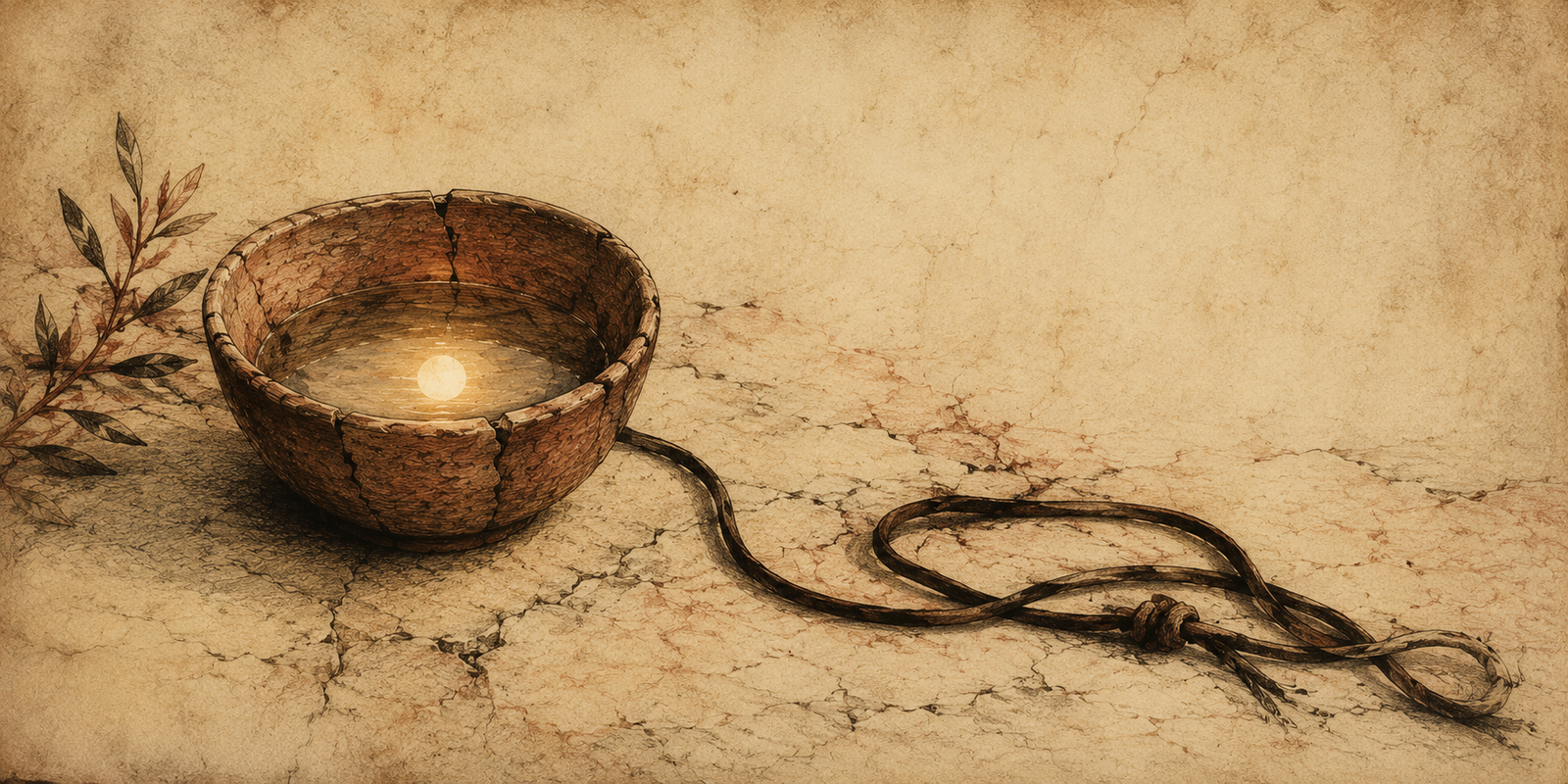

The Danger of Being Proved Right
A companion essay to Phaethon — The Borrowed Sun, exploring proof, shame, paternal love, and the danger of being publicly vindicated too late. This Hospitable Dark myth essay looks beyond the simple warning against ambition and asks why Phaethon needed the sky to answer a wound.
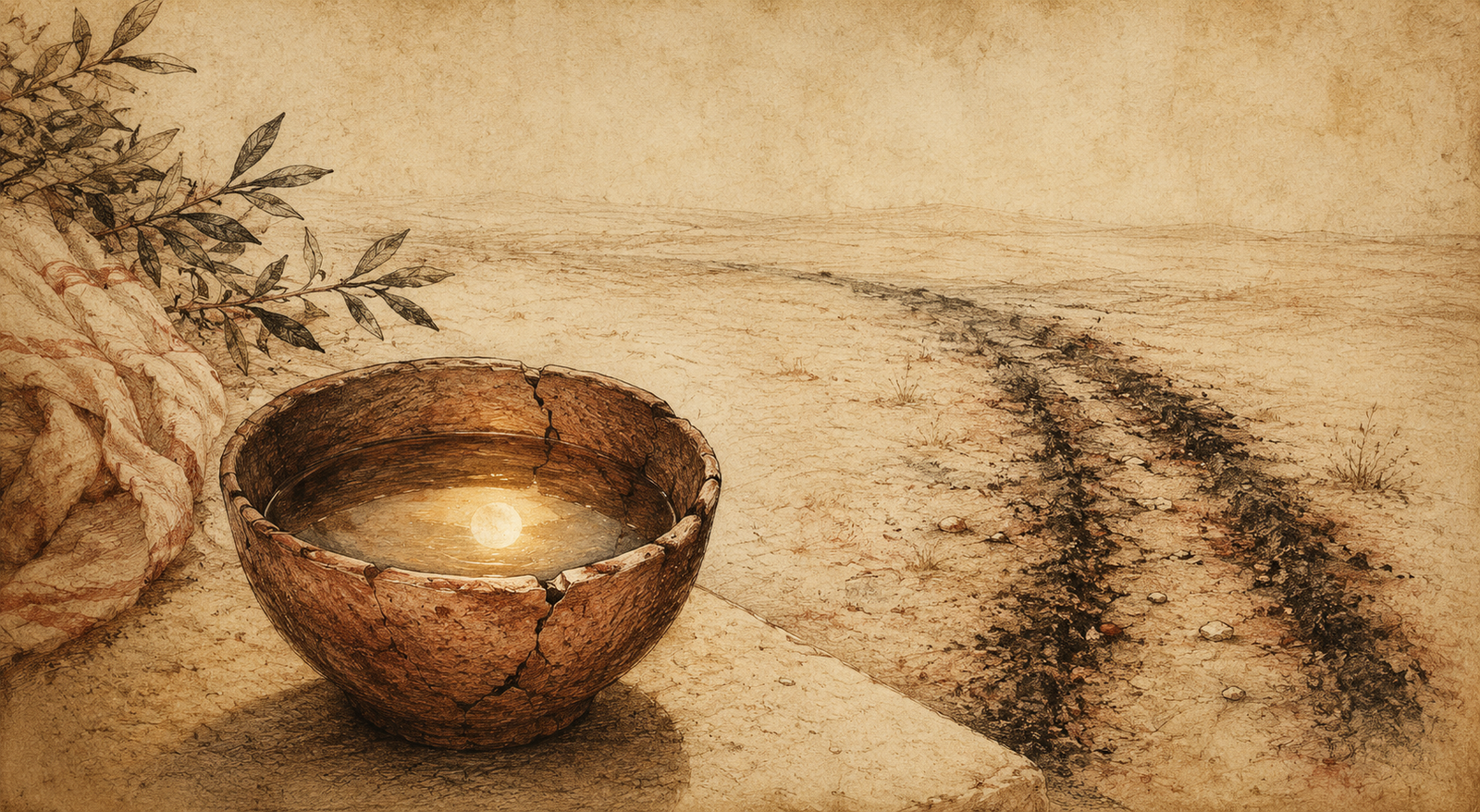

Phaethon — The Borrowed Sun
A warm, grave retelling of the Greek myth of Phaethon, where a boy’s wounded need for proof leads him from his mother’s courtyard to the chariot of the Sun. In The Borrowed Sun, catastrophe begins not with ambition, but with doubt, shame, and a father’s love given in the wrong shape.
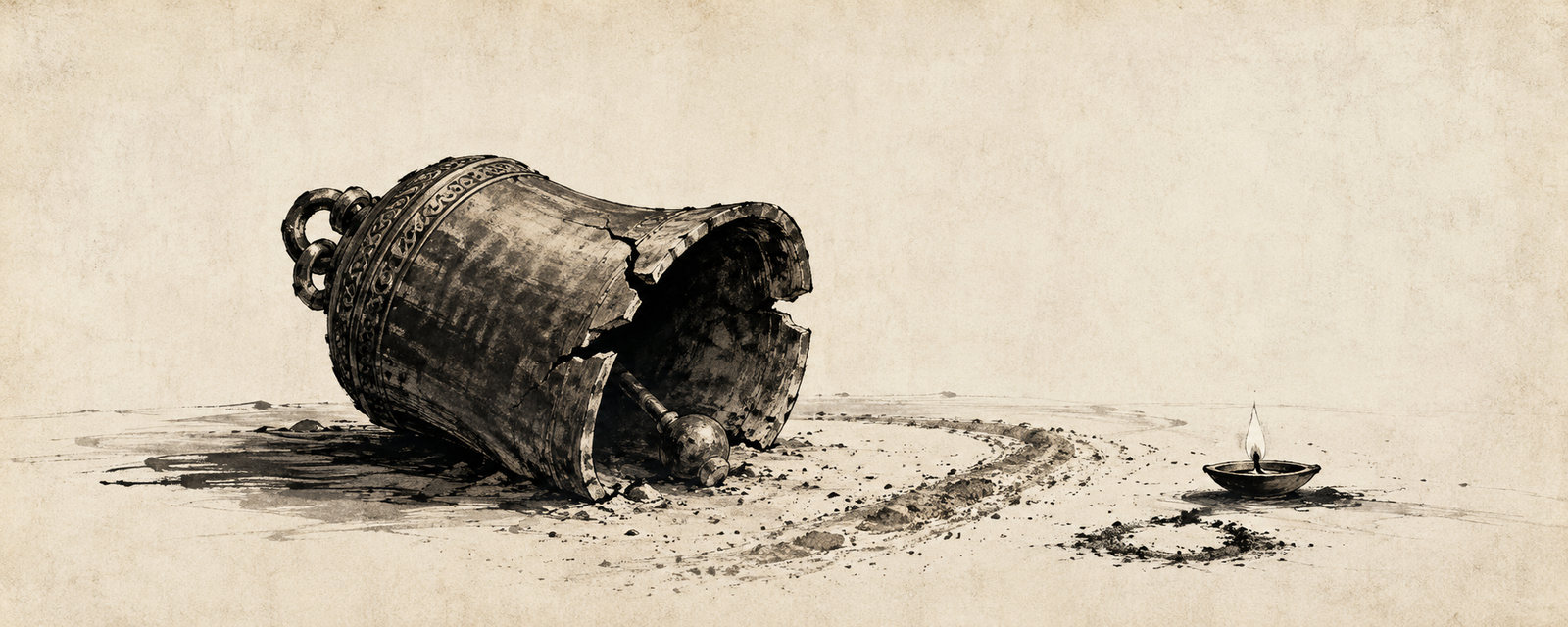

Fires of the Old World XVI —The Wrestling Hall
A hearthlit retelling of Krishna and Kamsa in the wrestling hall of Mathura. A broken bell hangs above the sand. A fearful king watches two boys enter without armour, without drums, and without fear. In this tale, power does not end in thunder, but in one calm hand closing without hate.
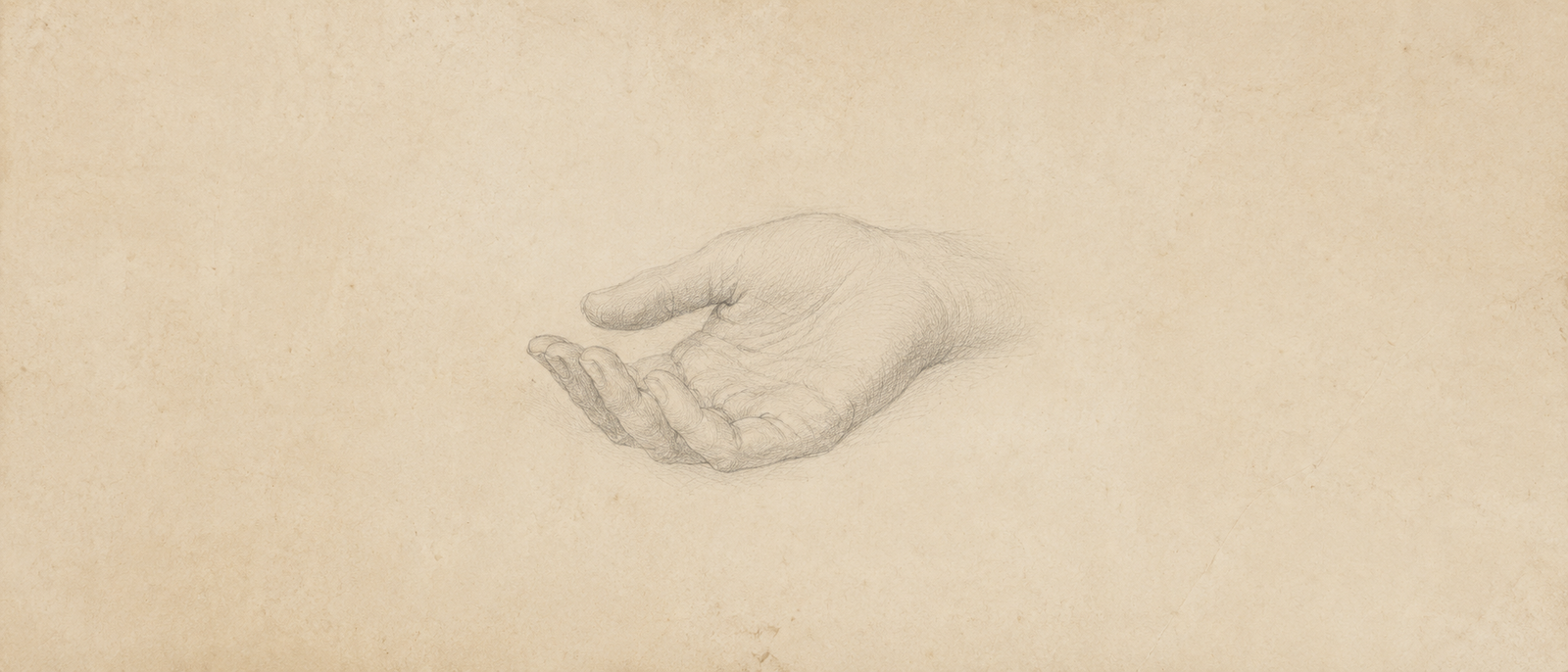

What the Hand Knew
In a room gone blue with evening, a hand moves before thought. What the Hand Knew is a quiet poem of bodily recognition: the beloved beside us, ordinary and unaware, while touch remembers home before the mind can arrive.
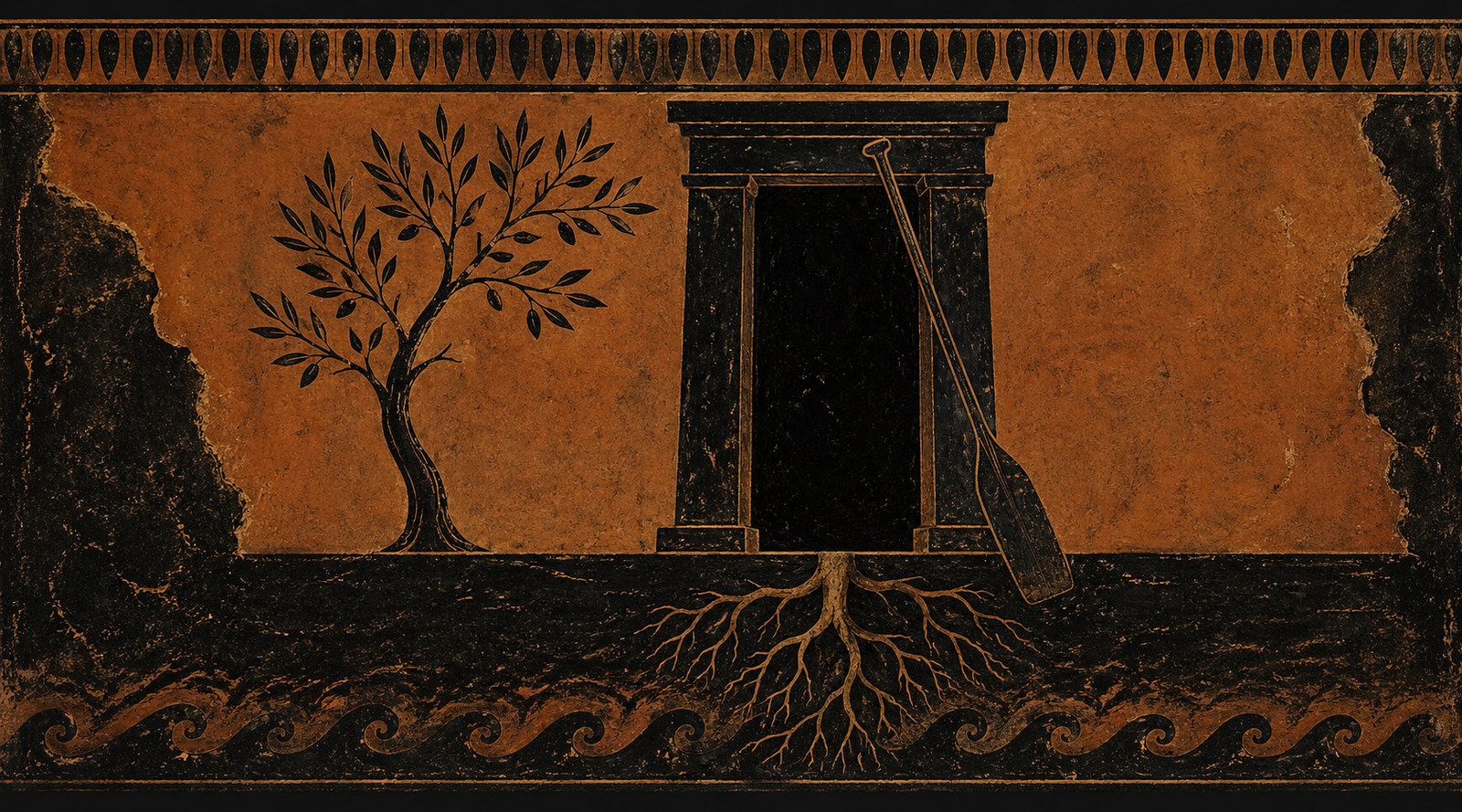

No Man Comes Home II — The Son Sent Out
Telemachus leaves Ithaca not as a hero, but as a son forced into motion by a house that will not correct itself. Seeking news of Odysseus, he discovers that a father’s absence can become larger in other men’s mouths than in the life of the child who has carried it. He wanted certainty. He received scale.
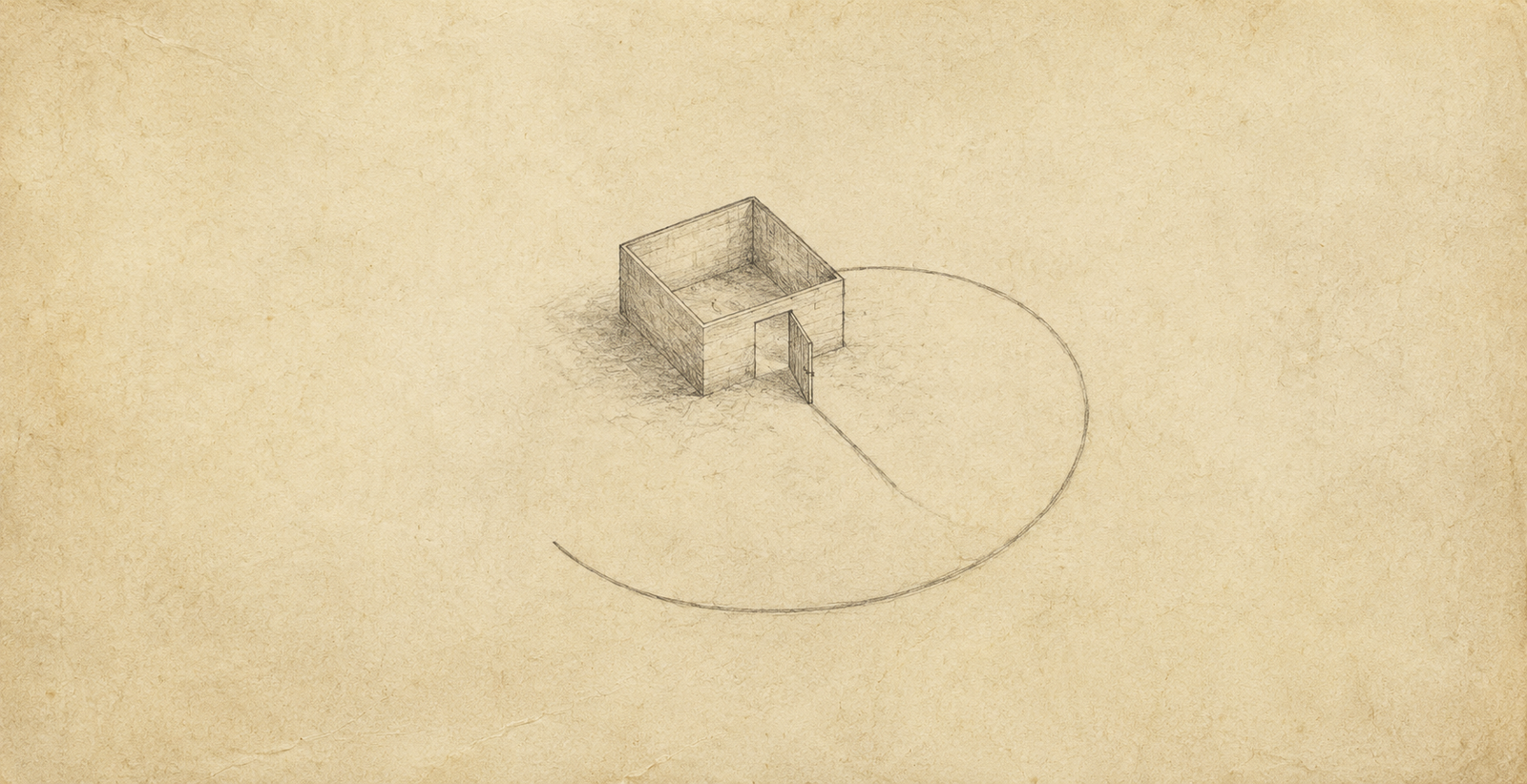

The Hut We Carry With Us
A Living Way essay on Kamo no Chomei, Hojoki, solitude, refuge, and the danger of becoming attached to the very life that saved us. The hut may shelter the soul from the noise of the world — but it may also become another possession.
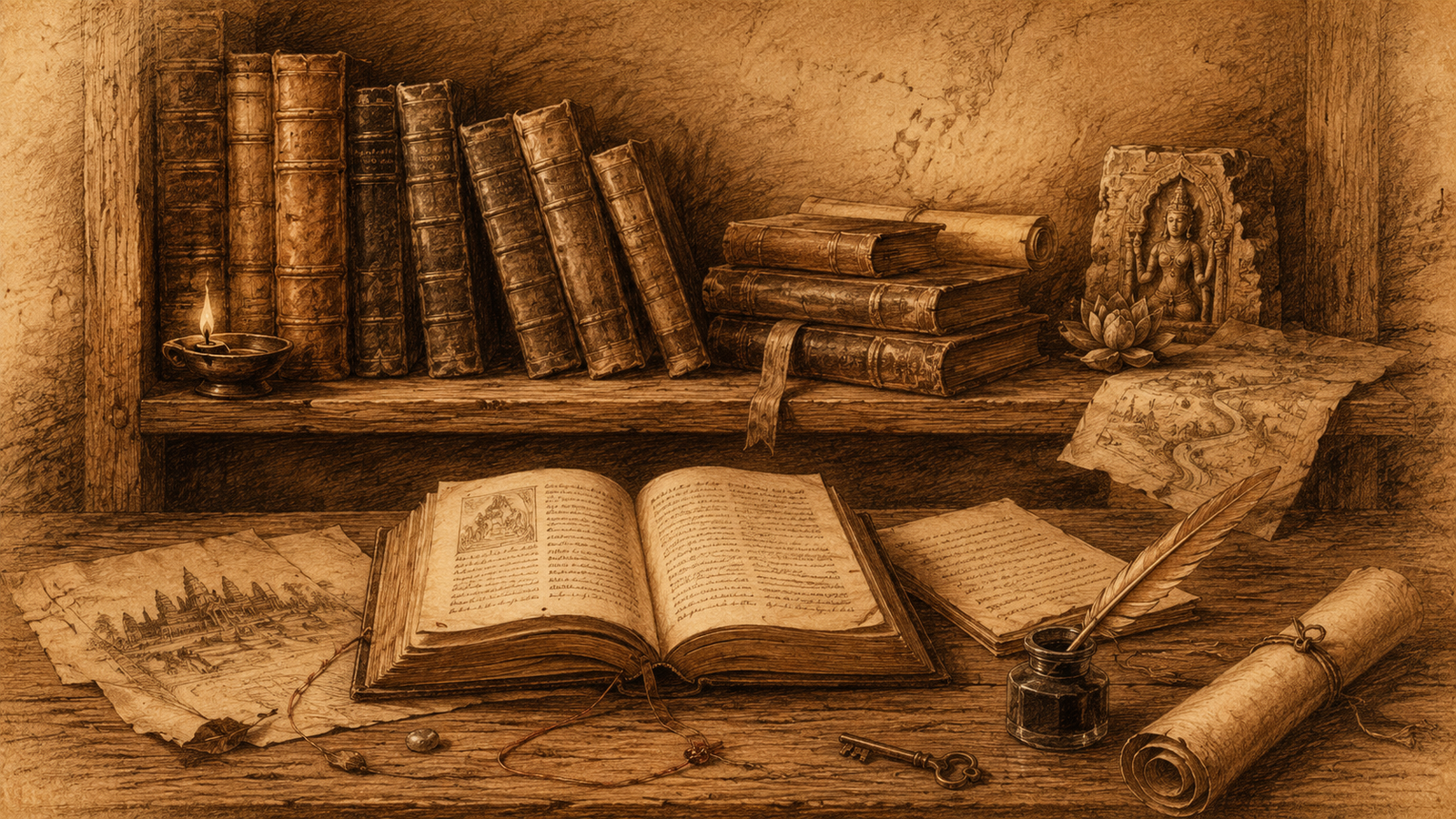

May 2026 in the Varro Library: Wells, Gates, Rivers, and Wings
In May, the Varro Library moved through thresholds: underworld gates, wells of knowledge, Angkorian rivers, damaged houses, labyrinths, and old stories returning with new force. Across myth, essay, poem, and children’s retelling, the month asked what must be surrendered before anything can truly be seen.
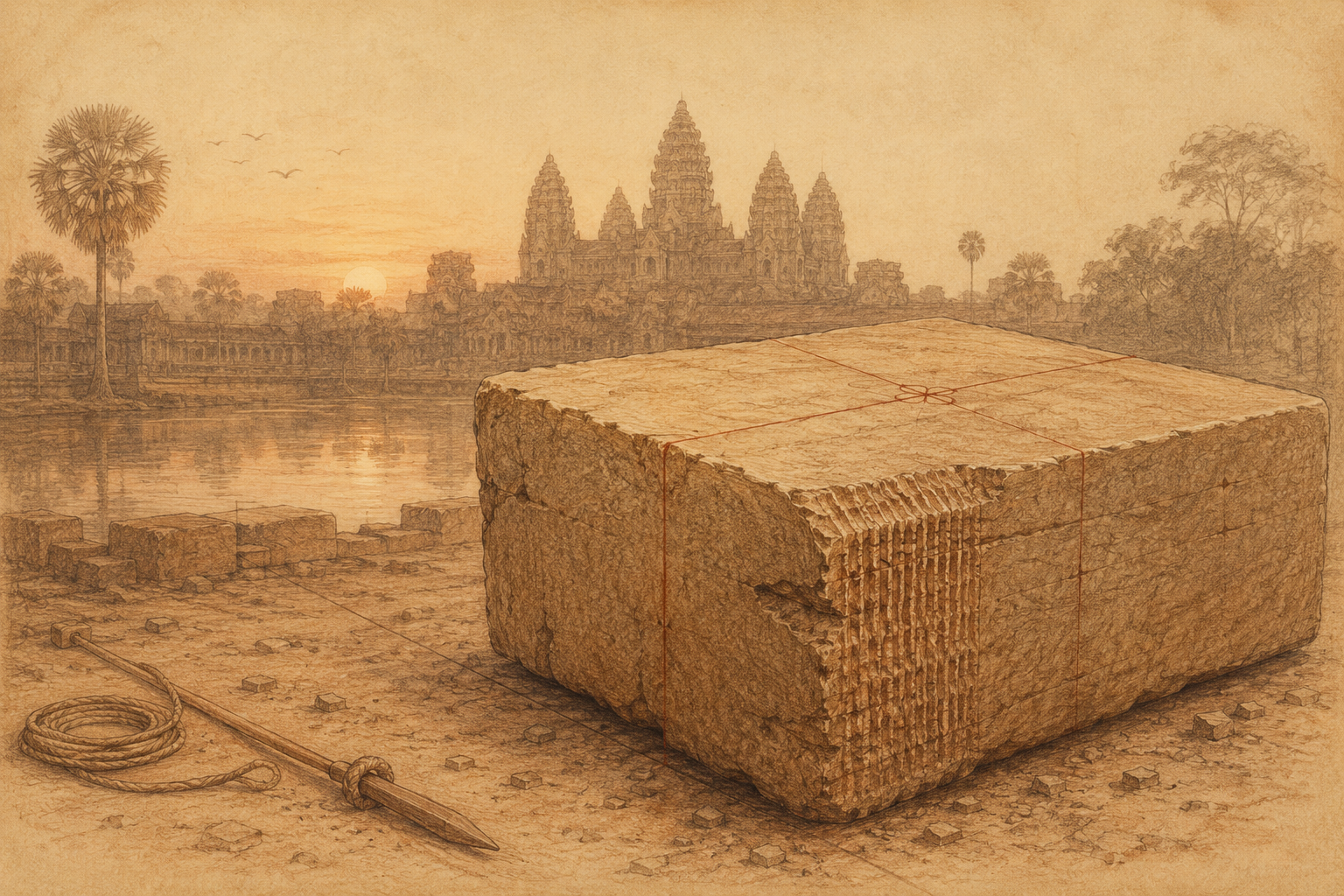

Where a Name Could Not Follow
A boy in the sandstone quarries beneath Phnom Kulen learns the first law of sacred building: not strength, not speed, but attention. Where a Name Could Not Follow imagines the life of an unnamed Angkorean stone-master whose hands helped move mountain into temple — and whose name vanished where the stone endured.
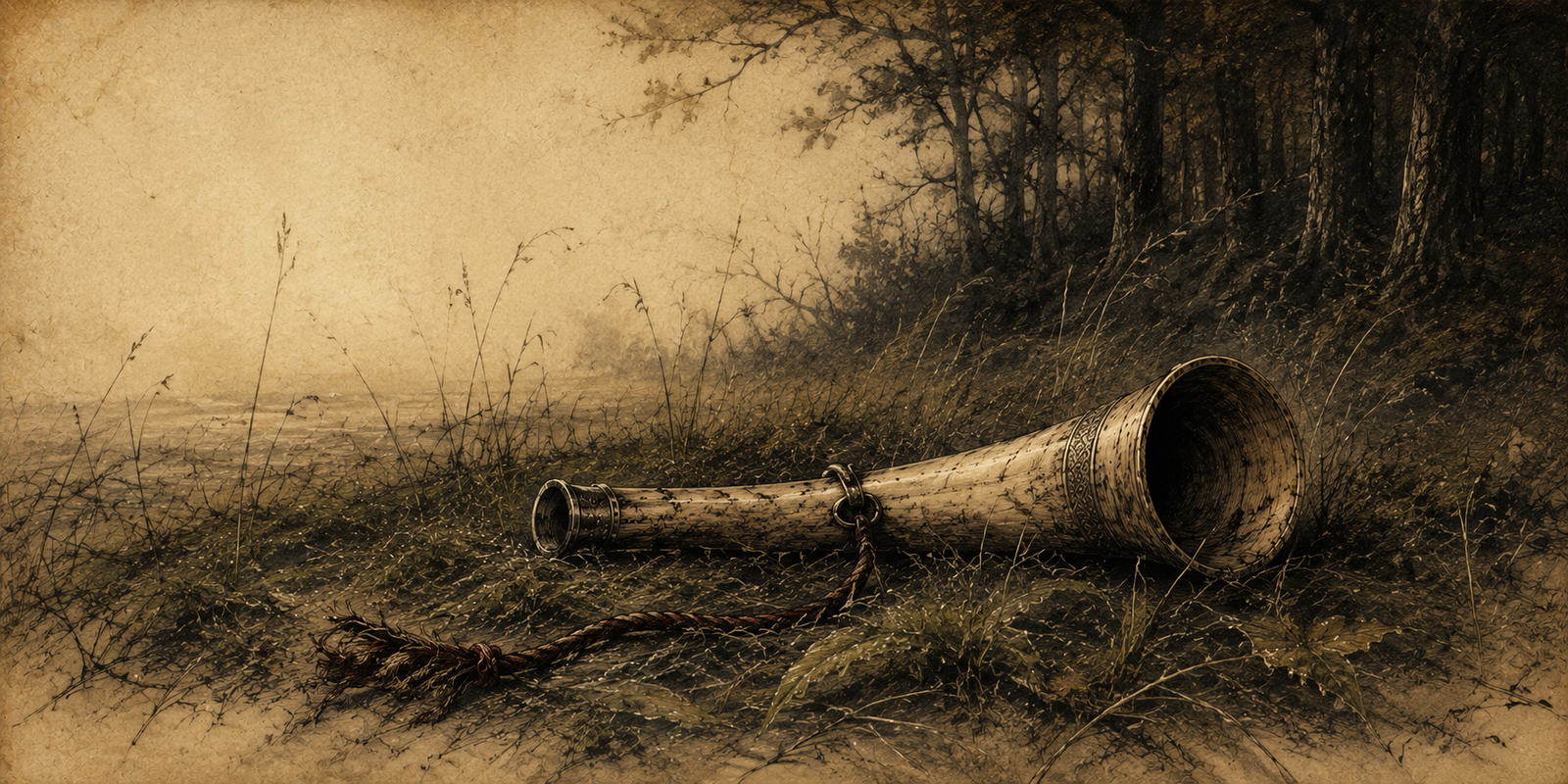

When Sight Becomes Trespass
A companion myth essay on Actaeon, Artemis, forbidden sight, and the terrible moment when seeing becomes trespass. When Sight Becomes Trespass asks why Actaeon’s story cannot be reduced to simple guilt or divine cruelty, and why the old myth still wounds through transformation, failed recognition, and the loss of being seen.
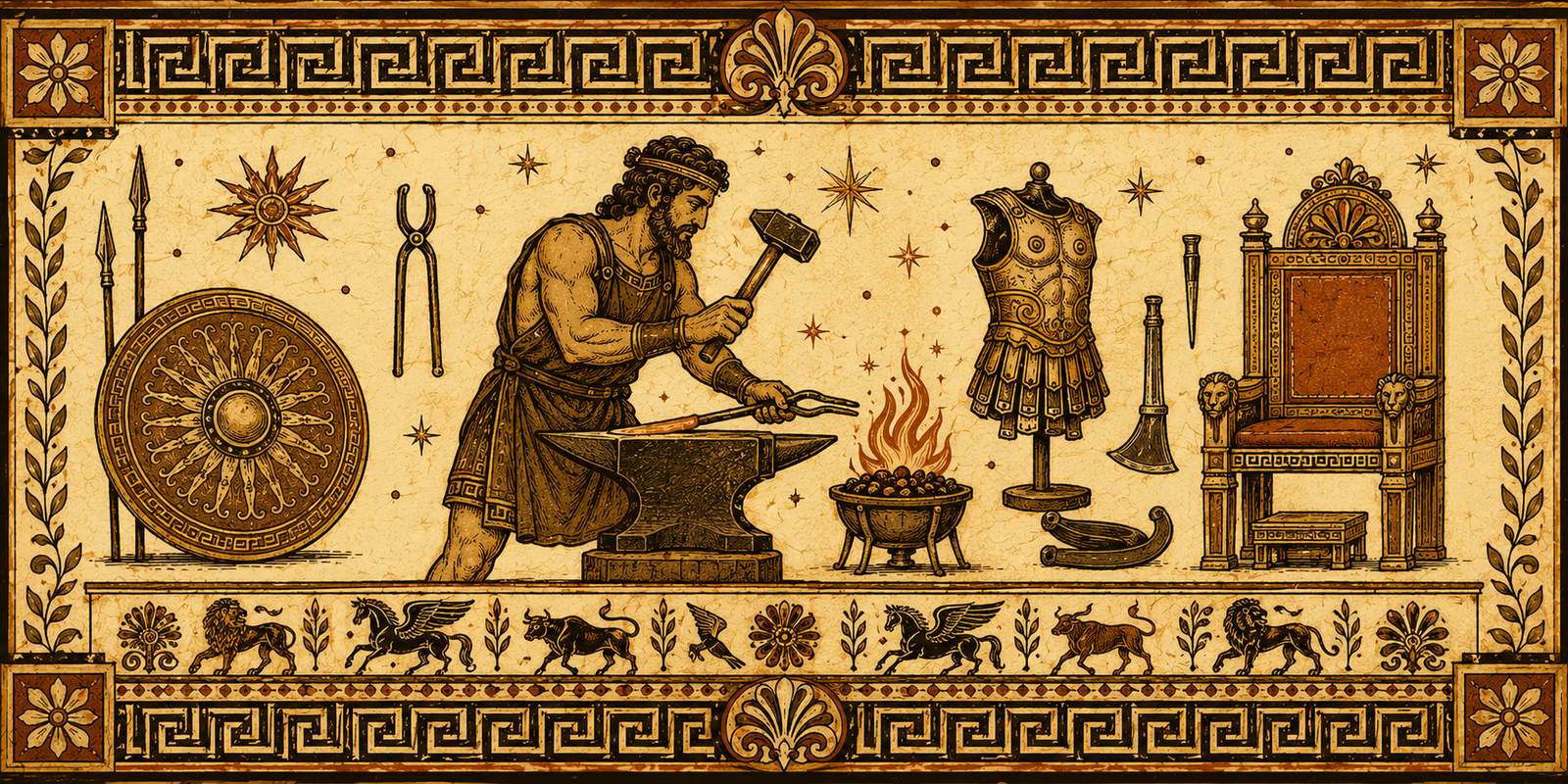

Hephaestus — The God of the Forge
After Daedalus and the Wings, The Greek World turns to Hephaestus: god of the forge, fire, metalwork, armour, traps, thrones, and impossible crafted wonders. A child-readable Greek myth guide to the divine maker whose objects can protect, shame, arm, trap, and astonish.
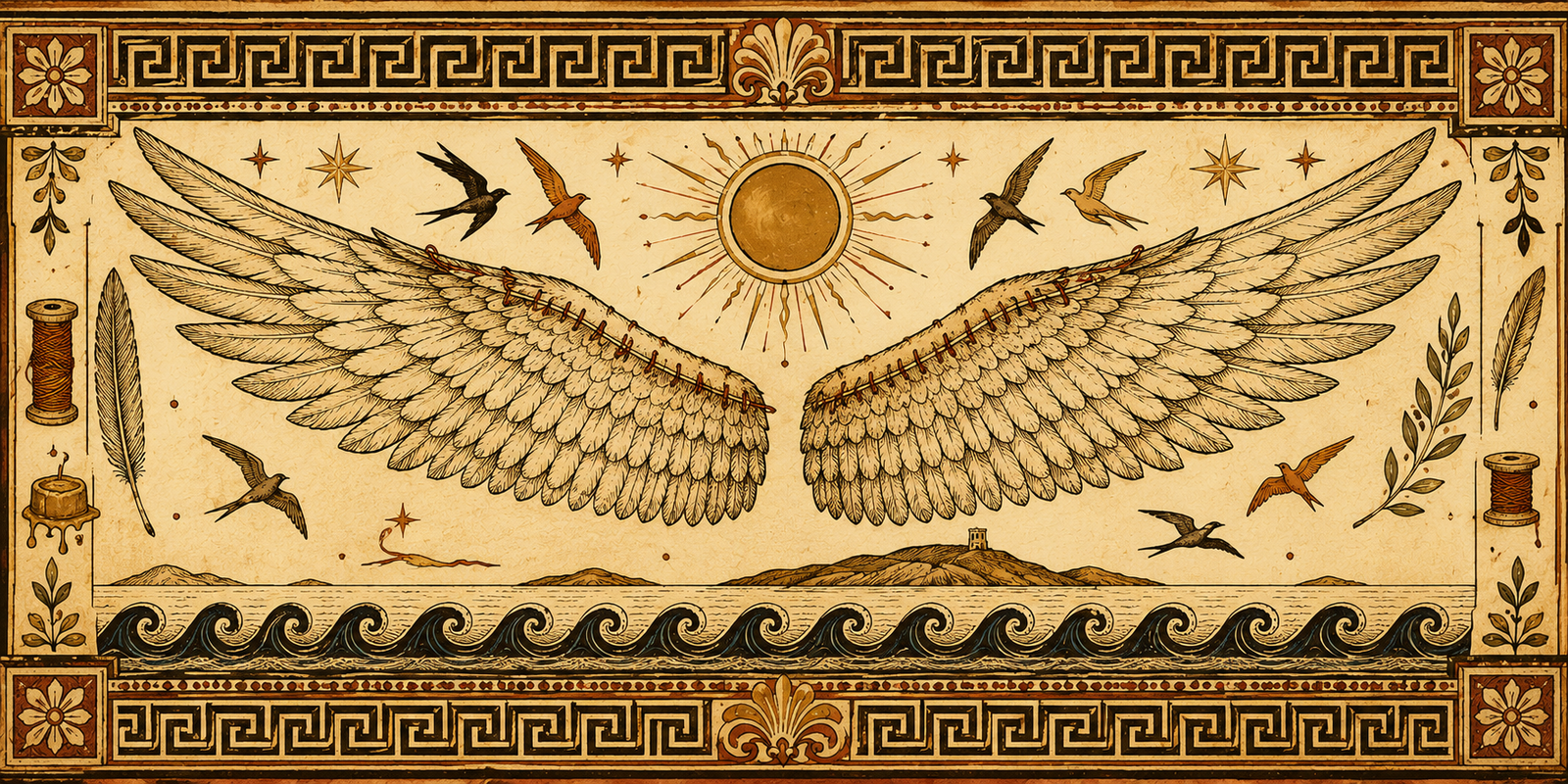

Daedalus and the Wings
A child-honouring Greek myth retelling of Daedalus and Icarus: a maker, a son, a prison with no door, and two wings stitched from feathers, wax, and hope. This Alexander Series tale preserves the wonder and sorrow of the myth without reducing it to a lesson about flying too close to the sun.
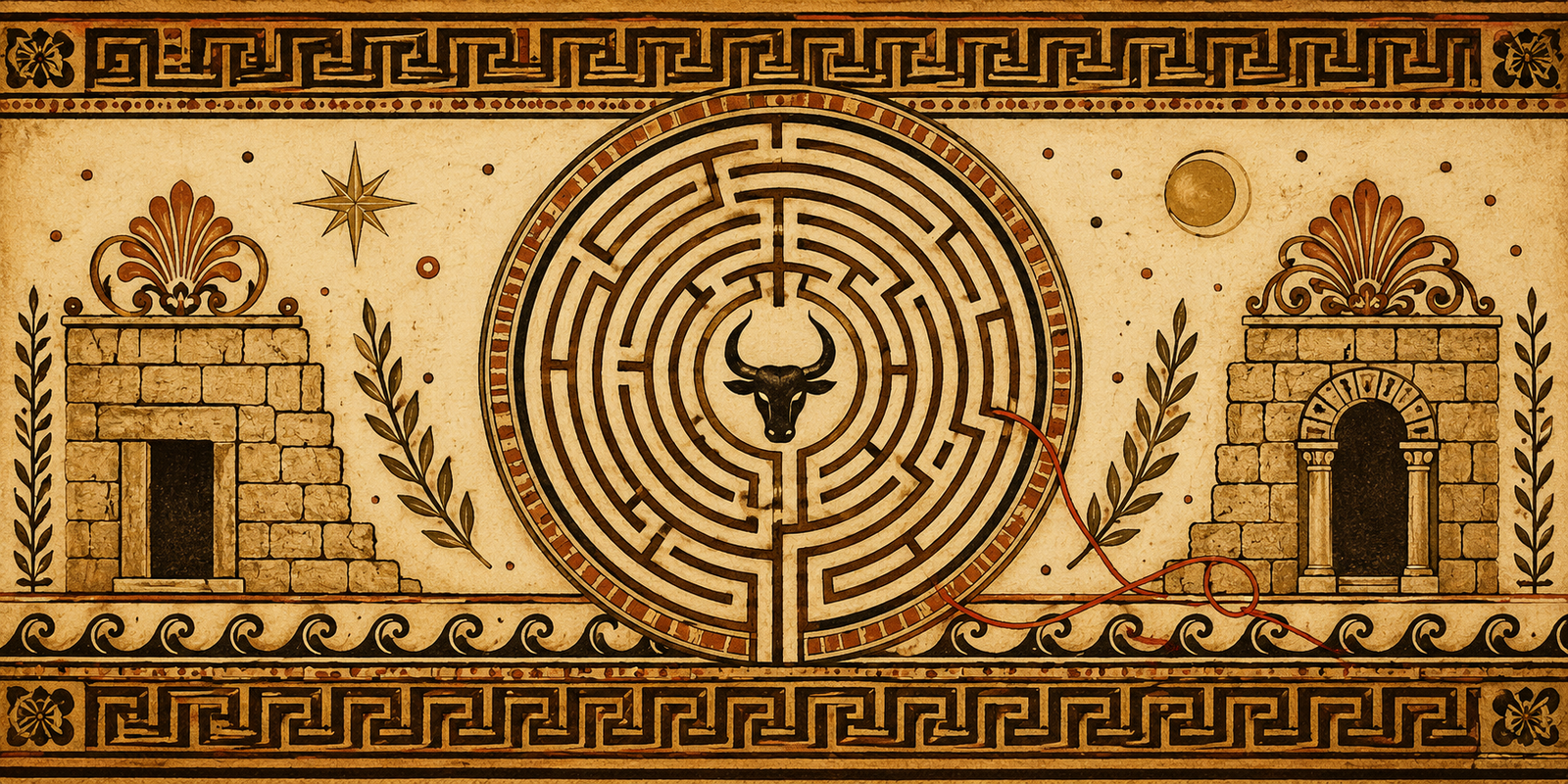

The Labyrinth
Before Daedalus made wings, he made the Labyrinth: a house of turns built to hold the Minotaur and hide the truth of Crete. This Greek World entry prepares child readers for Daedalus and the Wings by showing the maze not as a puzzle, but as one of Greek myth’s great signs of secrecy, danger, memory, and return.
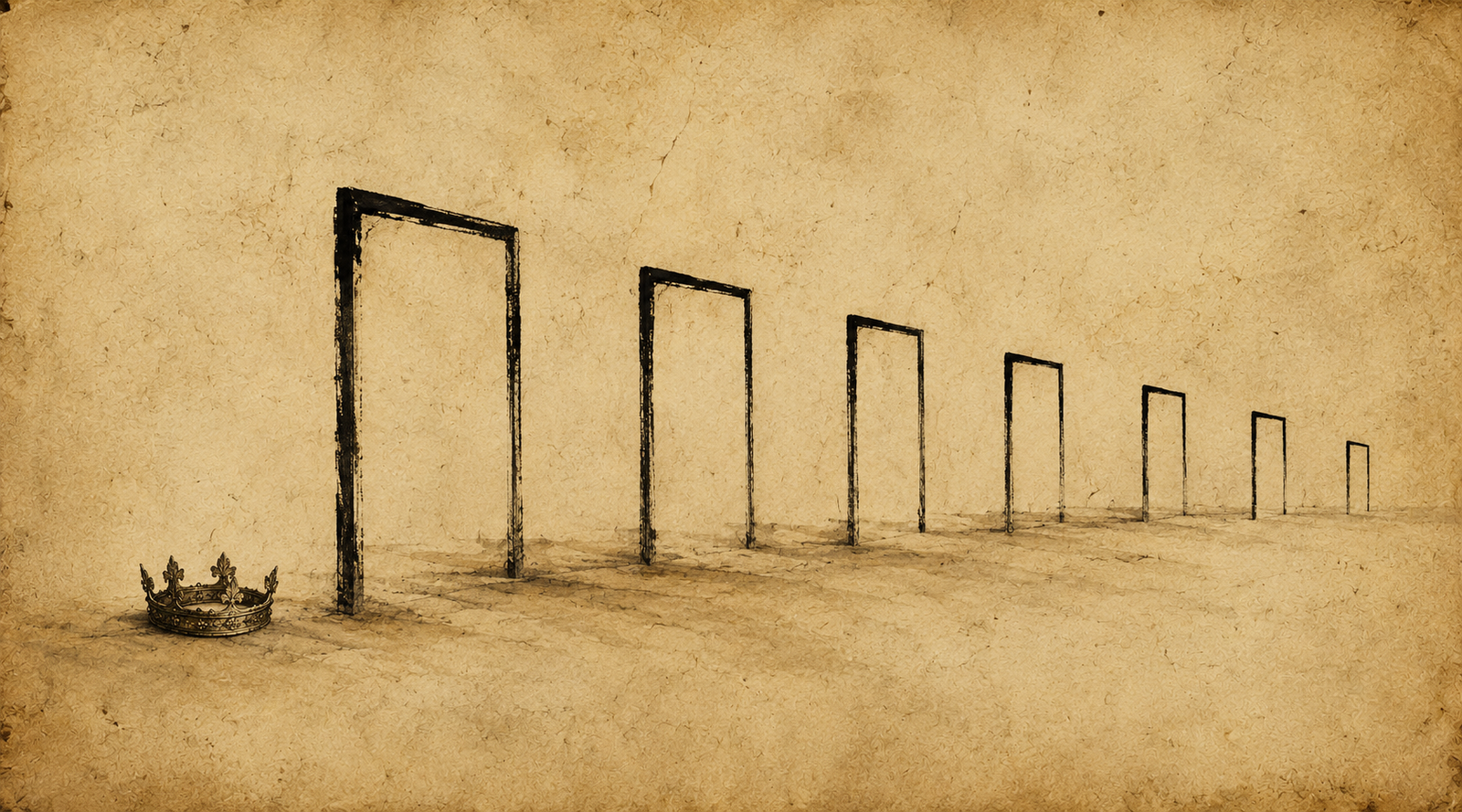

The Seven Gates: Inanna’s Descent Retold
A source-faithful Mytharium retelling of Inanna’s descent into the underworld. Inanna enters crowned, robed, adorned, and named, but the great below has rites of its own. Gate by gate, every sign by which the upper world has known her is taken away.
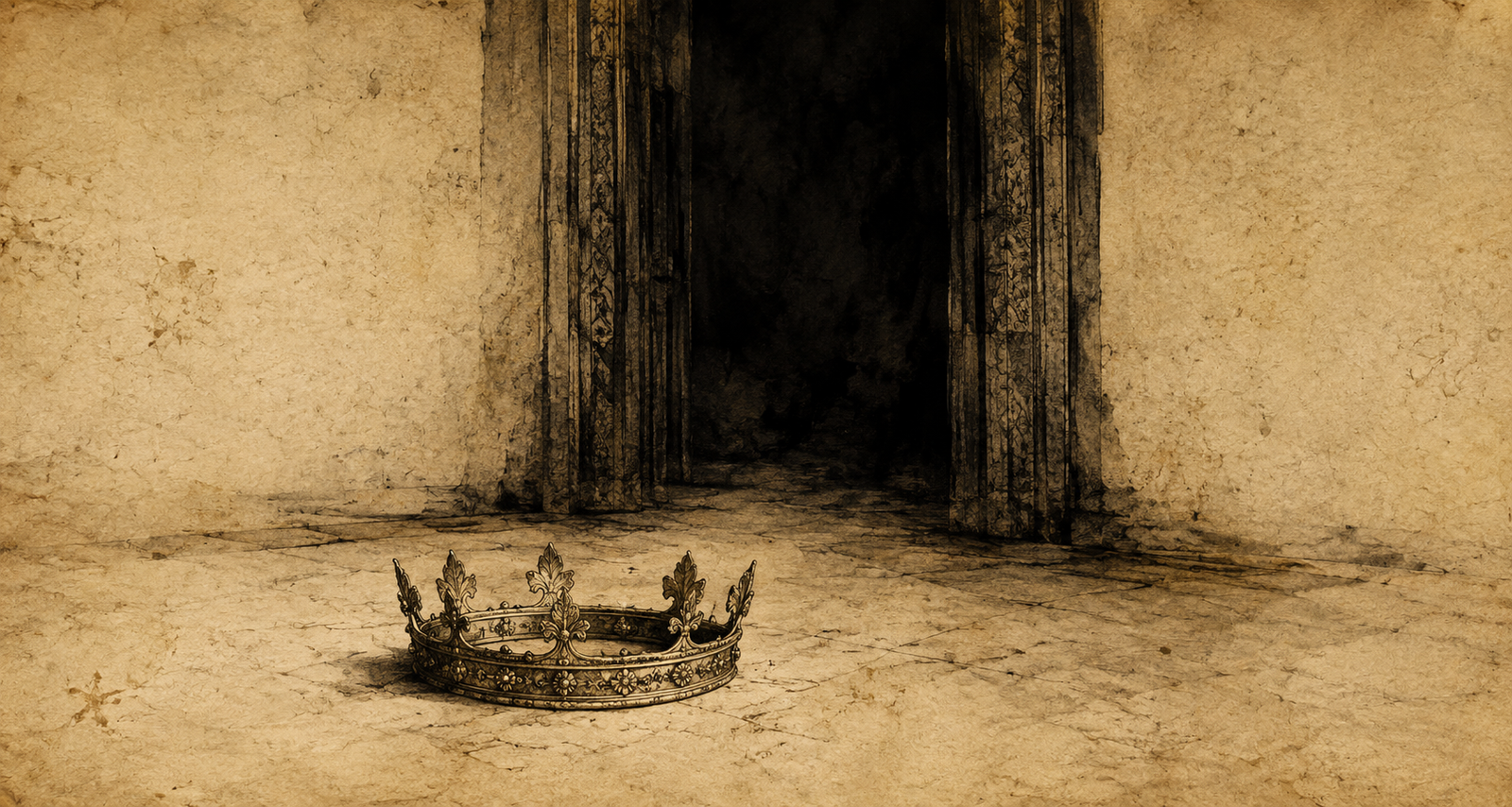

Inanna Goes Down Naked
A Mytharium essay on Inanna’s descent into the underworld: the crown removed at the first gate, the stripping away of power’s visible signs, and the old story’s severe understanding that no true return leaves the self unchanged.
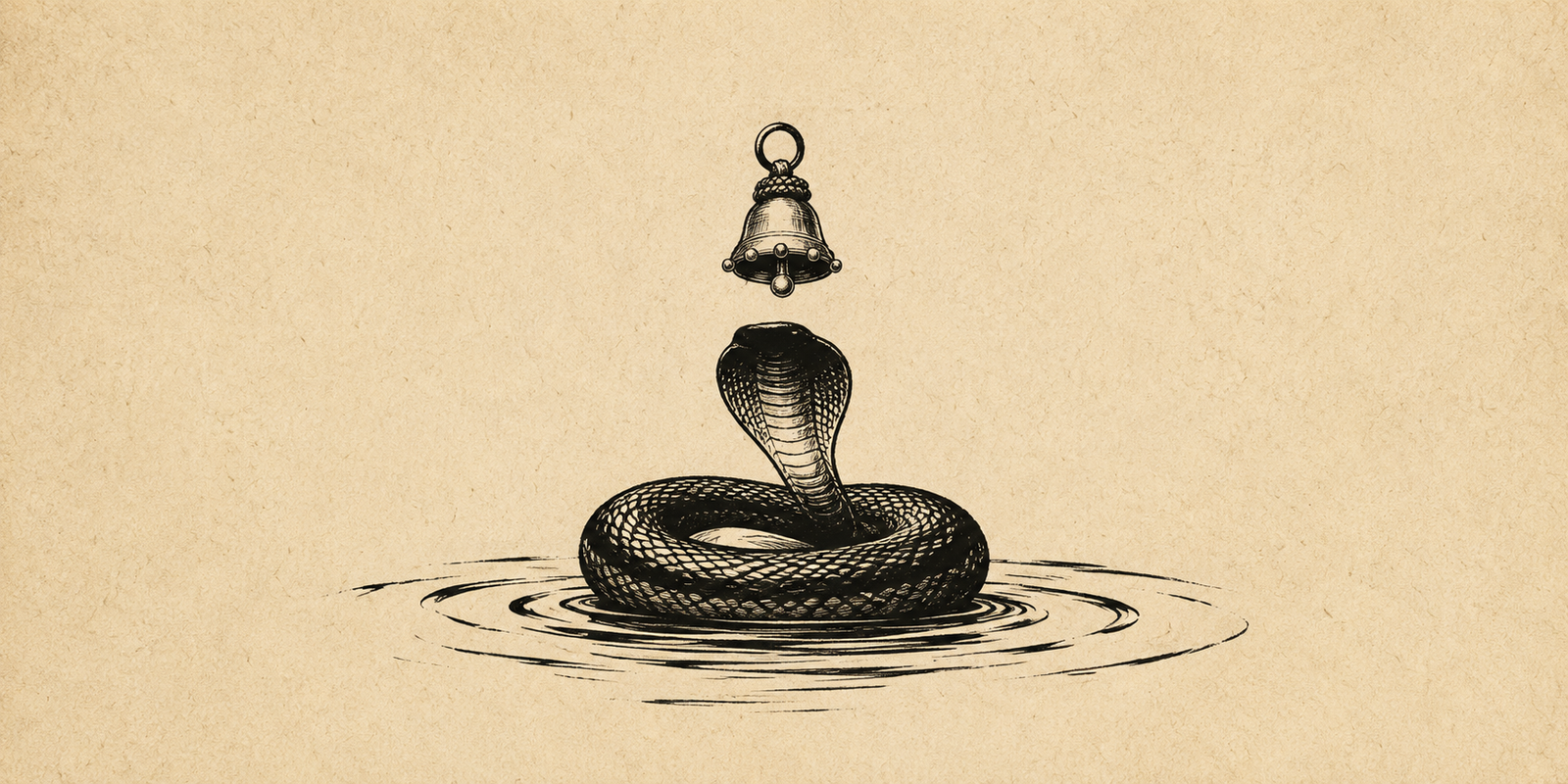

Fires of the Old World XV — The Serpent-River Dance
A hearthlit retelling of Krishna and Kaliya, the poisoned river, and the child who danced on the serpent’s hood until the water breathed again.
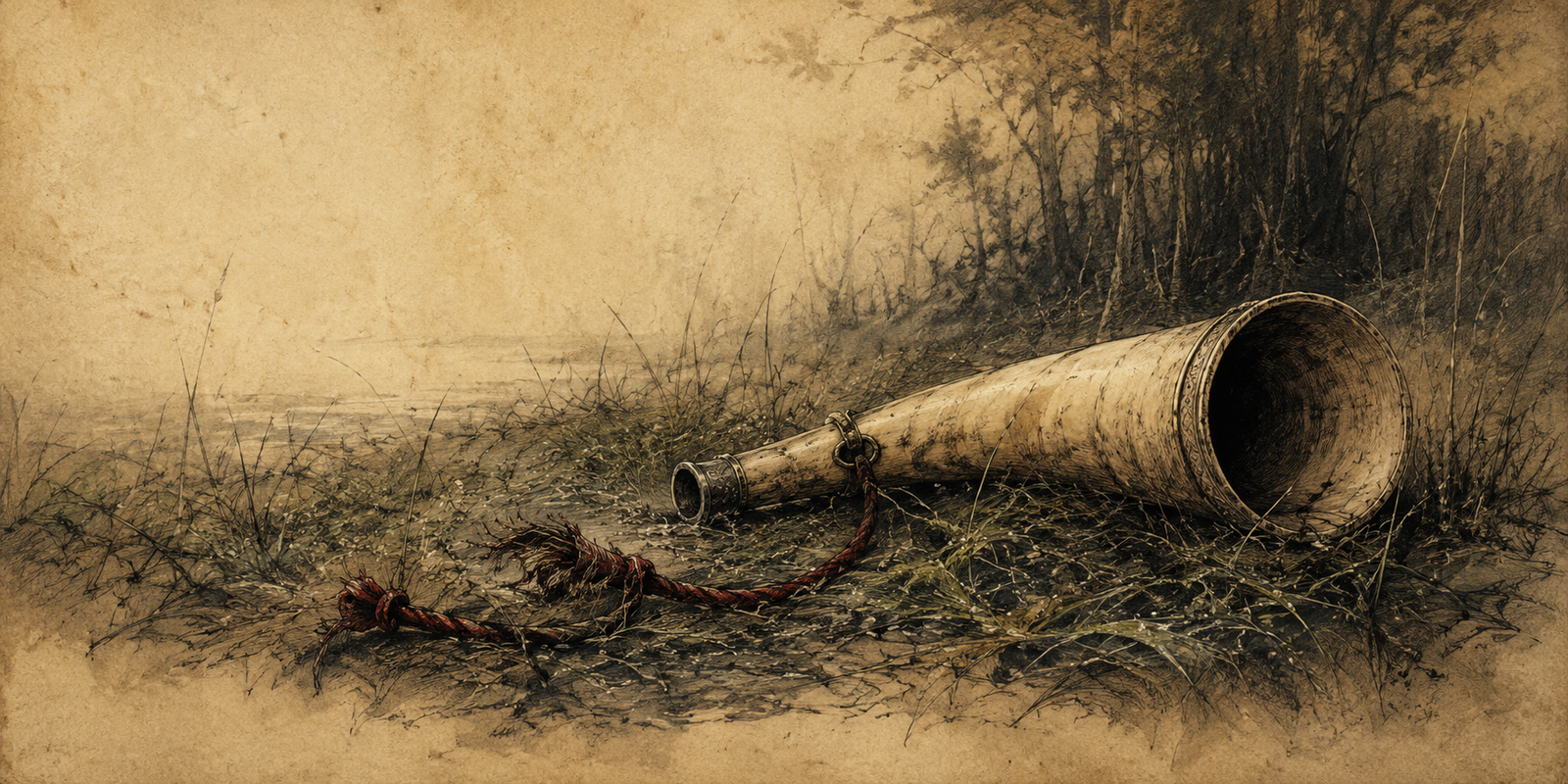

Actaeon — The Stag in the Clearing
A literary Greek myth retelling of Actaeon, the hunter who sees what was never meant for mortal eyes. In The Stag in the Clearing, The Hospitable Dark enters the forest through dogs, leather, wet grass, and dawn laughter before the old story turns towards transformation, terror, and the failure of recognition.


Where the River Outlasts Us
A spare lyric poem from The Vow on standing at the edge of beauty, absence, and time. A cliff, a river, and evening become the site of a deeper recognition: the world was magnificent before us, will continue without us, and wounds us most by remaining beautiful.
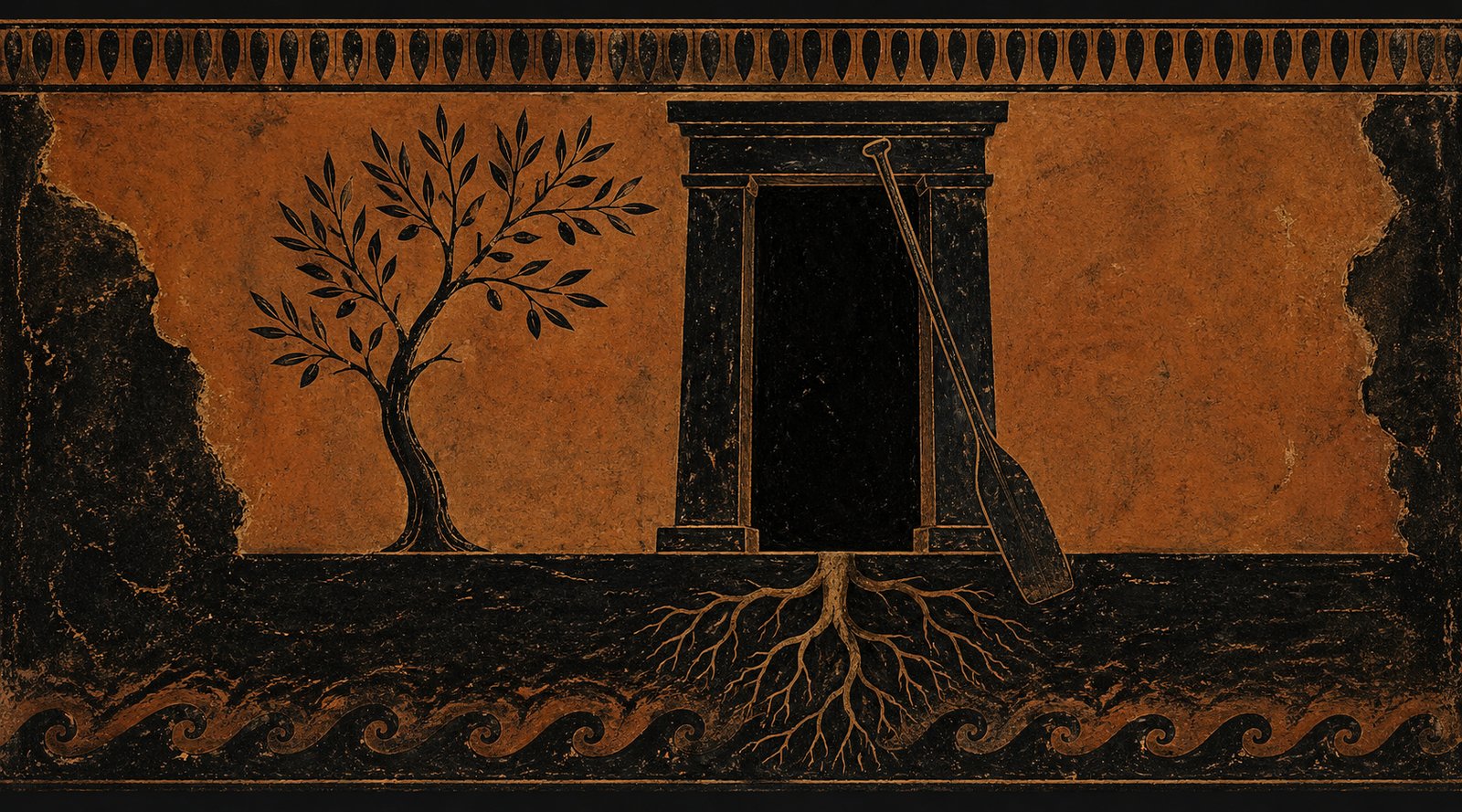

No Man Comes Home I — The House Without the Man
Before Odysseus returns, Ithaca has already become a battlefield. Penelope rules by delay, Telemachus grows beneath the weight of absence, and the suitors corrupt hospitality from within. The first canto of No Man Comes Home begins not with the hero, but with the damage made by his absence.
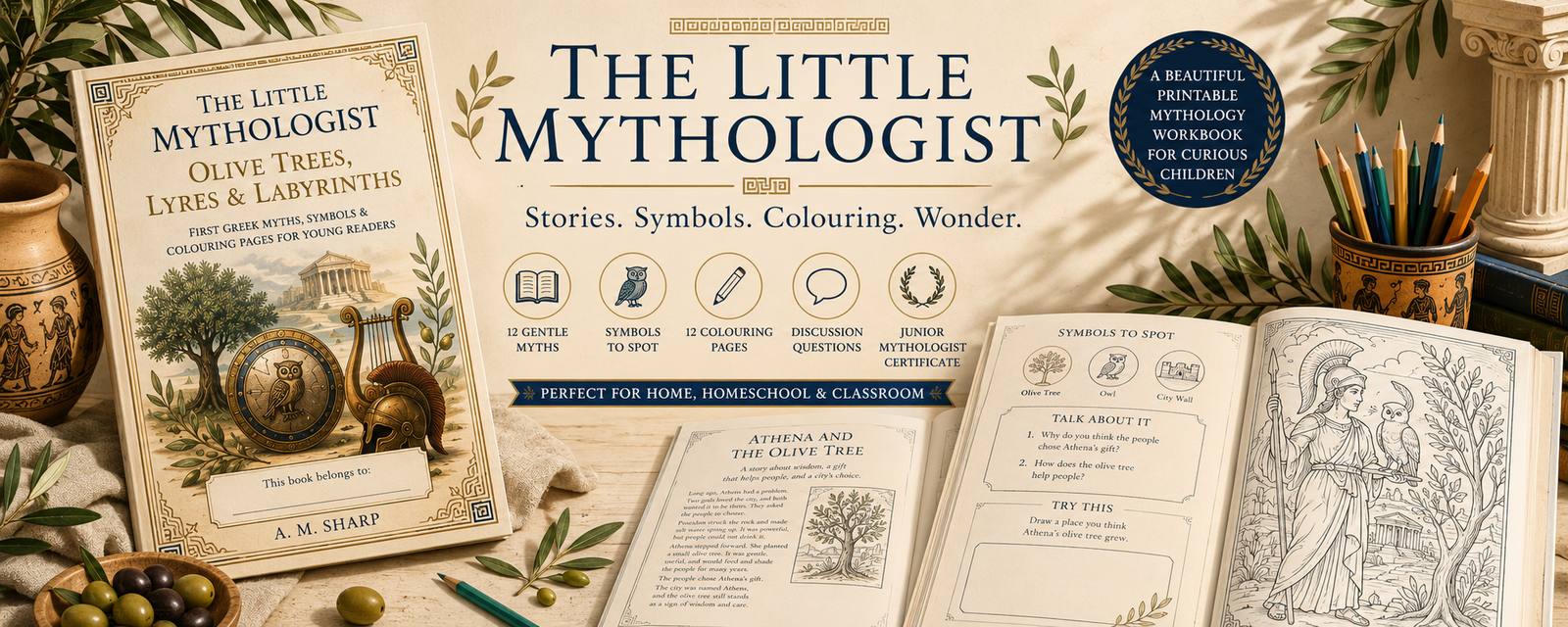

Old Stories, Young Hands — The Little Mythologist Printable Greek Mythology Workbook
Introducing The Little Mythologist, a printable Greek mythology workbook for children aged 6–10. Created as a hands-on companion to The Alexander Series, it includes twelve Greek myth retellings, colouring pages, symbols to notice, questions to discuss, activities, and a Junior Mythologist Certificate. Try the free sample or view the full workbook on Etsy.

The File
A person becomes easier to process once they become a file. This opening essay of Distance Machines examines administrative distance, bureaucracy, moral legibility, and the quiet violence by which a life is reduced to evidence, categories, missing documents, and acceptable form.
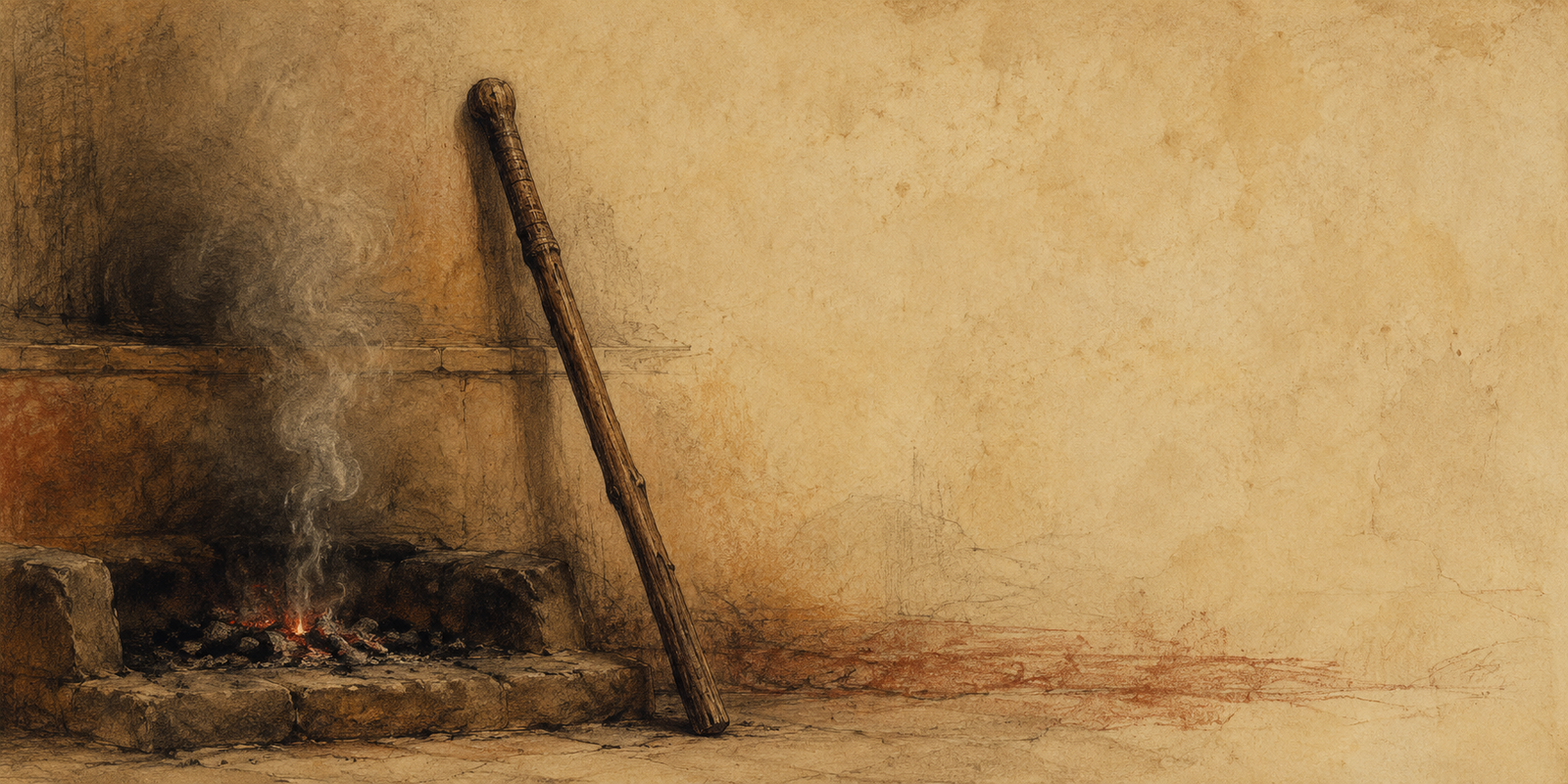

Memory, Fathers, and the Education of Telemachus
Telemachus reaches Pylos seeking news of Odysseus, but Nestor gives him something more difficult than certainty: memory. This reader’s guide to The Long Return III — An Old King Remembers explores fathers, sonship, hospitality, Troy’s aftermath, and the first hard education Telemachus receives from old grief.
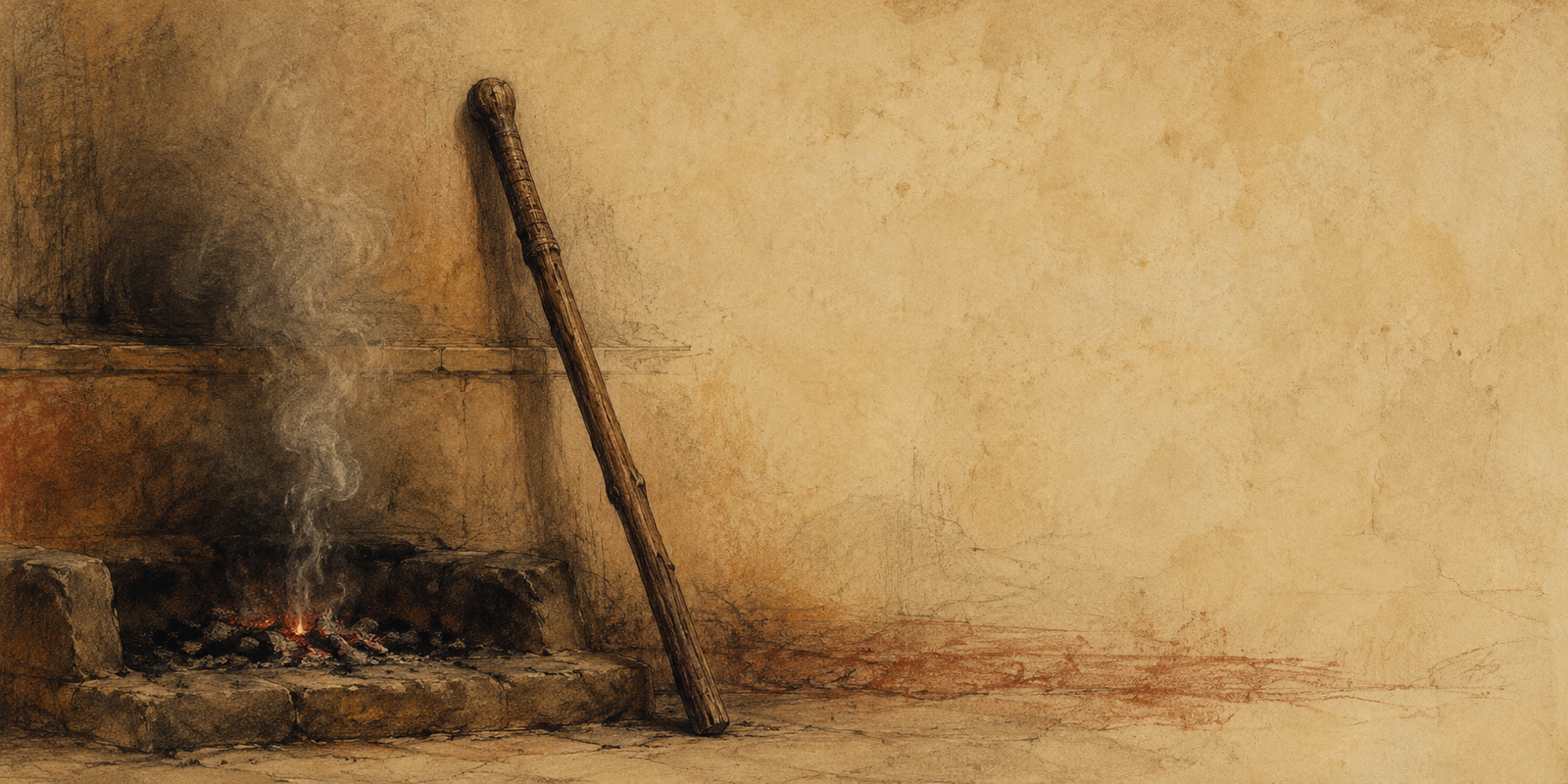

The Long Return III — An Old King Remembers
Telemachus reaches Pylos seeking news of Odysseus, but Nestor’s house gives him something harder than certainty: hospitality, old grief, and the memory of what happened after Troy. In this third instalment of The Long Return, a young man begins to understand that sonship may become an ordeal long before the father returns.