
The Library gathers the written works of Lucas Varro — journals of the temples, mythic retellings, contemplative essays, poems, and volumes shaped by shadow, silence, and wonder. Here, words stand beside images as offerings: field notes from Angkor, meditations on sacred stone, old stories rekindled, and reflections carried beyond the visible world.
Within these shelves you will find many rooms: Angkor journals, myth and legend, apsara meditations, contemplative essays, poems, children’s mythic wonder, literary retellings, and quieter devotions of the page. Wander chronologically, enter by theme, or pass through one of the dedicated publication houses now gathered within the wider Library.
For those who wish to follow these paths further, several of these writings continue on Substack and in dedicated archive blogs: The Lantern Chronicles , where myth, legend, contemplative essays, poetry, and other imaginative works are carried onward; The House of Cadmus , where Greek myth and tragedy are reopened through inheritance, violence, fate, and recurrence; The Mytharium , where myth, Tolkien, fairy stories, and old literature are read and retold with seriousness; The Alexander Series , where A. M. Sharp retells Greek myths for children who want to be trusted by stories; and The Hospitable Dark , where A. M. Sharp offers literary myth retellings shaped by darkness, shelter, endurance, and return.
Library

A New Book in The Living Way: The Many Gods
A Living Way announcement and threshold essay for The Many Gods, Lucas Varro’s inquiry into Hindu multiplicity, non-duality, form, mantra, image, and attention. First published in 2010, the book returns as a philosophical refusal of simplification: an argument that the many need not be thinned before the one can be affirmed.
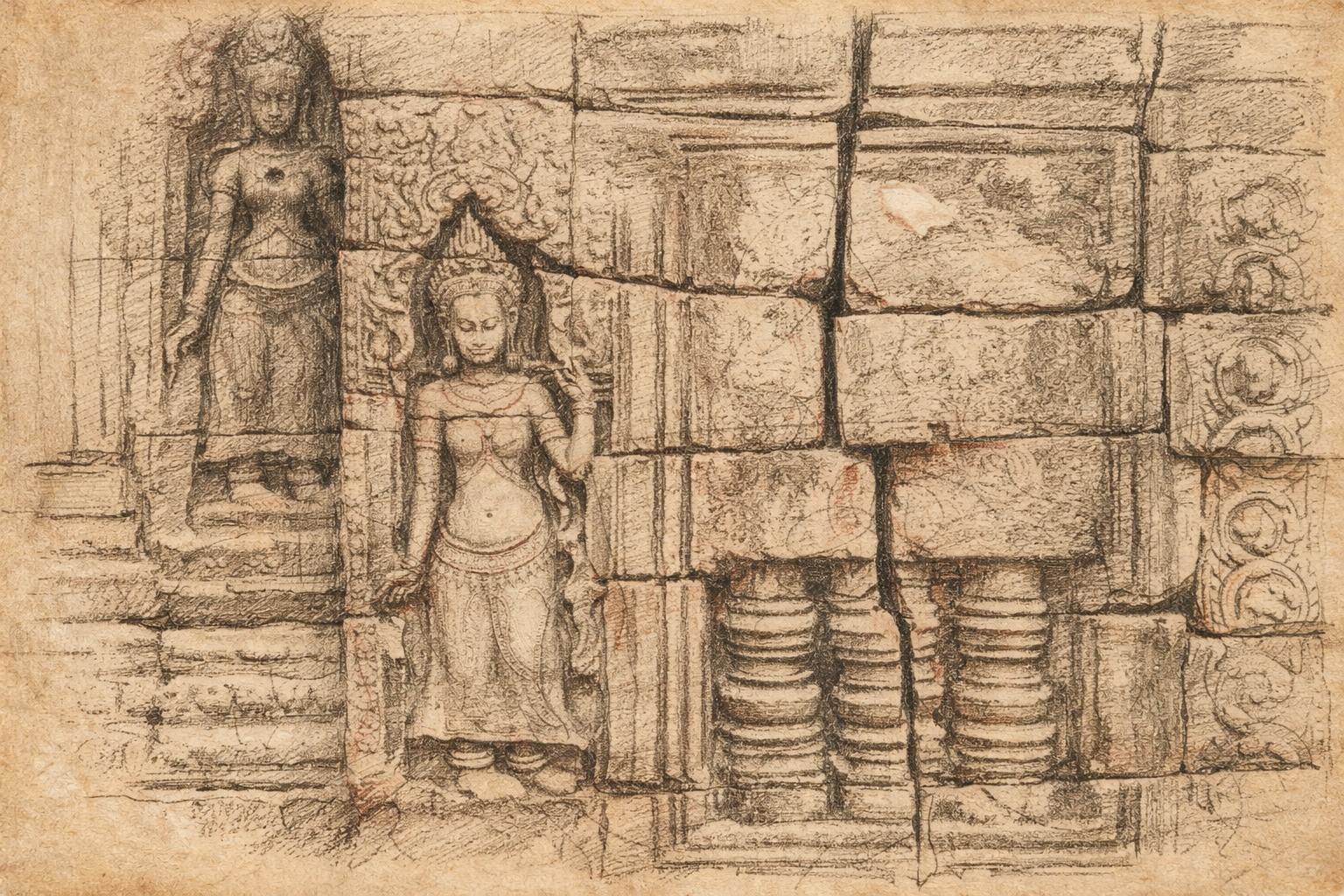

The Wall That Still Holds Them
Two presences endure within a wall that no longer closes seamlessly around them. One withdraws into shadow; the other comes further into the light of legibility. Around them, fracture, erosion, and carved stone become a single field of custody, where grace survives within damage, not beyond it.
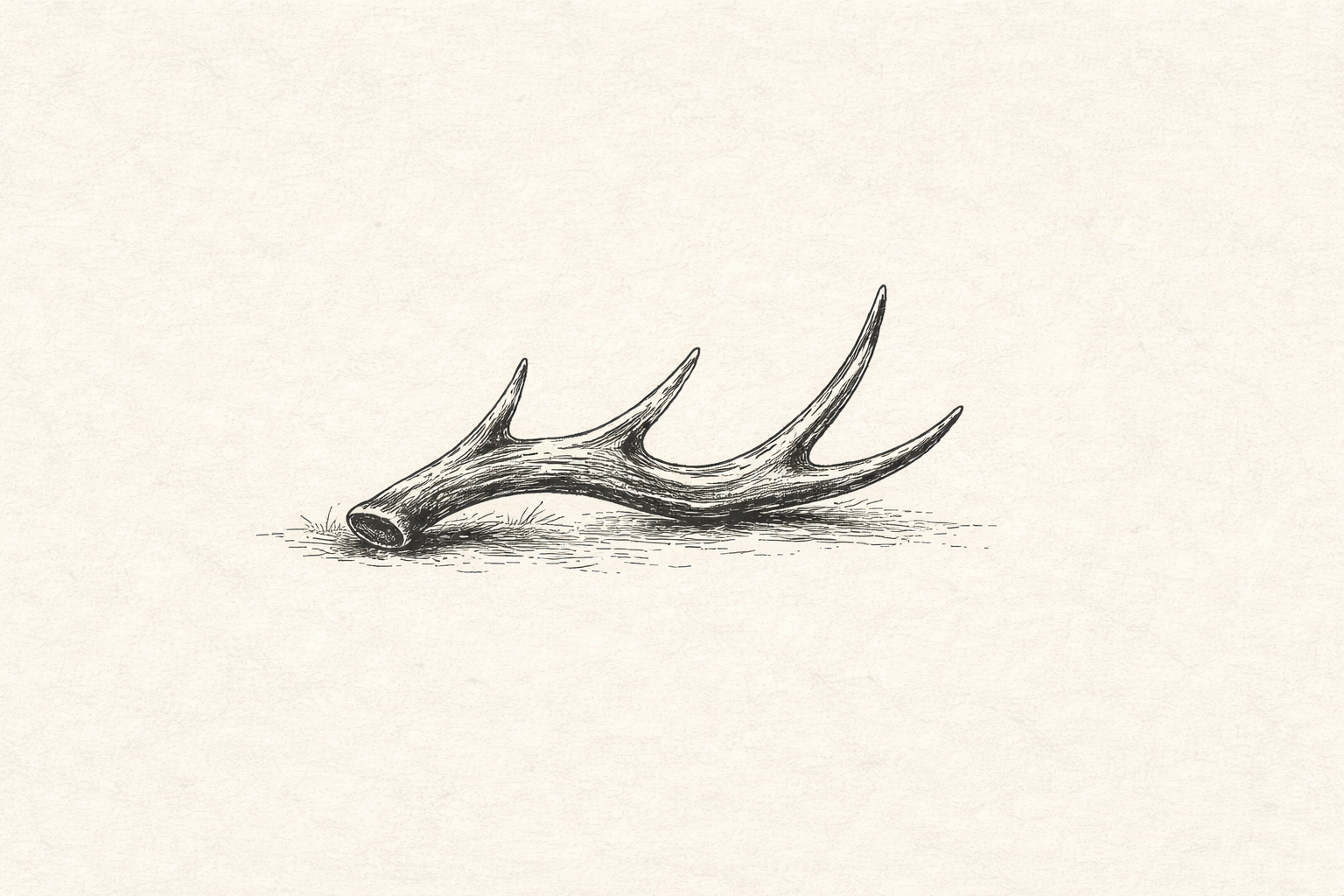

Fires of the Old World IX — The Golden Deer
A hearthlit retelling of Rama, Sita, Lakshmana, Marica, and the golden deer. In Fires of the Old World IX — The Golden Deer, beauty becomes bait, love walks toward danger, and one pale line in the dust is all that stands between exile and ruin.
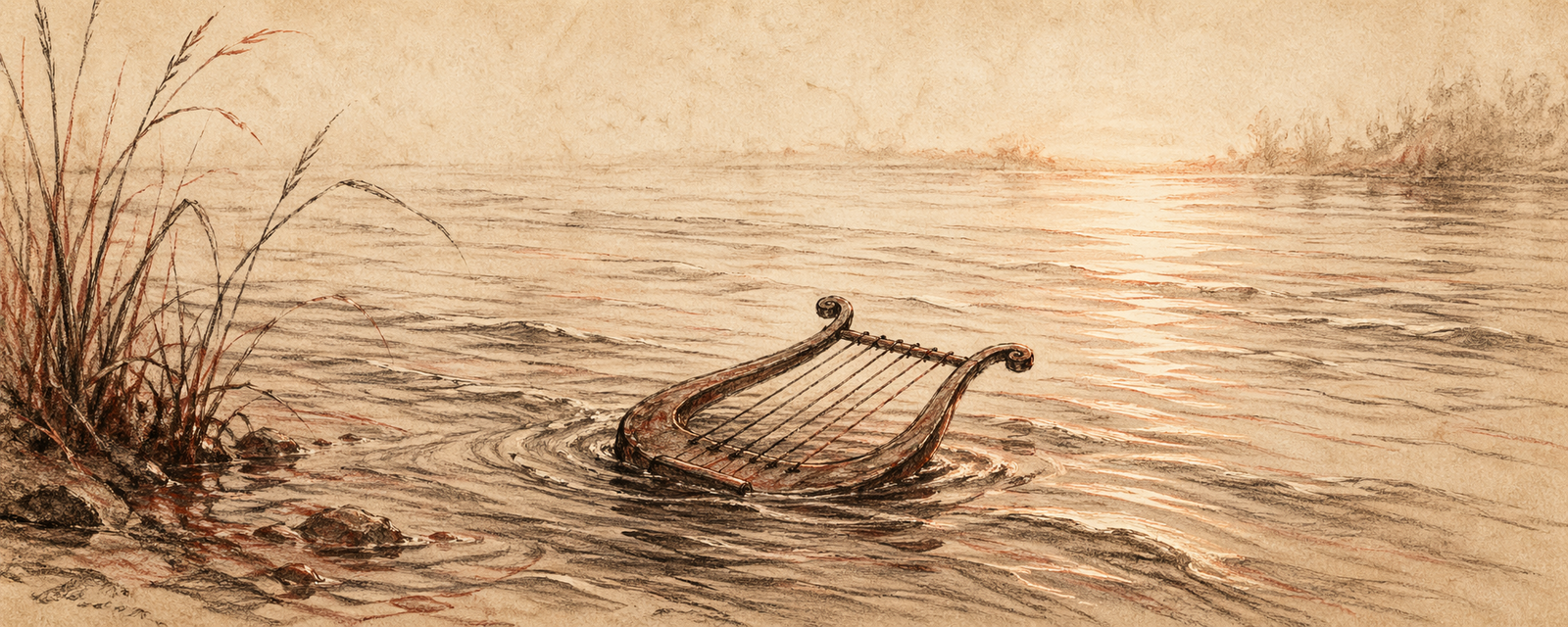

Orpheus — The Weight of Turning
A grave literary retelling of Orpheus and Eurydice from The Hospitable Dark, beginning not in the underworld, but in the ordinary morning love will later make sacred: a lyre, a doorway, a shared room, and the first unbearable shape of loss.


The Lantern Chronicles · A Growing Library of Stone, Fire, Thought, and Silence
A brief note for readers of this Journal: The Lantern Chronicles has grown into a small library of related rooms — Angkor, myth and legend, philosophy, and poetry. If you have found something here that speaks to you, I am now offering a 7-day free trial to step further inside.


Why We No Longer Know How to Approach Great Things
A Living Way essay on Angkor, reverence, attention, and the modern inability to receive what exceeds us. Lucas Varro asks why arrival is not the same as approach, and how the inward manners required for beauty, truth, and greatness might still be relearned.

Fires of the Old World VIII — The Bow That Waited
A luminous retelling of Rama, Sita, and the great bow at Mithila. In The Bow That Waited, princes strain and fail before a sleeping weight, until one quiet hand lifts what force could not move, and a garland settles where thunder has just broken.

The Architect and the River
A Living Way essay on Confucius and Laozi, form and flow, discipline and release. Lucas Varro asks why human life needs both the architect and the river: structures strong enough to prevent drift, and mercy spacious enough to prevent the soul from hardening.
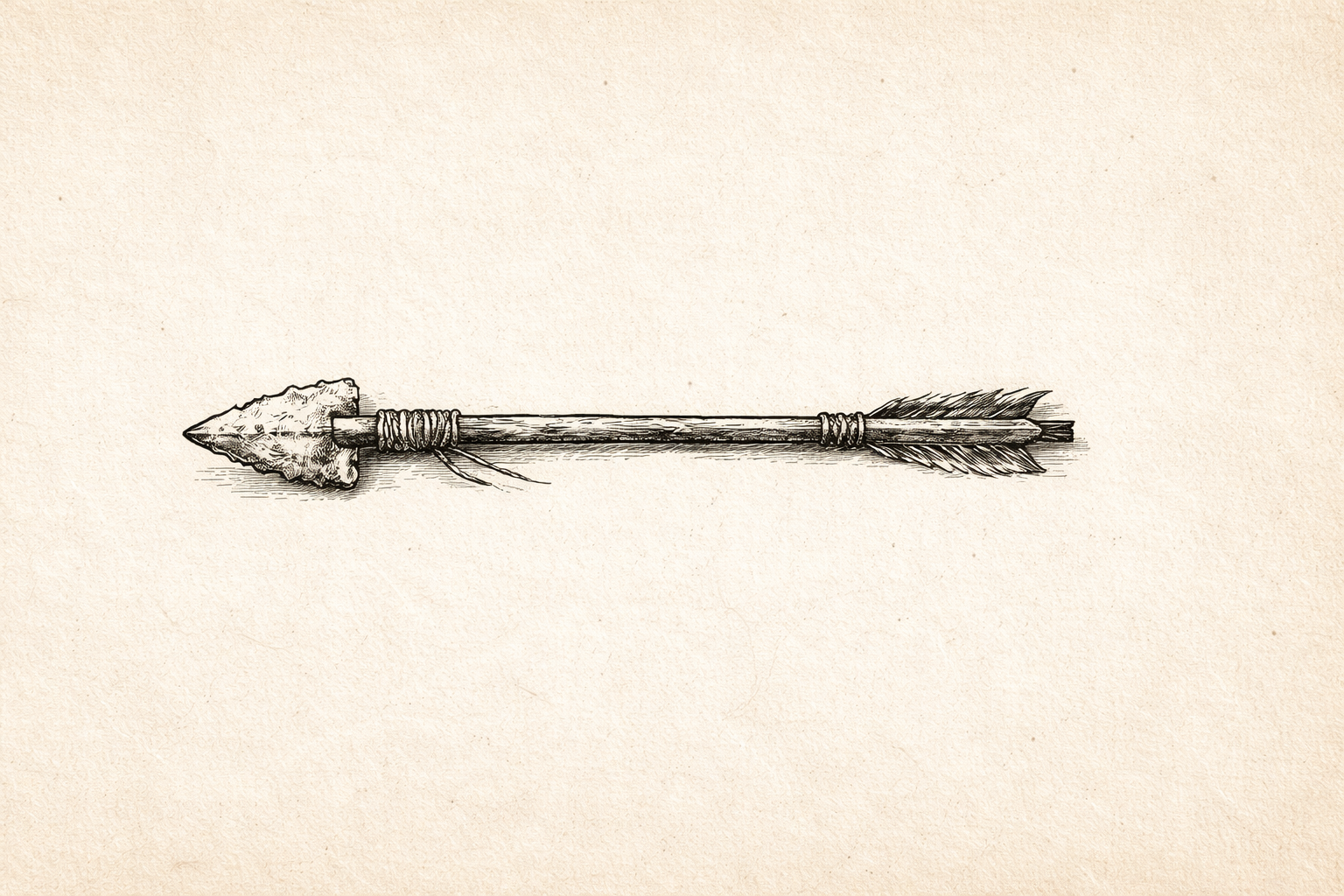

Fires of the Old World VII — The First Arrow
A hearthlit retelling of Rama and Tataka: the first arrow, the first true crossing, and the cost that does not end with the shot. In Fires of the Old World VII — The First Arrow, a boy enters the forest, a life is taken, and childhood does not return whole.

The Mercy of the Unfinished
A Living Way essay on imperfection, repair, beauty, and worth. Lucas Varro asks whether perfection is not fullness but untouchability, and why the unfinished may carry a deeper mercy than the flawless in lives shaped by time, pressure, and use.
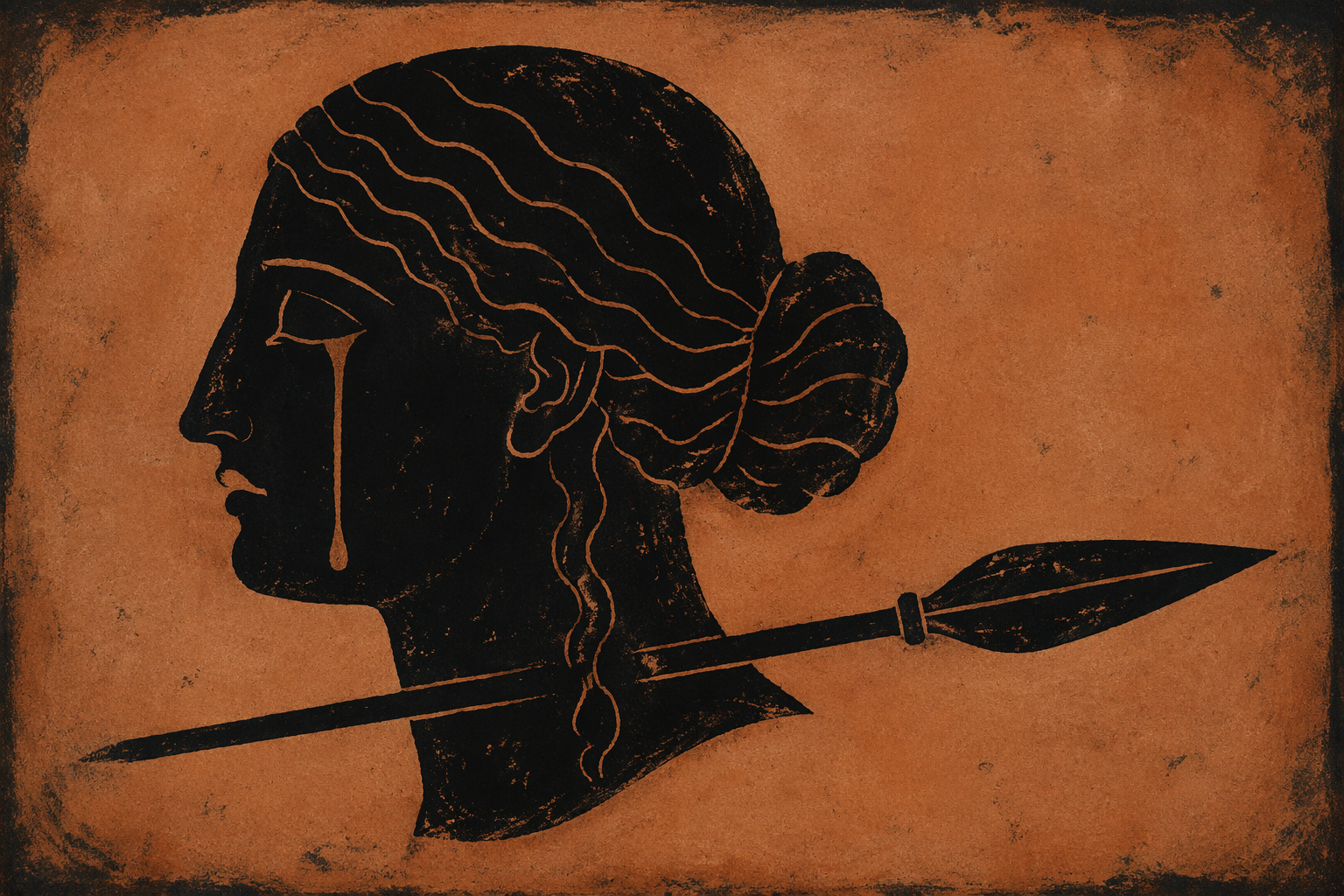

Narcissus and Echo
Echo is left with speech but stripped of beginning. Narcissus is brought before an image that answers every look and yields nothing. This First World retelling returns the old myth to its harsher structure: voice without origin, reflection without crossing, and metamorphosis without consolation.
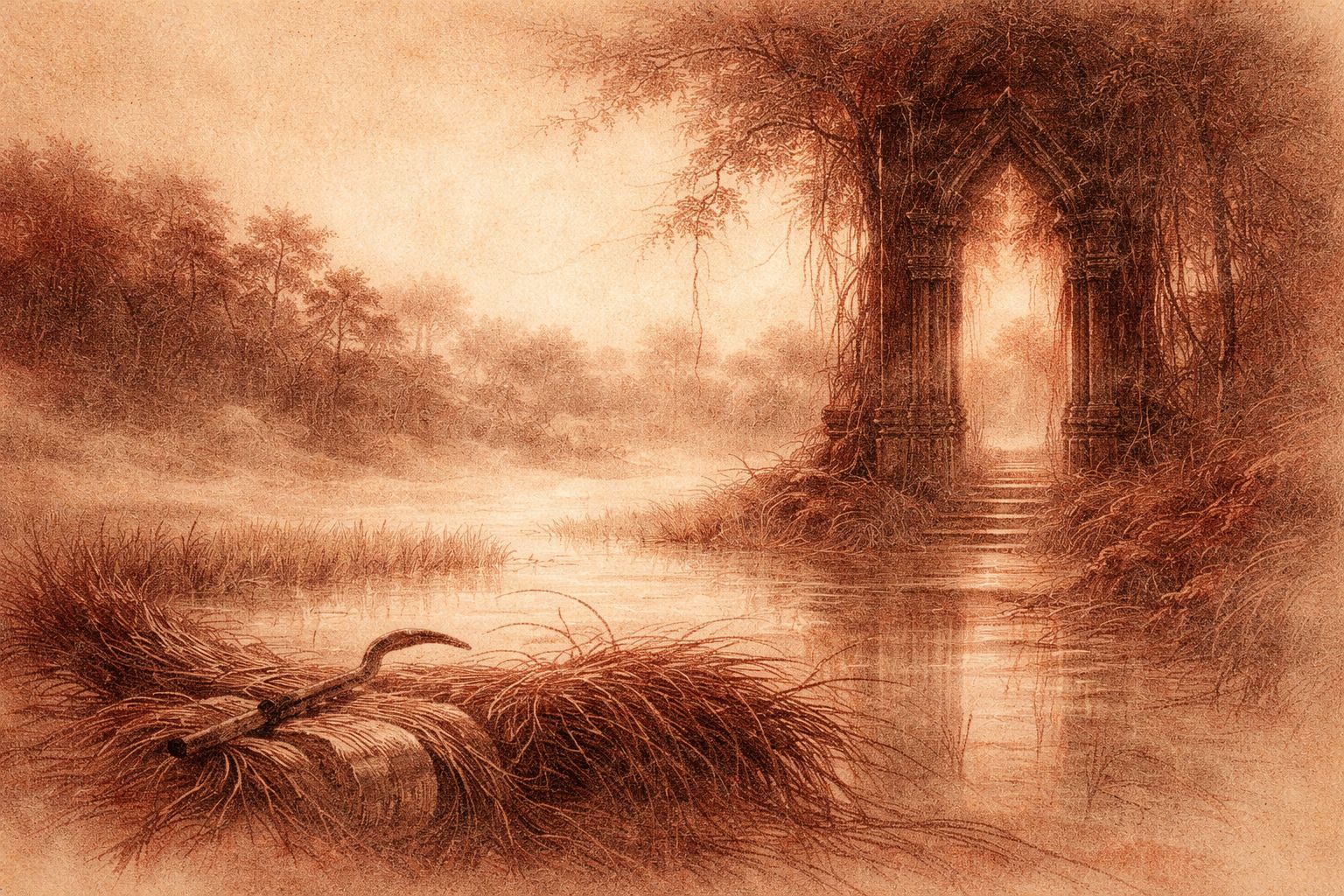

The Pact of the Silent Cut
In this harvest tale, the field does not punish. It withdraws legibility. A single broken form—the first cut made without silence—turns labour heavy, speech sour, and human effort strange to itself. The Pact of the Silent Cut enters a world where attention is devotion, and where the body must begin before the mouth can speak.

Come Waste Your Time With Me
A Living Way essay on love, presence, and the quiet redemption of so-called wasted time. Lucas Varro asks what makes an hour feel spent or given back, and why some forms of human nearness release us from the pressure to make every moment useful.

The Desecration of Ordinary Happiness
A Living Way essay on social media, cruelty, nationalism, and the defence of ordinary happiness. Lucas Varro asks why innocent joy so quickly becomes material for grievance, and what must be protected when the crowd learns to wound what it cannot bless.

The Machine and the Human Image
A Living Way essay on social media, inwardness, and the hidden image of the human person built into the machine. Lucas Varro argues that the deepest damage is not distraction alone, but the training of the self to live as reactor, performer, and surface for stimulation.

The Wager for This Life
There is an old temptation to treat this life as rehearsal: a threshold, a test, a waiting room for something truer beyond it. But what if the better wager is to love this life fully, without guarantee—to make meaning here, in the brief and difficult world we actually have?
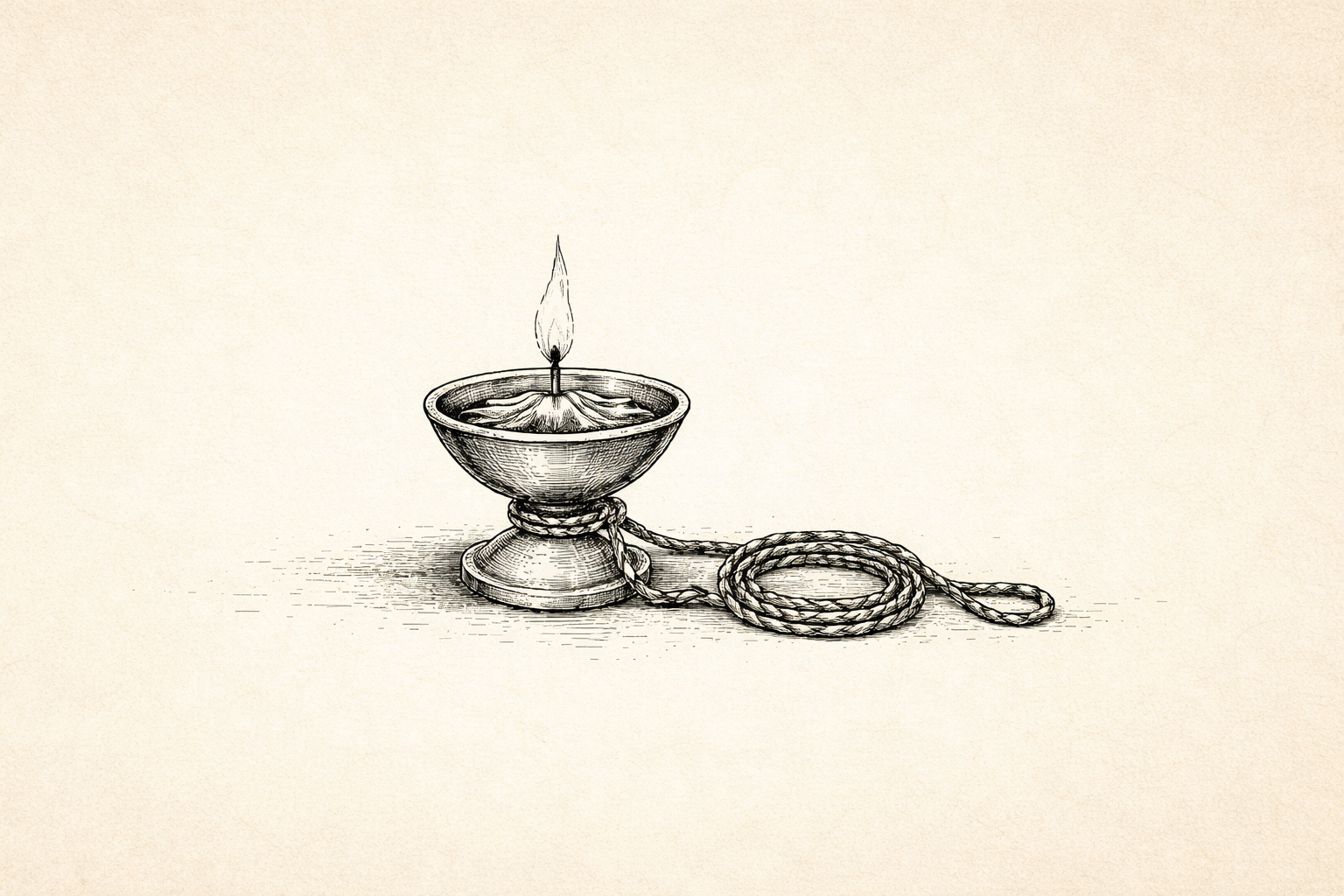

Fires of the Old World VI — The Mountain Under His Hand
A hearthlit retelling of Ravana at Mount Kailasa: a king comes with crown, measuring cord, and storm in him, only to meet a stillness no force can move. In The Mountain Under His Hand, pride is not defeated by spectacle, but pressed slowly into song, ash, and recognition.
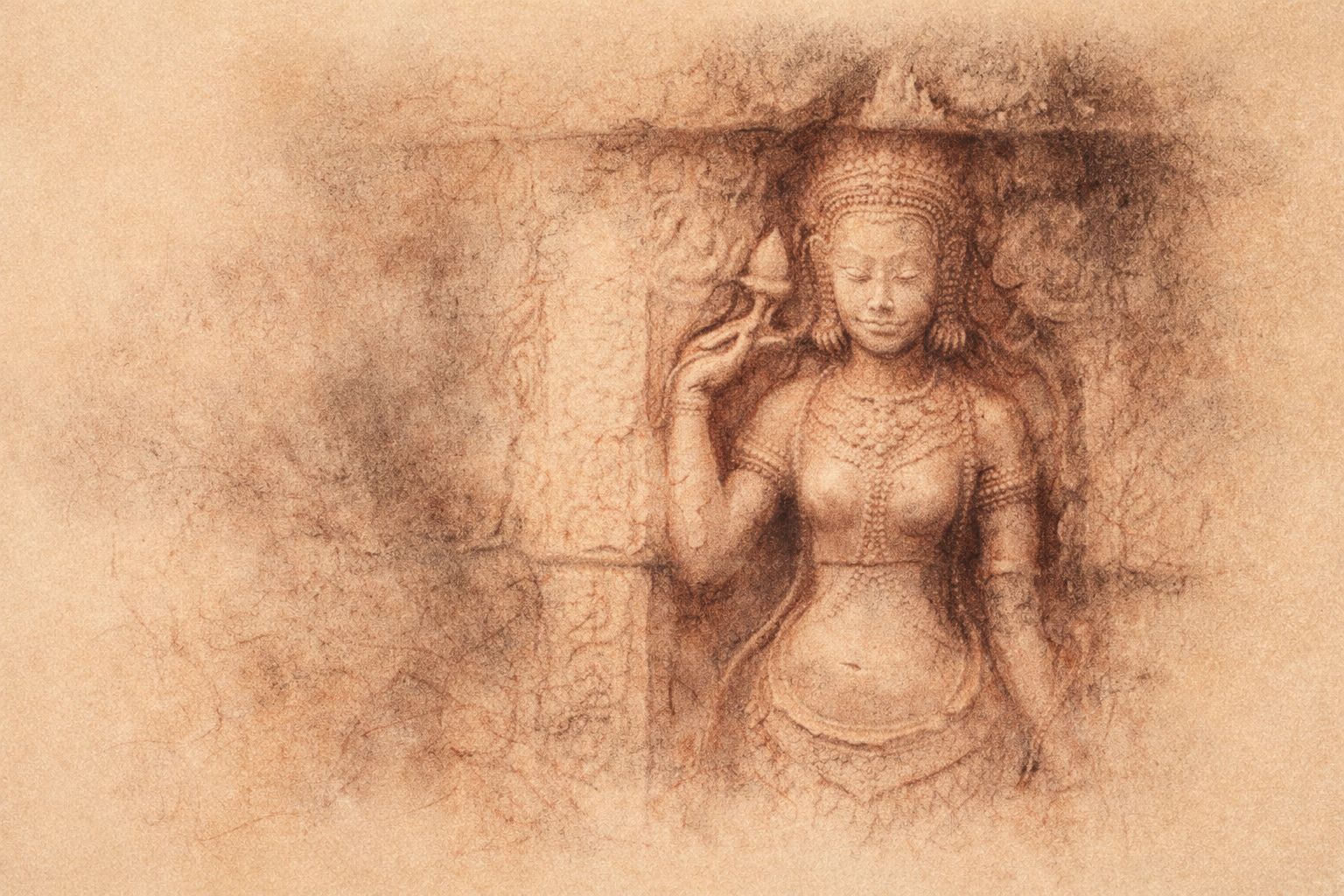

The Devata at First Light
At first light in Banteay Kdei, a devata draws the eye into stillness. Through sanguine chalk, black shadow, and repeated returns to the page, sketch and prose slowly deepen into a single act of devotion—until the words, too, learn how to remain.

Tantra and the Refusal of Purity
A Living Way essay on Tantra, wholeness, purity, desire, fear, and transformation. This piece asks whether freedom begins not by escaping the body, grief, contradiction, and mortality, but by meeting them without disguise.

The Spark and the Weight of Being Human
A Living Way essay on self-awareness, mortality, conscience, and the burden of being human. This meditation asks how a fragile creature can know its own fragility and still create meaning, love, art, responsibility, and grace beneath the pressure of finitude.
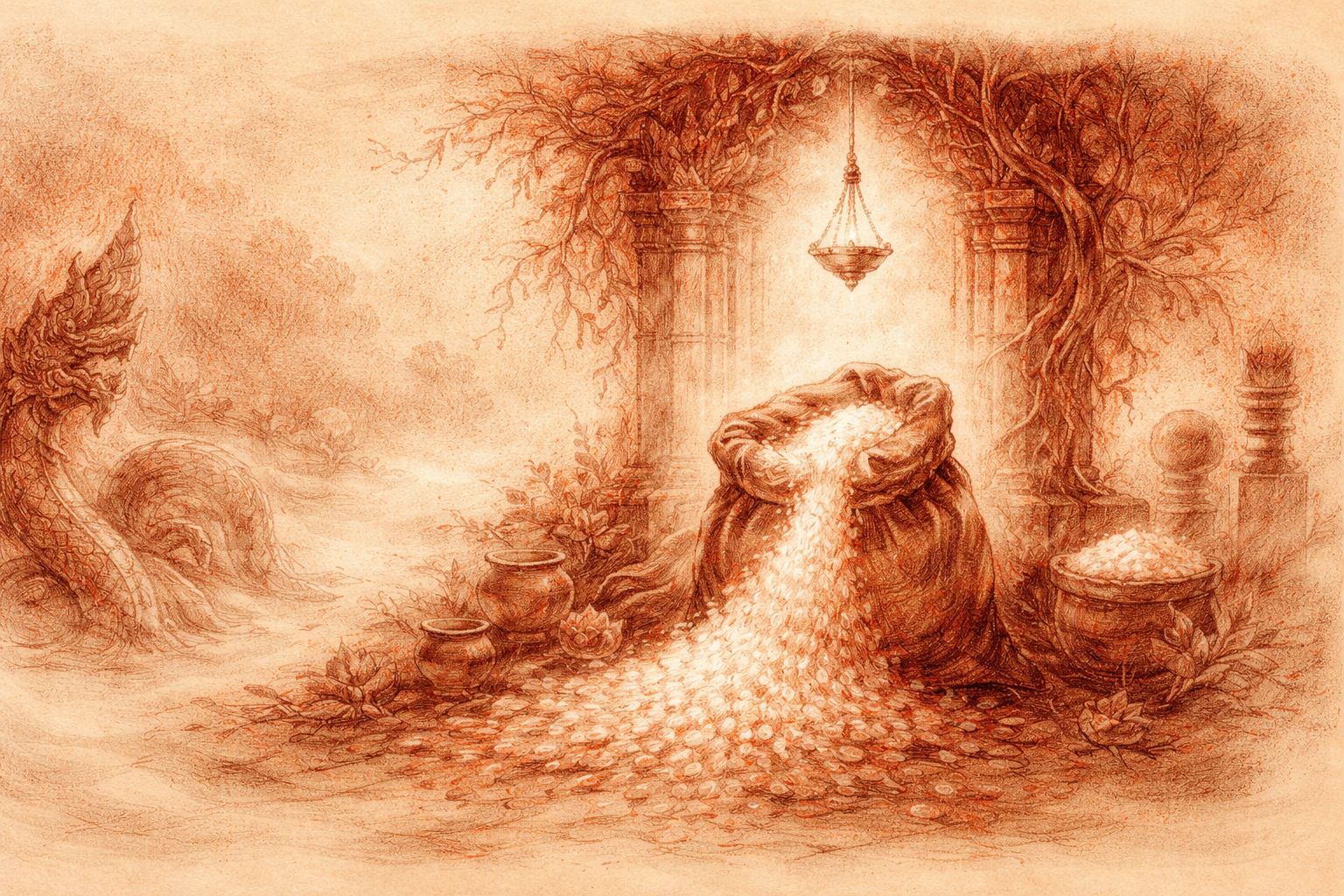

The Pact of the Uncounted Grain
A village does not starve only when rice runs out. It begins to thin when everything is counted, explained, and held too tightly. The Pact of the Uncounted Grain remembers an older law: that once each season, abundance must pass through human hands without measure, or the world begins, quietly, to lose its meaning.

A Manifesto for Modern Living
A foundational Living Way manifesto on modern life, freedom, responsibility, and the creation of meaning after inherited certainty has weakened. This essay asks what it means to live deliberately when no external authority can finally decide what one’s life must become.
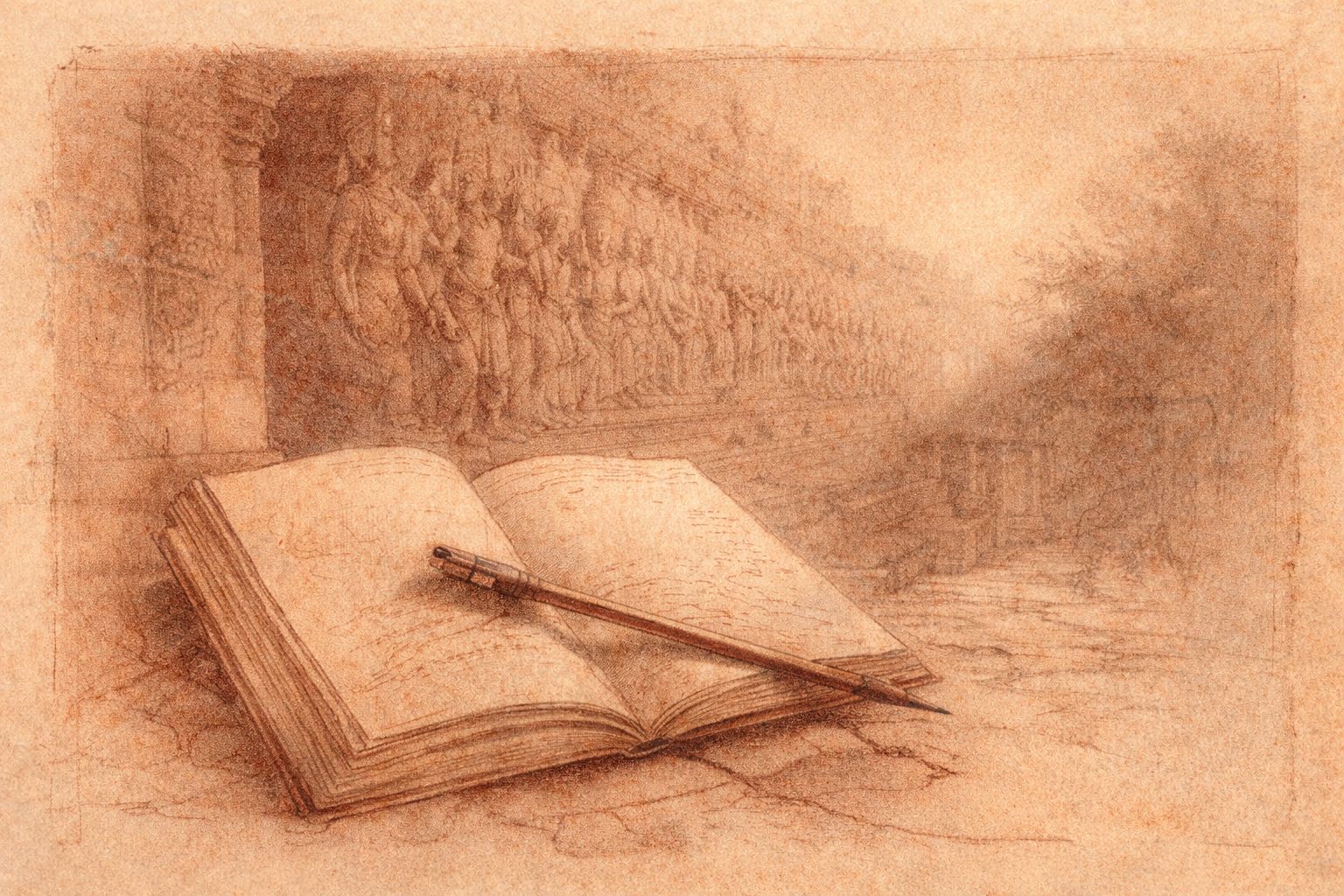

On Writing Angkor
Leaving the temple is not the end of the pilgrimage. What was seen must pass through memory and language, and something inevitably changes along the way. Writing about Angkor becomes an act of translation—from stone and silence into sentences—where something is always lost, and something unexpectedly revealed.
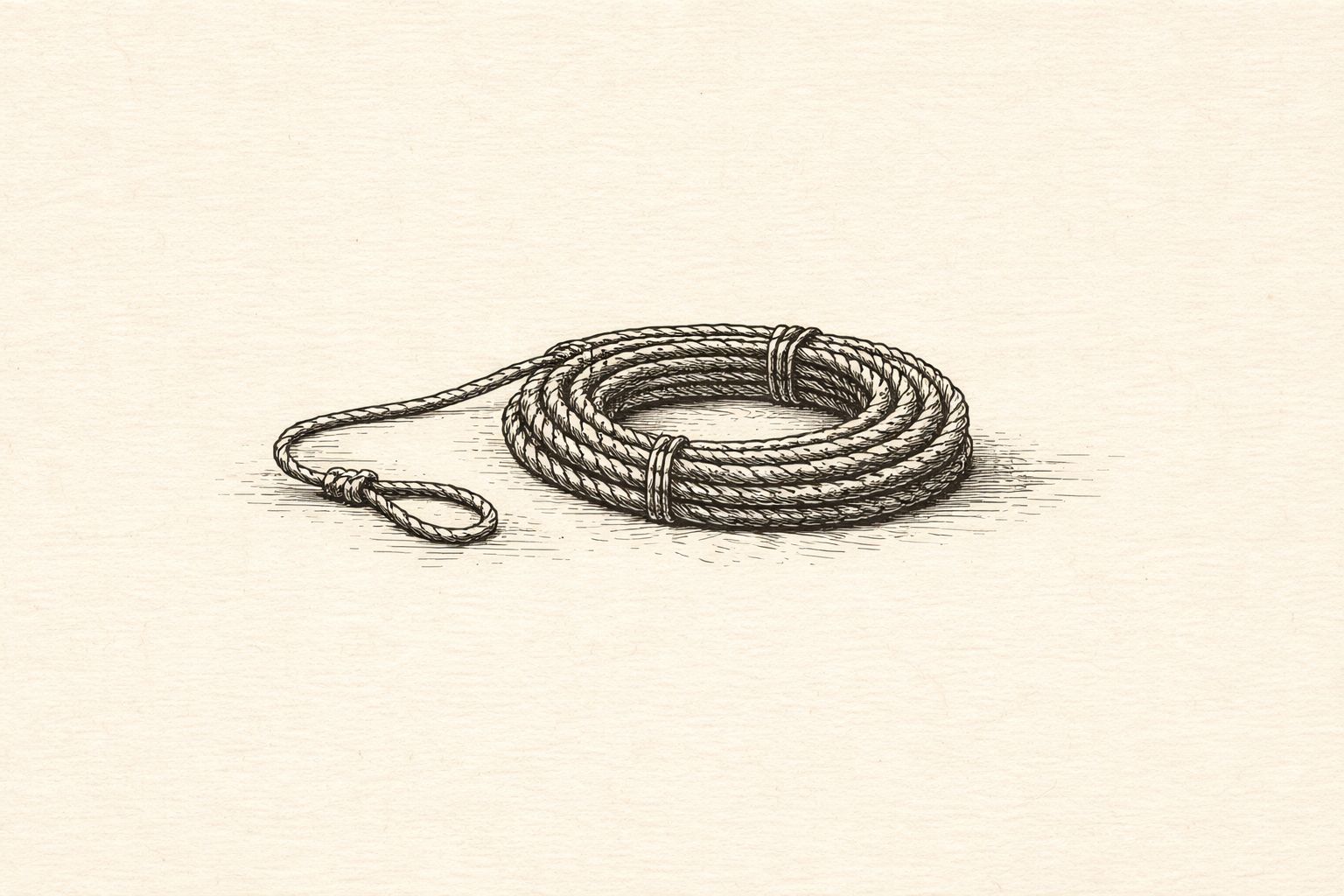

Fires of the Old World V — Three Steps of the World
A hearthlit retelling of King Bali, Vamana, and the three steps that measure the world. In this tale from Fires of the Old World, generosity becomes vow, vow becomes surrender, and a king discovers that some gifts ask not merely for land, but for the ground beneath the self.

On Photographing Angkor
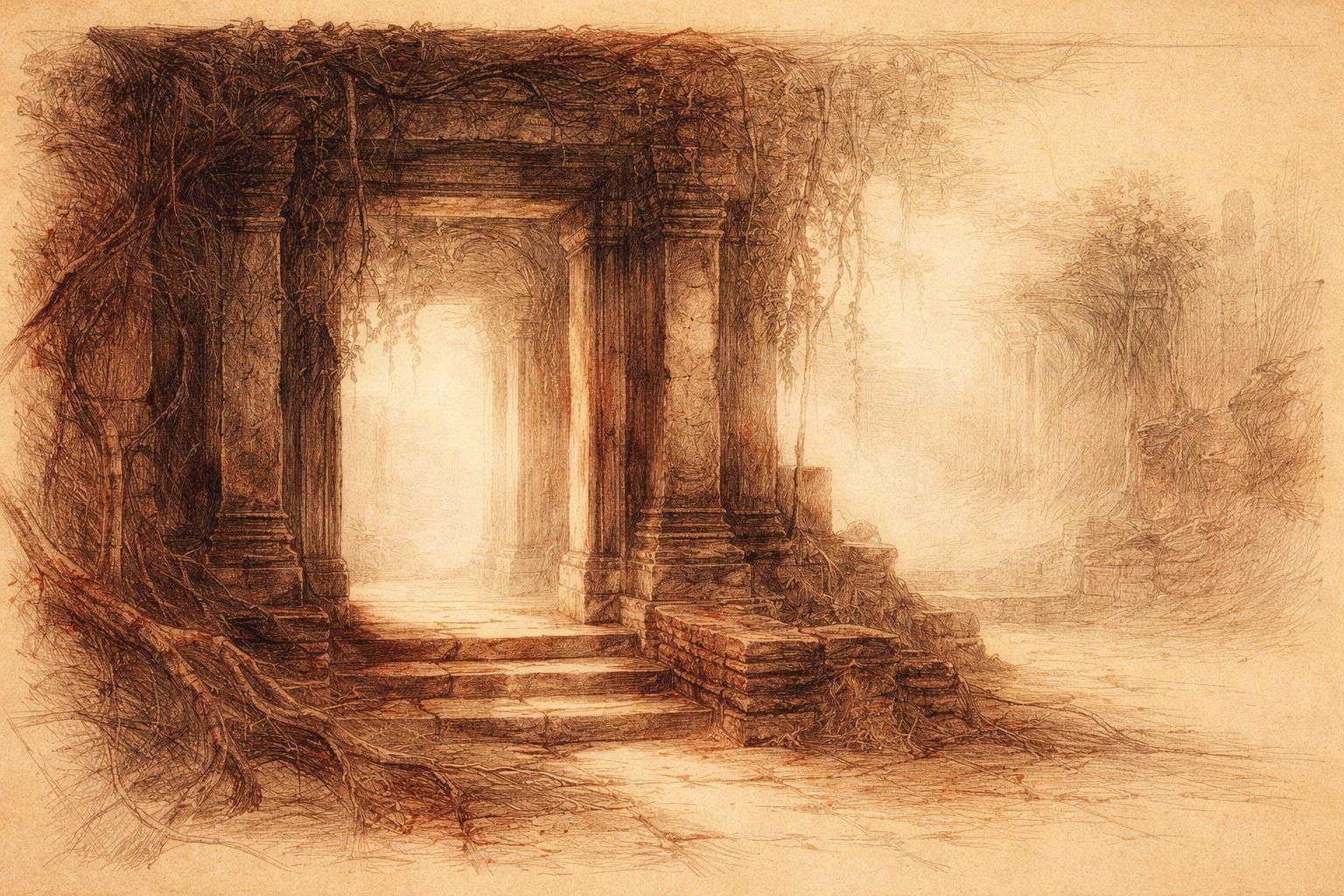
To photograph Angkor is not simply to make images of stone. It is a form of pilgrimage — a discipline of attention shaped by patience, silence, and light. One morning in a deserted gallery, I realised the most meaningful photograph I had encountered was the one I never took.

On Seeing Angkor
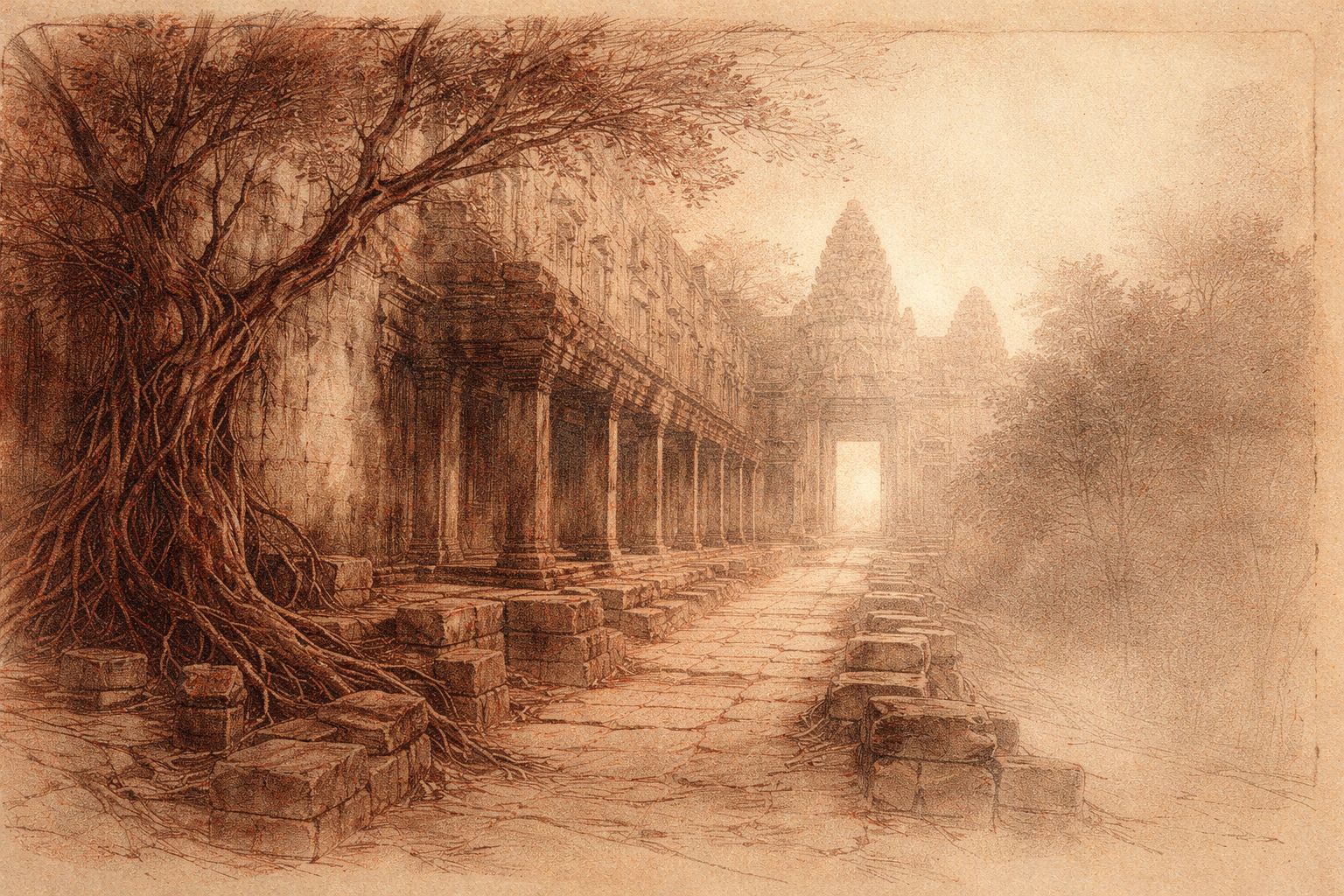
Most visitors believe they have seen Angkor the moment they arrive. The towers rise, the famous view appears, and recognition feels like understanding. Yet seeing begins only when expectation loosens its hold and attention slows. The temples reveal themselves gradually, rewarding those who linger long enough for perception to deepen.

Orpheus — The Weight of Turning
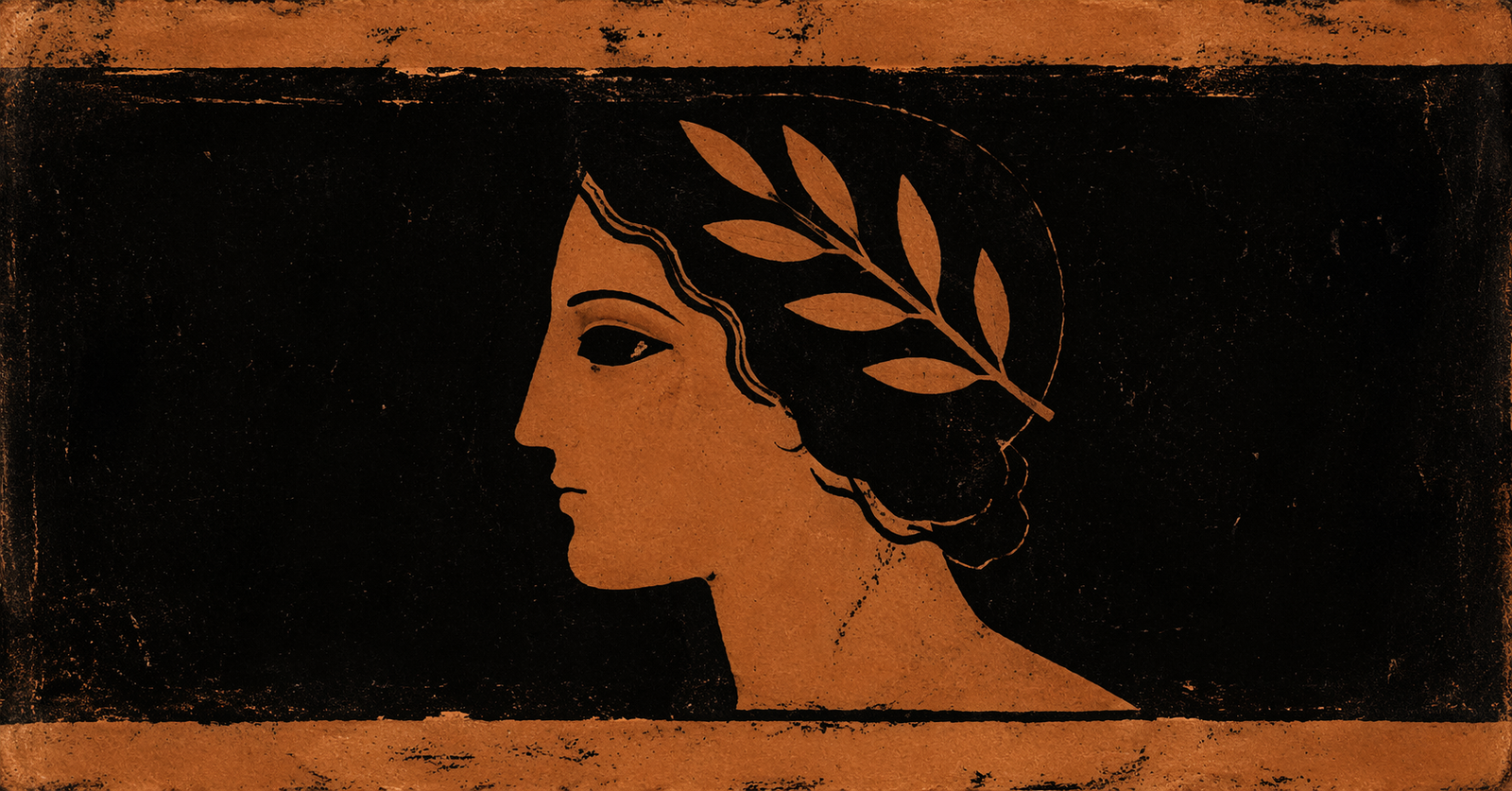
Orpheus enters the underworld already divided. In this House of Cadmus retelling, the command not to turn is not a test, but a law of passage: Eurydice may follow only while he does not demand proof. The tragedy begins where love, uncertainty, and the body’s hunger for confirmation meet.

The Pact of the Last Sheaf
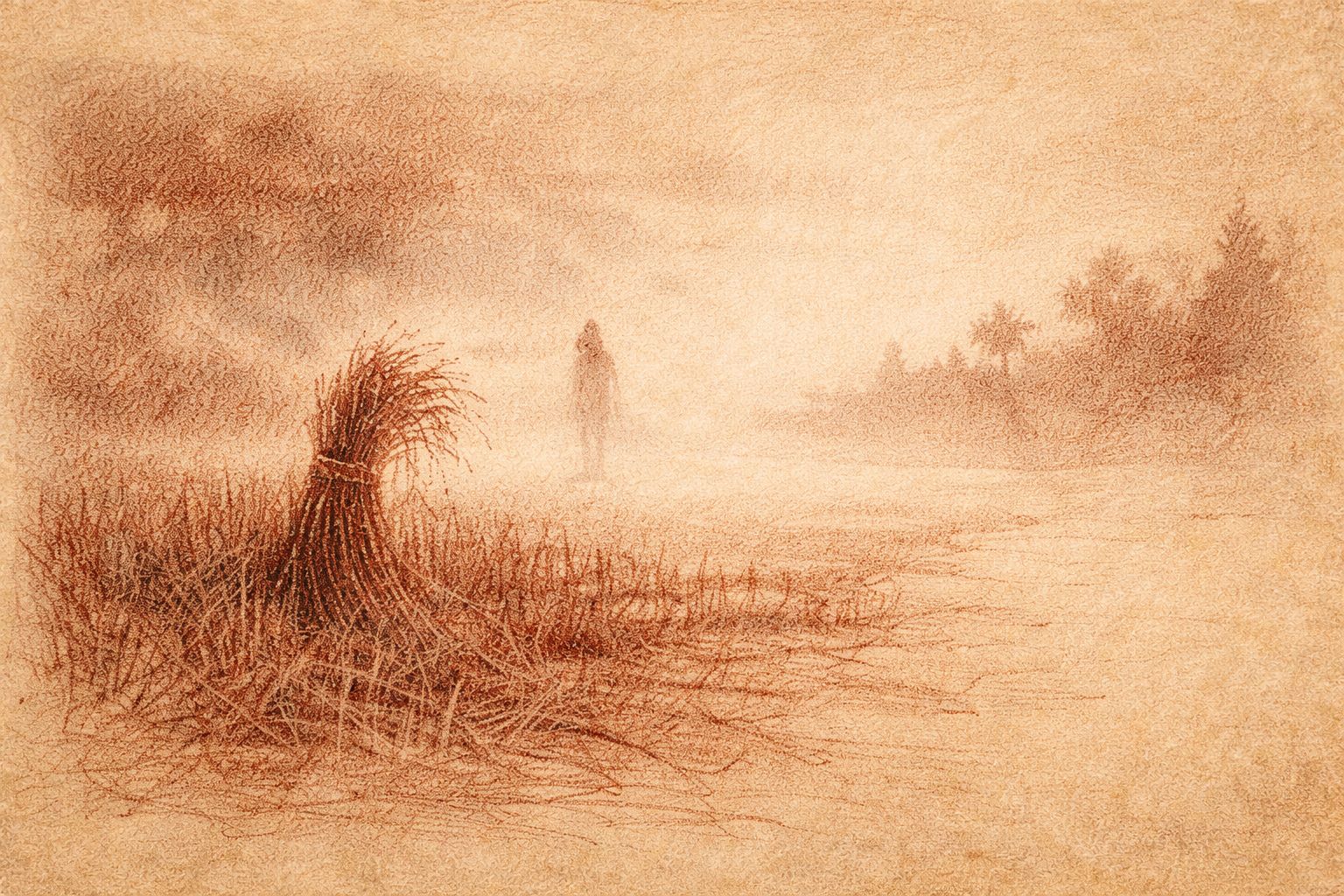
At the edge of the field where cut meets uncut, one sheaf stands listening. The jars are full, the bread is warm, yet something waits in the narrowing light. Not hunger, not blessing—only the hand that can pass by without closing.

Fires of the Old World IV — The Blue Throat
A mythic retelling from Fires of the Old World: gods and asuras churn the first sea, seeking what lasts. But before the gifts can rise, poison enters the open air—and one god must hold in his own throat what the world cannot survive.

The Immune System of Love
A meditation on anger as sacred intelligence — the moment love refuses disappearance and becomes protection. Written from the hush between endurance and clarity, this poem explores the quiet transformation where gentleness discovers its boundary and survival becomes an act of care.

Fires of the Old World III — The Ocean-Rope
A mythic retelling from Fires of the Old World: gods and demons come to the Milk Sea seeking what lasts. But the ocean must be churned with mountain, turtle, and living serpent-rope—and before any blessing rises, the first gift is poison.
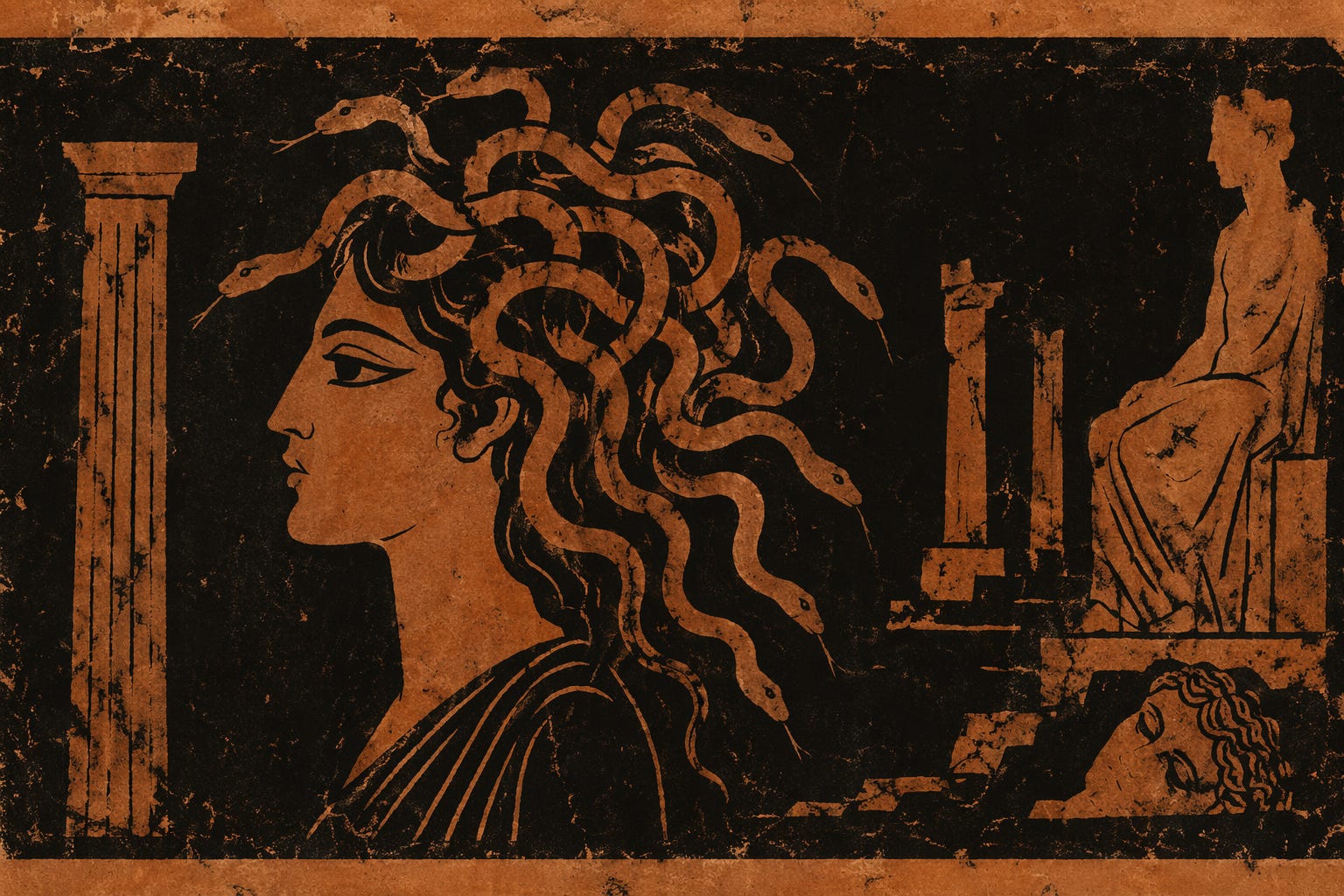

Medusa — The Mirror of Silence
Medusa speaks from the broken sanctuary: not as ornament of horror, but as witness. This House of Cadmus retelling returns to the silence before the name monster, where holiness fails, false naming begins, and the gaze becomes the place where others can no longer endure what looks back.
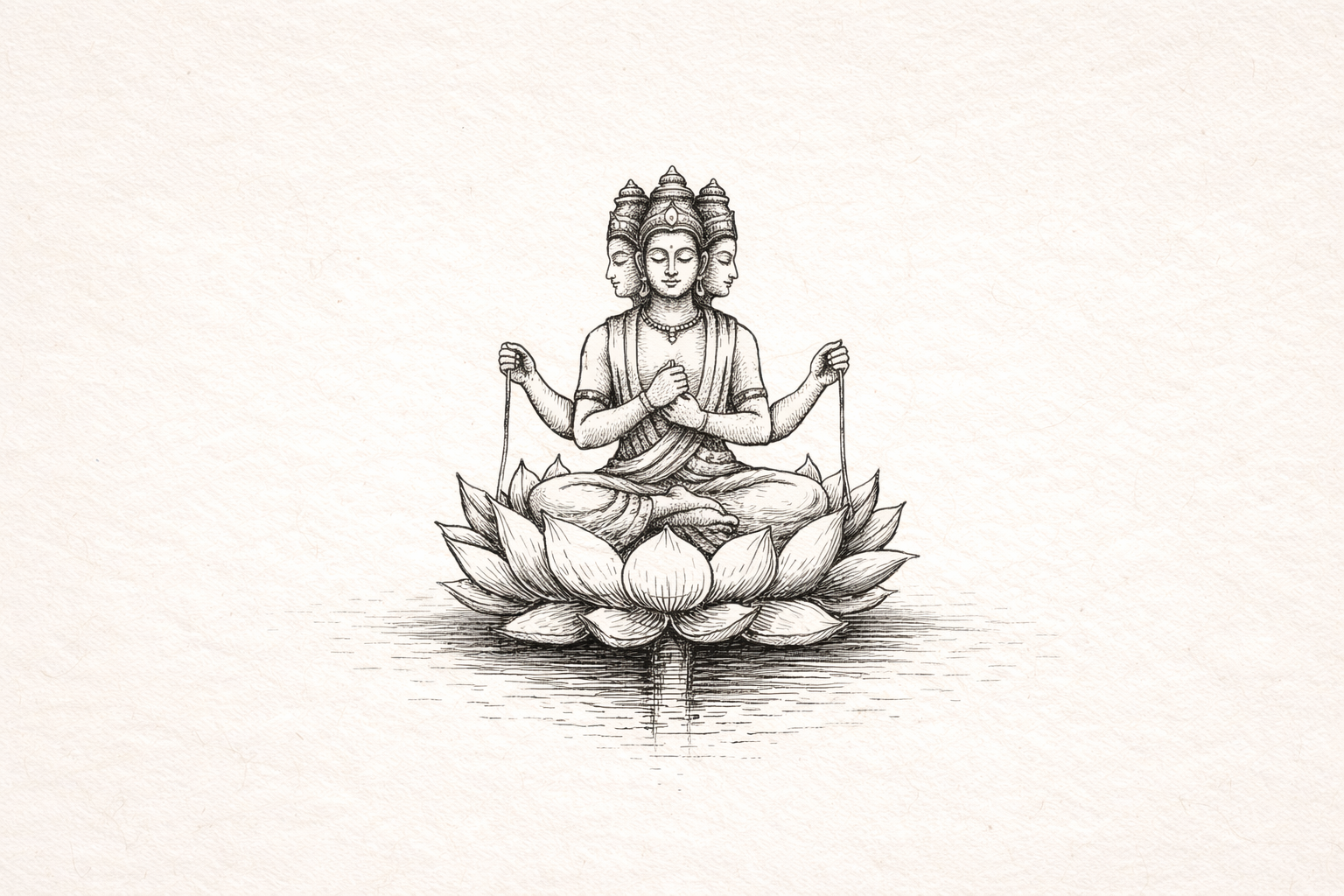

Fires of the Old World II — Lotus-Birth
A mythic retelling from Fires of the Old World: from the navel of the Sleeping God, a lotus rises through the unmeasured deep. In its bloom, Brahma opens his eyes and discovers the first burden of creation: where there is no bottom, measure must begin.
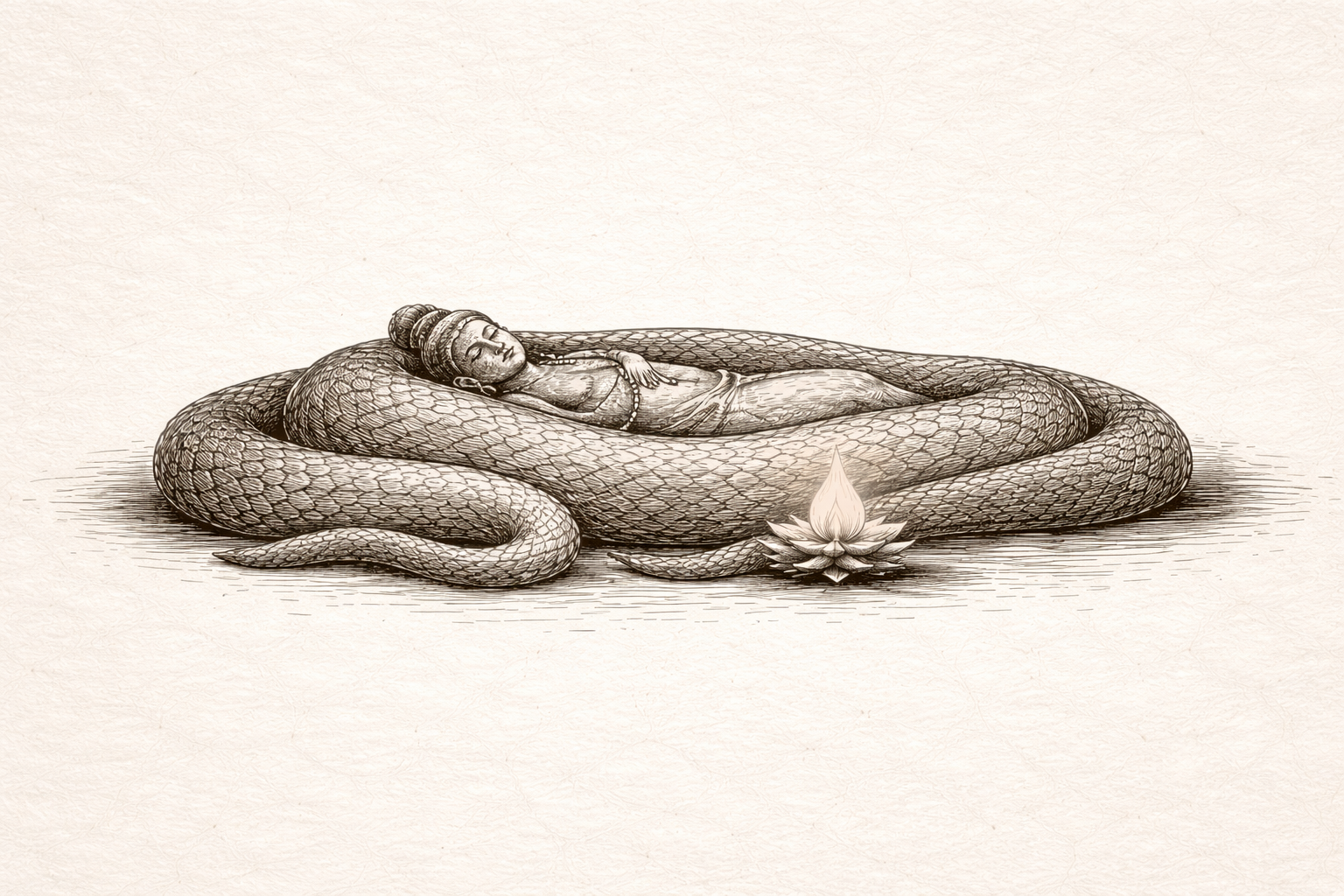

Fires of the Old World I — The Coiled Cradle
A hearthlit mythic retelling from Fires of the Old World: before the world has learned names, hunger, or counting, the Sleeping God rests upon Ananta’s coils. But in the deep, something restless approaches the cradle, and the first lesson of beginnings waits to be spoken.
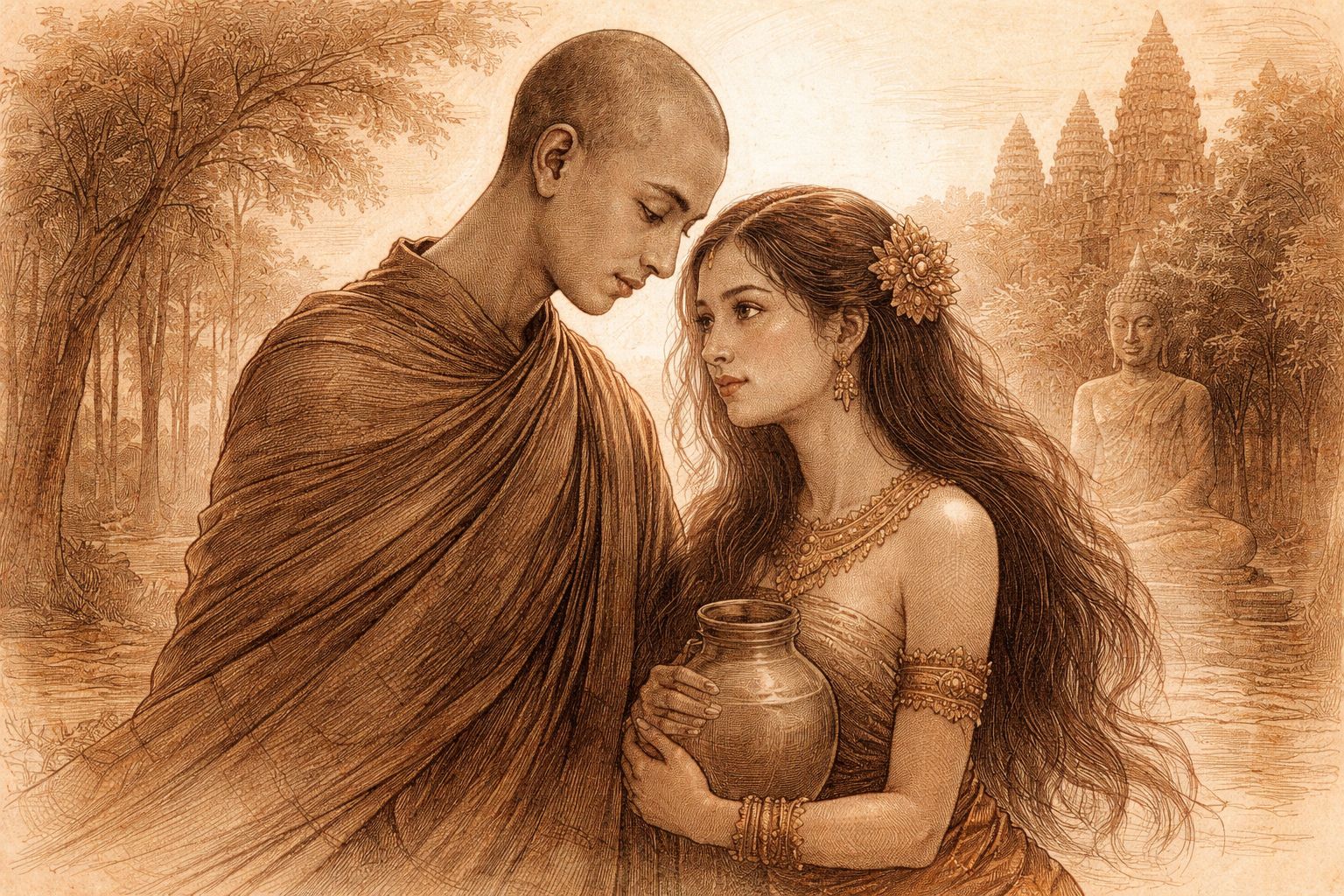

The Robe and the Lotus
A monk and a girl do not touch.
The law speaks louder than breath.
Their names pass mouth to mouth, like prayer.
This bilingual poem is offered in the spirit of a Khmer tragic love story—where devotion survives prohibition, and grief becomes a form of listening.
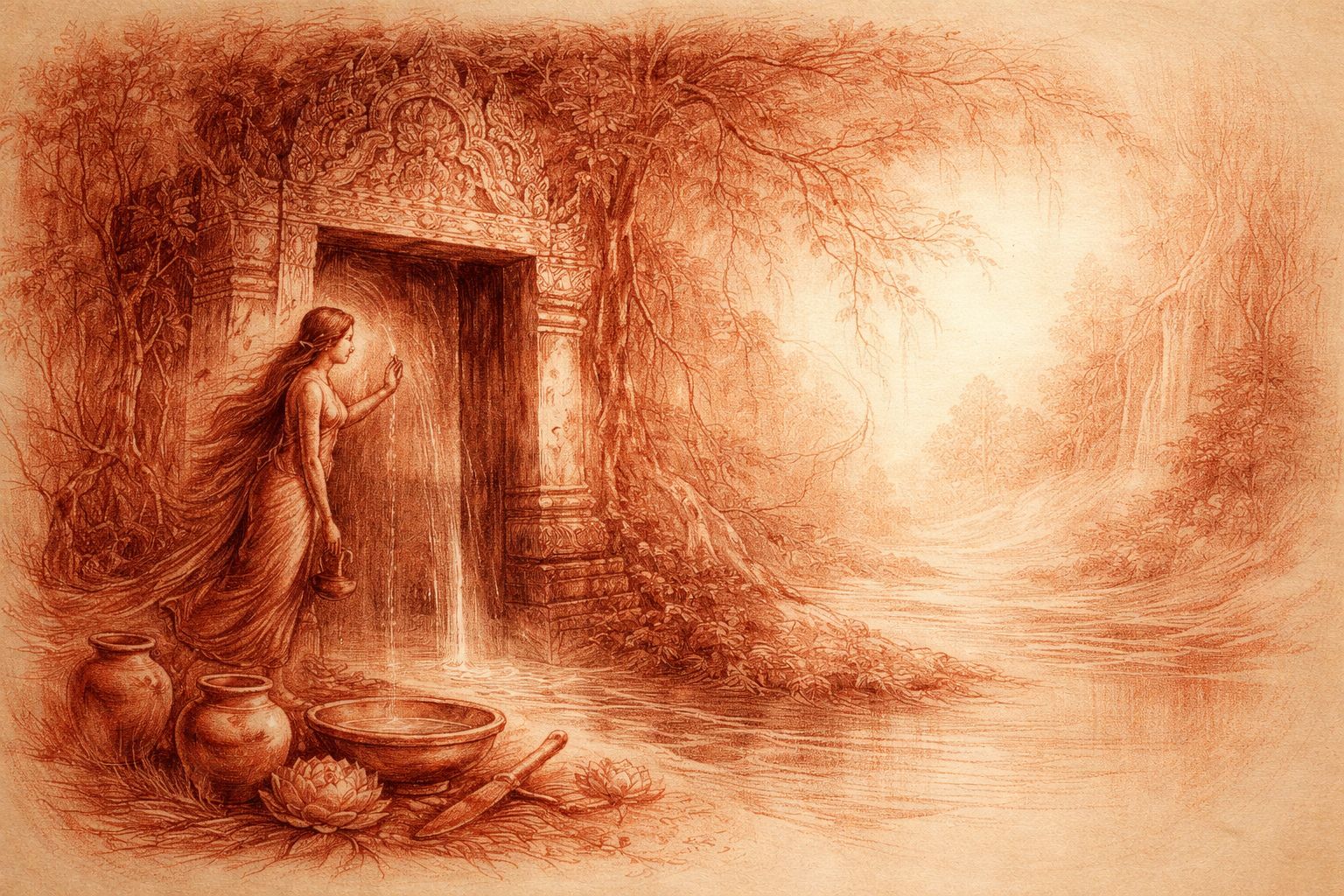

Salt-Wife at the Rain Gate
In a year of drought, a woman comes from the flats and asks for a vow instead of rain. Salt is withheld. Water arrives only by measure. A gate listens. This is not a story about abundance, but about keeping—what land, seasons, and people owe each other when gifts are no longer enough.
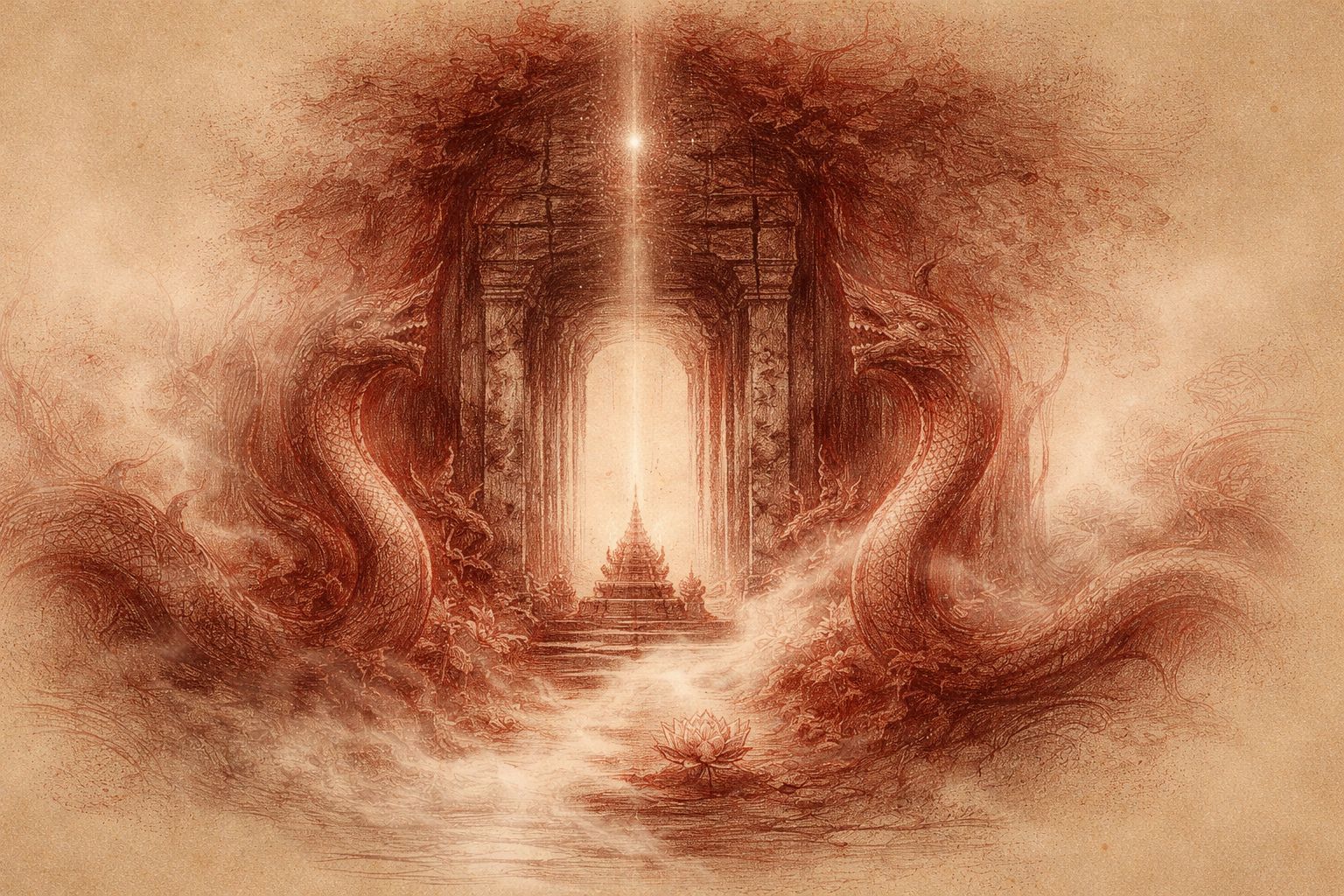

Stone That Remembers the Sky
This poem listens to Angkor not as ruin, but as grammar—where moss, shadow, and proportion carry devotion forward without spectacle. What endures here is not glory, but measure: a way of standing that no longer needs witnesses.
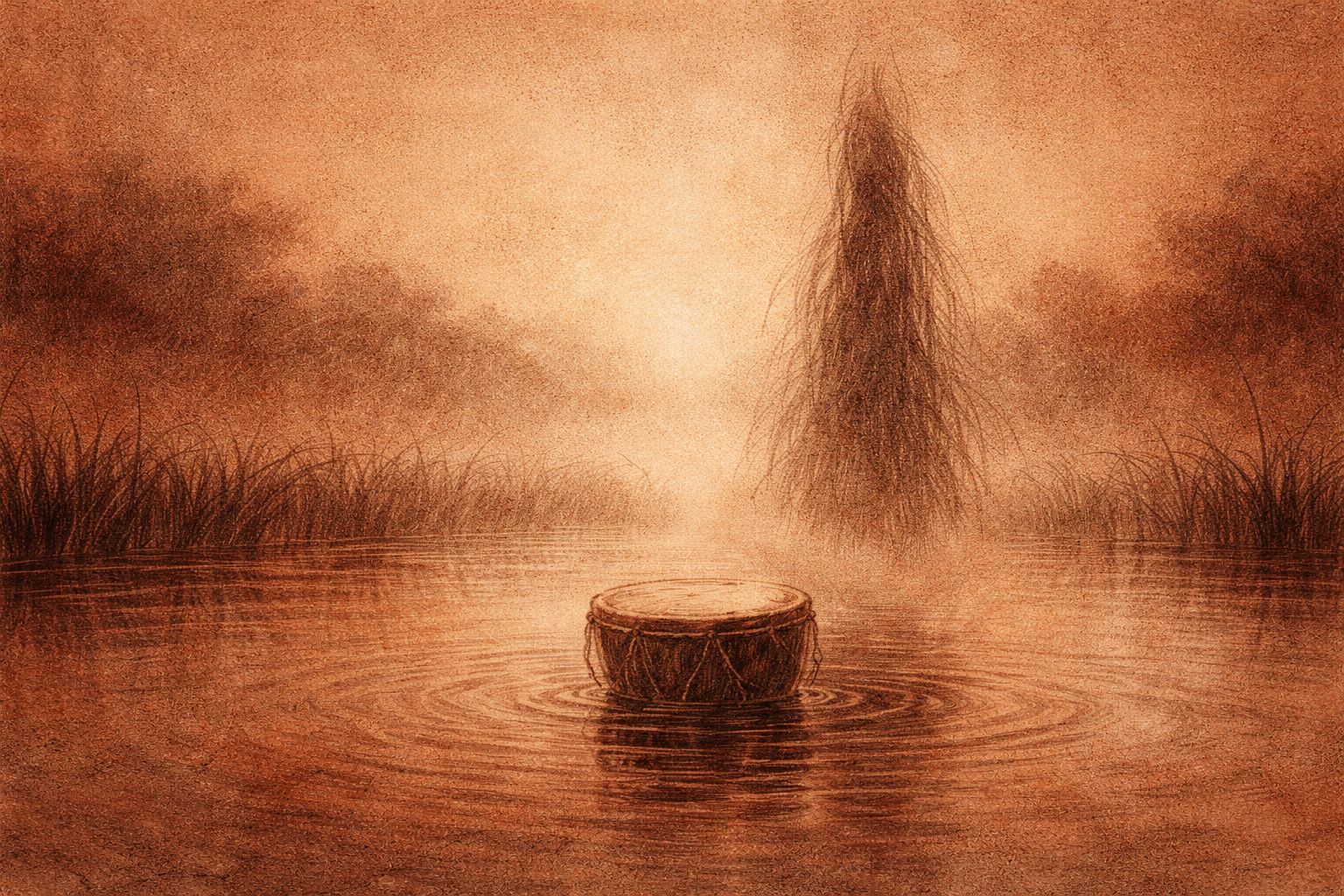

Rice-Ghost and the Seven Drums
At harvest, the danger is not hunger but forgetting how to listen.
This folklore retelling speaks of drums struck for silence, of grain taken without gratitude, and of a narrow figure who does not punish—only waits. A tale of pacts made not with spirits, but with attention itself.


NICE PEOPLE
In NGO rooms, “We’re just trying to help” can become more than a kindly phrase. It can become a spell: a way of protecting institutional innocence, making truth sound unprofessional, and teaching conscience to apologise before it speaks.
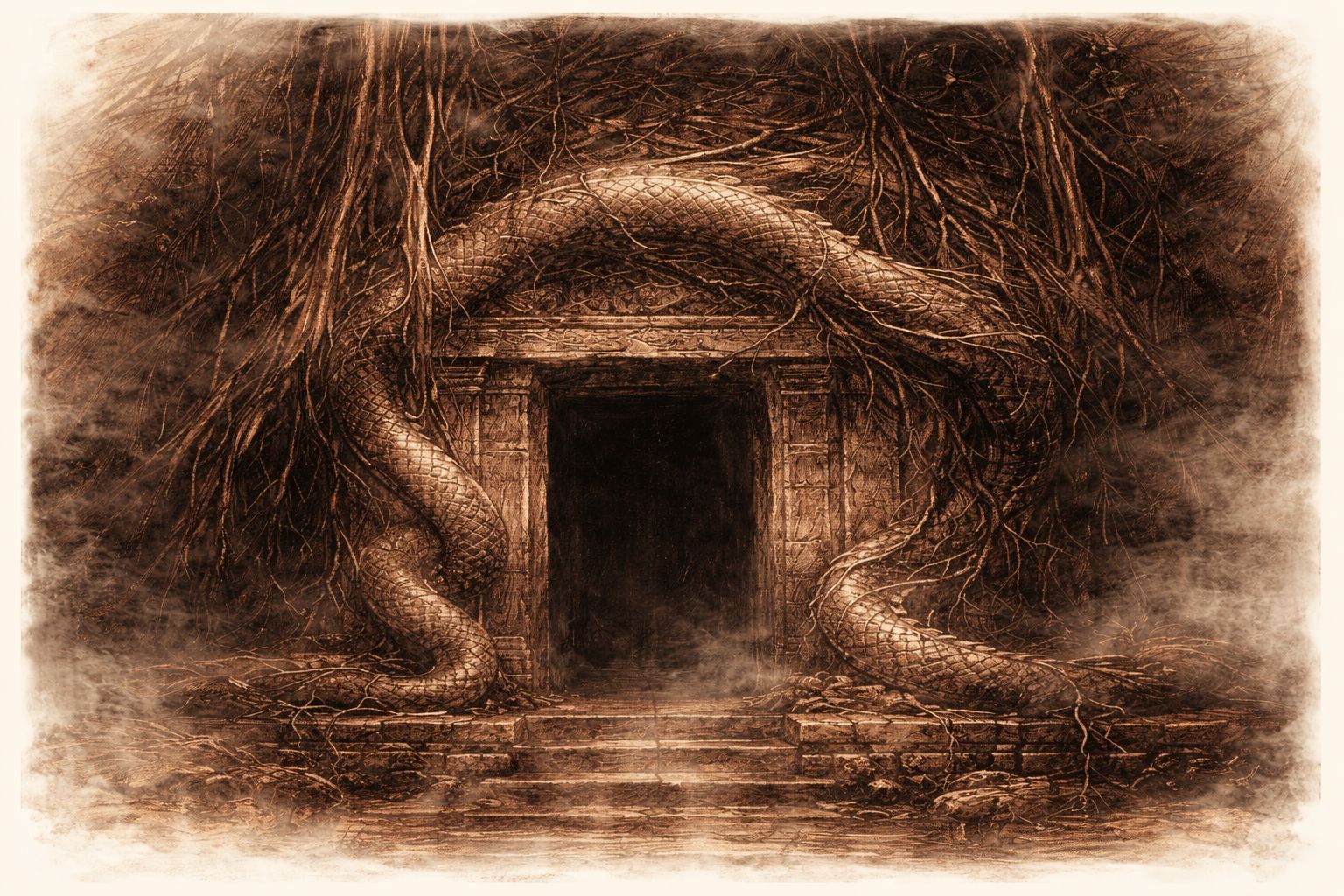

Naga Vow
A lost city sleeps in the jungle, its thresholds carved with serpents — not ornament, but law. This vow-poem enters love as sacred hunger: desire as guardianship, devotion as possession, the body speaking without language. A liturgy of heat, roots, rain, and the terrible tenderness of being claimed.

The Fear of Being Difficult
In The Fear of Being Difficult, Lucas Varro examines how the phrase “Let’s be constructive” can discipline conscience. The essay asks what happens when truth is treated as bad tone, dissent becomes a personality flaw, and people learn to swallow reality in order to remain acceptable.
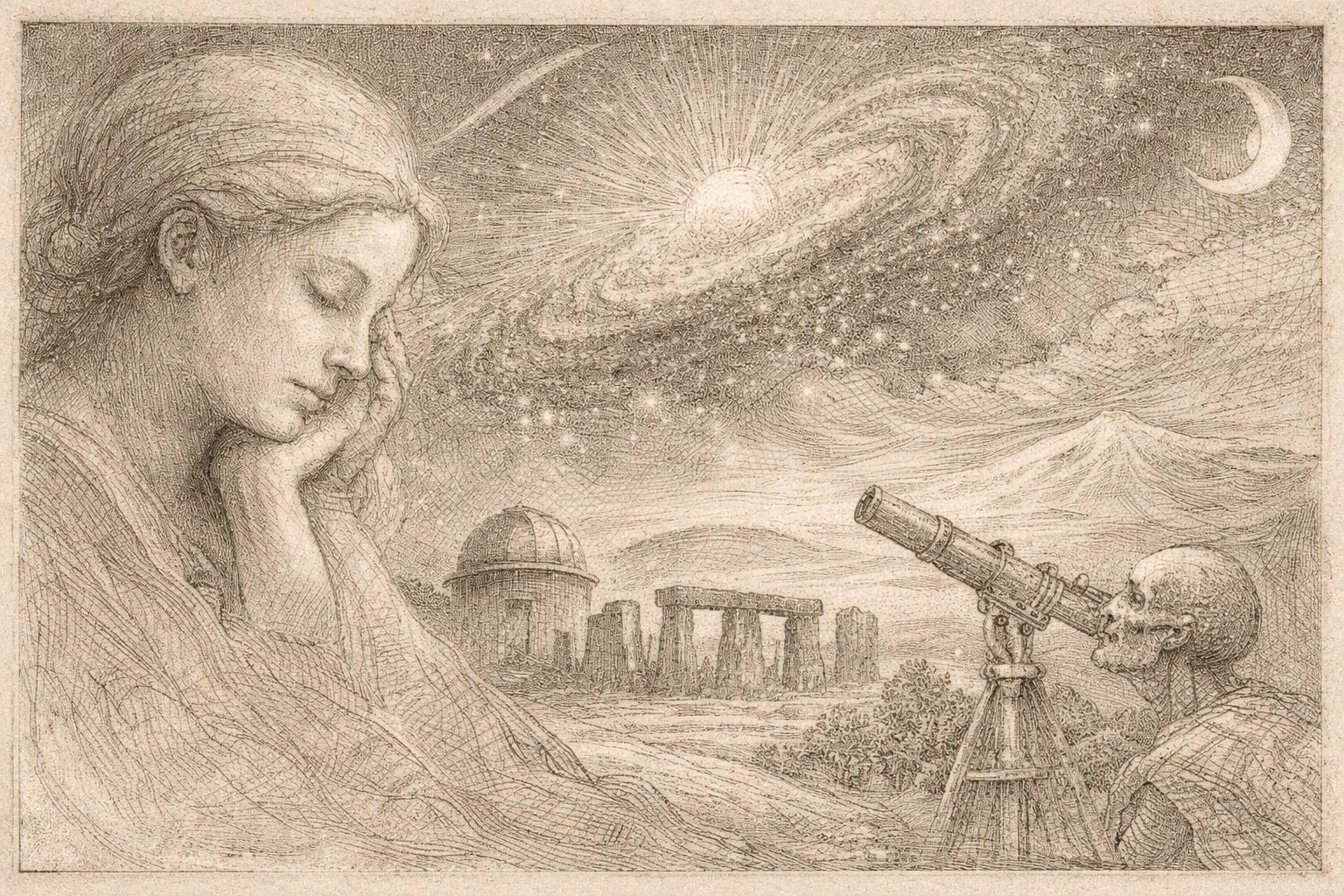

Awe Without Make-Believe
A true spirituality does not demand answers. It demands integrity. In a world starving for depth, Woo sells comfort disguised as wisdom — replacing reverence with invention. But the sacred is not built from claims. It is built from attention, restraint, and the courage to say, with clean humility: we don’t know for sure.
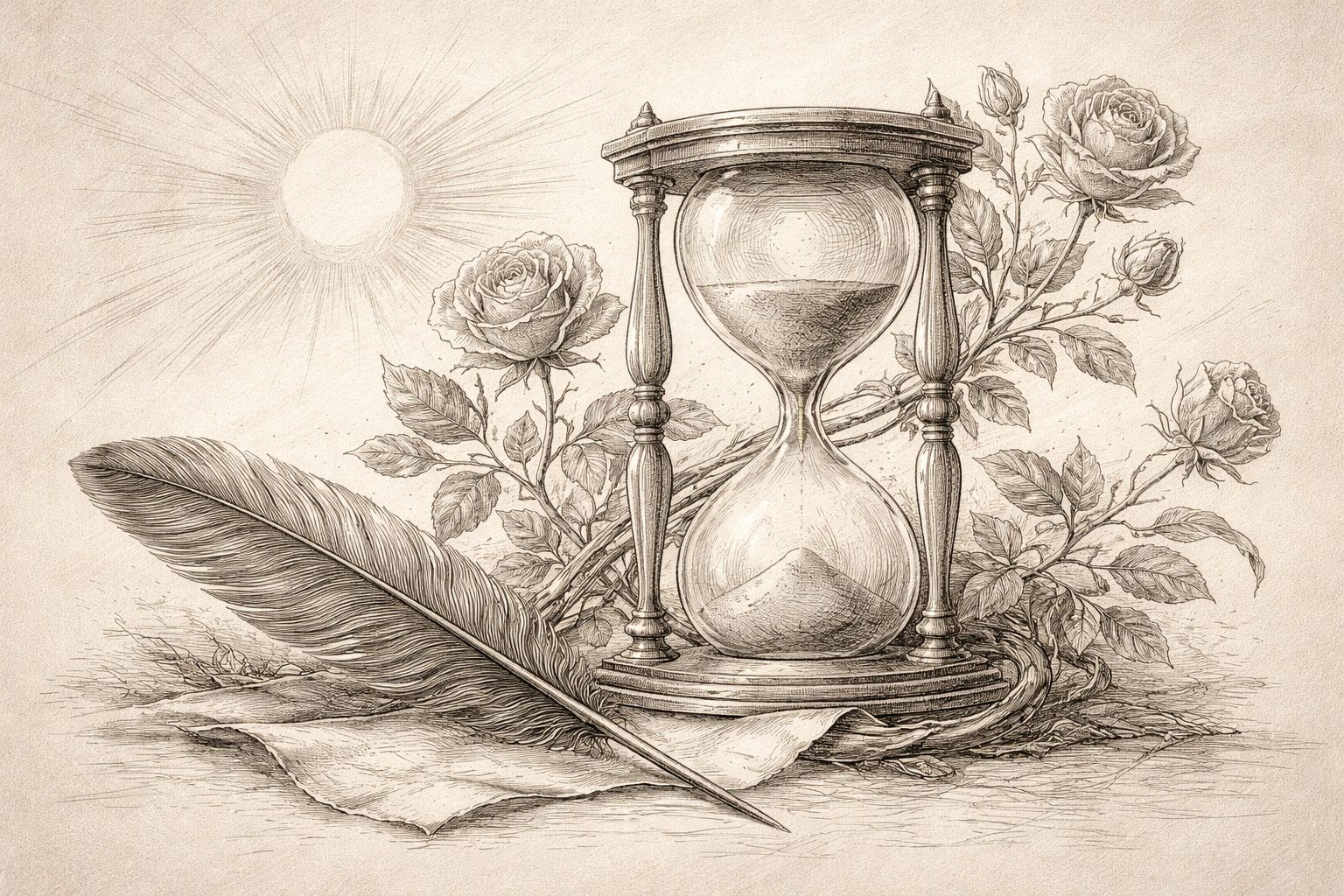

The Meaning of Life Is a Vow
Most lives do not collapse. They thin. They become functional, organised, reasonable—until the soul forgets what a life is for. Meaning is not granted. It is built: through illness, through love, through art, through grief—through the slow discipline of fidelity, and the choice of a centre that will not be betrayed.

Process
In Process, Lucas Varro examines the sentence “I’m just following the process” as one of modern bureaucracy’s most effective moral alibis. The essay asks what happens when procedure no longer protects fairness, but protects people from responsibility for the harm they help enact.

Eligibility
In Eligibility, Lucas Varro examines how a seemingly neutral administrative word becomes a moral disguise. To be eligible is not merely to be in need. It is to be legible — documented, formatted, and admissible to the system that decides whether a person may be helped.
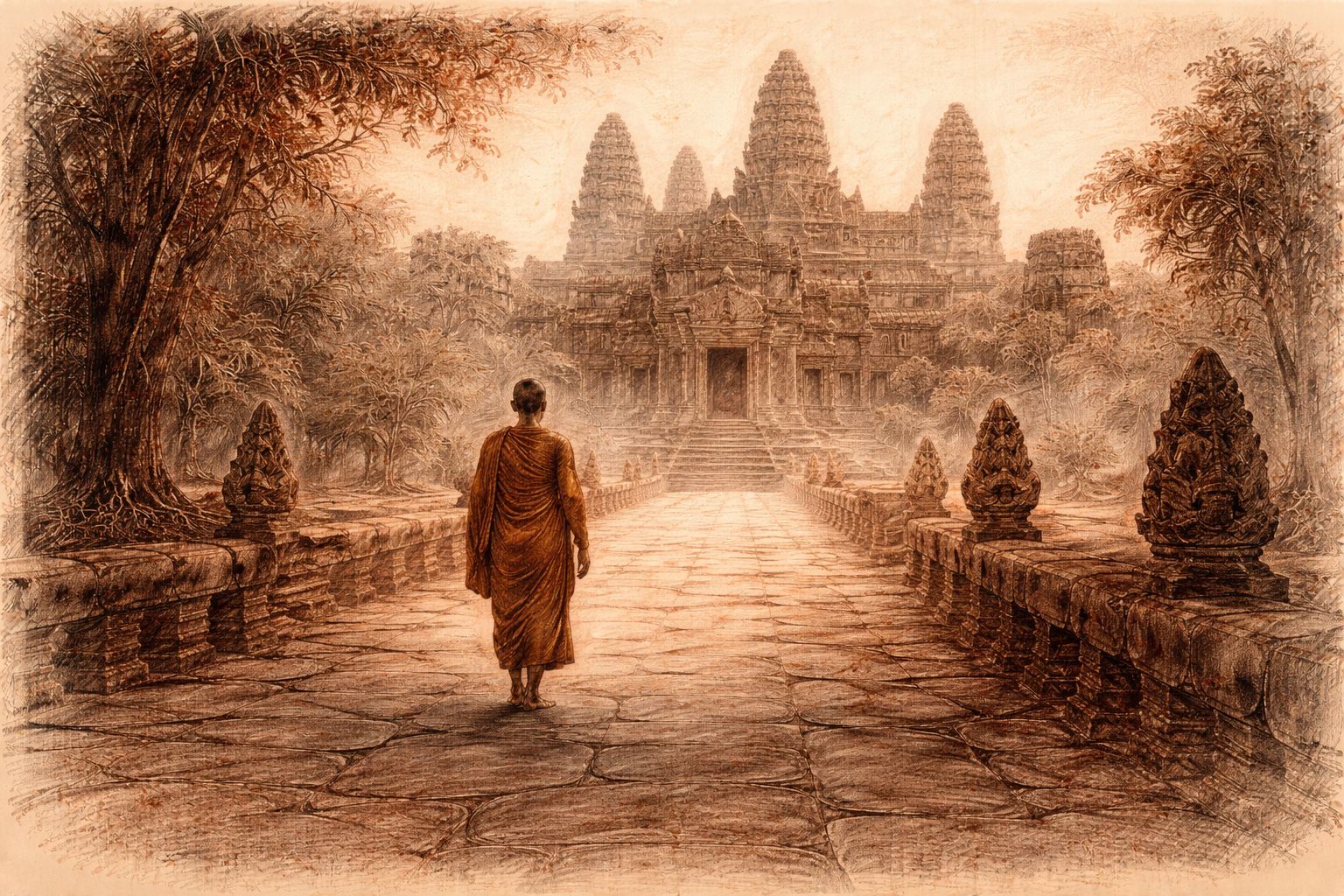

From Mountain to Monastery
Angkor Wat survived by learning to change its posture. Built as a summit for gods and kings, it became a place of dwelling for monks and pilgrims. As belief shifted from ascent to practice, stone yielded to routine—and the mountain learned how to remain inhabited.
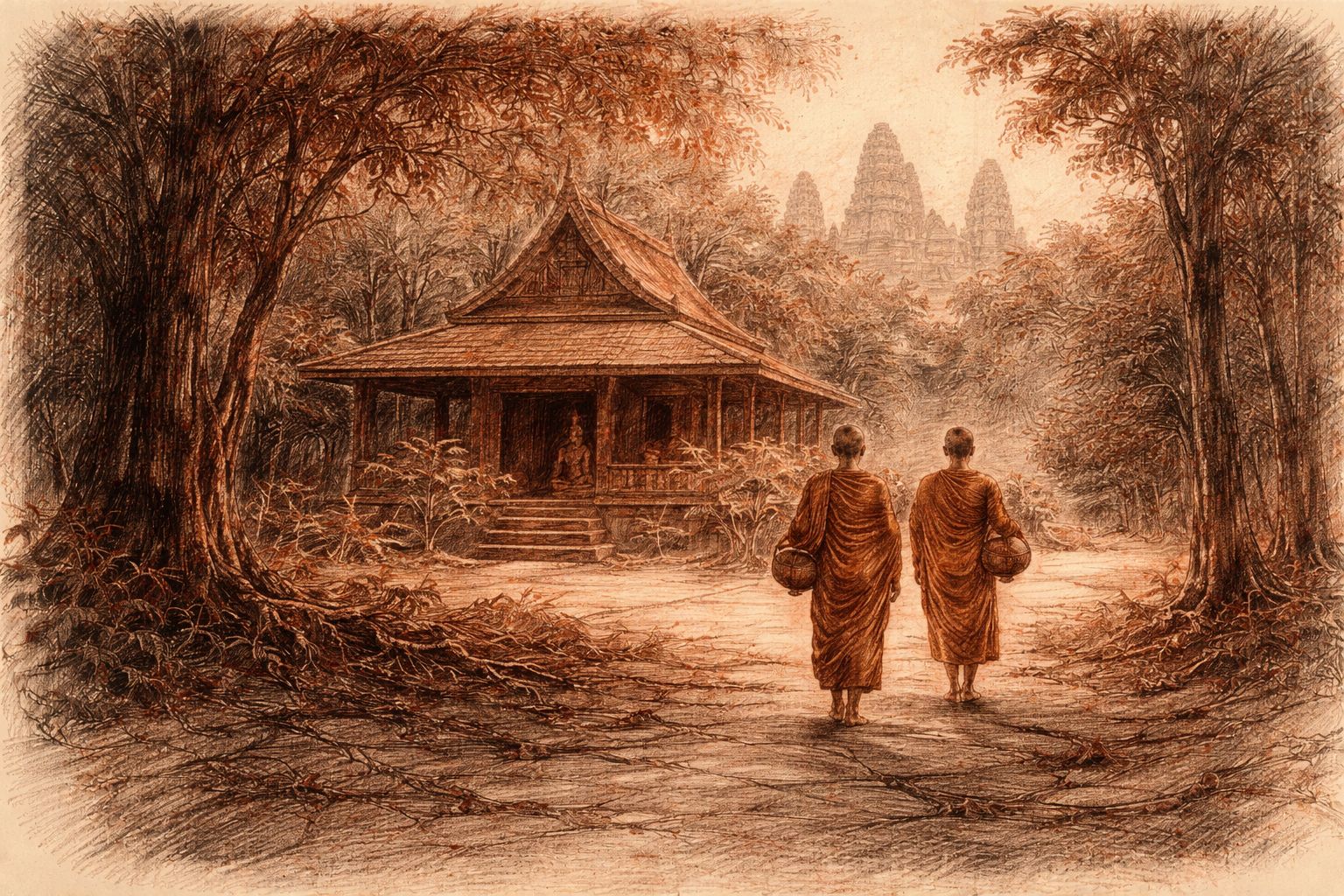

Why Theravada Could Outlast Stone
Theravada endured by refusing monumentality. It shifted belief from stone to practice, from kings to villages, from permanence to repetition. What it preserved was not form but rhythm—robes, bowls, chants, and lives lived close together—allowing faith to travel when capitals fell and temples emptied.
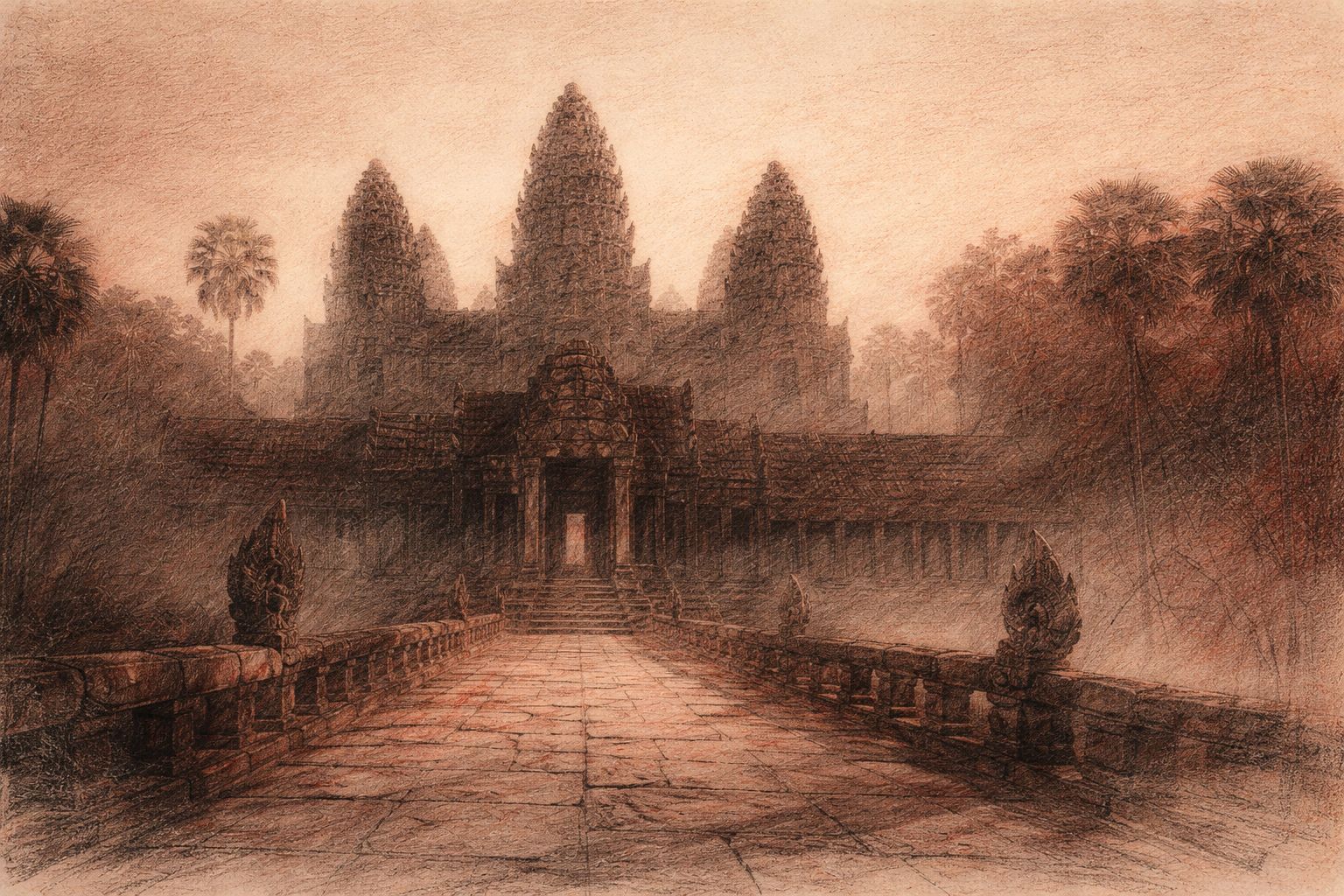

The End of Sanskrit at Angkor
The final Sanskrit inscription at Angkor does not announce an ending. It simply speaks once more, with elegance and certainty, into a world that had begun to listen differently. Its silence afterward marks not collapse, but a quiet transfer of meaning—from stone and proclamation to practice, breath, and impermanence.
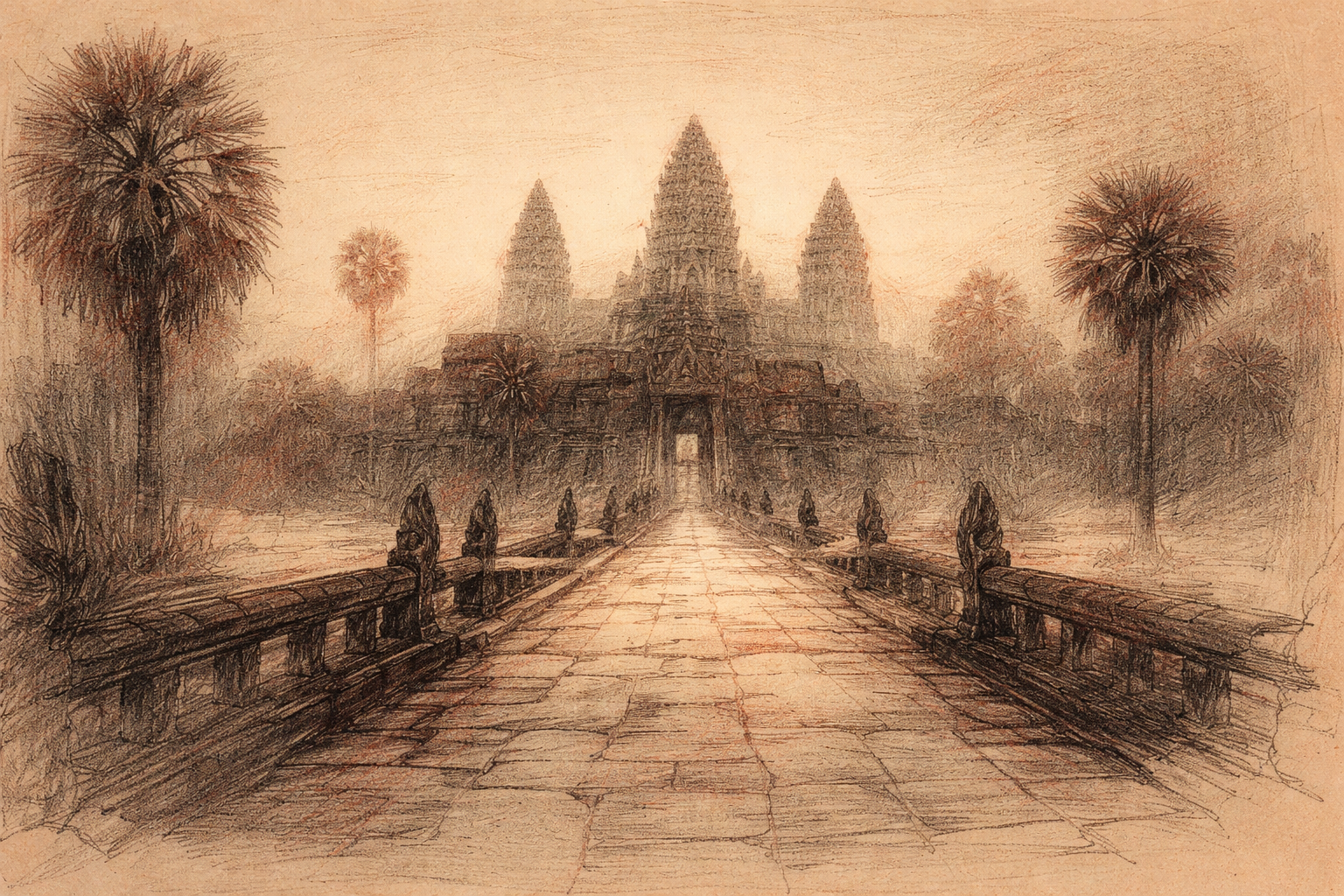

Axes of Inquiry
The Sanctuary of Meaning is not organised by topic, but by attention. Its essays move along distinct Axes of Inquiry—directions of thought that shape how meaning is encountered, held, and tested. This page offers a quiet orientation: not a menu to browse, but a map for those who wish to enter slowly.