
The Library gathers the written works of Lucas Varro — journals of the temples, mythic retellings, contemplative essays, poems, and volumes shaped by shadow, silence, and wonder. Here, words stand beside images as offerings: field notes from Angkor, meditations on sacred stone, old stories rekindled, and reflections carried beyond the visible world.
Within these shelves you will find many rooms: Angkor journals, myth and legend, apsara meditations, contemplative essays, poems, children’s mythic wonder, literary retellings, and quieter devotions of the page. Wander chronologically, enter by theme, or pass through one of the dedicated publication houses now gathered within the wider Library.
For those who wish to follow these paths further, several of these writings continue on Substack and in dedicated archive blogs: The Lantern Chronicles , where myth, legend, contemplative essays, poetry, and other imaginative works are carried onward; The House of Cadmus , where Greek myth and tragedy are reopened through inheritance, violence, fate, and recurrence; The Mytharium , where myth, Tolkien, fairy stories, and old literature are read and retold with seriousness; The Alexander Series , where A. M. Sharp retells Greek myths for children who want to be trusted by stories; and The Hospitable Dark , where A. M. Sharp offers literary myth retellings shaped by darkness, shelter, endurance, and return.
Library
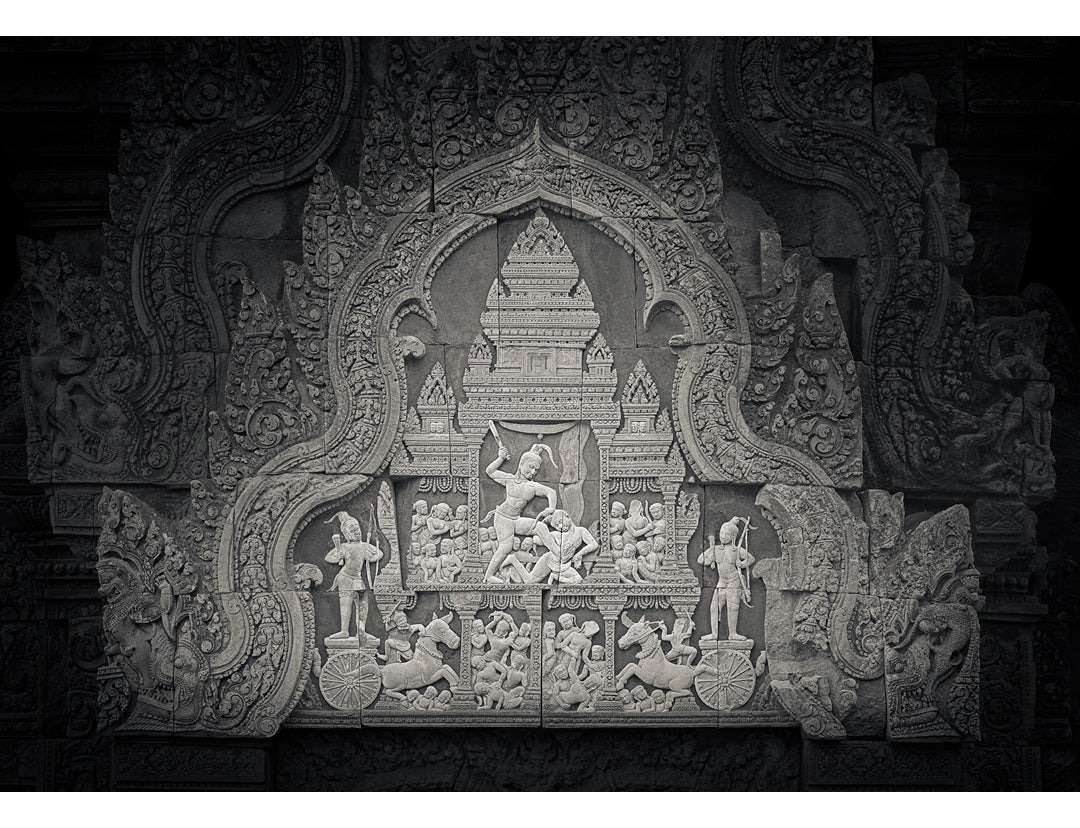

Tympanum
A tympanum is a pause in stone—a held breath above the doorway where meaning gathers before entry. This essay reflects on how sacred architecture uses this charged surface to train posture and attention, turning thresholds into moments of orientation where image, myth, and belief quietly converge.


Vahanas — When the Gods Learned to Walk
At Angkor, the gods do not arrive alone. Beneath their thrones, animals wait—alert, grounded, precise. Vahanas are not symbols but translations: divine force rendered into claw, wing, and weight. Even broken statues speak clearly when the animal remains, holding identity steady against time.
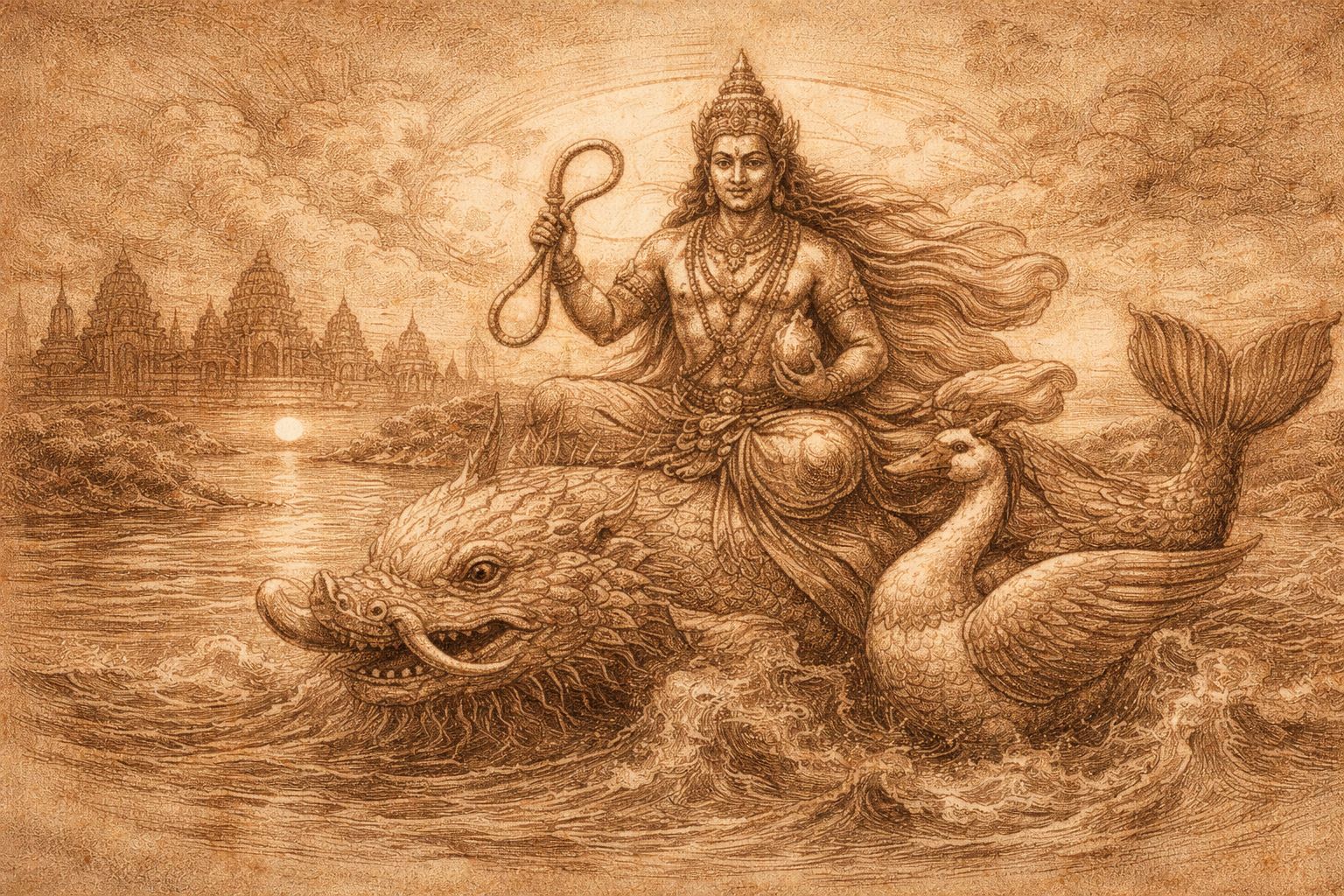

Varuna
Varuna is not a god of thunder but of watching. This essay explores the Vedic guardian of order and waters as sky-king, judge, and western sentinel—binding truth, time, and morality into a quiet discipline that Khmer temples carved into boundary, flow, and stone.
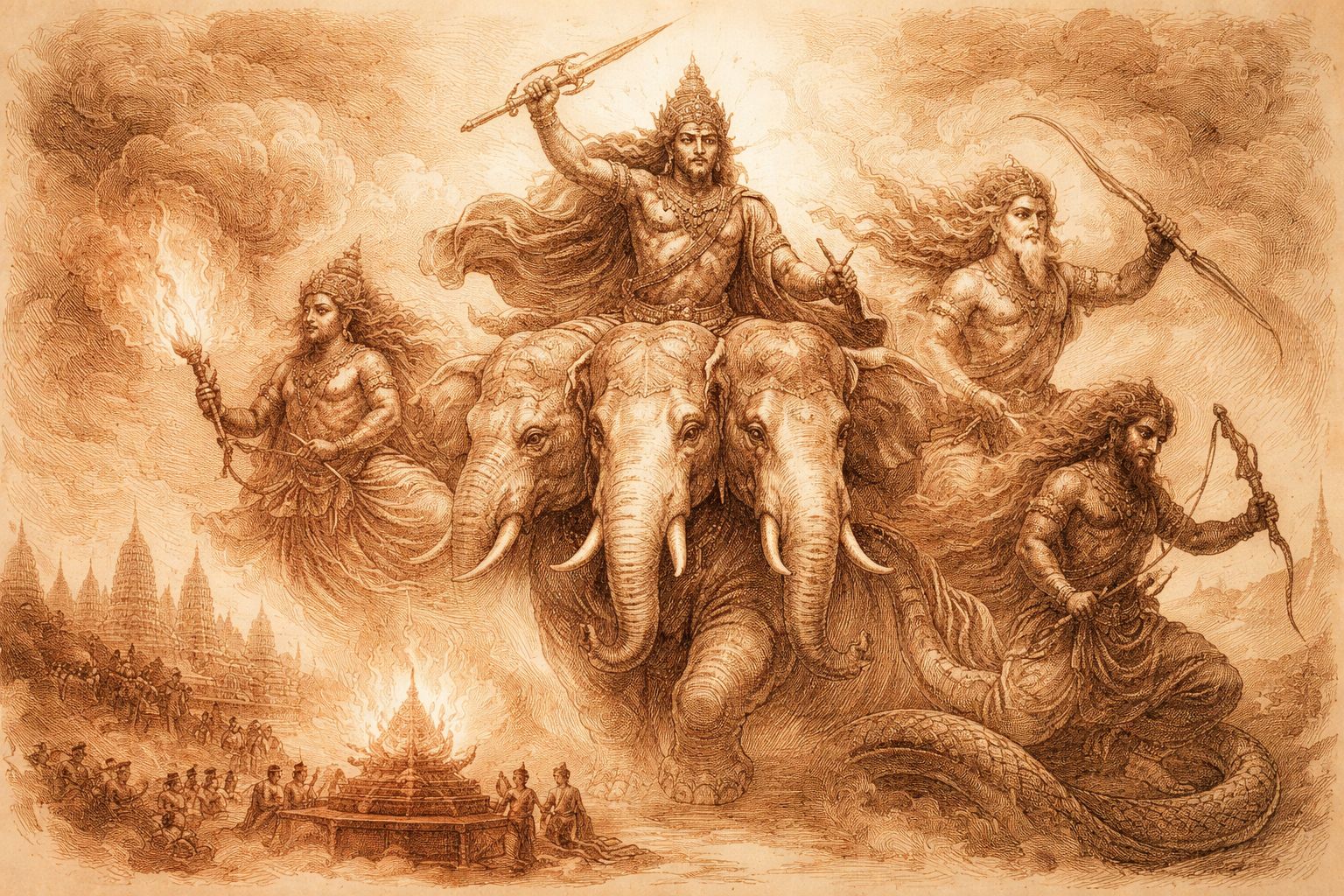

The Vedic Gods — Voices Before Stone
Before temples learned to hold silence, the gods arrived as weather. Fire carried prayer. Storms ruled kingship. In the Vedic world, divinity was not housed but invoked—spoken into wind, flame, and rain. These ancient gods did not vanish at Angkor; they were reorganised, disciplined, and set to guard space itself.


Yama — The Weight That Balances
Yama does not threaten; he weighs. Seated on his buffalo, ledger open, he reads what life has already written. At Angkor, death is not annihilation but accounting—an adjustment of balance before return. Nothing is erased. Everything is placed.