
The Library gathers the written works of Lucas Varro — journals of the temples, mythic retellings, contemplative essays, poems, and volumes shaped by shadow, silence, and wonder. Here, words stand beside images as offerings: field notes from Angkor, meditations on sacred stone, old stories rekindled, and reflections carried beyond the visible world.
Within these shelves you will find many rooms: Angkor journals, myth and legend, apsara meditations, contemplative essays, poems, children’s mythic wonder, literary retellings, and quieter devotions of the page. Wander chronologically, enter by theme, or pass through one of the dedicated publication houses now gathered within the wider Library.
For those who wish to follow these paths further, several of these writings continue on Substack and in dedicated archive blogs: The Lantern Chronicles , where myth, legend, contemplative essays, poetry, and other imaginative works are carried onward; The House of Cadmus , where Greek myth and tragedy are reopened through inheritance, violence, fate, and recurrence; The Mytharium , where myth, Tolkien, fairy stories, and old literature are read and retold with seriousness; The Alexander Series , where A. M. Sharp retells Greek myths for children who want to be trusted by stories; and The Hospitable Dark , where A. M. Sharp offers literary myth retellings shaped by darkness, shelter, endurance, and return.
Library
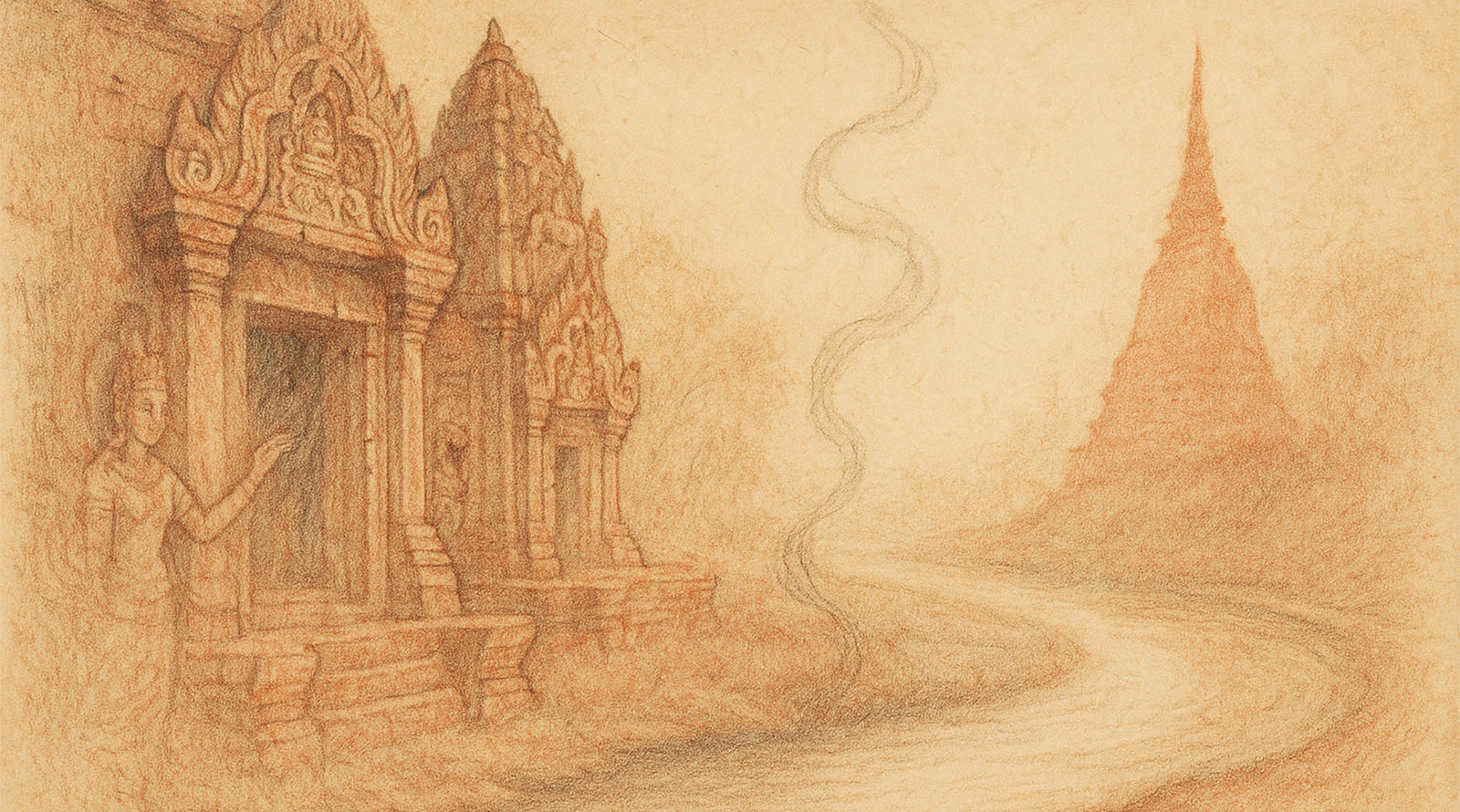

The Shape of a Vanishing Empire
The stones do not mourn.
They whisper the shape of what once was—
of constellations surrendered, of dharma reshaping a world.
Step into the hush between kingdoms,
where breath becomes lineage
and memory walks on river light.
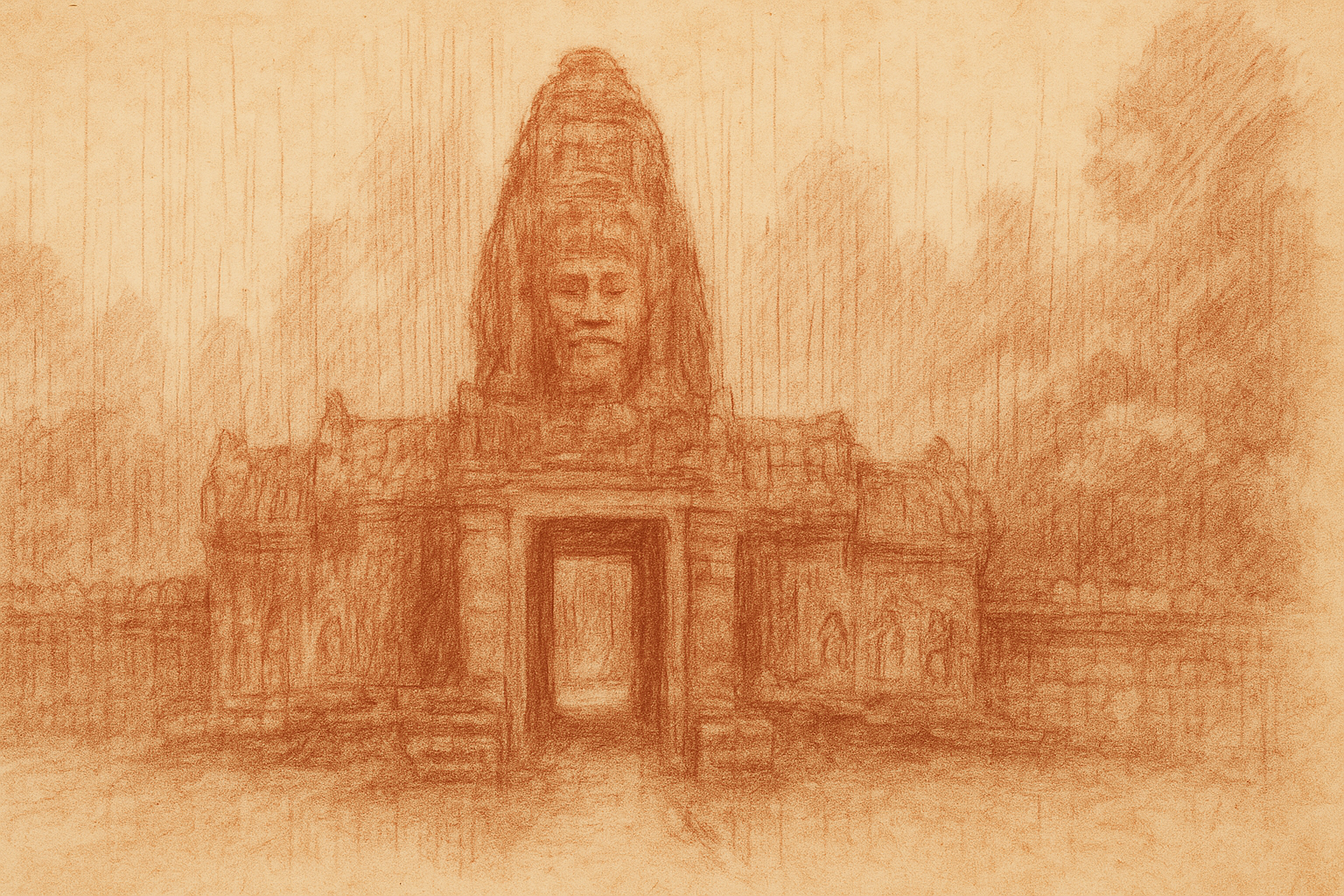

The Rain That Softens Time
Rain cloaks the threshold. Garuda waits with lifted wings. Devatas lean from wet stone. A tree remembers the temple. And the chalk listens in the hush of rain.
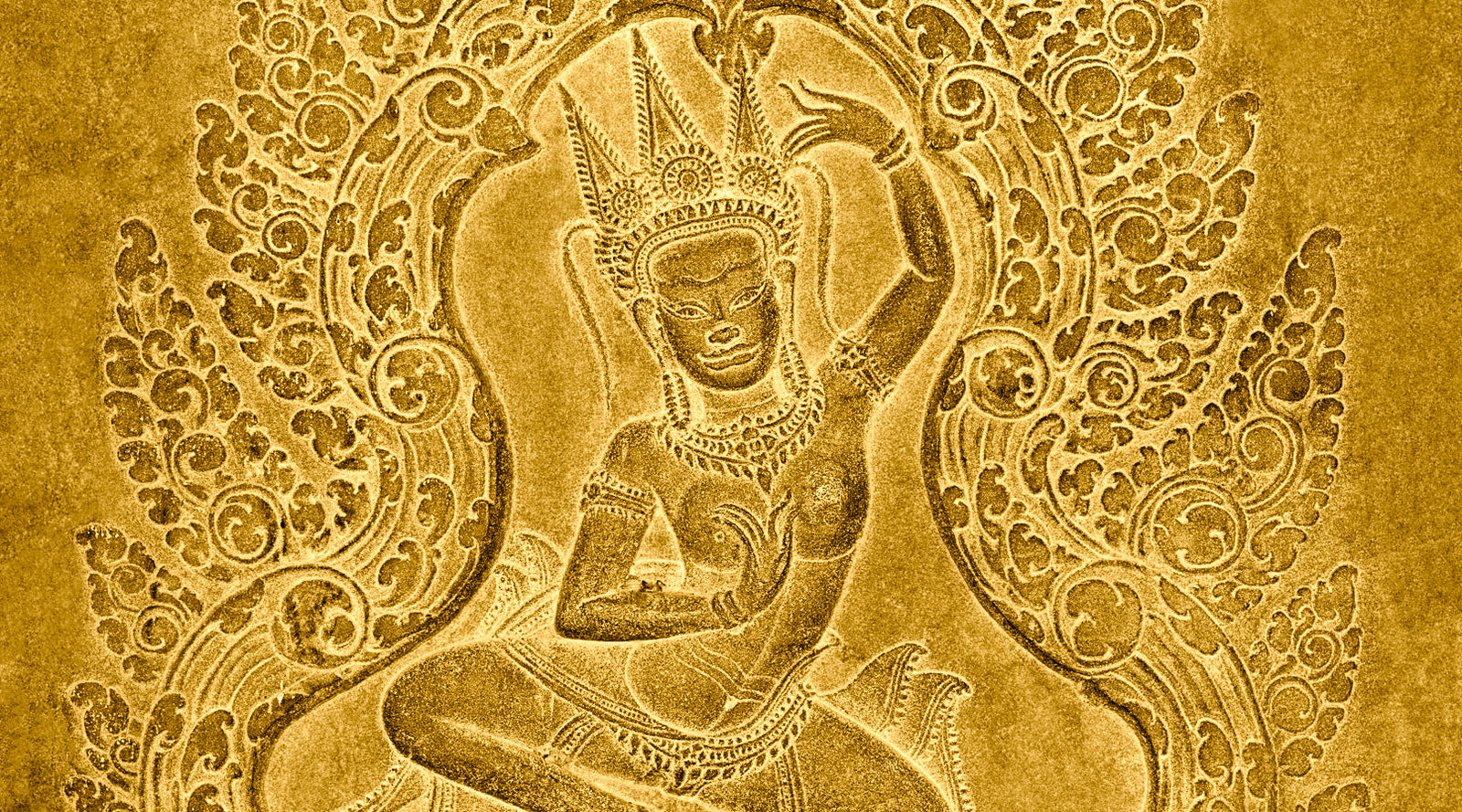

She Was Not Made, But Remembered
She does not shimmer. She emanates. In this golden photograph of the sacred feminine, we find not a record—but a threshold. The print holds not stillness, but a kind of arrival.
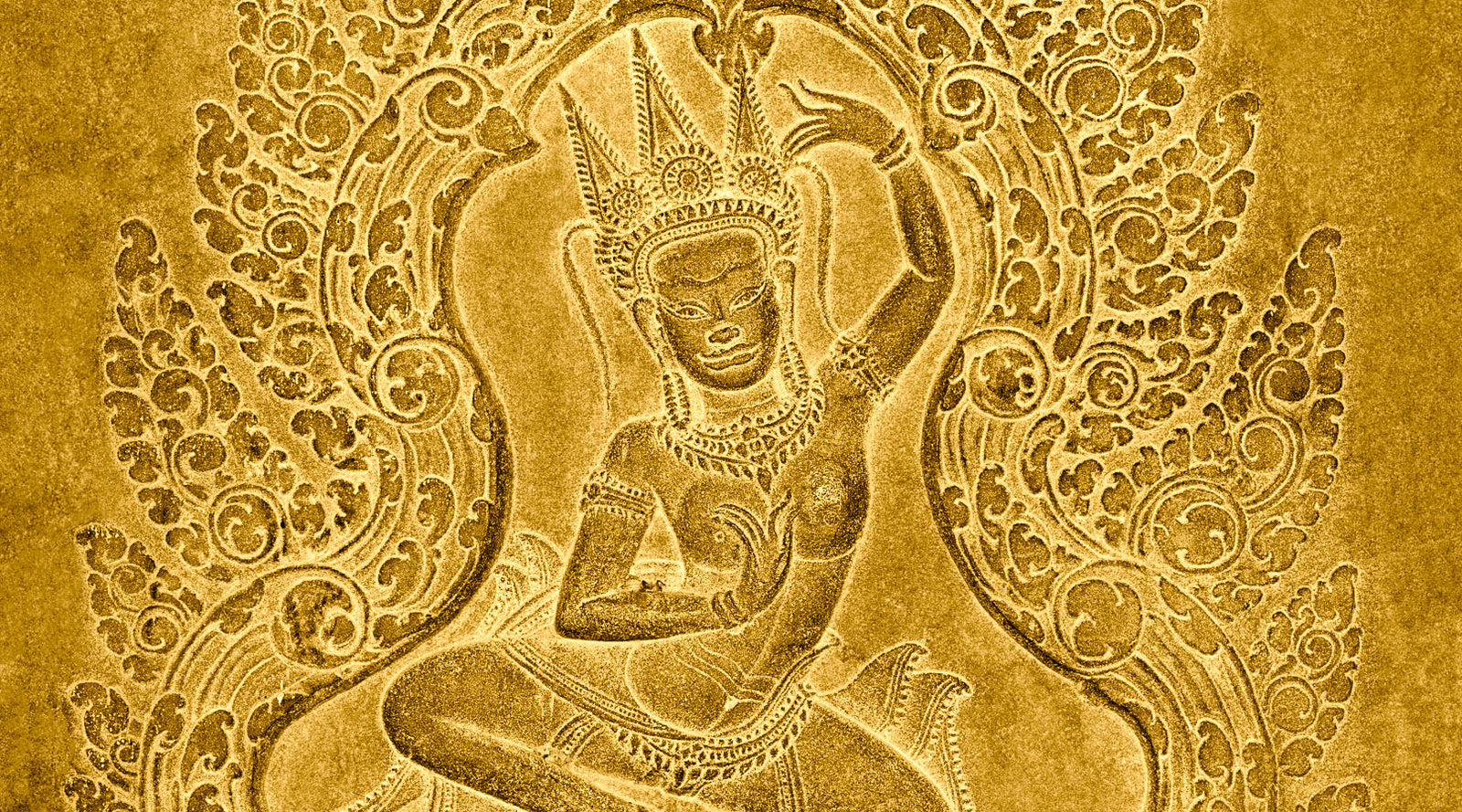

No Hand Carved Her Light
She rose between dusk and breath—not as something made, but as something remembered. The light did not fall upon her. It entered where she stood.
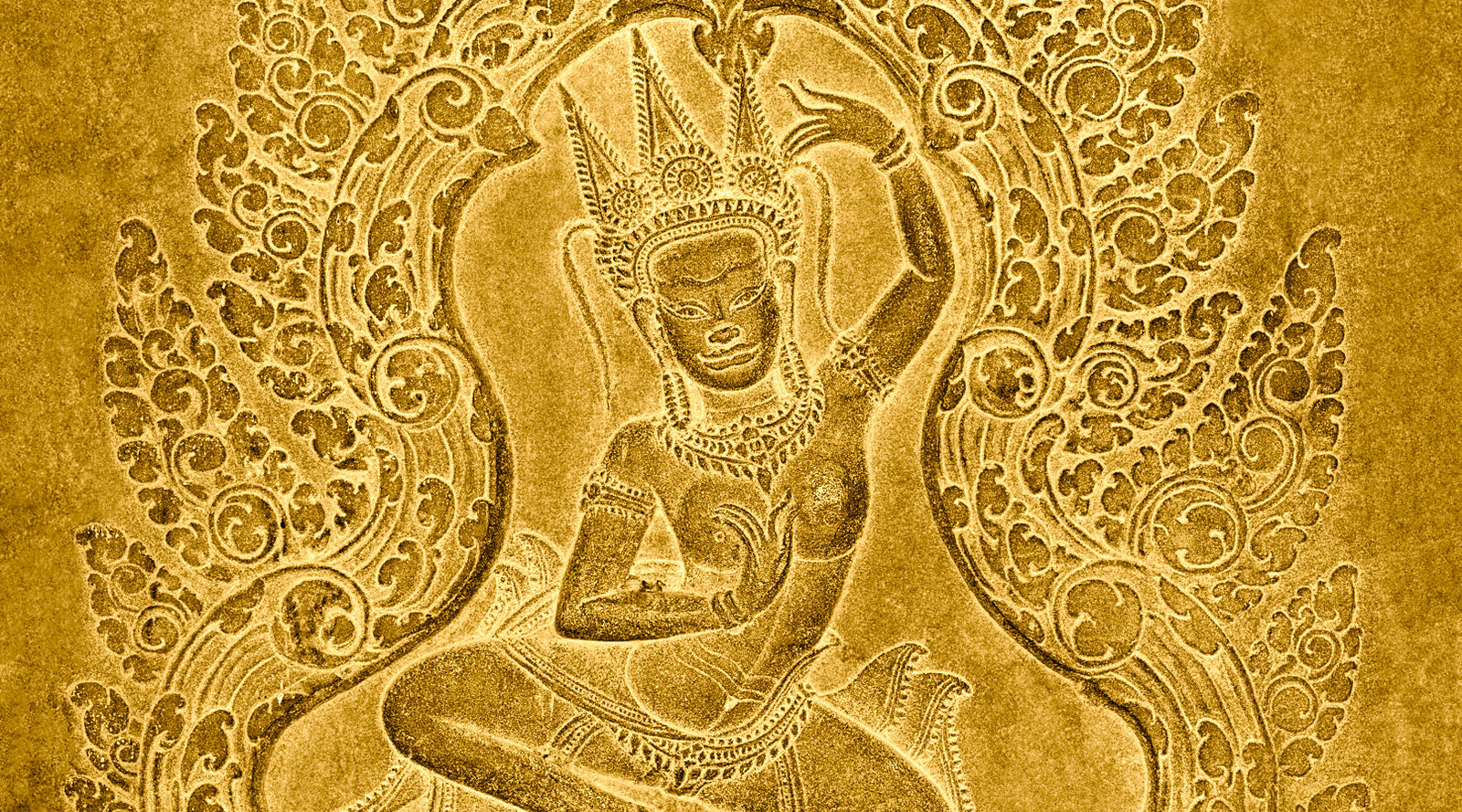

The Light That Waited to Return
She did not move, and yet the stone remembered. The gate of flame held her, and her lifted hand carried a language older than names. Silence deepens, and breath becomes gold.
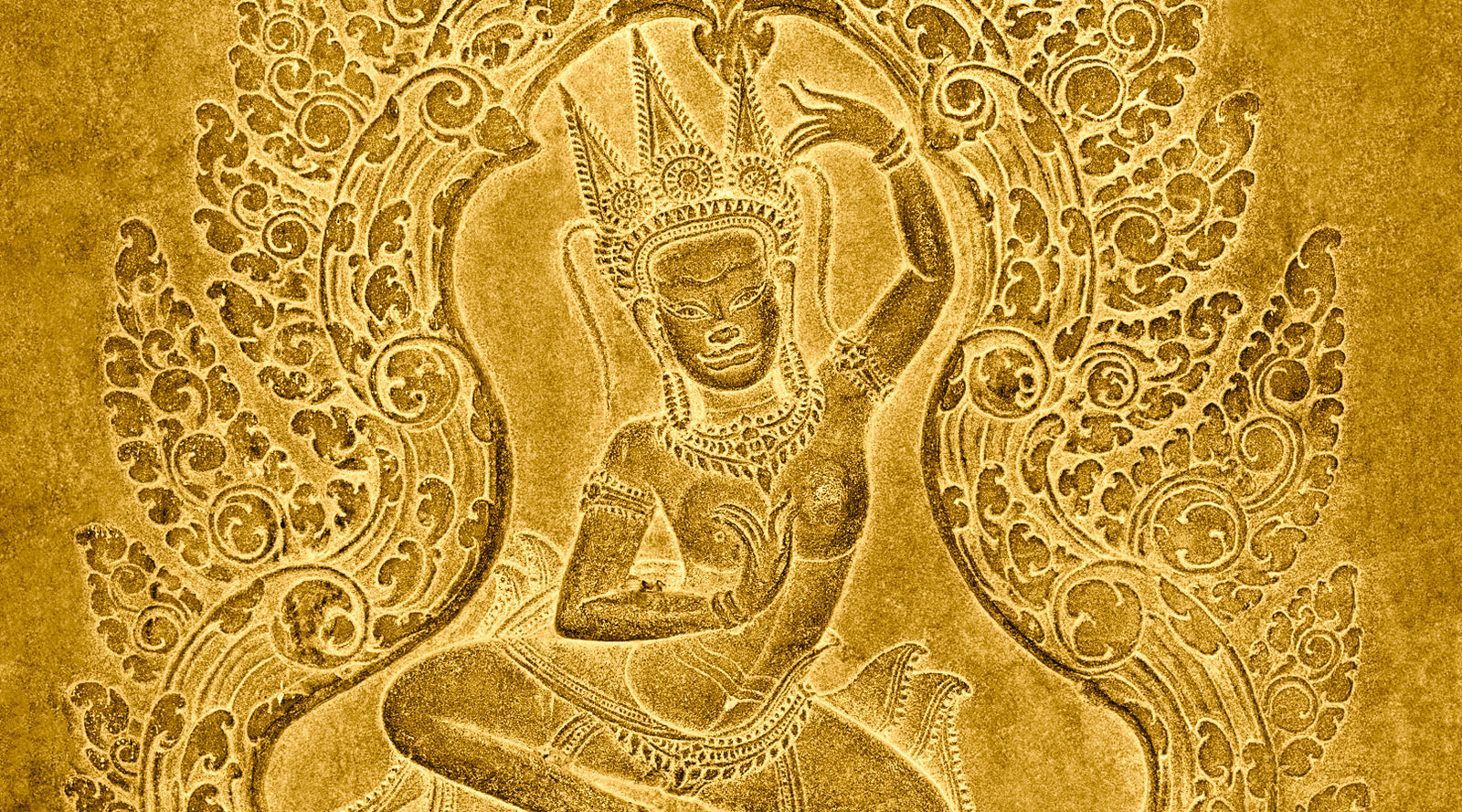

She Appeared in the Breath Before Gold
She was not revealed. She was kept—and offered. In the hush before dusk, the stone flared gold and the dancer returned to breath. Her hand traced a silence that no sculptor gave her.
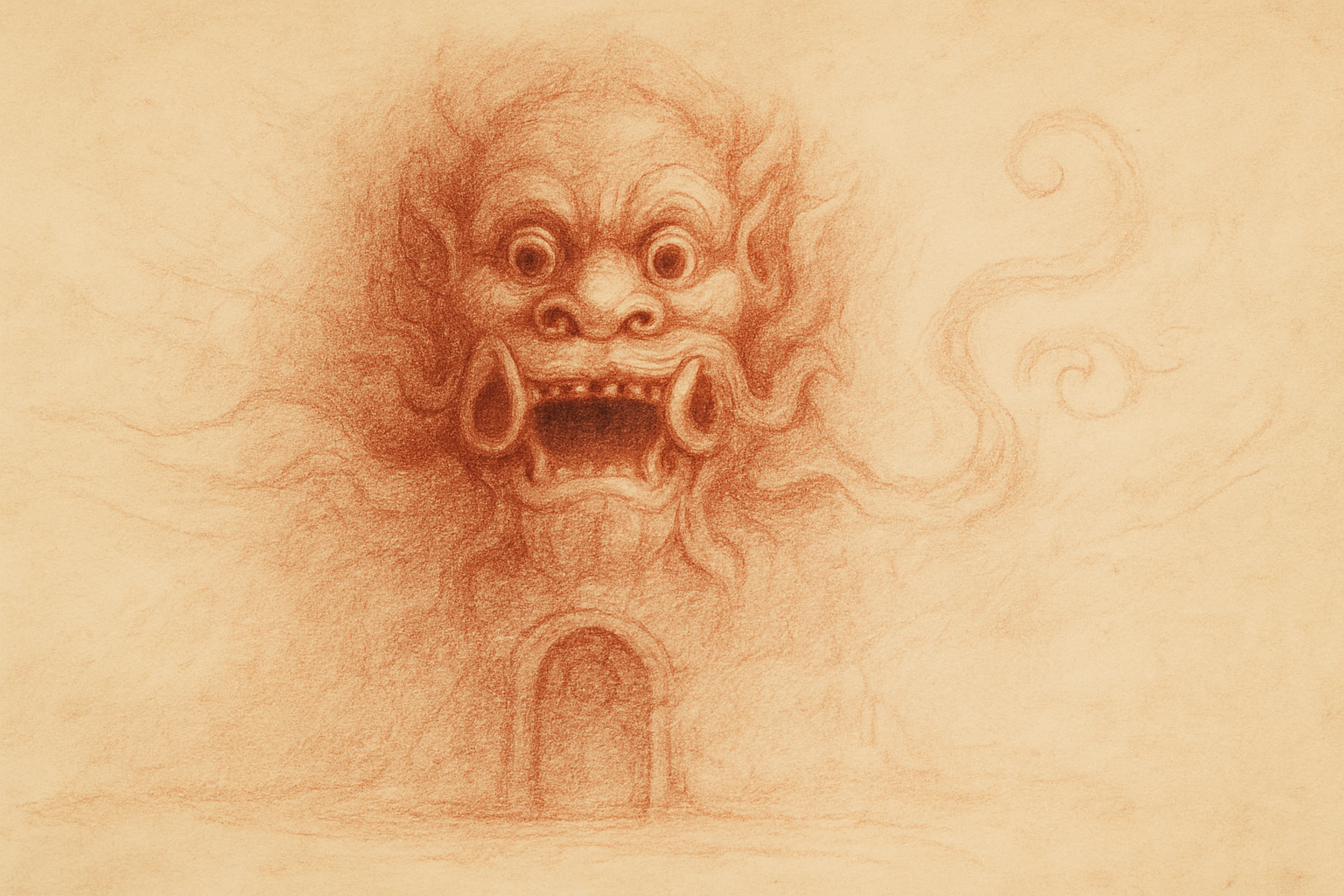

The Face That Devoured Itself
He opened his jaws to destroy the world, but the god said no. Begin with your tail. And so he turned inward, swallowing pride, flame, and form—until only the face remained, watching the threshold in perfect stillness.
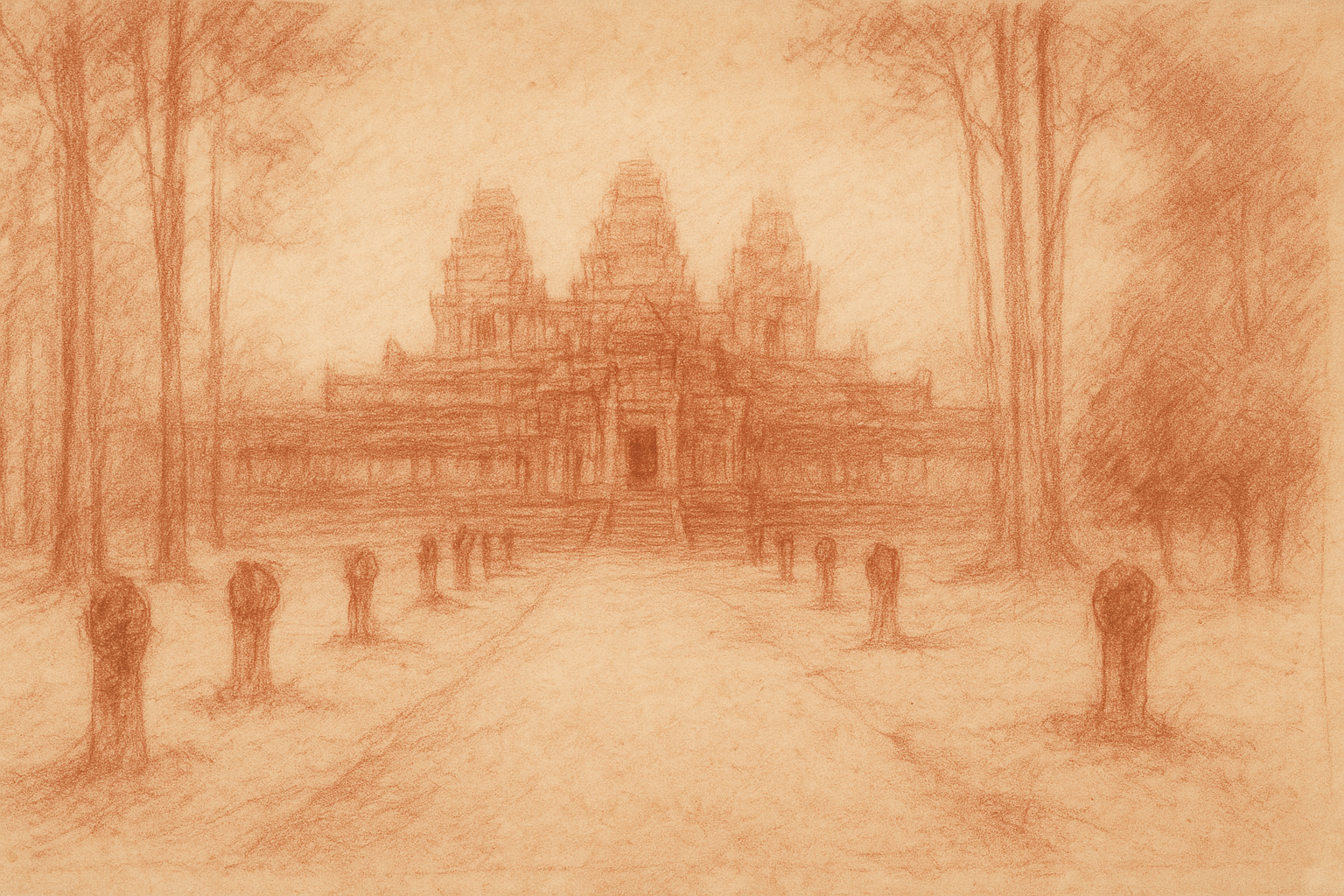

Where the Carving Stopped
Beneath the veil of dawn, a temple waits—bare, immense, and holy. Where the carving ceased, the spirit remained. In that unfinished stillness, something eternal begins to speak.
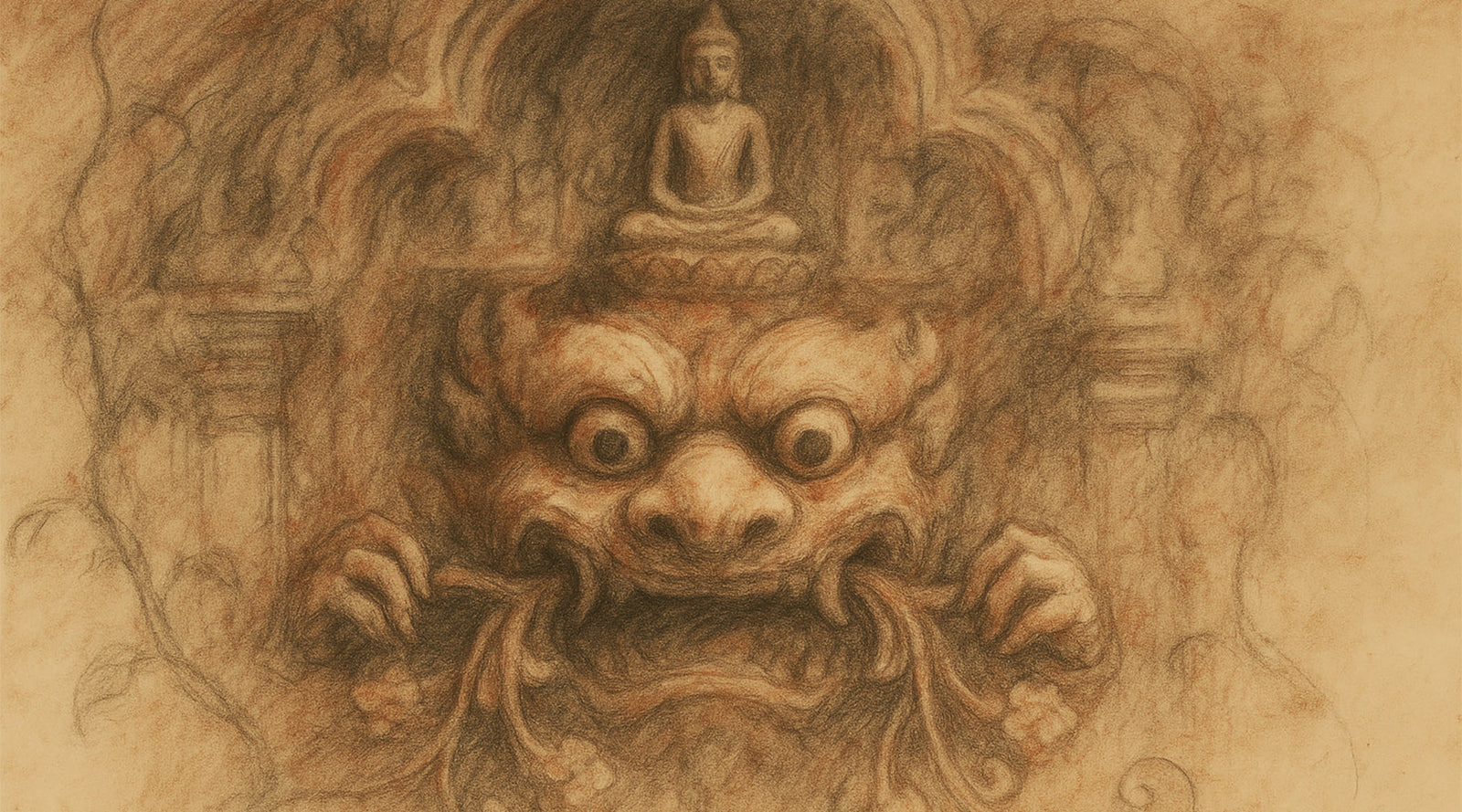

The Mouth of Time: On the Kala at Angkor
Above the temple thresholds of Angkor, the kala watches with round, unblinking eyes. Jawless, eternal, and fierce, this devouring guardian marks the passage into sacred space. In this luminous reflection, Lucas Varro explores the kala’s mythic presence, sculptural mystery, and its place as both protector and gate of transformation.
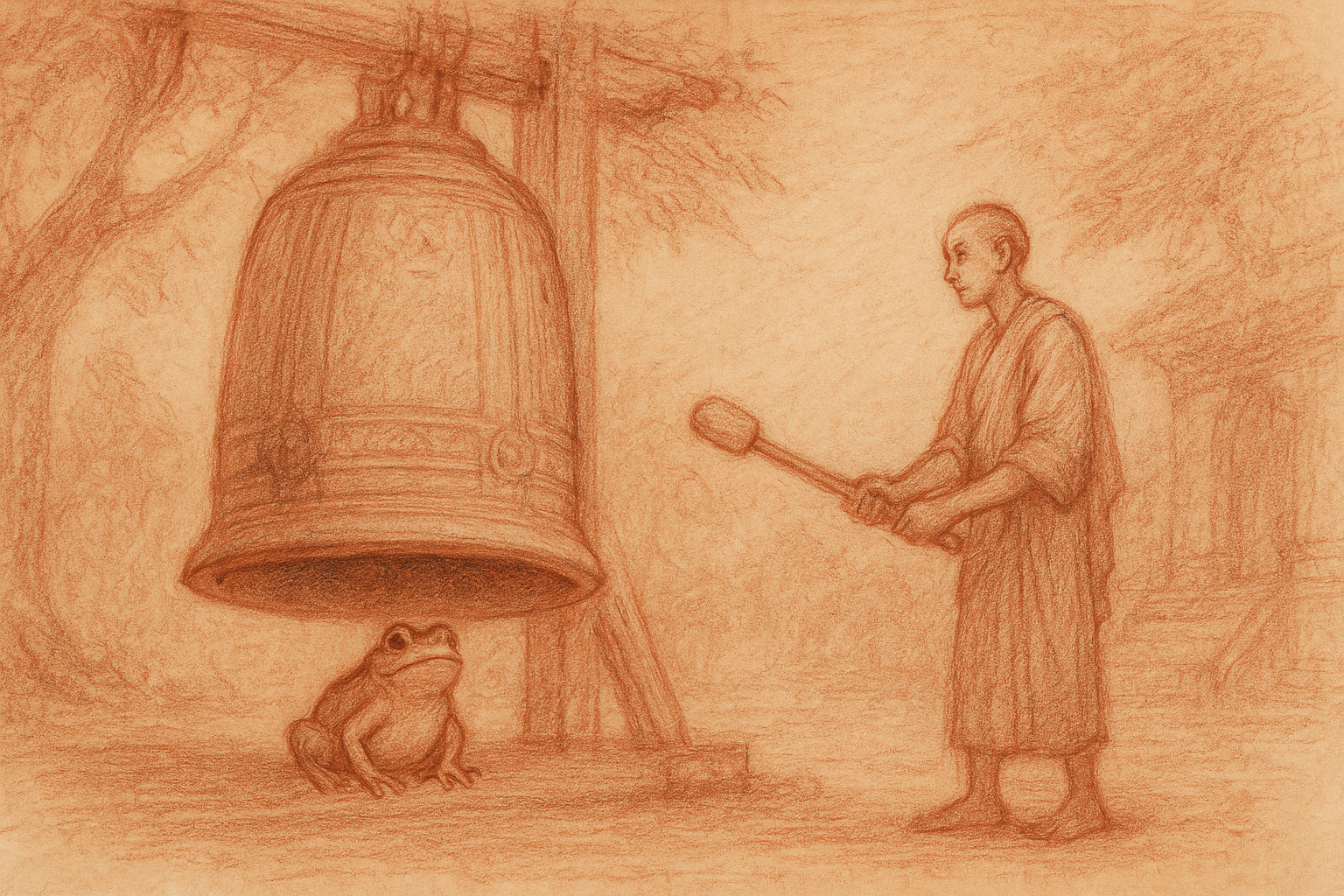

The Frog and the Bell
A small frog nestles beneath a temple bell and believes he is the source of its sacred voice. But when silence returns, something deeper awakens. In the hush that follows thunder, even folly can become a mirror. And even a frog may bow to the sound that is not his.
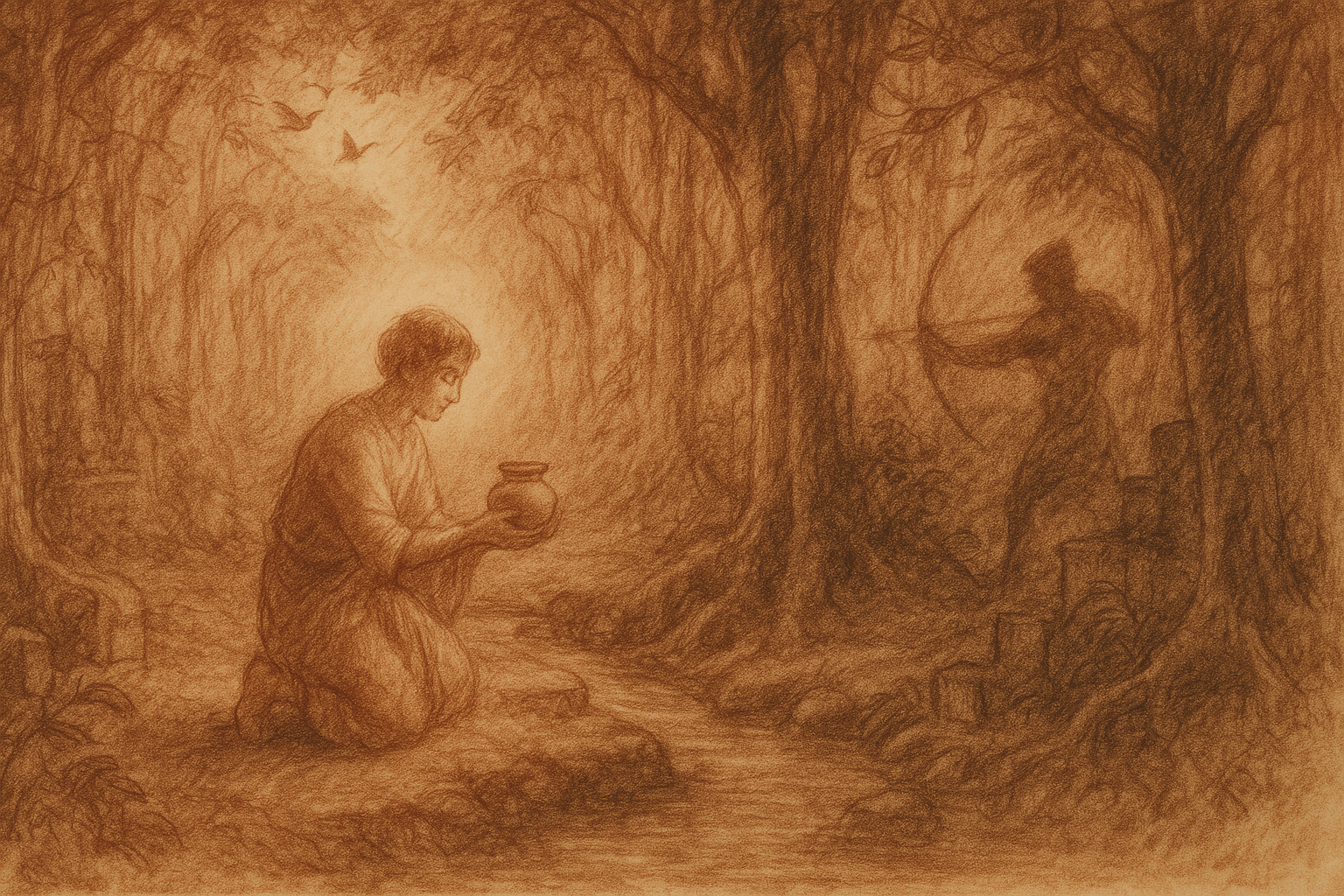

The Golden Light that Waited
There is a path in the forest where time once held its breath—
where a golden son knelt beside a stream,
and an arrow’s sorrow turned into healing light.
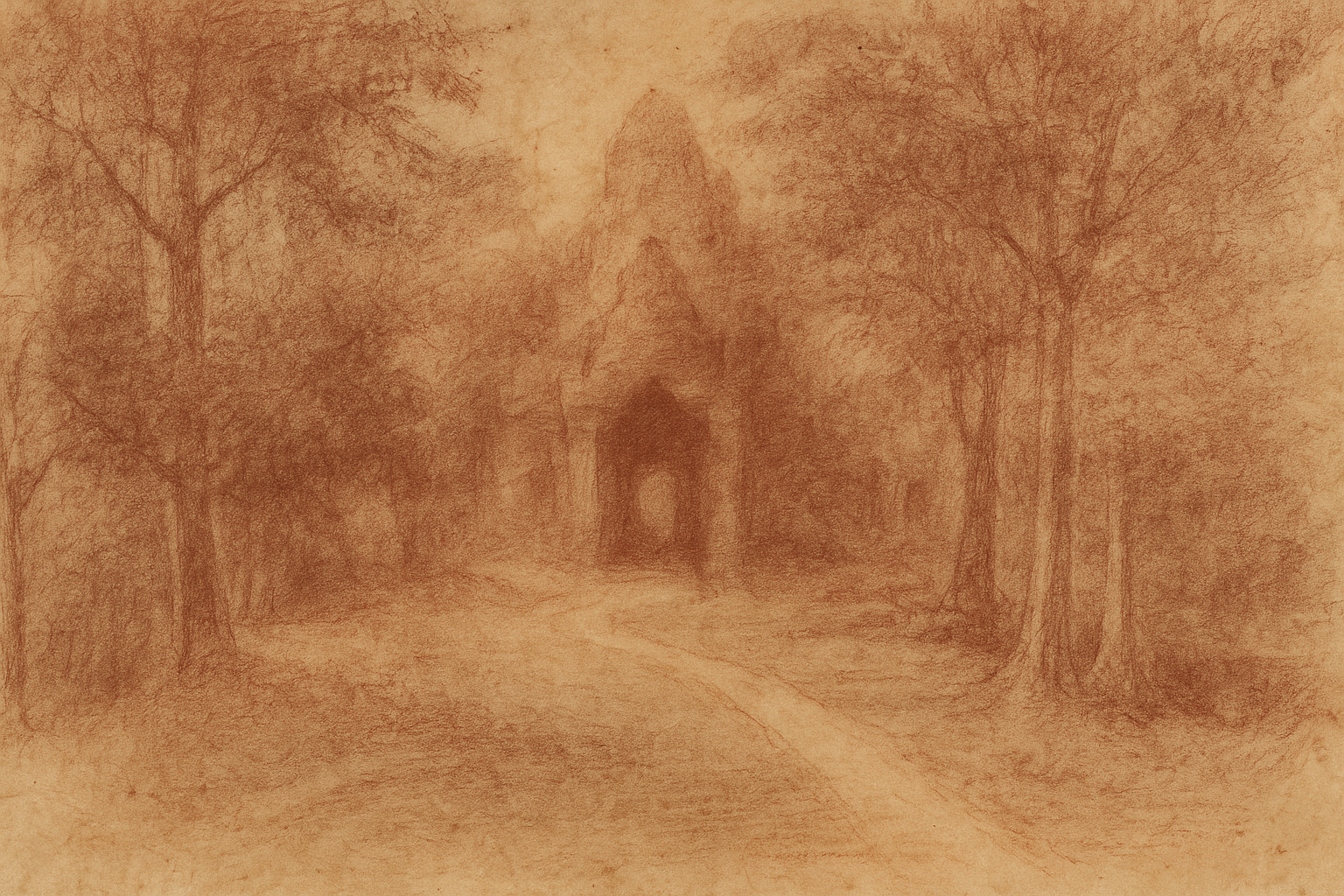

The Gate the Ancestors Still Guard
Beneath soft cloud and after monsoon rain, we walked where no road leads—through moss-strewn silence, broken statues, and the stillness of unseen watchers.
Each sketch a gesture of prayer, each threshold a moment of return. The ancestors were listening. And the stone remembered.
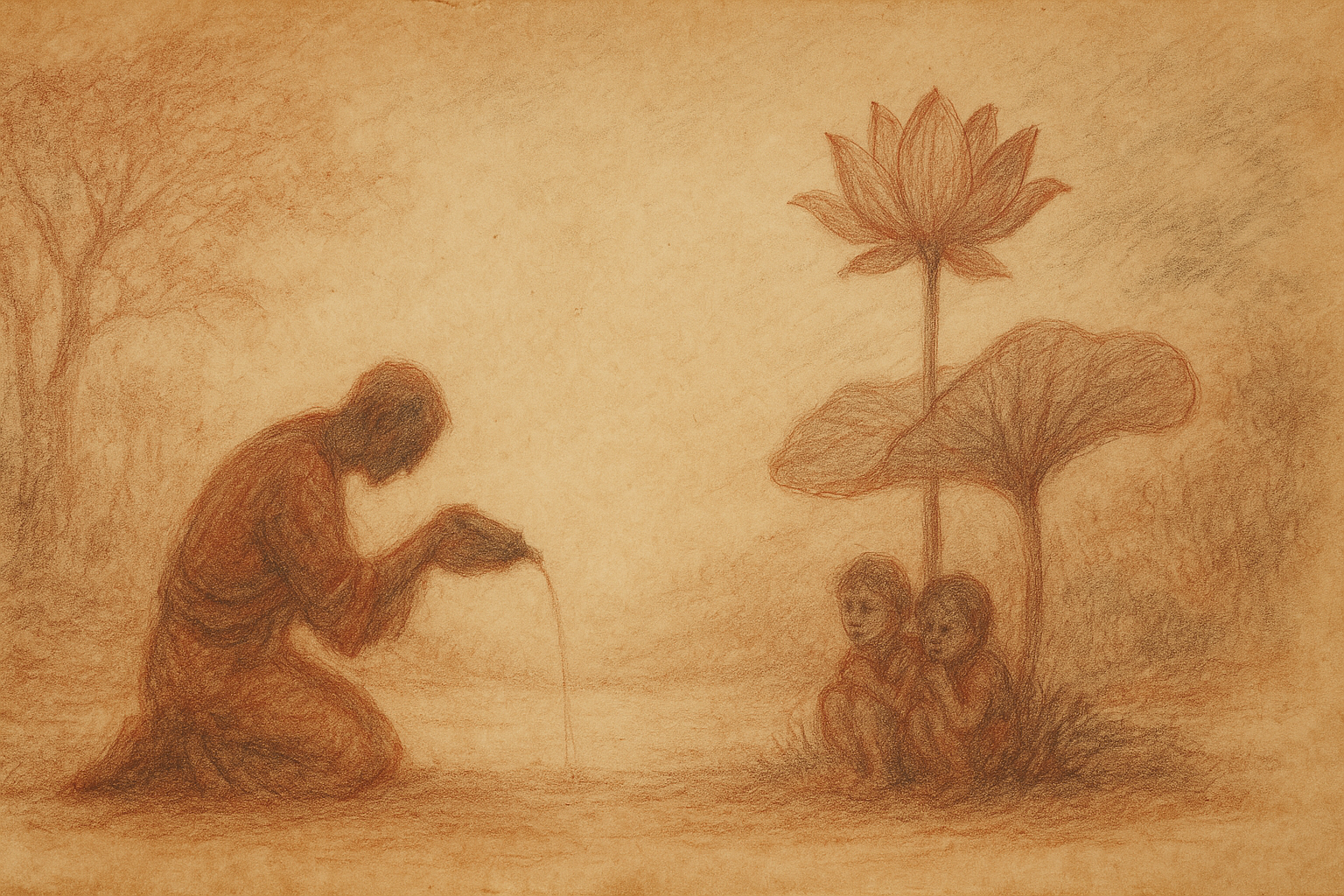

The Water That Never Reaches the Ground
He knelt beside the lotus leaves. The children trembled. The vow was lifted. Water poured from his hand—not to the ground, but into memory. And the forest, and the gods, held their breath.
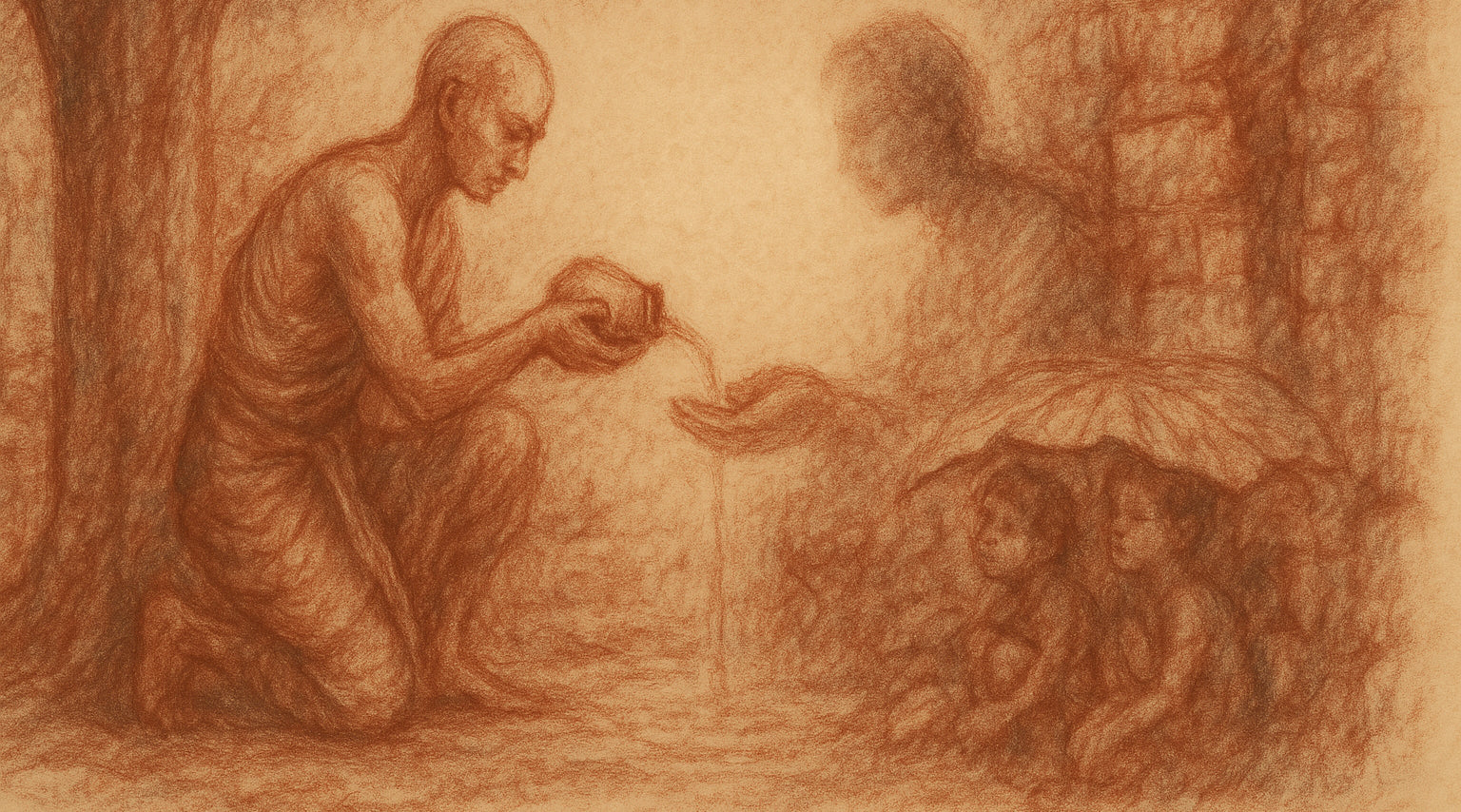

The Gift That Shook the Earth: Cambodia’s Sacred Tale of Giving
The Moha Chinok tells of a prince who gives away his children, his wife, and finally his silence—until even the gods bow. This sacred Cambodian tale is not one of perfection, but of a vow that burns through sorrow into compassion. A gift so complete, it shook the earth.
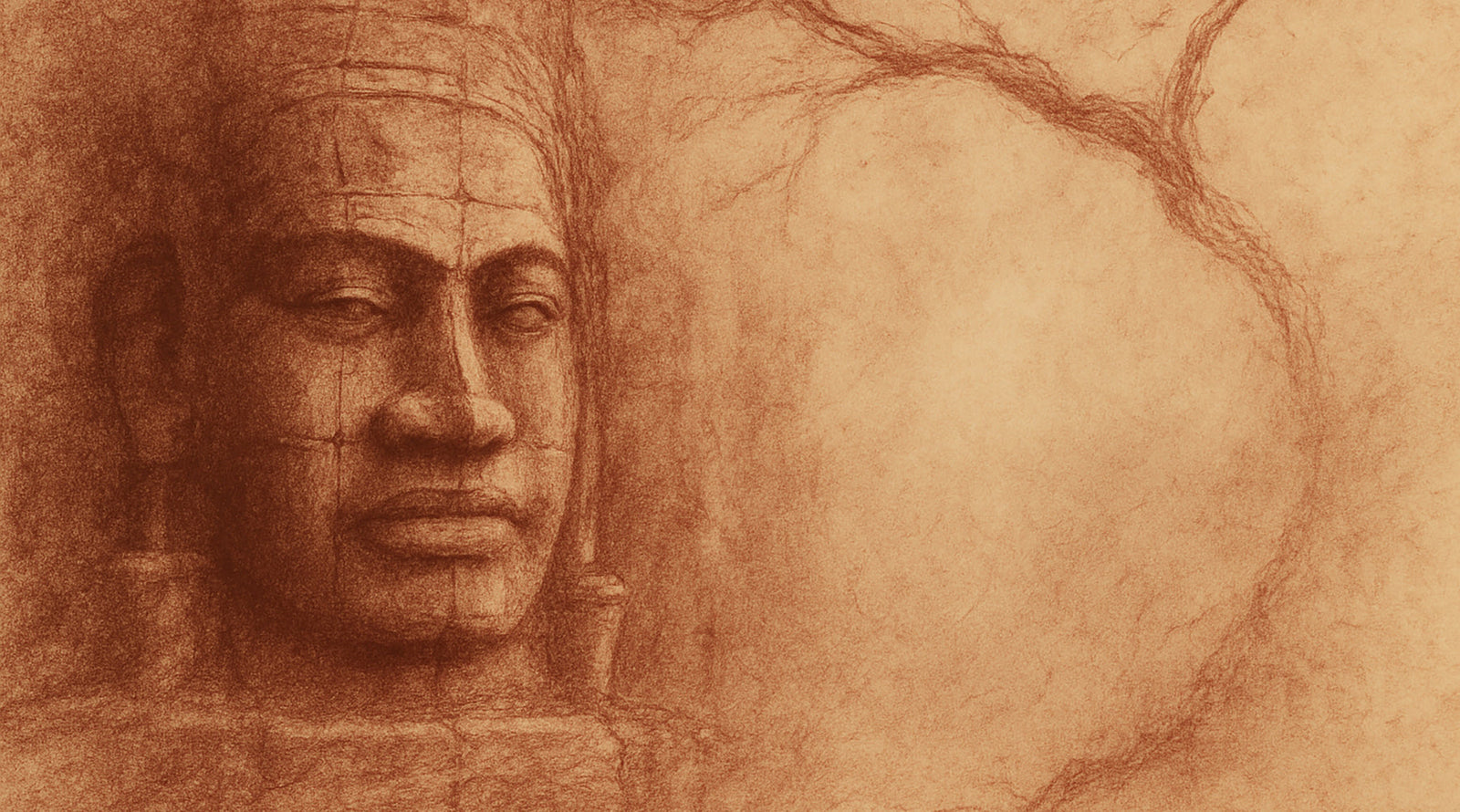

The Silent Gaze of the God Beyond Names
A mountain of stone stares outward in silence.
Two hundred faces. No name. Only presence.
Enter the Bayon, where the sacred does not speak—
it watches.
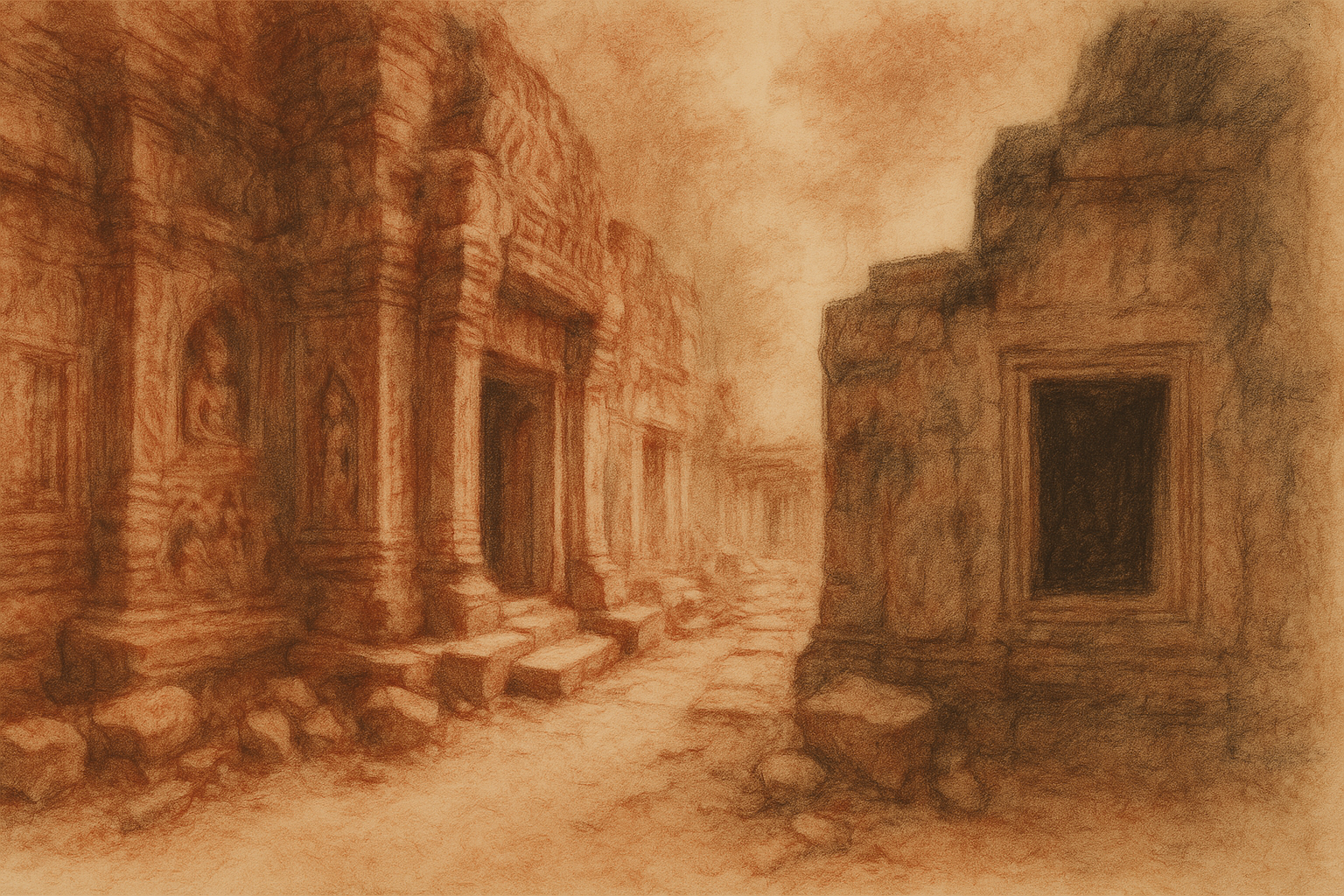

Where Roots Hold the Ruin Like Prayer
Beneath the canopy of Ta Prohm’s southern galleries, silence takes form—between incense and ruin, roots and prayer, shadow and light. A field journal entry drawn in reverence, where chalk remembers what time cannot hold. Step quietly between guardians, and listen to the breath that lingers in stone.
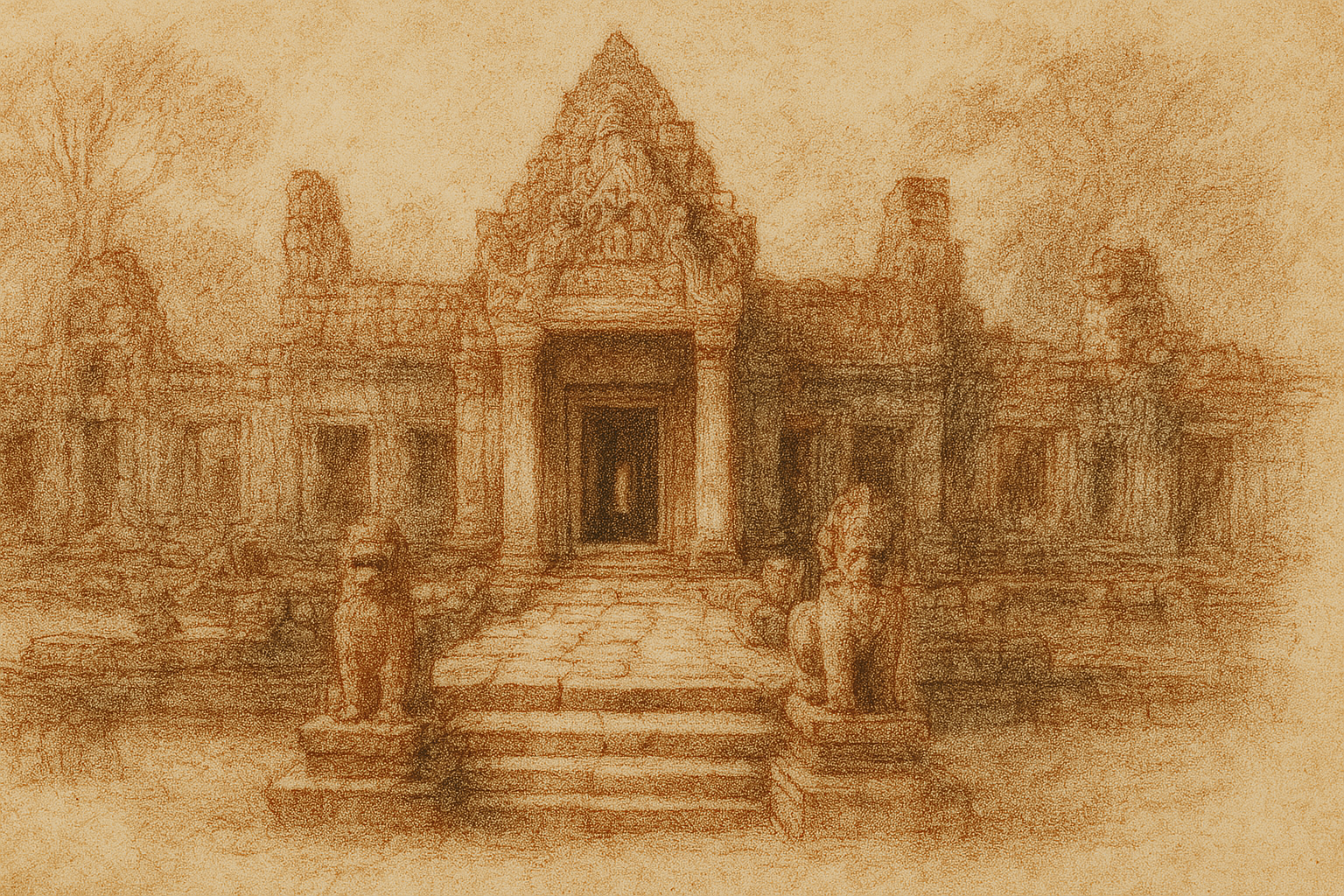

The Serpent, the Thunderbolt, and the Sky
Beneath curling vines and soft monsoon light, gods sleep on stone, thunder waits above a crown, and wings darken the sky. This is a morning of sacred symbols and soft breath—where every carving remembers, and every silence leads inward.
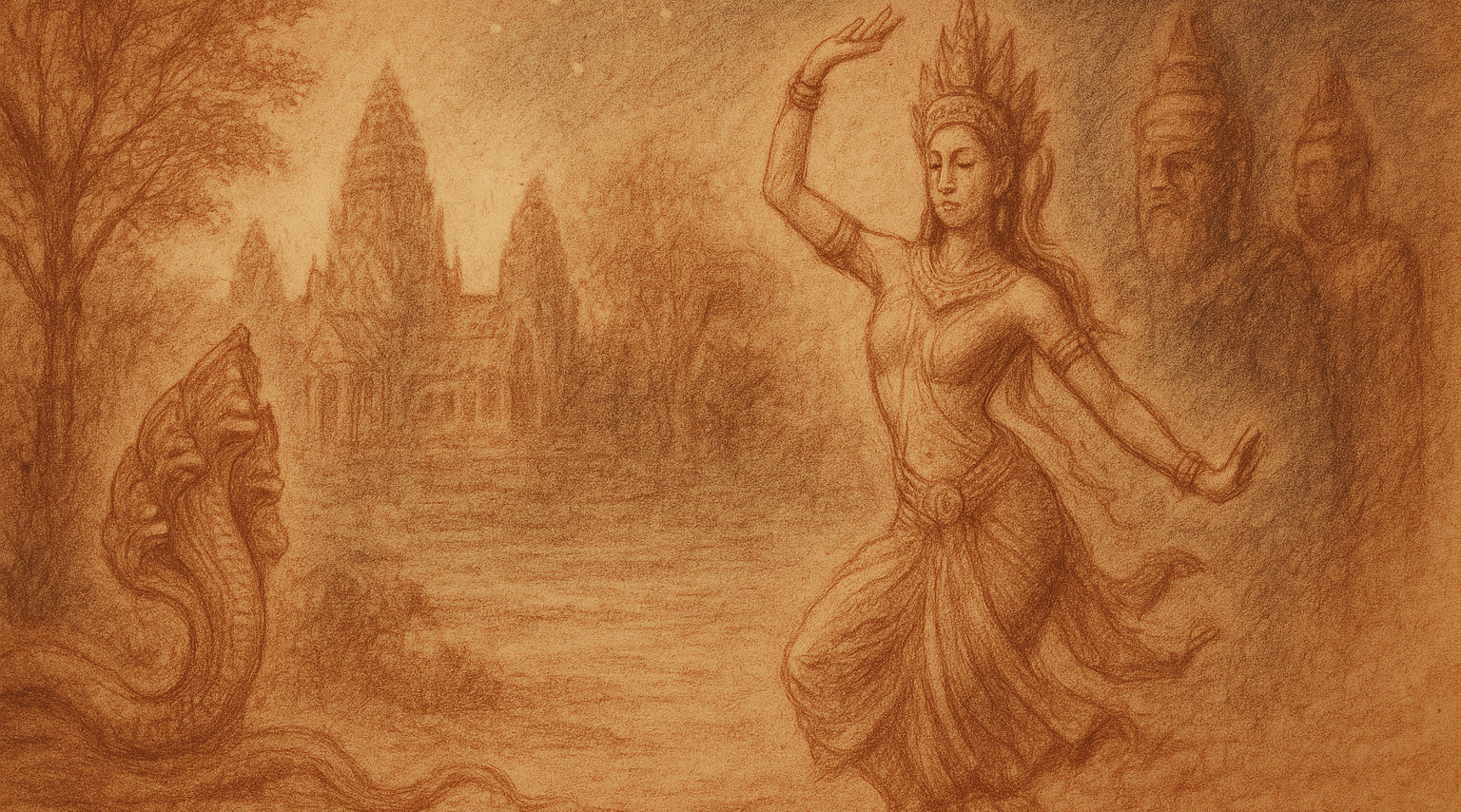

Where Gods and Stones Whisper as One
Step barefoot into the hush of Angkor, where carved stone remembers the shape of prayer, and the breath between gods and kings still lingers in the light. Here, myth and devotion flow like hidden rivers beneath the ancient ground, inviting the soul to listen where language ends.
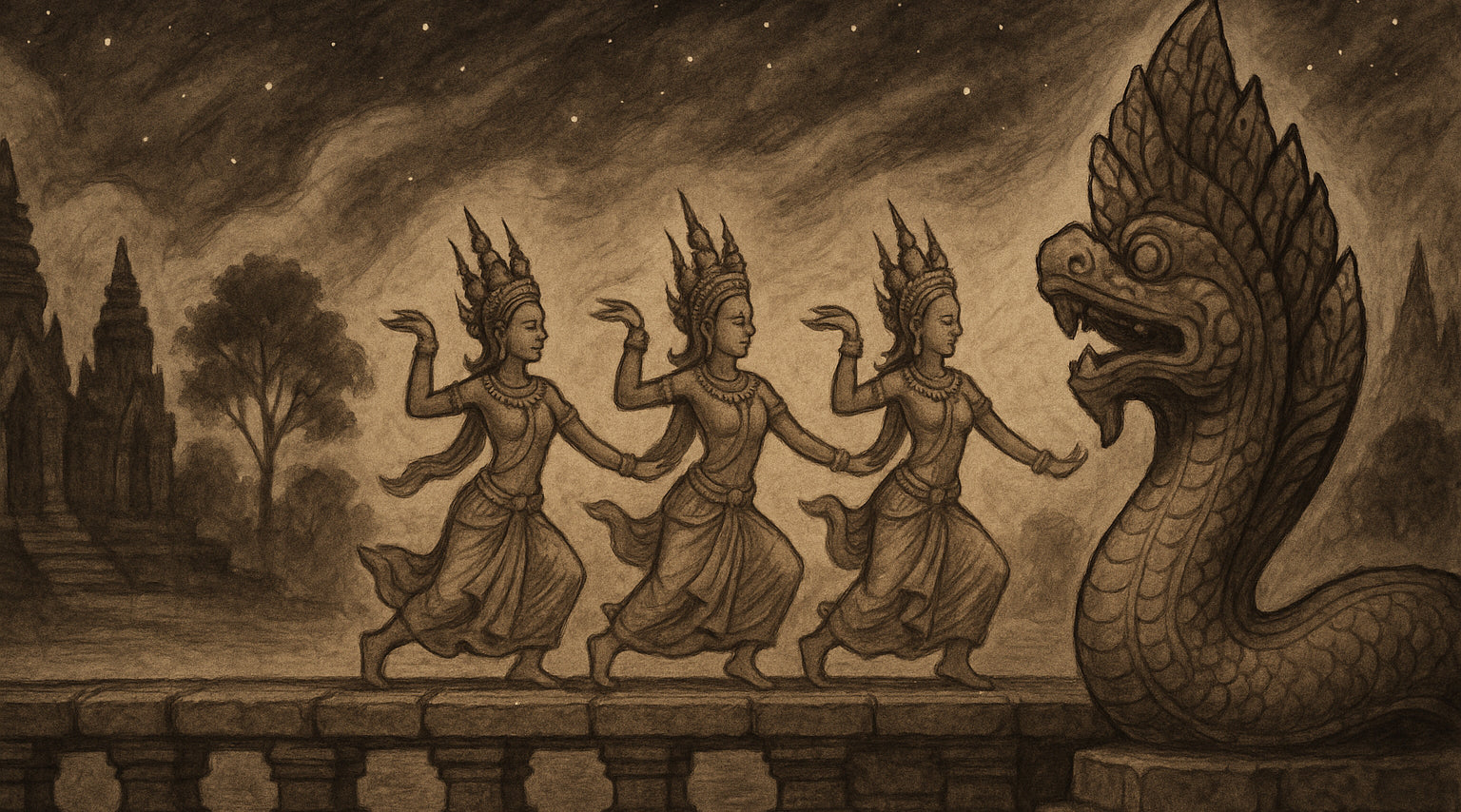

When Stone Breathes the Name of Gods
In still corridors of Angkor, where the breath of gods once passed through stone, silence lingers with memory. Step softly—each carved figure still listens, each pillar still prays. In their shadows, devotion flickers like incense, and time kneels before the sacred form of longing made visible.
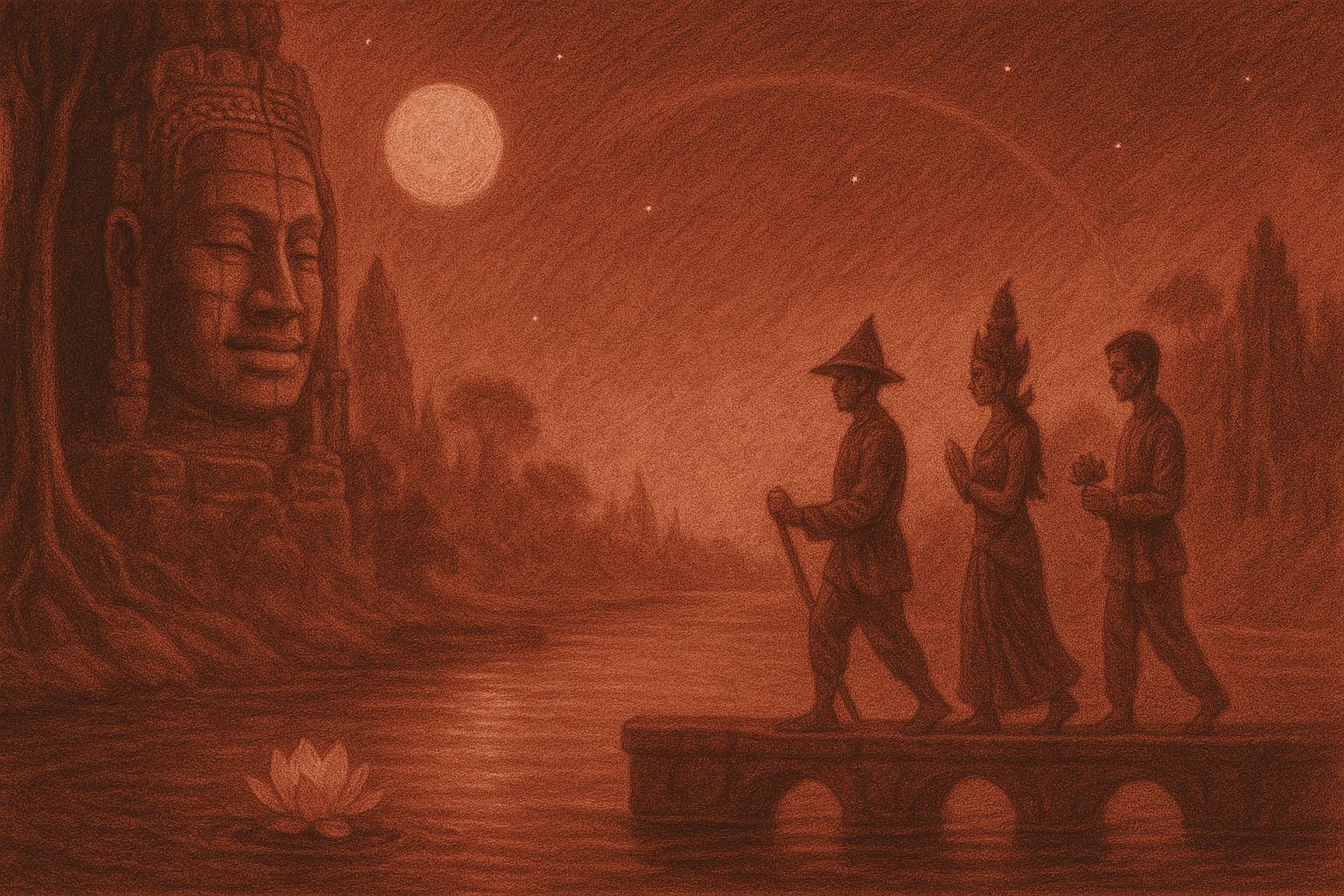

When Two Rivers Become One: The Secret of the Bayon
Beneath the gaze of silent stone, two destinies entwine—Khmer and Cham, land and sea, kingship and yearning. Step softly into the Bayon’s breath, where unity flickers like moonlight on water and the ancient dream still waits, murmuring through corridors carved in shadow and light.
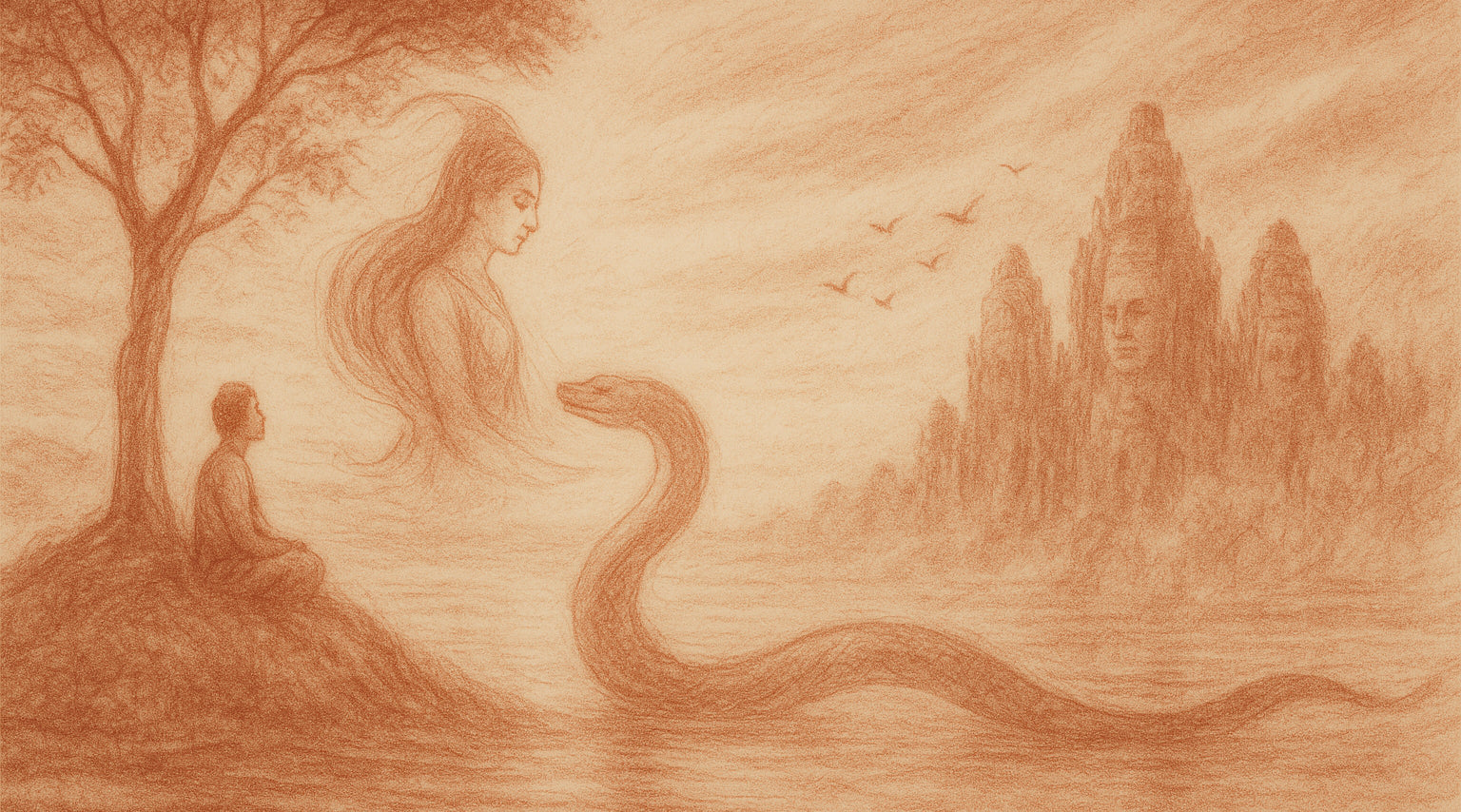

In the Beginning Was the Bayon
Beneath faces carved in ancient light, the Bayon dreams of oceans swallowed and kingdoms born. A whisper rises from the well of myth—calling not to be understood, but remembered. Step gently, where the world began in silence and stone.
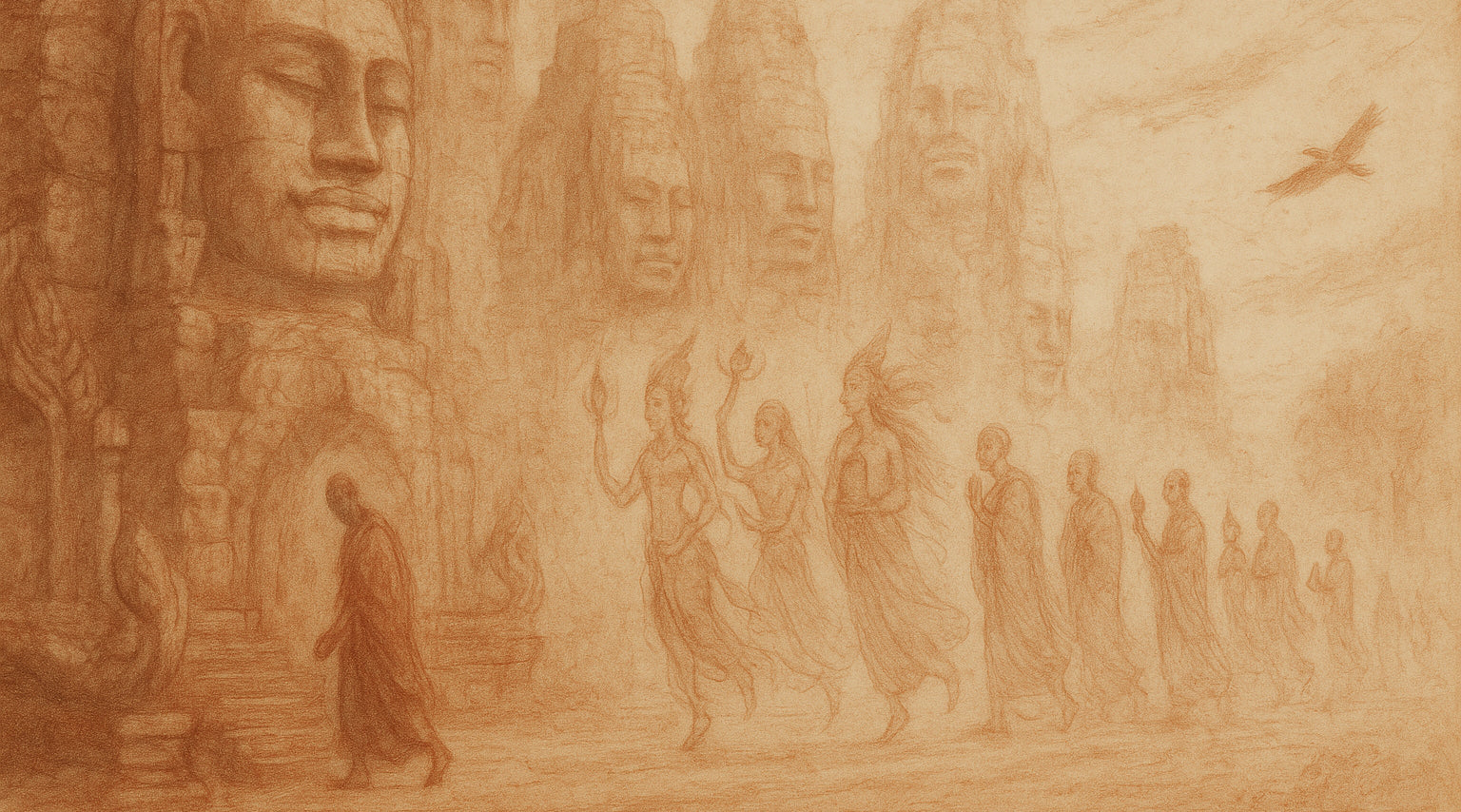

A Sanctuary Where Faces Keep Their Secrets
Veiled in morning mist, the faces gaze from stone—serene, nameless, and infinite. Step quietly through shadowed corridors where silence listens, and memory breathes. Let mystery lead you, not to answers, but to presence.
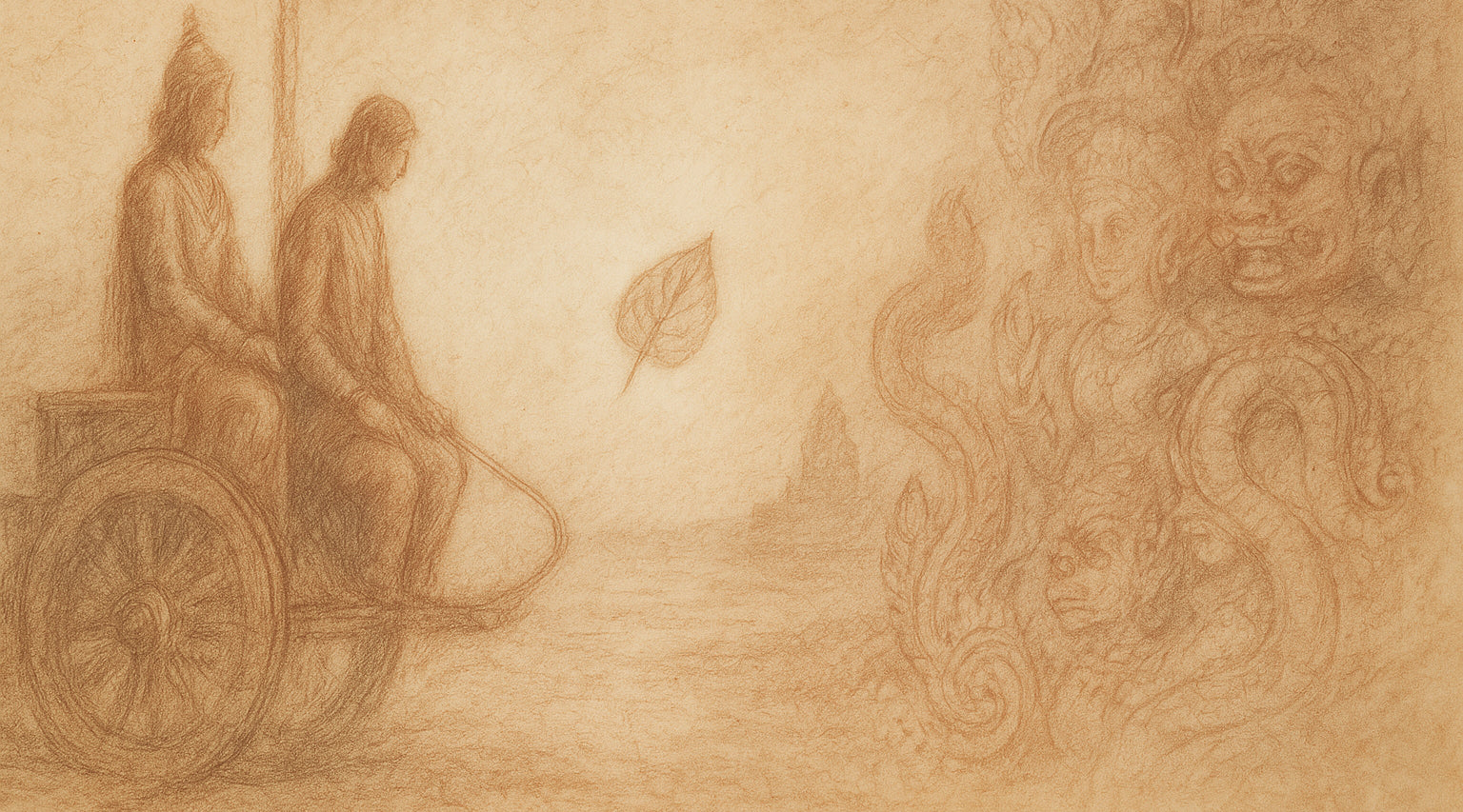

The Sacred Art of Abridgement: Khmer Myths in Stone
A single moment carved in stone may speak the whole.
Step where epics are distilled to breath and flame—
where gods whisper through fractured scenes,
and the soul of Angkor gathers in what was left unsaid.
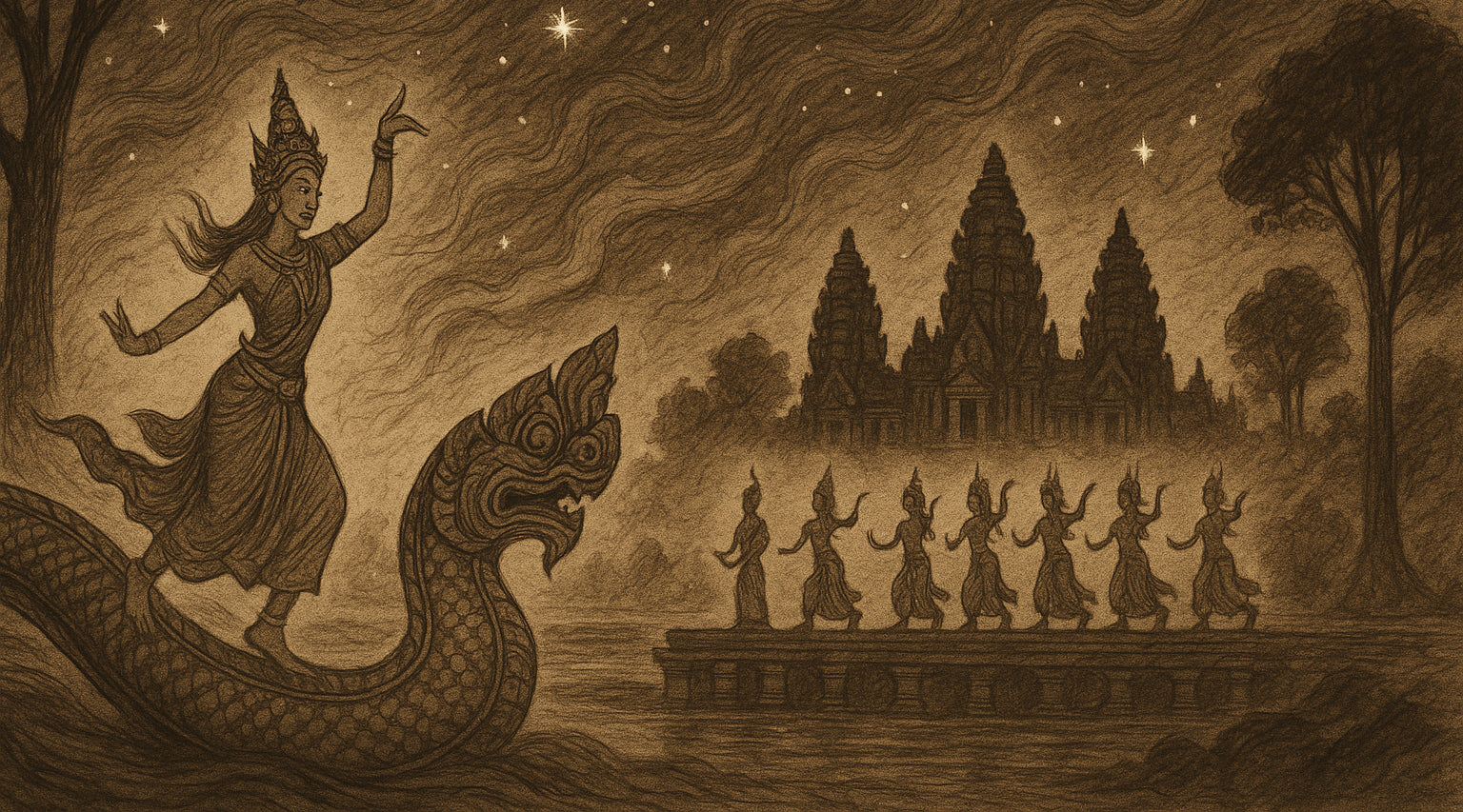

A Threshold of Stone and Soul: Entering the Sanctuary of Meaning
Some temples are not meant to be visited, but entered inwardly. Let these pages guide you across thresholds carved in shadow, into realms where stone and silence conspire to reveal what endures. Here, myth breathes, meaning ripens, and the soul remembers.
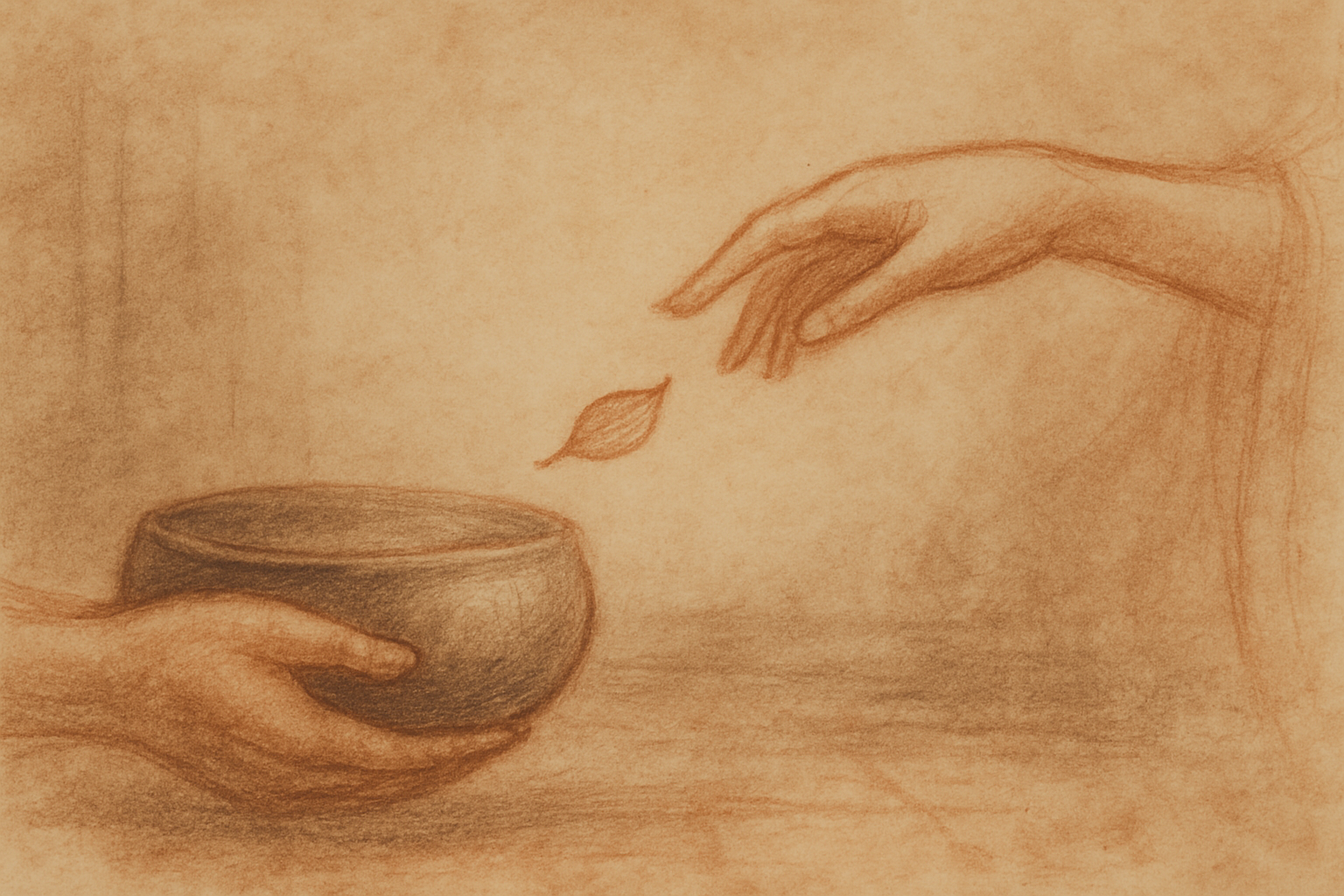

When the Monk Sang to the Moonlight
In moonlit silence beneath the frangipani tree, a vow was made and unmade. Still they walk—his voice a fading chant, her sorrow a falling petal—where love became a prayer too radiant for the world to bear.
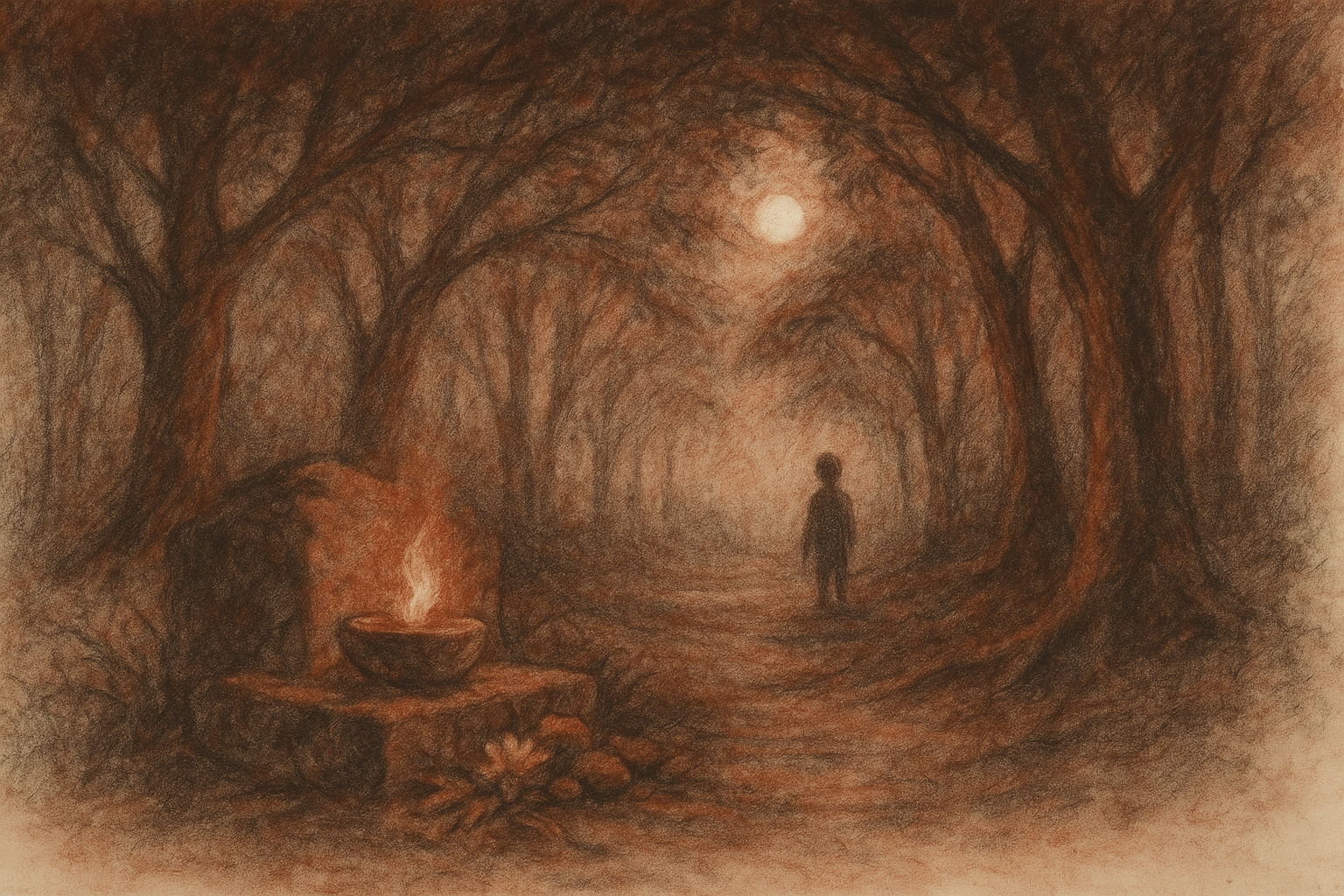

The Whispering Forest: Arak and the Celestial Light
Beneath the tamarind’s silent boughs, something breathes between root and star. A boy is taken, a forest stirs, and the old songs rise again—carried not by words, but by wind, memory, and the voices that whisper where offerings are left and the veil grows thin.
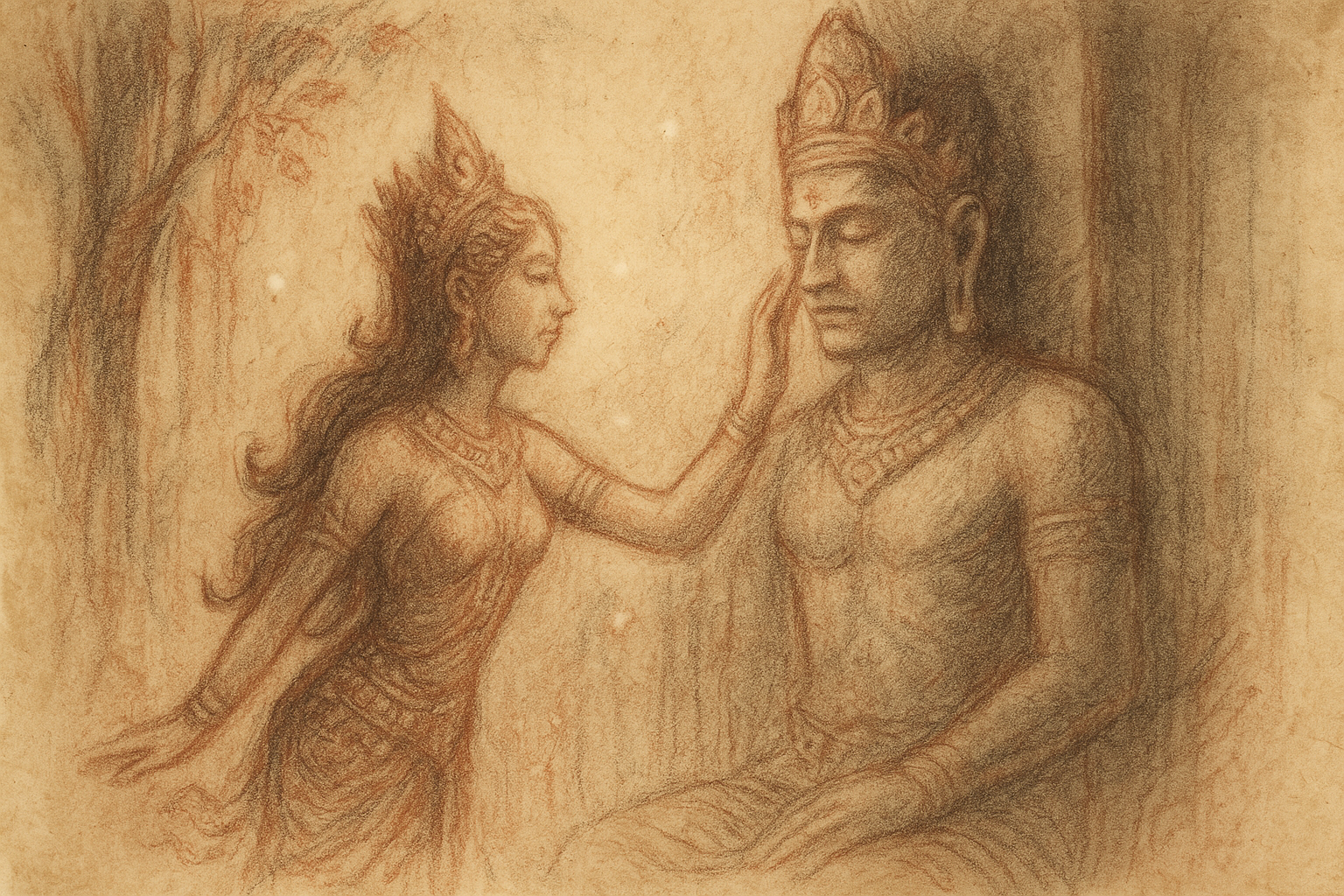

The Apsara and the Stone
Beneath the fig tree’s listening hush, a shadow lingers near the shrine—part breath, part longing, part forgotten dance. The stone remembers more than time allows, and moonlight finds what silence keeps.
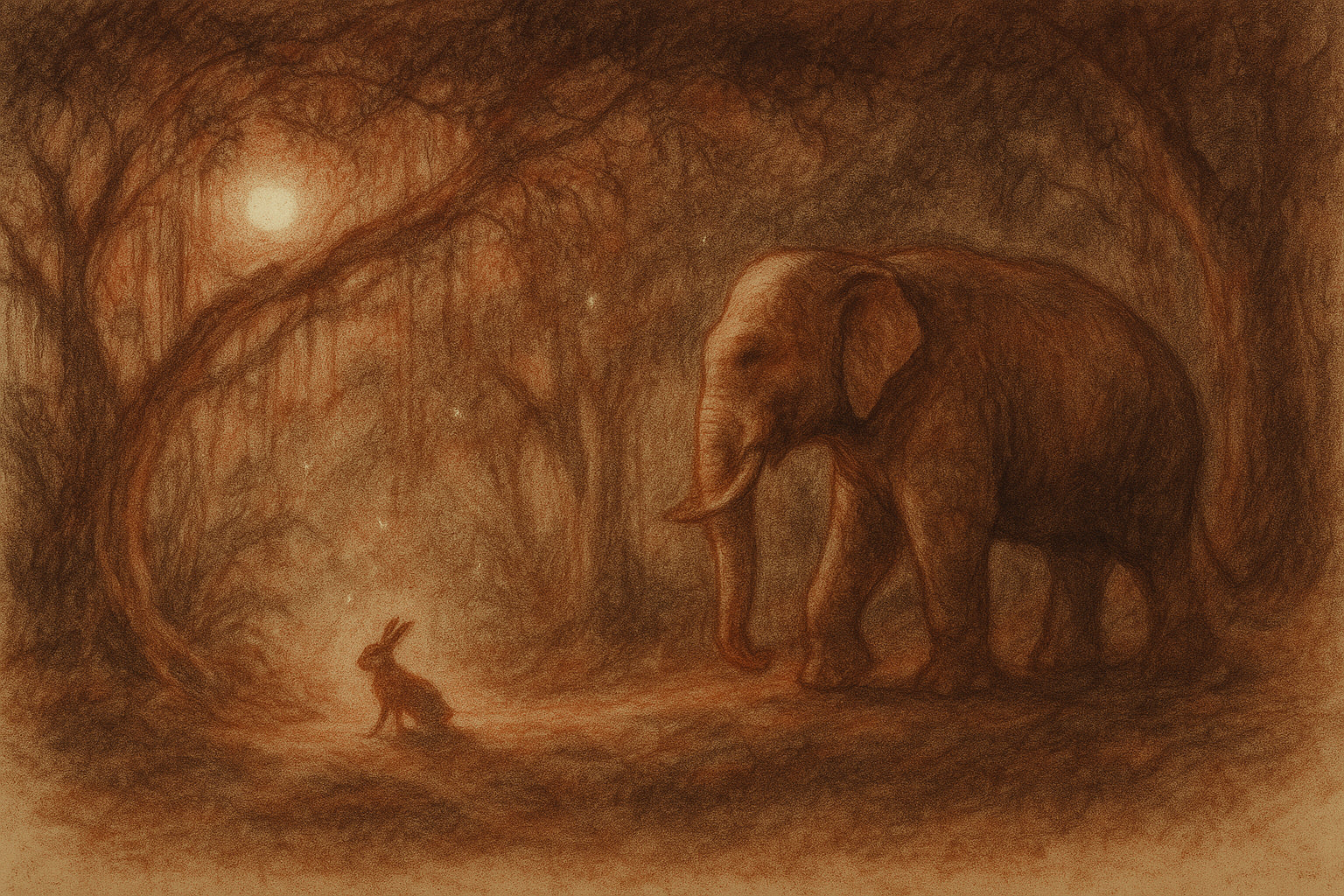

The Rabbit and the Elephant
In the hush of a moonlit forest, where banyan roots cradle still water, something stirs—a whisper of pride, a shadow of wisdom, and a ripple that never comes. Look closely. The pond does not move. The moon does not blink. But something old remembers.
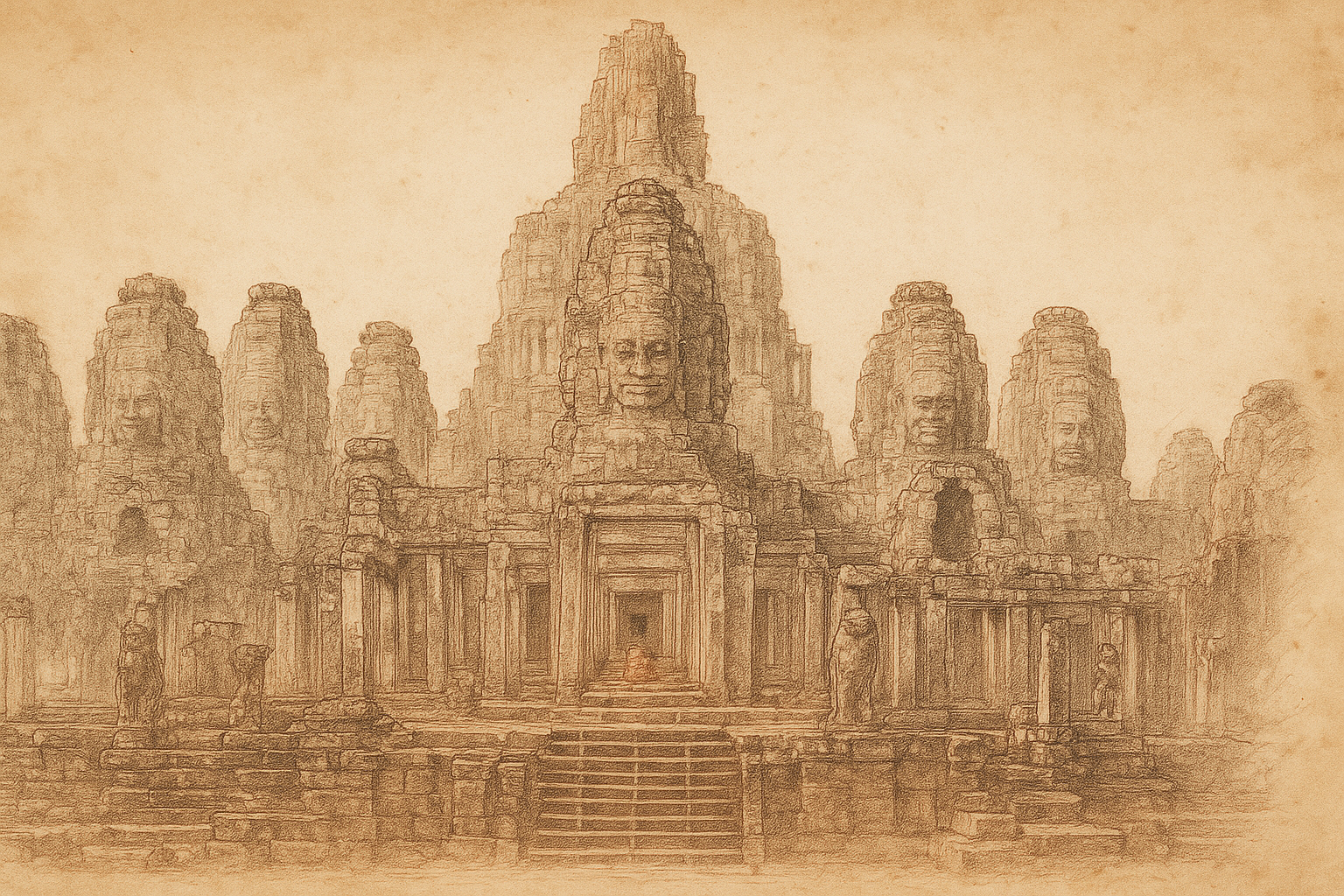

In the Shadow of the Sacred Wall - Morning at the Bayon
Mist drifts over ancient stone, where gods are carved into memory and silence carries the weight of forgotten prayers. Somewhere between shadow and gold light, something eternal waits—unmoving, and yet alive.
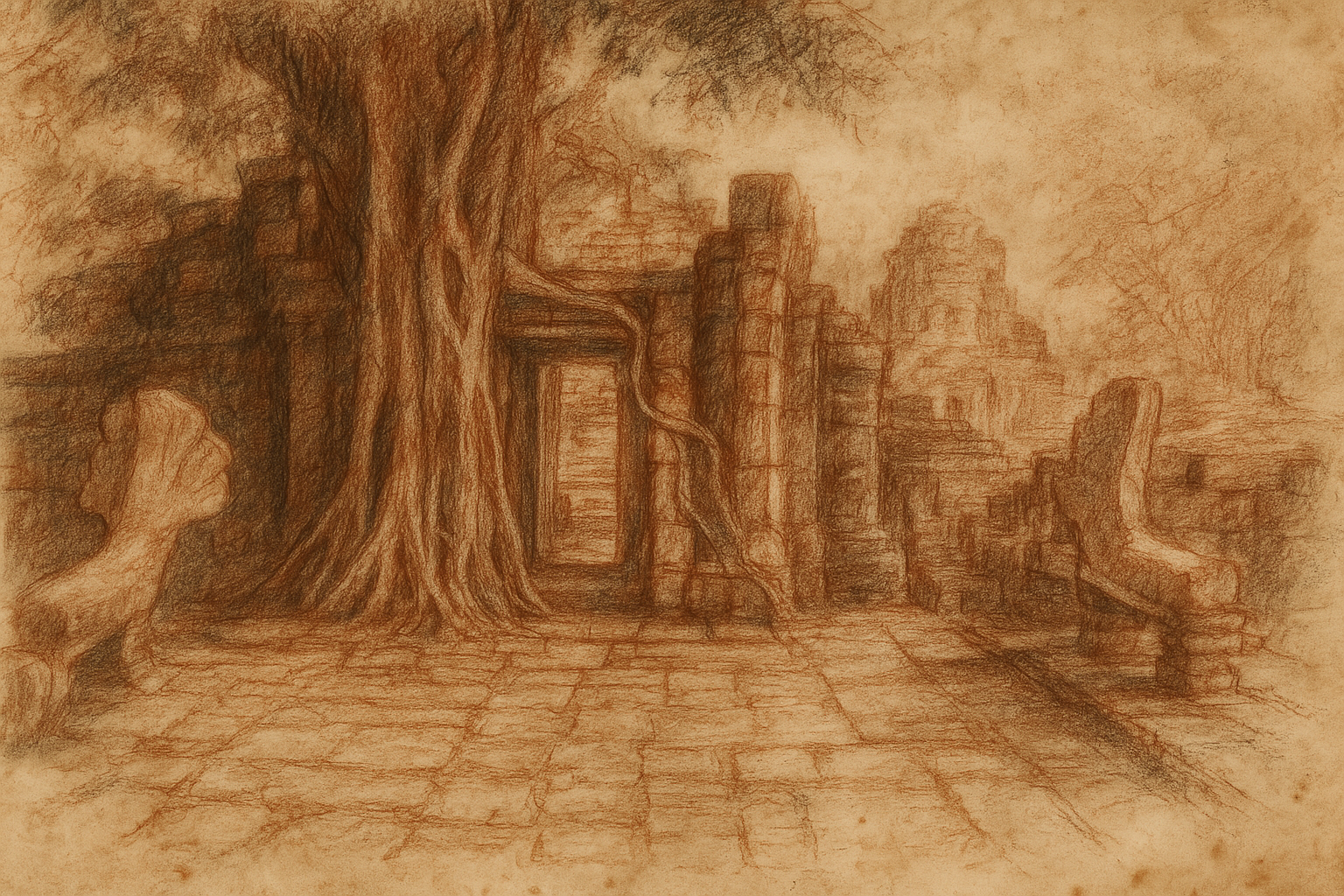

Beneath the Wings of Silence
Stone remembers what we forget. In a forest where Buddhas endure and hornbills rise, silence becomes a doorway—and every step, a prayer returned.
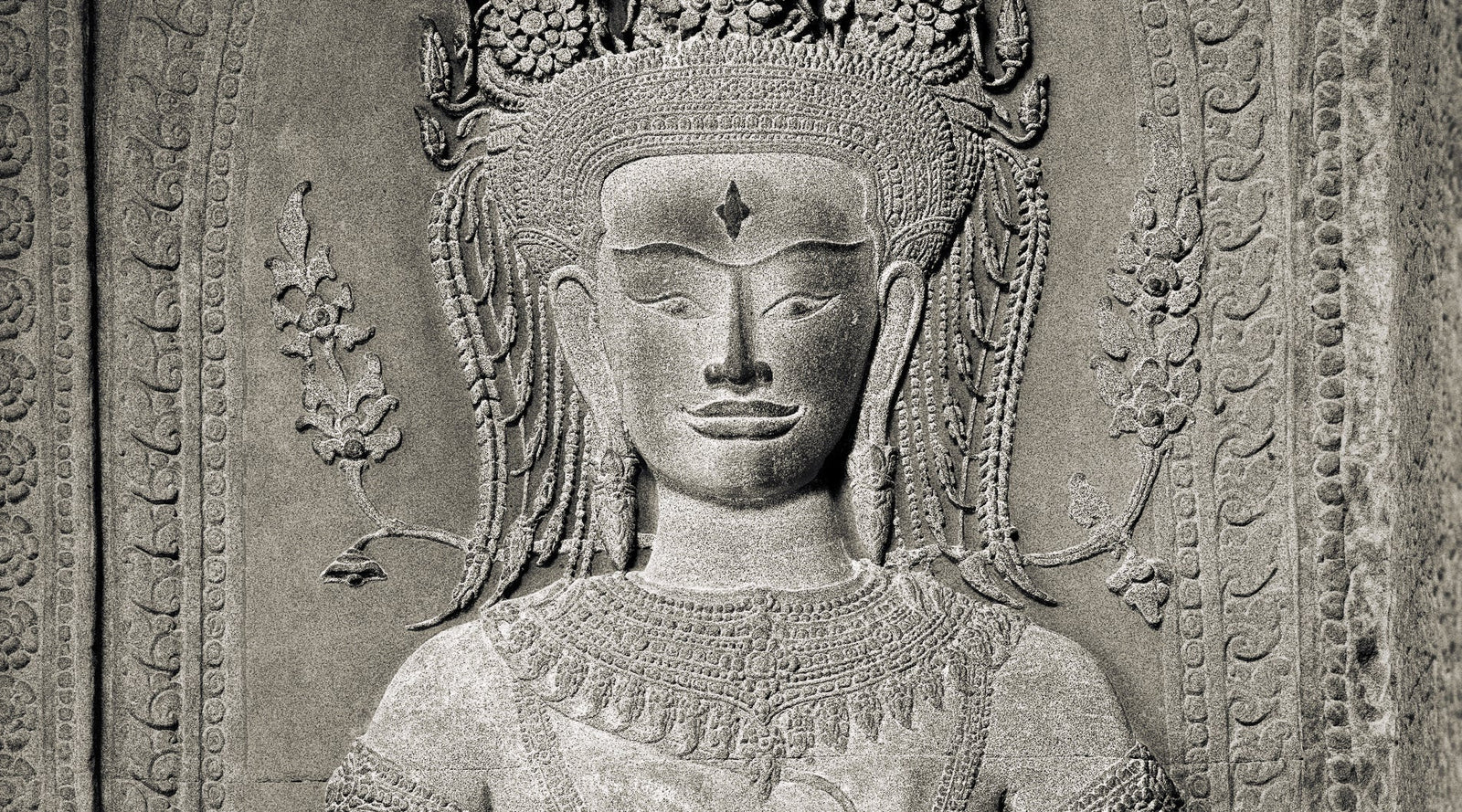

The Image That Waits with You
A devata carved in the third tier of Angkor Wat is not revealed by light, but by waiting. This curatorial meditation traces the devotional making of She Who Waits in Shadow—from hush to hand.
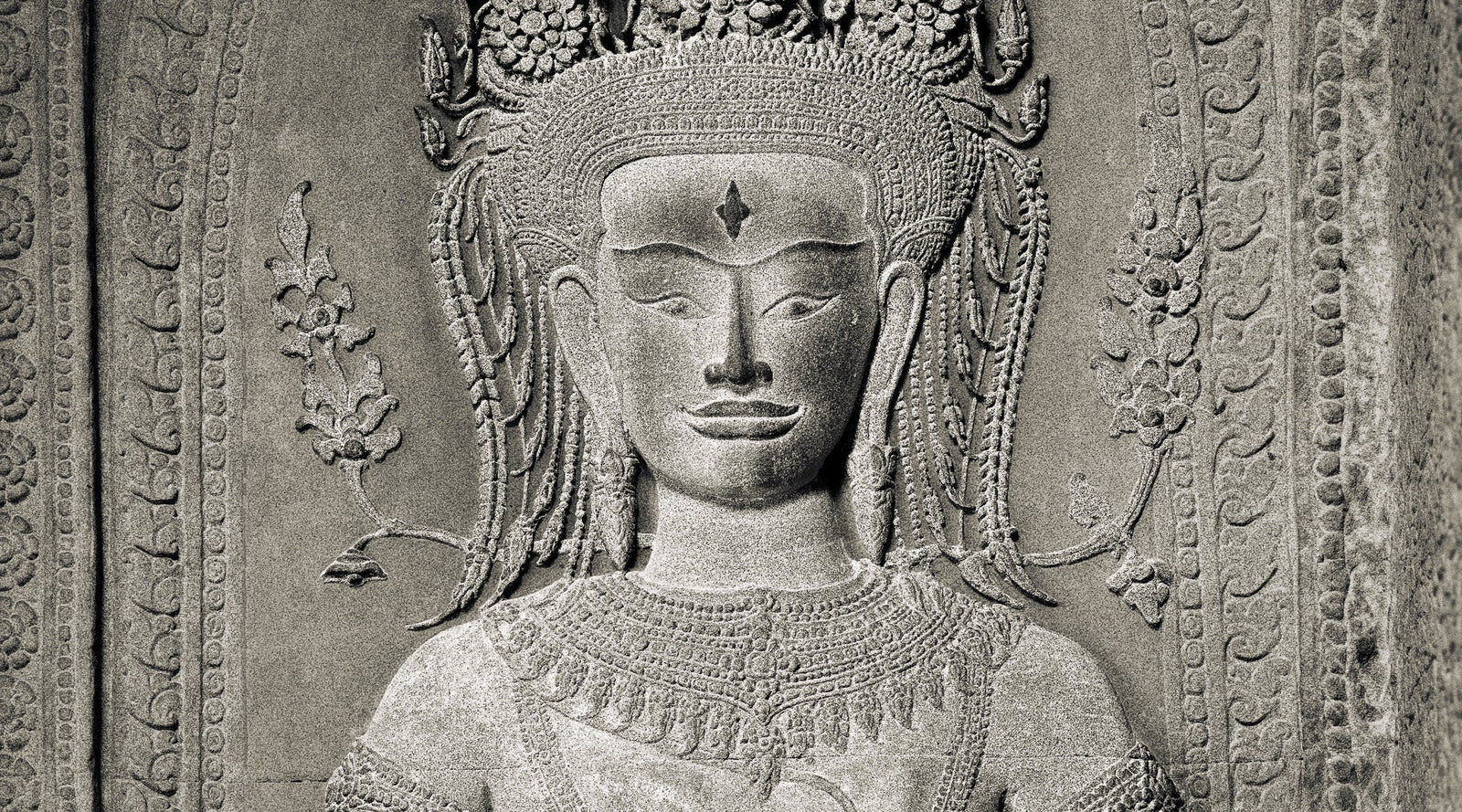

The Patience of Shadow
She does not shimmer or declare. She waits. In this quiet haibun, stone and memory entwine as the artist meets a devata not by seeking, but by standing still.
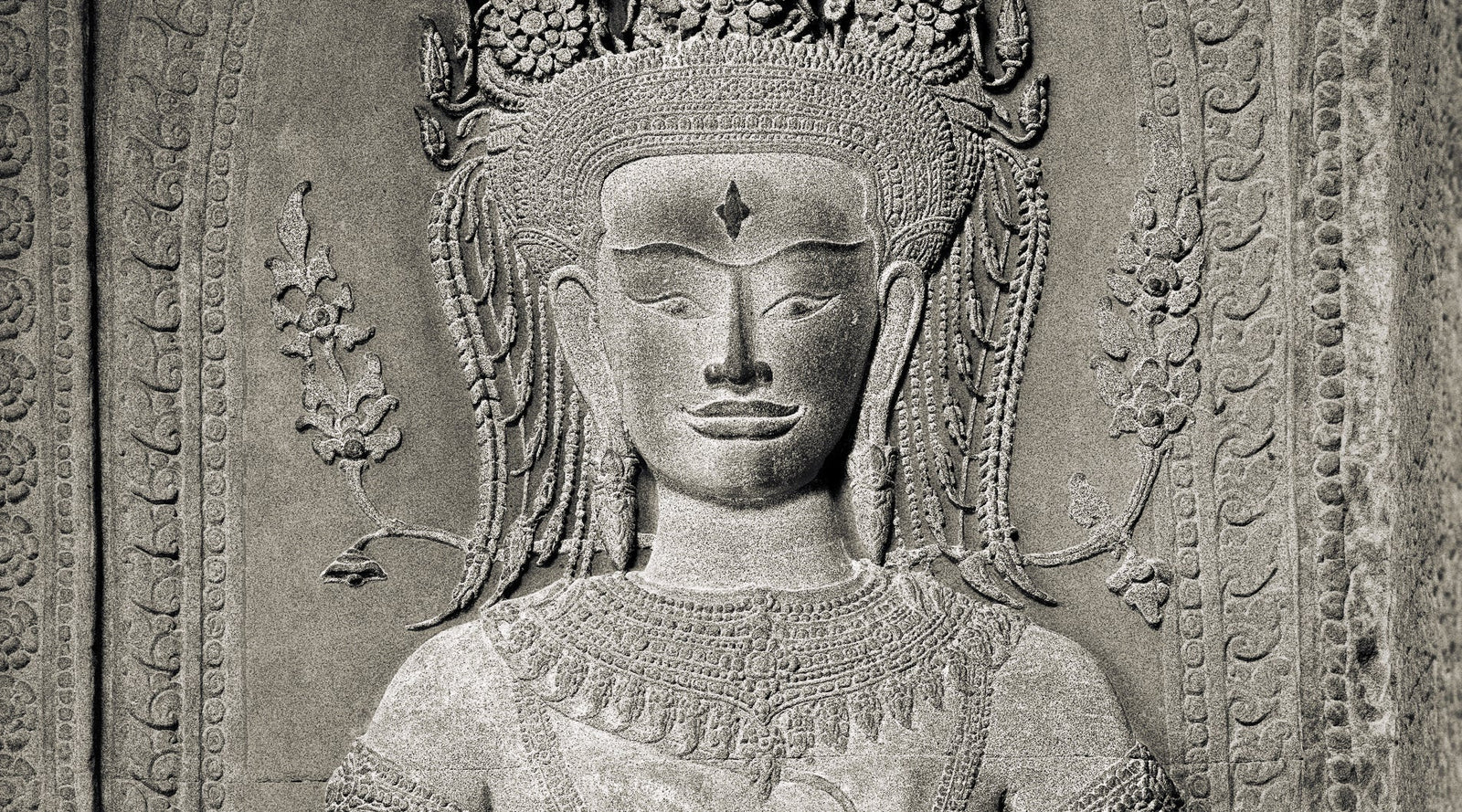

The Breath That Reveals Her
A devata in the third tier of Angkor Wat waits for more than light—she waits for breath. In this reflection, a slow field encounter unfolds into a poem shaped by patience and presence.
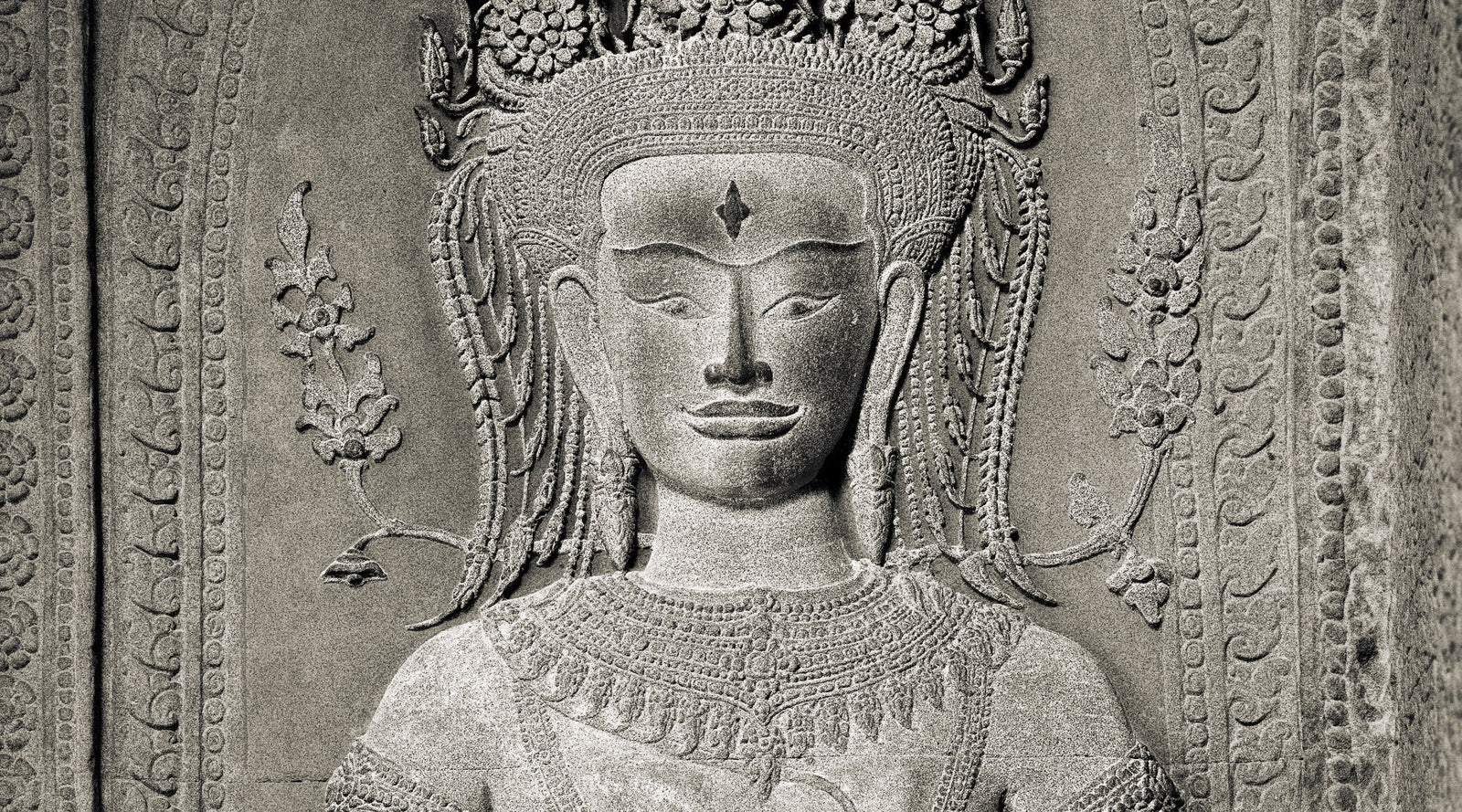

Stone Waits Before Light
In the sanctum of Angkor Wat, a devata cloaked in darkness emerges through stillness, not sight. The artist waits—then breathes. A long exposure begins not with the shutter, but with the hush before it.
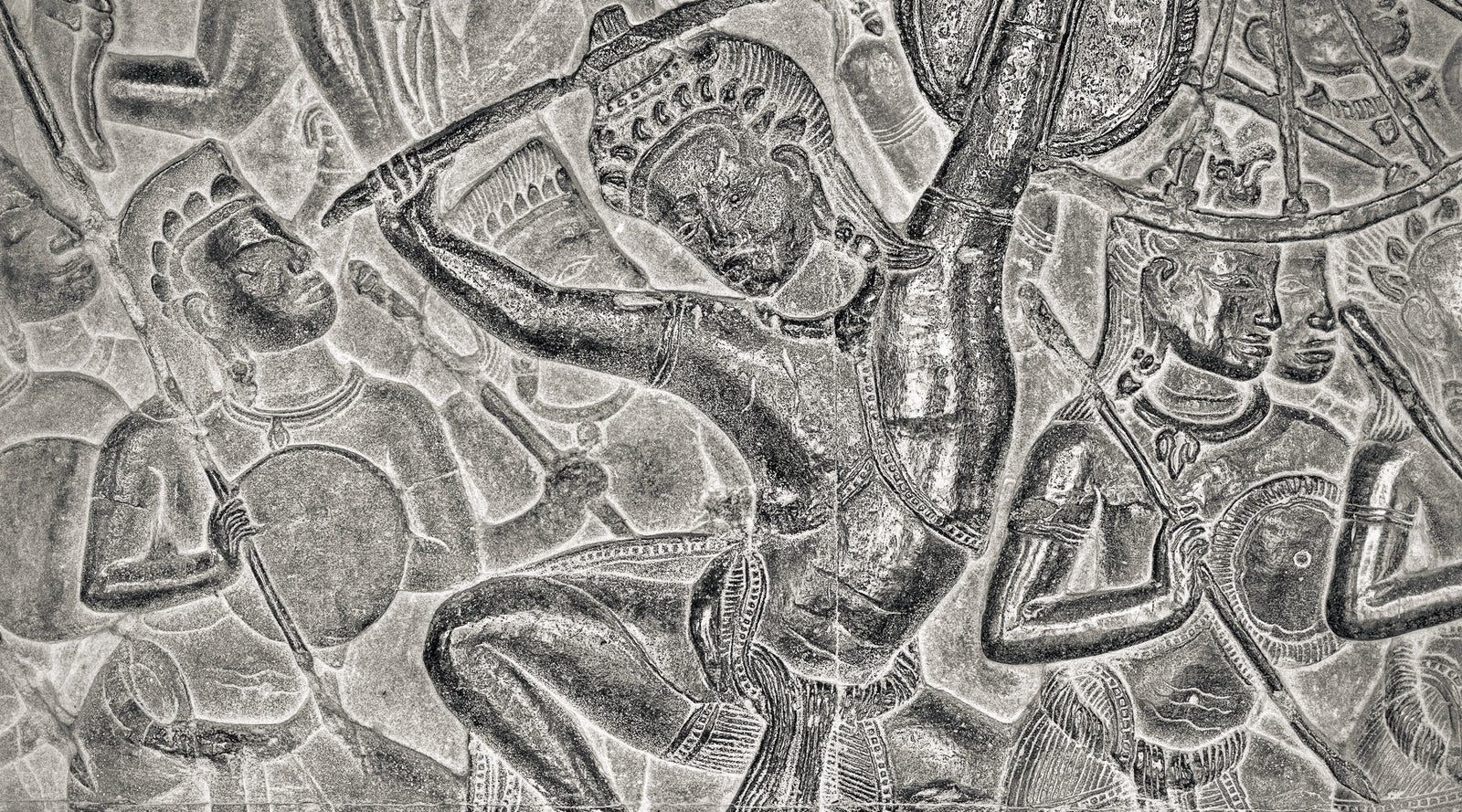

The Gesture Before Annihilation
More than a photograph—this is a devotional frame, where film becomes memory, and gesture becomes the only answer left to time.
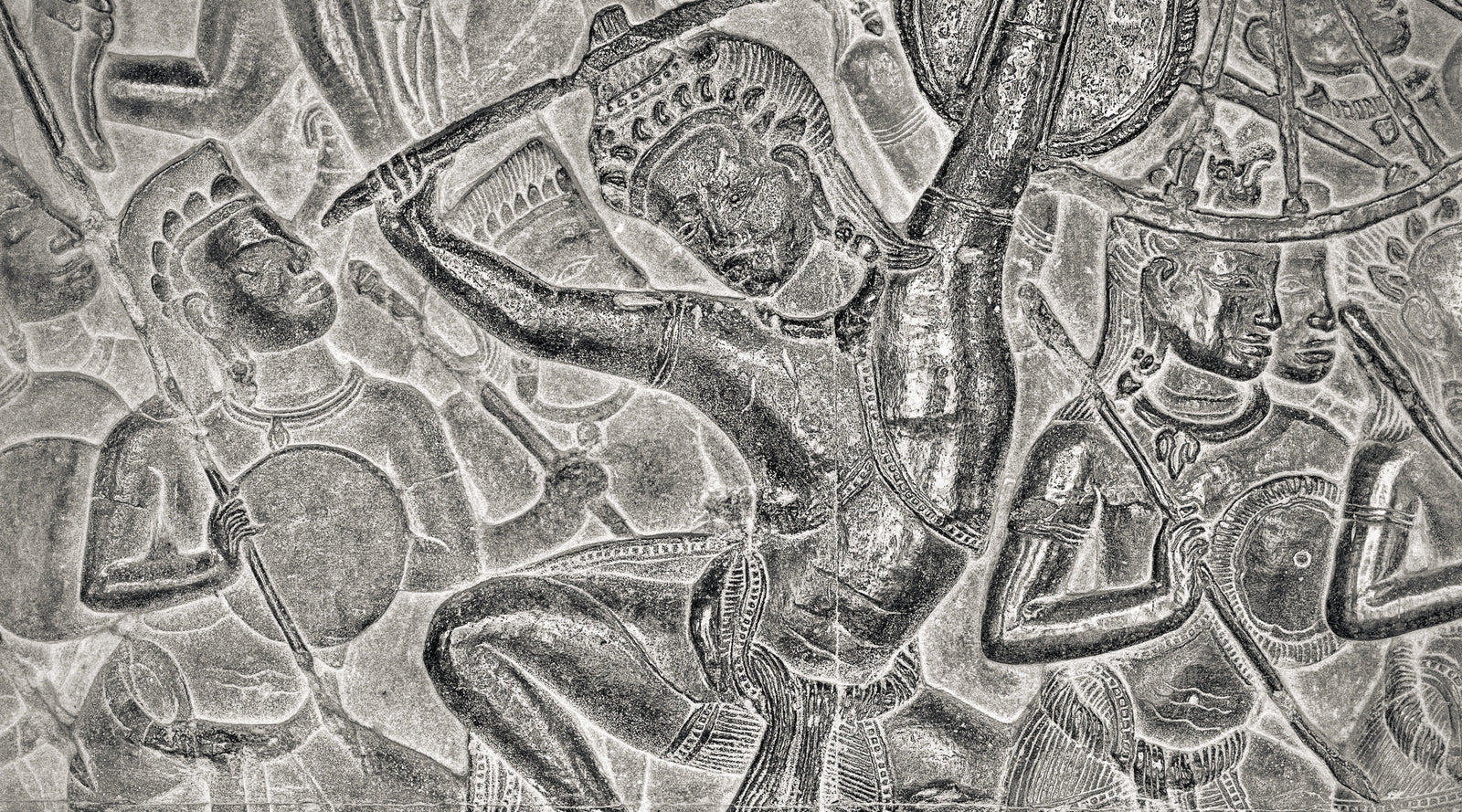

The Moment That Never Finished
In the hush of Angkor, one figure holds a breath the world forgot. His silence still dances. His shadow still speaks.
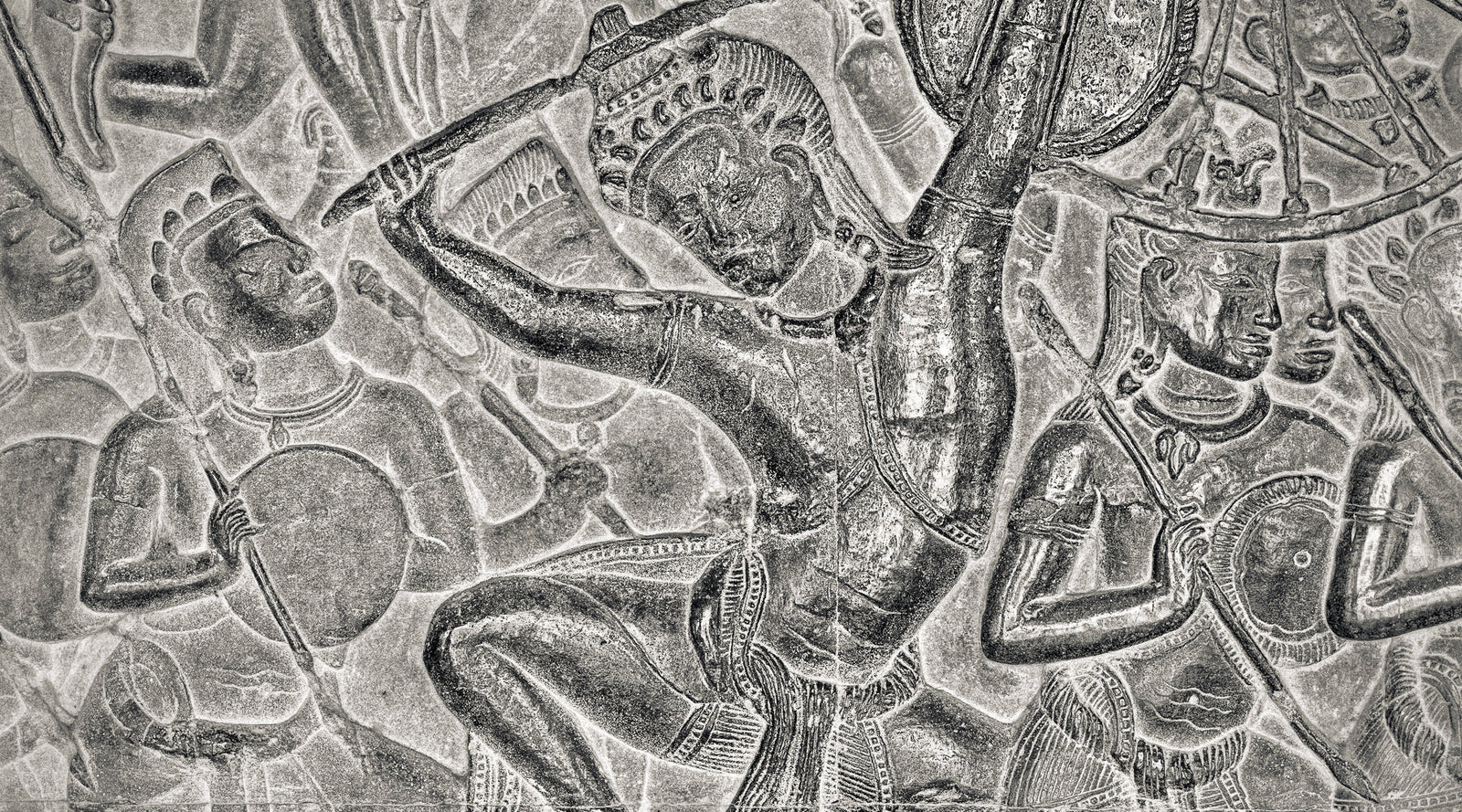

A Flame Held Upright
He raises his hand—not to strike, but to remember. A flame caught in its last motion, inviting us to witness the quiet beauty before it fades.
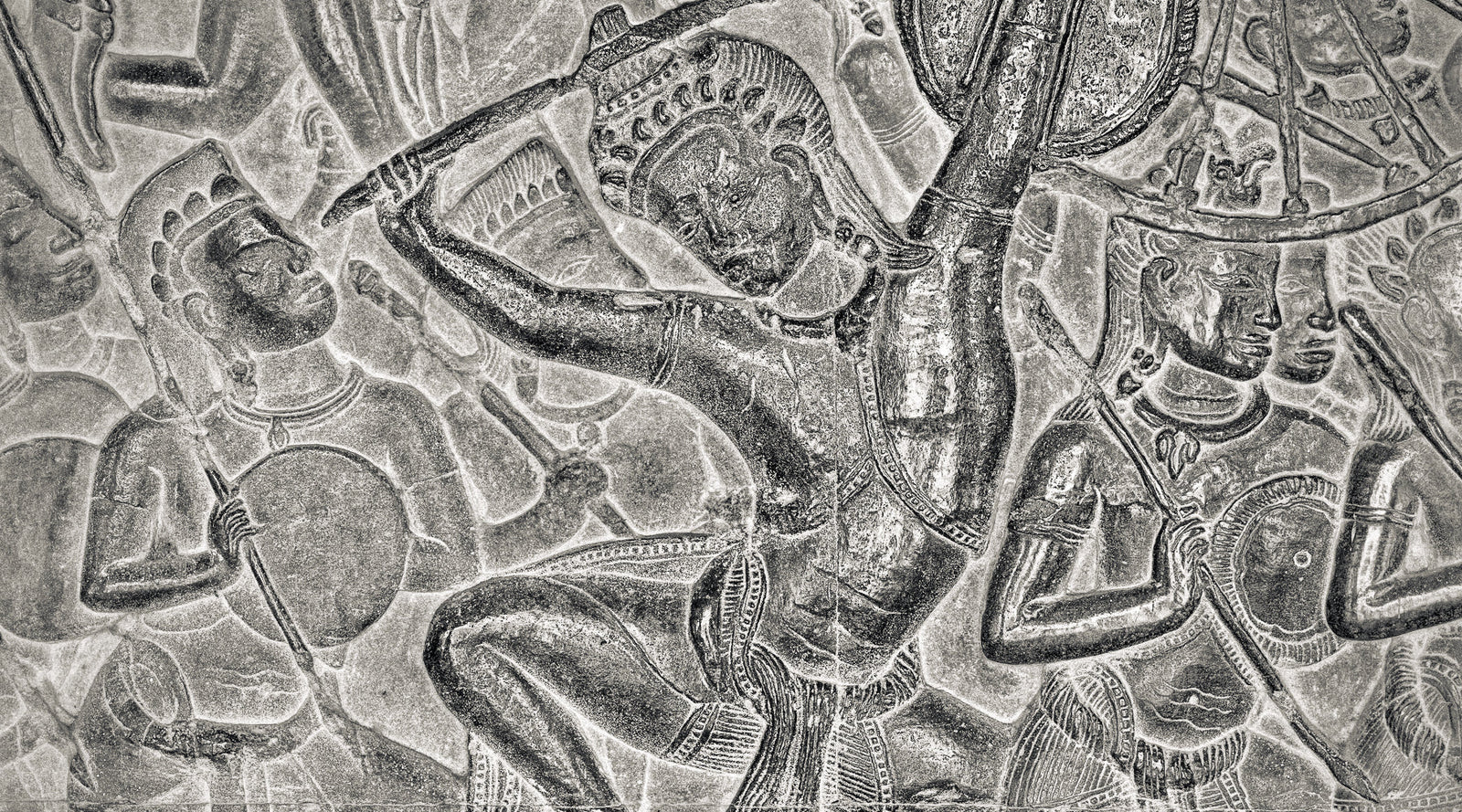

Breath Before the Blade
Rain-washed stone and the hush after war—Lucas Varro follows the breath of a forgotten figure through one lifted arm, held forever in mid-gesture.
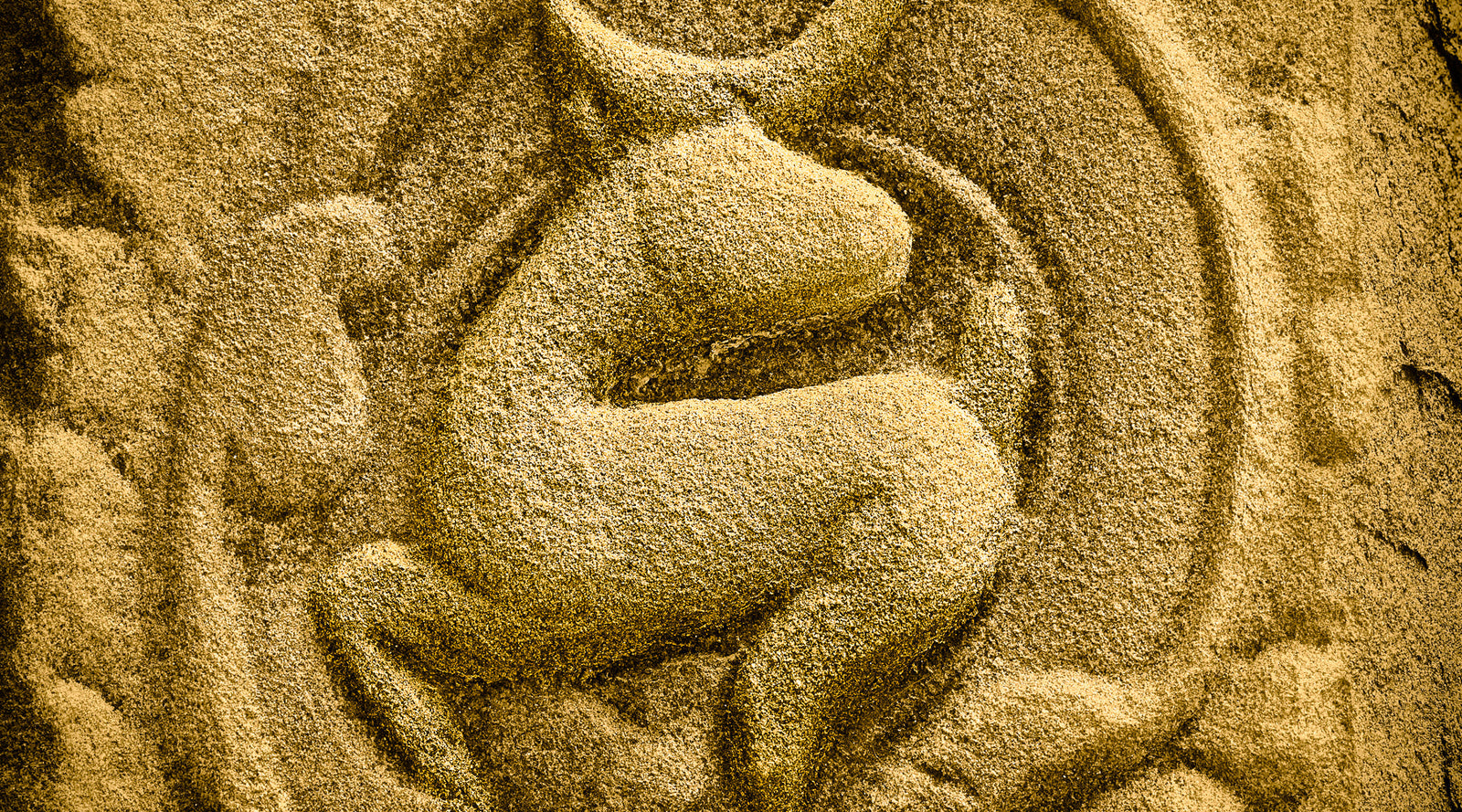

The Light That Stepped into Stillness
A deer lifts its hoof. The sun lowers its head. In this curatorial meditation, presence becomes prayer—and one golden moment at Ta Prohm is shaped into something rare and radiant.
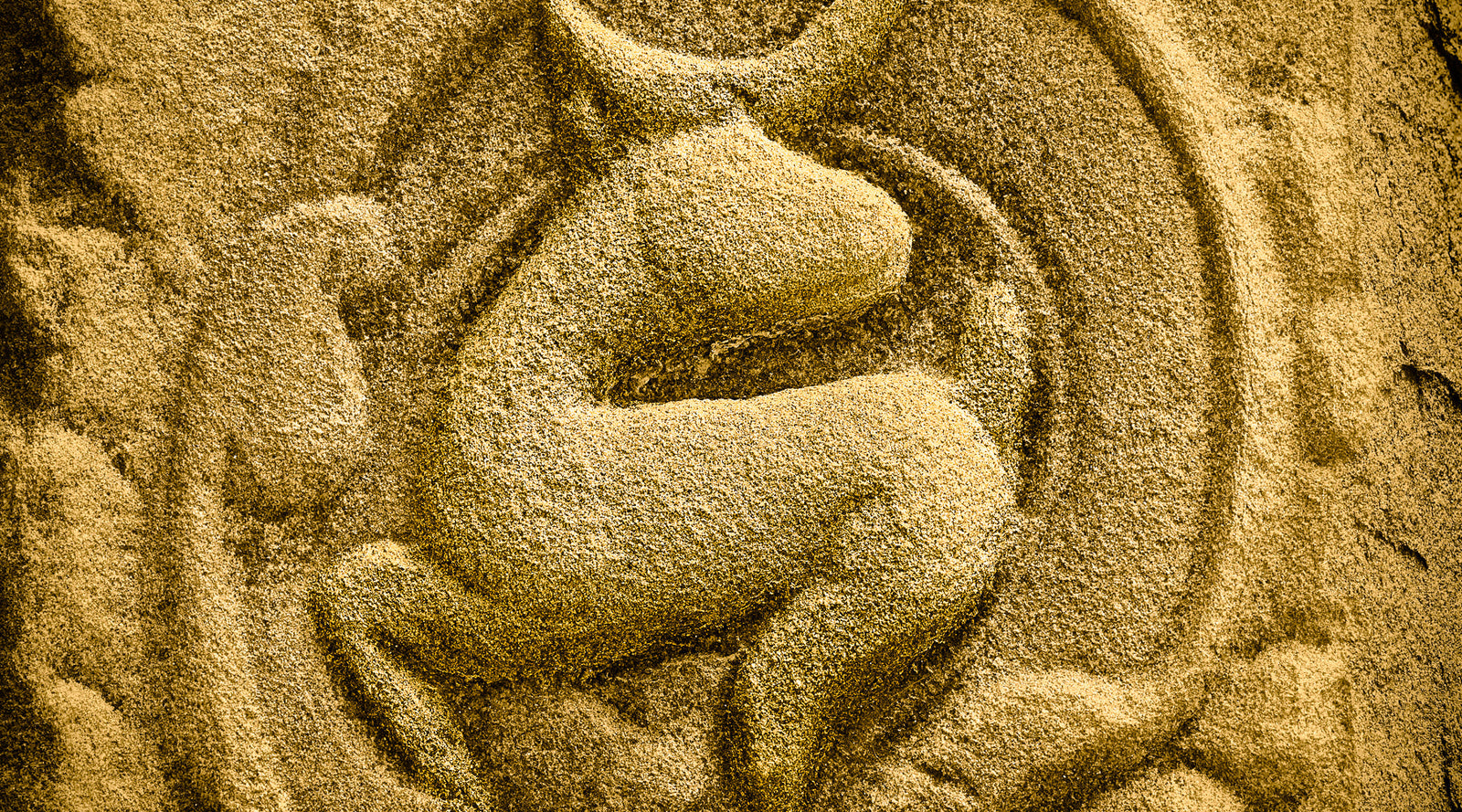

Where Motion Folds into Stone
Stone does not move, but light listens. A quiet meditation on the gesture of a carved deer, the hush of dusk, and the moment when presence glows through stillness.
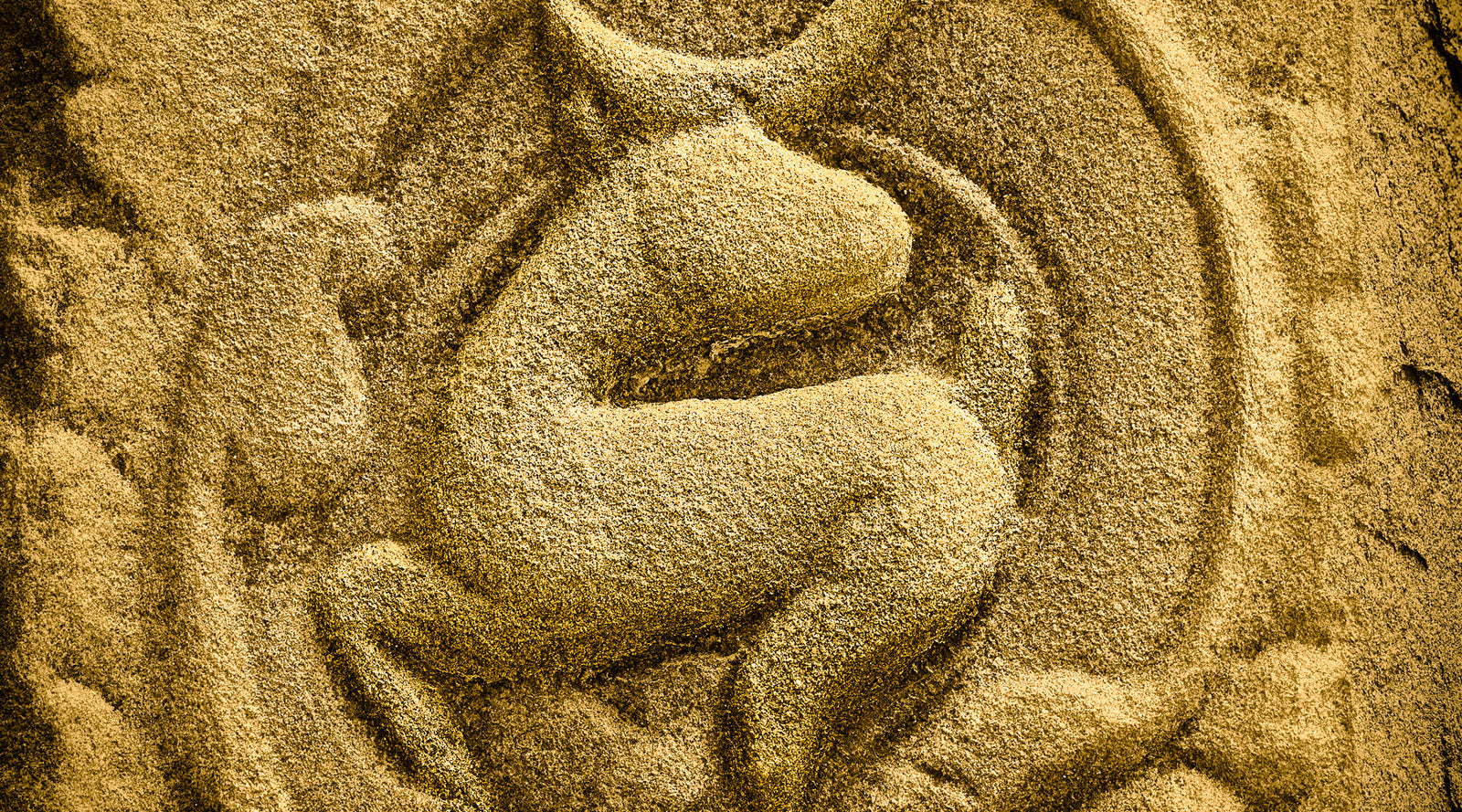

The Hoof That Called the Evening Down
A small carving. A fading light. A hoof raised in silence. In this lyrical meditation, a field note deepens into poem, revealing how dusk gathered inside a gesture—and did not leave.
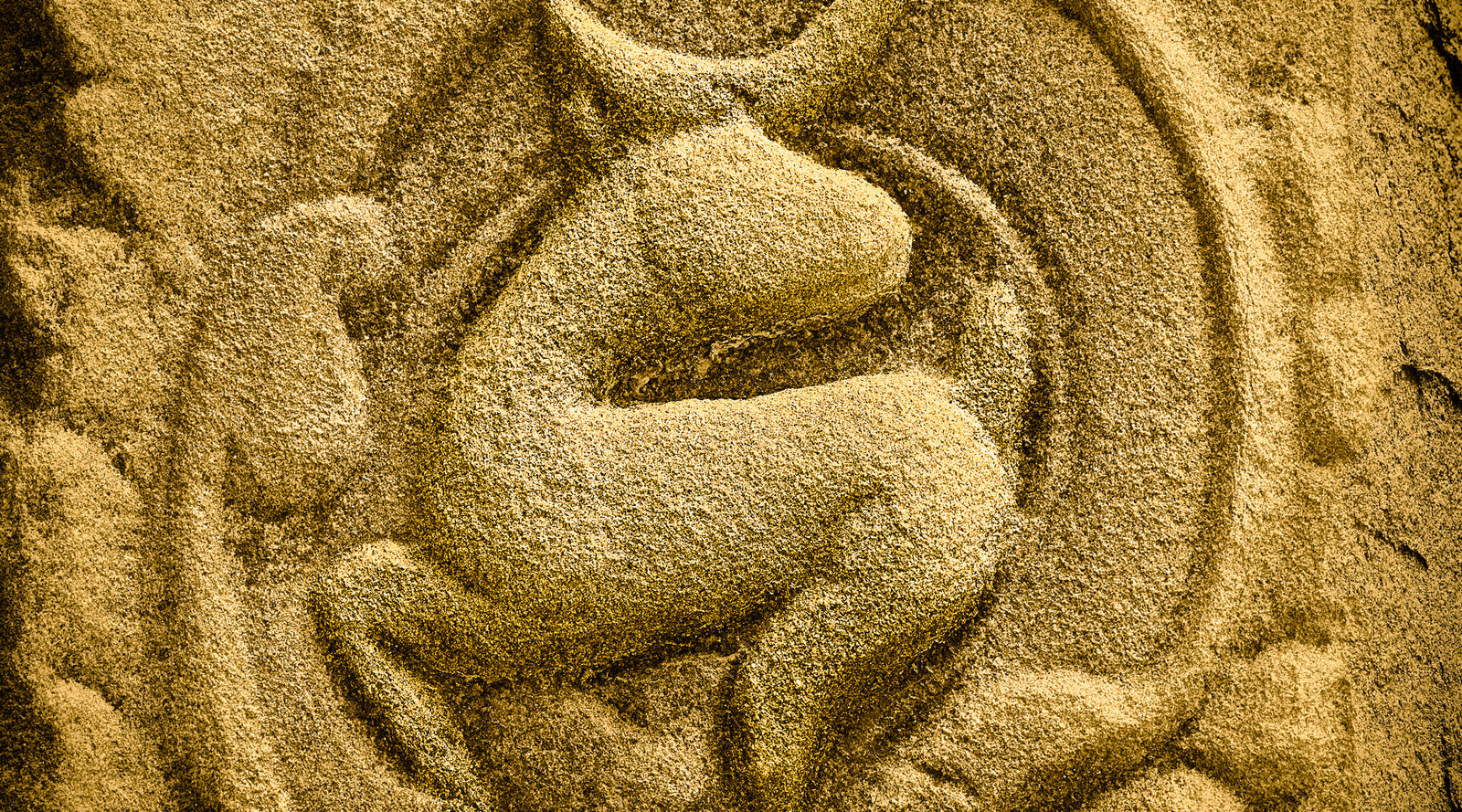

A Gesture That Gathers the Light
The deer does not move, yet the sun bows as if summoned. In this quiet journal reflection, the artist recalls a moment when gesture became invocation—and stone remembered how to hold the light.
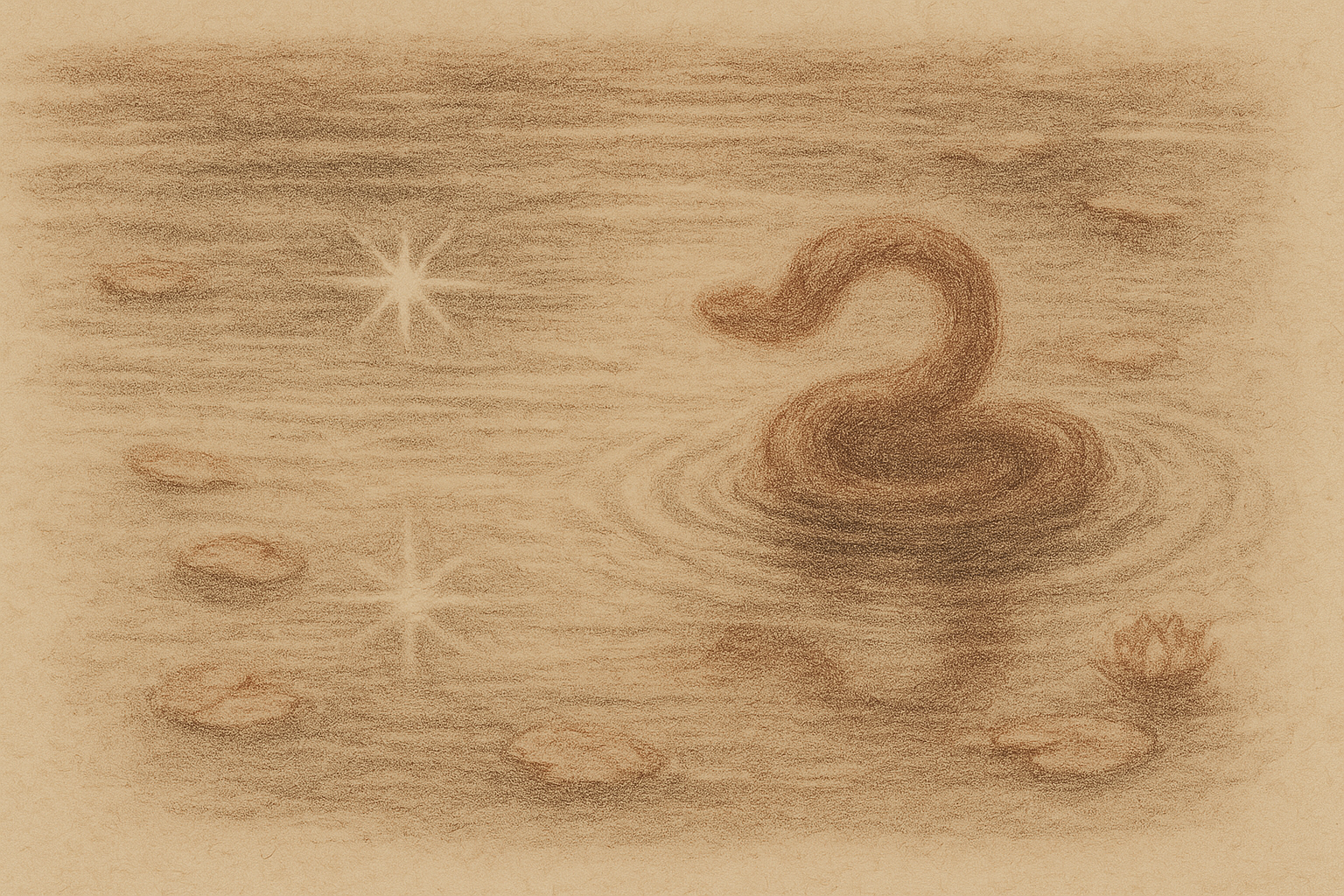

The Serpent and the Star
They met only in reflection—one rising from the roots of the world, the other descending through starlight. From their longing, the first temple was born. Some say the moon still remembers. Others say the serpent still listens.
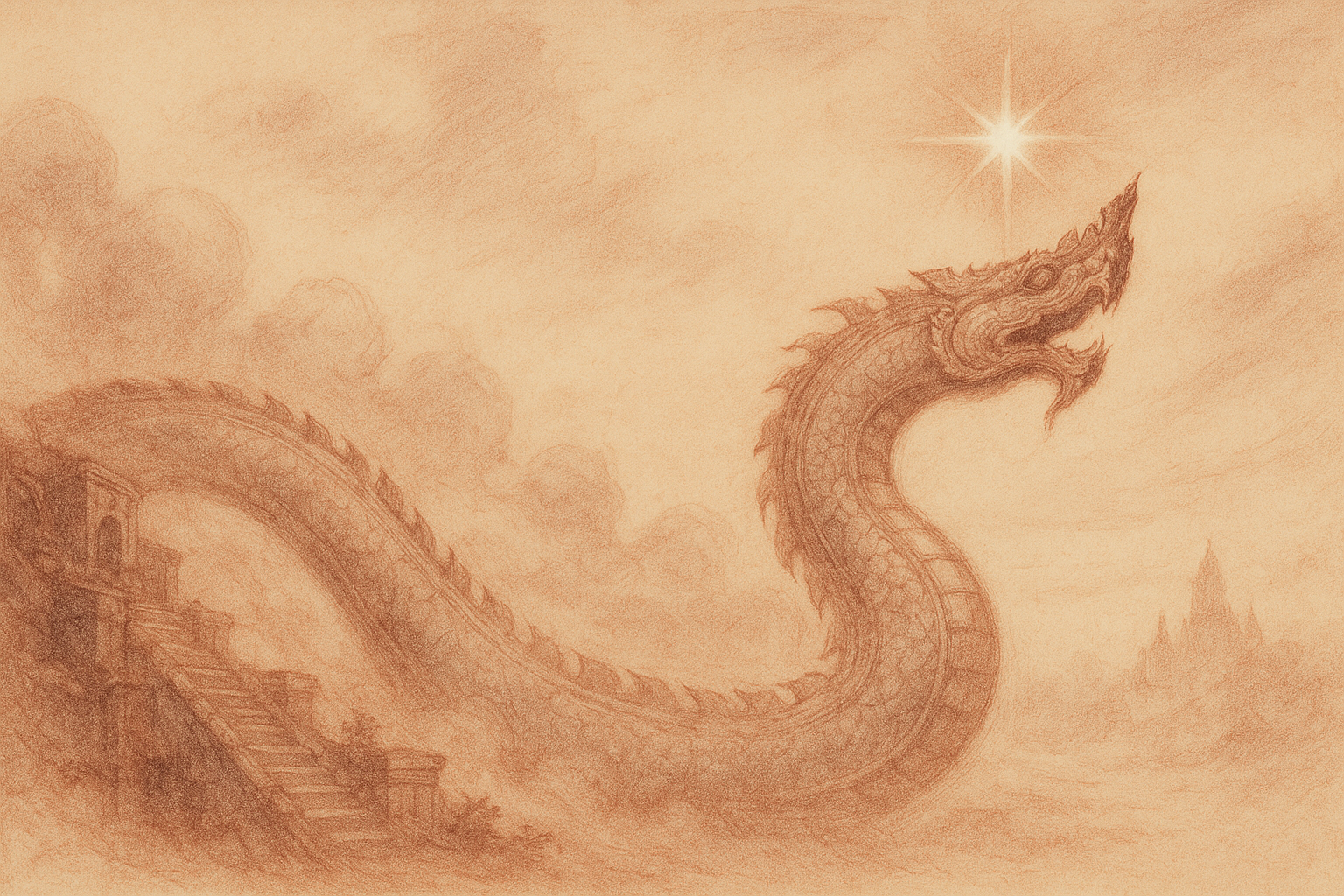

A Bridge Between Realms: On Imagining Khmer Myths
They are not all retellings—yet they feel remembered. These stories walk beside the old myths like mist along temple stone, imagined in reverence and offered with care.
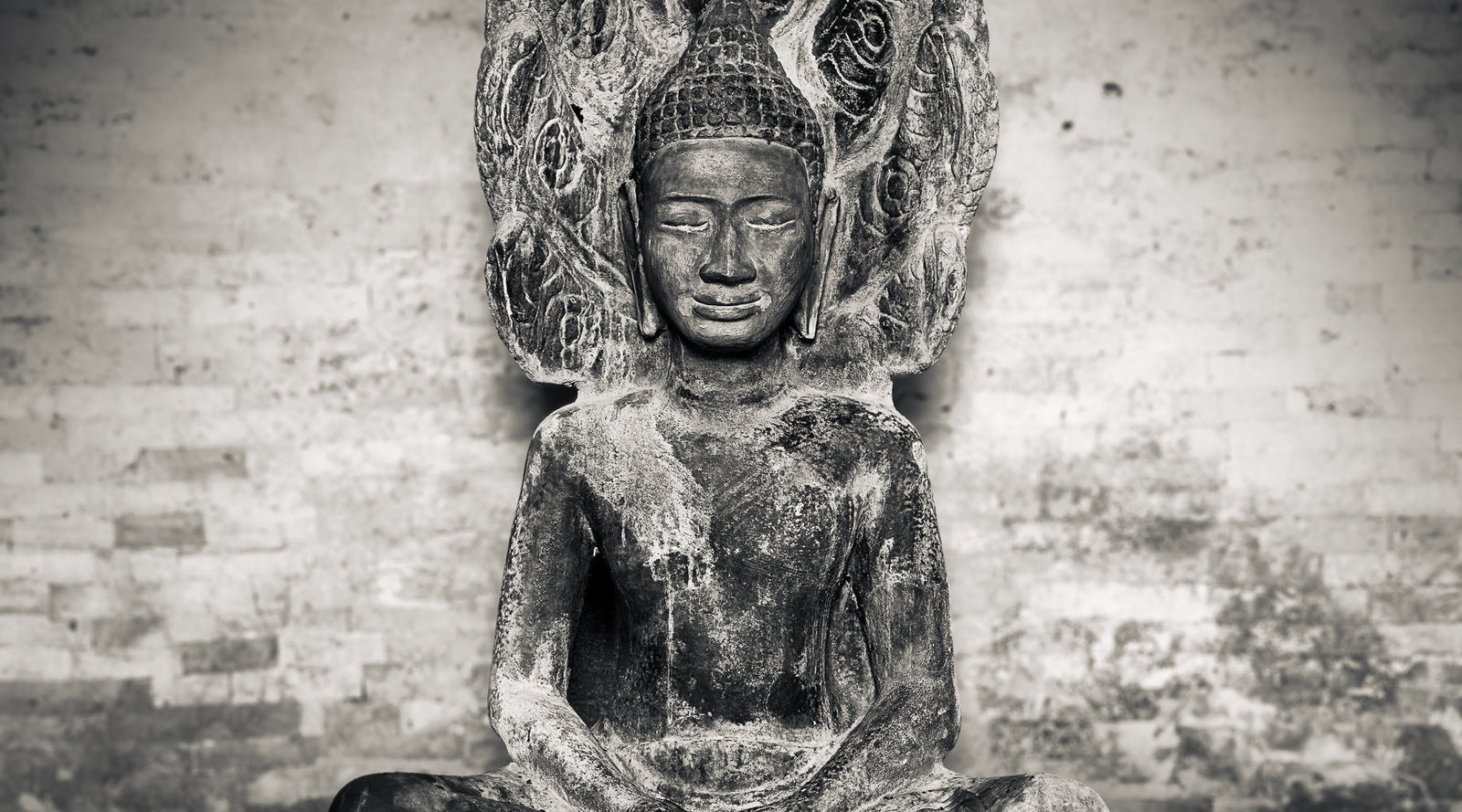

Stillness in the Shape of Shelter
A rain-streaked Buddha sits beneath the coiled naga Muchilinda, not to resist the world, but to hold stillness within it. This meditation reveals a print shaped by breath, not description.
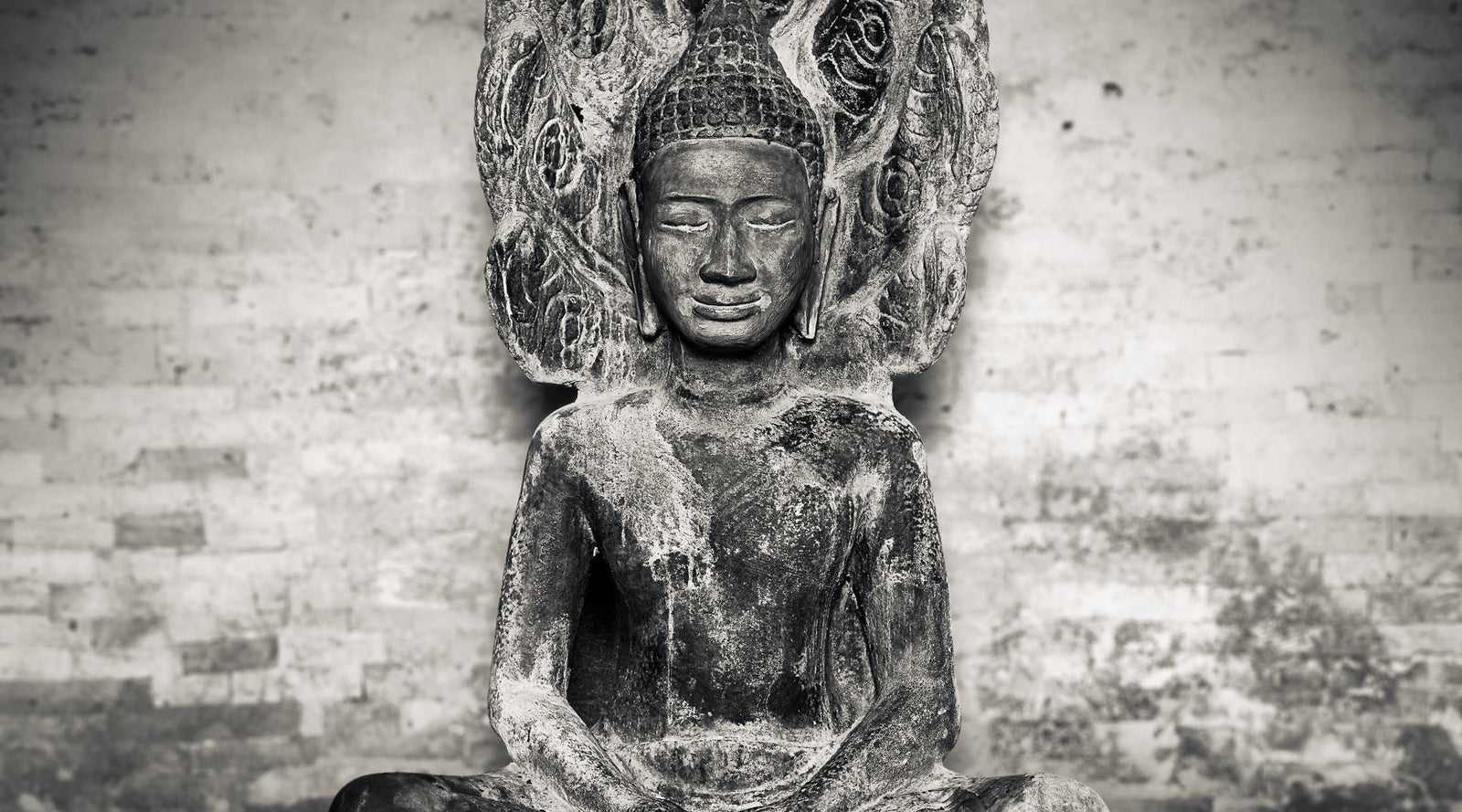

The Shelter That Remains
Time gathers around the Buddha as breath, not burden. In this haibun, the artist offers a moment that does not explain itself—it simply remains, unmoving beneath the shelter of silence.
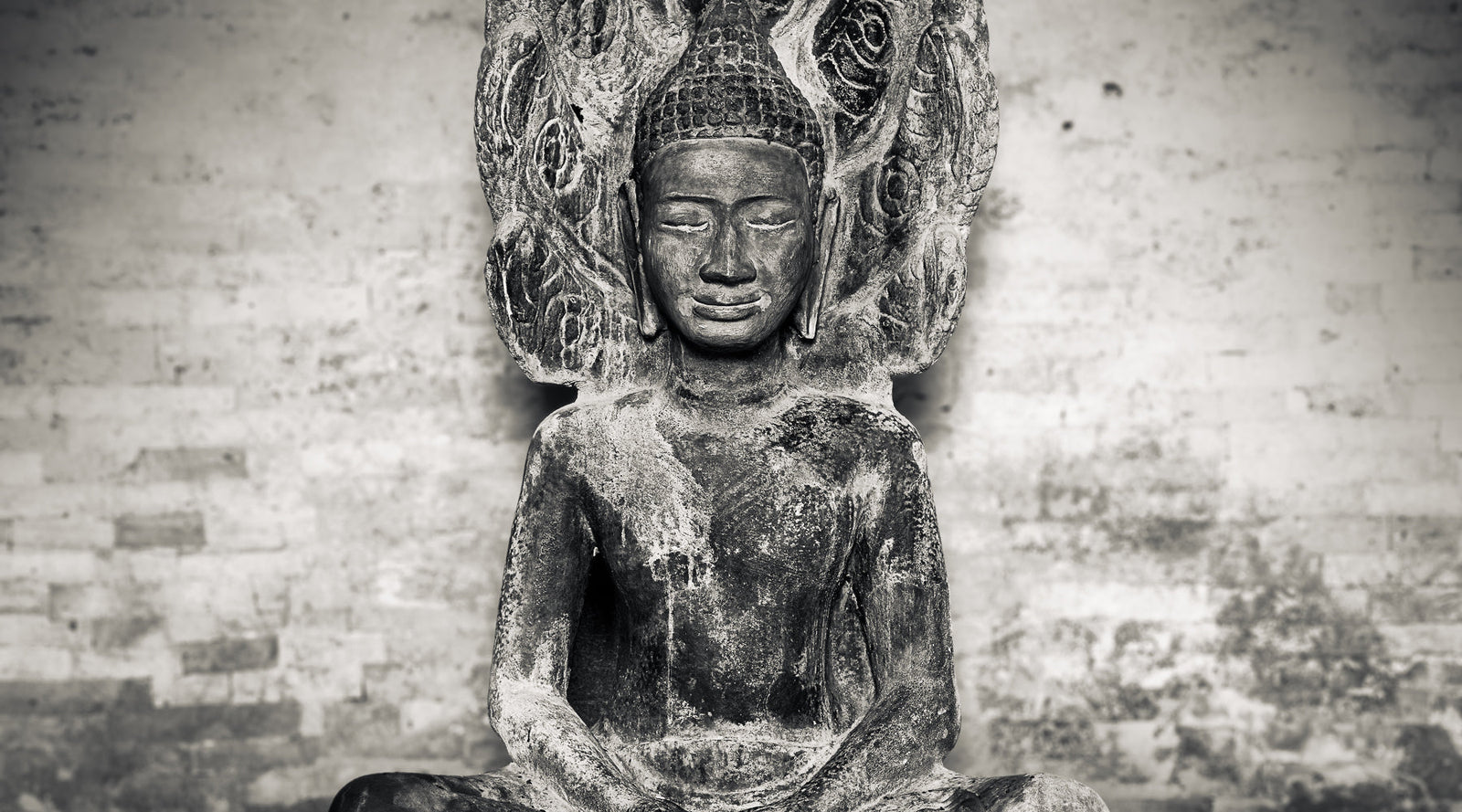

What Light Remembers
Light rests on the Buddha’s chest without revealing him. In this moment of reverent waiting, the image forms as presence—not picture. The serpent shelters, the stone remembers, and the poem listens.
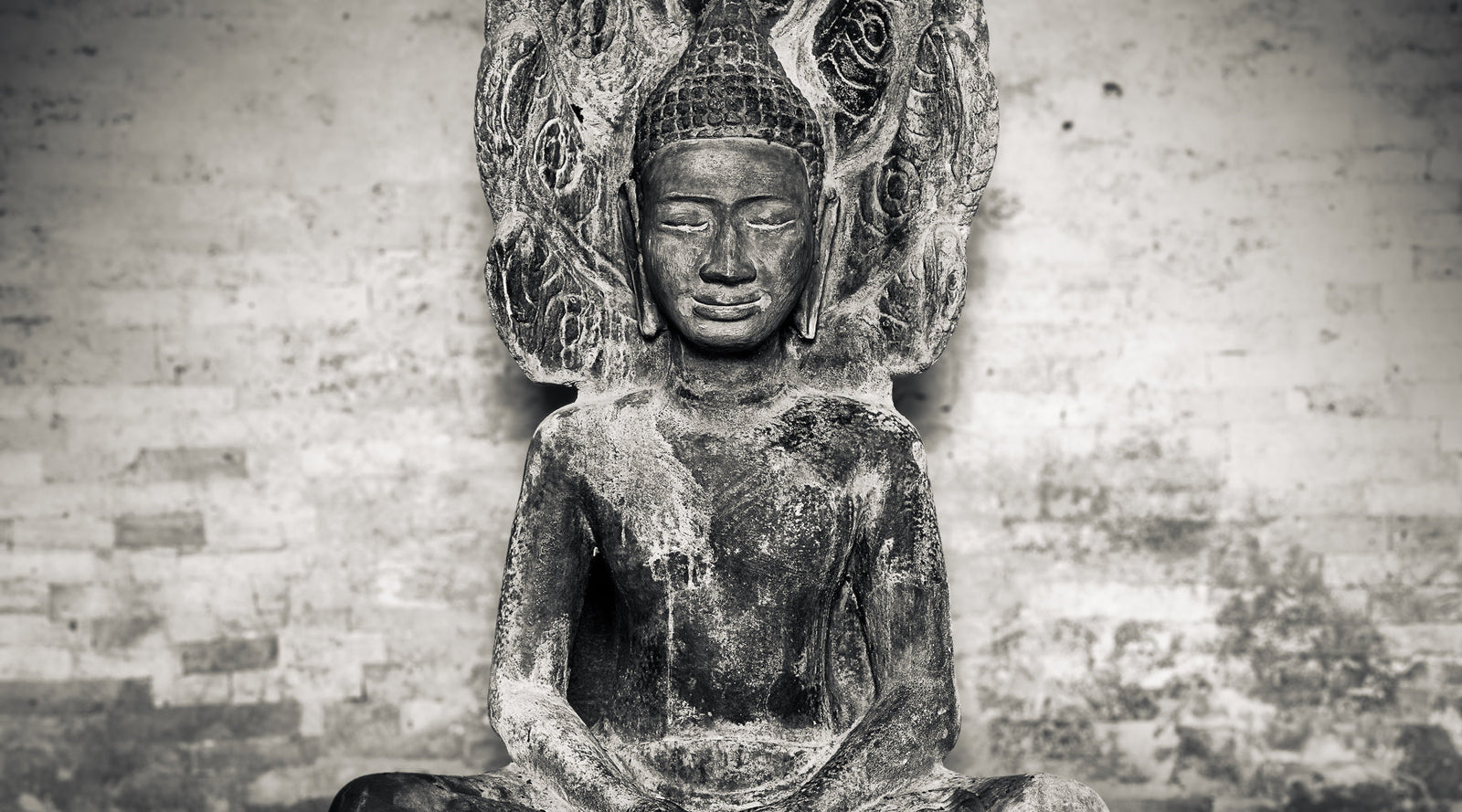

Beneath the Hood, the World Falls Silent
The artist enters a rain-stained sanctuary where a Buddha waits beneath serpent coils and silence. He listens before he photographs. He receives before he records. The moment is still breathing.
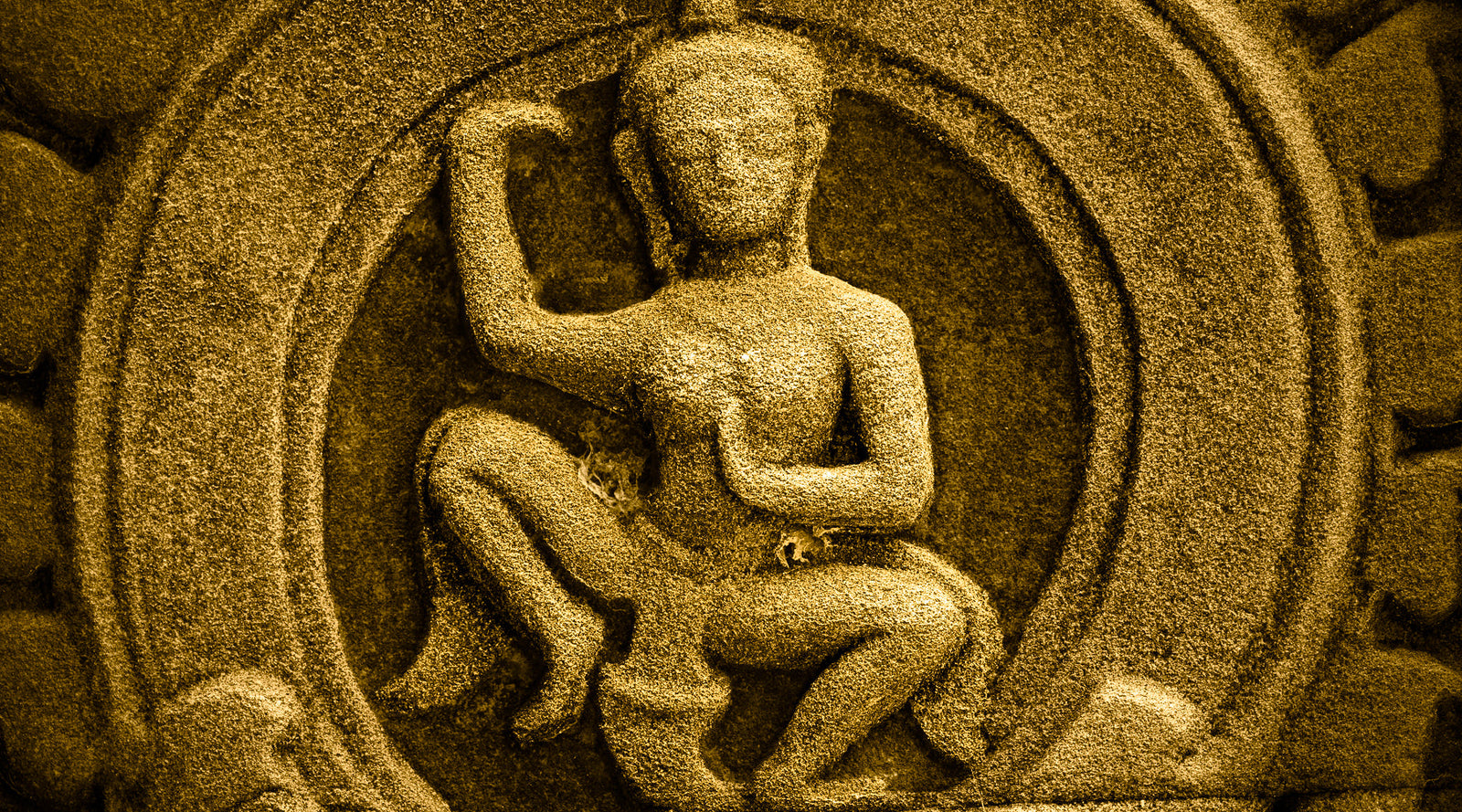

When Stillness Becomes Flame
She lifts her foot, and time surrenders. This radiant apsara becomes light—not in motion, but in the memory of motion, glowing still.
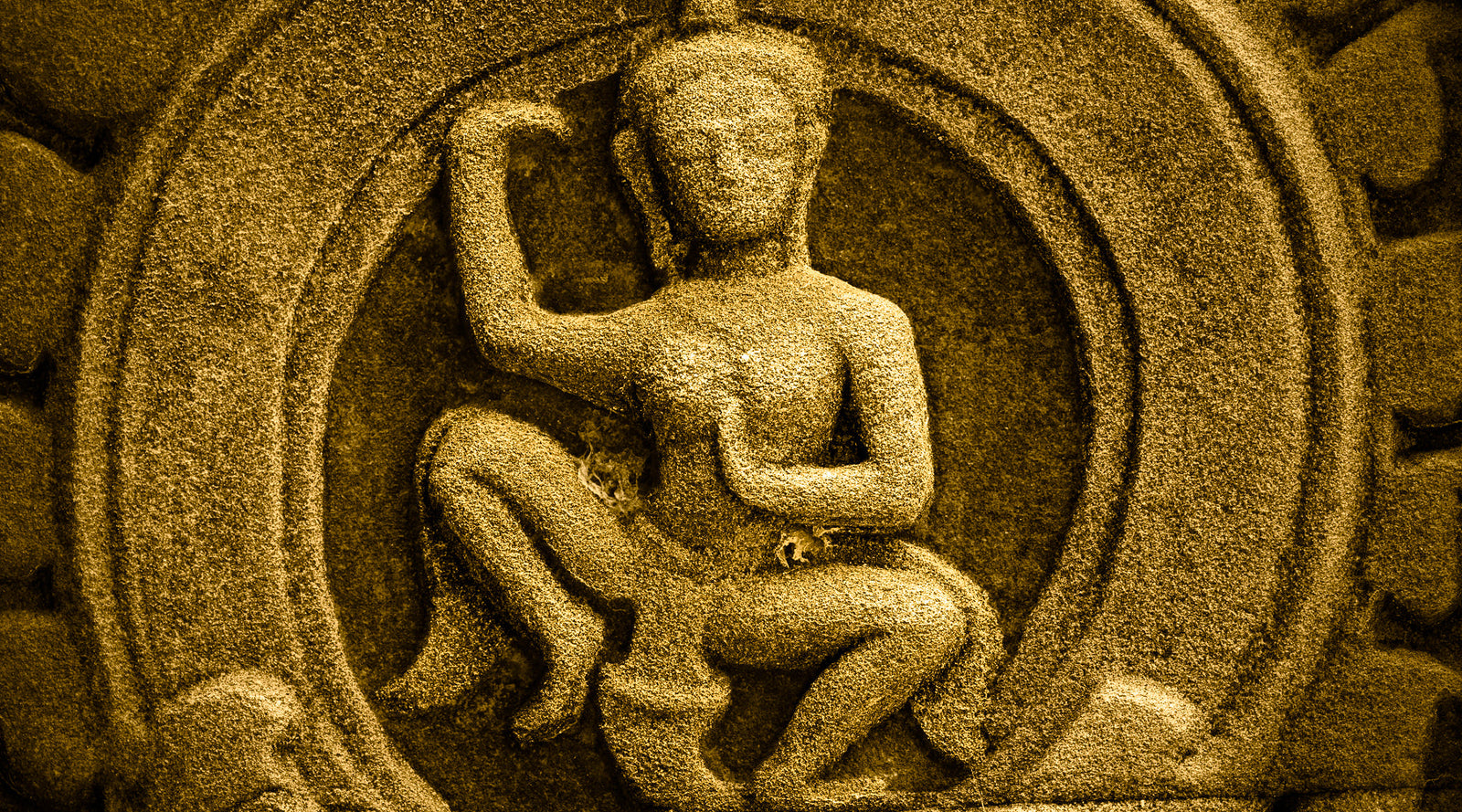

The Dance That Remains
A moment carved from dusk returns in gold. She moves, then stays—joy eternal, held not in form, but in the breath before it breaks.