
The Library gathers the written works of Lucas Varro — journals of the temples, mythic retellings, contemplative essays, poems, and volumes shaped by shadow, silence, and wonder. Here, words stand beside images as offerings: field notes from Angkor, meditations on sacred stone, old stories rekindled, and reflections carried beyond the visible world.
Within these shelves you will find many rooms: Angkor journals, myth and legend, apsara meditations, contemplative essays, poems, children’s mythic wonder, literary retellings, and quieter devotions of the page. Wander chronologically, enter by theme, or pass through one of the dedicated publication houses now gathered within the wider Library.
For those who wish to follow these paths further, several of these writings continue on Substack and in dedicated archive blogs: The Lantern Chronicles , where myth, legend, contemplative essays, poetry, and other imaginative works are carried onward; The House of Cadmus , where Greek myth and tragedy are reopened through inheritance, violence, fate, and recurrence; The Mytharium , where myth, Tolkien, fairy stories, and old literature are read and retold with seriousness; The Alexander Series , where A. M. Sharp retells Greek myths for children who want to be trusted by stories; and The Hospitable Dark , where A. M. Sharp offers literary myth retellings shaped by darkness, shelter, endurance, and return.
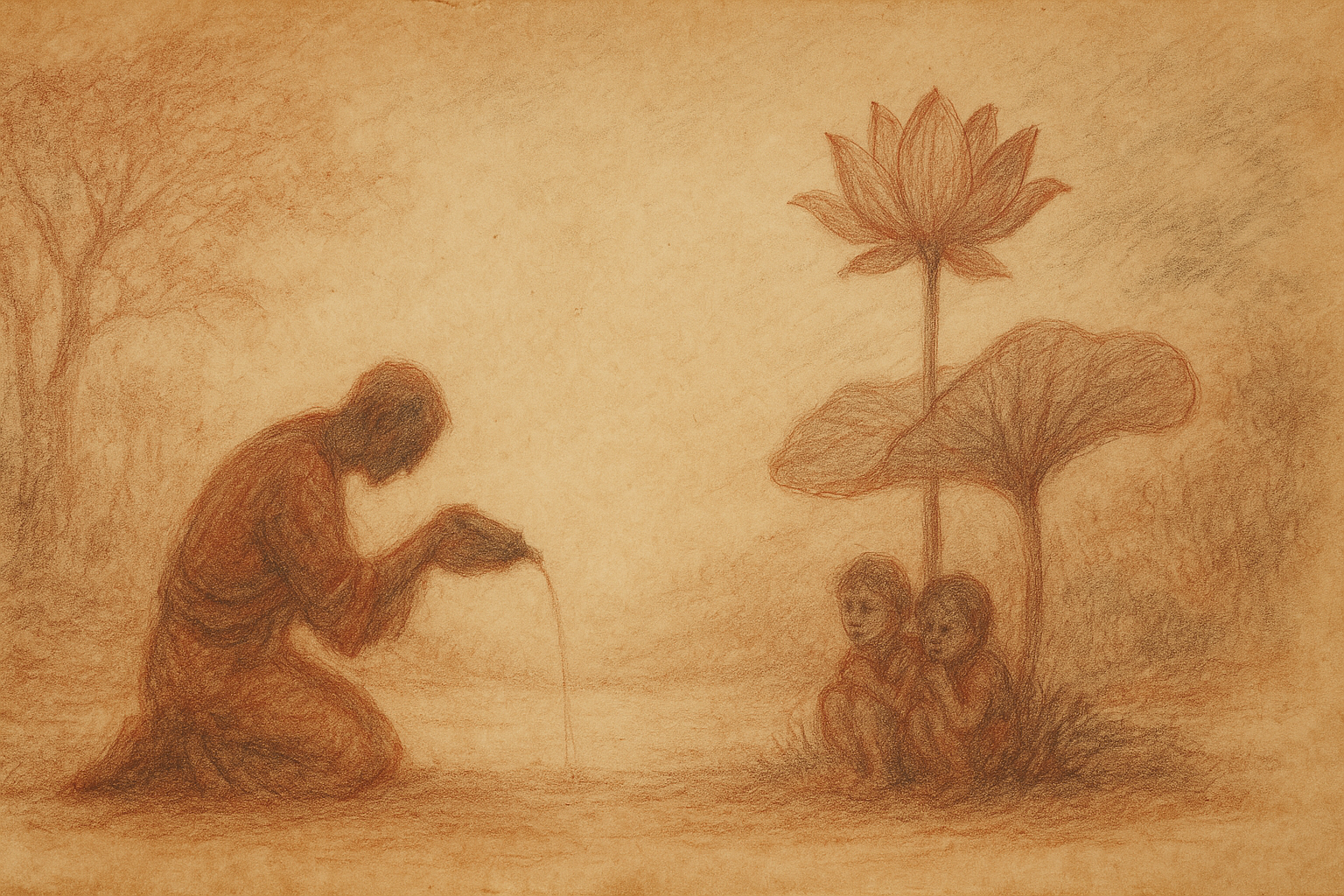

The Water That Never Reaches the Ground
He knelt beside the lotus leaves. The children trembled. The vow was lifted. Water poured from his hand—not to the ground, but into memory. And the forest, and the gods, held their breath.
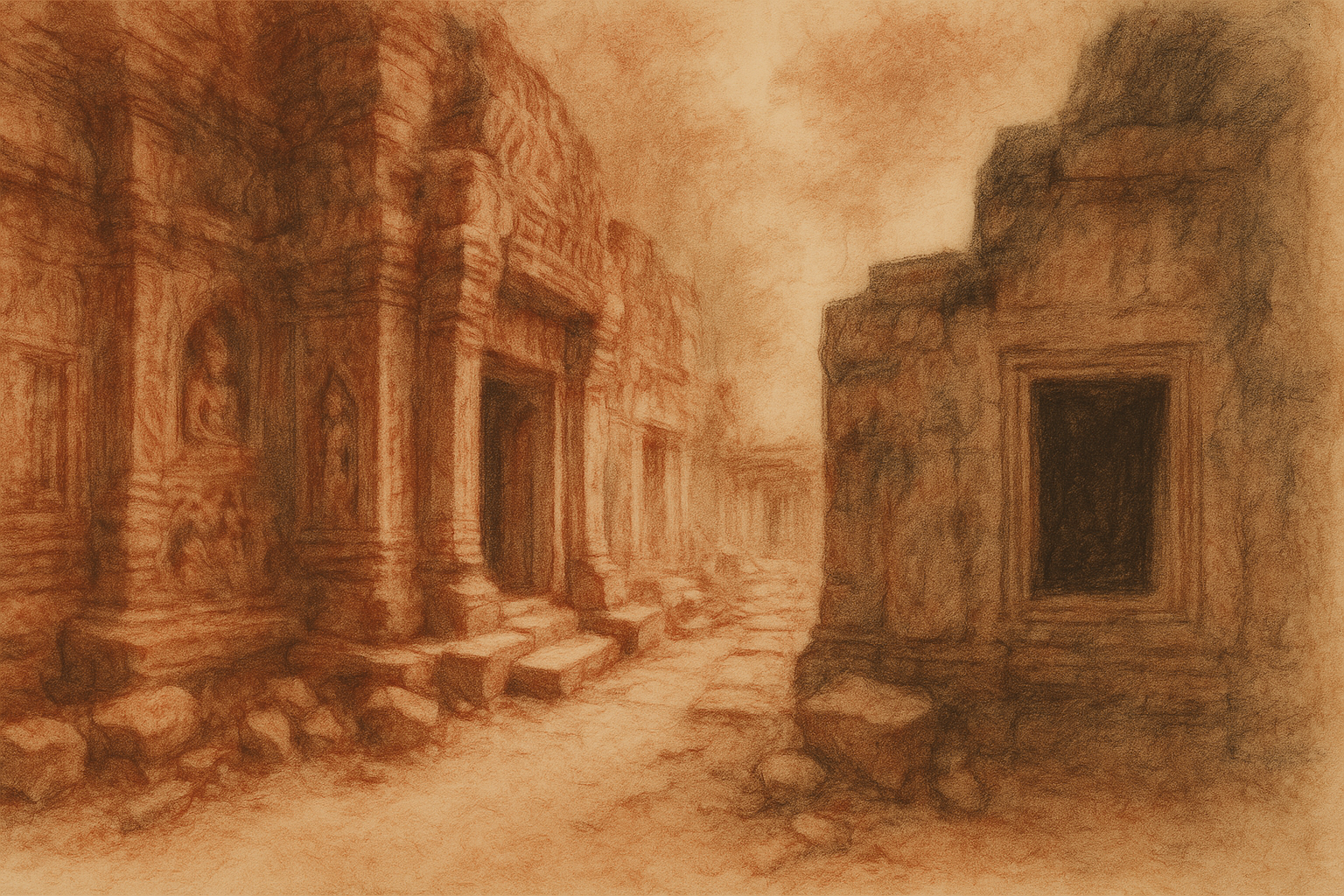

Where Roots Hold the Ruin Like Prayer
Beneath the canopy of Ta Prohm’s southern galleries, silence takes form—between incense and ruin, roots and prayer, shadow and light. A field journal entry drawn in reverence, where chalk remembers what time cannot hold. Step quietly between guardians, and listen to the breath that lingers in stone.
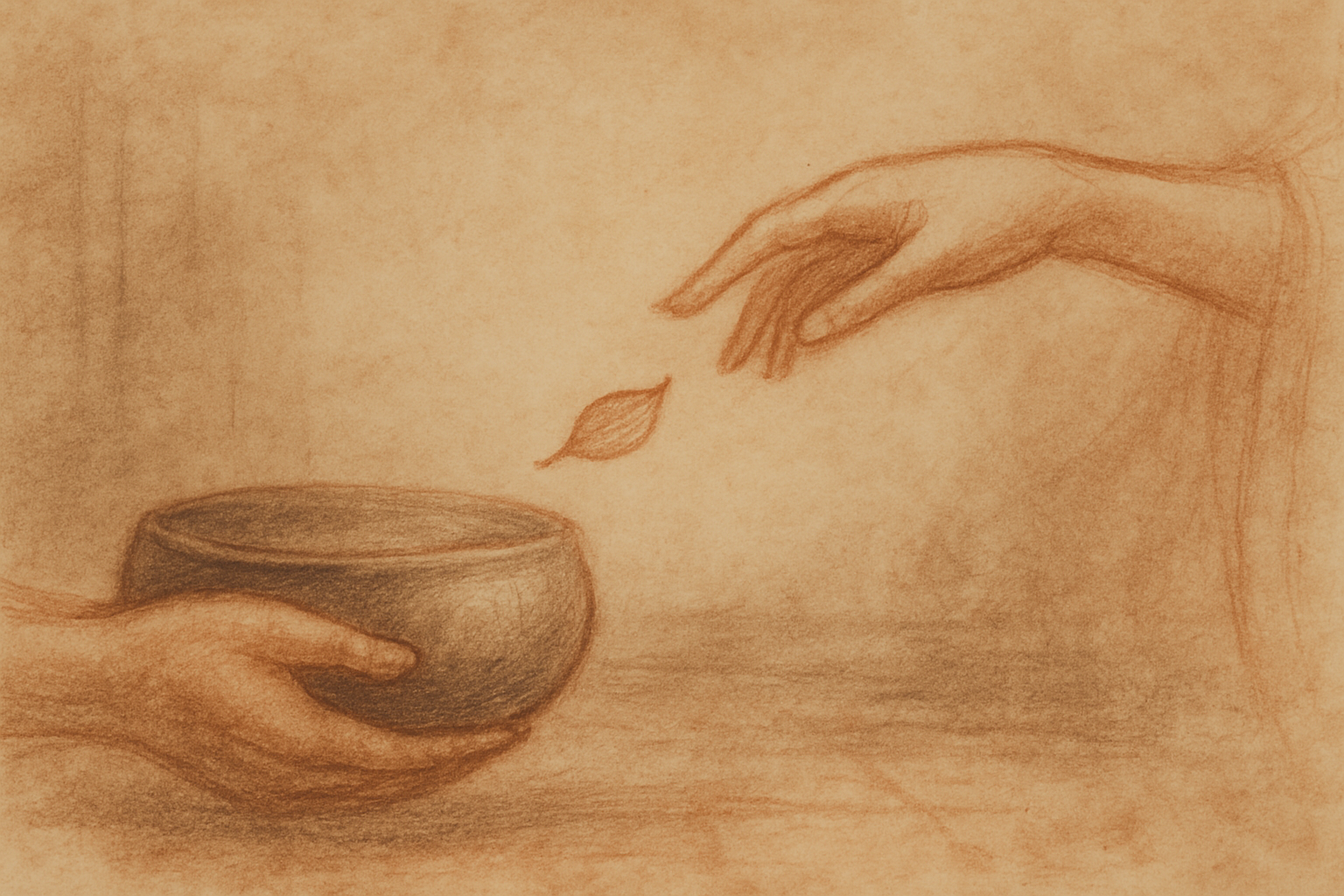

When the Monk Sang to the Moonlight
In moonlit silence beneath the frangipani tree, a vow was made and unmade. Still they walk—his voice a fading chant, her sorrow a falling petal—where love became a prayer too radiant for the world to bear.
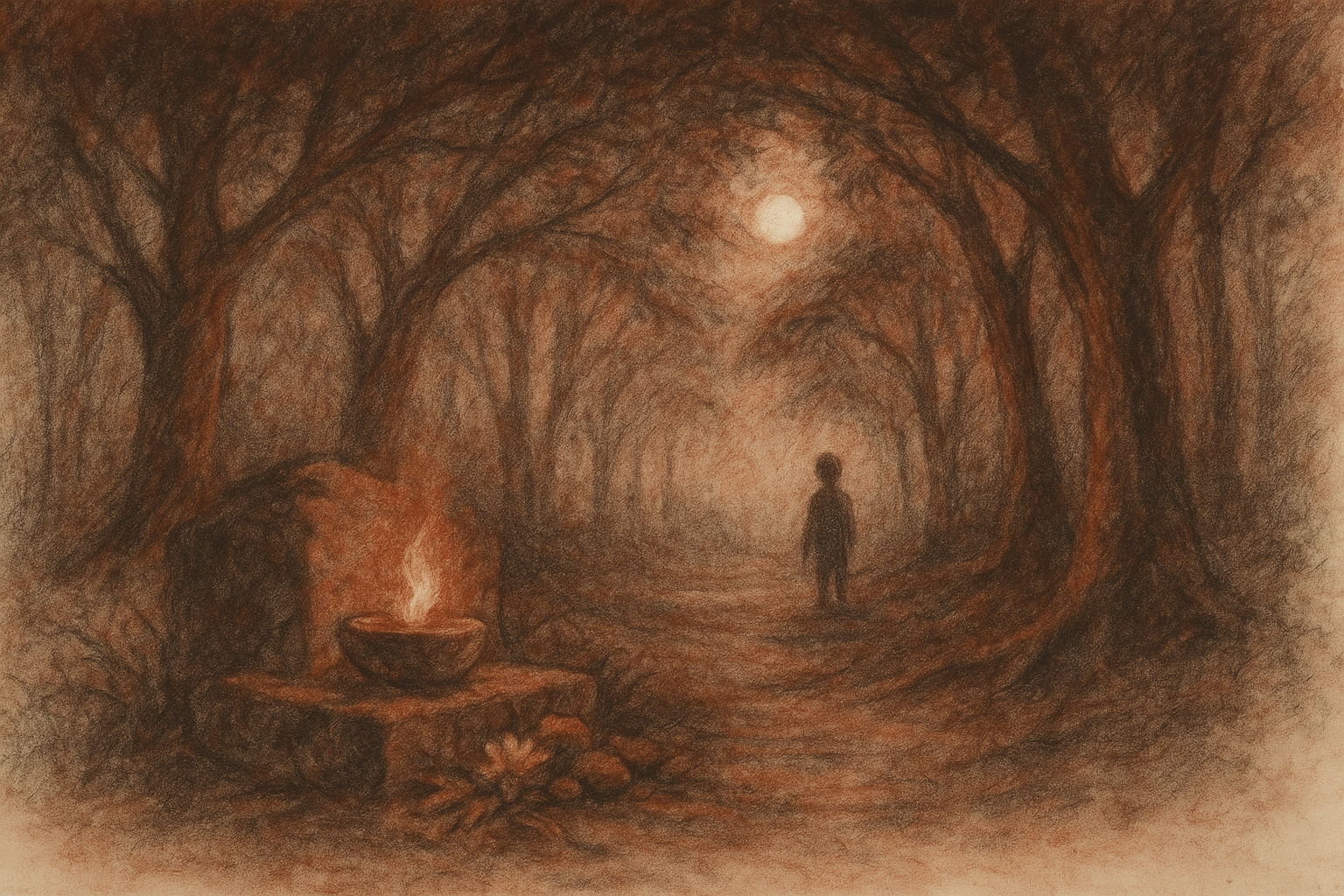

The Whispering Forest: Arak and the Celestial Light
Beneath the tamarind’s silent boughs, something breathes between root and star. A boy is taken, a forest stirs, and the old songs rise again—carried not by words, but by wind, memory, and the voices that whisper where offerings are left and the veil grows thin.
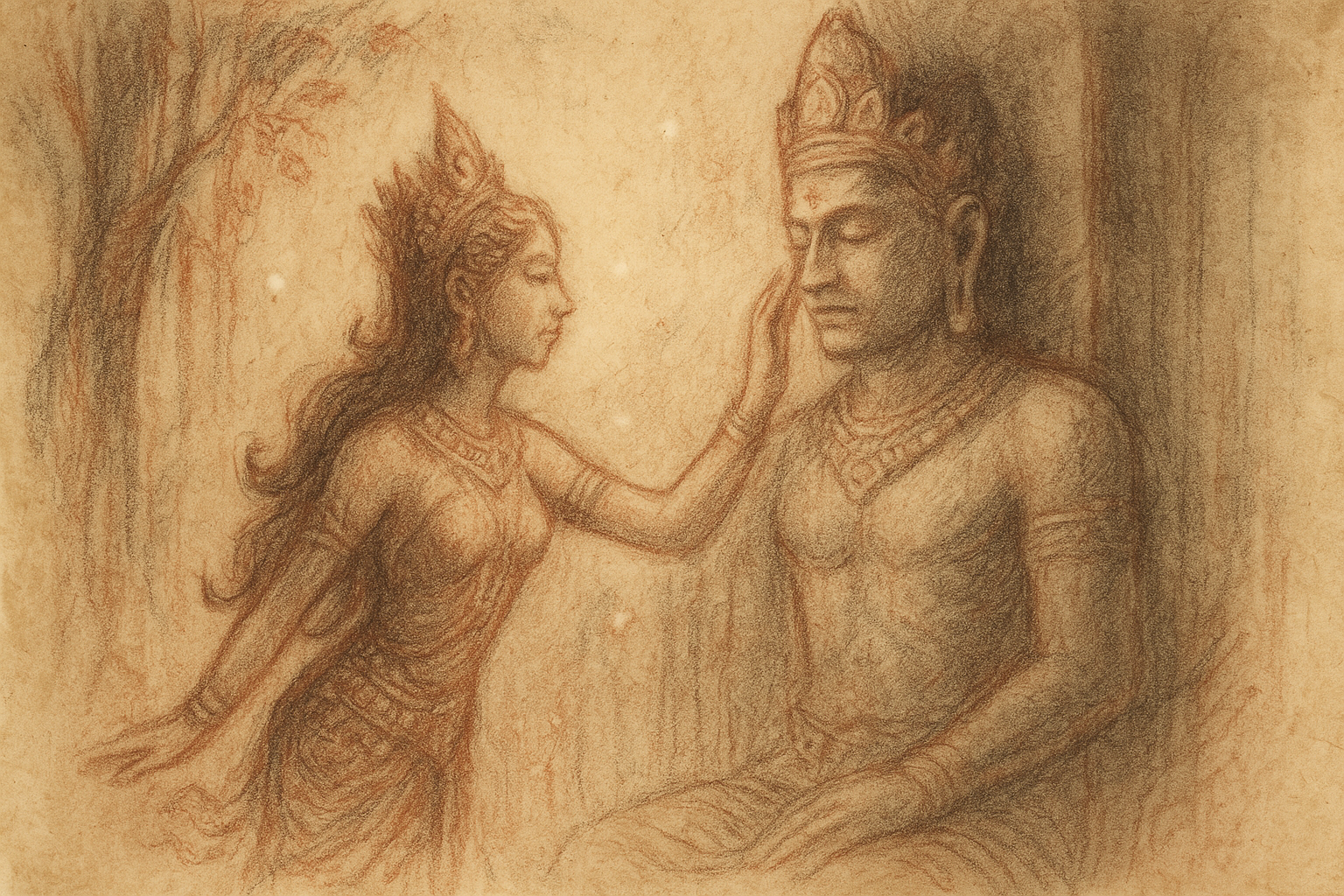

The Apsara and the Stone
Beneath the fig tree’s listening hush, a shadow lingers near the shrine—part breath, part longing, part forgotten dance. The stone remembers more than time allows, and moonlight finds what silence keeps.
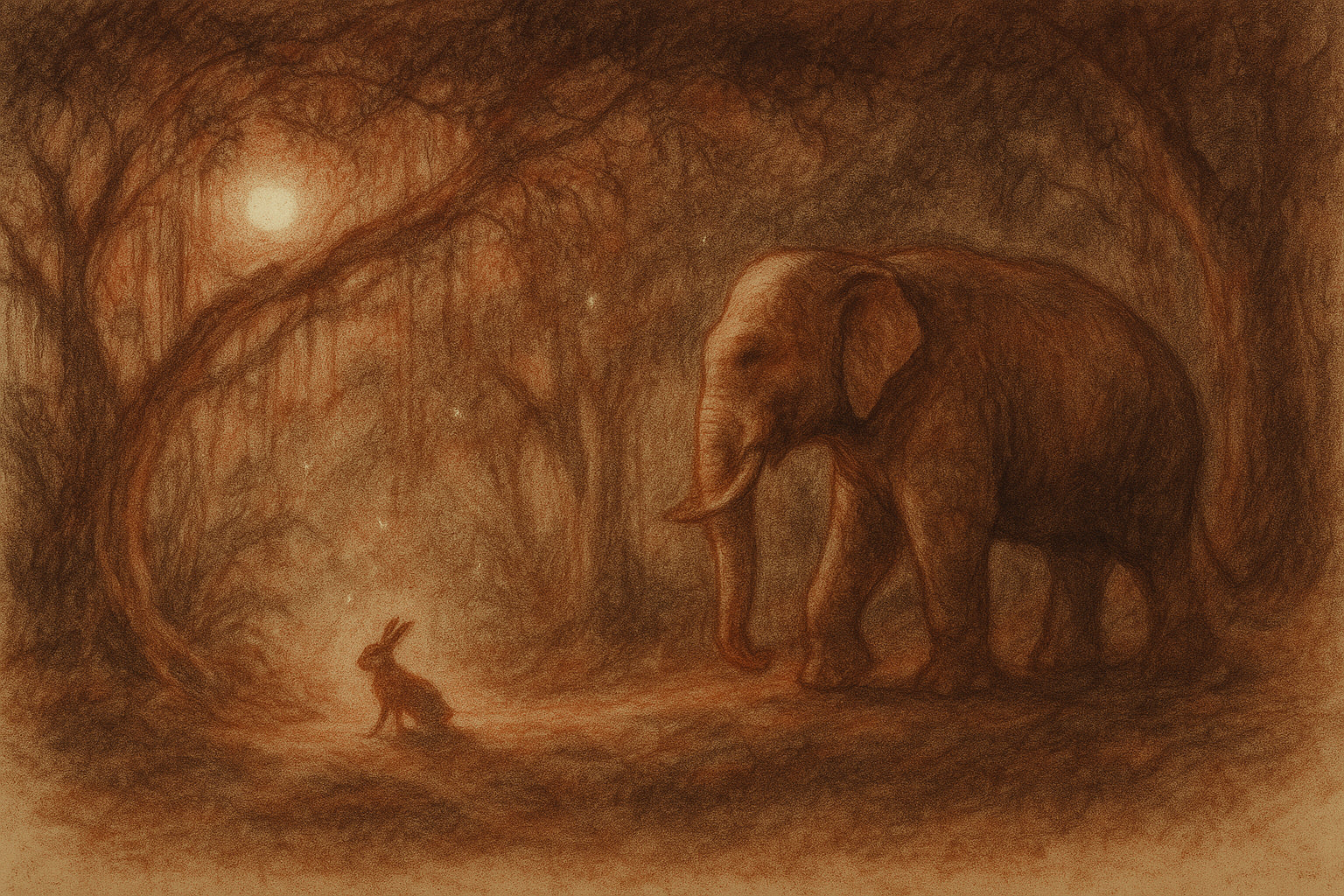

The Rabbit and the Elephant
In the hush of a moonlit forest, where banyan roots cradle still water, something stirs—a whisper of pride, a shadow of wisdom, and a ripple that never comes. Look closely. The pond does not move. The moon does not blink. But something old remembers.
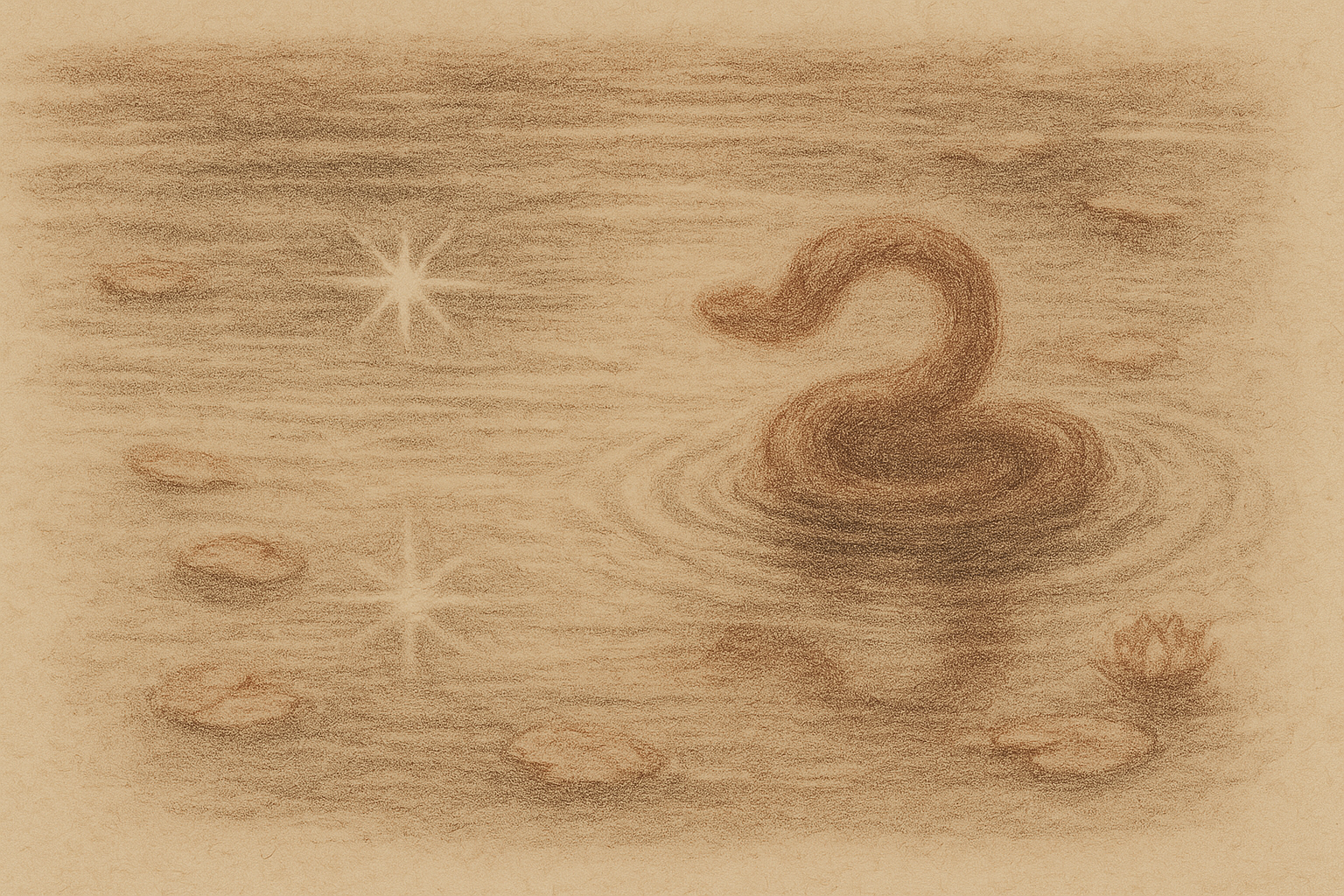

The Serpent and the Star
They met only in reflection—one rising from the roots of the world, the other descending through starlight. From their longing, the first temple was born. Some say the moon still remembers. Others say the serpent still listens.
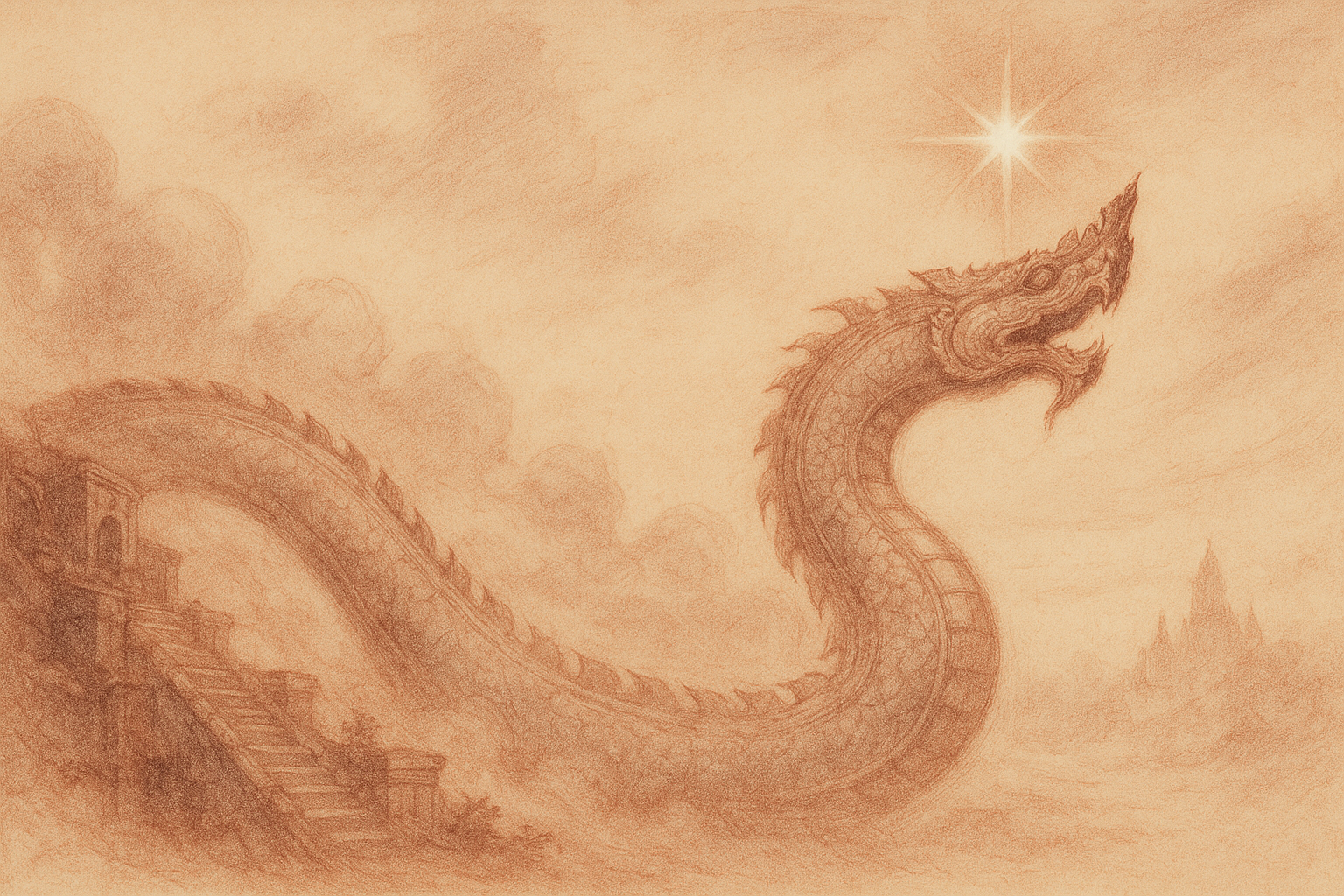

A Bridge Between Realms: On Imagining Khmer Myths
They are not all retellings—yet they feel remembered. These stories walk beside the old myths like mist along temple stone, imagined in reverence and offered with care.
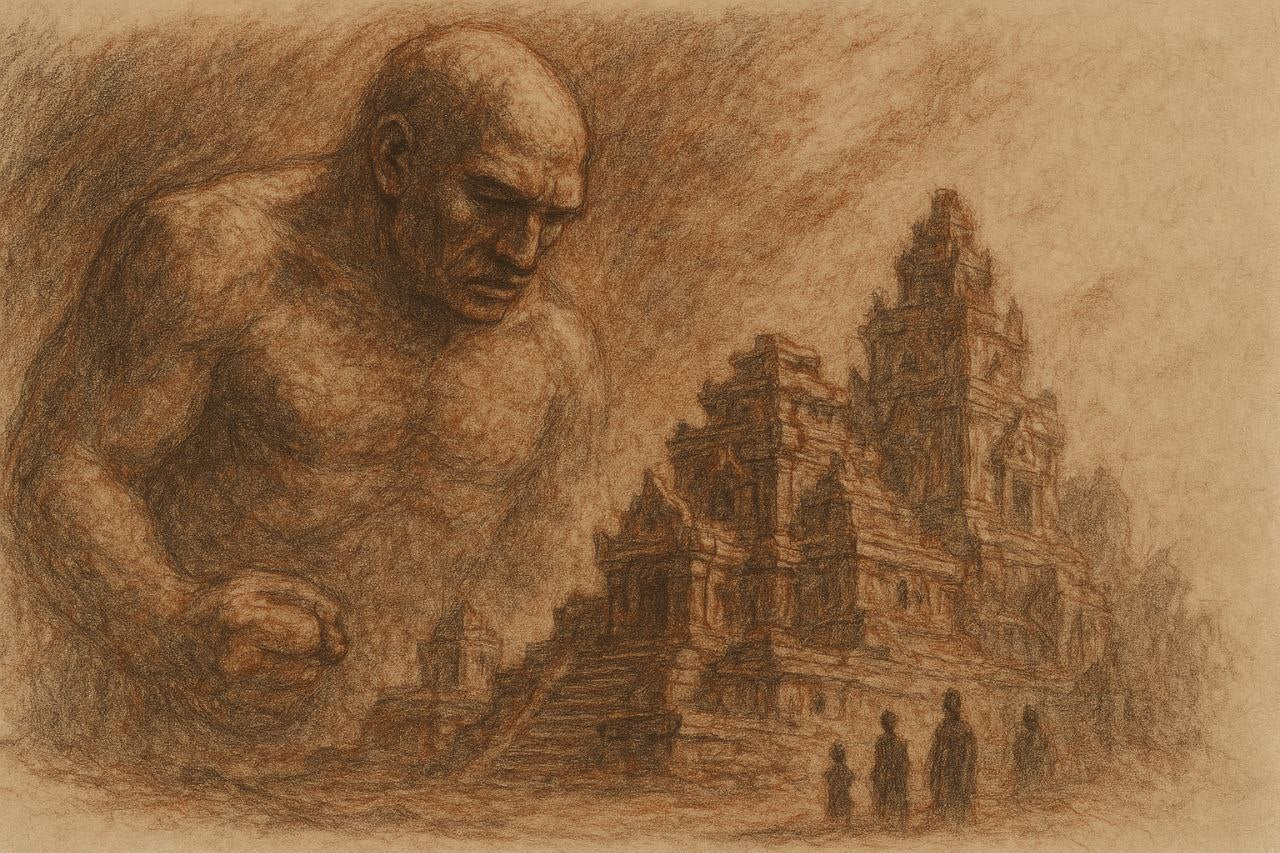

The Giant of Phnom Bakheng: A Legend in Stone and Shadow
High above the jungle canopy, where stone meets sky, a giant stirs beneath Phnom Bakheng. Born of earth and legend, he rises not in fury—but in sorrow—his towering form a silent witness to the ambitions of kings and the turning of stars. Step into the myth where temples breathe and the ancient still remembers.
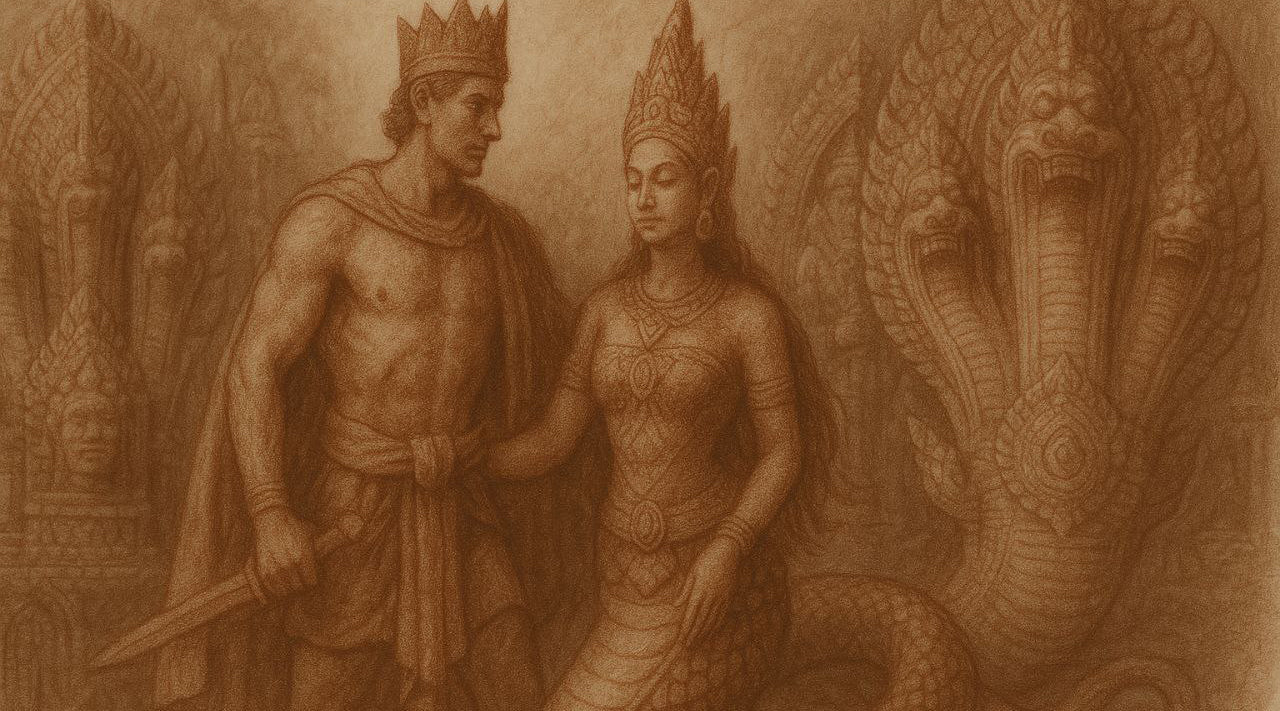

The Legend of Neang Neak and Preah Thong: The Birth of the Khmer Kingdom
A serpent princess and a wandering prince unite to shape the Khmer kingdom—where love births a dynasty, and the Nāga coils through stone and blood.