
The Library gathers the written works of Lucas Varro — journals of the temples, mythic retellings, contemplative essays, poems, and volumes shaped by shadow, silence, and wonder. Here, words stand beside images as offerings: field notes from Angkor, meditations on sacred stone, old stories rekindled, and reflections carried beyond the visible world.
Within these shelves you will find many rooms: Angkor journals, myth and legend, apsara meditations, contemplative essays, poems, children’s mythic wonder, literary retellings, and quieter devotions of the page. Wander chronologically, enter by theme, or pass through one of the dedicated publication houses now gathered within the wider Library.
For those who wish to follow these paths further, several of these writings continue on Substack and in dedicated archive blogs: The Lantern Chronicles , where myth, legend, contemplative essays, poetry, and other imaginative works are carried onward; The House of Cadmus , where Greek myth and tragedy are reopened through inheritance, violence, fate, and recurrence; The Mytharium , where myth, Tolkien, fairy stories, and old literature are read and retold with seriousness; The Alexander Series , where A. M. Sharp retells Greek myths for children who want to be trusted by stories; and The Hospitable Dark , where A. M. Sharp offers literary myth retellings shaped by darkness, shelter, endurance, and return.
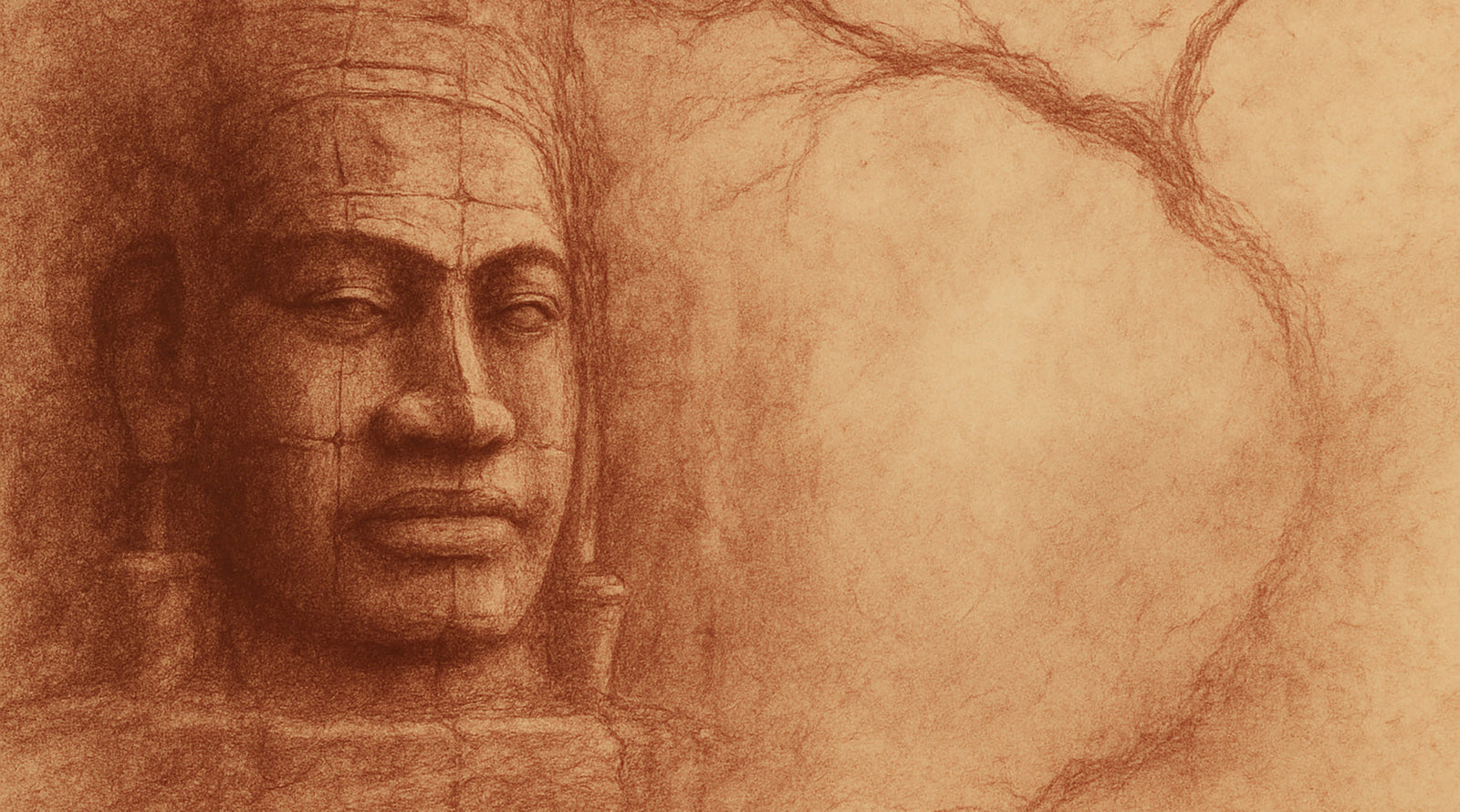

The Silent Gaze of the God Beyond Names
A mountain of stone stares outward in silence.
Two hundred faces. No name. Only presence.
Enter the Bayon, where the sacred does not speak—
it watches.
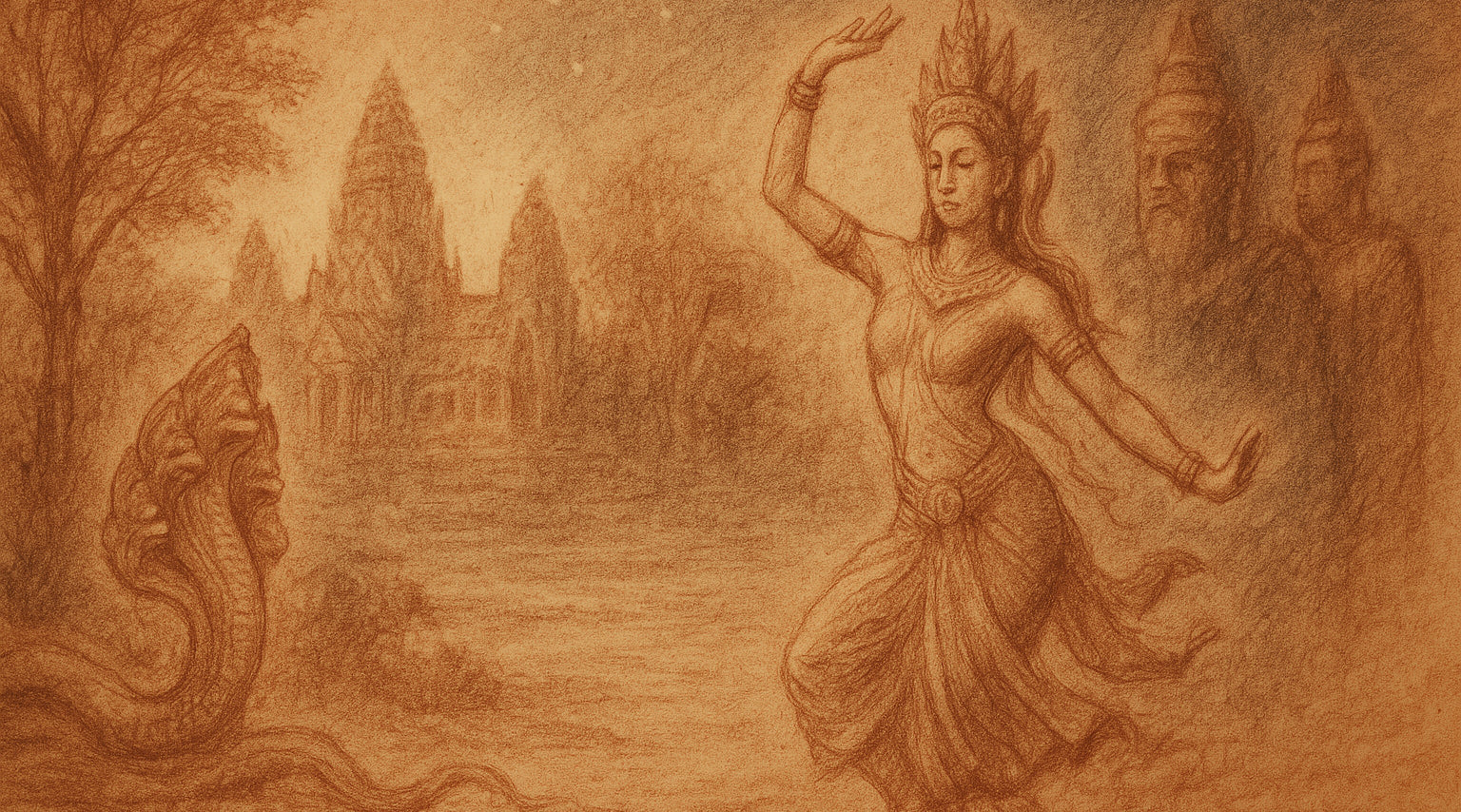

Where Gods and Stones Whisper as One
Step barefoot into the hush of Angkor, where carved stone remembers the shape of prayer, and the breath between gods and kings still lingers in the light. Here, myth and devotion flow like hidden rivers beneath the ancient ground, inviting the soul to listen where language ends.
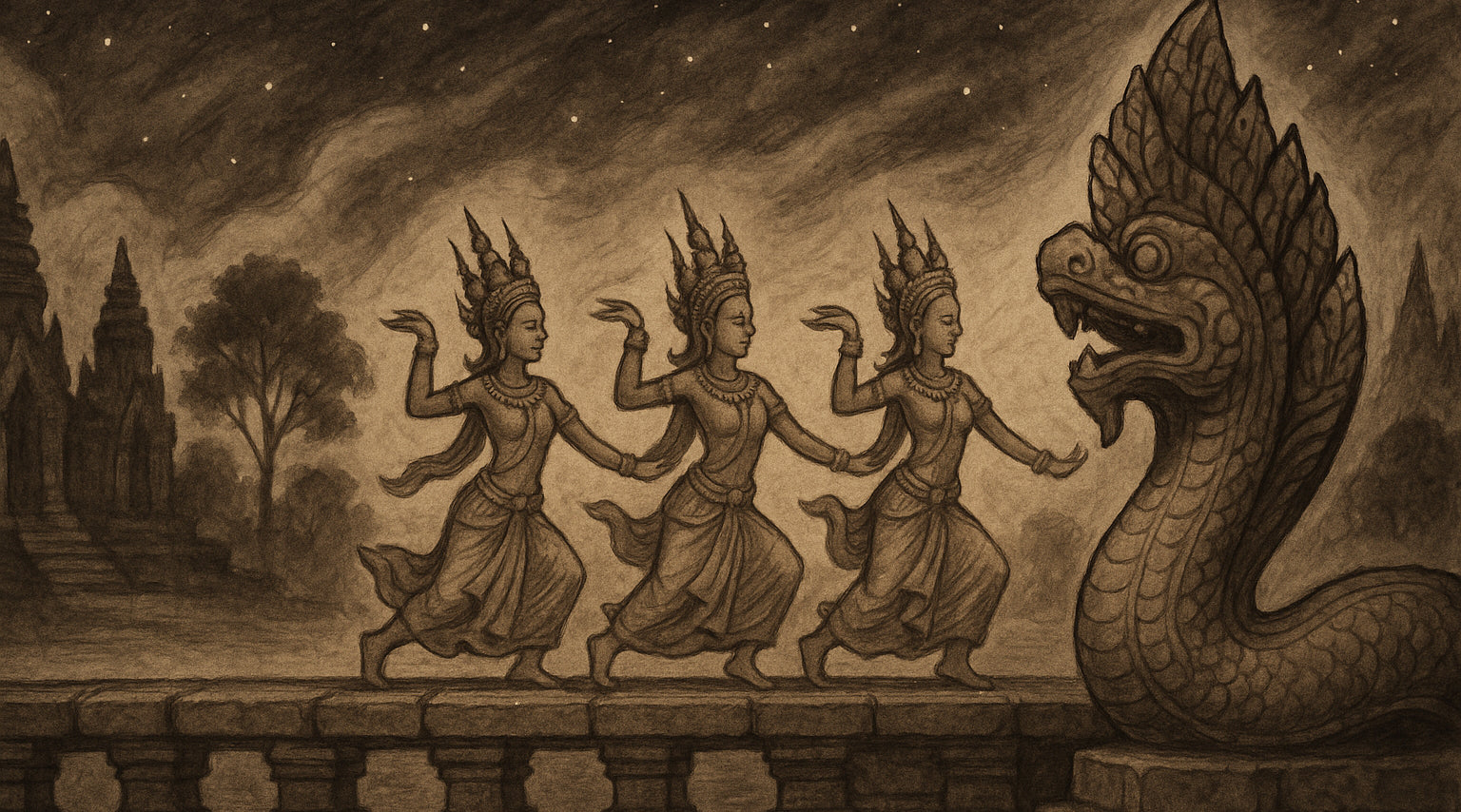

When Stone Breathes the Name of Gods
In still corridors of Angkor, where the breath of gods once passed through stone, silence lingers with memory. Step softly—each carved figure still listens, each pillar still prays. In their shadows, devotion flickers like incense, and time kneels before the sacred form of longing made visible.
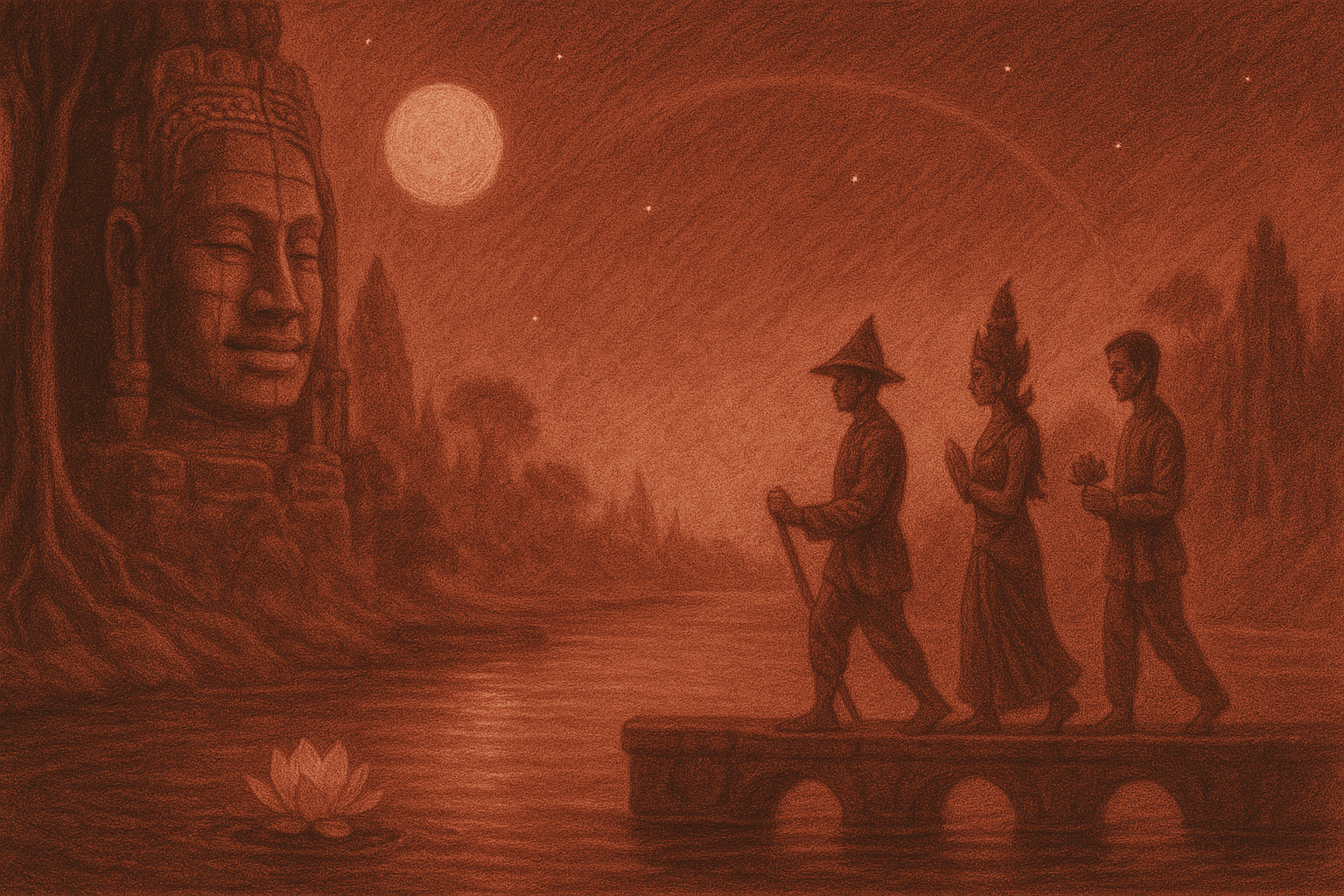

When Two Rivers Become One: The Secret of the Bayon
Beneath the gaze of silent stone, two destinies entwine—Khmer and Cham, land and sea, kingship and yearning. Step softly into the Bayon’s breath, where unity flickers like moonlight on water and the ancient dream still waits, murmuring through corridors carved in shadow and light.
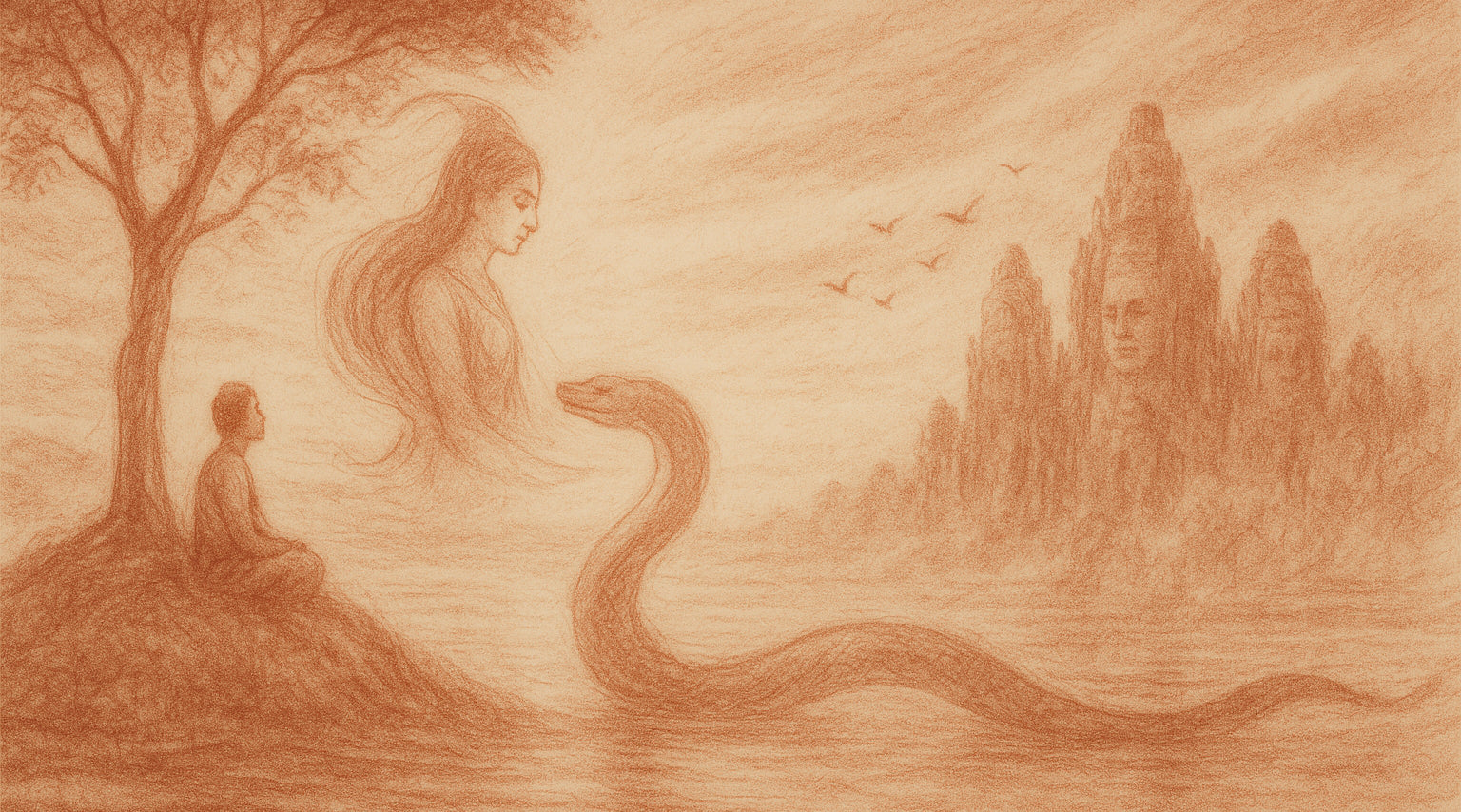

In the Beginning Was the Bayon
Beneath faces carved in ancient light, the Bayon dreams of oceans swallowed and kingdoms born. A whisper rises from the well of myth—calling not to be understood, but remembered. Step gently, where the world began in silence and stone.
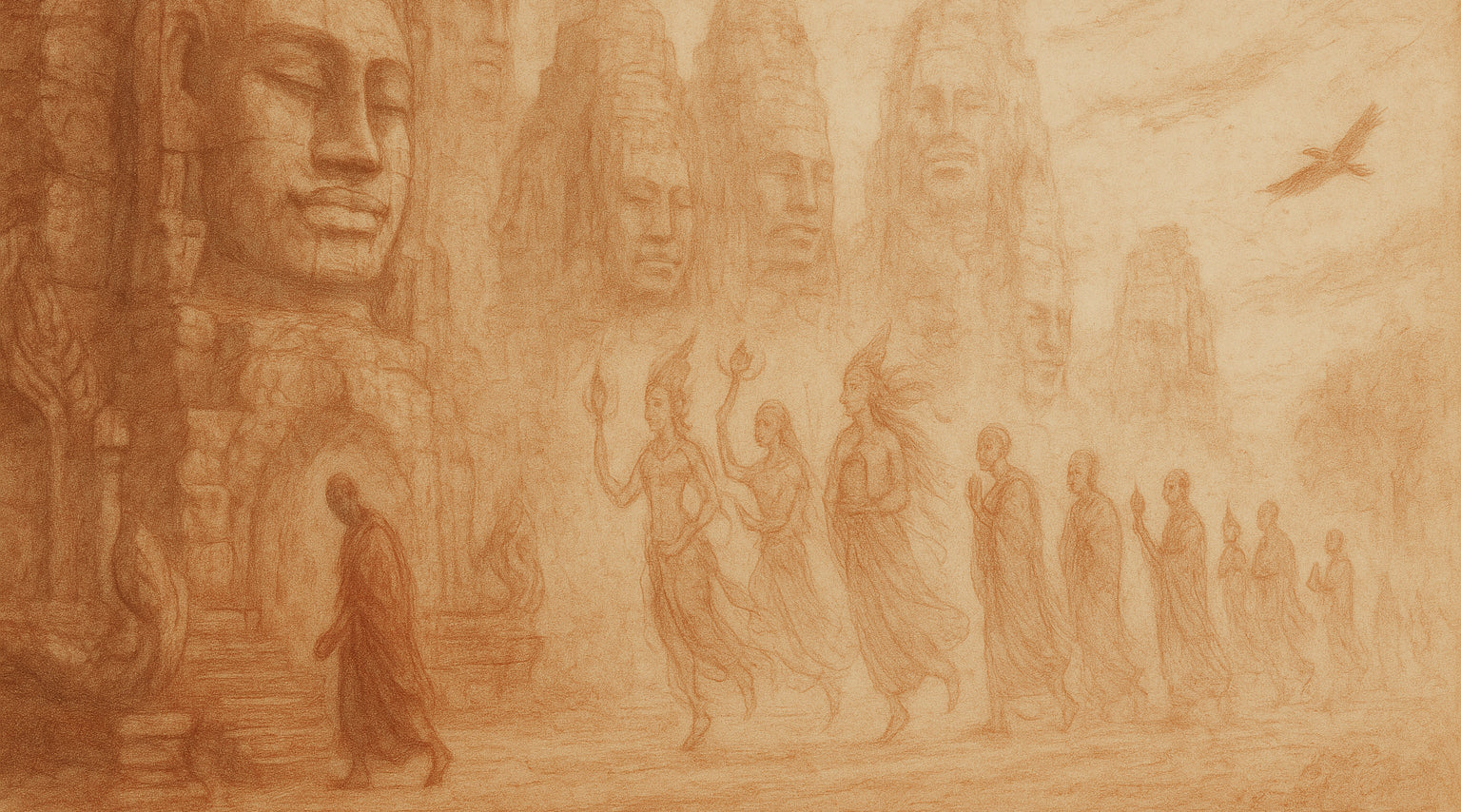

A Sanctuary Where Faces Keep Their Secrets
Veiled in morning mist, the faces gaze from stone—serene, nameless, and infinite. Step quietly through shadowed corridors where silence listens, and memory breathes. Let mystery lead you, not to answers, but to presence.
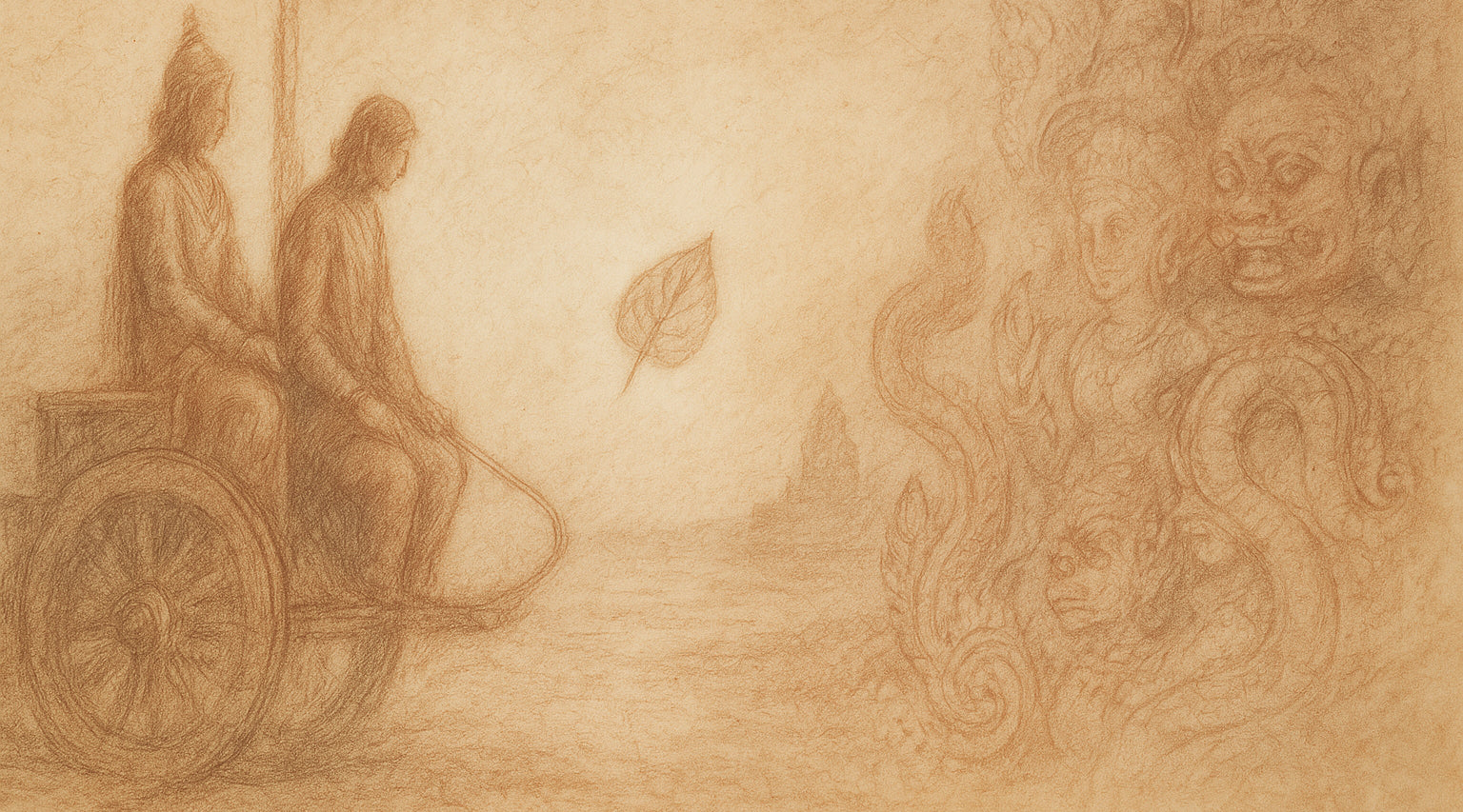

The Sacred Art of Abridgement: Khmer Myths in Stone
A single moment carved in stone may speak the whole.
Step where epics are distilled to breath and flame—
where gods whisper through fractured scenes,
and the soul of Angkor gathers in what was left unsaid.
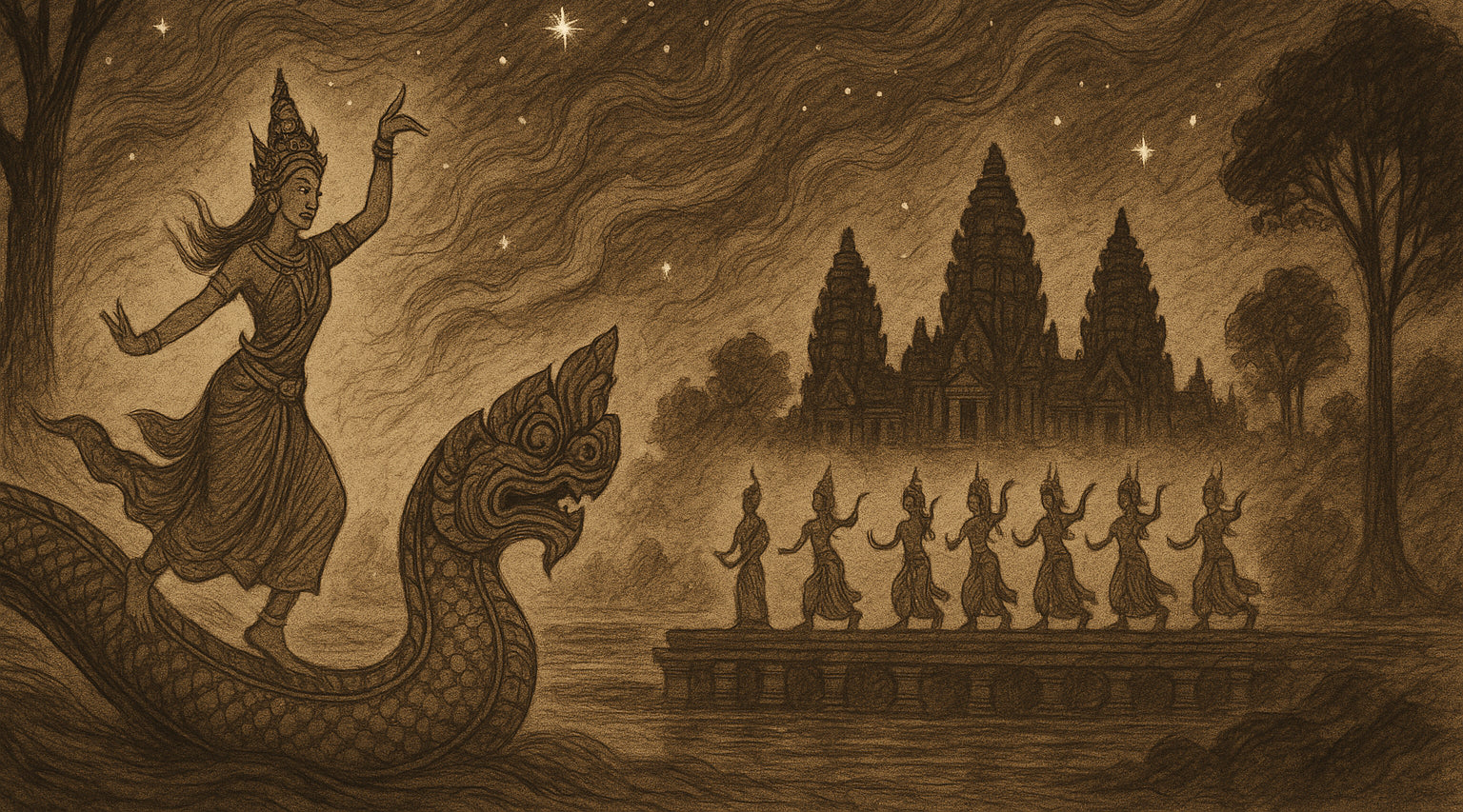

A Threshold of Stone and Soul: Entering the Sanctuary of Meaning
Some temples are not meant to be visited, but entered inwardly. Let these pages guide you across thresholds carved in shadow, into realms where stone and silence conspire to reveal what endures. Here, myth breathes, meaning ripens, and the soul remembers.
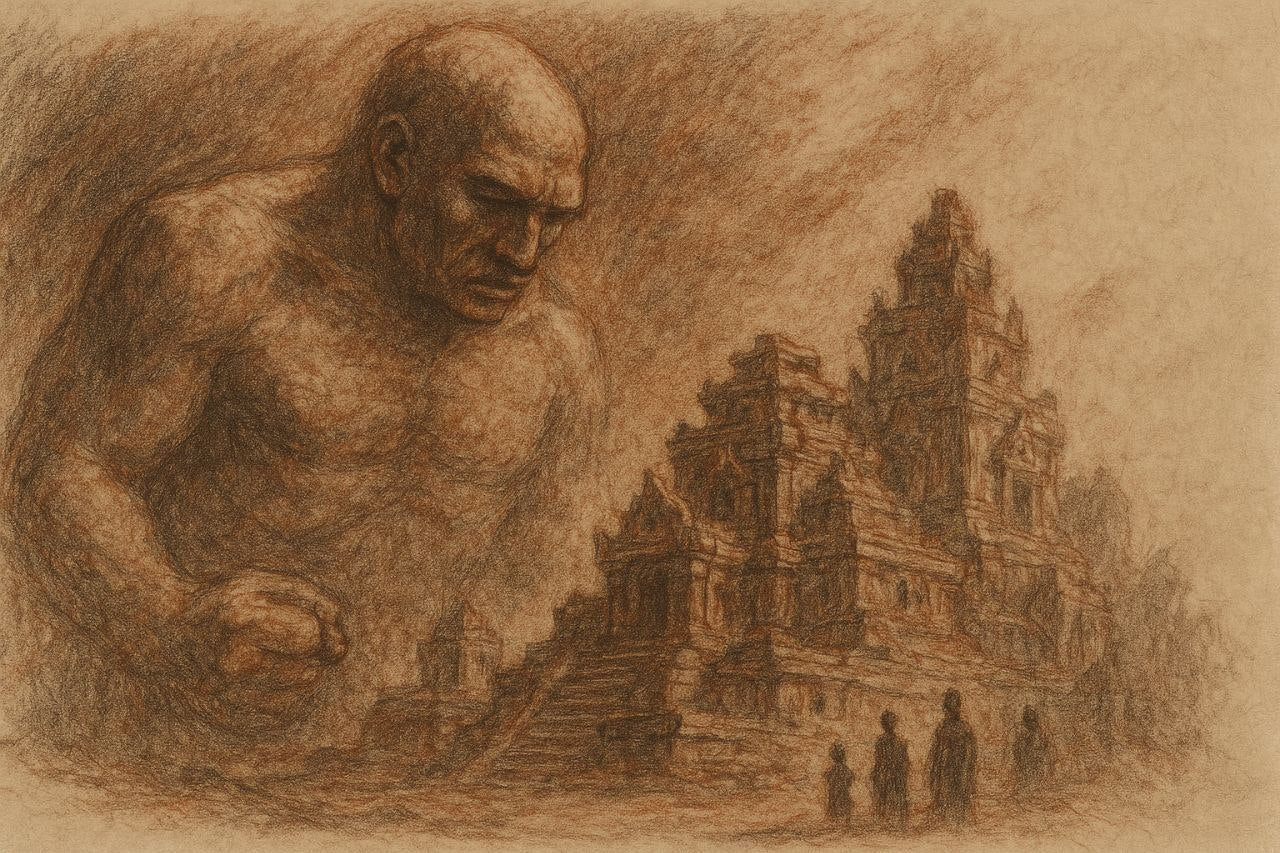

The Giant of Phnom Bakheng: A Legend in Stone and Shadow
High above the jungle canopy, where stone meets sky, a giant stirs beneath Phnom Bakheng. Born of earth and legend, he rises not in fury—but in sorrow—his towering form a silent witness to the ambitions of kings and the turning of stars. Step into the myth where temples breathe and the ancient still remembers.
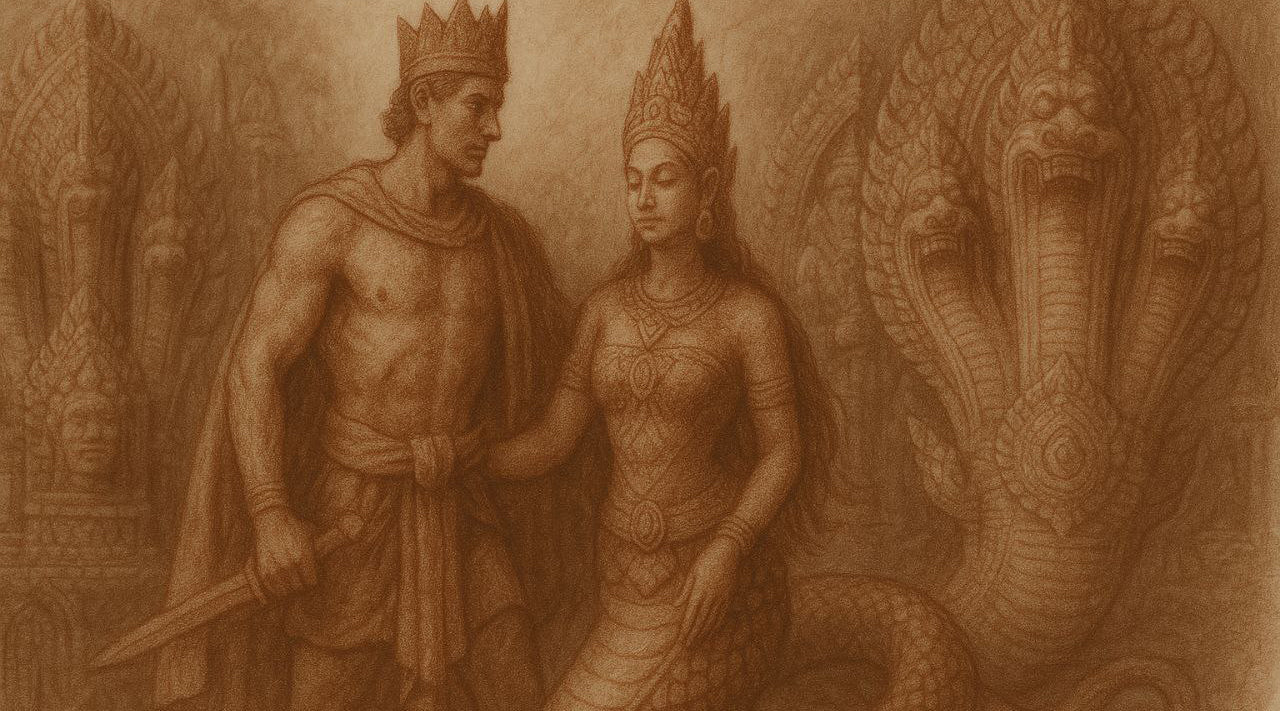

The Legend of Neang Neak and Preah Thong: The Birth of the Khmer Kingdom
A serpent princess and a wandering prince unite to shape the Khmer kingdom—where love births a dynasty, and the Nāga coils through stone and blood.
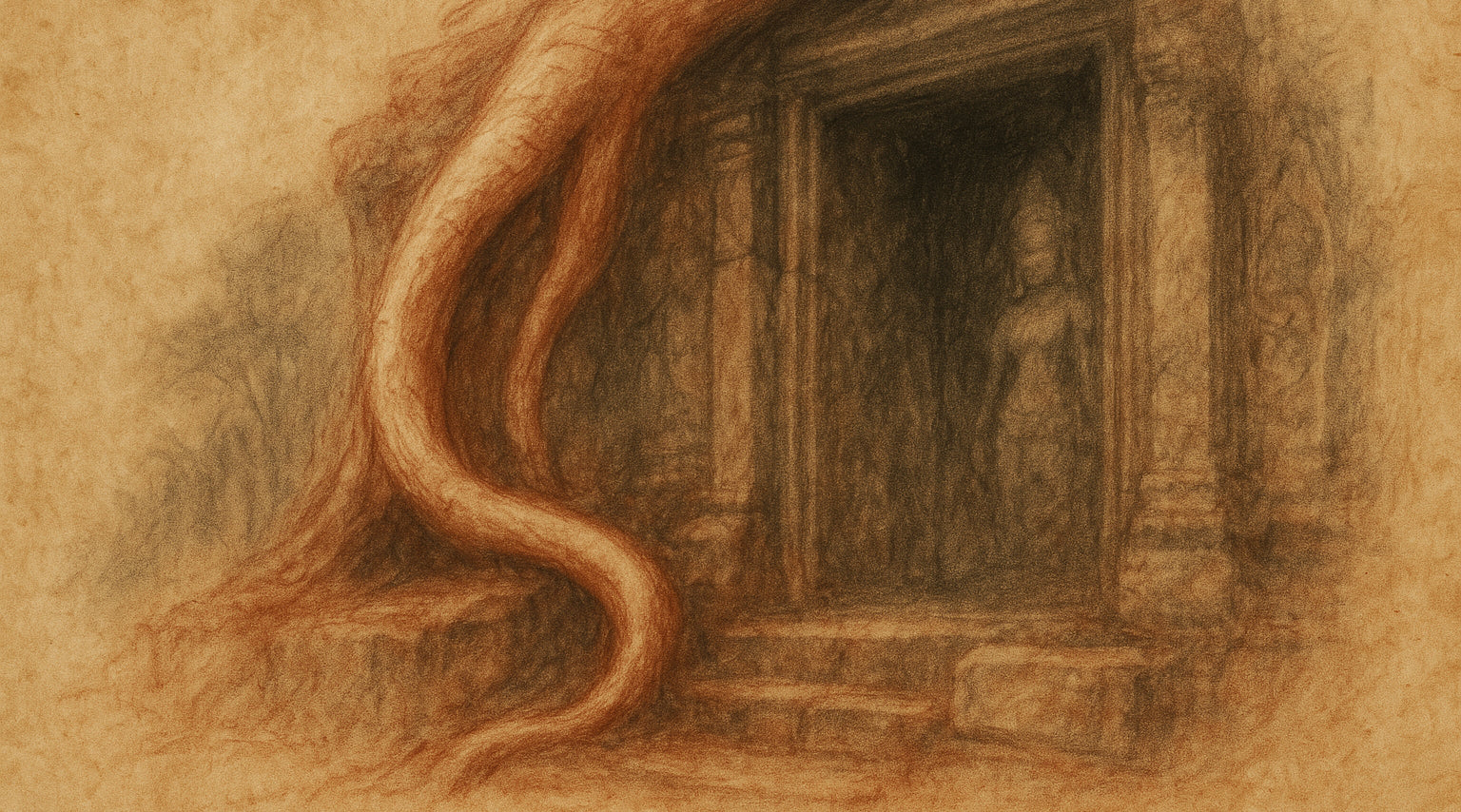

The Beauty That Time Reveals
What if the worn were more sacred than the new? Step through the softened stone of Angkor into a meditation on impermanence, quiet grace, and the beauty that reveals itself only through time.
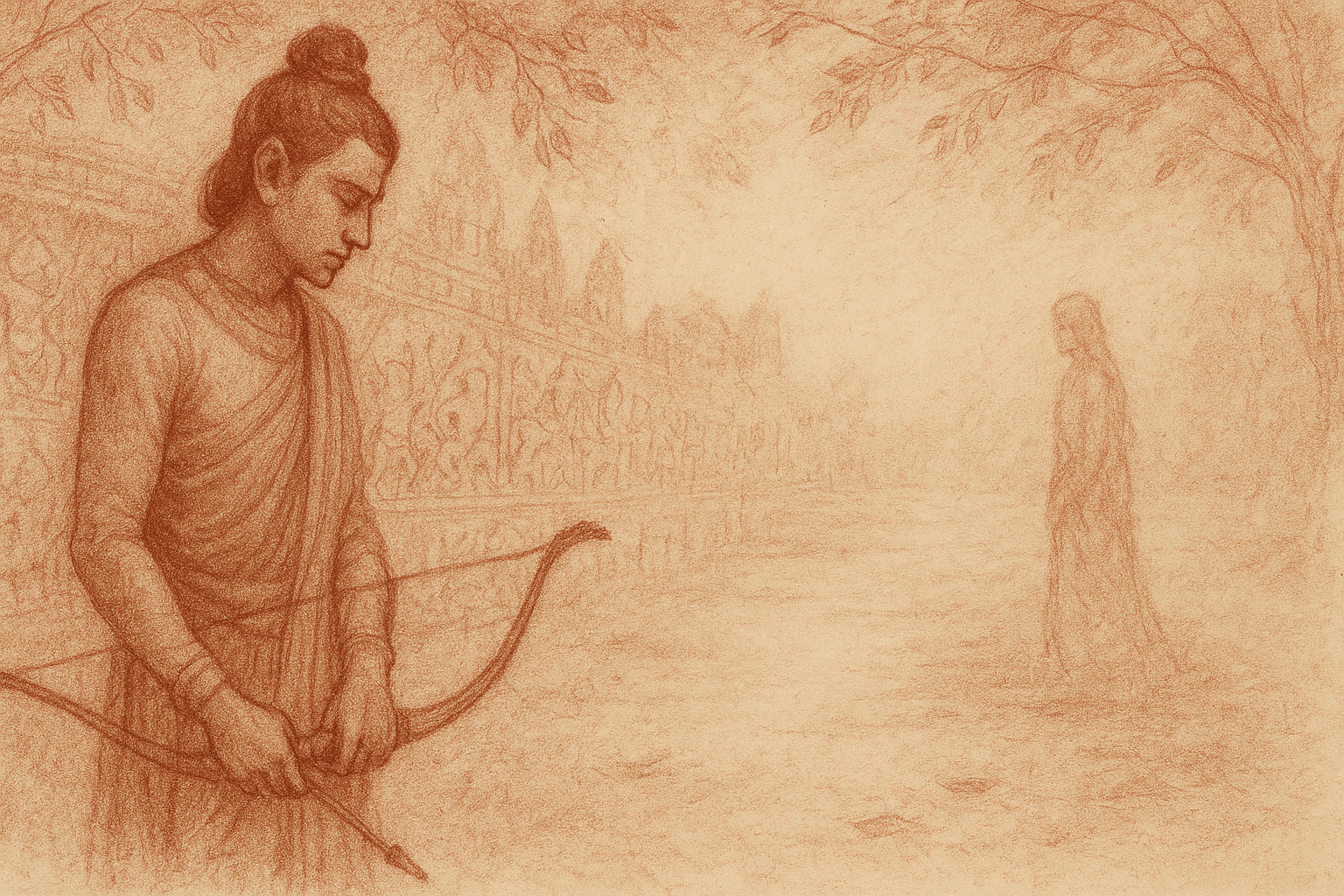

The God Who Walked Away: Rama in Sacred Stone
He stands in stone, composed—but beneath the bow and vow, a heart breaks quietly. Walk the galleries where gods falter, vows deepen, and silence bears the weight of love.
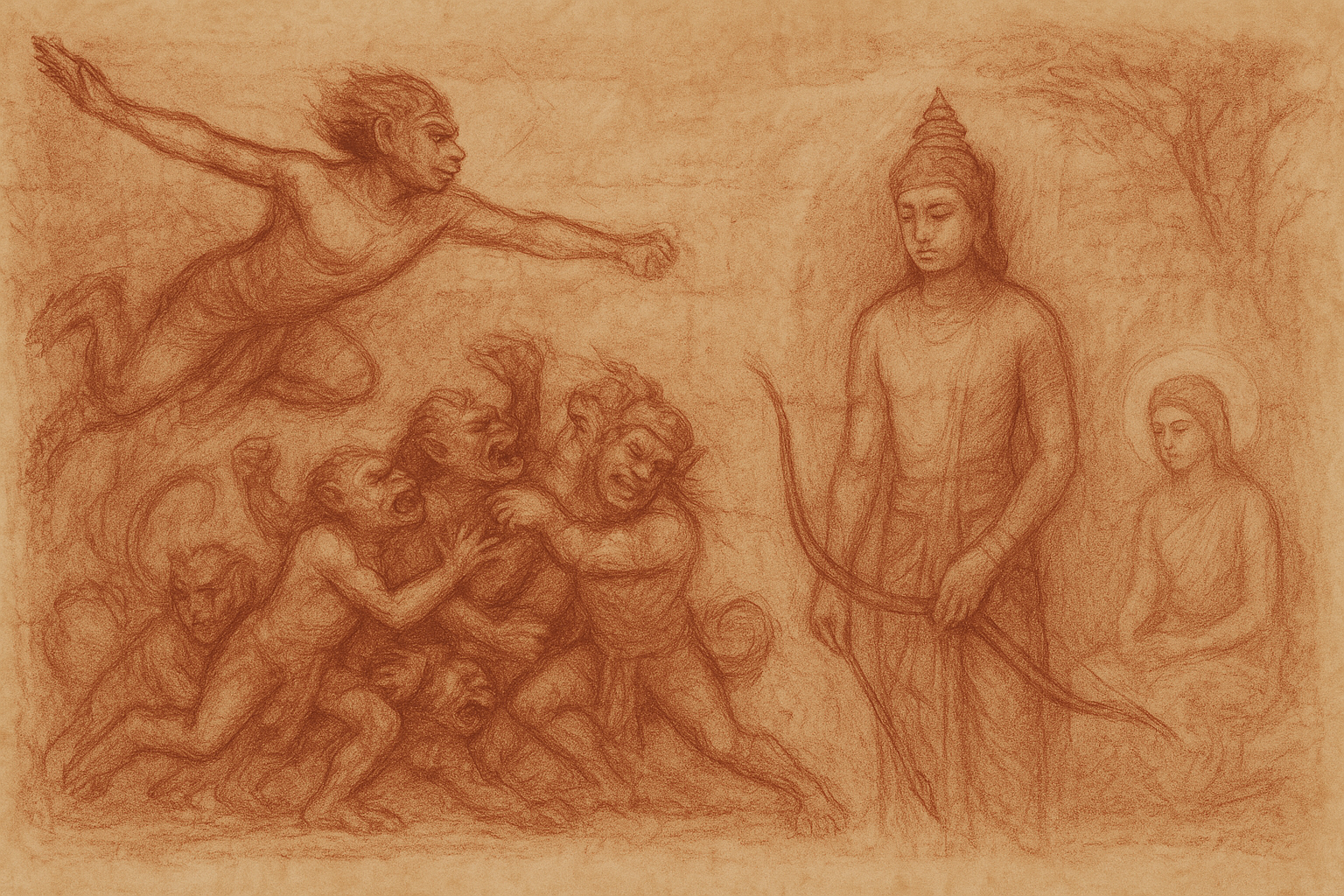

When the Ramayana Was Carved in Stone
The Ramayana unfolds in stone—where monkey warriors fly, Sita weeps beneath the acacia, and Rama returns not to triumph, but to restore cosmic order. In Angkor, these are not carvings. They are offerings—etched by sculptors who knew that mythology is not story, but the soul’s invisible design.


The First Arrow
In a forest haunted by fear, Rama’s first arrow pierced not only the demoness Tataka, but the sacred veil between boyhood and divine justice. Her death returned the stillness. The gods rejoiced. But Rama, we are told, was quiet.
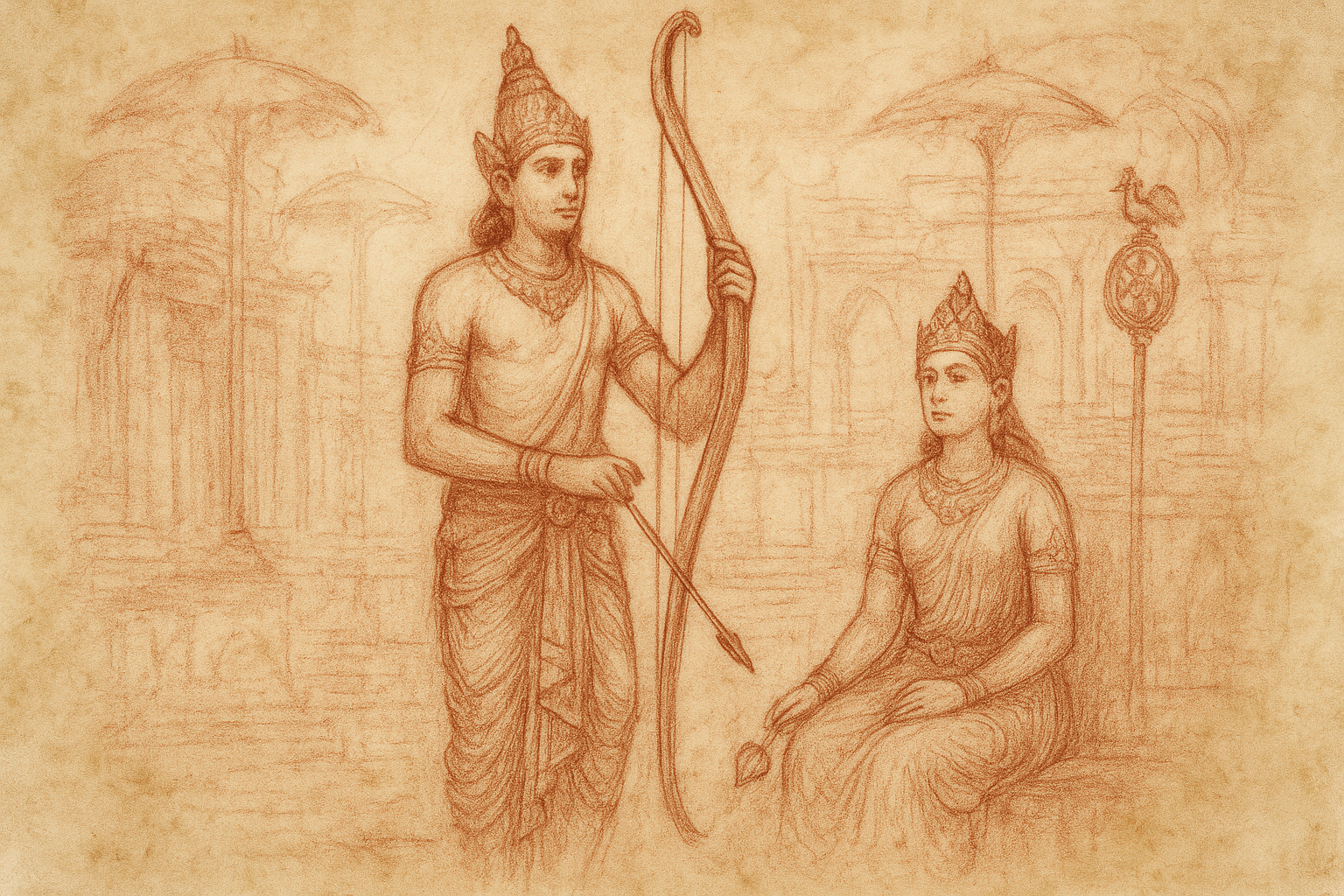

The Bow That Thundered
In the northwestern gallery of Angkor Wat, five tiers of sacred stillness recall the day a bow once thundered. Rama stands calm. Sita, composed. A svayamvara not of conquest, but of vow returned. In silence, the stone remembers what sound once revealed.
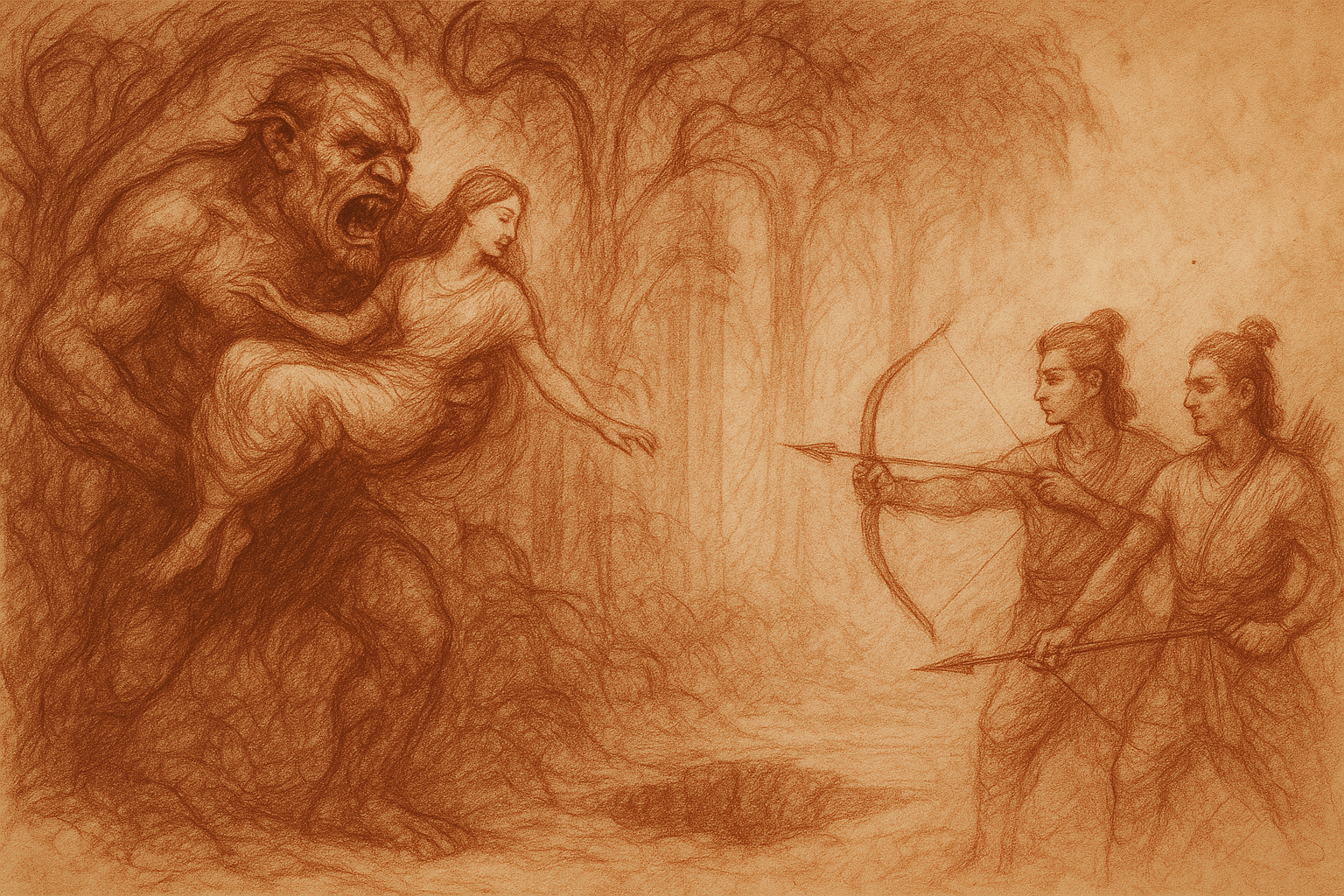

The Demon Who Could Not Devour Her
In the quiet stone of Banteay Srei and Angkor Wat, the tale of Viradha—Sita’s first abductor—still echoes. This luminous reflection traces his monstrous curse and hidden celestial origin, revealing a story not of conquest, but of release, as told through the sacred language of Khmer reliefs.
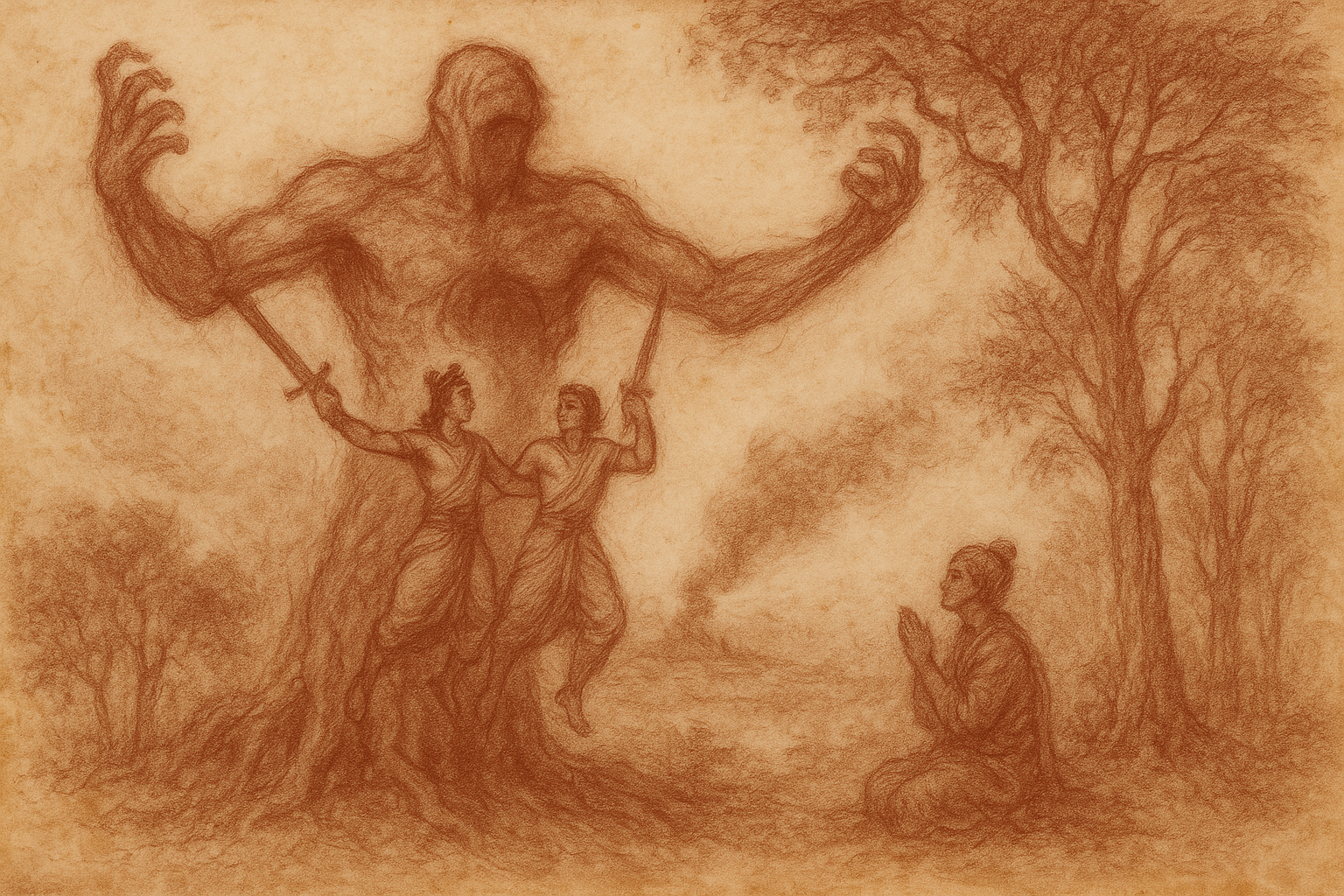

The Killing of Kabandha
In a forest where sorrow walks beside the divine, a monstrous form is not condemned but consecrated. The sword becomes a key. The flame, a passage. And the grotesque, once seen, reveals a radiance long hidden.
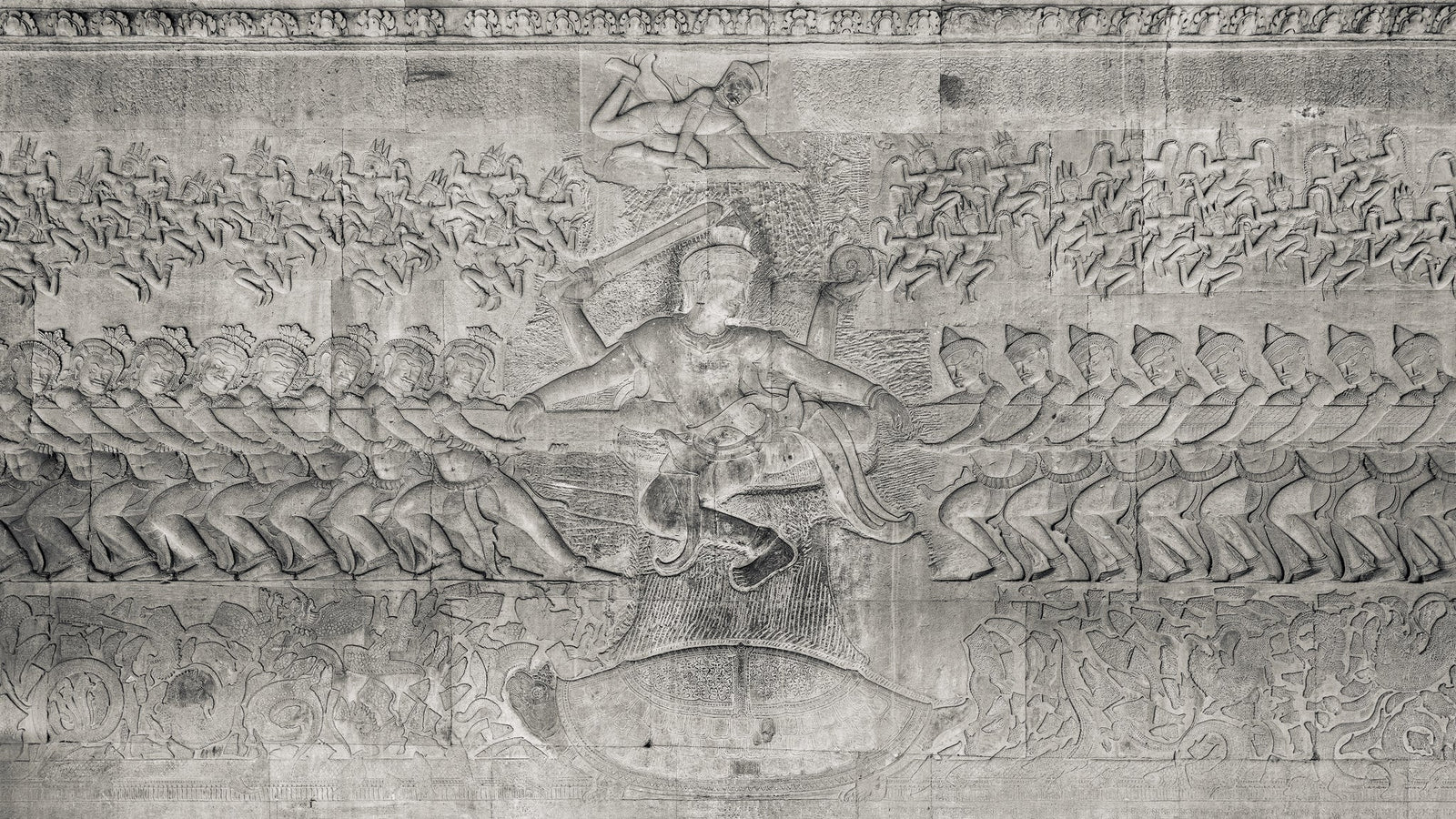

The Churning of the Ocean of Milk
Carved in stone yet unfinished in meaning, the Churning of the Ocean of Milk unfolds at Angkor Wat as a living cosmogram. Gods and adversaries pull against one another, the axis strains, sacrifice is renewed. This essay reads the great relief not as myth illustrated, but as creation continually held against collapse.
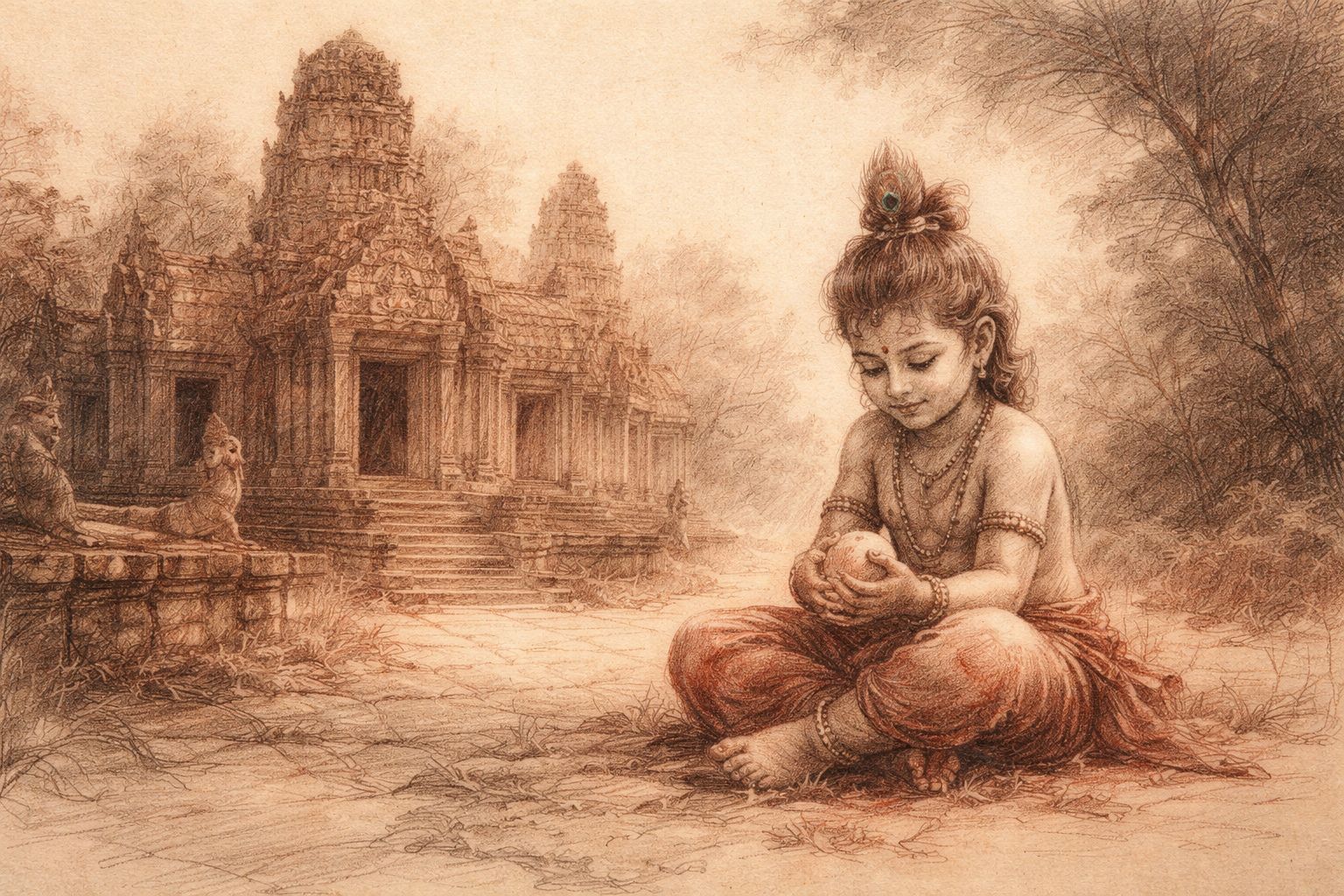

Krishna as Child — Play, Innocence, and Devotion at Angkor
At Banteay Samre, Krishna appears not as ruler or teacher, but as a child held within stone. The reliefs dwell on nearness and scale, on power that does not announce itself. Here devotion learns a different posture: not mastery, but care, and attention trained by smallness.
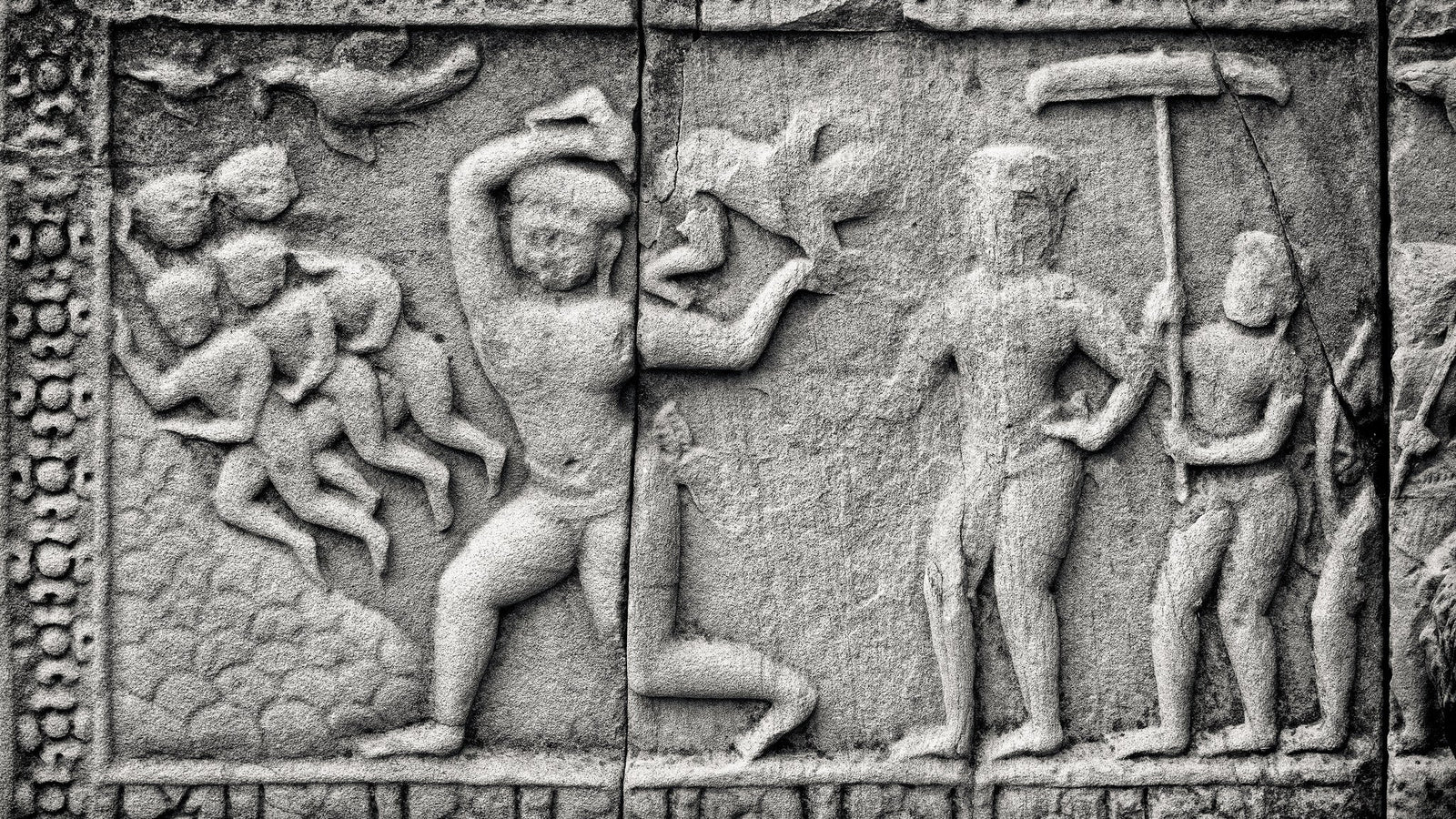

The God Who Was Nearly Broken
Before the god could smile, the world tried to break him.
In stone, the mother still prays, the child still falls—
and somewhere, the dark one waits to rise.


Krishna Beneath the Rain-God’s Cloak: A Tale in Stone
Beneath the hush of Baphuon’s southern gate, a child is carried through rain and prophecy. Step into the stone’s soft whisper, where the gods move unseen, and time shelters a hidden tenderness. Let your breath slow—and listen to what is almost remembered.
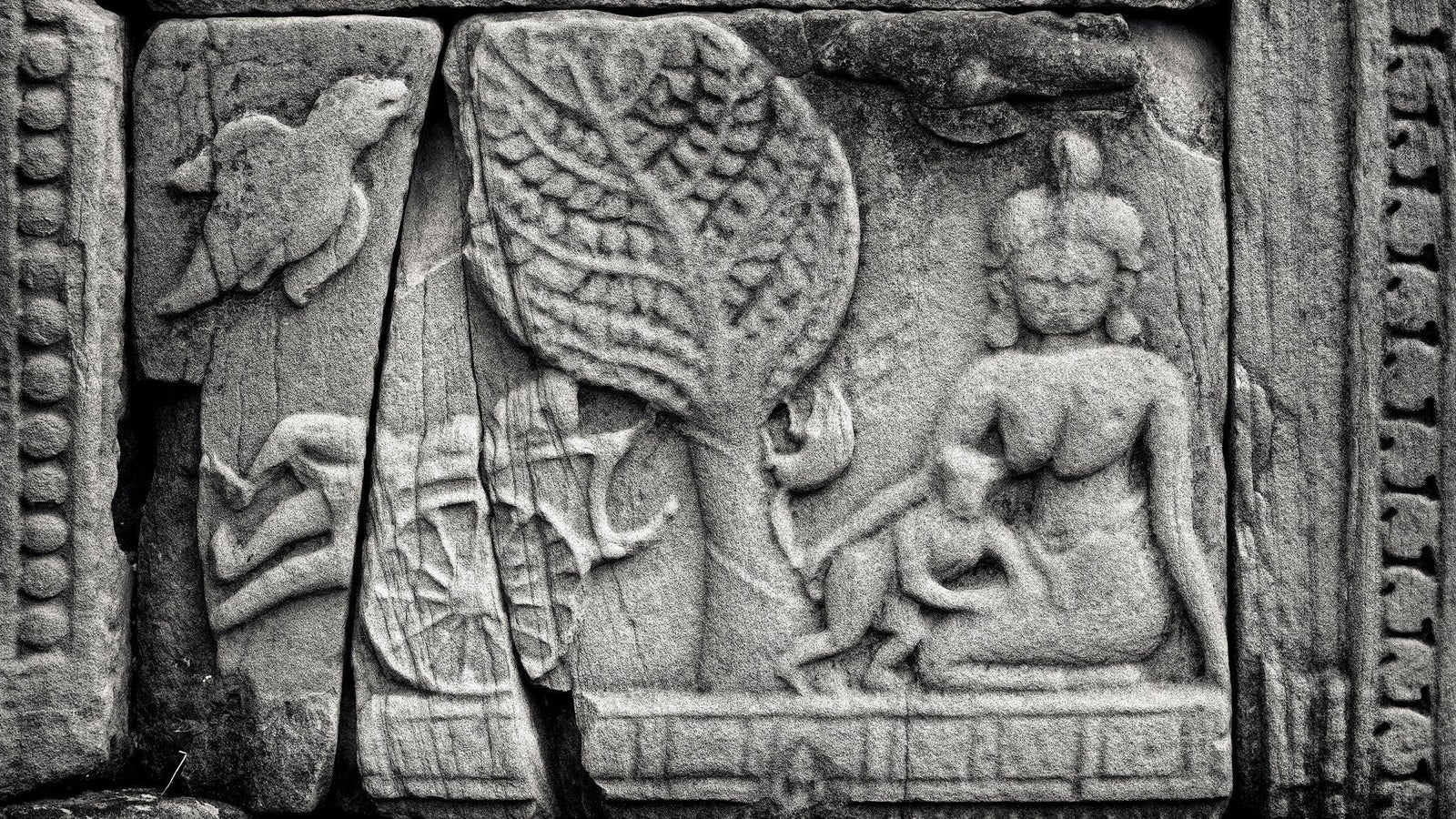

The Cart and the Whirlwind — Krishna’s Infancy at Baphuon
At Baphuon, the cart breaks and the wind collapses. The god-child does not confront danger; he outlasts it. What pretends to bear weight fails, and what relies on motion falls back to earth. The relief holds these stories in fragments, trusting restraint over certainty.
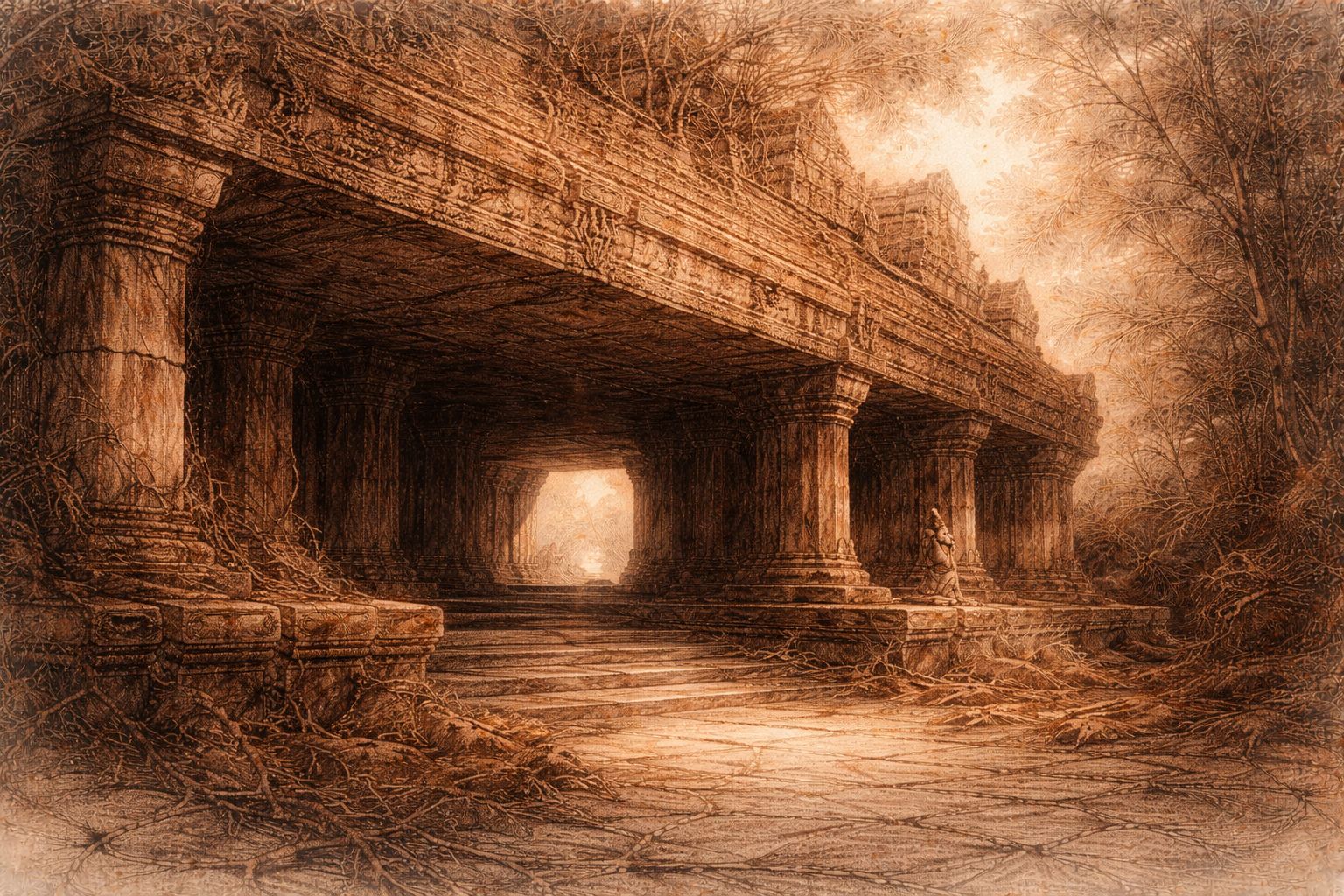

Krishna Govardhana — Shelter, Refusal, and Authority at Angkor
Across Angkor, Krishna stands holding a mountain, not in strain but in balance. The storm has already failed. What remains is a lesson in restraint: protection without dominance, power expressed as shelter. Stone preserves this pause, offering a model of authority that absorbs excess rather than unleashing it.
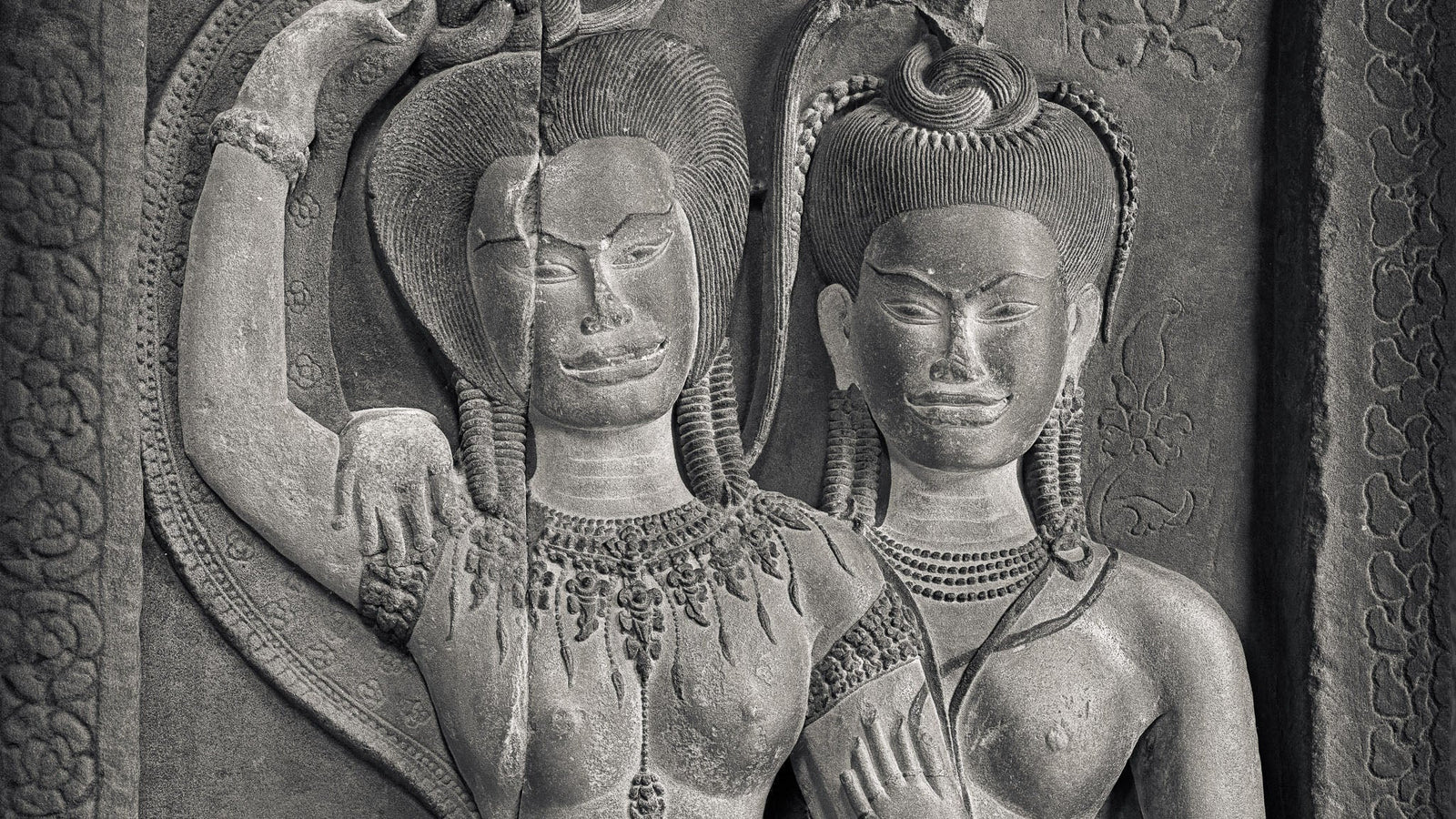

The Gaze and the Sacred Women of Angkor
To look at the apsaras of Angkor is to discover how deeply one’s own habits of seeing are trained. This essay examines the Western concept of the gaze, and how it collapses when brought before Khmer sacred art—where the female form is not an object, but a bearer of auspicious power and cosmological order.
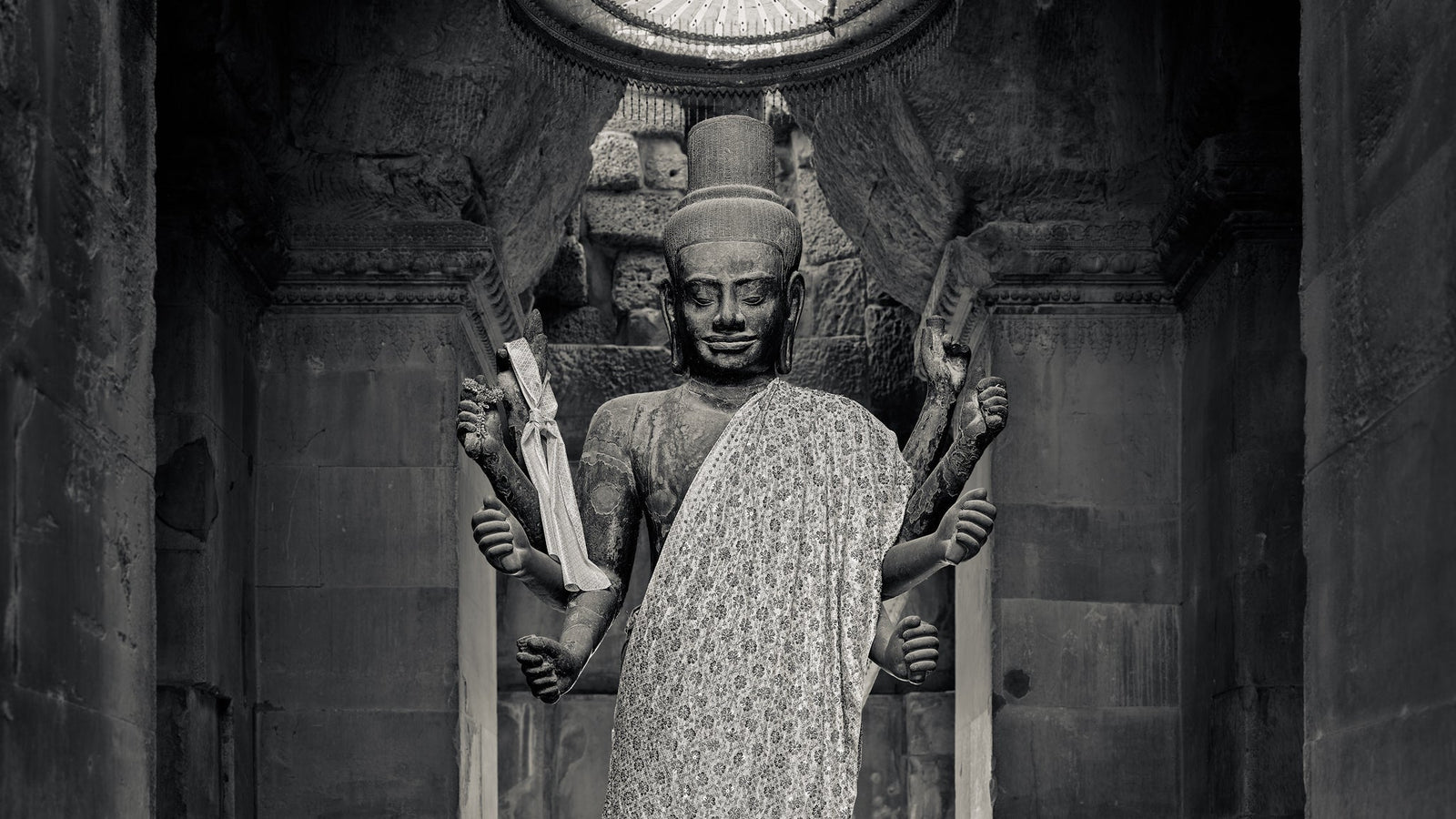

Vishnu, the Lord of Cambodia
Vishnu does not arrive in Cambodia as a stranger. He is recognised rather than invoked, folded into stone, kingship, and horizon. Whether as eight-armed sovereign or ancestral guardian, he endures as a custodian of order—watchful, available, and quietly holding the moral weight of continuity.
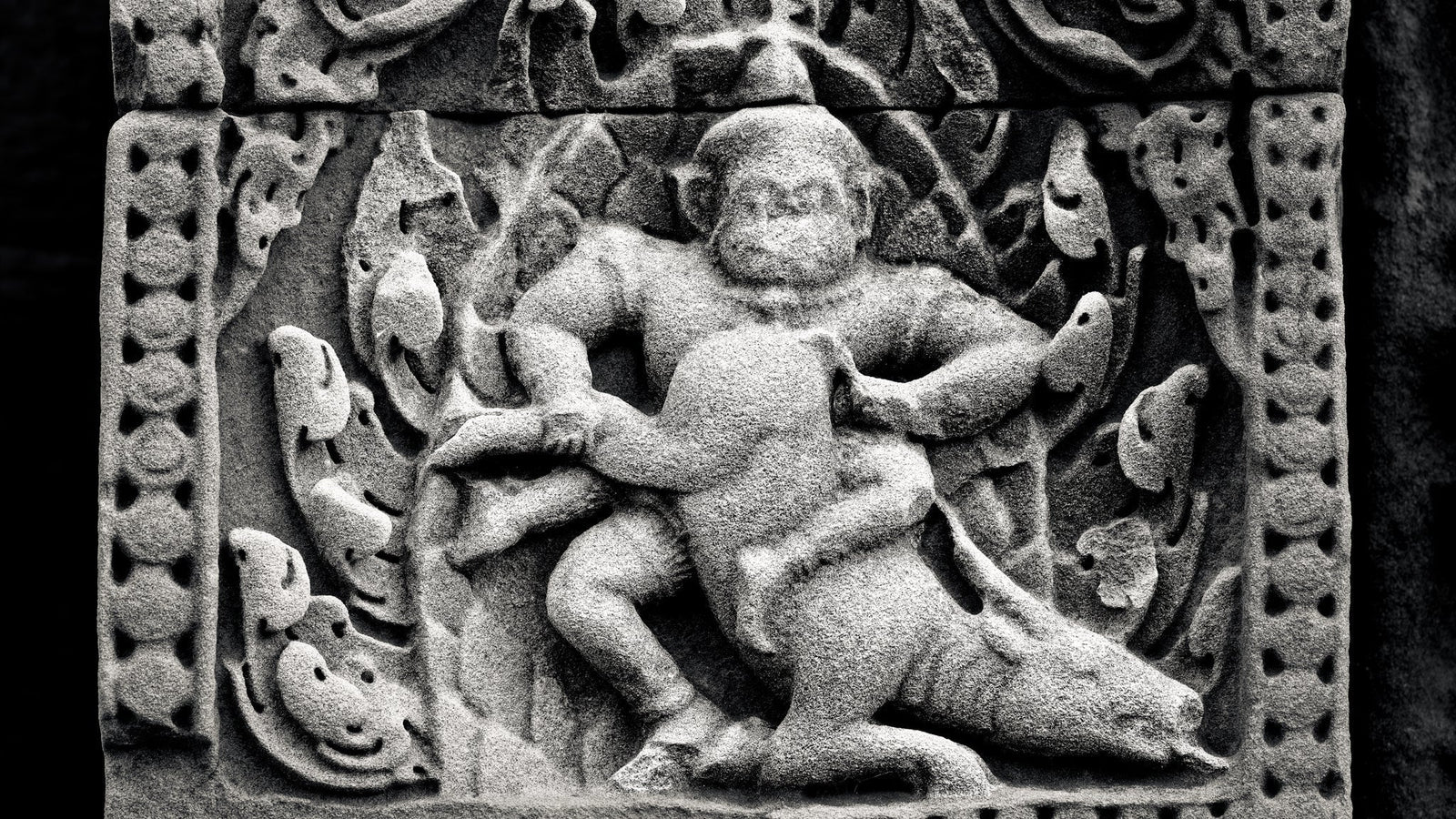

Valin Fighting Dubhi
Low on a pilaster at Banteay Samre, Valin bends the buffalo demon Dubhi toward the earth. The scene is intimate, almost comic, yet heavy with consequence. Strength here is not heroic display but physical labour—authority felt in the hands, close to the ground, before judgement arrives.
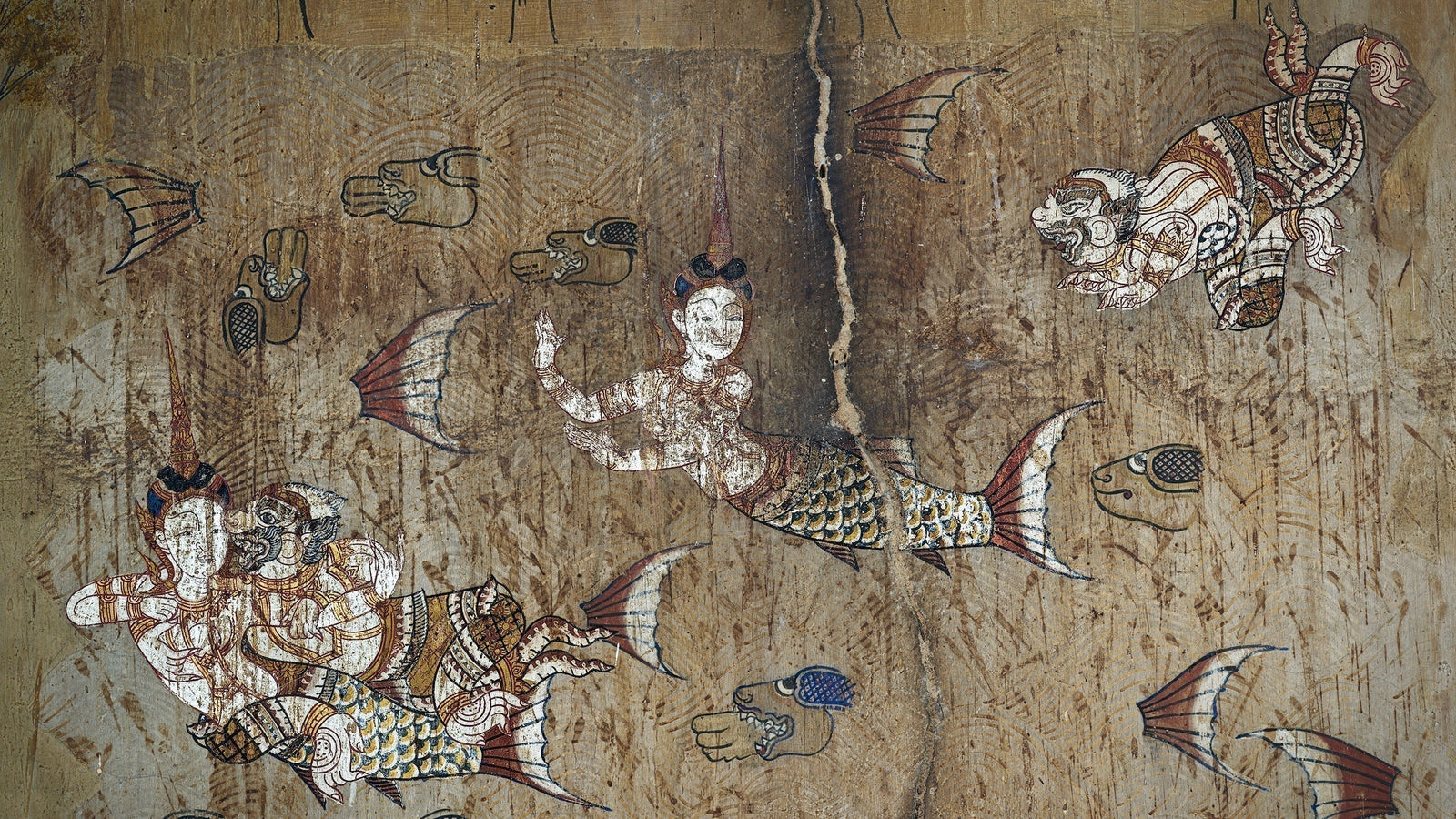

Hanuman and Sovann Maccha: Listening Beneath the Sea
Beneath the painted sea of Wat Bo, force gives way to attention. Hanuman’s strength falters, and listening begins. In the Reamker’s quiet divergence, opposition becomes relationship, and the causeway rises not through conquest, but through restraint, recognition, and care.
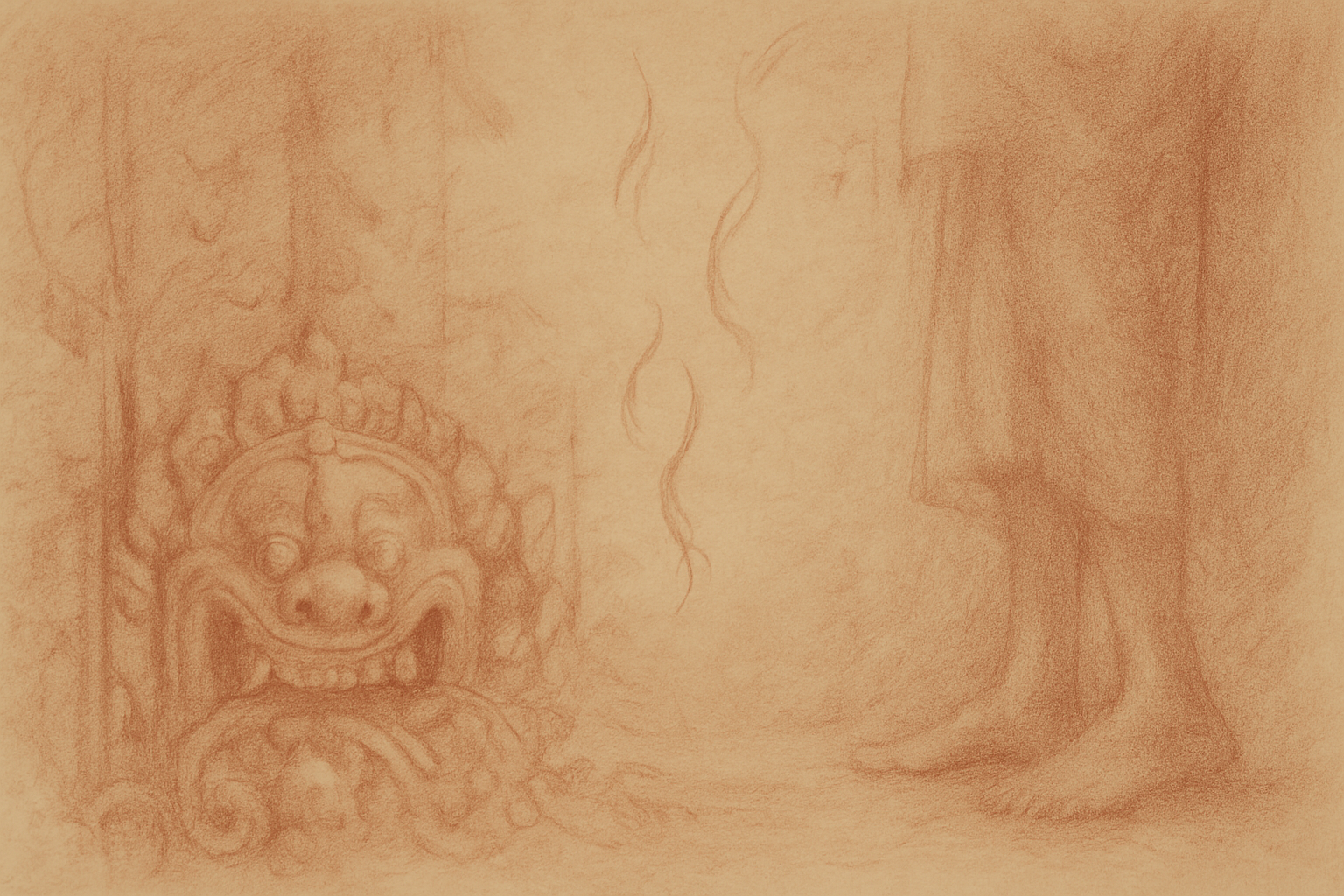

When the Scissors Fell: The Buddha’s Renunciation in Stone
He lifts the blade, and the world holds its breath.
Stone bears witness. The past dissolves.
At Preah Khan, renunciation is not an ending,
but the soft beginning of the path to stillness.
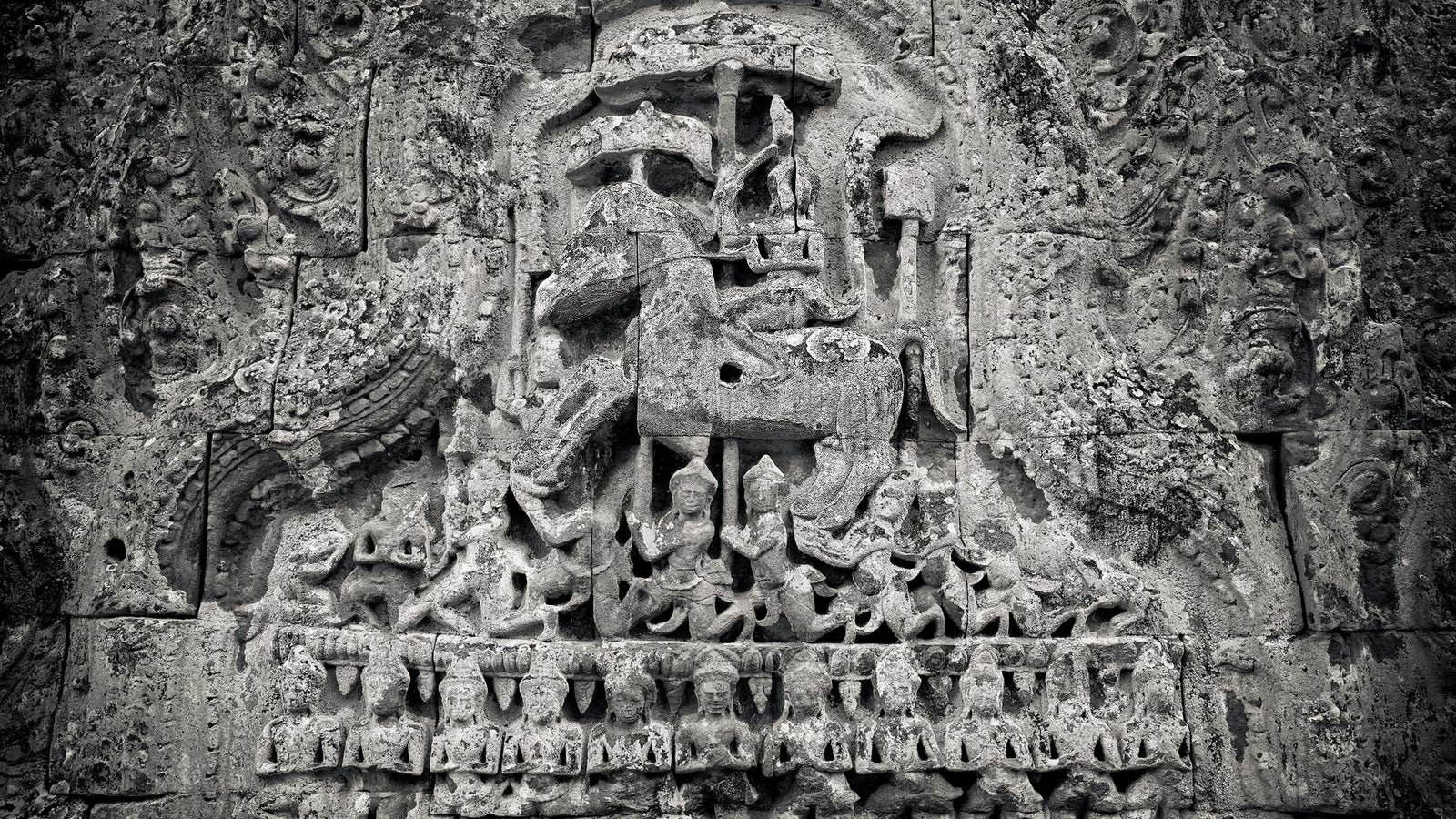

The Silent Gate of Awakening: The Buddha’s Great Departure
A prince steps into silence beneath the hands of gods.
Stone softens. Mist lingers. The world holds its breath.
At Ta Prohm, renunciation becomes a doorway—
not of loss, but of luminous becoming.
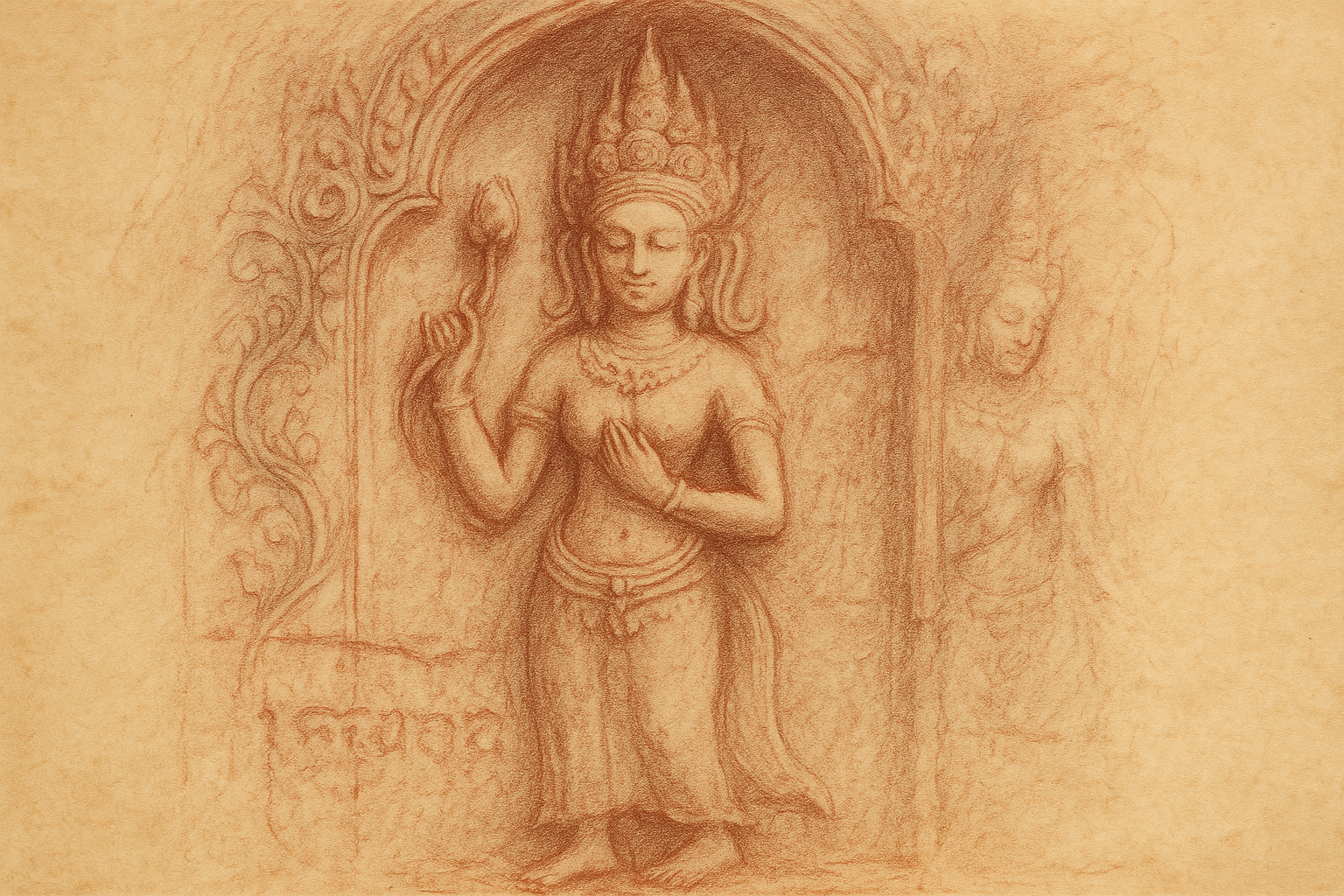

What the Celestial Ladies Are Called
They do not ask to be named.
Carved into temple stone with smiles that cross worlds, they invite us to let go of labels—
and simply kneel
in wonder.
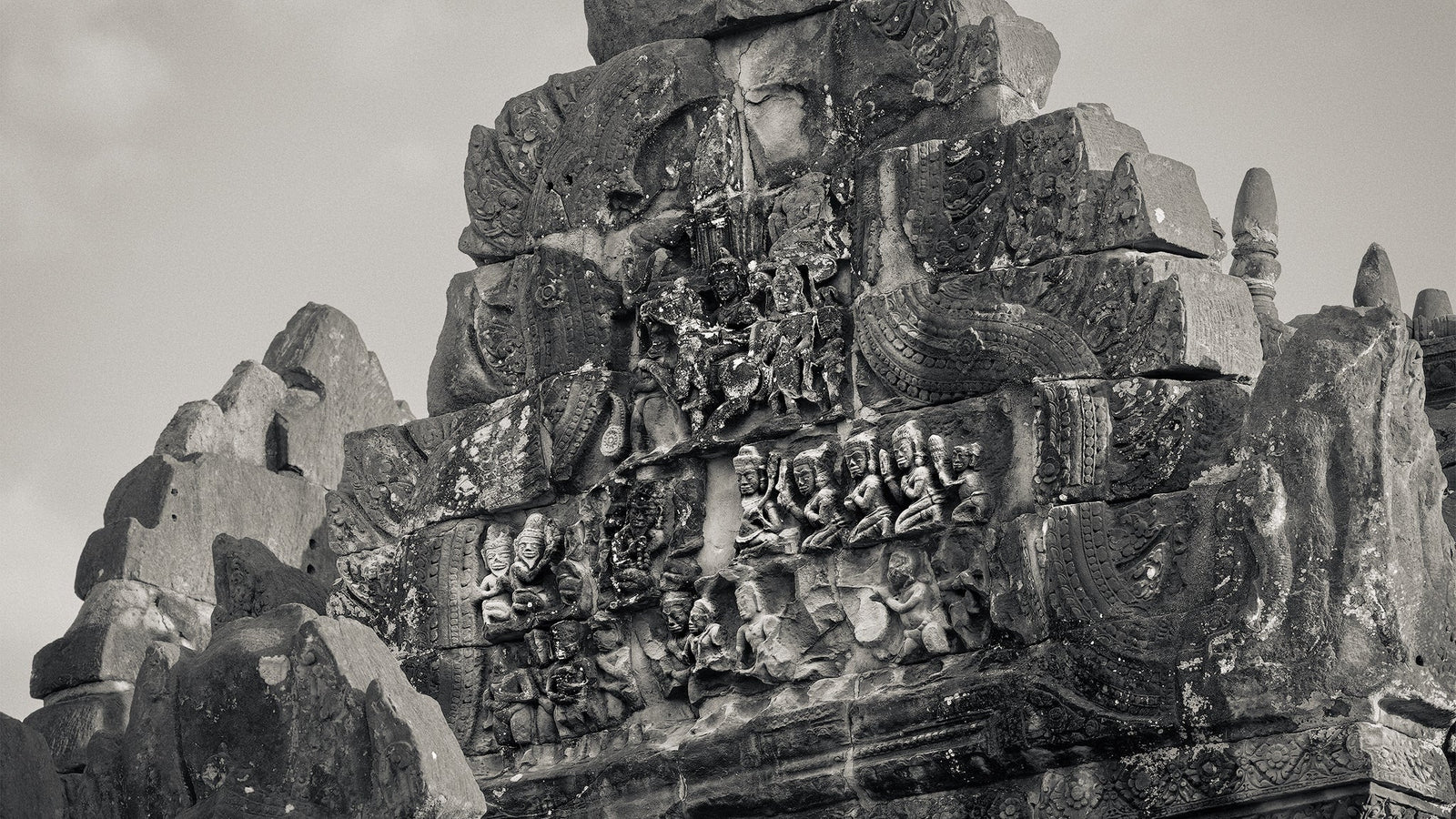

The Four That Opened the Gate
A prince sees age, sickness, death—and then serenity.
Stone holds what memory cannot: the hush of becoming, the moment before renunciation, the gate just beginning to open.
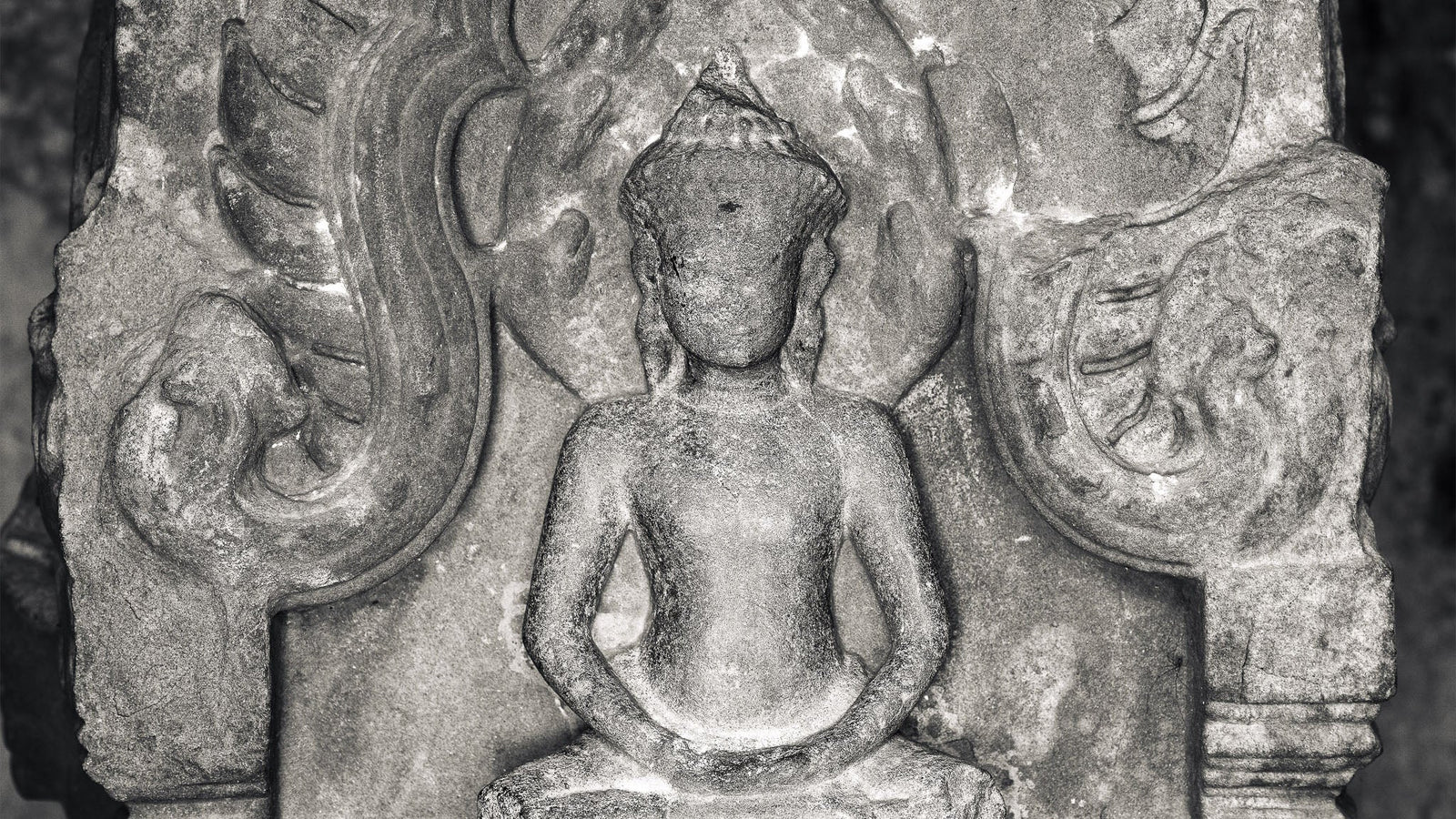

The Light Before the Path: Buddha’s Uncarved Beginnings
Walk the hush between stories—where lotus blooms unfurl, and the child who would awaken steps through heaven unseen. In the stillness of uncarved stone, memory glows.
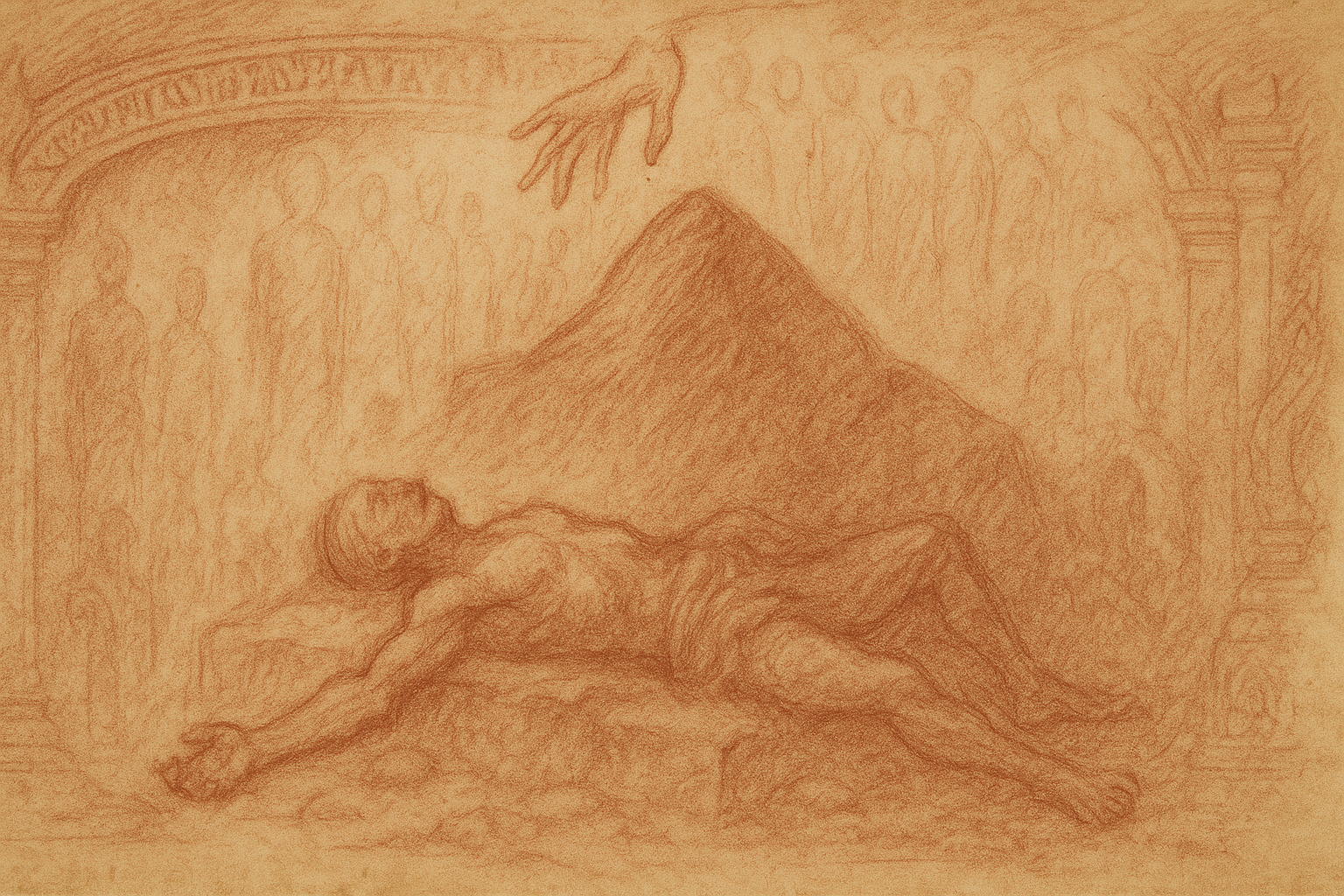

The Hell Without Rest: On the Avīci Realm at Angkor Wat
Beneath the stone cries of Angkor’s gallery, the condemned fall—not into eternal fire, but into memory and reckoning. Step into the shadows of Avīci, where judgement carves silence, and even the darkest soul still waits for light.
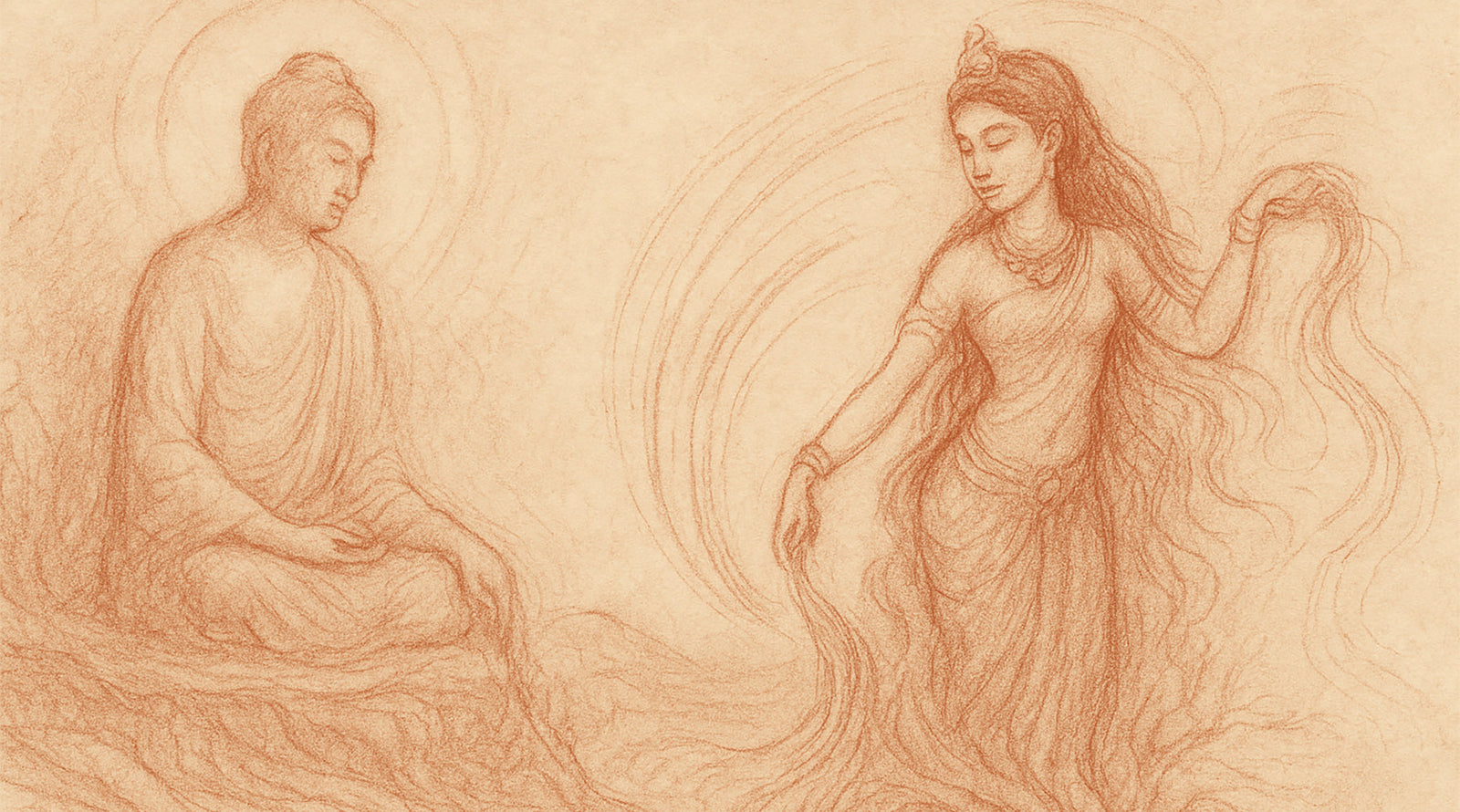

The Goddess Who Twisted Her Hair
Beneath the carvings of Ta Prohm, a goddess wrings her hair and the world is cleansed. Follow the silence where stone remembers, and the flood of truth flows not from force, but from presence. A meditation on earth, witness, and the sacred gesture that washed death away.
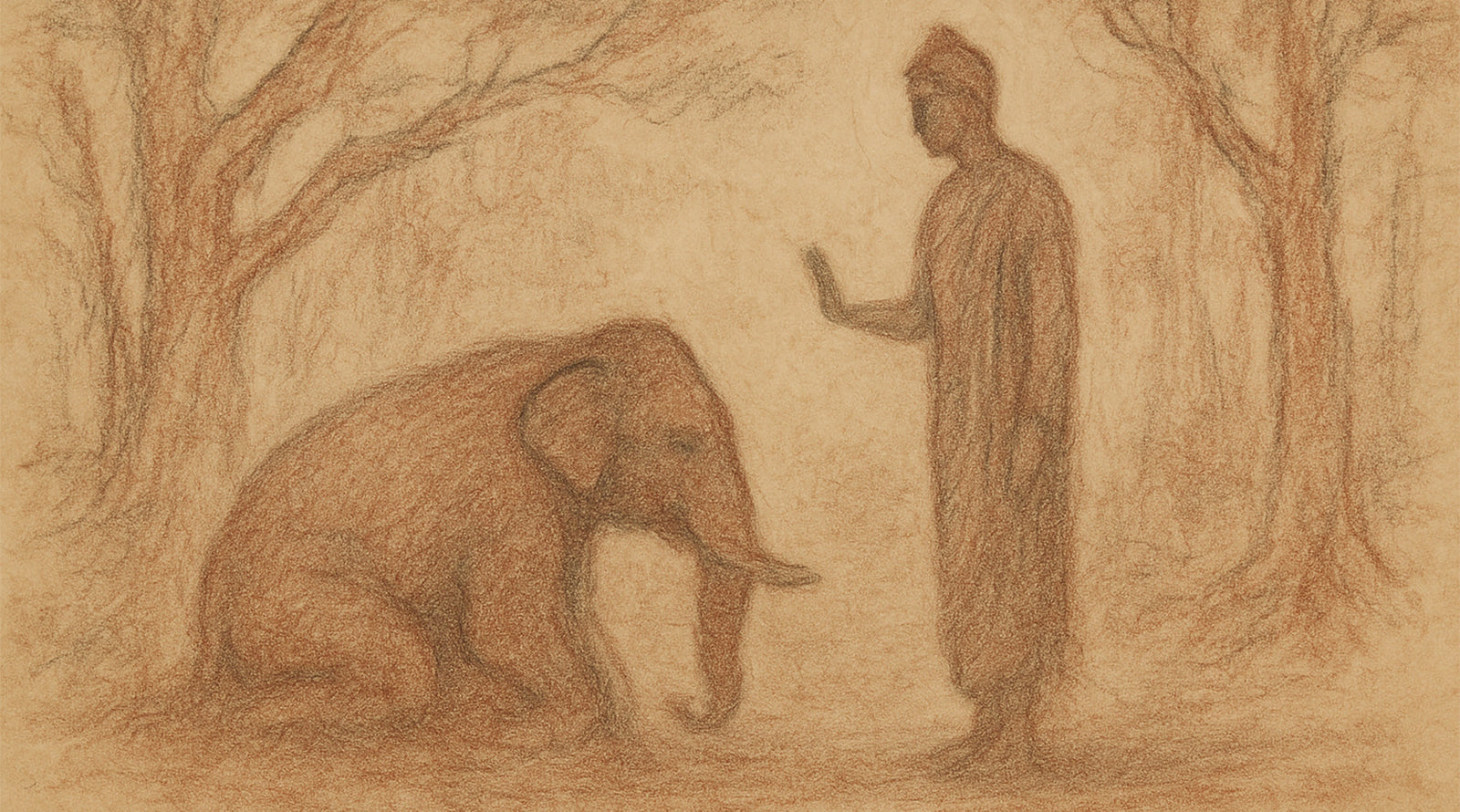

The Elephant Who Bowed to Silence
In a forest temple rarely visited, a fierce elephant kneels beneath the Buddha’s hand—carved in stone and veiled by time. This luminous meditation reflects on Theravāda resilience, the Hindu Reaction, and the miracle of wrath transfigured by stillness.
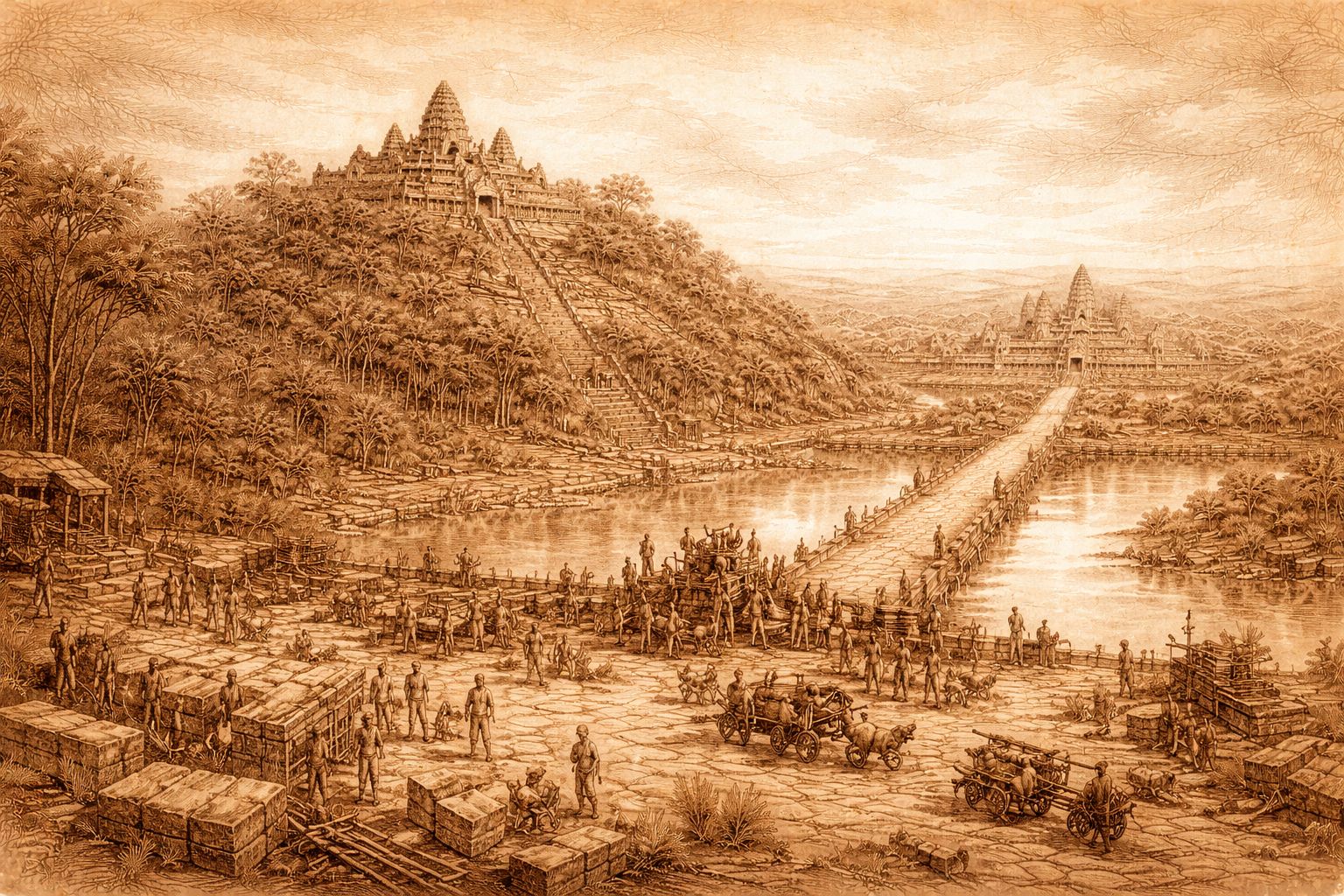

From Template to Territory — Yaśovarman I and the Birth of Angkor Proper
Yaśovarman I completes Angkor’s first cycle by lifting the royal triad from Roluos and fixing it at Angkor proper. With Lolei, the East Baray, and Phnom Bakheng, the Khmer cosmos becomes a city—measured, aligned, and no longer provisional.
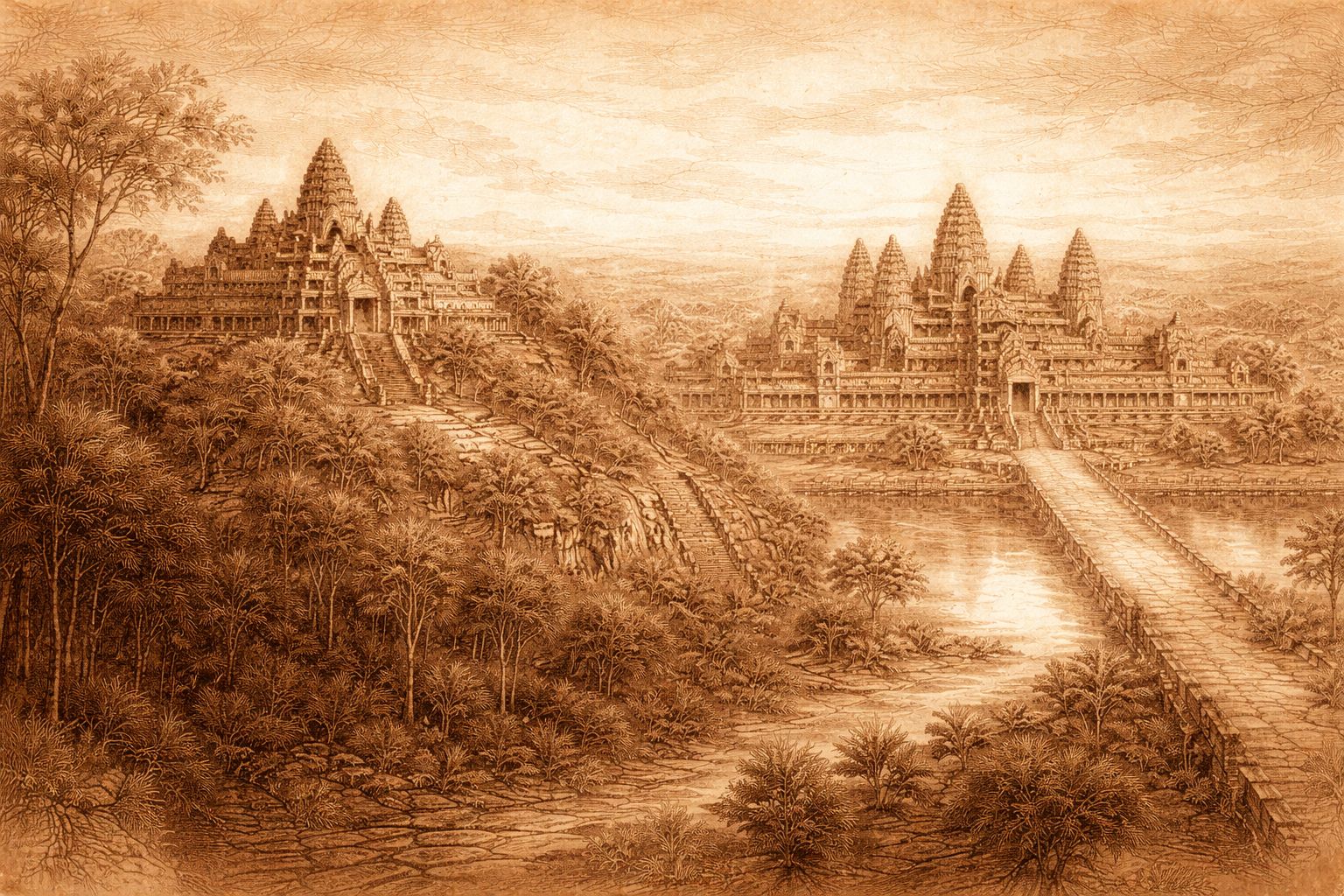

From Hill to Mandala — Phnom Bakheng and Angkor Wat
From Phnom Bakheng’s crowned hill to Angkor Wat’s perfected mandala, the Khmer state temple evolves from reliance on nature to total architectural control. What begins as ascent upon a given mountain culminates in a man-made cosmos, measured, timed, and held in stone.
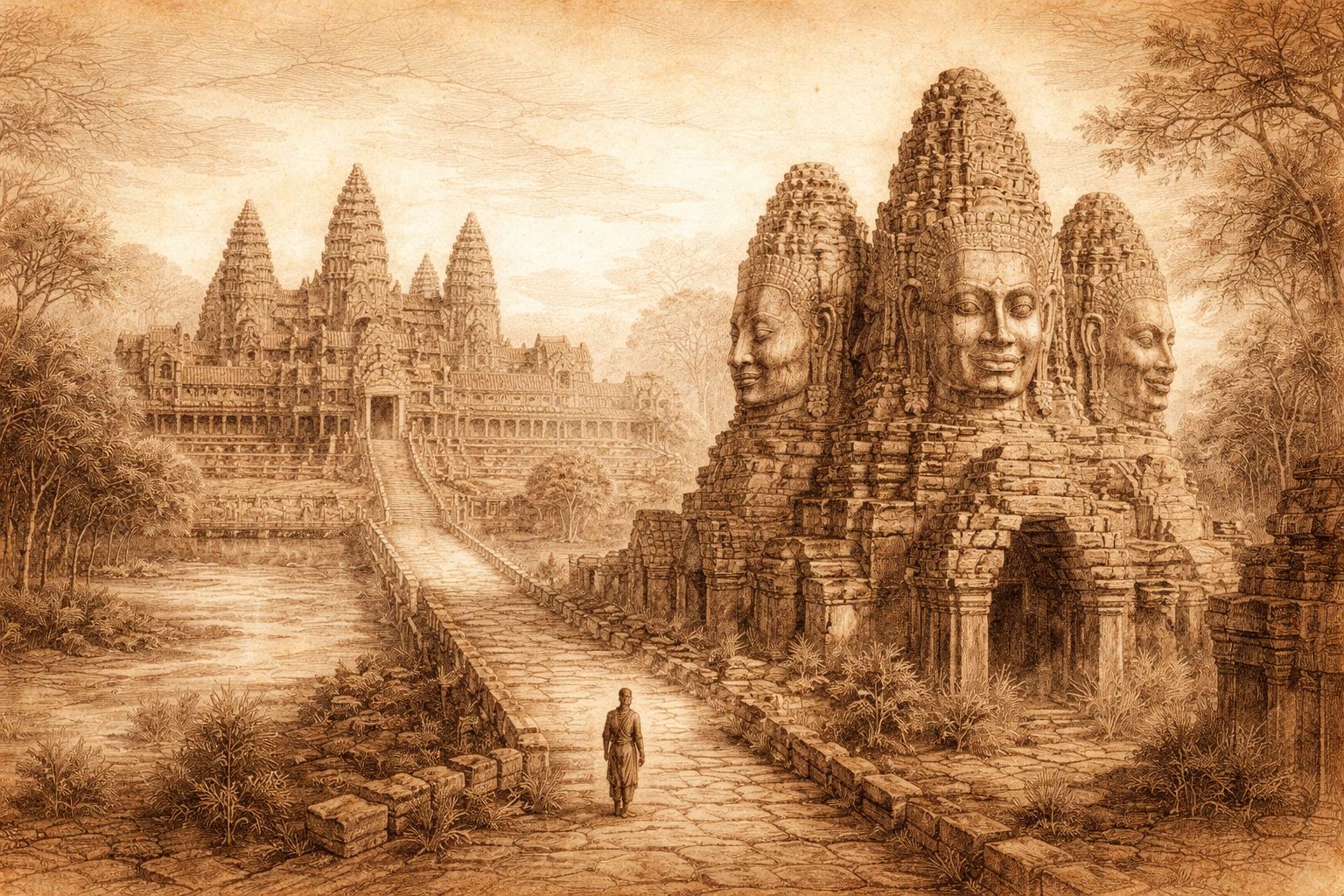

From Order to Presence — Angkor Wat and the Bayon
Angkor Wat perfects the universe as law: measured, aligned, and complete. The Bayon answers with presence—faces turned outward, meeting suffering where it stands. Between them, the Khmer mandala does not break; it turns inside out, discovering that order alone is insufficient without compassion.
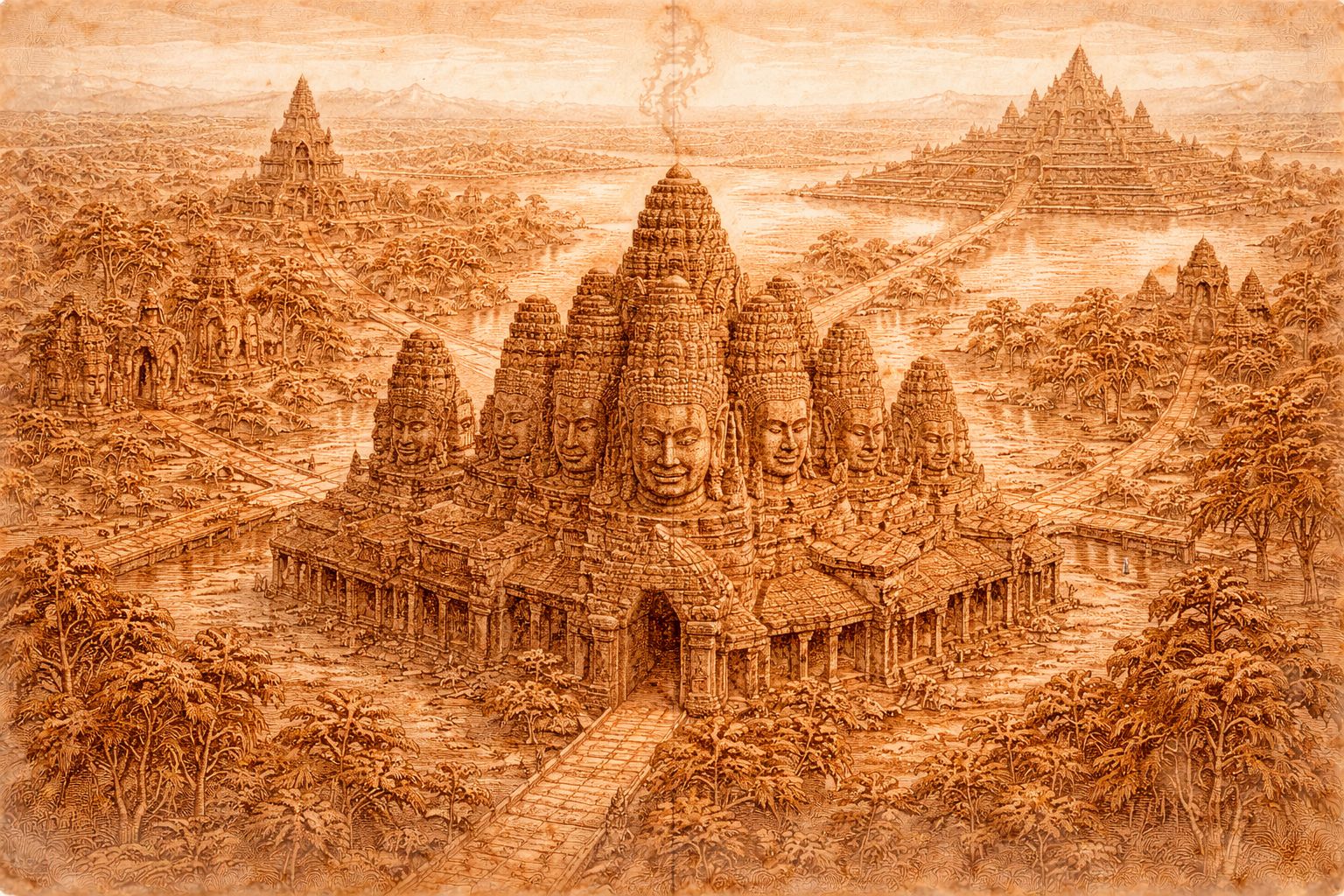

The Mandala Broken Open — Mahayana Buddhism and the Remaking of Angkor
When Angkor fell, the mandala did not shatter—it opened. Under Jayavarman VII, the rigid cosmic square fractured into a living network of faces, roads, and care. Geometry gave way to compassion, and the centre learned to move toward suffering rather than rule from above.


The Spirit of Banteay Samre Temple
Step within the quiet walls of Banteay Samre, where time softens and the gods dwell in stillness. Not a place to marvel—but to remember, to kneel, and to be received by silence older than the stone.


Angkor Architectural Styles and the Language of Stone
Angkor’s architectural styles are not steps of progress but layers of listening. Brick, laterite, and sandstone each learn how to hold weight, silence, and belief. Walking among them, one feels not a history of forms, but a long education in restraint, proportion, and presence.


Angkor Lintel Styles and the Language of the Threshold
Angkor’s lintels are not embellishments but thresholds that learned how to speak. Across centuries, stone experiments with restraint and abundance, narrative and silence. To walk beneath these carvings is to pass under compressed belief, where meaning pauses just long enough to register before entry.
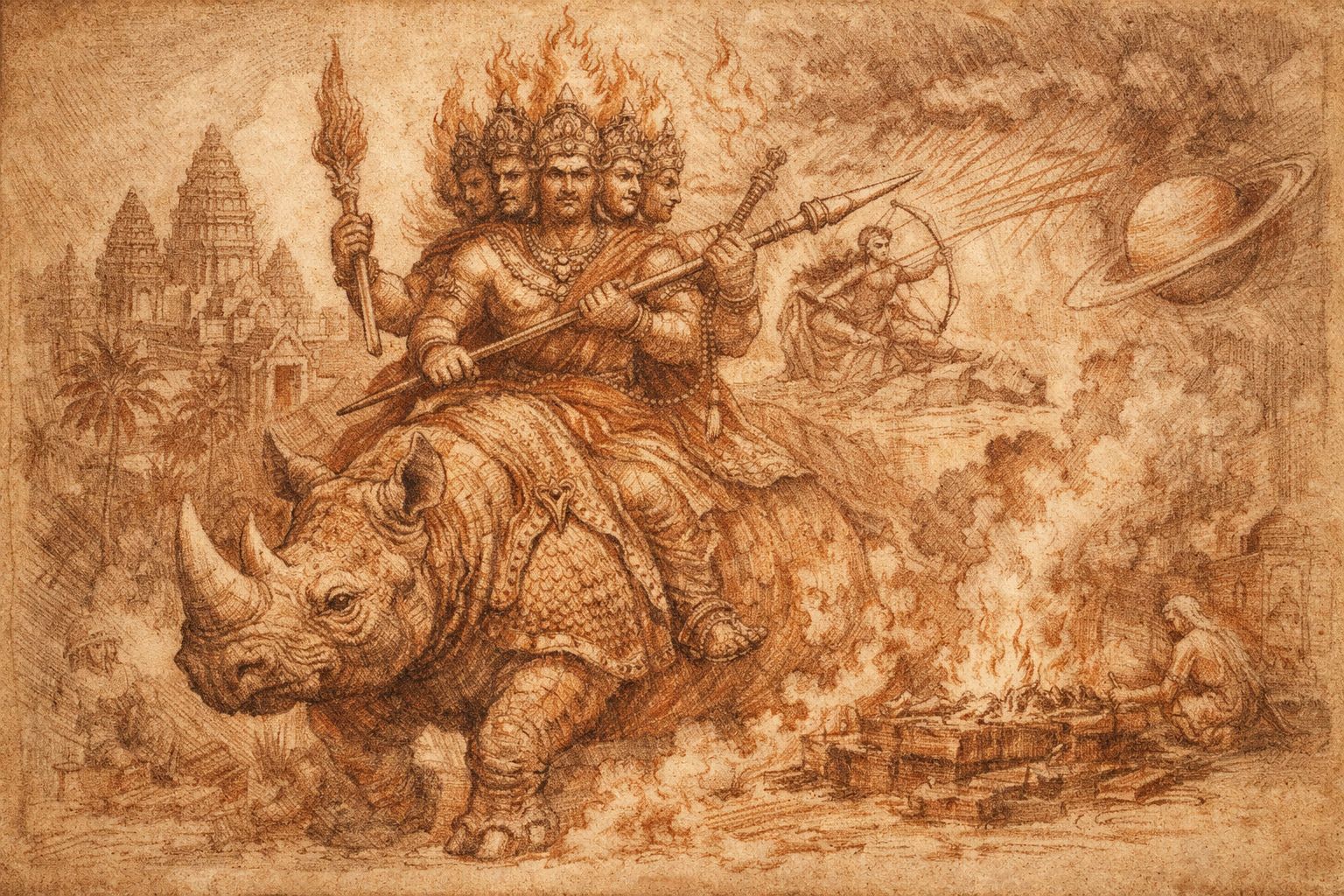

Agni — Keeper of the Living Flame
Fire at Angkor is never wild. It is housed, rekindled, disciplined. Agni rides not a swift ram but a rhinoceros—armoured, deliberate, unafraid. Here, flame does not destroy; it prepares. What burns is not lost, but translated—into ash, silence, and return.
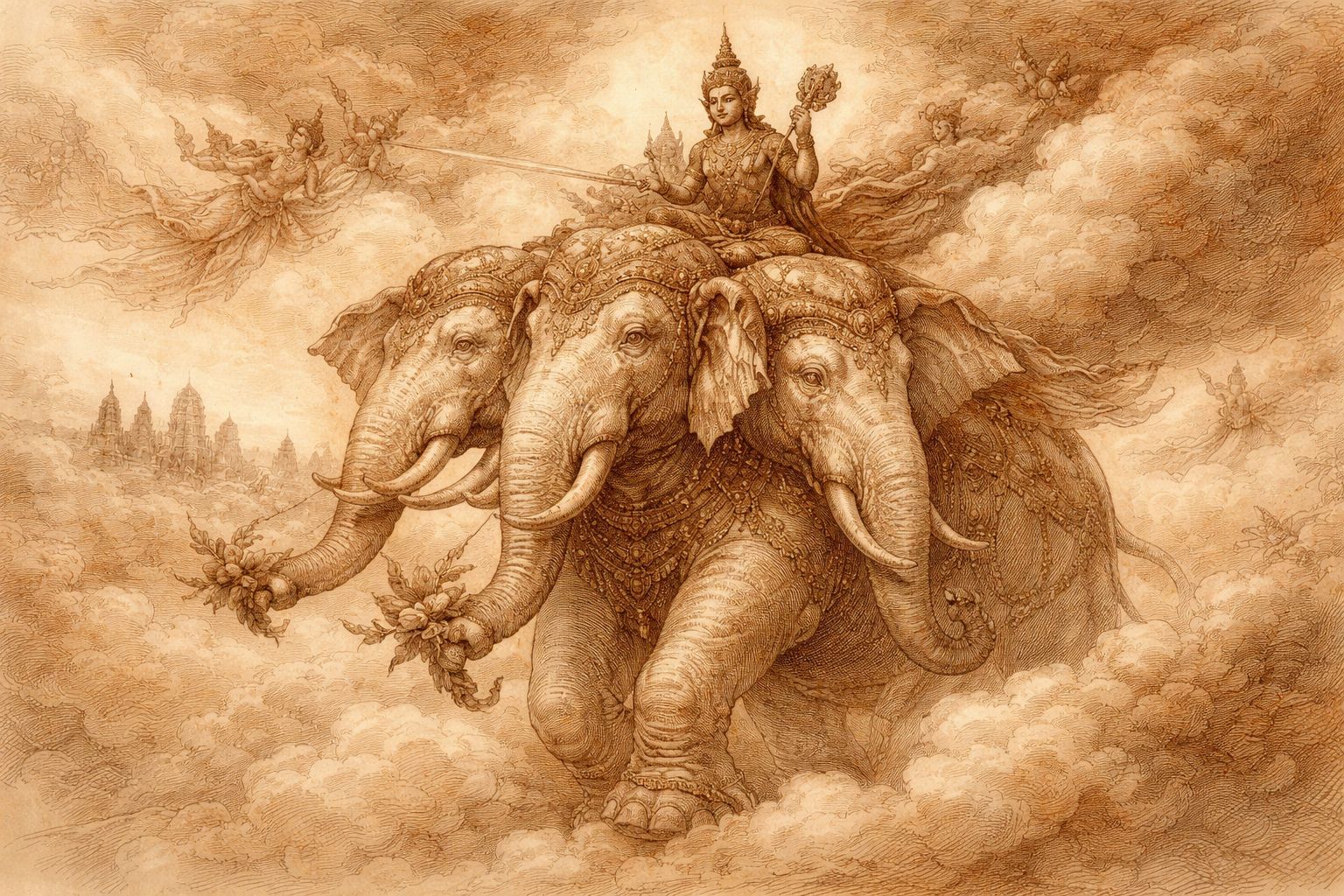

Airavata — The Cloud That Bears the King
Airavata is not merely Indra’s mount, but the sky made patient. In Angkor, he appears where rain is requested and authority restrained—three heads listening in different directions, white as gathered cloud. He teaches that power, like monsoon, must arrive slowly and depart without violence.
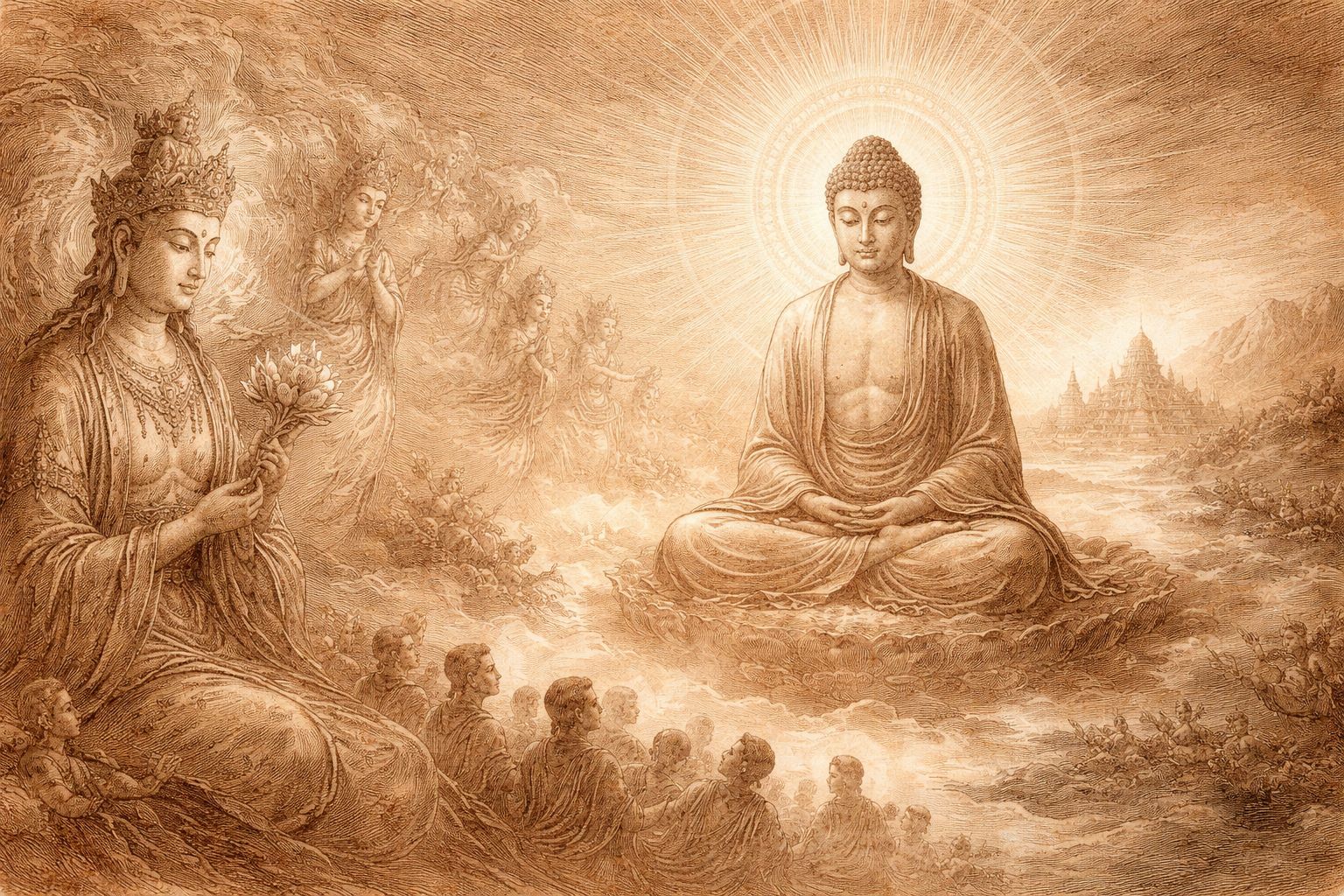

Amitabha — The Measureless Light That Waits
Amitabha does not rush to save the world. He waits, radiant and unmoving, while compassion travels outward on his behalf. For those who falter, who cannot finish the path by effort alone, his western light remains—quiet, measureless, and endlessly receptive.
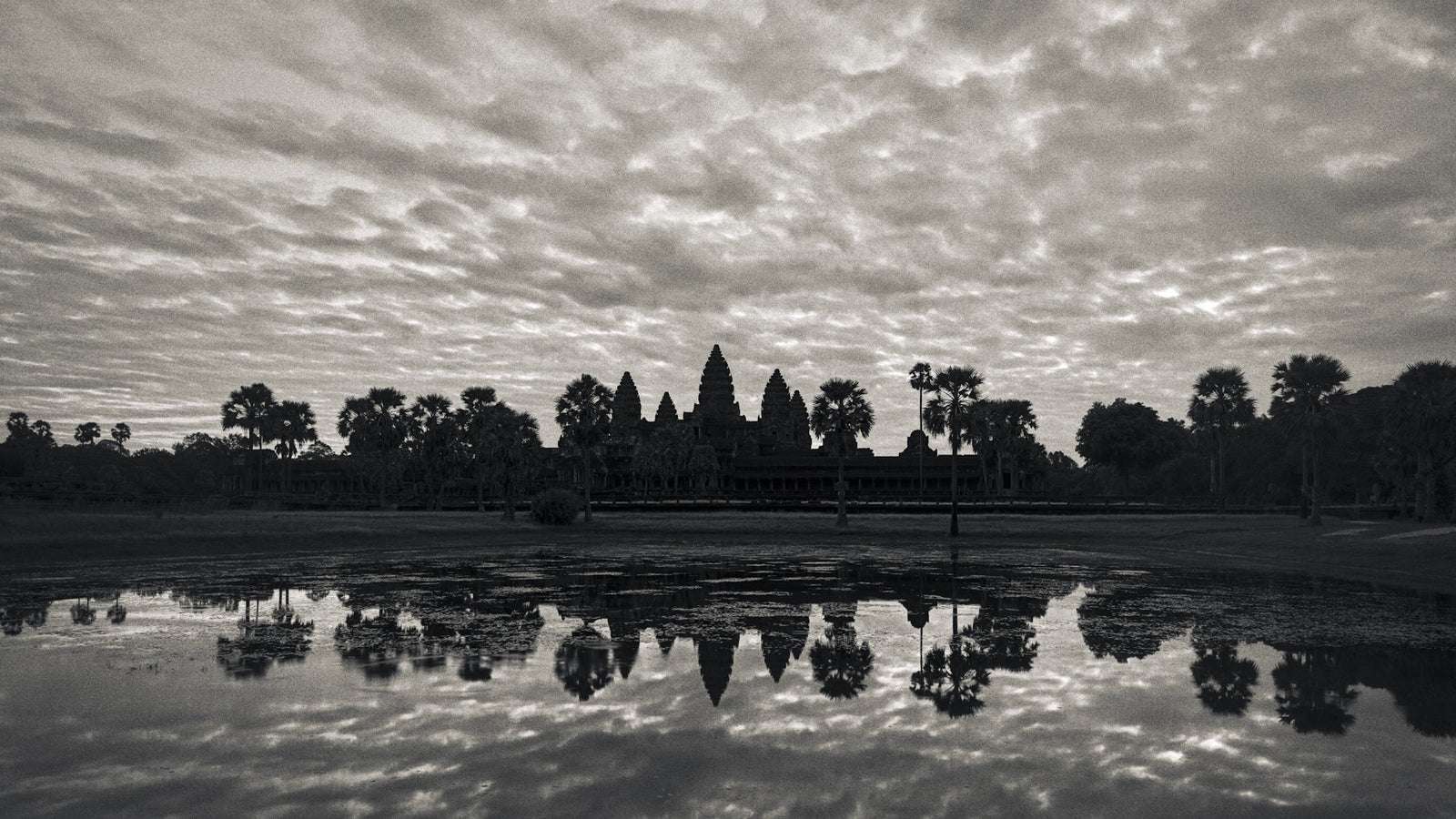

The Construction of Sacredness at Angkor Wat
Step beyond stone and shadow into a place where silence was carved with devotion. A temple not only built for gods—but made sacred by centuries of offering, story, and light. Let each breath lead you deeper into the mystery of how sacredness is born.
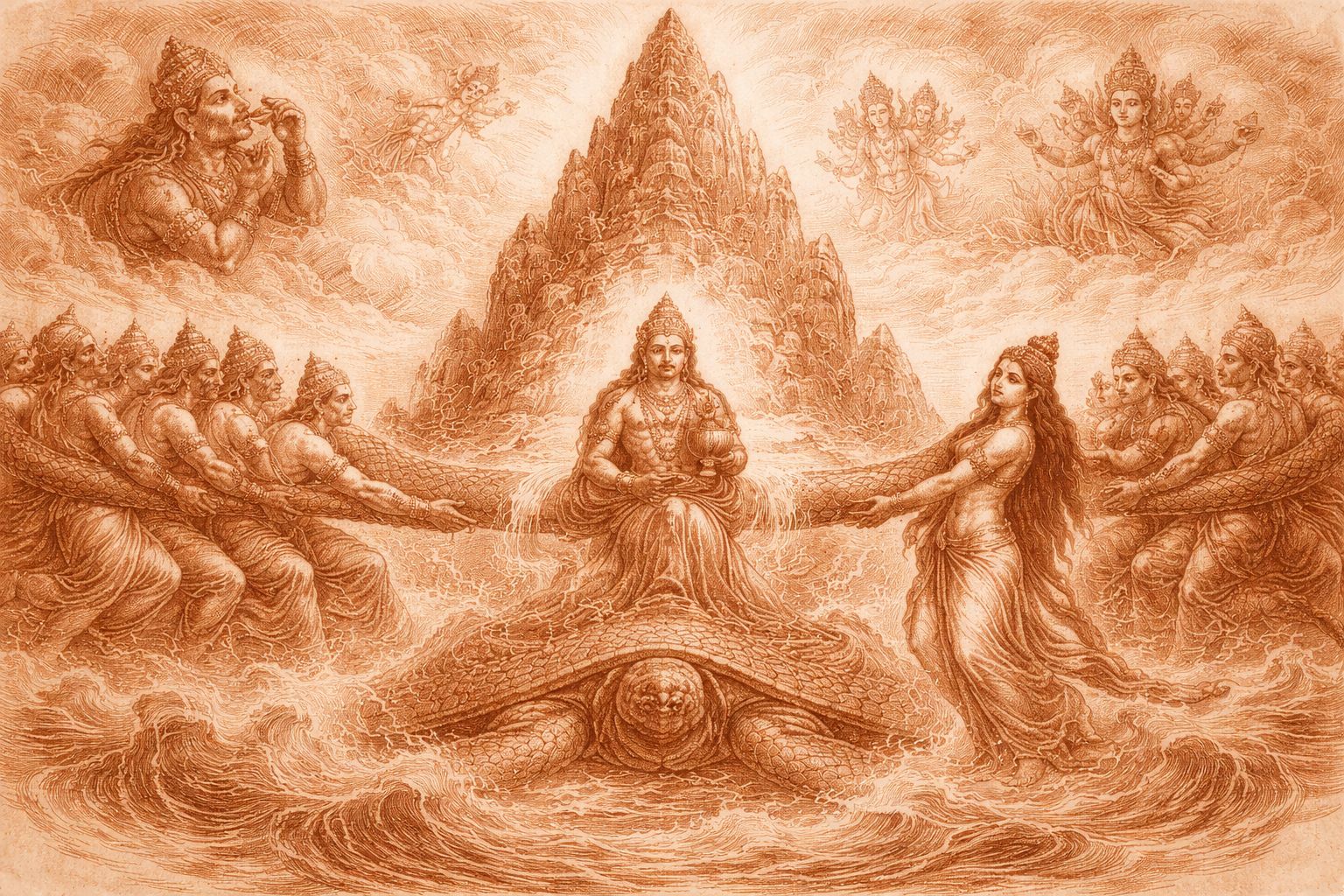

Amrita — The Nectar That Must Be Earned
Amrita is not a gift but a consequence. Drawn from the Ocean of Milk through strain, alliance, and risk, it grants immortality only to those aligned with cosmic order. Poison rises before nectar. The myth insists: vitality must be earned, stabilised, and rightly shared.
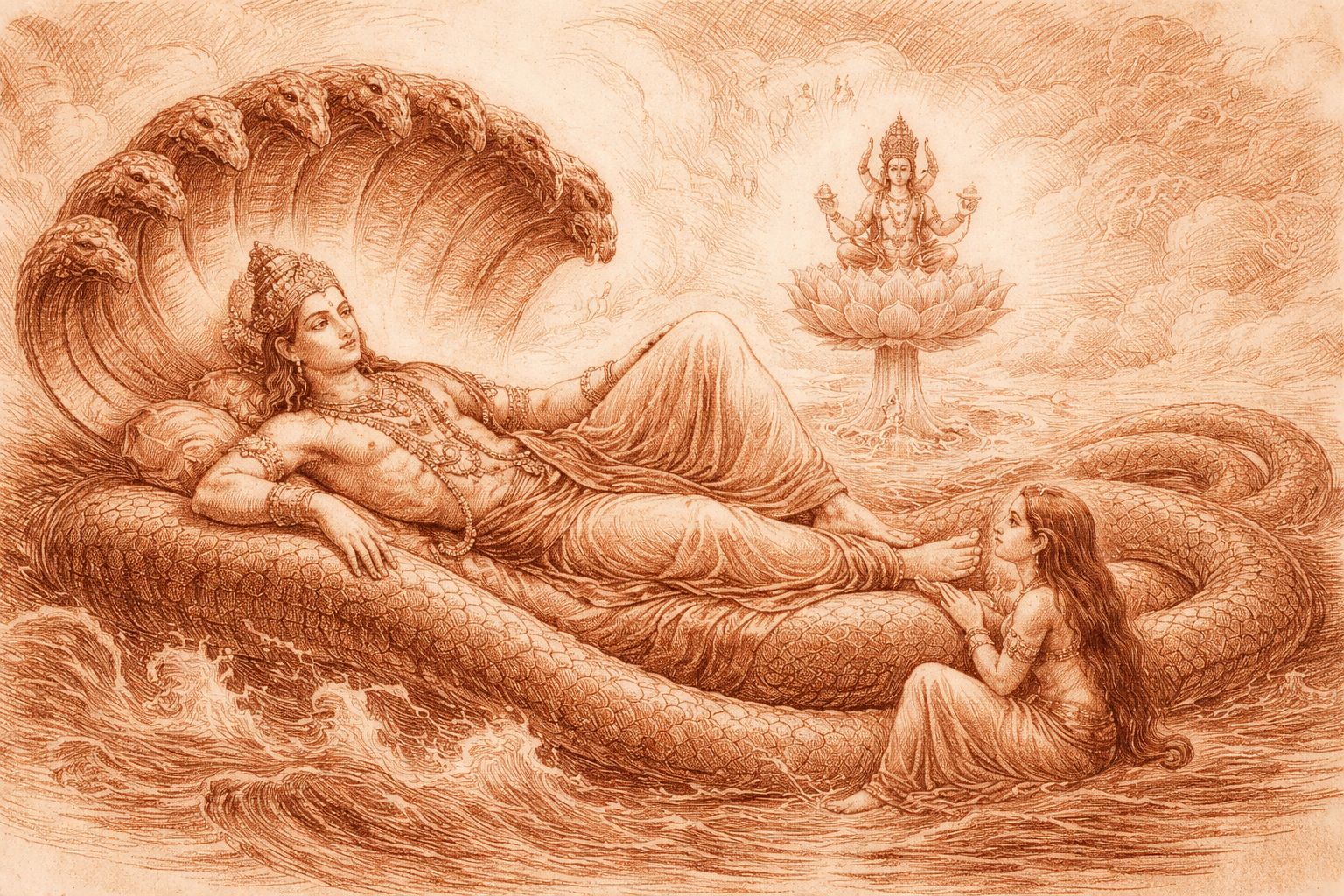

Ananta — The Serpent Who Remembers the World
Before creation takes form, something remains. Ananta, the Endless Serpent, floats upon the cosmic sea, carrying memory through dissolution. Upon his coils Vishnu sleeps, dreaming the next world into being. He is not power, but patience—the residue that ensures rebirth is always possible.
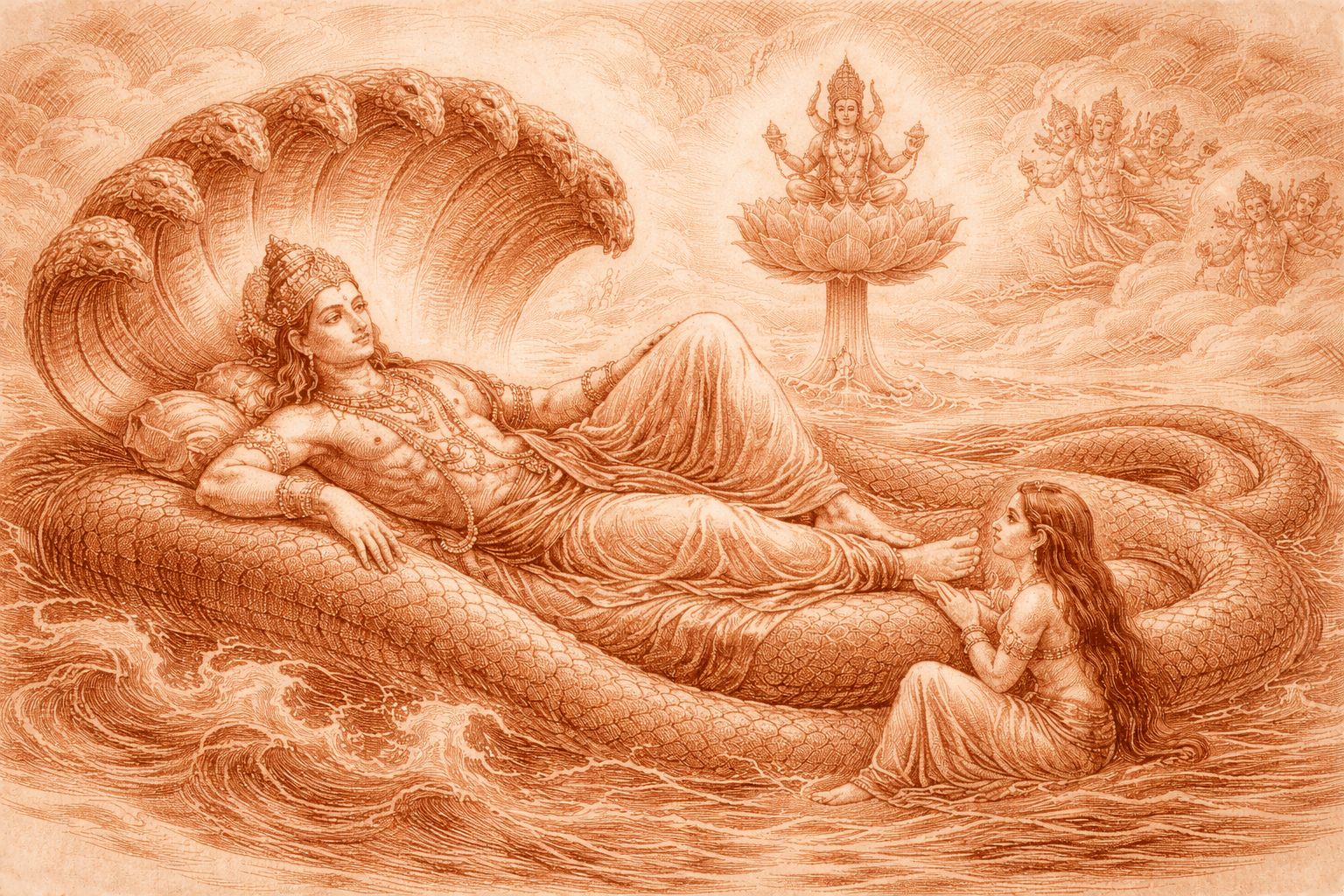

Anantasayin — Where the World Pauses to Be Remembered
Anantasayin depicts the universe at rest. Vishnu reclines upon the endless serpent Ananta, suspended on the Ocean of Milk between one world and the next. It is not sleep as absence, but as memory—creation held intact while time loosens and prepares to begin again.
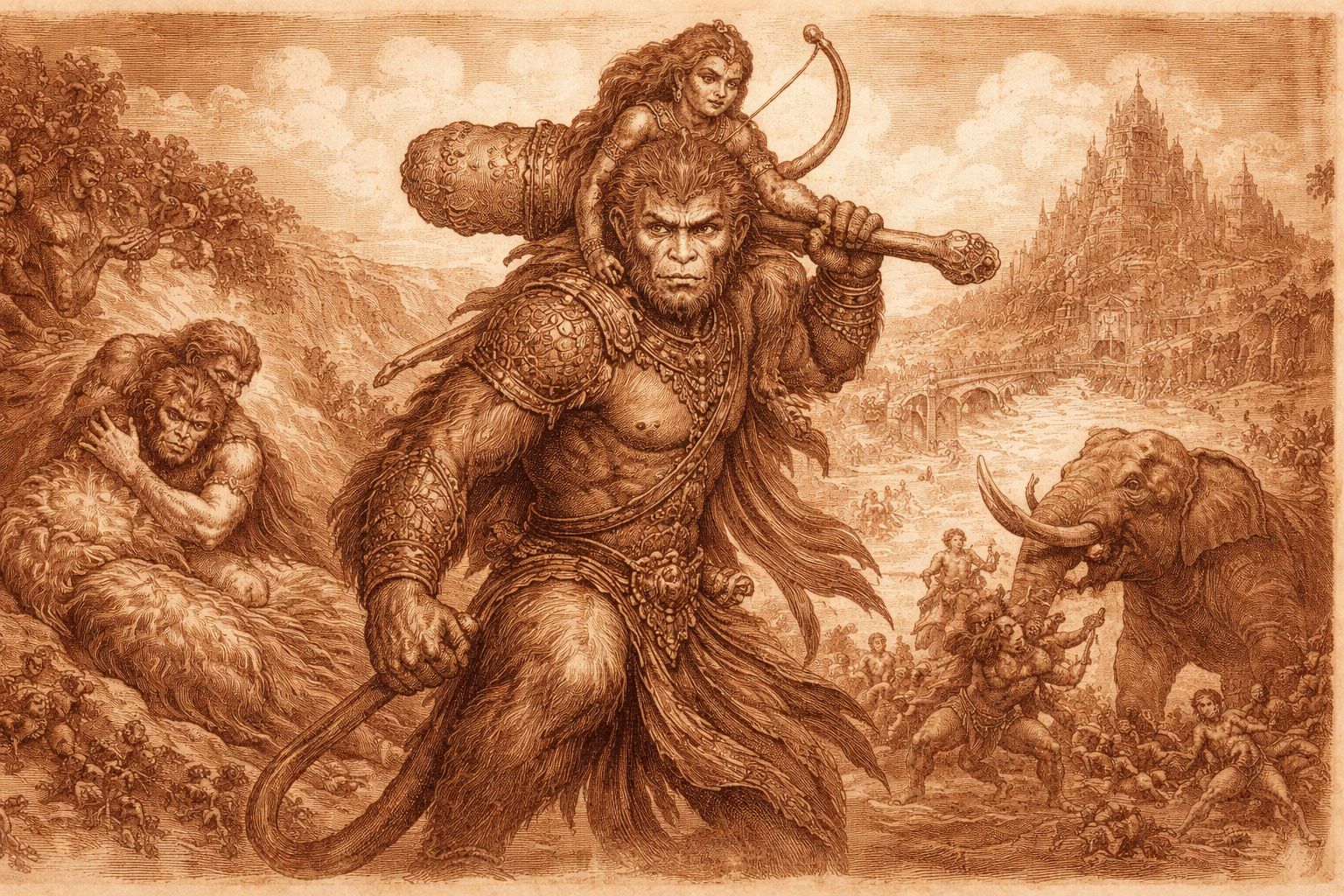

Angada — The Strength That Carries Forward
Angada does not claim the past; he carries it. Born into fracture, he becomes a living bridge—strength without resentment, loyalty without demand. In stone and story, he reminds us that the future often advances on the shoulders of those who ask nothing, yet bear everything.