
The Library gathers the written works of Lucas Varro — journals of the temples, mythic retellings, contemplative essays, poems, and volumes shaped by shadow, silence, and wonder. Here, words stand beside images as offerings: field notes from Angkor, meditations on sacred stone, old stories rekindled, and reflections carried beyond the visible world.
Within these shelves you will find many rooms: Angkor journals, myth and legend, apsara meditations, contemplative essays, poems, children’s mythic wonder, literary retellings, and quieter devotions of the page. Wander chronologically, enter by theme, or pass through one of the dedicated publication houses now gathered within the wider Library.
For those who wish to follow these paths further, several of these writings continue on Substack and in dedicated archive blogs: The Lantern Chronicles , where myth, legend, contemplative essays, poetry, and other imaginative works are carried onward; The House of Cadmus , where Greek myth and tragedy are reopened through inheritance, violence, fate, and recurrence; The Mytharium , where myth, Tolkien, fairy stories, and old literature are read and retold with seriousness; The Alexander Series , where A. M. Sharp retells Greek myths for children who want to be trusted by stories; and The Hospitable Dark , where A. M. Sharp offers literary myth retellings shaped by darkness, shelter, endurance, and return.
Library
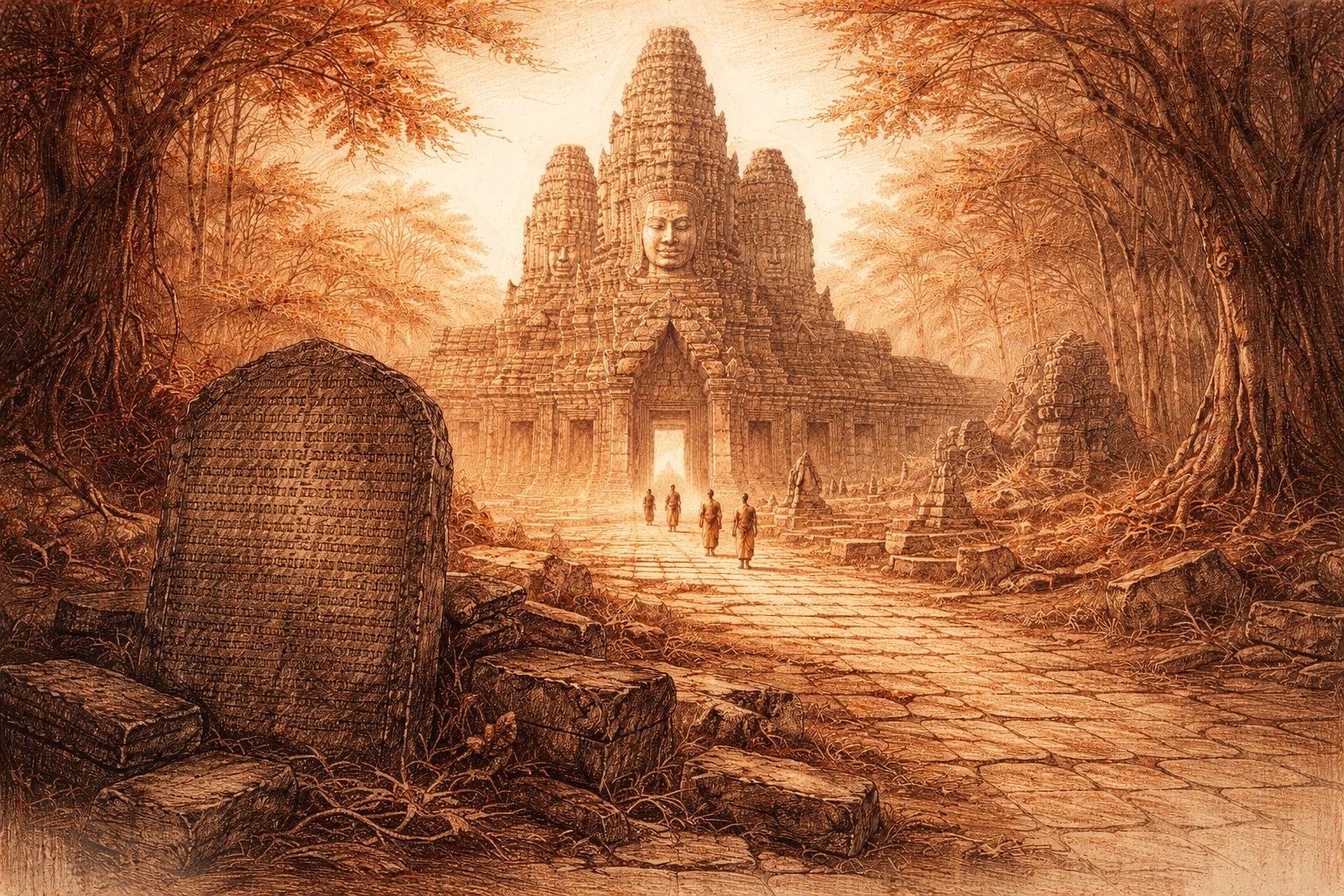

Jayavarman IX — The Last Inscription
Jayavarman IX rules at the edge of Angkor’s silence—the last king to speak in Sanskrit, the final voice cut into stone. His reign marks not collapse, but transition: from cosmic kingship to human continuity, from monument to monastery, from divine proclamation to quiet survival.
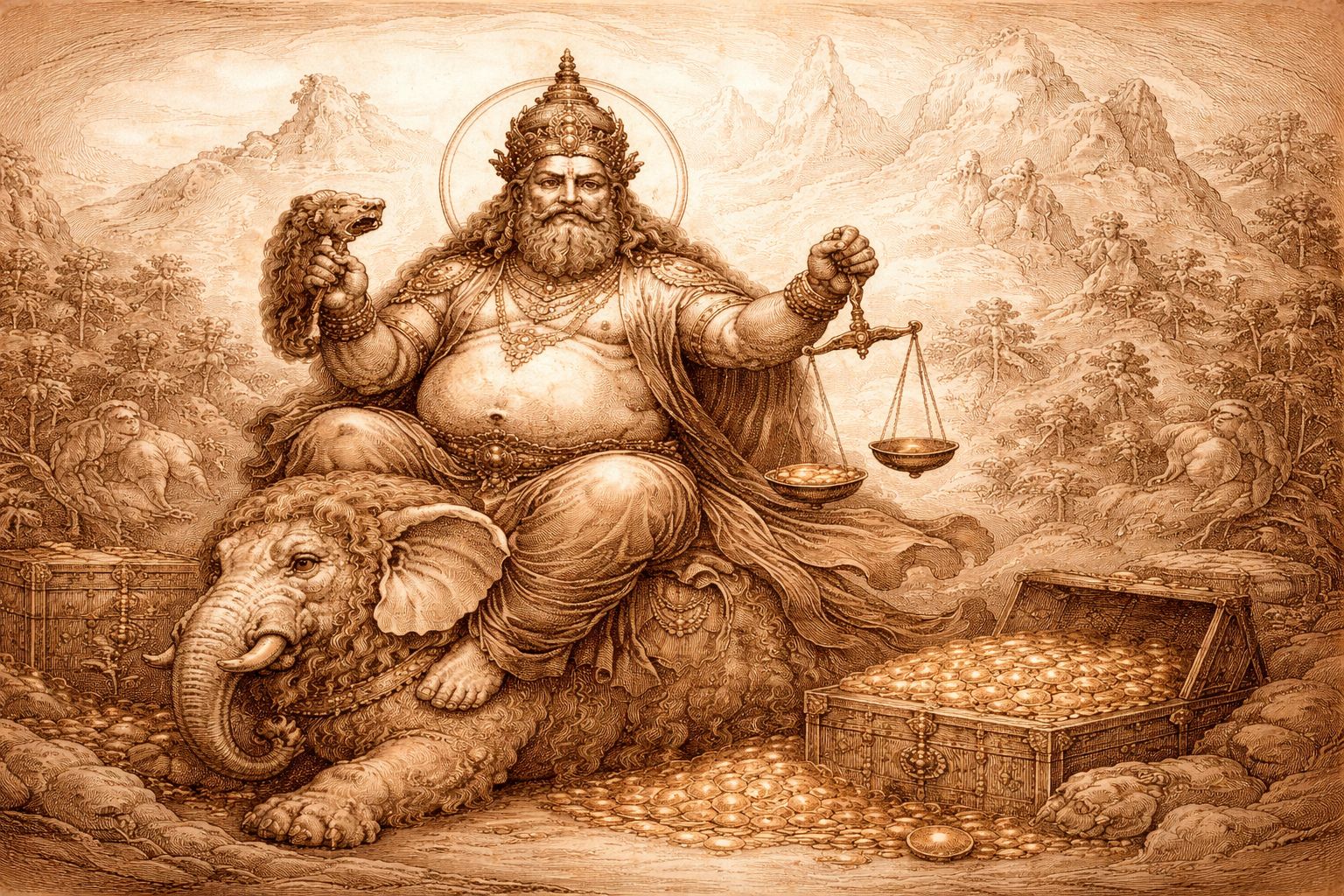

Kubera — The Measure of Wealth
Kubera does not offer abundance without consequence. His wealth bends the body, demands measure, and resists display. In the North, beneath mountain and root, he guards not riches but restraint—asking whether what we gather will be held with care, or allowed to distort the hand that grasps it.
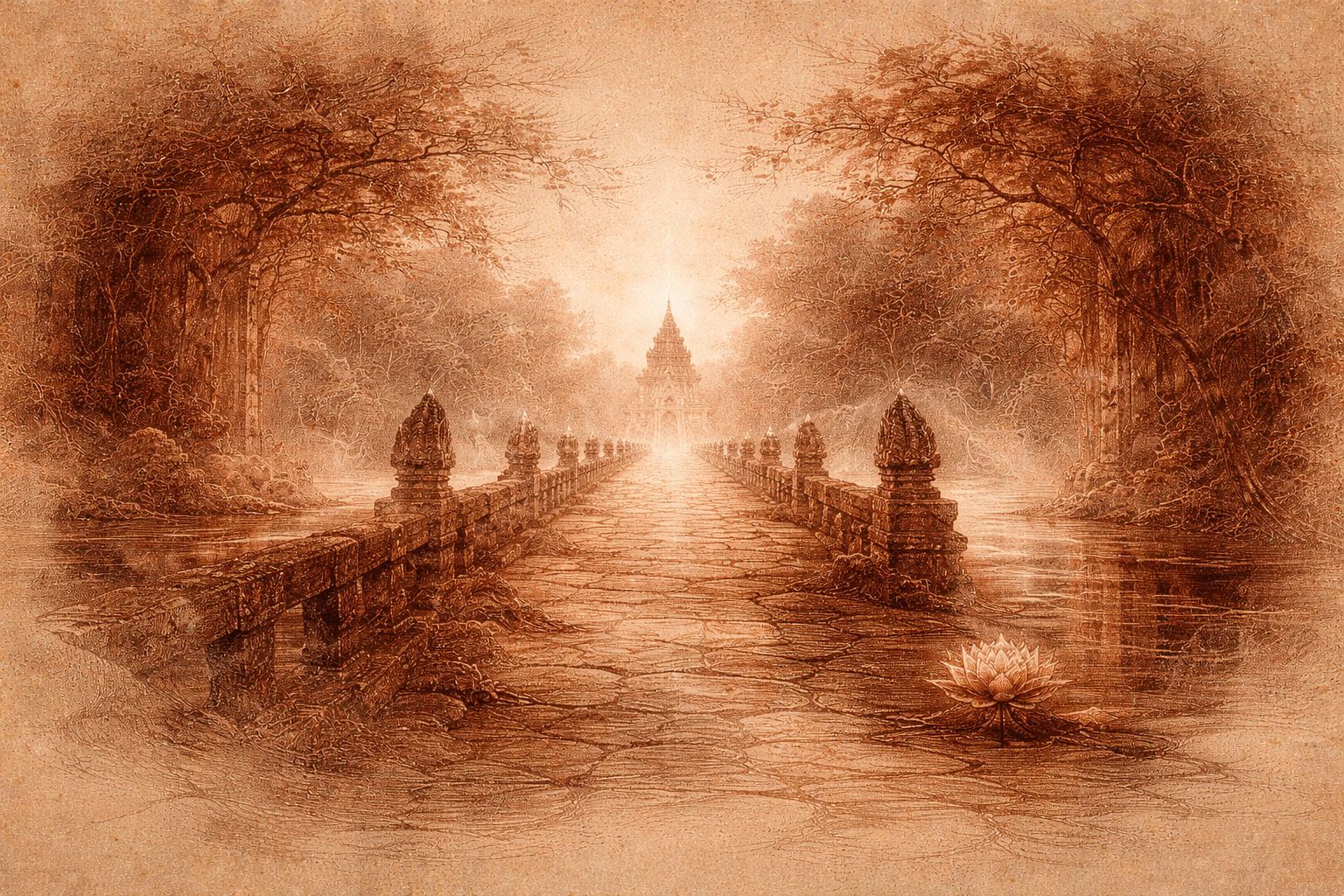

The Causeway, Remembered
This diptych listens to a causeway as remembered instruction. One poem enters the slowing; the other carries it away. What endures is not stone or water, but measure—how the body learned to wait, how breath changed pace, and how that learning persists, quietly resisting the speed of elsewhere.
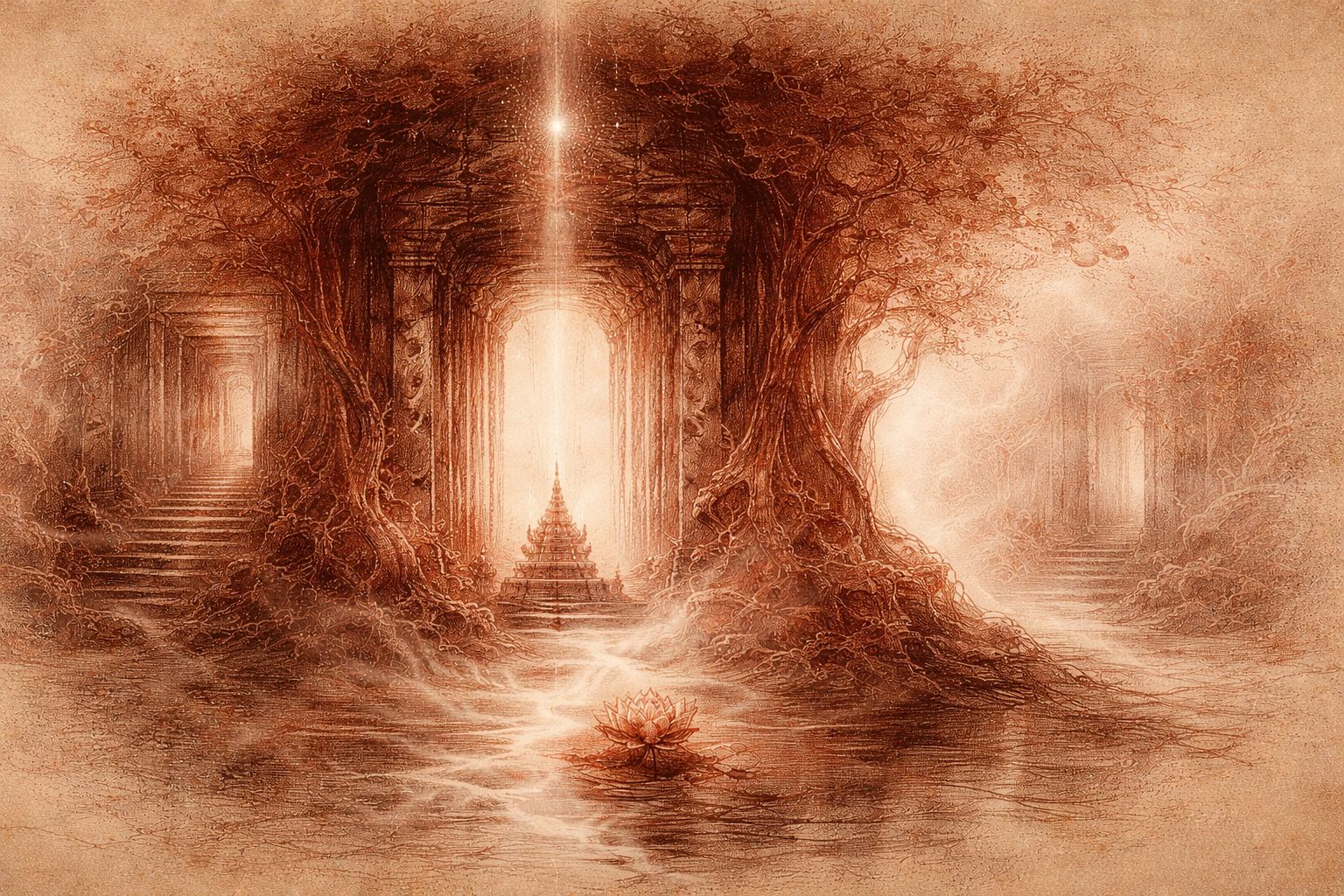

Before Seeing / After Leaving
Some places are entered before the body arrives
and remain standing after it leaves.
This diptych traces the arc of longing and consequence—what it means to be altered by a sacred place without spectacle. Before seeing, the desire to kneel. After leaving, the cost: a different measure of pace, attention, and care that does not fade on return.
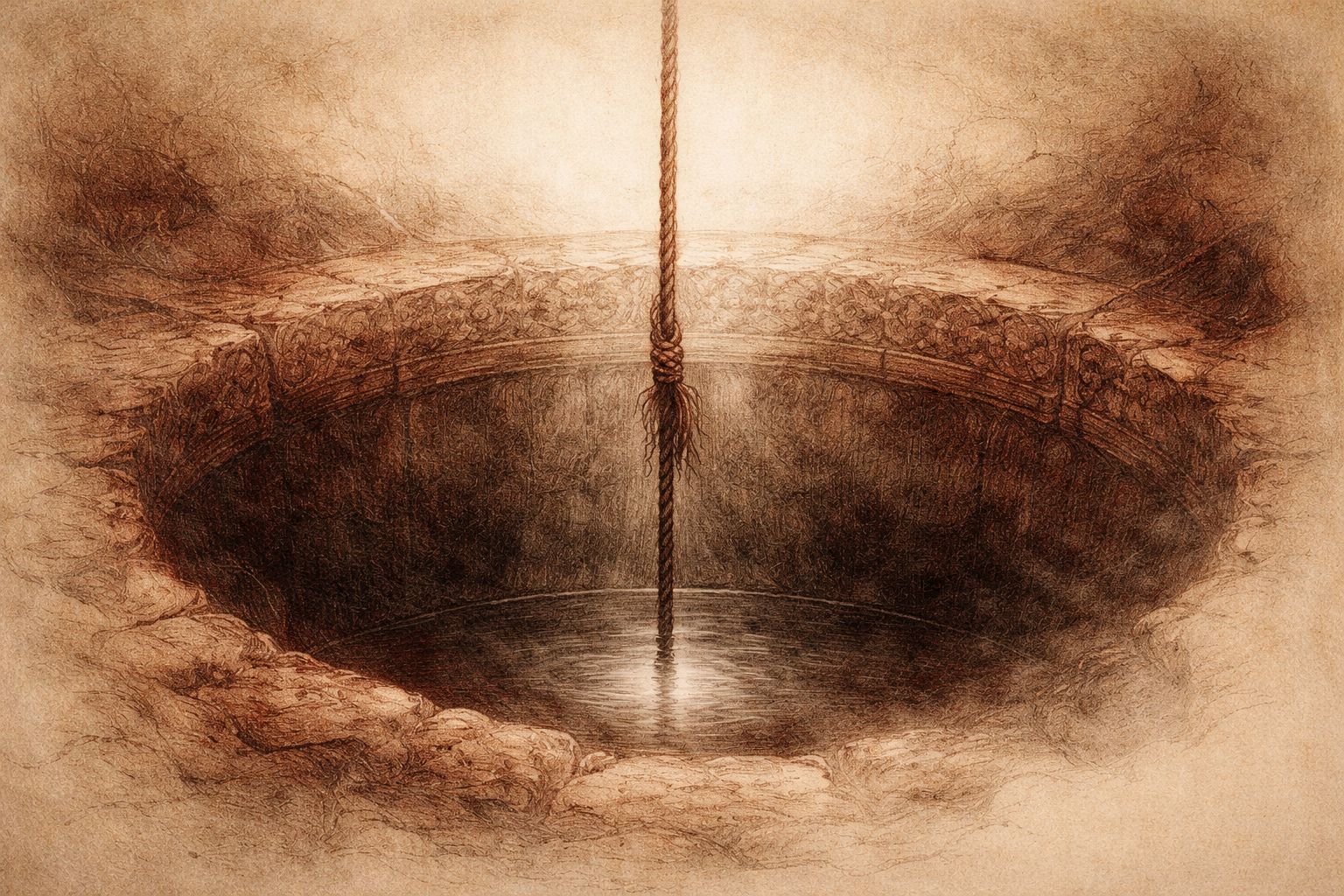

The Well
Some encounters do not announce themselves as fate.
They arrive as ordinary labour: a rope, a well, the burn of fibre on skin.
The Well was written to strip the divine of spectacle and return it to contact—to sound, temperature, weight. Nothing is explained. Nothing is promised. What matters is what the body learns before language arrives.
This is a poem about calibration rather than loss: how a single moment can permanently alter what the body knows it cannot keep. Not memory. Not grief. A quieter knowledge, held in the hands.
Some mornings, the air still thins.
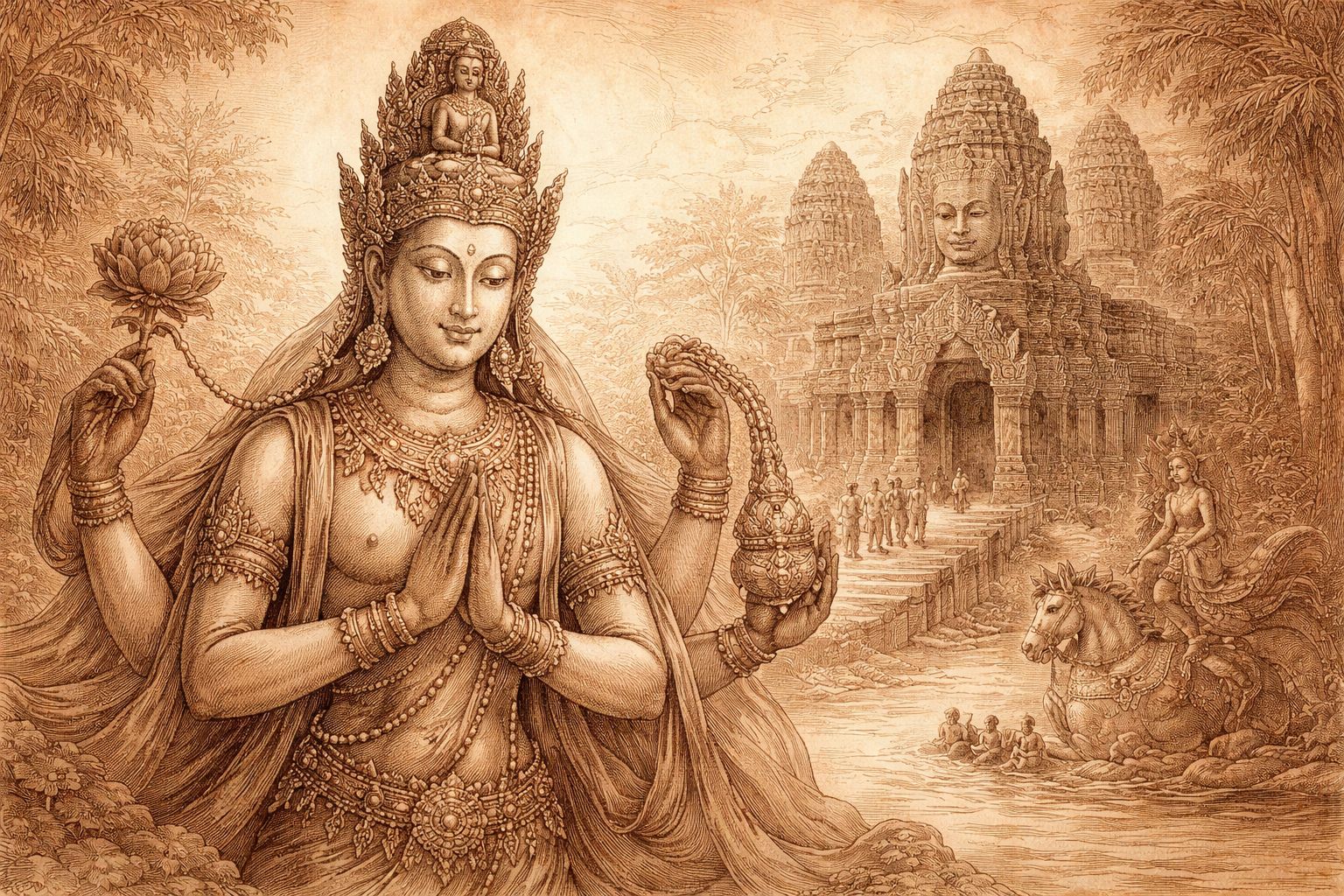

Lokeshvara — The One Who Hears the World
Lokeshvara stands at the edge of release and chooses to remain. With a thousand hands and many listening heads, he does not save the world from afar—he stays within it, bearing its cries. In Angkor, compassion became architecture, policy, and vow, carved into stone and water.
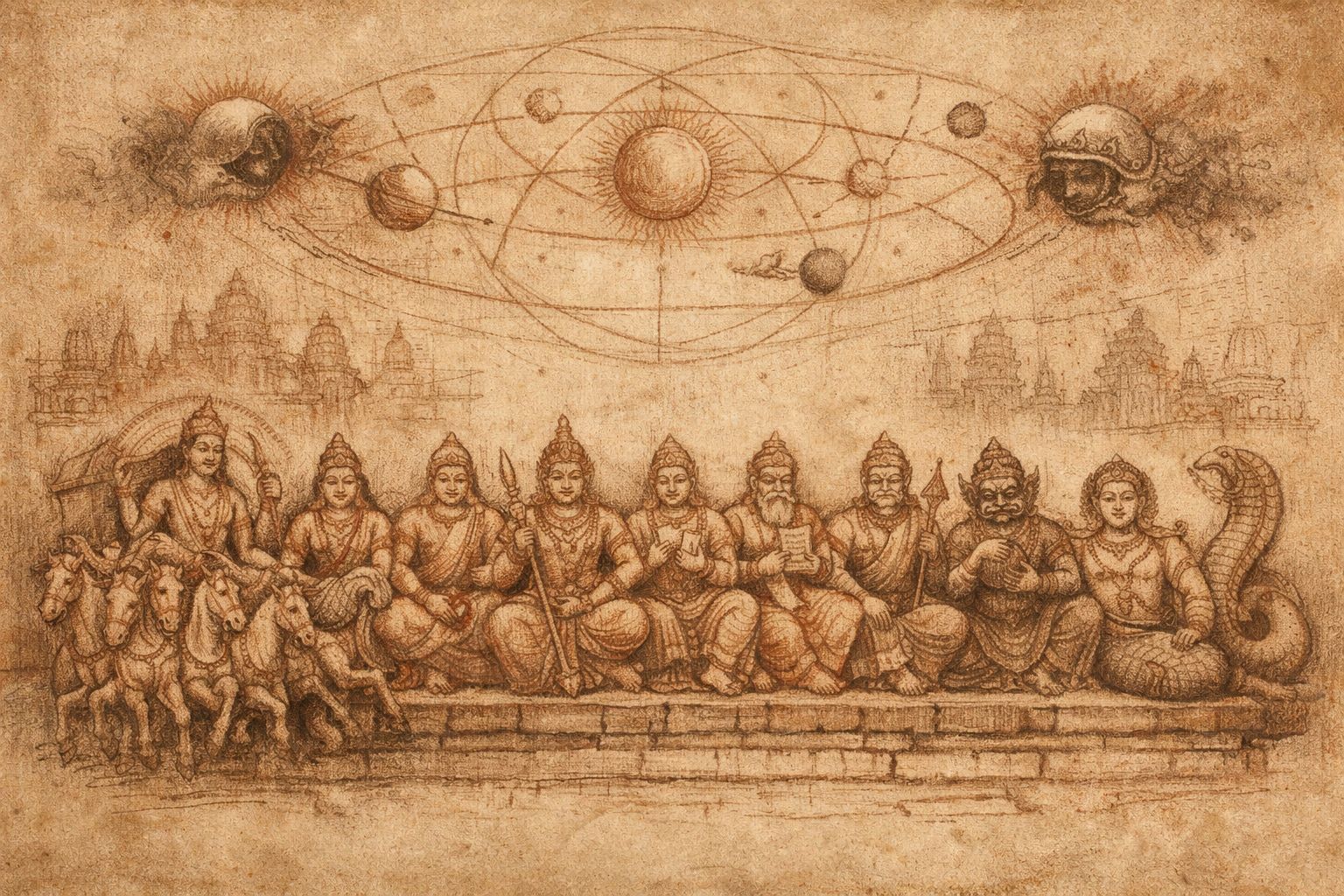

Navagraha
The Navagraha are not decorative gods but regulators of time. This essay explores how nine celestial forces—sun, moon, planets, and eclipses—shaped Khmer ritual, architecture, and action, teaching that harmony depends not on belief alone, but on meeting the universe at the correct moment.
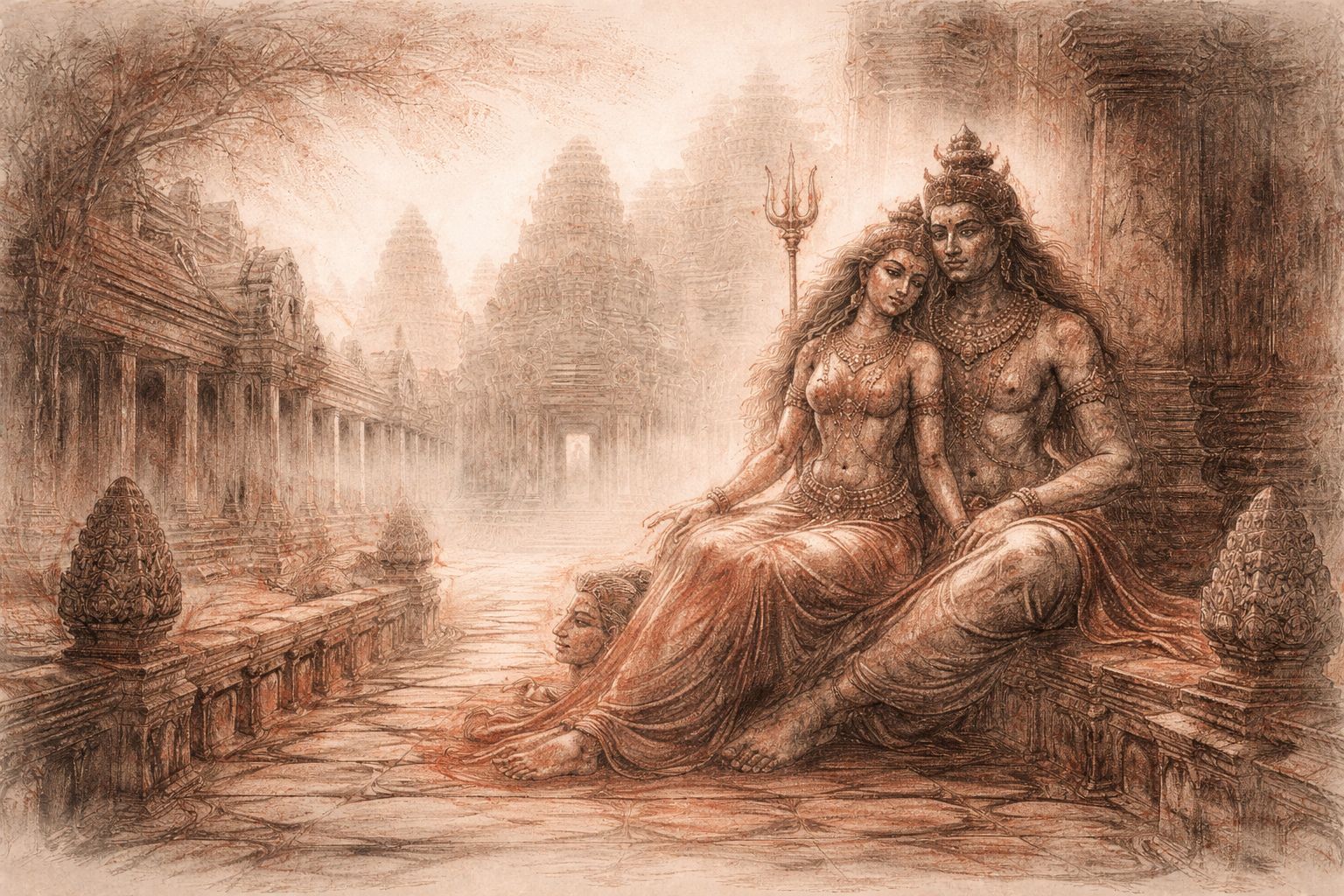

Parvati in Angkor: Presence, Continuity, and Held Power
Parvati does not interrupt; she gathers. In Angkor she appears as sustained presence, not force—shakti held close, patient, exacting. She returns withdrawal to relation, stillness to continuity. Without her weight, the figure collapses inward. With her, balance becomes possible, and endurance learns how to remain alive.
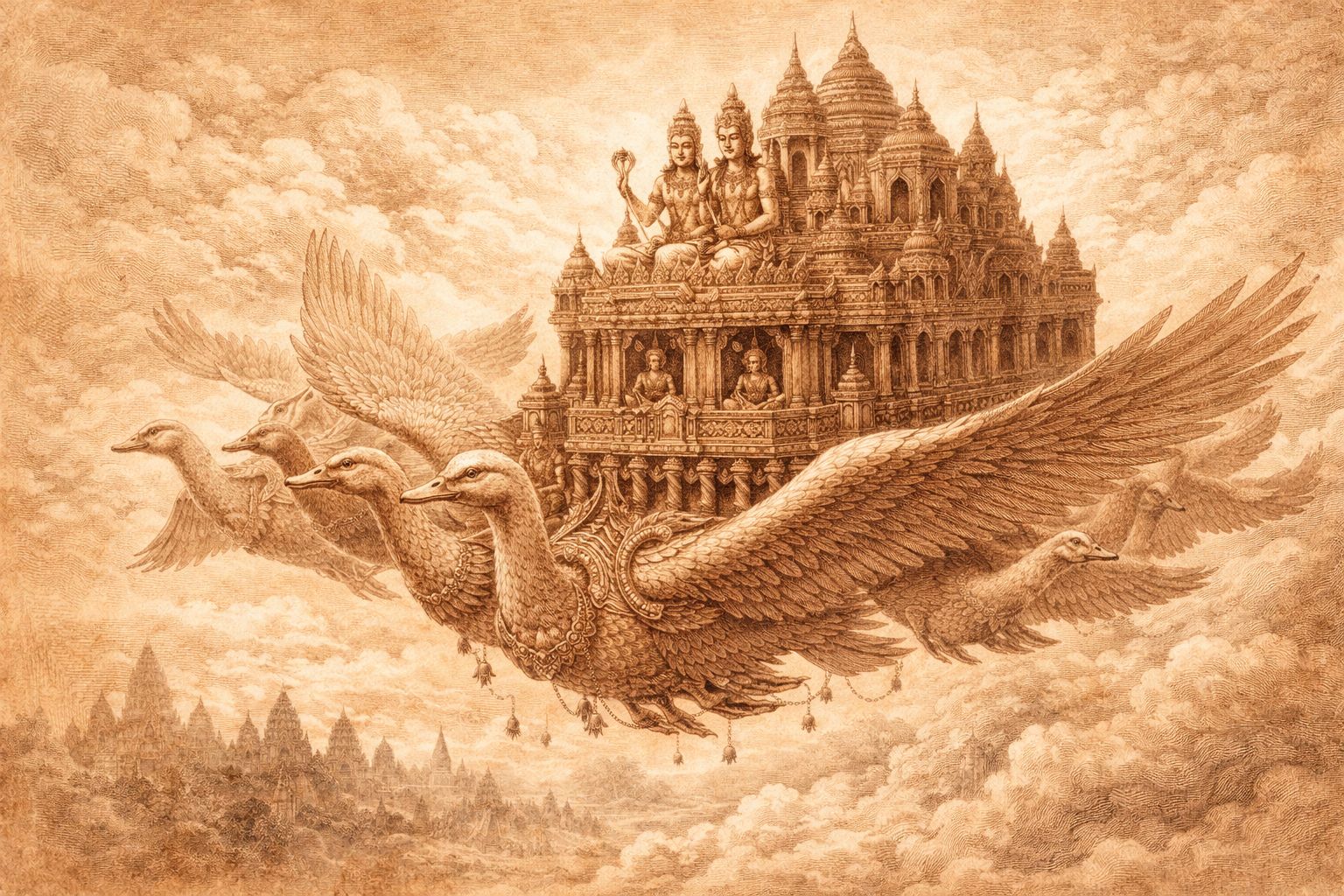

Pushpaka — The Palace That Learned to Fly
Pushpaka is a palace that learns to move without forgetting its purpose. Stolen, it becomes splendour without ethics; restored, it becomes justice in flight. Carried by hamsas, it teaches Angkor that power is not proved by ascent, but by the manner of return.
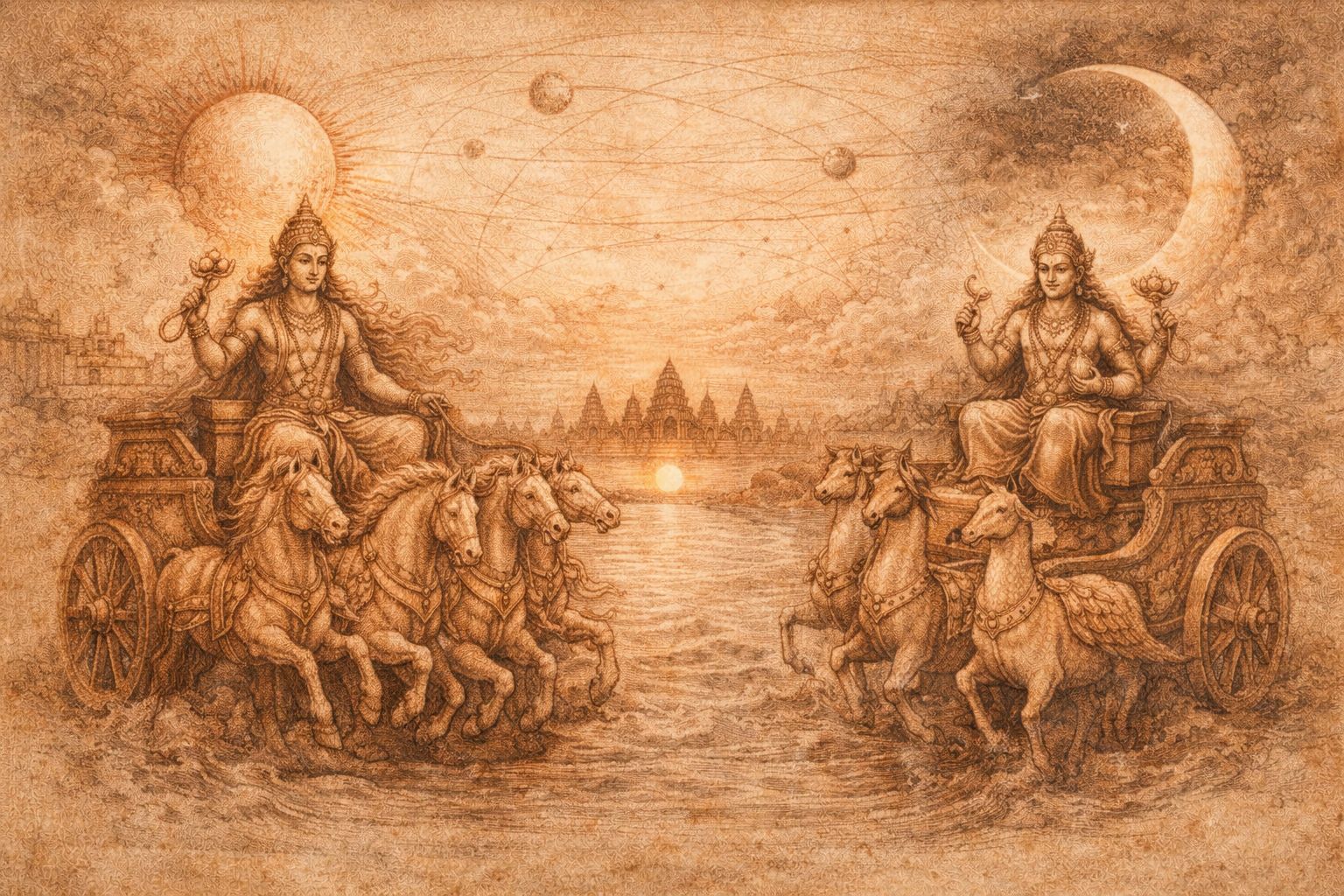

Surya and Chandra
Surya and Chandra are not opposites but measures—sun and moon regulating the breath of the world. This essay reflects on order and restoration, light and return, tracing how ancient cosmology understood time as a delicate calibration, enacted not only in myth but in the lived geometry of sacred architecture.
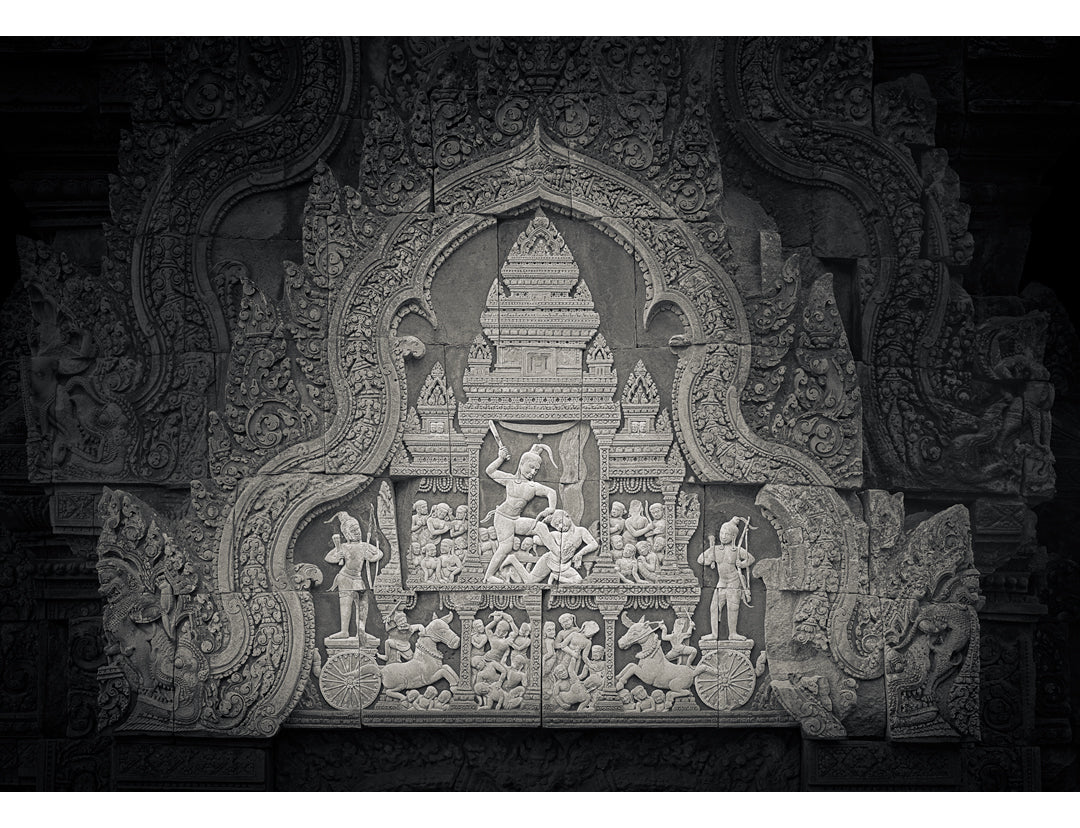

Tympanum
A tympanum is a pause in stone—a held breath above the doorway where meaning gathers before entry. This essay reflects on how sacred architecture uses this charged surface to train posture and attention, turning thresholds into moments of orientation where image, myth, and belief quietly converge.
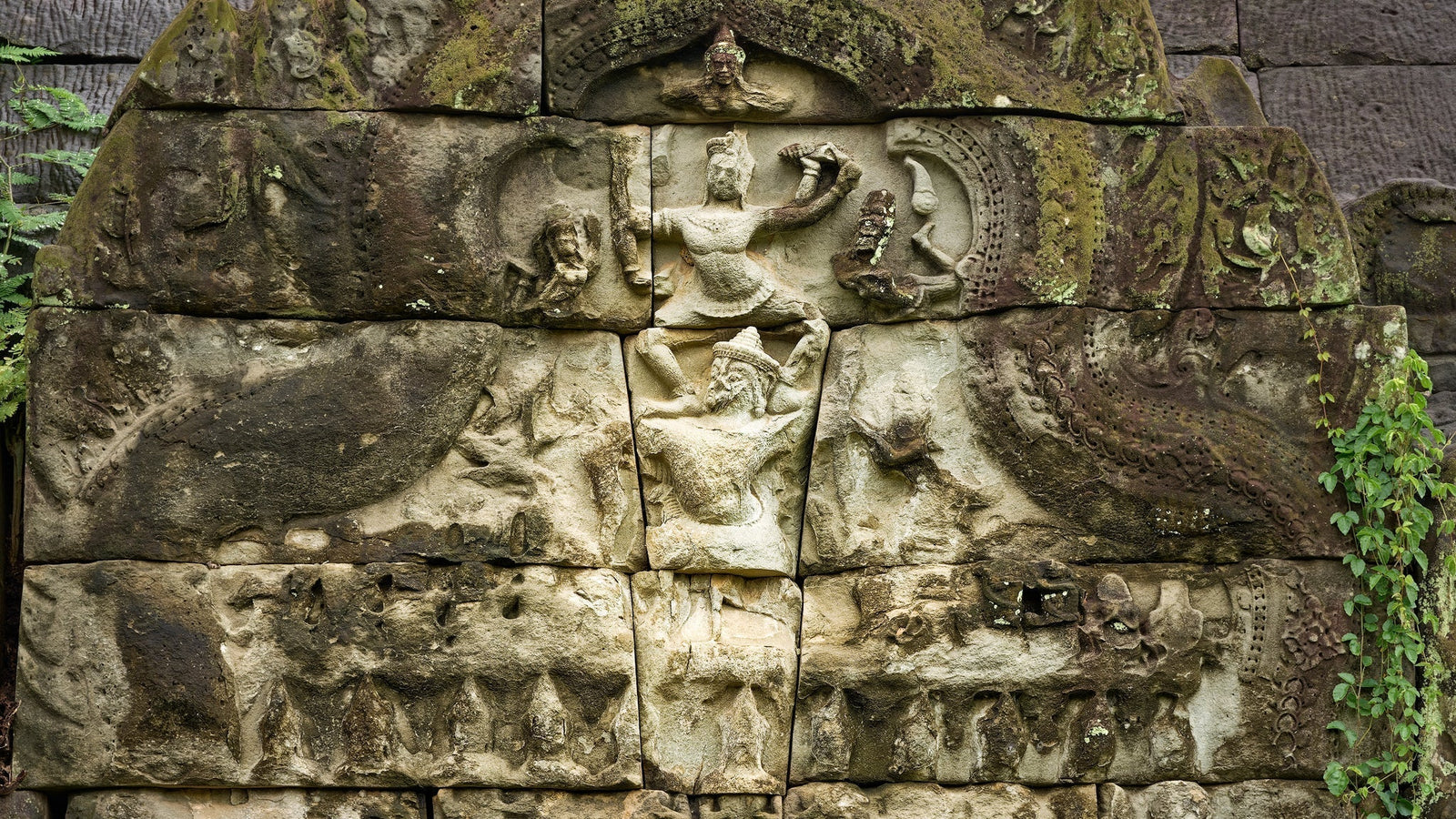

Vahanas — When the Gods Learned to Walk
At Angkor, the gods do not arrive alone. Beneath their thrones, animals wait—alert, grounded, precise. Vahanas are not symbols but translations: divine force rendered into claw, wing, and weight. Even broken statues speak clearly when the animal remains, holding identity steady against time.

Varuna
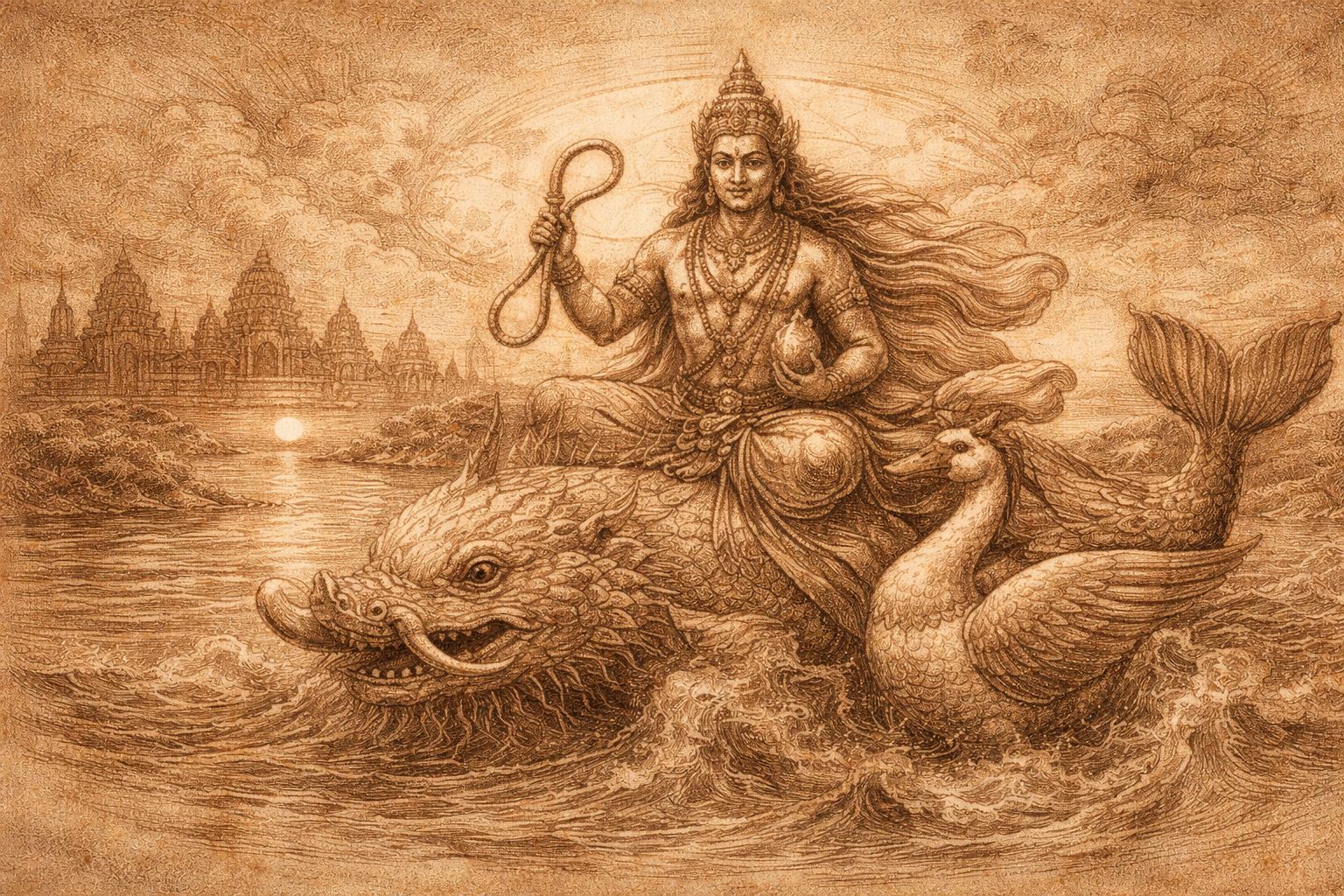
Varuna is not a god of thunder but of watching. This essay explores the Vedic guardian of order and waters as sky-king, judge, and western sentinel—binding truth, time, and morality into a quiet discipline that Khmer temples carved into boundary, flow, and stone.

The Vedic Gods — Voices Before Stone
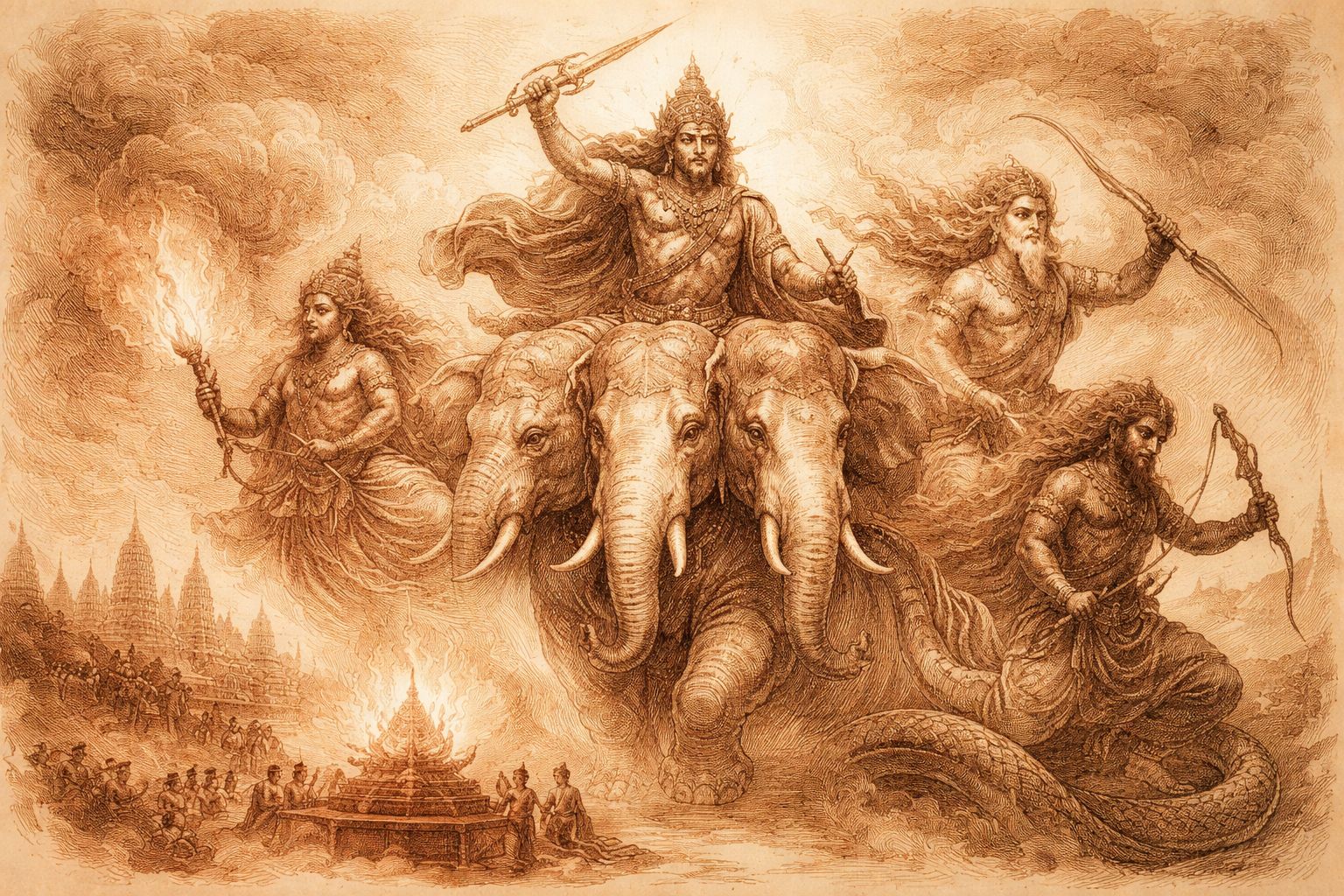
Before temples learned to hold silence, the gods arrived as weather. Fire carried prayer. Storms ruled kingship. In the Vedic world, divinity was not housed but invoked—spoken into wind, flame, and rain. These ancient gods did not vanish at Angkor; they were reorganised, disciplined, and set to guard space itself.

Yama — The Weight That Balances
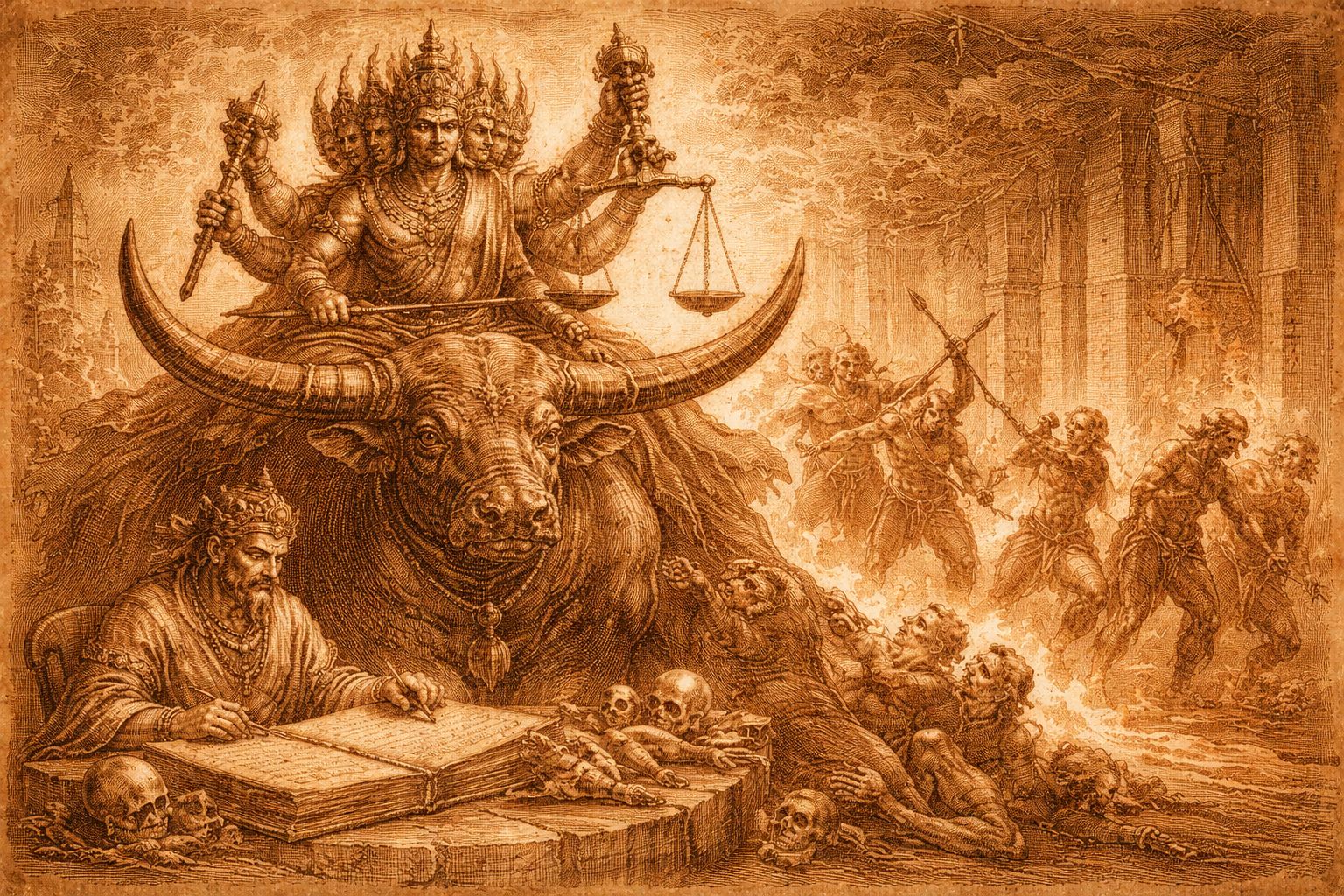
Yama does not threaten; he weighs. Seated on his buffalo, ledger open, he reads what life has already written. At Angkor, death is not annihilation but accounting—an adjustment of balance before return. Nothing is erased. Everything is placed.