
The Library gathers the written works of Lucas Varro — journals of the temples, mythic retellings, contemplative essays, poems, and volumes shaped by shadow, silence, and wonder. Here, words stand beside images as offerings: field notes from Angkor, meditations on sacred stone, old stories rekindled, and reflections carried beyond the visible world.
Within these shelves you will find many rooms: Angkor journals, myth and legend, apsara meditations, contemplative essays, poems, children’s mythic wonder, literary retellings, and quieter devotions of the page. Wander chronologically, enter by theme, or pass through one of the dedicated publication houses now gathered within the wider Library.
For those who wish to follow these paths further, several of these writings continue on Substack and in dedicated archive blogs: The Lantern Chronicles , where myth, legend, contemplative essays, poetry, and other imaginative works are carried onward; The House of Cadmus , where Greek myth and tragedy are reopened through inheritance, violence, fate, and recurrence; The Mytharium , where myth, Tolkien, fairy stories, and old literature are read and retold with seriousness; The Alexander Series , where A. M. Sharp retells Greek myths for children who want to be trusted by stories; and The Hospitable Dark , where A. M. Sharp offers literary myth retellings shaped by darkness, shelter, endurance, and return.
Library
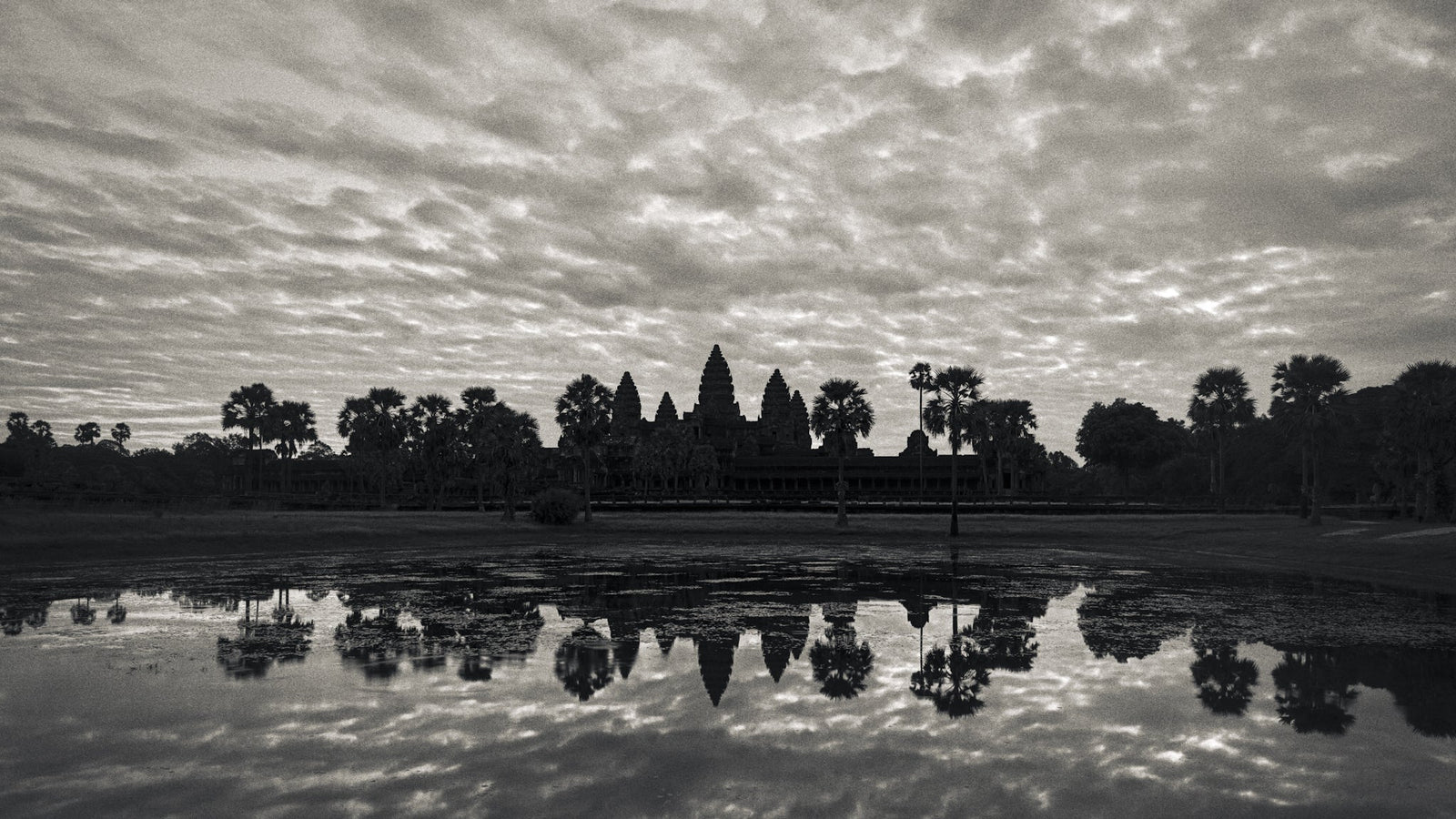

The Construction of Sacredness at Angkor Wat
Step beyond stone and shadow into a place where silence was carved with devotion. A temple not only built for gods—but made sacred by centuries of offering, story, and light. Let each breath lead you deeper into the mystery of how sacredness is born.
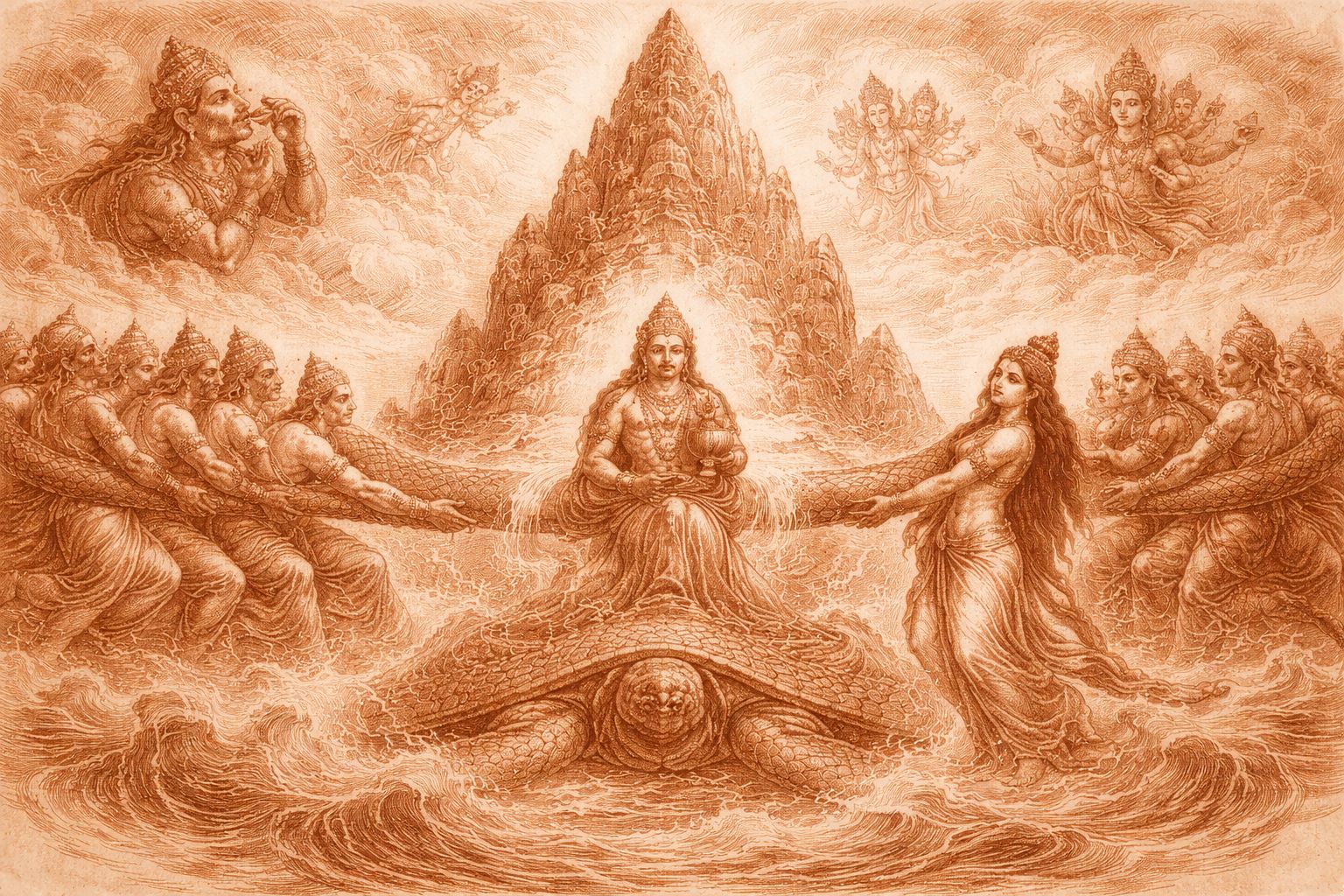

Amrita — The Nectar That Must Be Earned
Amrita is not a gift but a consequence. Drawn from the Ocean of Milk through strain, alliance, and risk, it grants immortality only to those aligned with cosmic order. Poison rises before nectar. The myth insists: vitality must be earned, stabilised, and rightly shared.
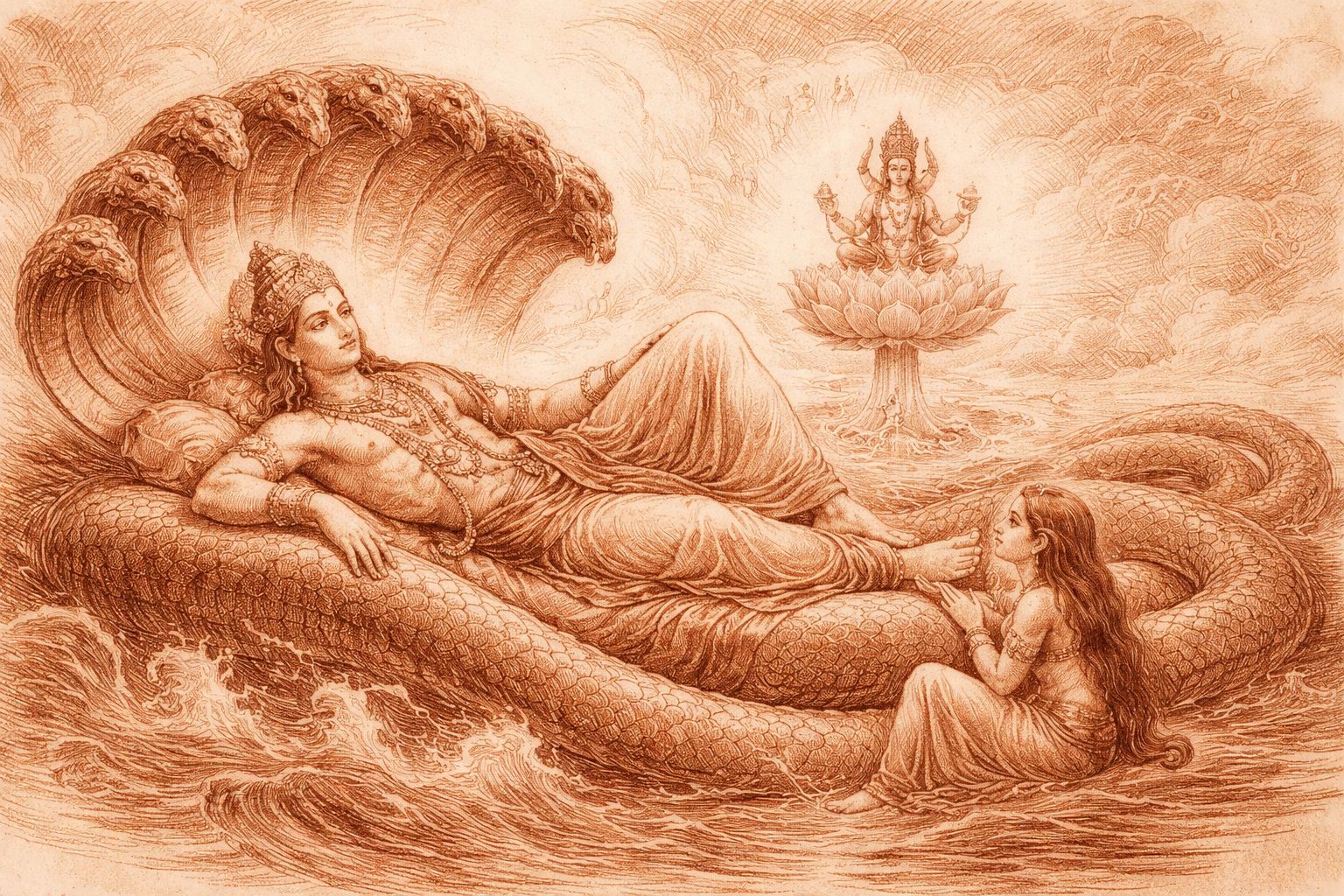

Ananta — The Serpent Who Remembers the World
Before creation takes form, something remains. Ananta, the Endless Serpent, floats upon the cosmic sea, carrying memory through dissolution. Upon his coils Vishnu sleeps, dreaming the next world into being. He is not power, but patience—the residue that ensures rebirth is always possible.
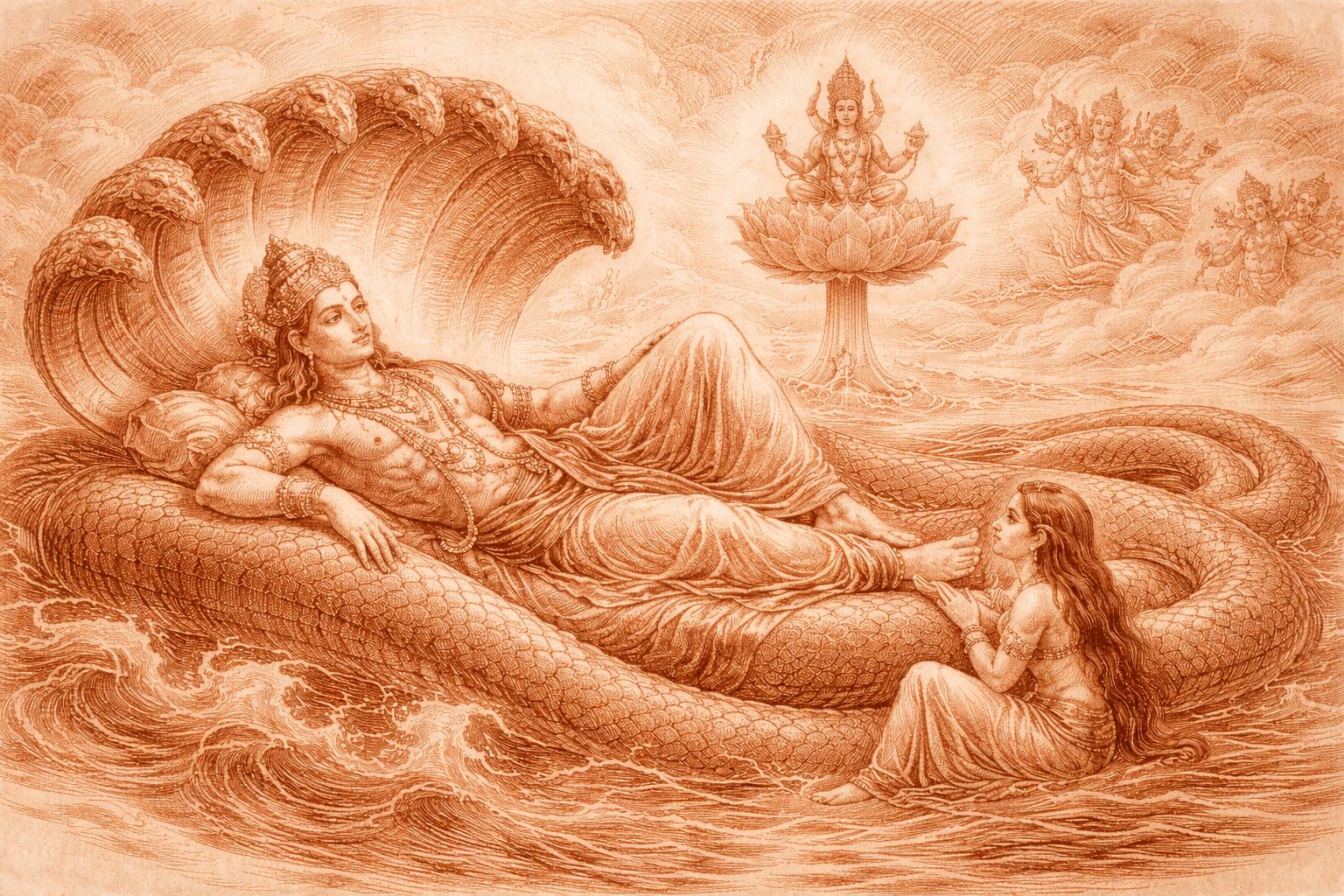

Anantasayin — Where the World Pauses to Be Remembered
Anantasayin depicts the universe at rest. Vishnu reclines upon the endless serpent Ananta, suspended on the Ocean of Milk between one world and the next. It is not sleep as absence, but as memory—creation held intact while time loosens and prepares to begin again.

Angada — The Strength That Carries Forward
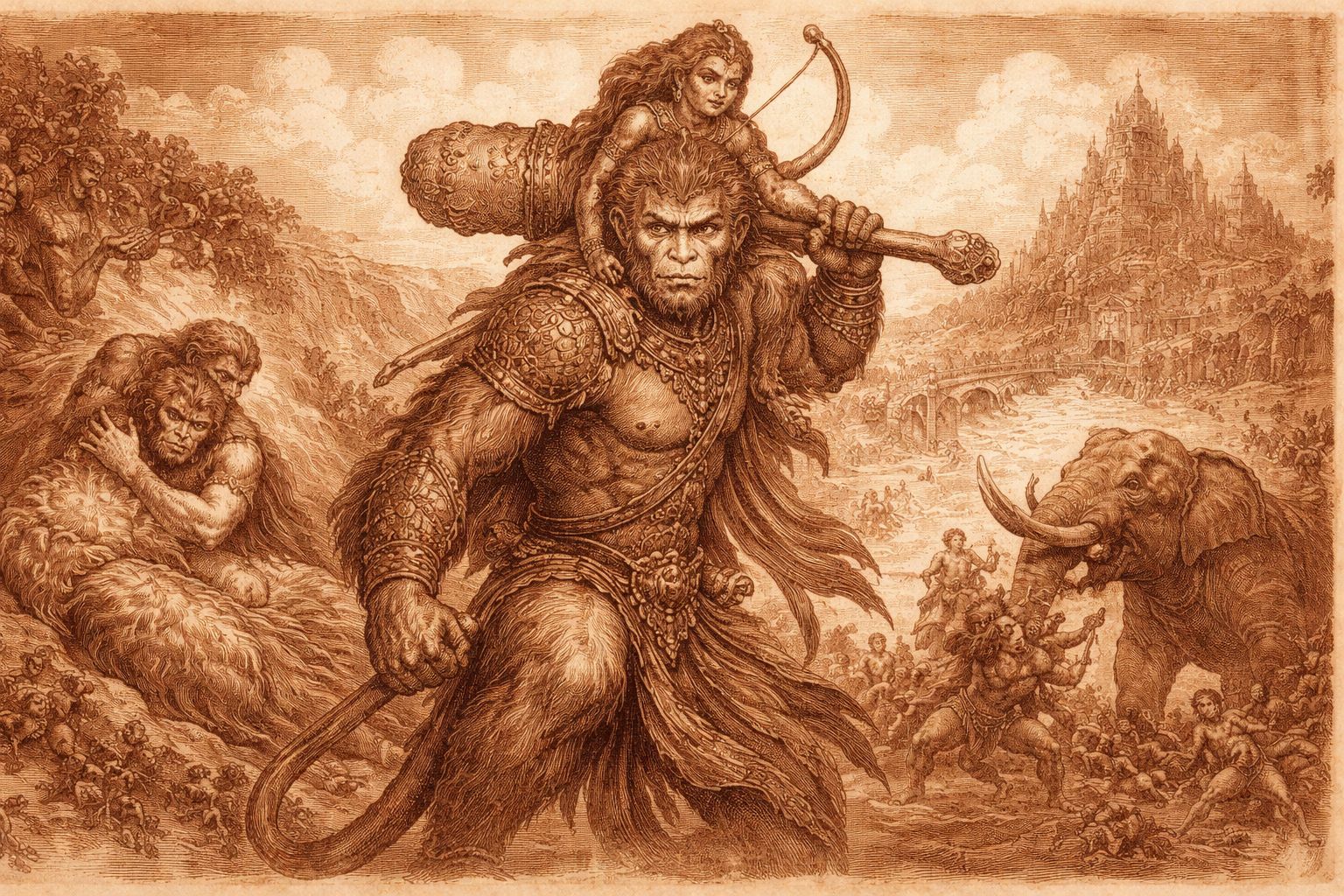
Angada does not claim the past; he carries it. Born into fracture, he becomes a living bridge—strength without resentment, loyalty without demand. In stone and story, he reminds us that the future often advances on the shoulders of those who ask nothing, yet bear everything.

Angkor — A City That Learned to Listen
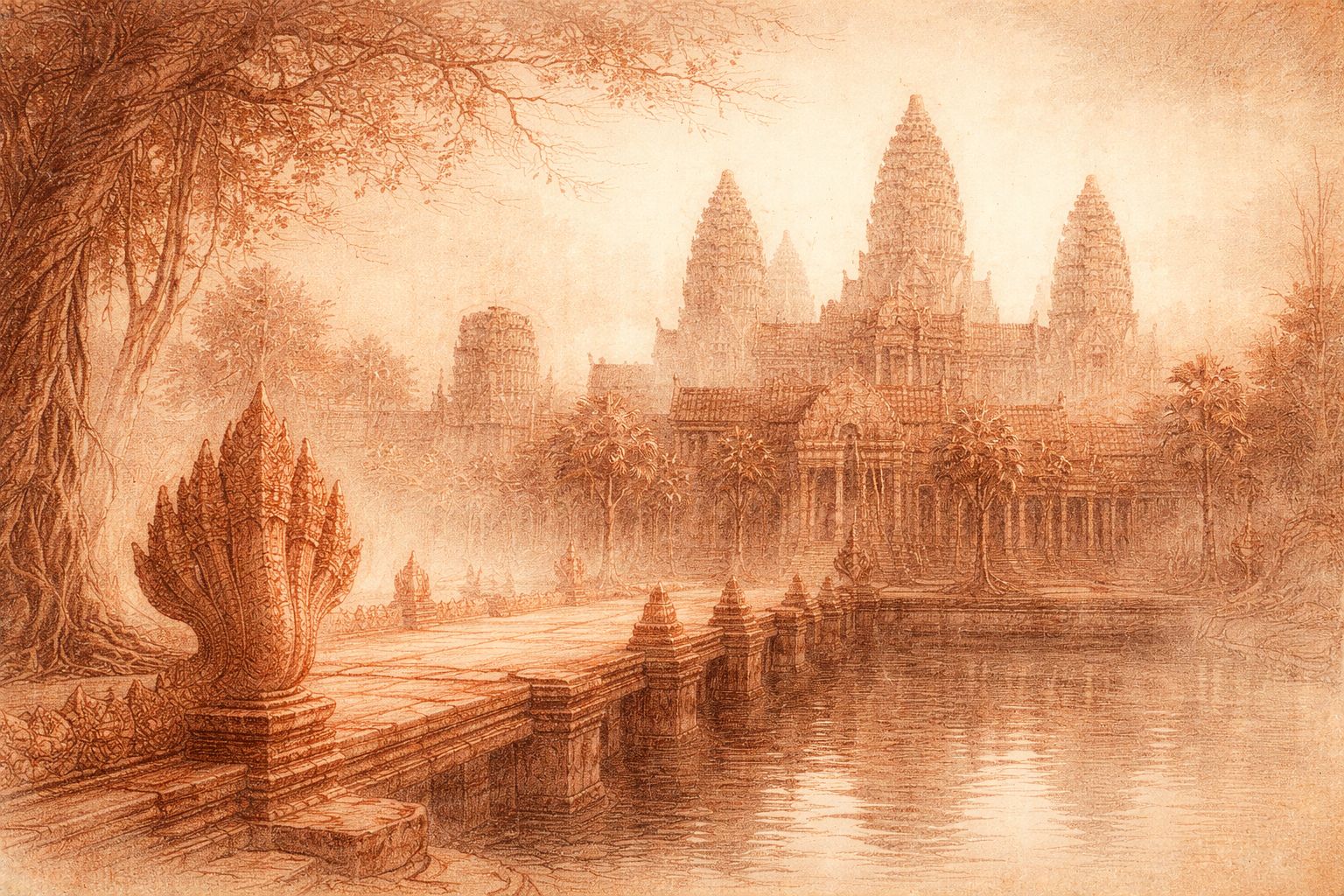
Angkor means city, but it grew into something rarer: a place where stone, water, and belief were tuned together for five centuries. Its temples are not ruins of power, but records of attention—an experiment in alignment that still listens, long after the court has gone.

Angkor Wat Temple
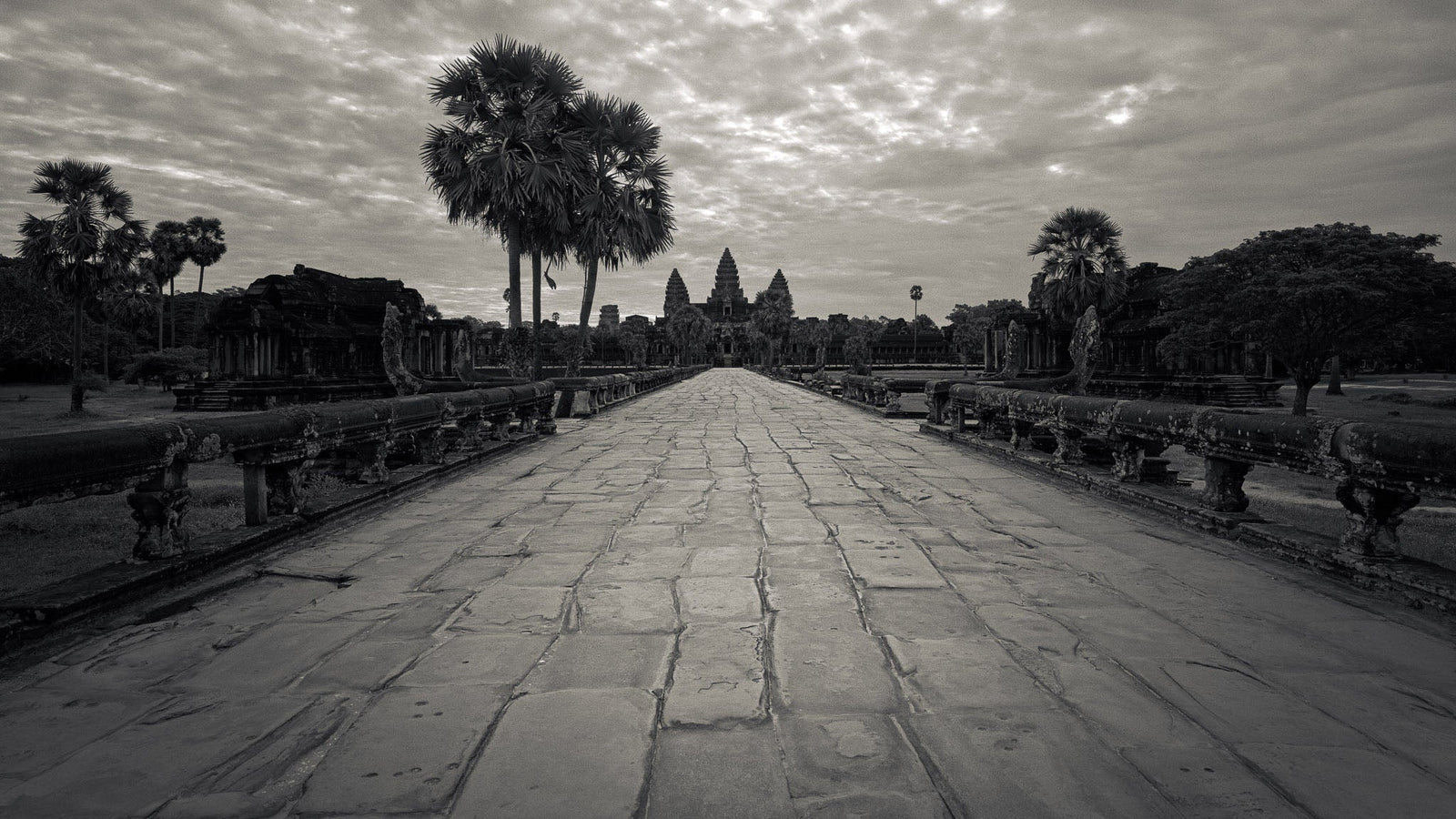
Angkor Wat is encountered not as a monument, but as a measure of order made stone. This essay reflects on horizon, proportion, and endurance—how architecture, myth, and kingship were disciplined into a single coherent world that continues to stand, complete and unresolved, across centuries.

Apsaras & Devatas — The Stillness That Dances
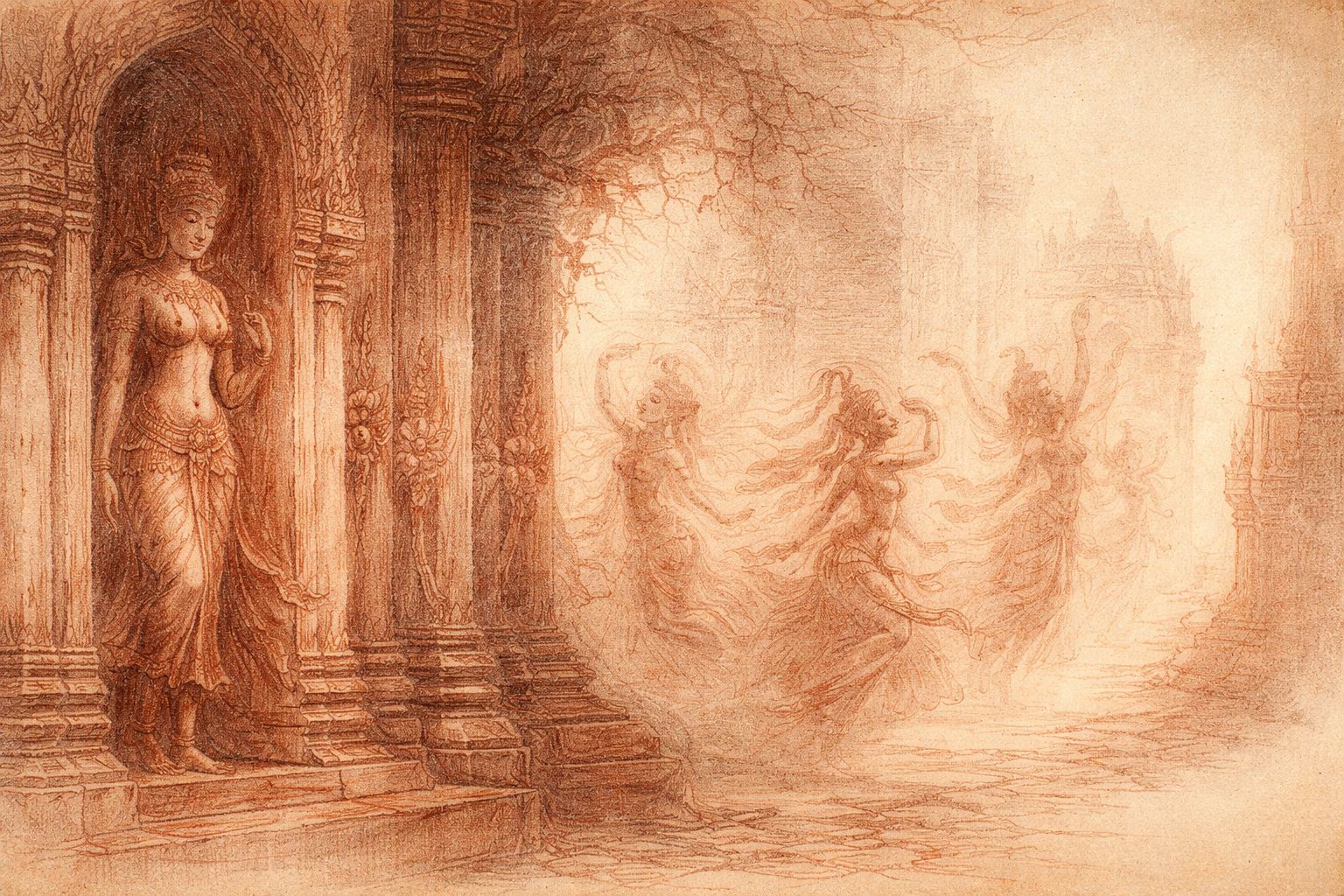
Thousands of women in stone line the temples of Angkor, some standing, some forever mid-dance. They are not ornaments. They are structure, rhythm, and protection—stillness holding the walls, movement animating the heavens, each figure a prayer cut patiently into time.
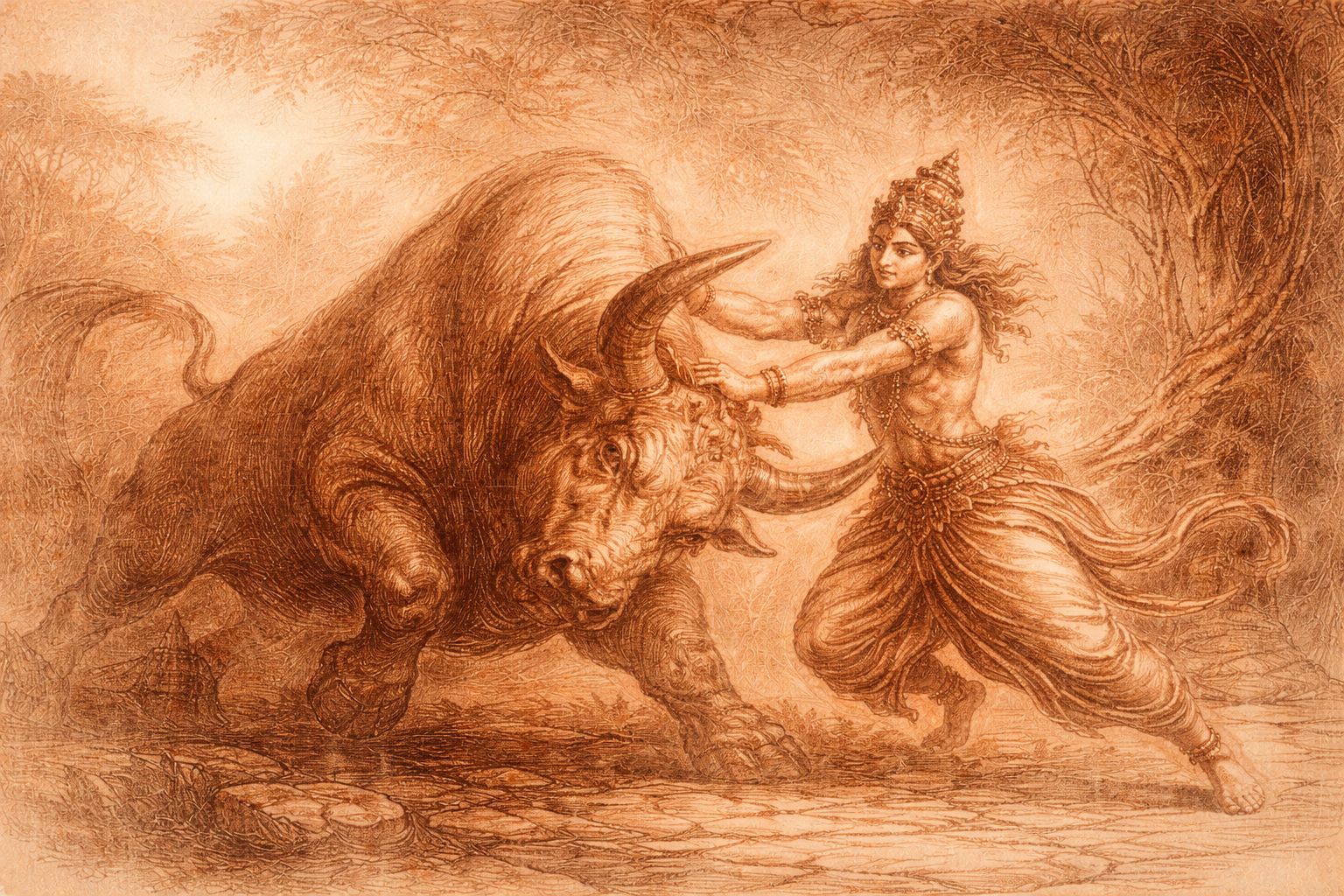

Arishta — When Disorder Wears the Shape of Strength
Arishta comes as a bull—strength untethered from season and care. His defeat by Krishna is not spectacle, but correction: power seized by its own horn and returned to proportion. A myth of restraint, where order is restored not by force alone, but by listening.
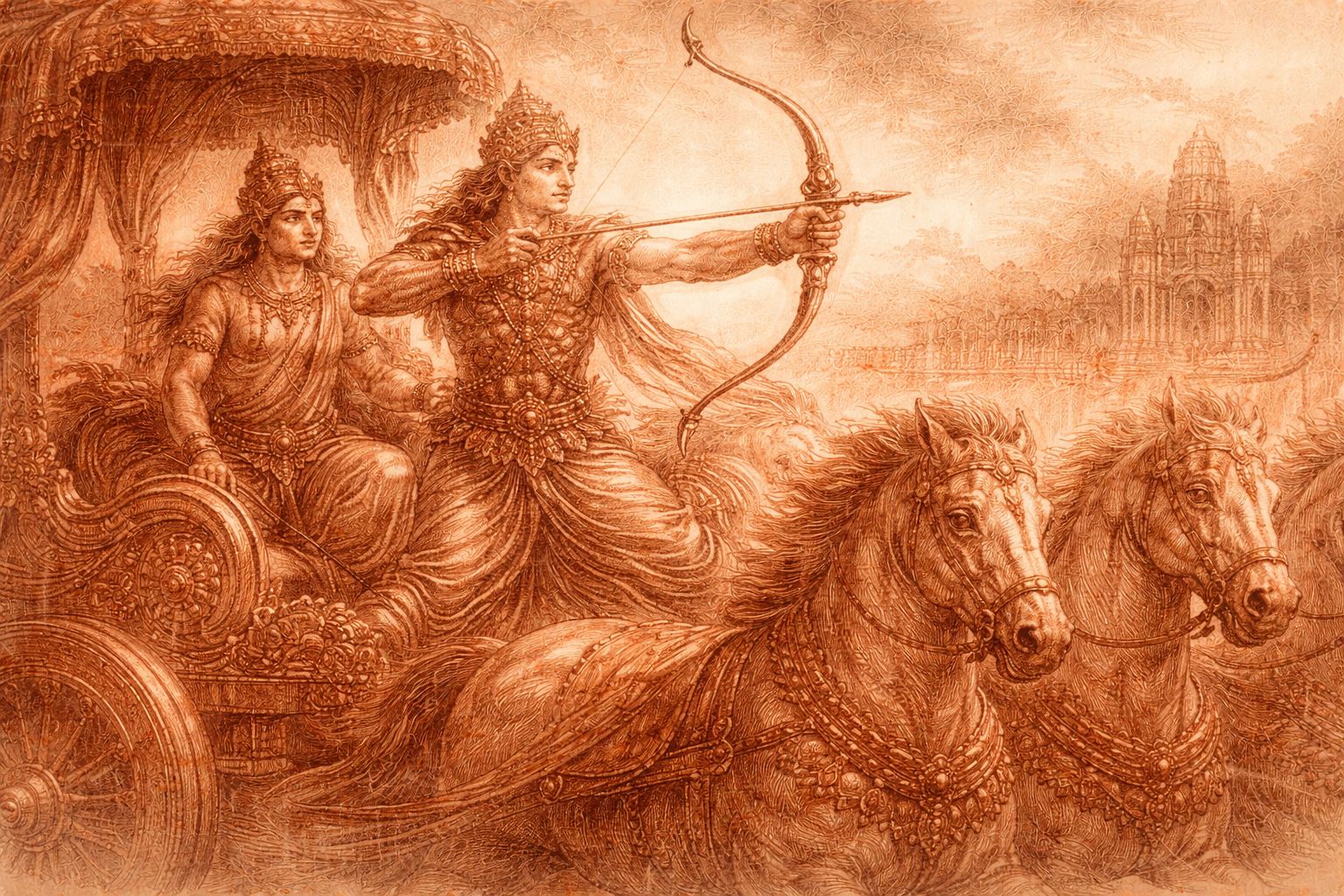

Arjuna — The Warrior Who Learned to Lower His Bow
Arjuna is the warrior who pauses. Faced with kinship and carnage, he lowers his bow and listens. Guided by Krishna, he learns that true action is alignment without attachment—a lesson carved into Angkor’s stone, where power waits upon wisdom.
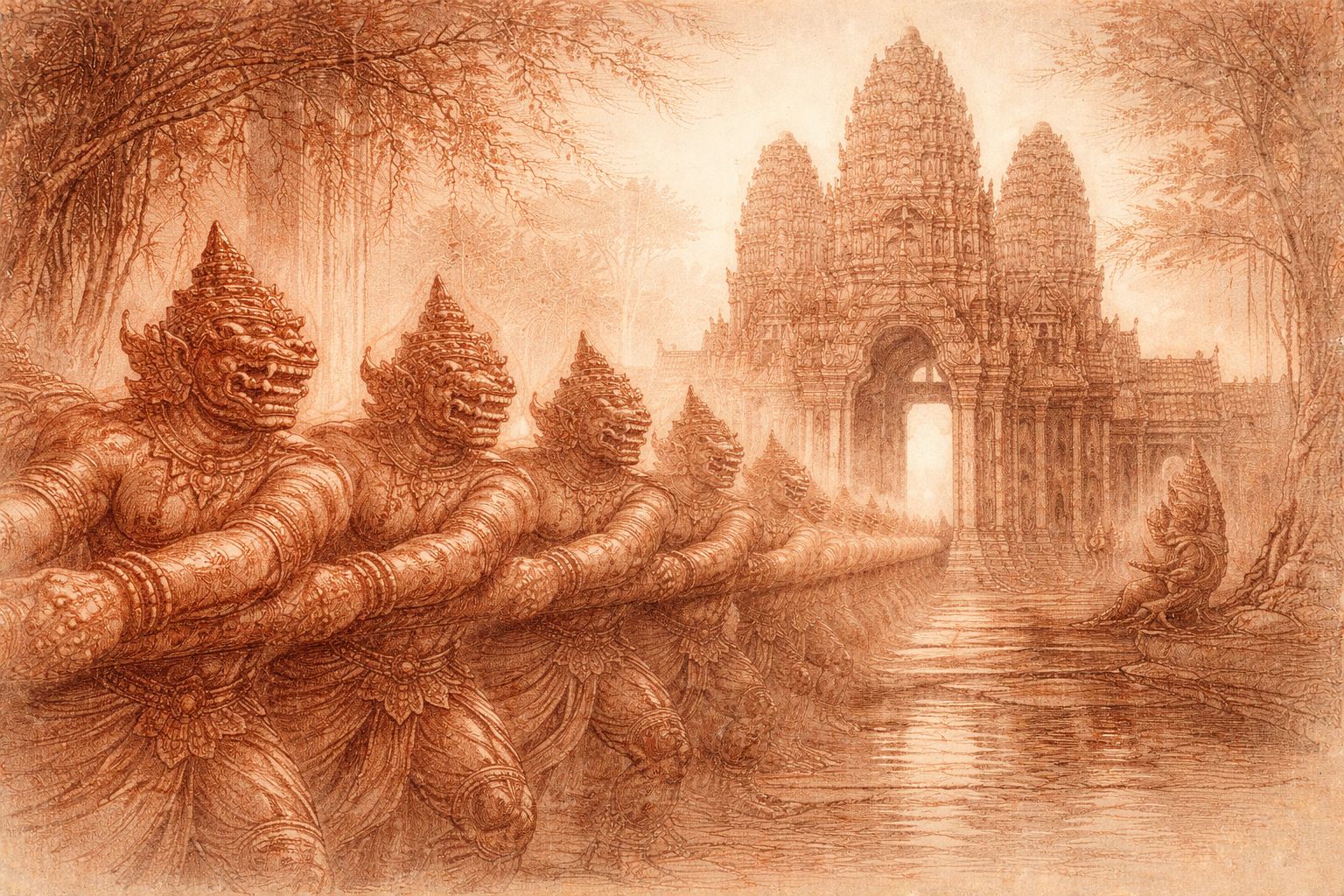

Asuras — The Necessary Shadow of the Gods
The asuras of Angkor are not merely demons but necessary shadows—figures of excess stationed at the threshold of order. Their struggle with the gods churns the cosmos itself, reminding us that balance is born not from purity, but from disciplined opposition.
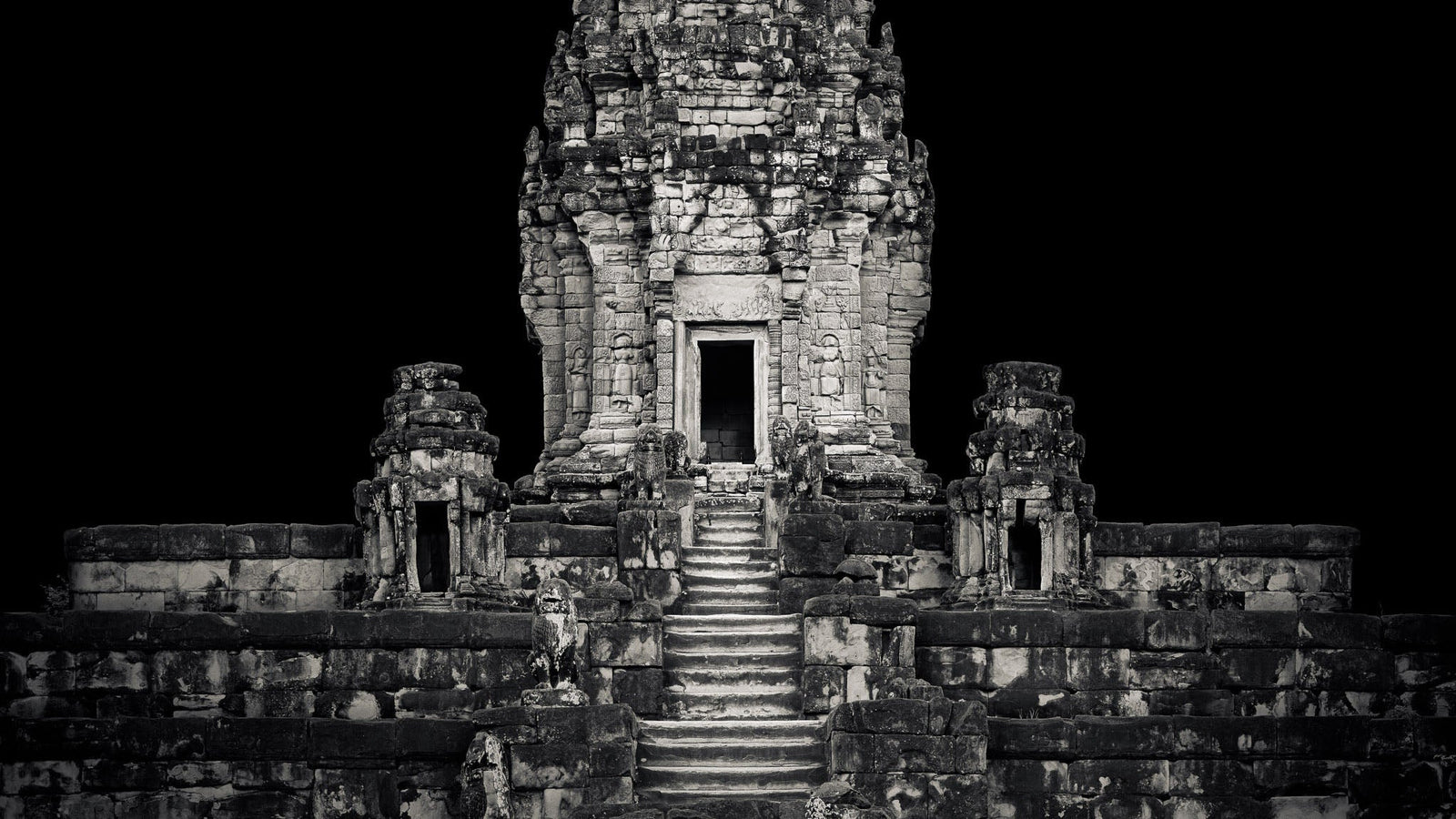

Bakong Temple
Bakong is where Angkor makes its first irreversible choice: to raise stone into a mountain and bind kingship to the cosmos. This sanctuary essay explores Bakong as the Khmer empire’s foundational act—severe, resolved, and essential—where Mount Meru first took permanent form on the Cambodian plain.
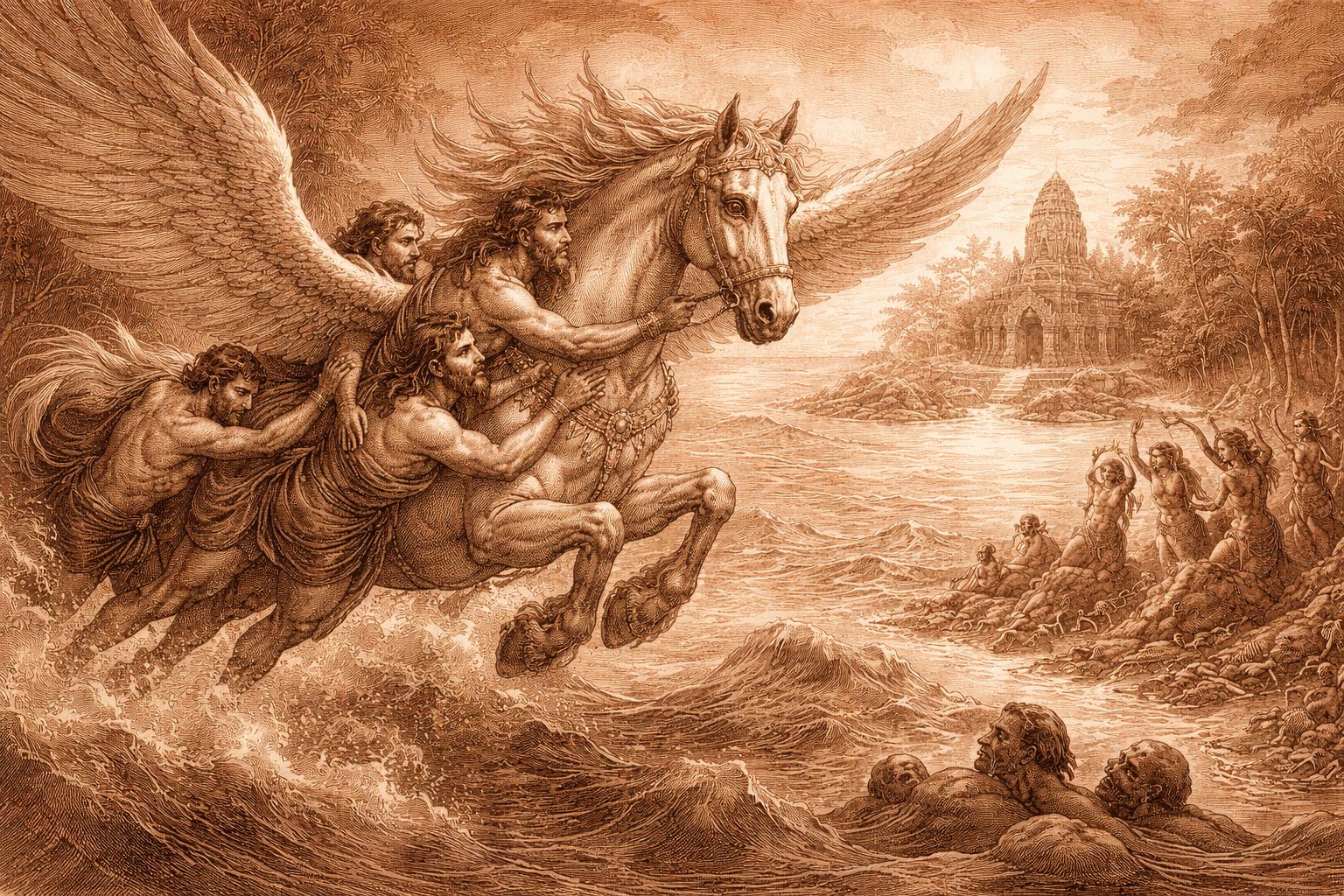

Balaha — The Horse Who Carries Across
Balaha is compassion in motion. Appearing as a flying horse, Lokeshvara becomes the vessel that carries beings across the ocean of existence. Rescue is offered—but only to those who do not look back. In Angkor, this vow was carved into water, stone, and flight.
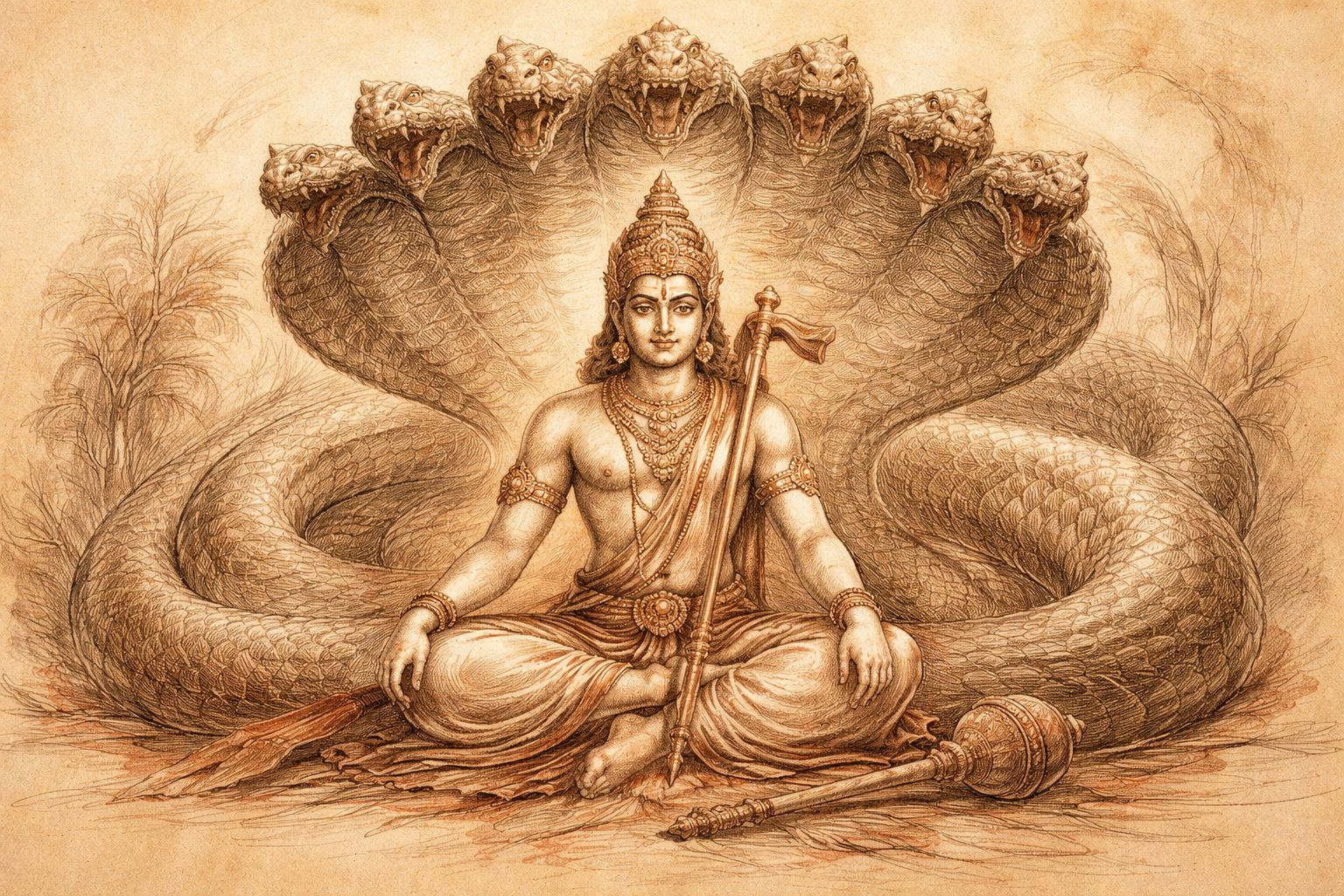

Balarama — The Weight That Holds
Balarama is the strength that does not seek attention—the pale force beneath colour, the foundation beneath play. As Ananta in human form, he teaches that true power is not spectacle, but weight borne in silence, allowing the world, and all its stories, to stand.
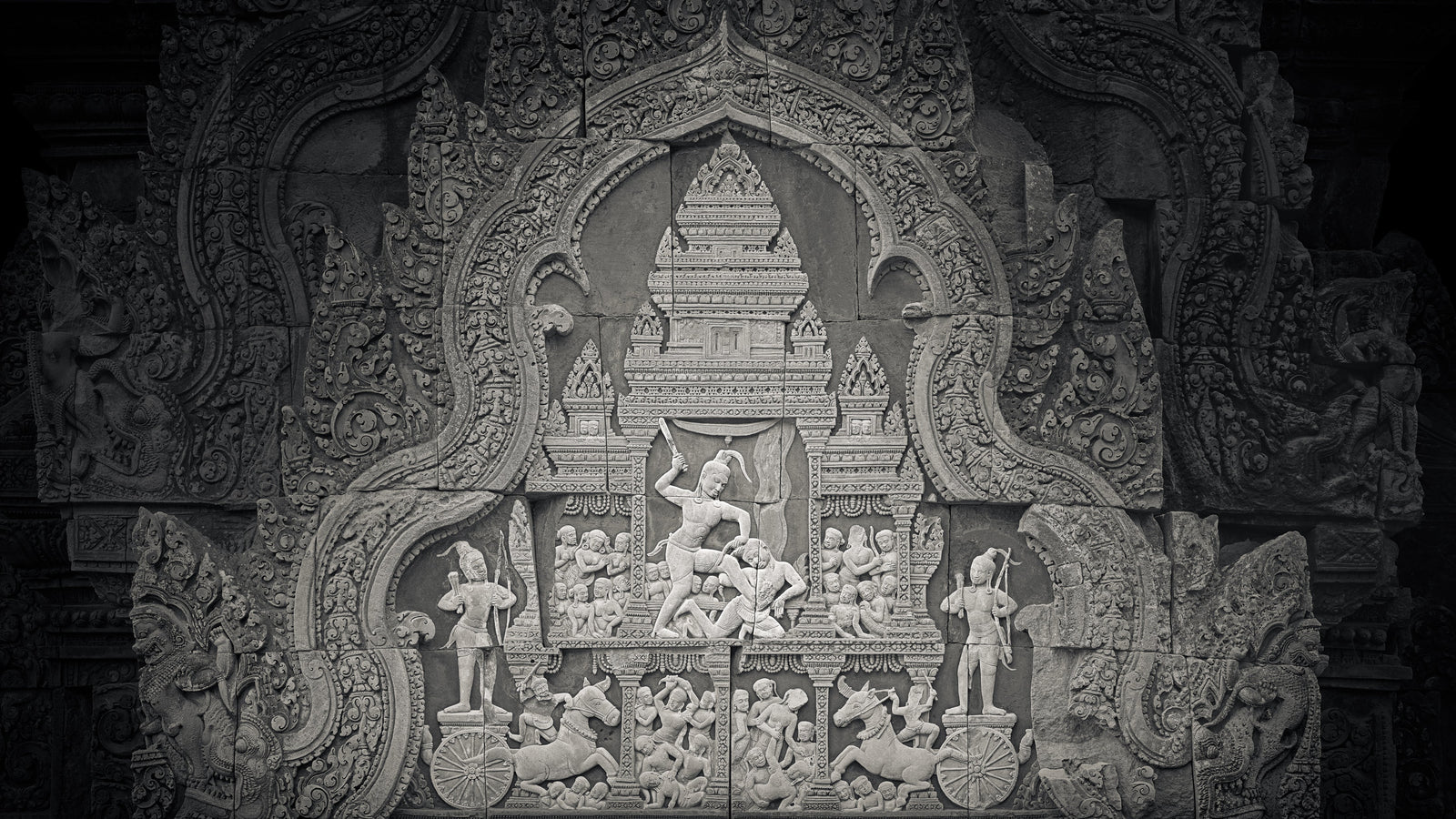

Banteay Srei Temple
Banteay Srei teaches attention rather than awe. This essay reflects on intimacy, craftsmanship, and devotion at Angkor’s most refined temple, where pink sandstone, lowered thresholds, and lingering reliefs invite closeness, patience, and a quieter form of reverence shaped by care rather than scale.
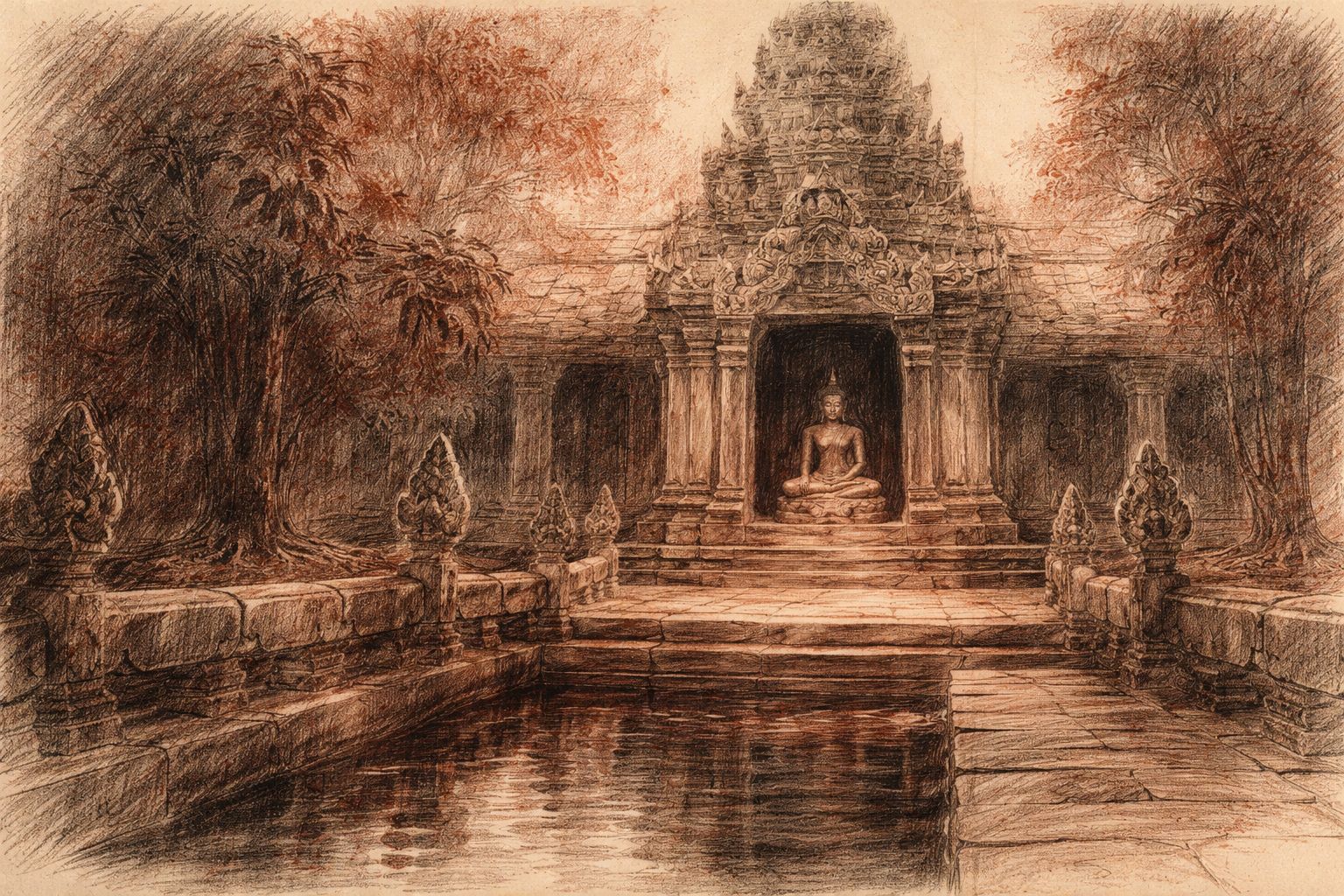

Bhaisajyaguru and the Silence of Healing in Angkor
In Angkor’s hospital shrines, healing begins without haste. Bhaisajyaguru sits with the sick, not above them, holding his medicine in silence. Stone, water, and body are aligned so that suffering is met rather than erased. Care here is measured, patient, and quietly enduring.
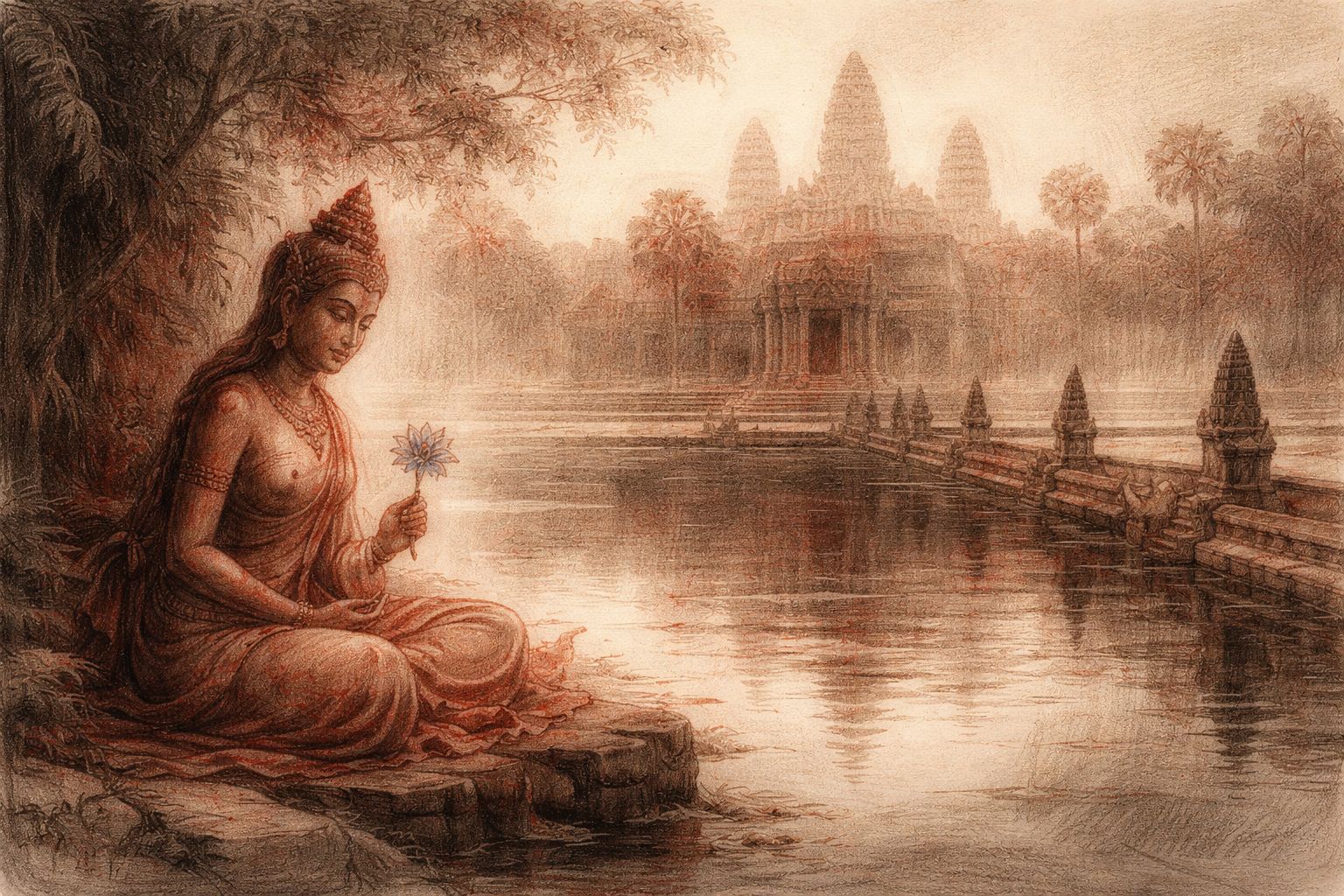

Bhumidevi
In Angkor, the earth speaks first. Before tower or face, there is weight, water, and memory underfoot. Bhumidevi is felt as witness rather than image—receiving steps, keeping account, returning what has been given. Here, the land is not background but covenant.
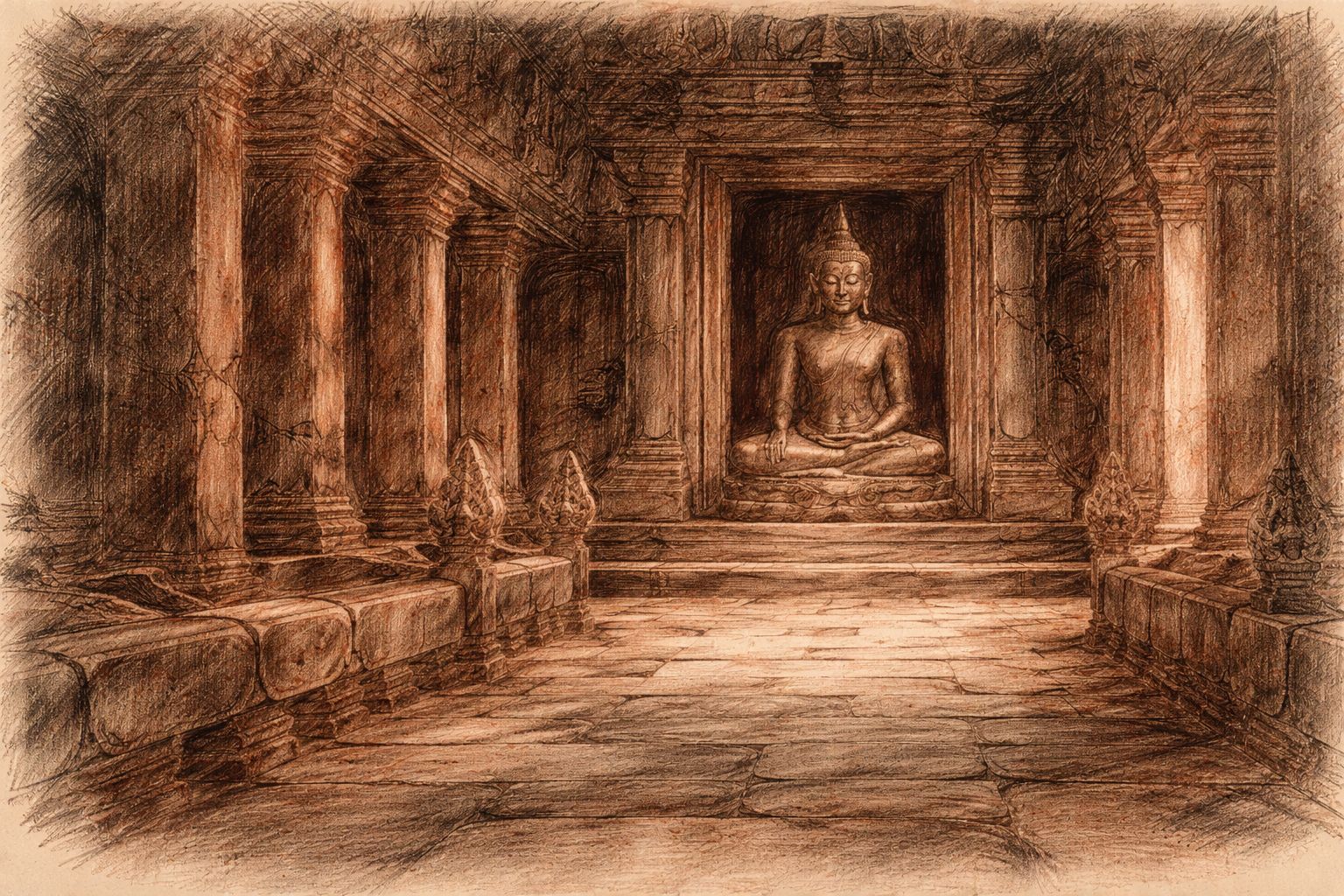

The Bodhisattva and the Discipline of Remaining
In Angkor, the Bodhisattva is recognised by what he refuses: final departure, private release, unshared clarity. He remains at the threshold, holding space rather than resolving it. His compassion is architectural, measured, and patient—an ethic of staying close without closing the world.
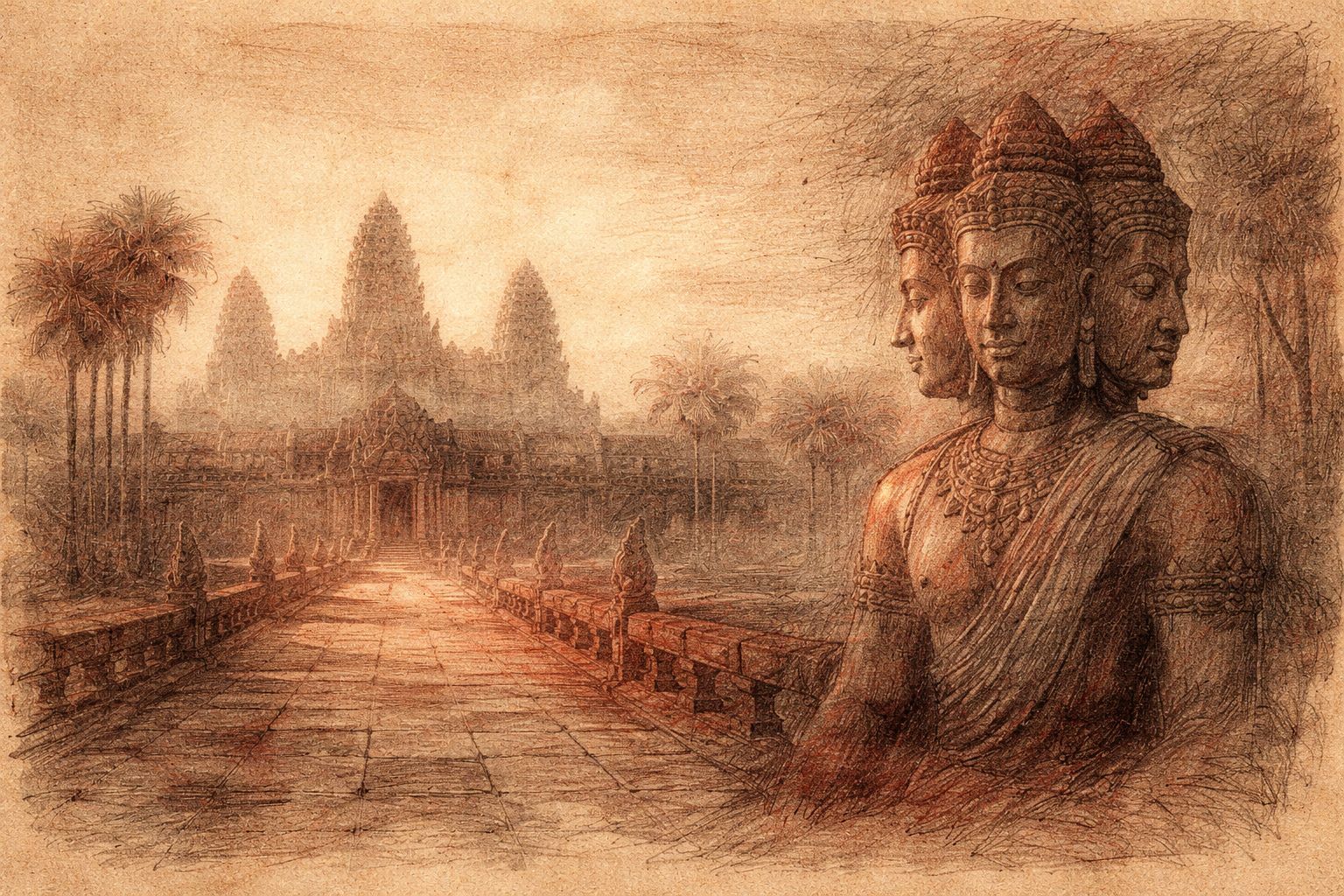

Brahma and the Quiet Order of Stone
Brahma moves through Angkor not as a figure to be encountered, but as a principle already at work. He is present in proportion, in orientation, in the quiet certainty of placement. Creation here is not an event, but a condition—one that continues to hold long after its maker has withdrawn.
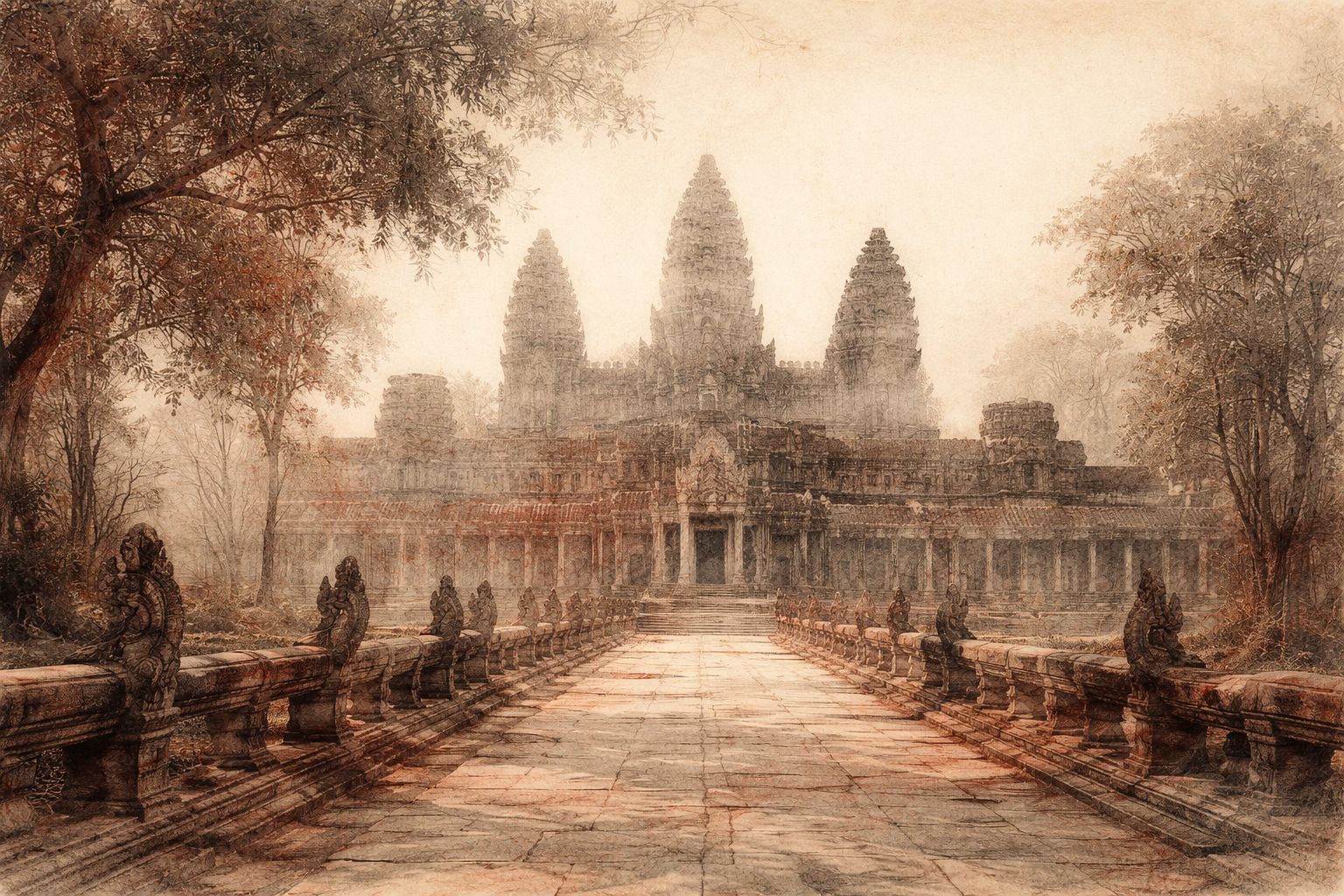

Brahman at Angkor: Stone, Stillness, and the Ground of Being
At Angkor, Brahman is not named or carved, yet it can be felt in the patience of stone and the refusal of the temples to conclude. Repetition, stillness, and scale train attention until form loosens its claim, and the pilgrim begins to sense the ground that sustains both self and world.
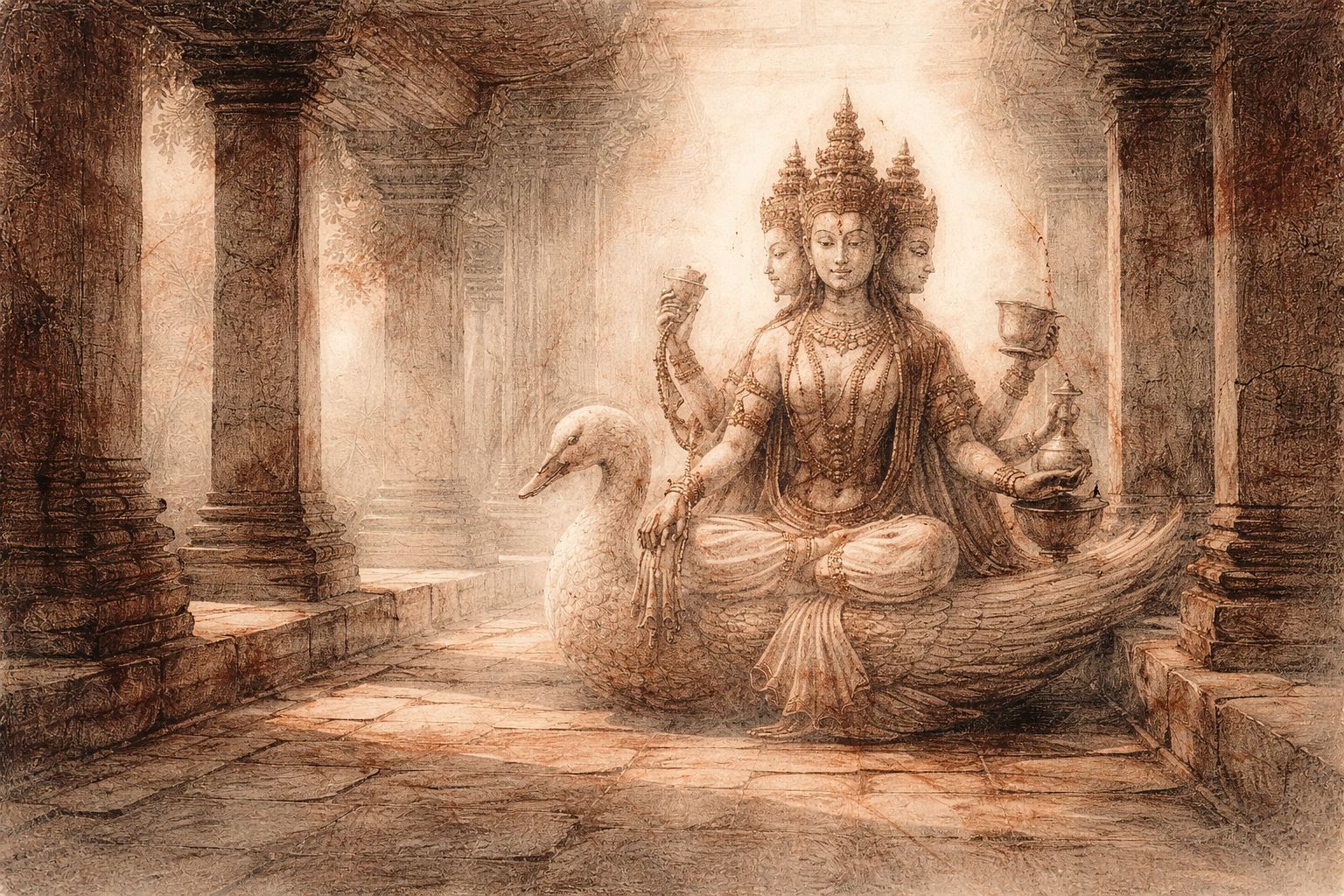

Brahmi at Angkor: The Energy That Sustains Form
Brahmi appears at Angkor not as narrative but as function: the energy that allows form to endure once creation has begun. Multiple faces, measured gestures, and quiet severity reveal a goddess concerned not with origin, but with maintenance—creation understood as ongoing responsibility rather than completed act.
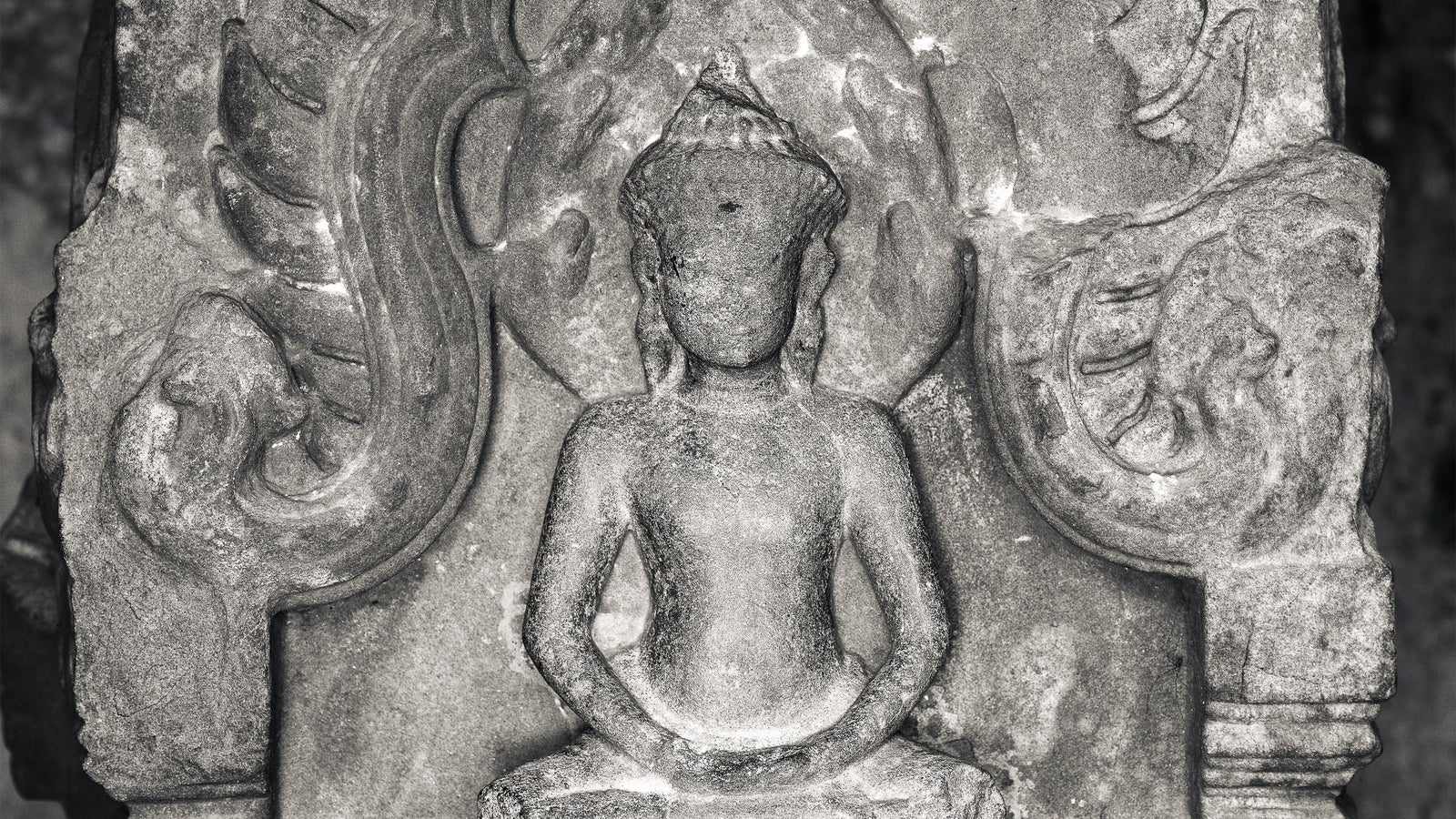

Buddha — The One Who Sits
The Buddha enters Angkor not as a proclamation, but as a posture learned by stone. He withdraws rather than commands, teaching attention through stillness. In naga coils and weathered galleries, the temples absorb his discipline: to meet suffering without grasping, and to endure without turning away.
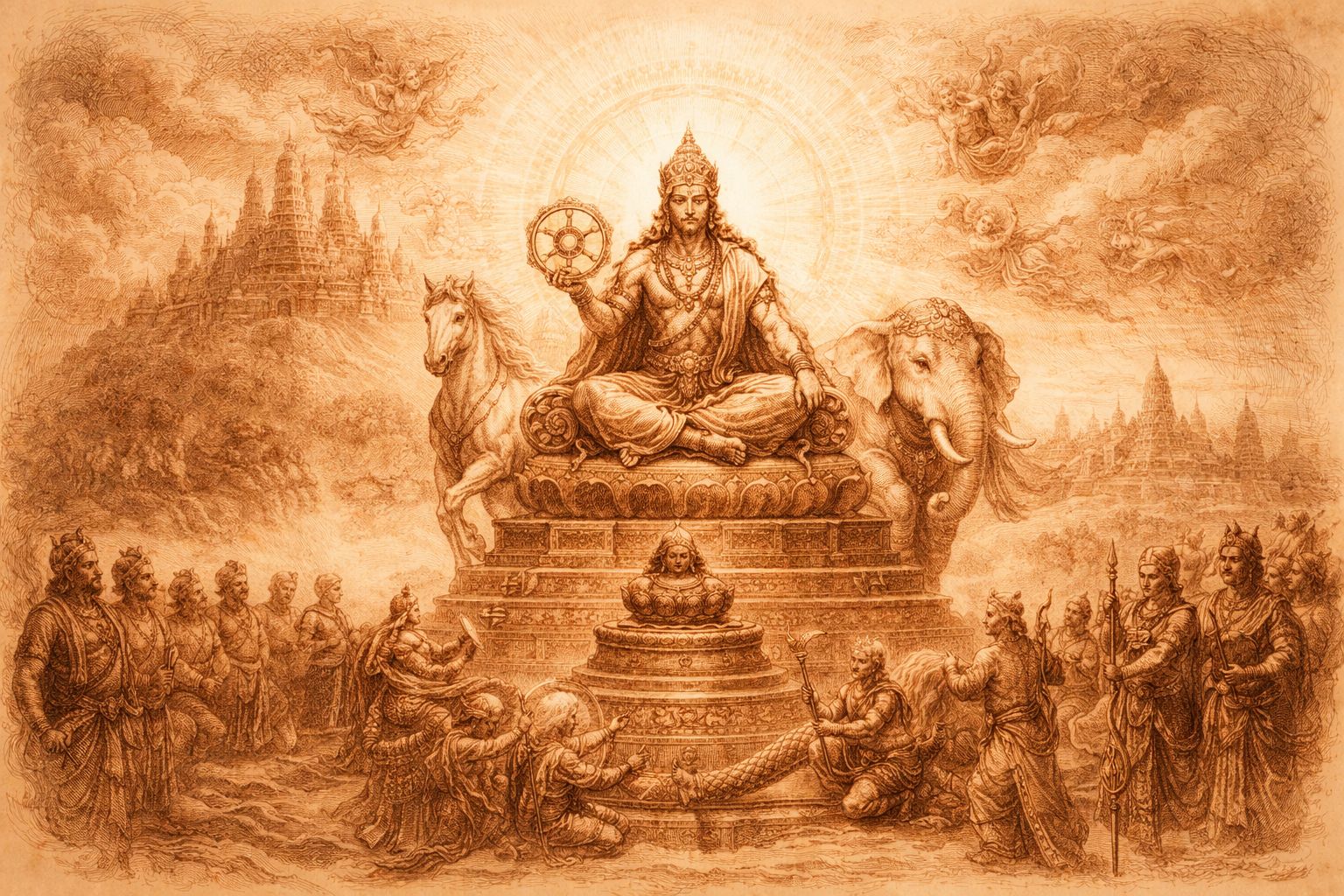

Cakravartin — The King Who Turns the World
The cakravartin is not a conqueror at the edge of the world but its still centre. His power turns like a wheel, organising space, justice, and prosperity into circulation. At Angkor, kingship was measured not by expansion alone, but by the fragile art of holding the world in balance.
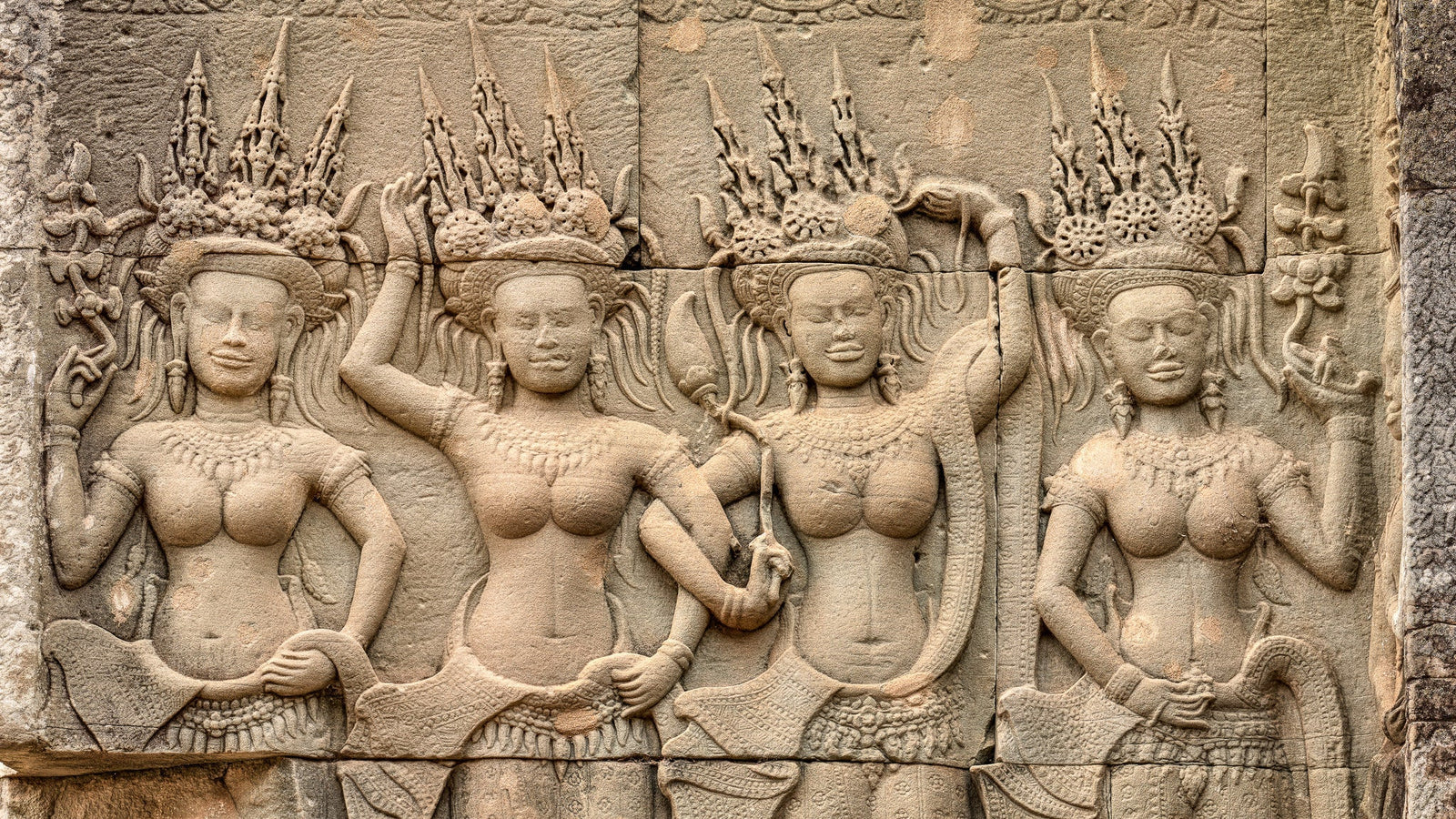

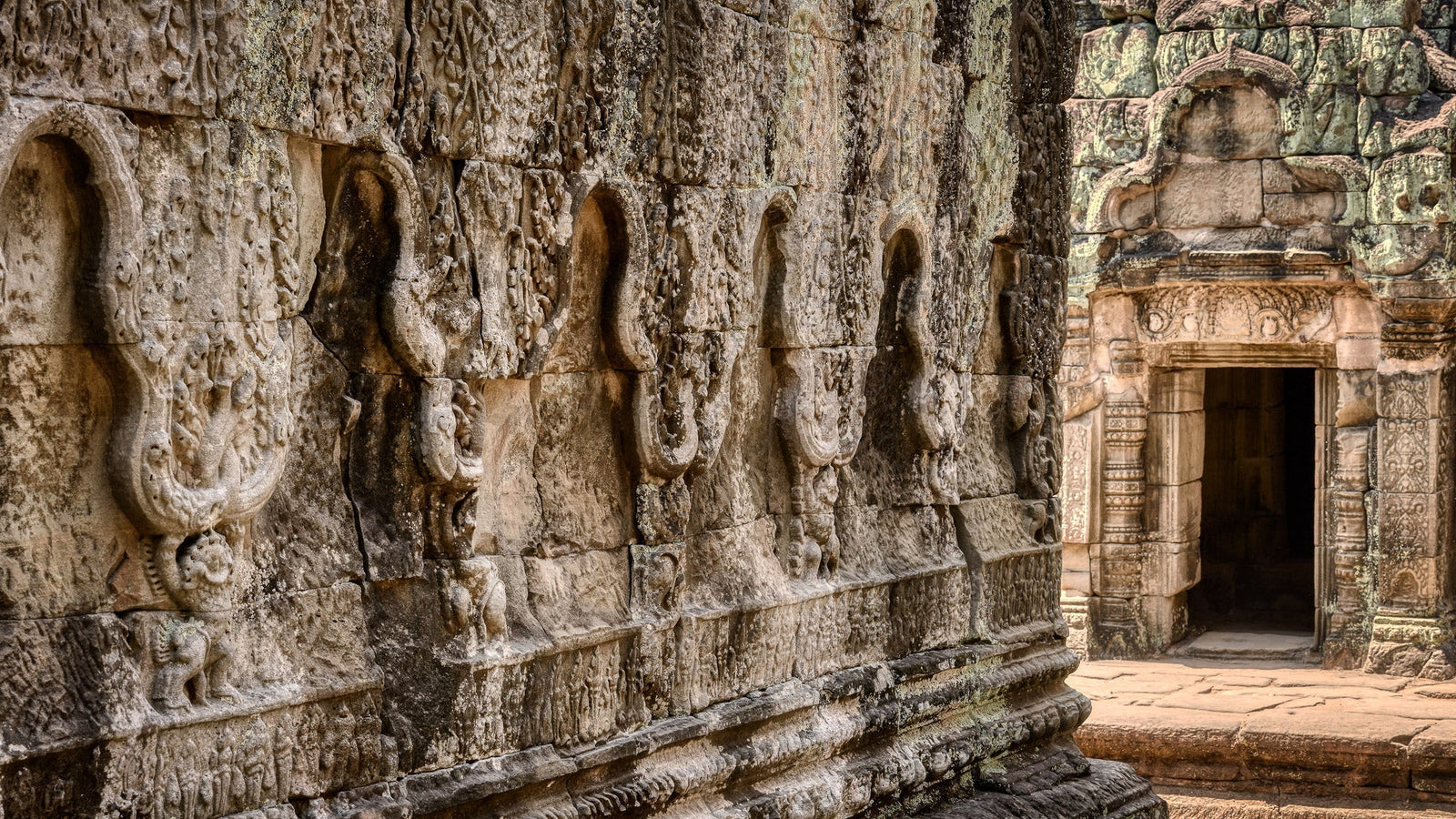

The Vanishing Buddha: A Silence Carved in Stone
There are wounds in the stone that no rain can wash away.
Walk slowly among the vanished Buddhas—
where silence remembers what belief once tried to forget,
and the soul still bows before what is no longer seen.
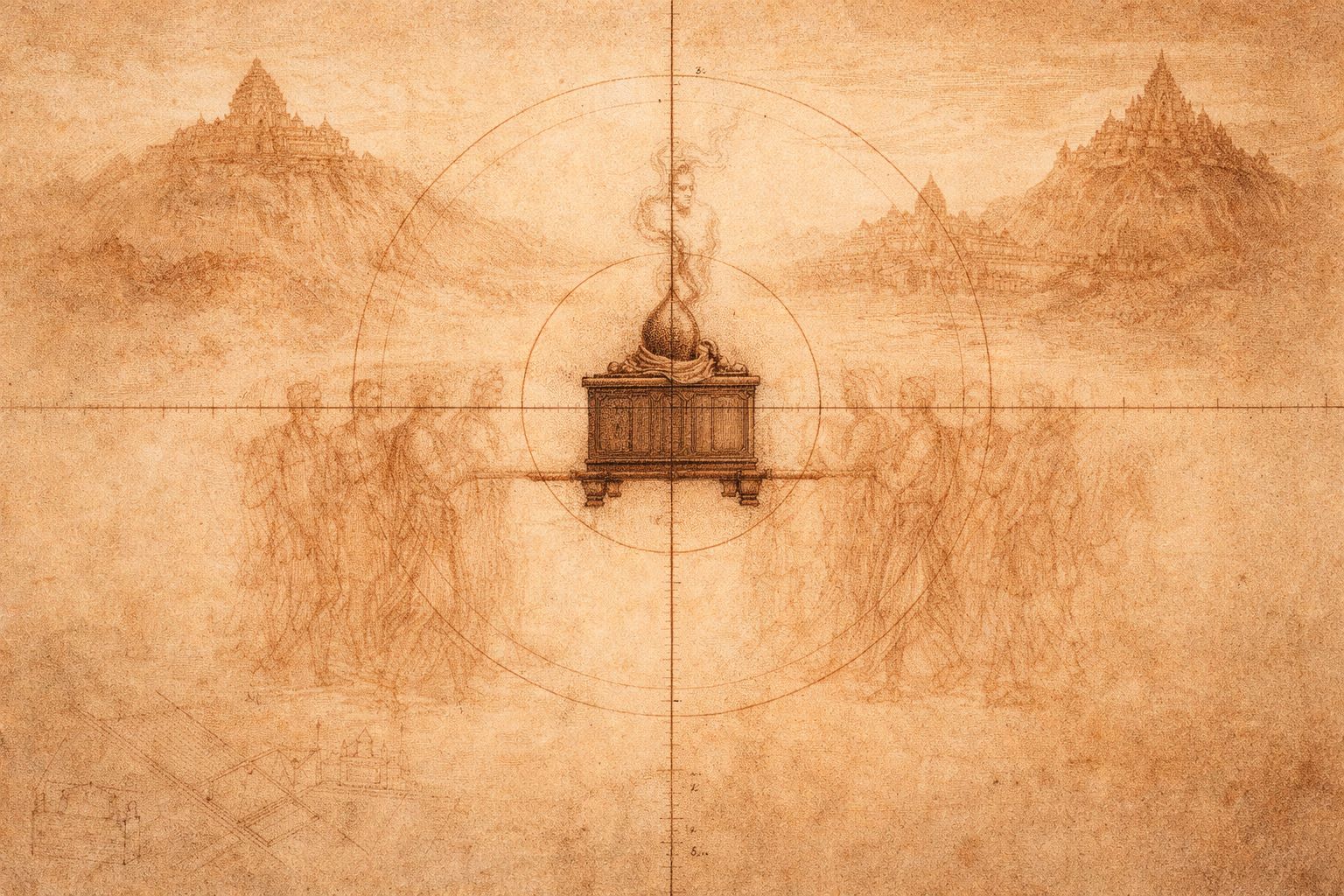

Devarāja — The Axis That Does Not Move
The devarāja was not a king raised to heaven, but a centre installed in silence. Mobile, incorporeal, and fiercely precise, it allowed power to move without dissolving. Angkor begins not in splendour, but in alignment—where ritual teaches stone how to remember.
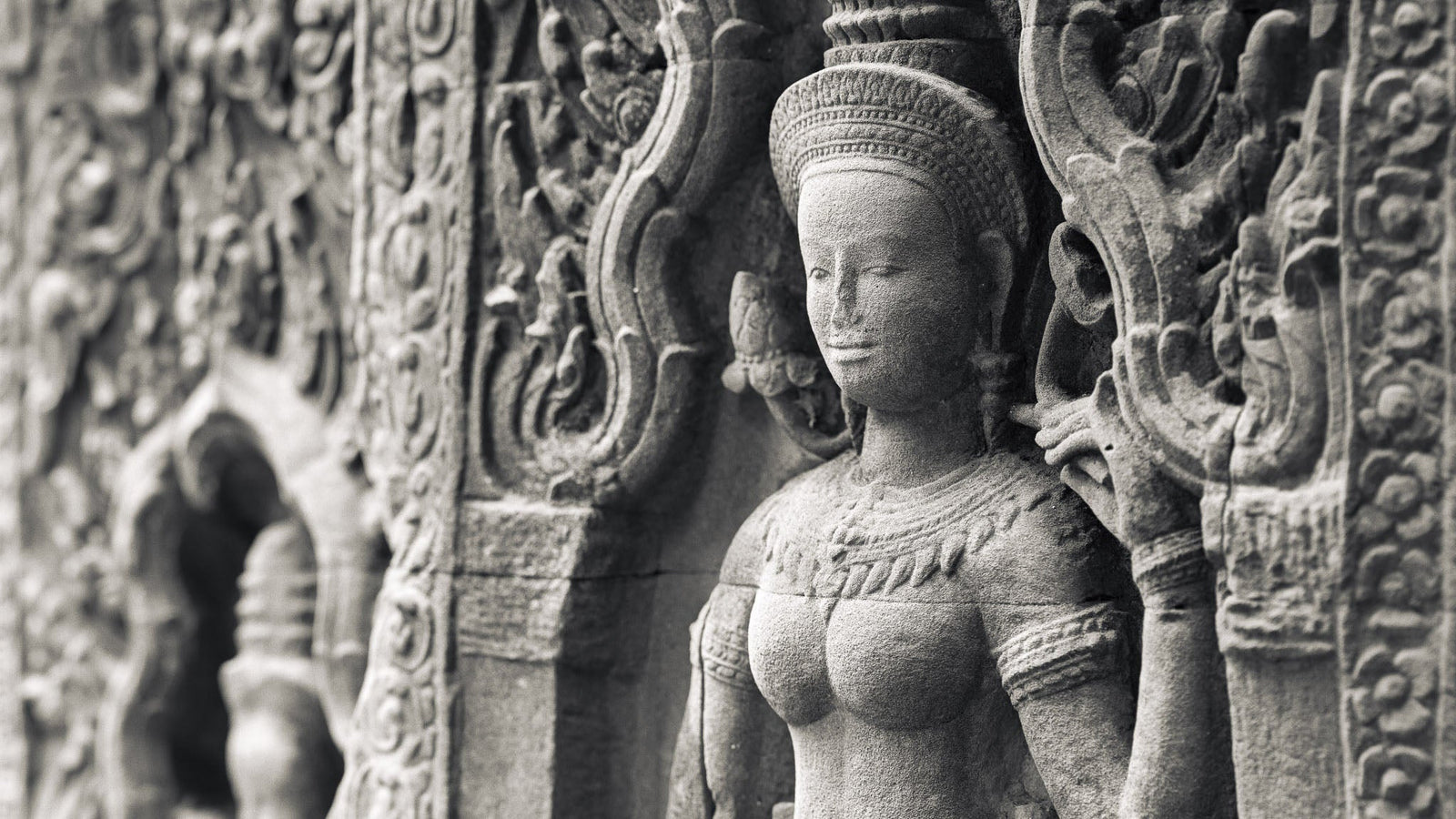

Devatas of Angkor: The Guardians Who Remain
They do not dance or descend. They remain. Along walls and thresholds, the devatas hold the temple in quiet balance, turning stone into a place that feels inhabited, watched over, and gently ordered. Their stillness is not absence, but assurance—beauty tasked with keeping the sacred intact.
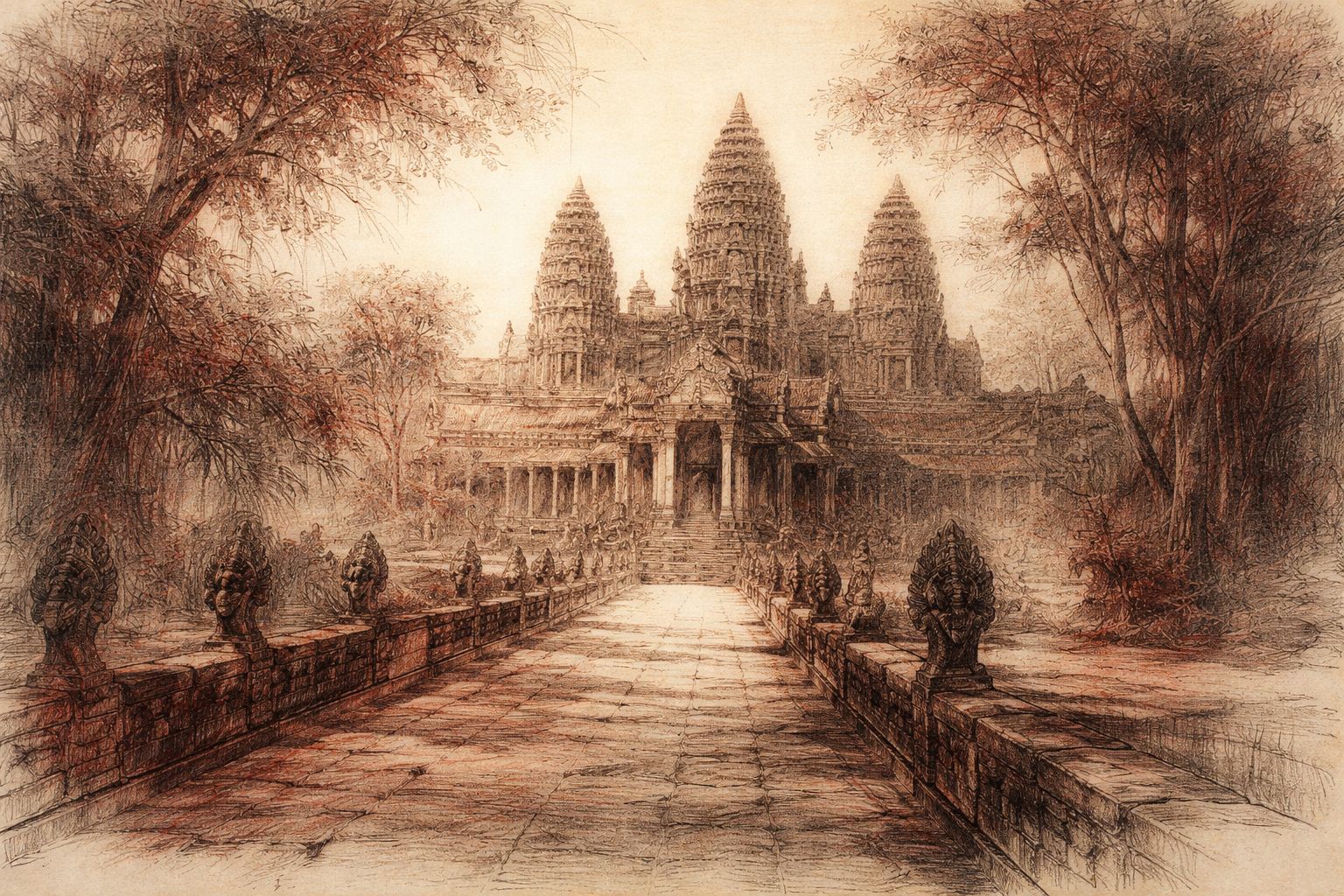

Dharma — What Holds
Dharma in Angkor is not explained; it is carried. It passes through stone as weight through a column, disciplining movement, posture, and role. Order here is not chosen but borne, asking for alignment rather than belief. What endures is not proclaimed loudly, but held accurately.

Citragupta — The Ledger That Does Not Forget
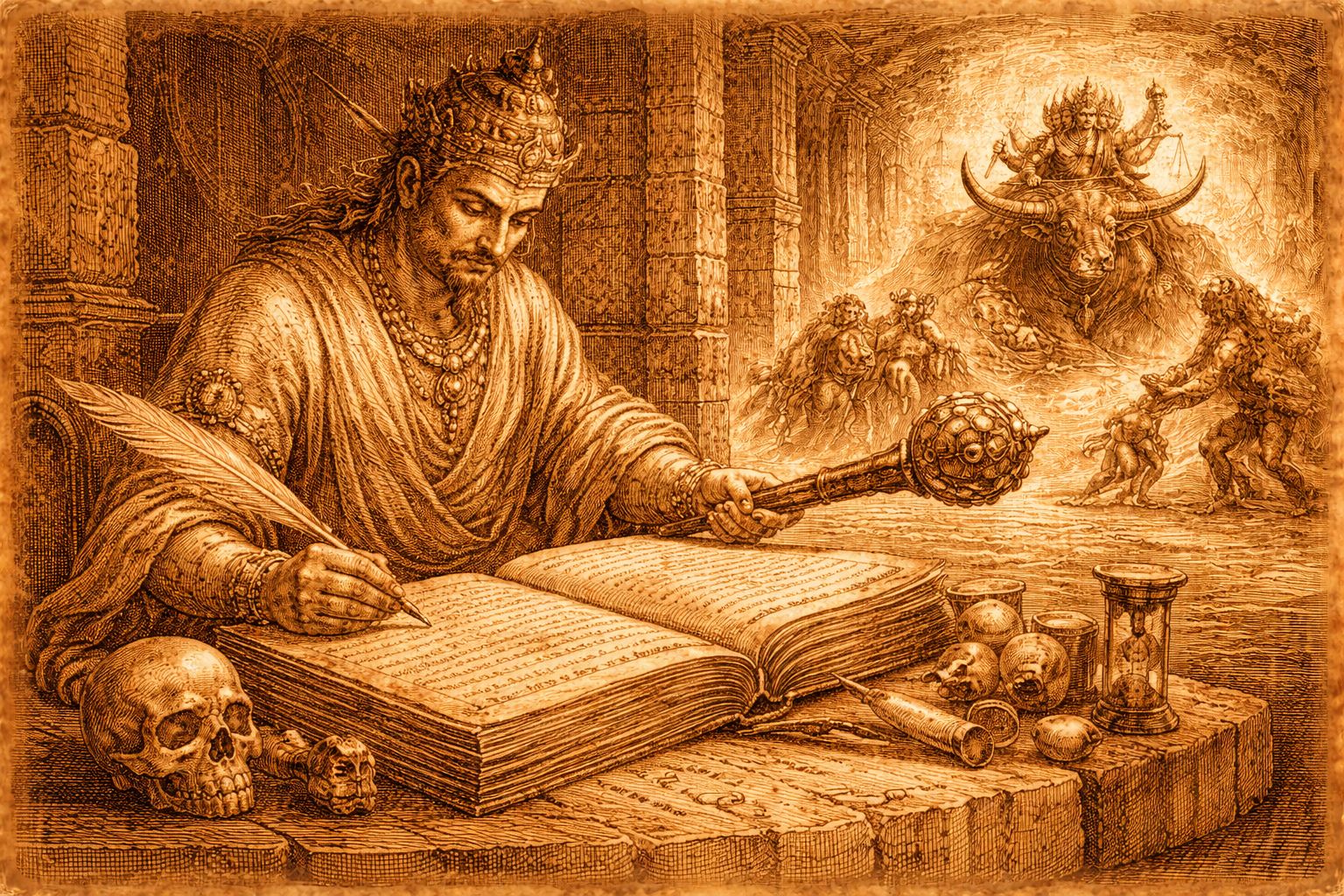
Citragupta does not judge; he reads. In his ledger, every life is already complete, every action accounted for. Before Yama speaks, the record is heard. Justice at Angkor is not fury or mercy—it is balance, rendered legible.

The Dikpalas — Holding the World in Place
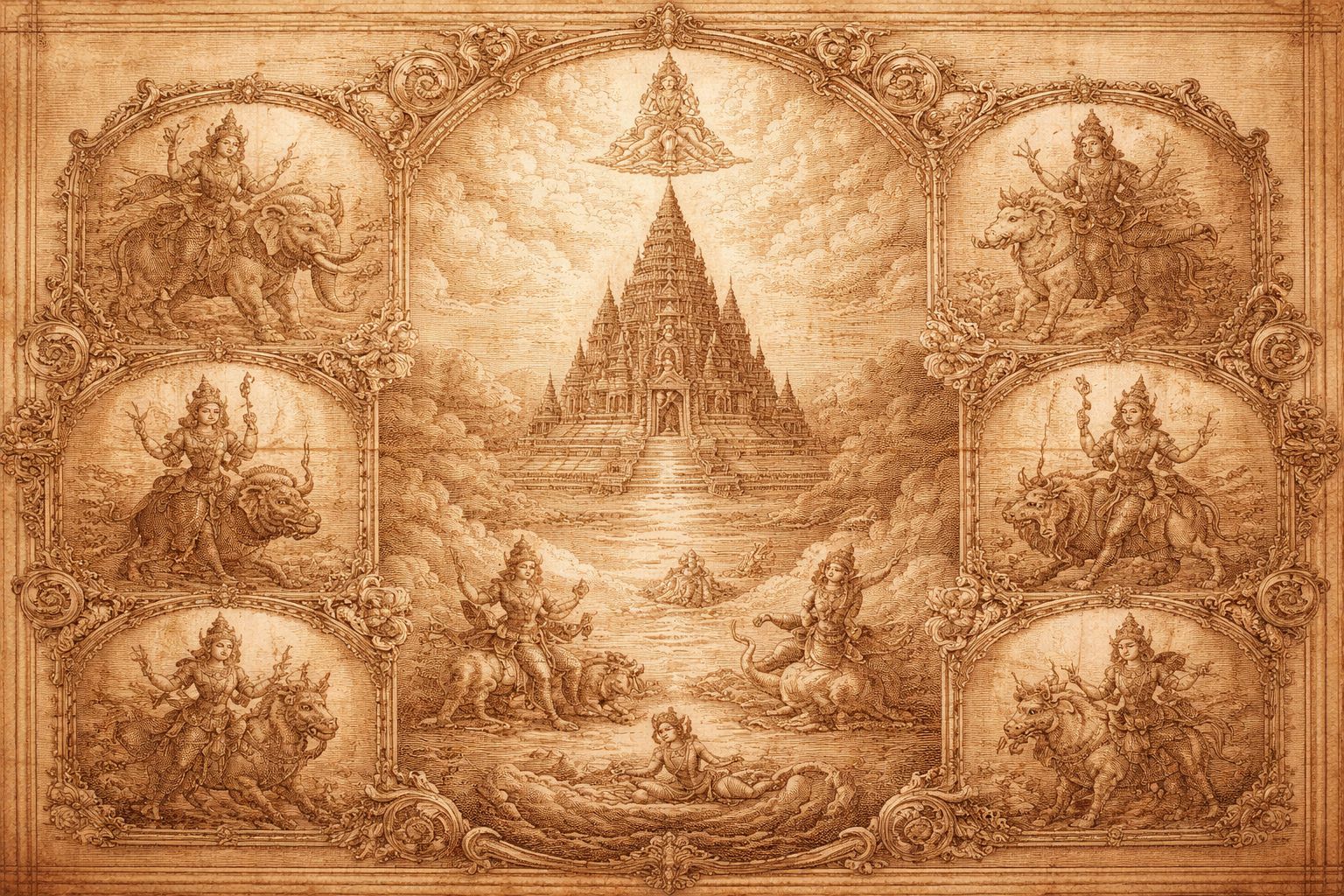
The Dikpalas do not defend temples from enemies. They defend them from confusion. By fixing north, south, east, and west into stone, the Khmers ensured that power remained measured, water restrained, death contained, and wealth bounded. A temple endures only when the world around it is held in place.


Dubhi and the Weight of Power in the Reamker
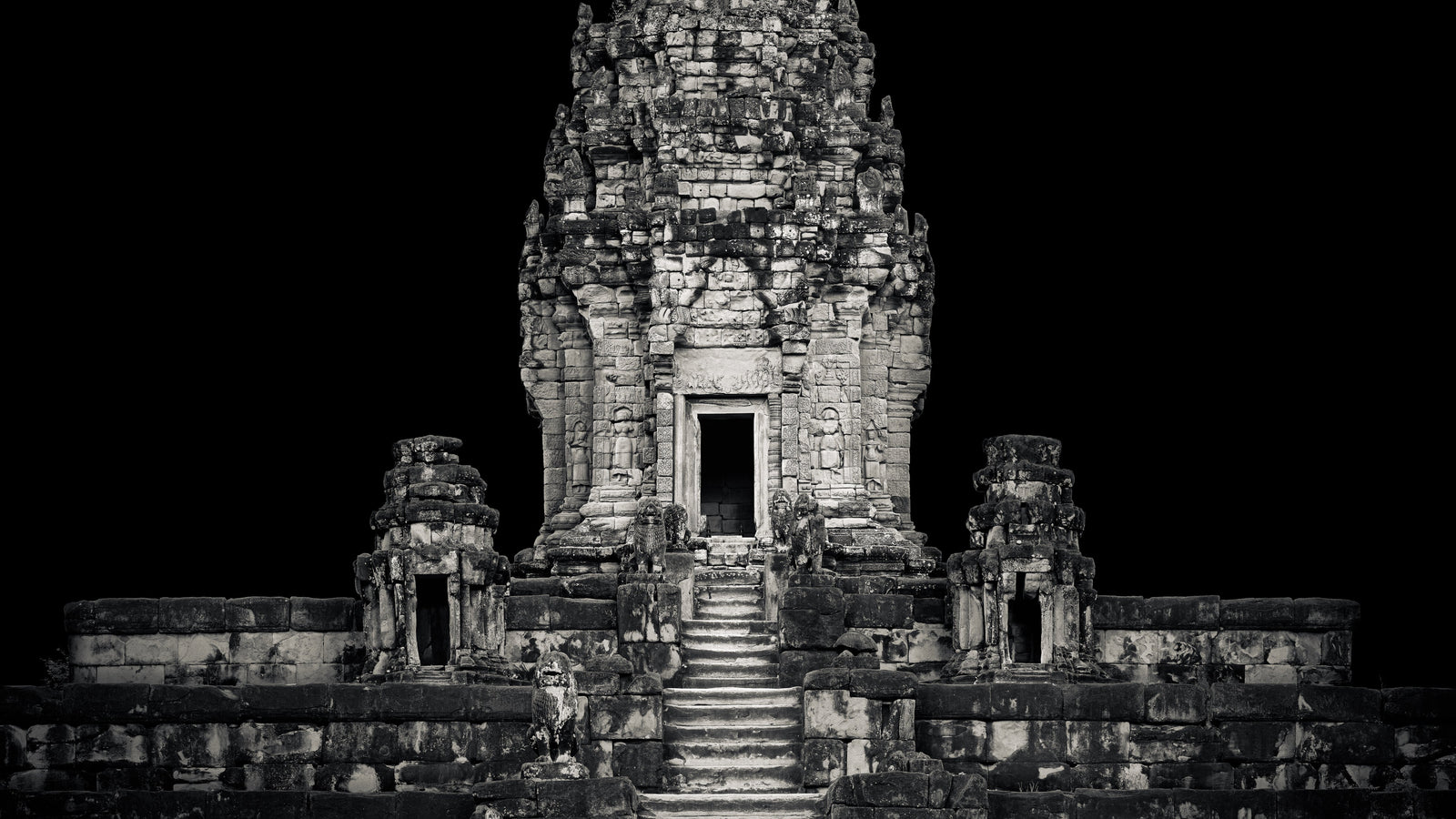
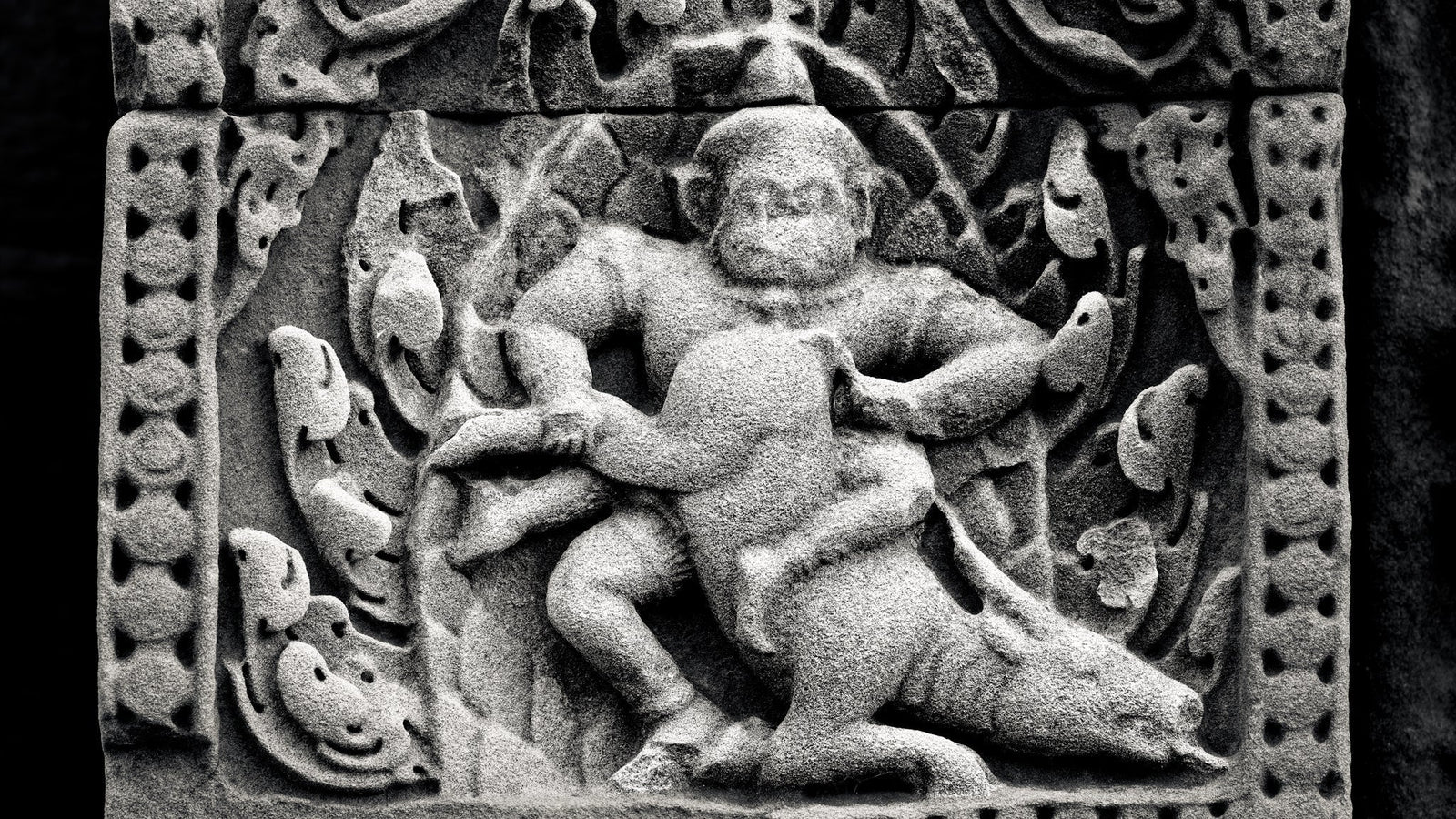
Dubhi appears as weight before meaning—strength without inheritance, power without direction. In stone and story, he is not erased but contained, his defeat leaving a trace that passes into the body of the world. A meditation on force, survival, and the cost of being unable to belong.
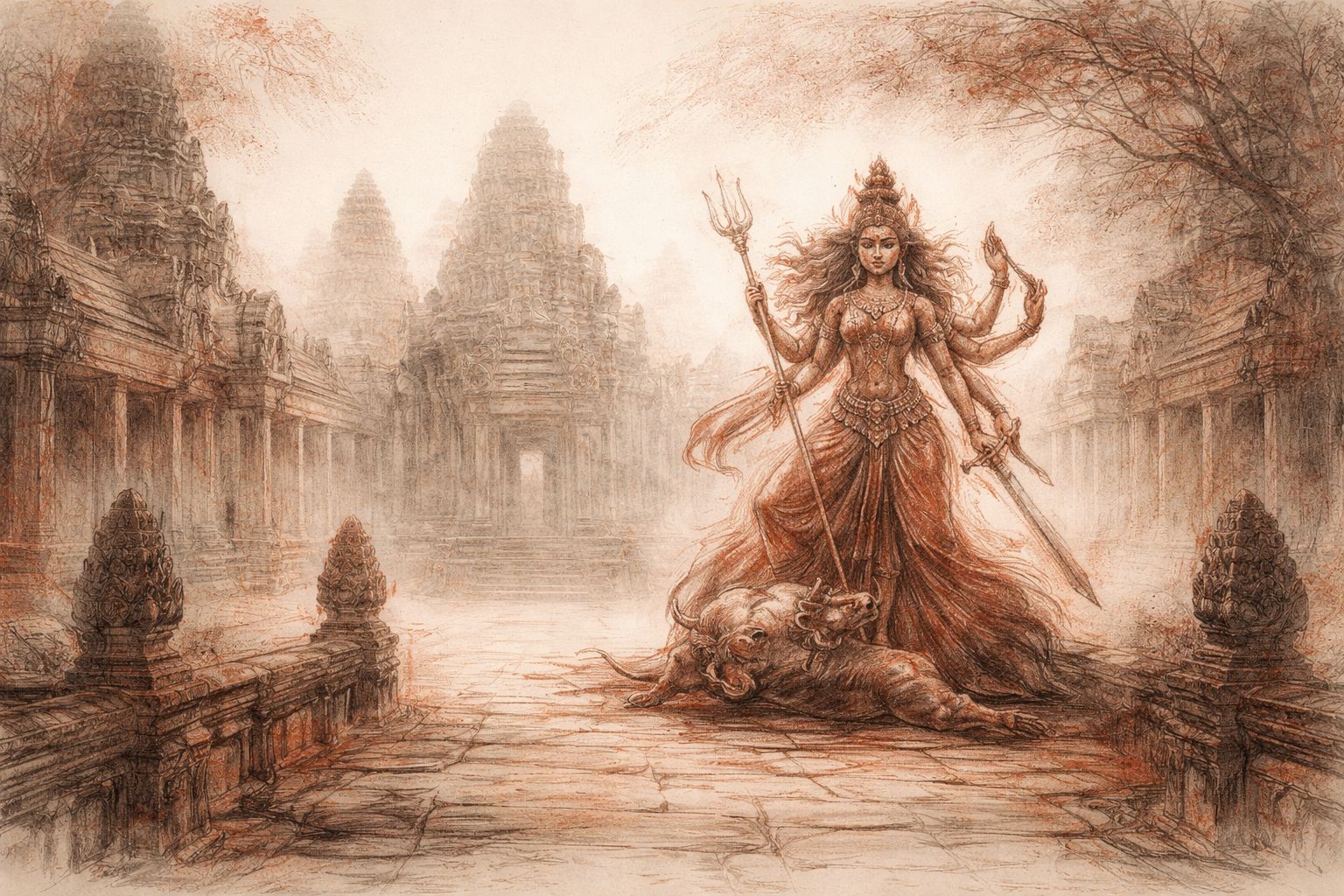

Durga in Angkor: Held Power and Necessary Force
Durga does not arrive; she is already present. In Angkor she appears as held force, not spectacle—violence contained, necessity exact. She does not console or invite. She corrects. Before her, excess quiets, indulgence falls away, and what remains stands narrower, heavier, intact.
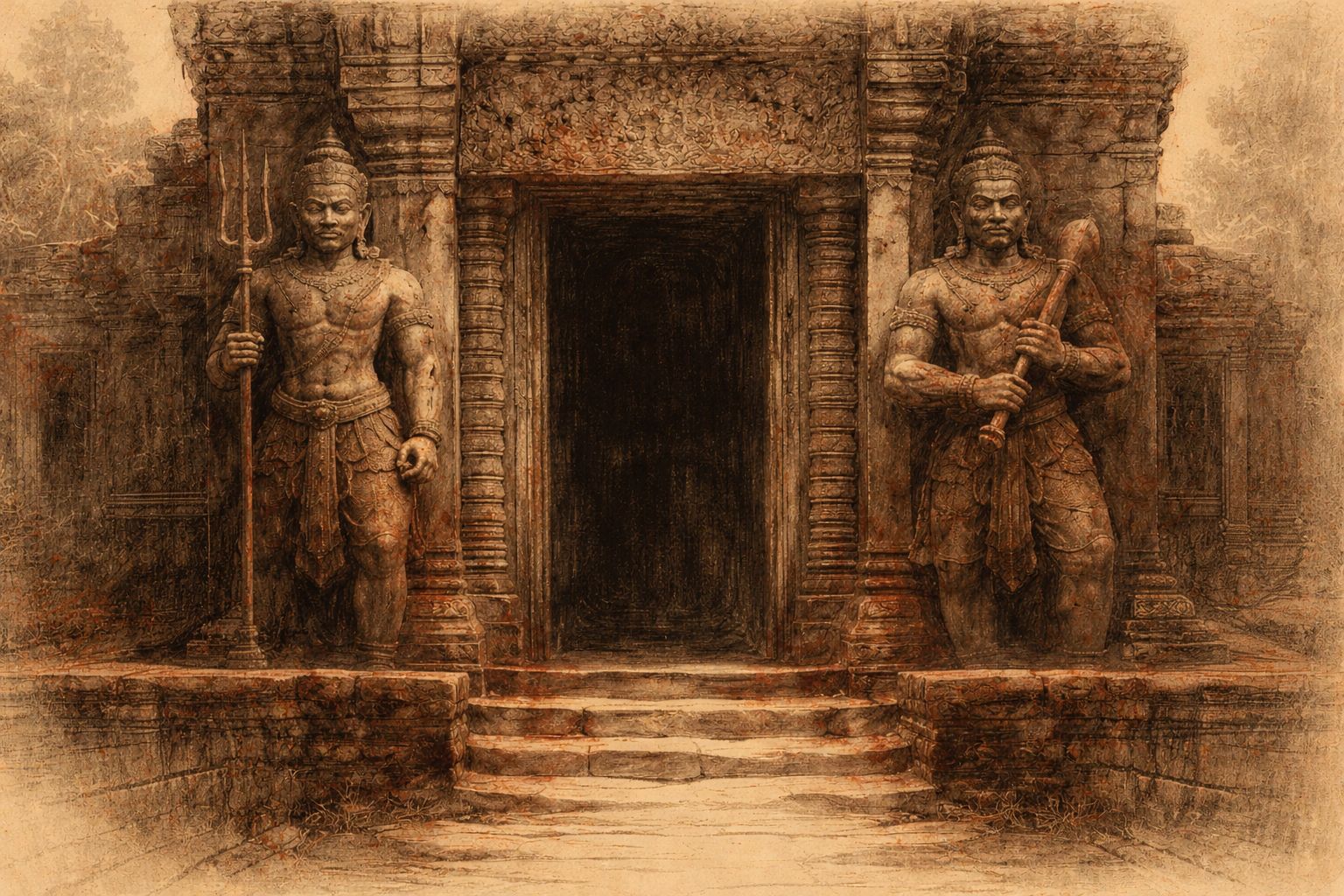

Dvarapalas of Angkor: Guardians of the Threshold
They stand where movement must pause. The dvarapalas do not decorate the temple; they regulate it. Paired, immovable, and exacting, they turn entry into a decision. To pass between them is to accept the discipline of the threshold—without explanation, without appeal.
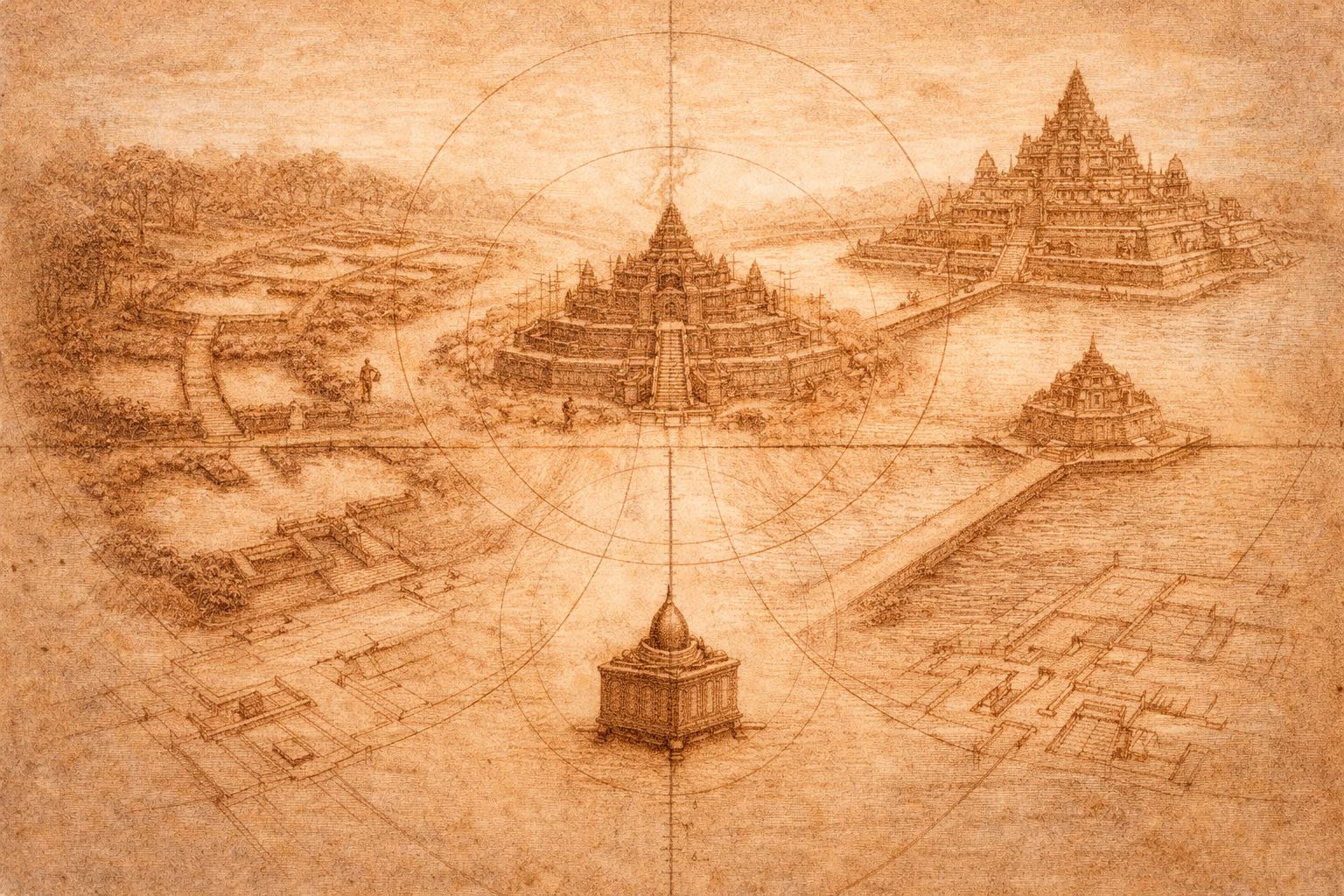

From Quiet to Scale — Jayavarman III and Indravarman I
Jayavarman III kept Angkor steady; Indravarman I made it resound. From quiet continuity at Roluos to the first great baray and sandstone temple-mountain, the transition was not a break but an amplification—foundations tested, then raised into forms that could carry empire.
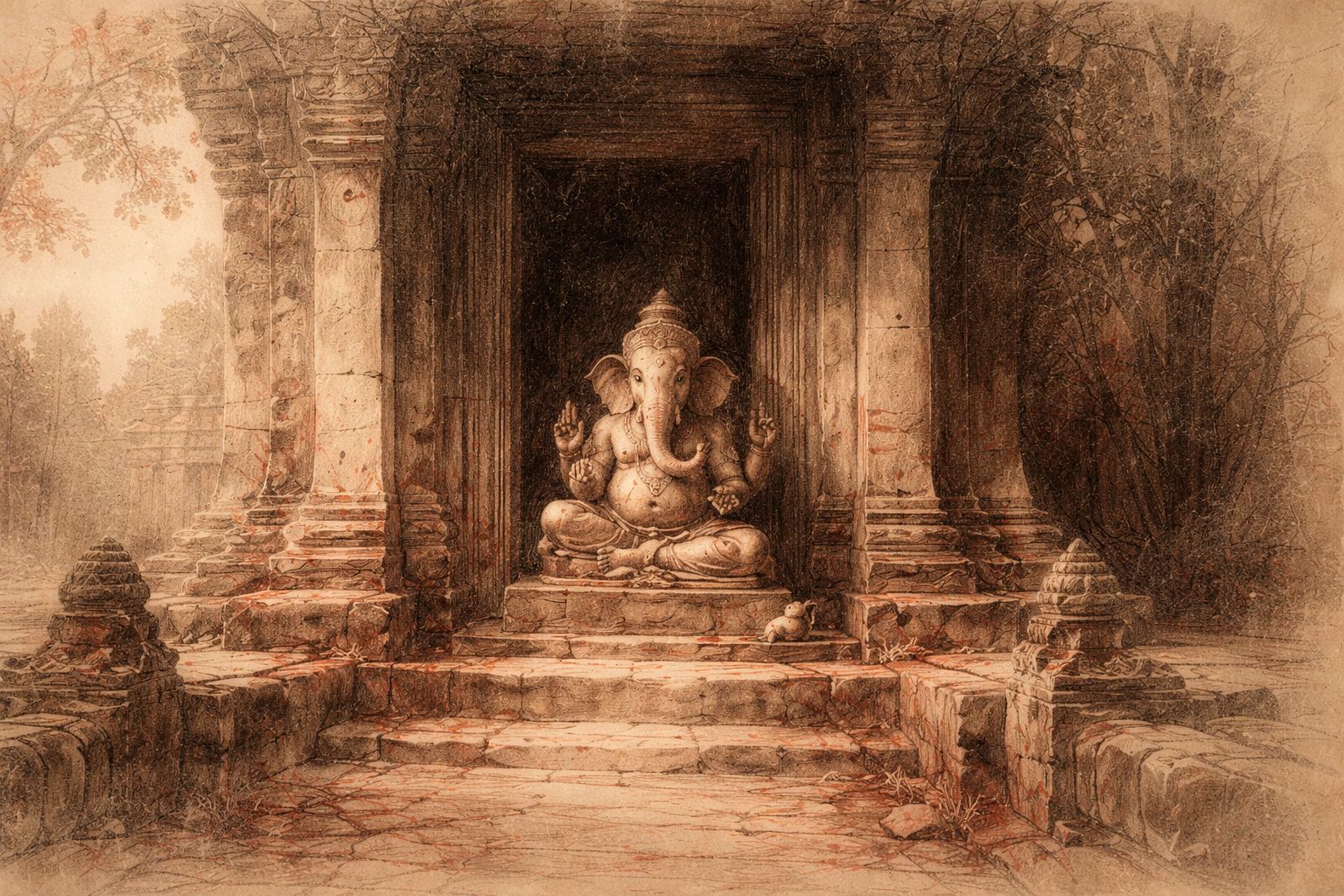

Ganesha in Angkor: The God Who Clears the Threshold
Ganesha stands where movement hesitates. Not as spectacle, but as permission. He does not erase difficulty; he makes it passable. In Angkor’s shadowed thresholds, he reminds the body how to begin—without conquest, without certainty, simply by consenting to the first step.
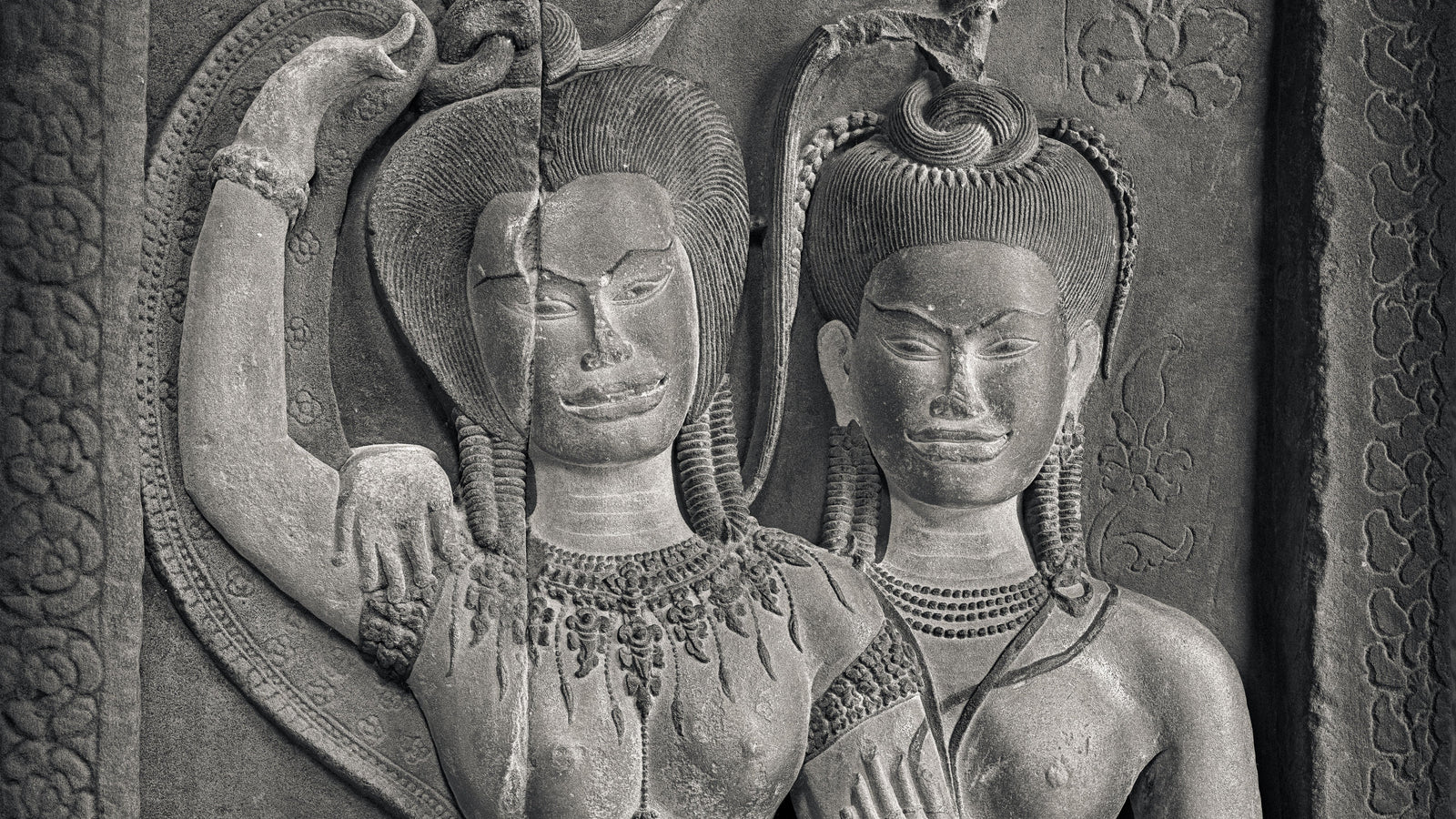

The Caress Between Lifetimes
She did not smile for the sculptor alone.
In the Cruciform Galleries of Angkor Wat, two apsaras lean together in golden hush—an eternal caress remembered through stone, through time, through light. This is their story, and the silence that first called me to them.
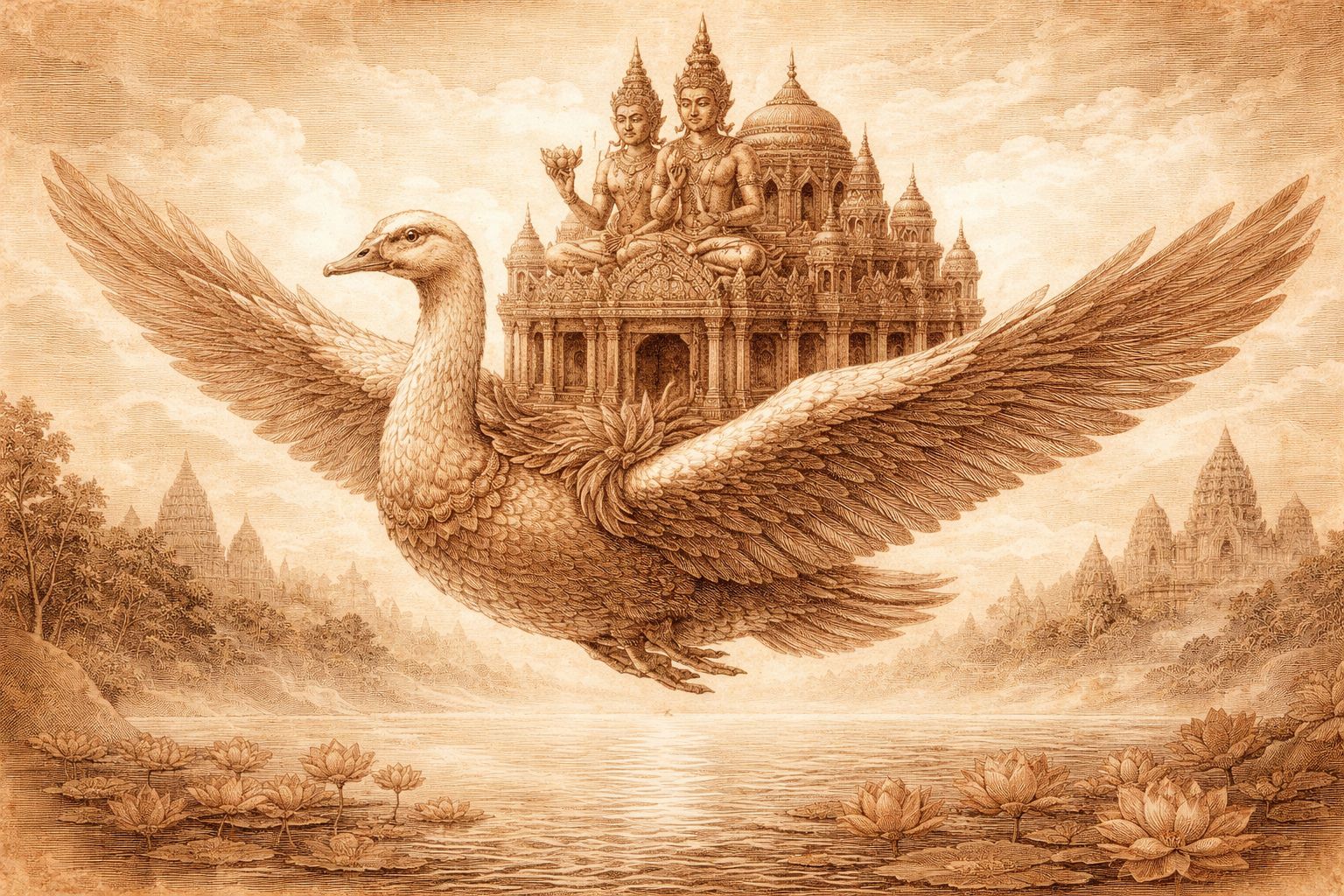

The Hamsa — The Bird That Knows Two Worlds
The hamsa does not flee the world, nor does it sink into it. It glides between water and sky with untroubled certainty, bearing gods, palaces, and breath itself. In its wings, Angkor teaches a quieter mastery: how to remain unstained while fully present.
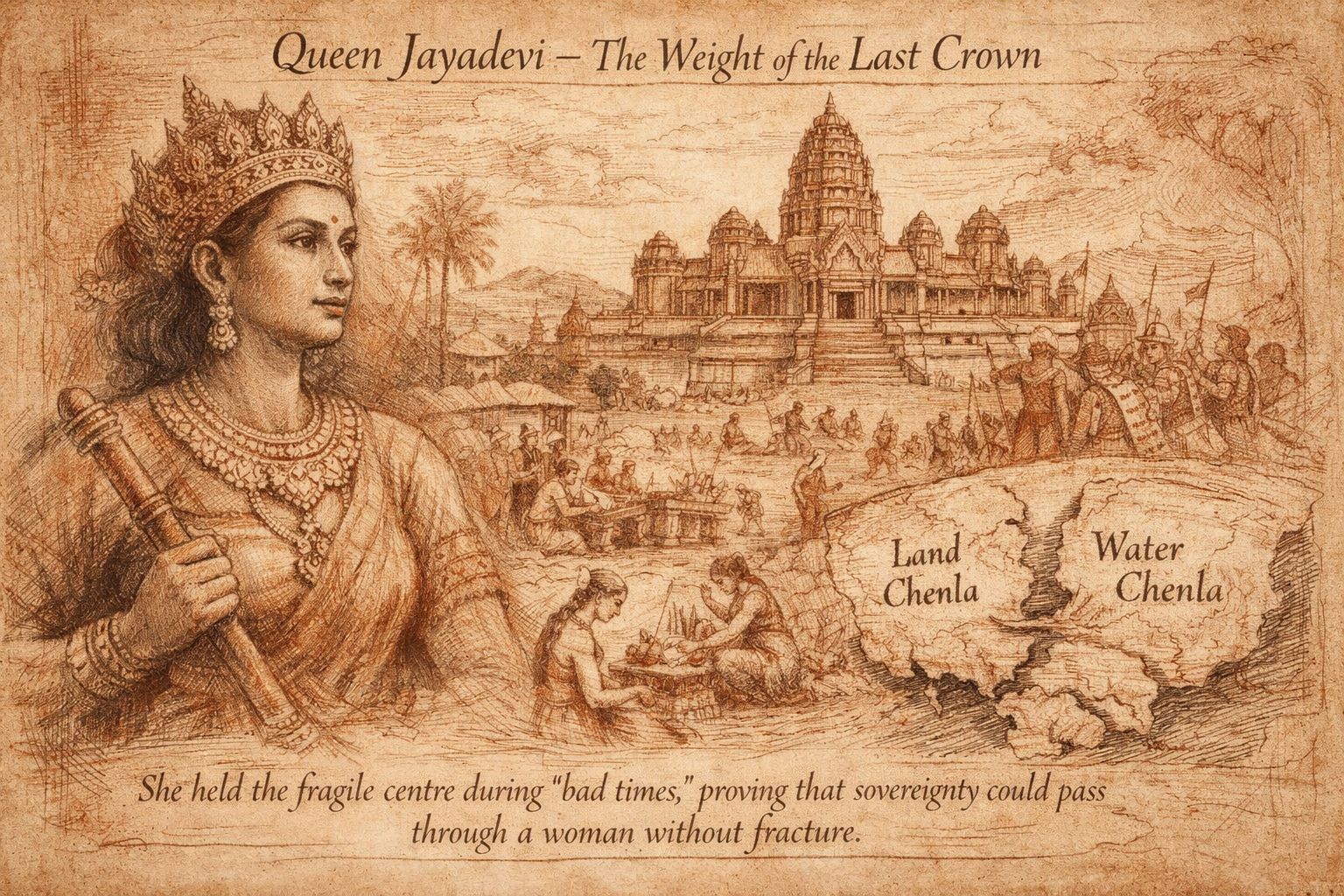

Queen Jayadevi — The Weight of the Last Crown
Queen Jayadevi ruled not in triumph, but in tension. Bearing the full title of Holy Lord, she held together a fragile centre during “bad times,” proving that sovereignty could pass through a woman without fracture. When her reign ended, the kingdom loosened—waiting, quietly, for Angkor to rise.
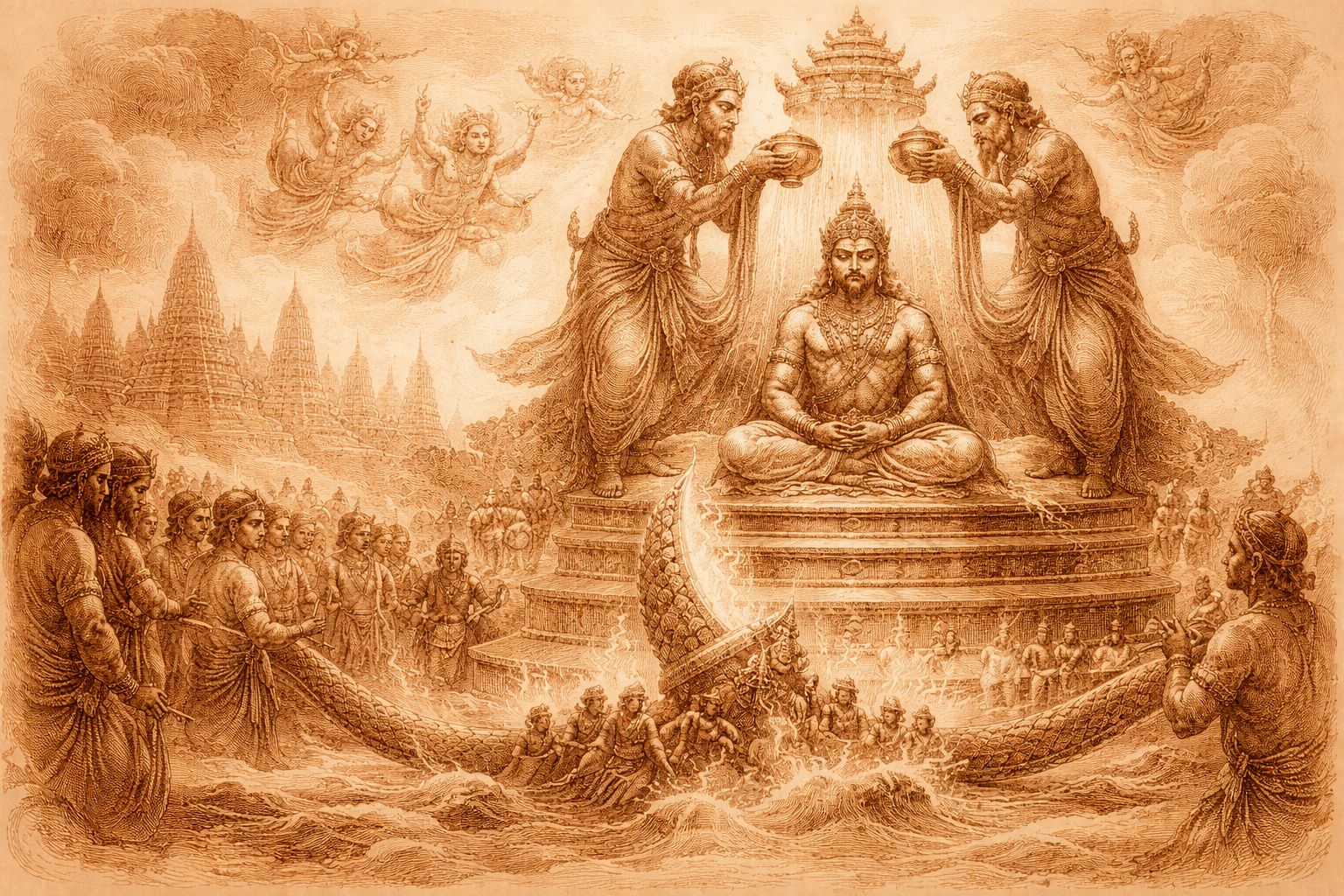

Indrābhiṣeka — The Rite That Restores the World
The Indrābhiṣeka was never merely a coronation. It was a ritual reset of the cosmos itself. By reenacting Indra’s return to power after chaos, Khmer kings submitted their authority to renewal, washing victory into legitimacy and binding sovereignty to balance, restraint, and cosmic order.
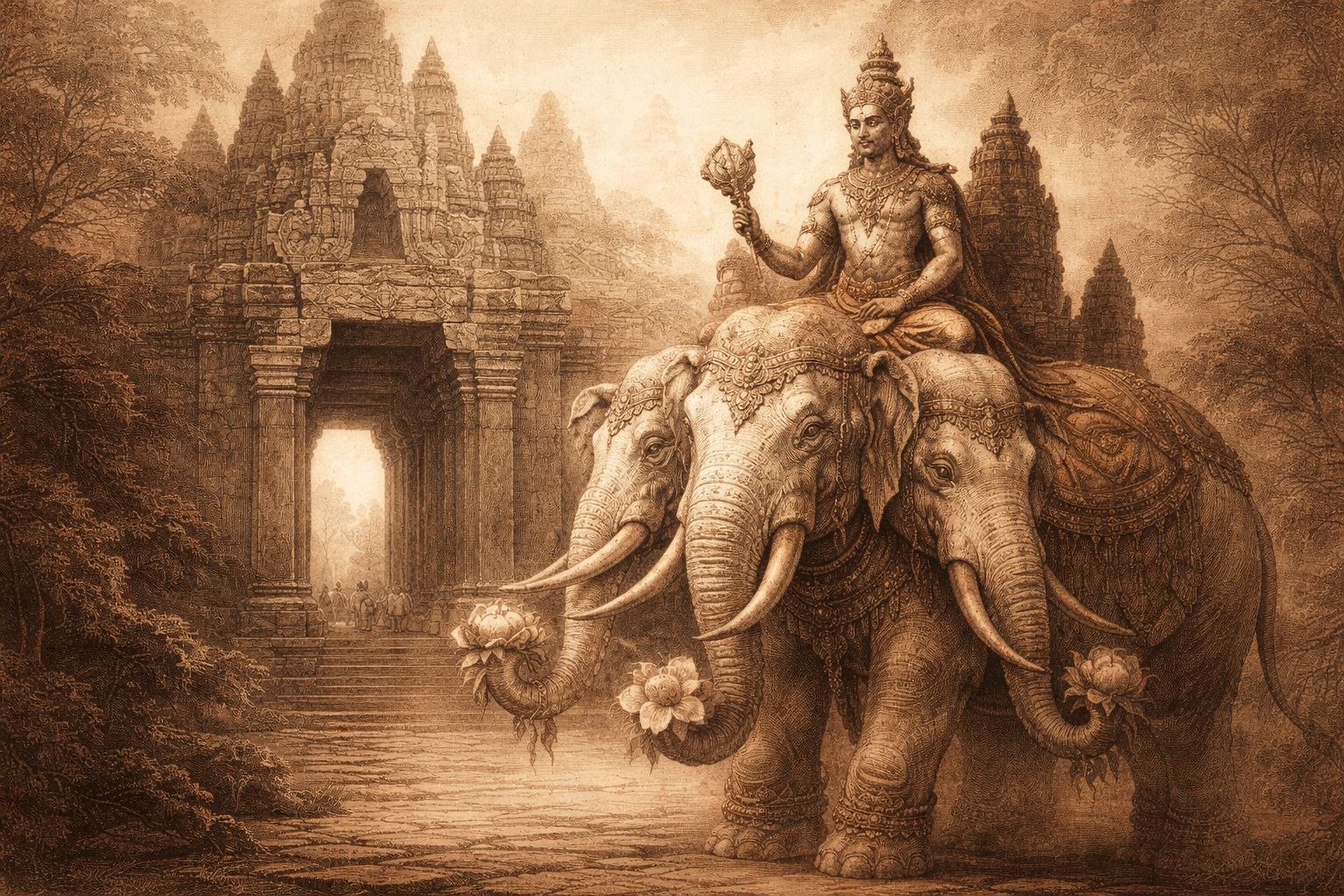

Indra — The East, the Storm, and the Fading Crown
Indra arrives as pressure before belief: cloud-thick air, withheld rain, the breath before release. At Angkor he remains at the eastern gates, mounted on the white elephant, guarding the threshold where force yields to law and storm learns restraint. Kings pass. The weather remembers.
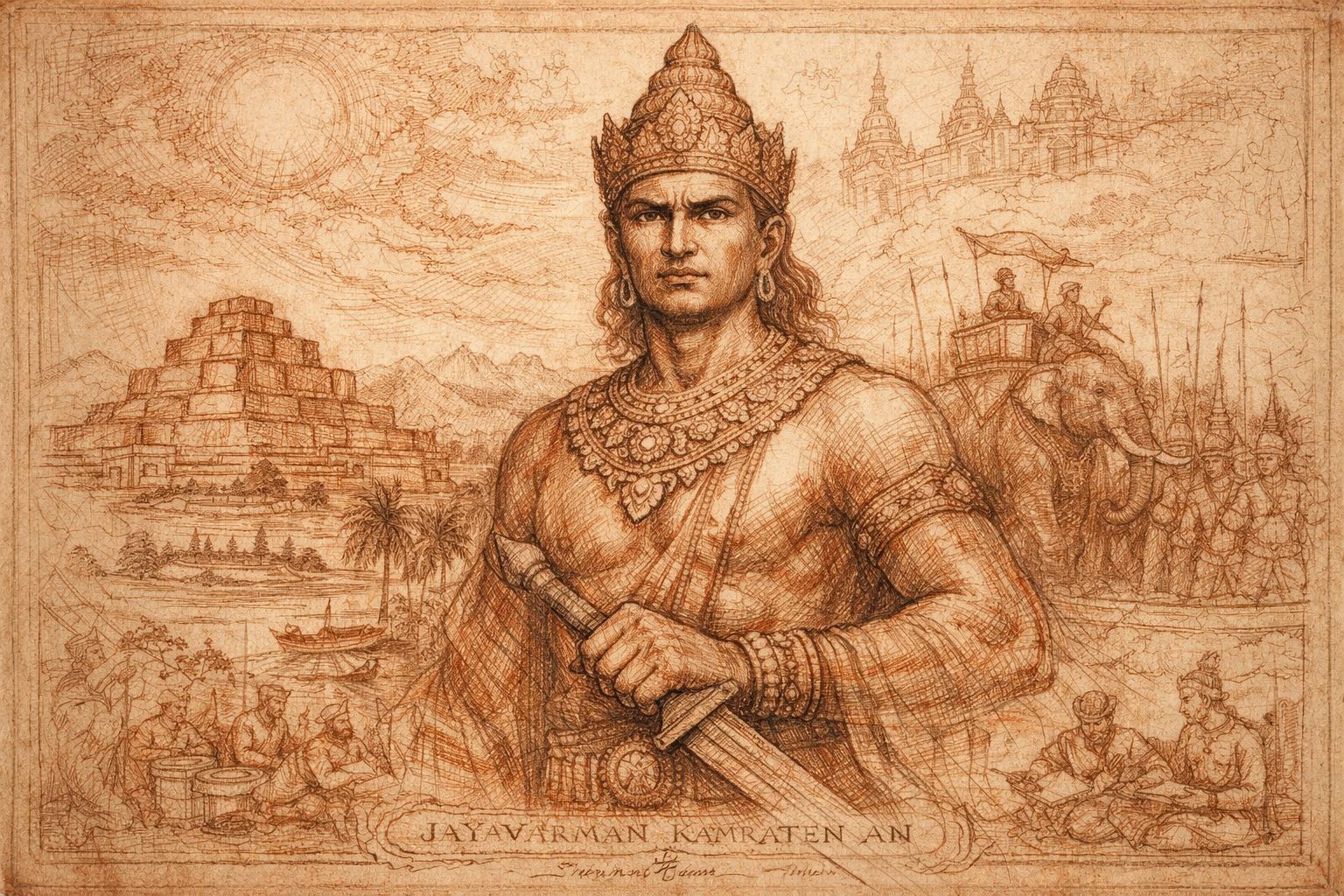

Jayavarman I — Armour of the Centre
Jayavarman I did not rule by monument, but by containment. He gathered fractured lands into a defended centre, replacing inheritance with appointment, custom with decree. The armour he forged did not survive his death, yet it taught Cambodia how authority could be shaped, sanctified, and held.
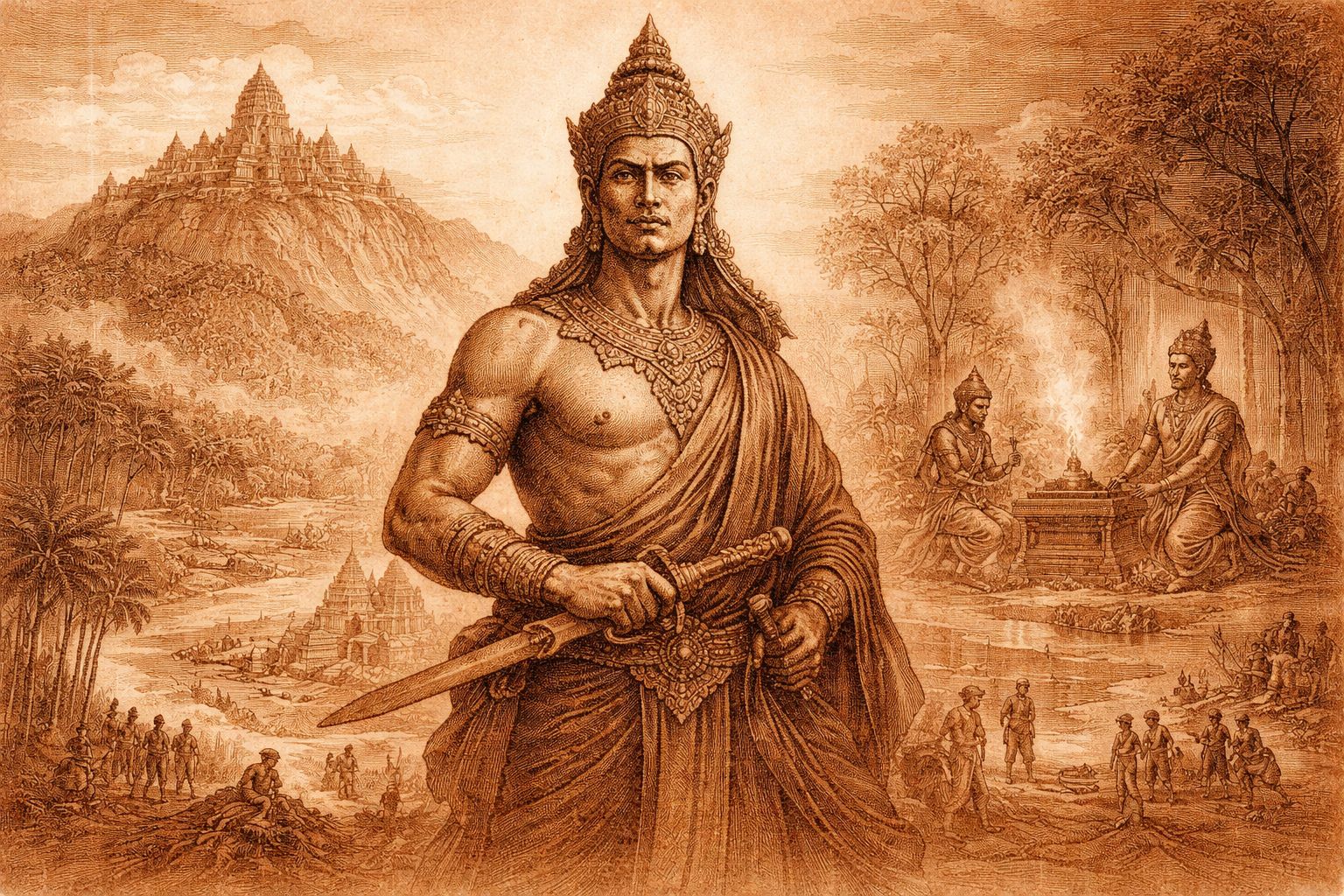

Jayavarman II — The Mountain That Remembered His Name
Jayavarman II did not found Angkor with monuments, but with alignment. On a sacred mountain, he declared a centre strong enough to outlast him. From ritual, sovereignty was born; from measure, empire followed. The towers of Angkor rise because one king first taught the land how to stand.
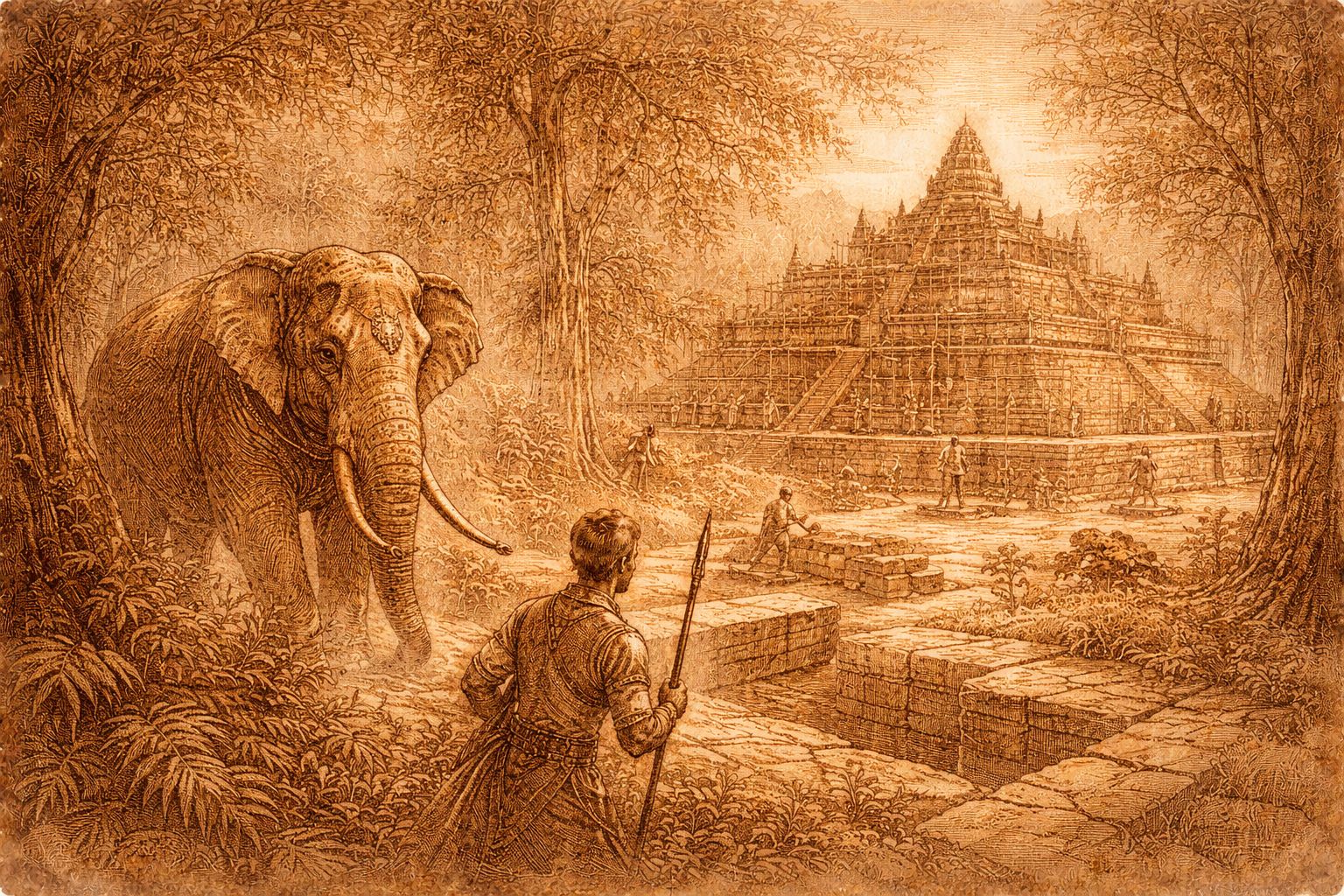

Jayavarman III — The King Who Kept the Centre Quiet
Jayavarman III ruled without spectacle. He left no great inscriptions, only continuity. Under him, the Devarāja remained installed, the capital steady, and the first intimations of water control quietly emerged. Angkor did not grow louder in his reign—but it did not lose its centre.
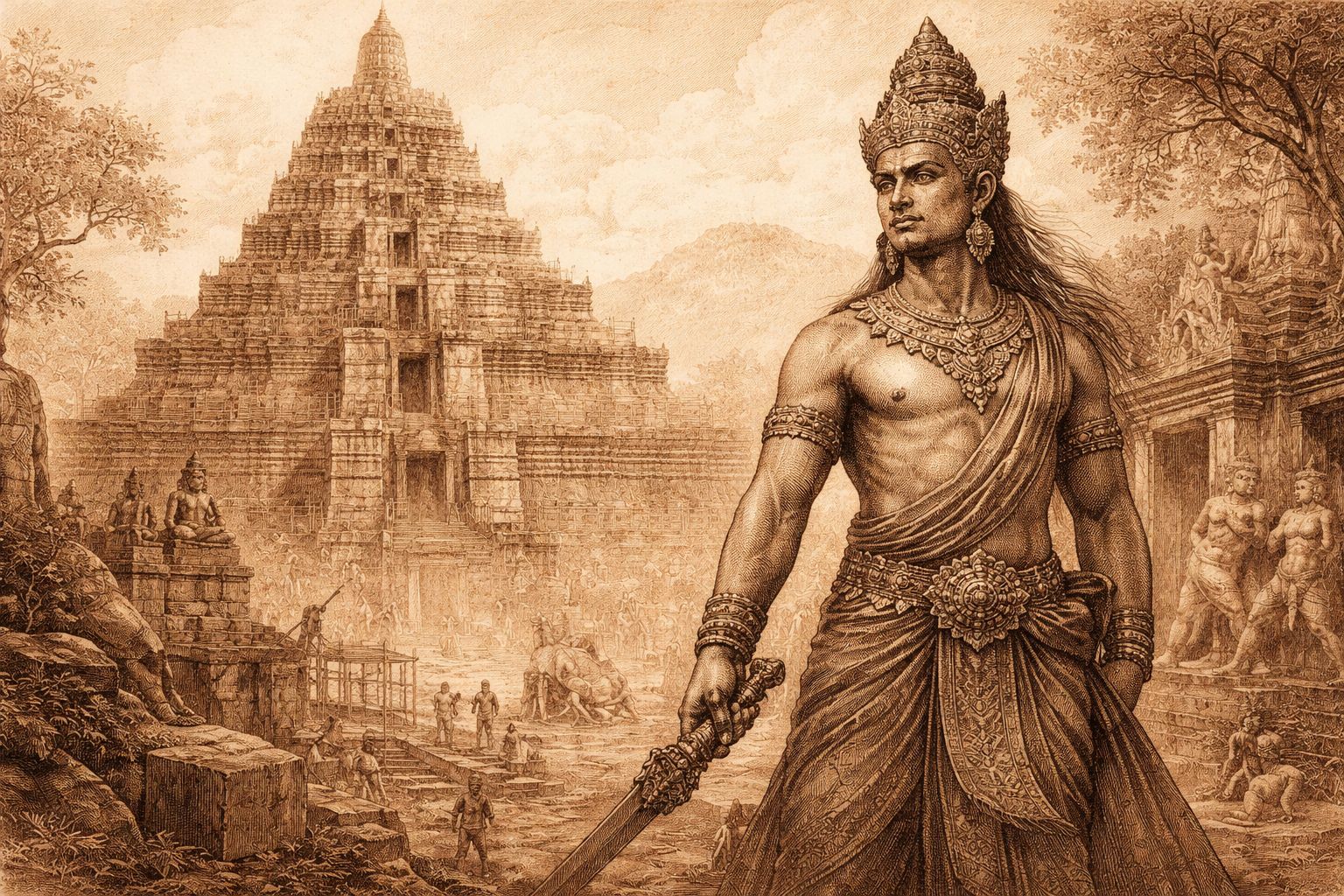

Jayavarman IV — The King Who Built Away from Memory
Jayavarman IV did not conquer Angkor. He stepped away from it, testing whether kingship could survive dislocation. Koh Ker stands as his wager: scale as argument, motion as proof, sovereignty stripped of memory and rebuilt in stone, force, and silence.
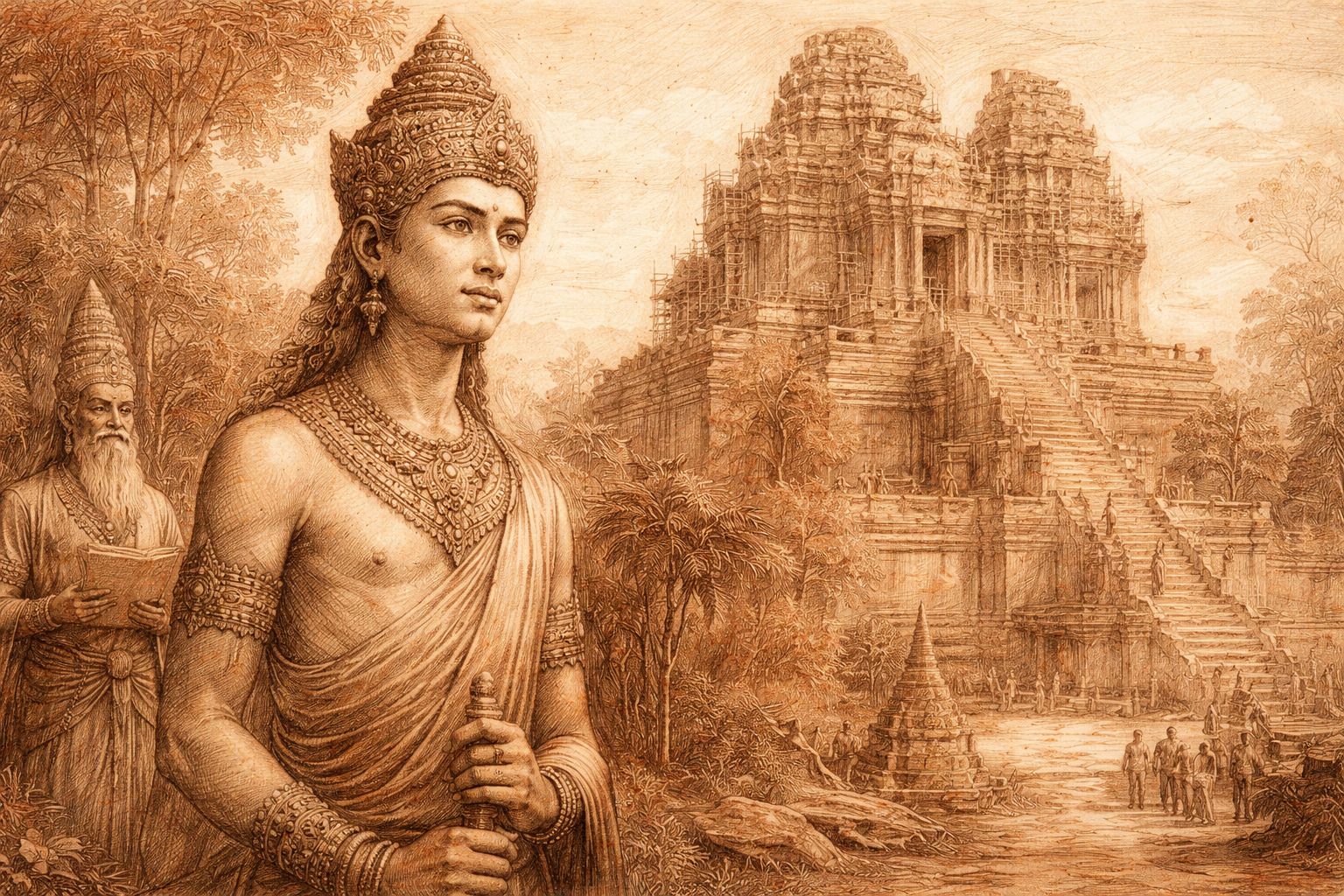

The Quiet Reign — Jayavarman V and the Discipline of Unfinished Stone
Jayavarman V did not rule through conquest or spectacle. He held Angkor steady while others taught, carved, and refined its vision. His unfinished mountain, Ta Keo, stands as a monument to restraint—a golden idea left in bare stone, awaiting a future that did not arrive.
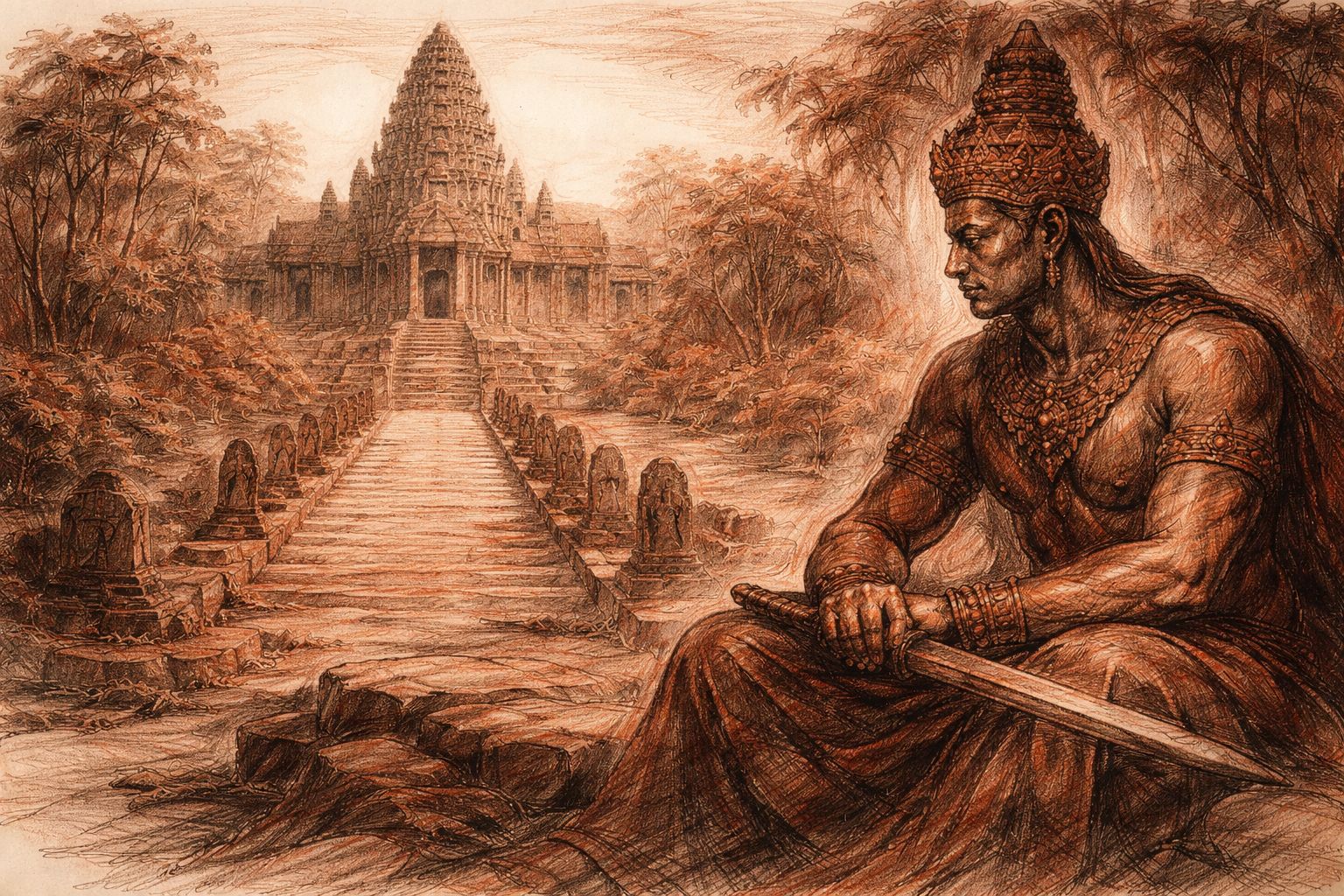

Jayavarman VI — The King Who Ruled from Elsewhere
Jayavarman VI ruled Angkor by shifting its centre of gravity. He left the capital largely untouched, allowing power to gather in the north, where Phimai rehearsed forms the empire had not yet named. His reign was not loud, but foundational—an act of placement rather than display.
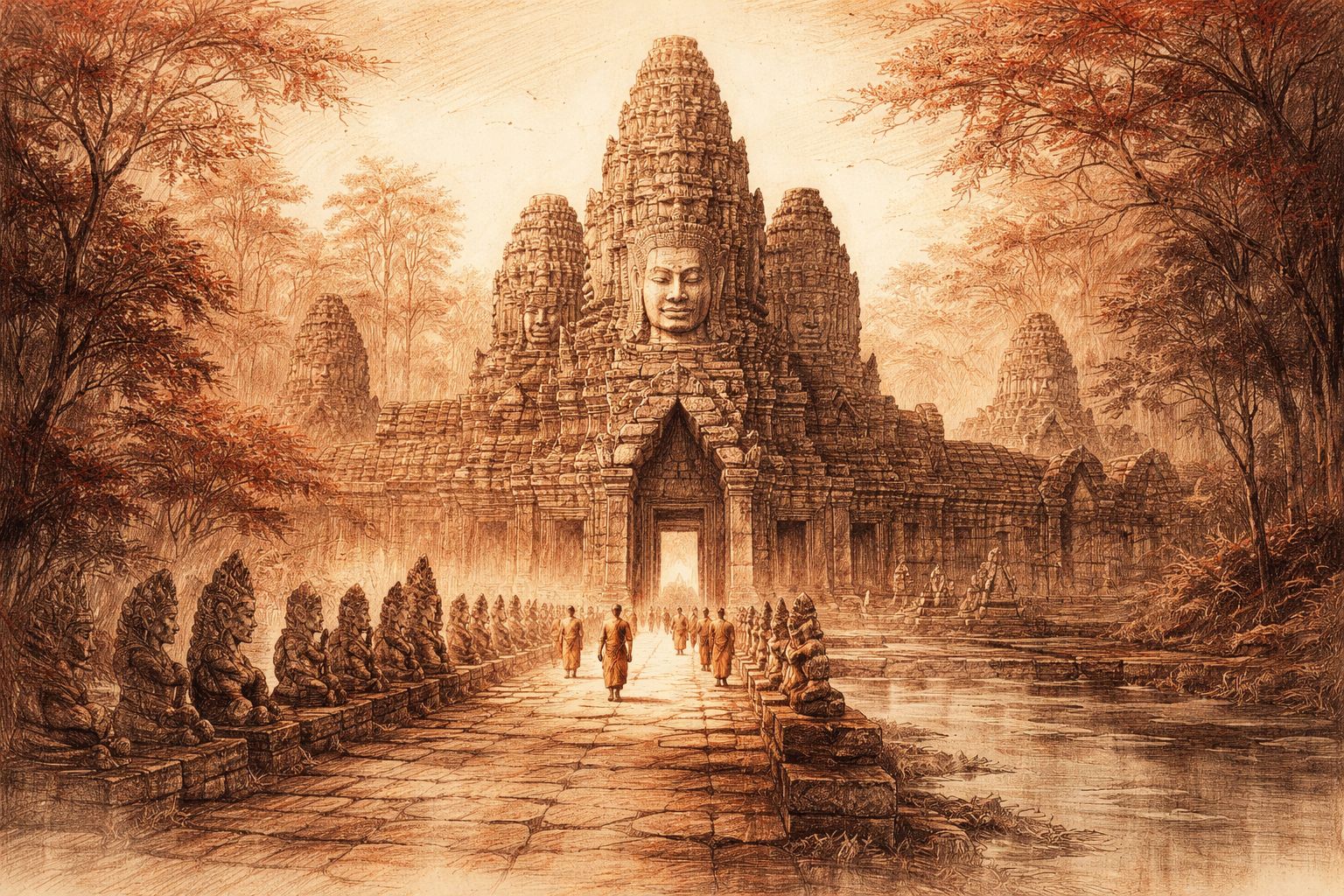

Jayavarman VII — The King Who Chose Compassion as Power
Jayavarman VII ruled not as a god demanding order, but as a bodhisattva absorbing pain. Roads, hospitals, and temples became instruments of care. His reign burned with compassion at imperial scale—brilliant, costly, and unforgettable—leaving Angkor forever marked by the possibility that power might heal.
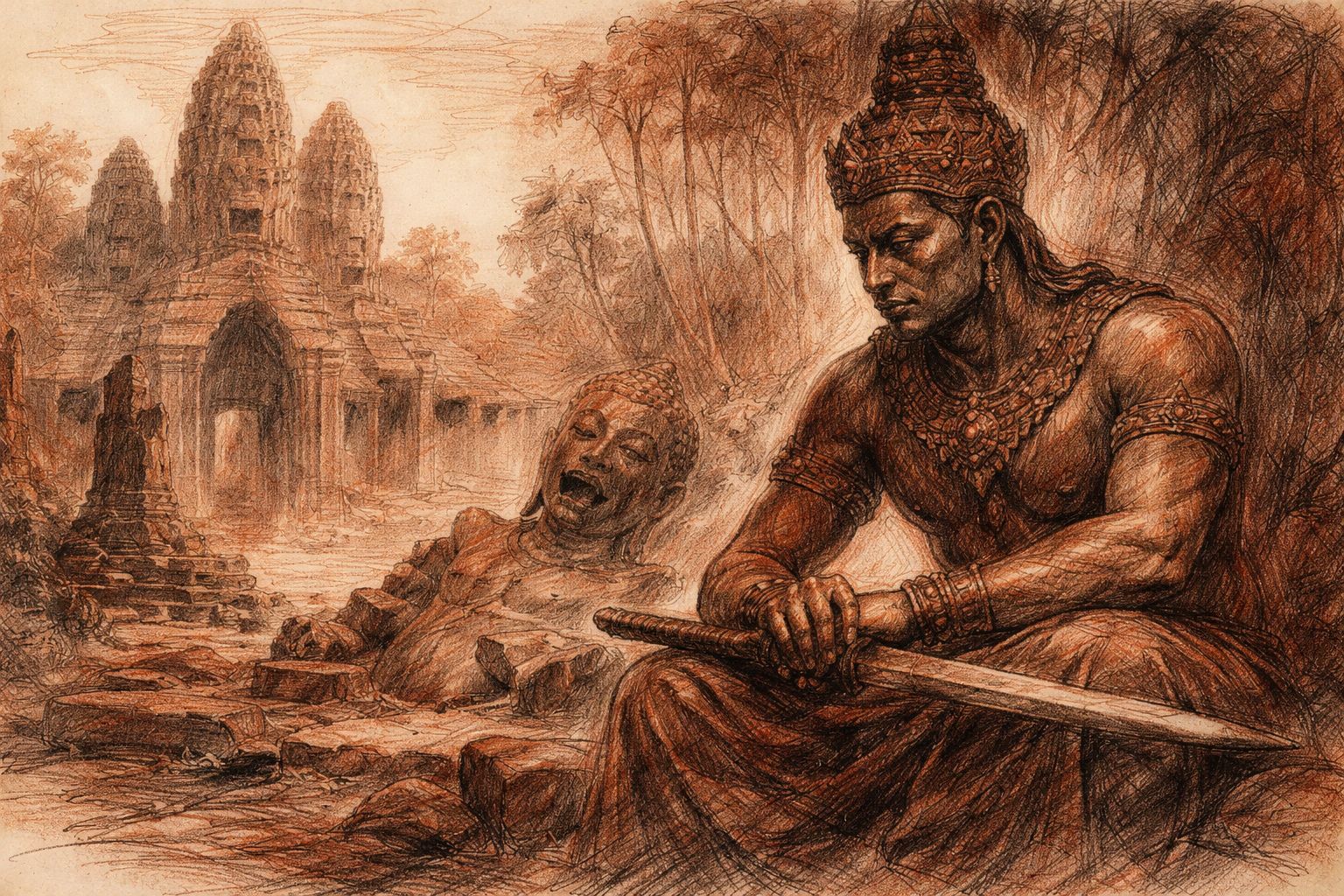

Jayavarman VIII — The King Who Refused Silence
Jayavarman VIII ruled at the moment Angkor hesitated between contraction and release. He erased not from cruelty alone, but from fear of a world growing too plural to command. His final temple stands like a full stop in stone—quiet, deliberate, and already listening for silence.
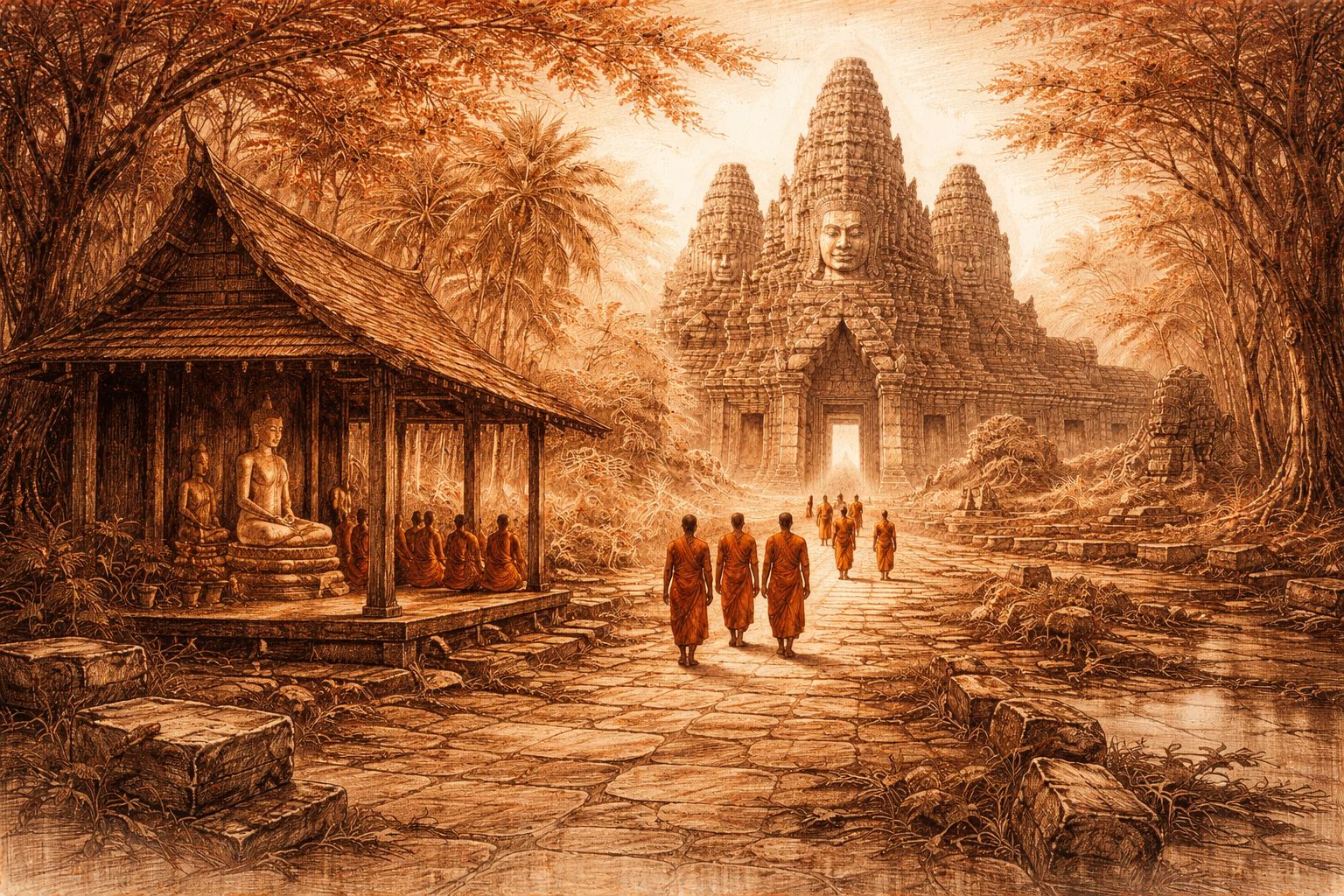

Jayavarman IX — The Last Candle and the Morning Light
Jayavarman IX stands at the threshold between stone and breath—the last Sanskrit voice of Angkor ruling as Theravada Buddhism quietly became the faith of the people. His reign marks not collapse, but release: from divine kingship to lived practice, from monument to monastery, from cosmic order to moral attention.